The best action camera for a beach vacation
Hot sand, salt water, glare off everything, and no outlet until dinner. The specs that decide a beach week are not the ones on the front of the box.
Part of Cameras.
We earn a commission if you buy through our links, at no extra cost to you. It never changes what we recommend or the order we rank it in — how this works.
The DJI Osmo Action 5 Pro is the best action camera for a beach vacation, because a beach week is decided by three published numbers and it wins all three: 20m waterproof with no housing, 240 minutes of recording at 1080p/24, and a -20° to 45°C operating range — the only camera-level heat figure among the bodies we cover, which matters when the camera spends the afternoon on a towel in direct sun. The GoPro HERO13 Black is the pick if you want the replaceable lens cover that makes sand a consumable problem rather than a permanent one, and the mount ecosystem to put a camera on a board, a rail or a kid. The Insta360 X5 is the pick for a trip where nobody wants to aim a camera. Whichever body you take, buy a float with it — a camera dropped in surf is gone in seconds without one.
01
Quick picks
| # | Product | Best for | Score | Price |
|---|---|---|---|---|
| 01 | 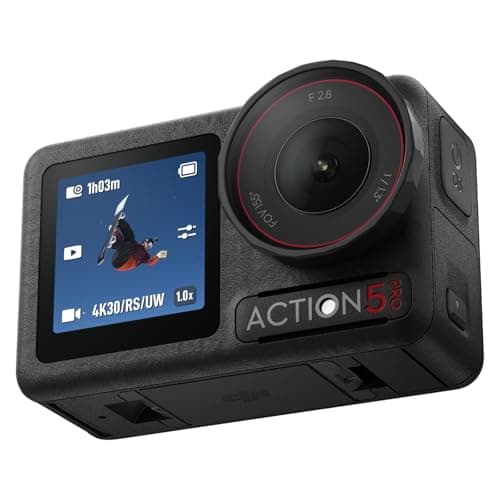 DJI Osmo Action 5 Pro Goes to 20m with no housing at all and publishes a 240-minute runtime — the two numbers that decide a long, wet, cold day. | Long paddles, cold water, and anyone tired of buying a housing to get past 10m | 9.1/ 10 | |
| 02 | 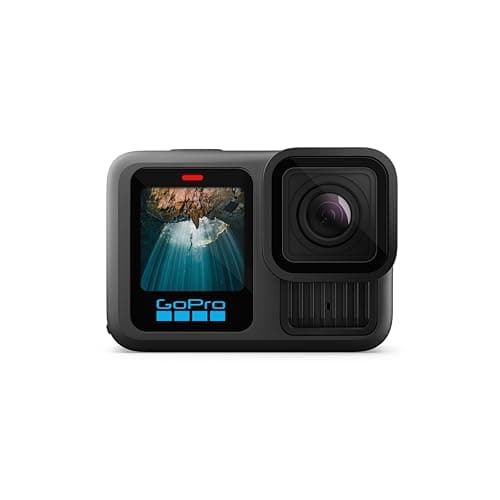 GoPro HERO13 Black The safest default for lake and trail: 33ft without a housing, the steadiest footage in the category, and a mount for literally everything. | Anyone who wants one camera to handle the kayak, the bike and the family trip | 8.8/ 10 | |
| 03 | 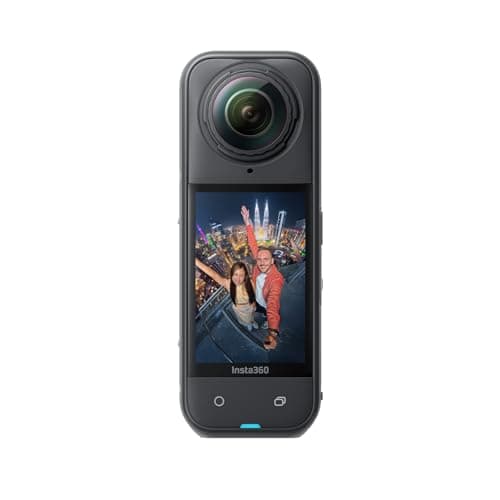 Insta360 X5 15m rated, replaceable lenses, and the one camera that means you never have to aim while you are paddling. | Anyone filming themselves on the water who cannot stop to frame a shot | 9.1/ 10 | |
| 04 | 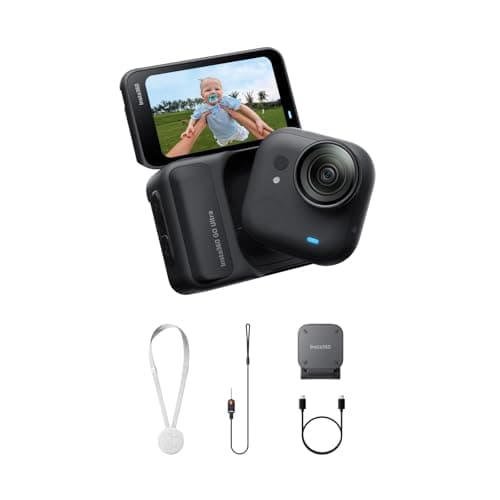 Insta360 GO Ultra 53 grams and IPX8 to 10m on its own — the camera you actually clip on for a paddle instead of leaving in the dry bag. | Hands-free clips where a full-size camera would never leave the bag | 7.6/ 10 | |
| 05 | 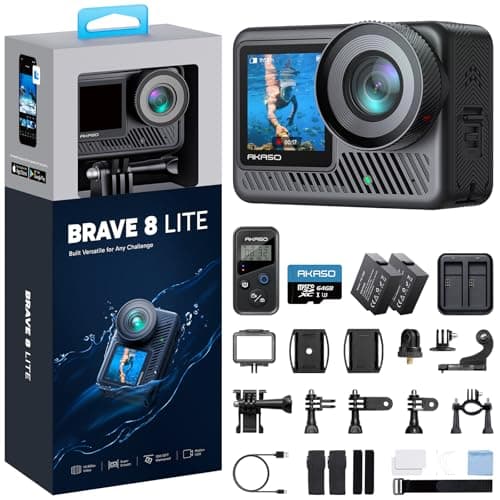 AKASO Brave 8 Lite Two batteries and a bag of mounts in the box at a fraction of flagship money — buy it knowing the stabilization gives up first. | A pool, a calm lake, a first camera you are not precious about | 7.4/ 10 | |
| 06 | 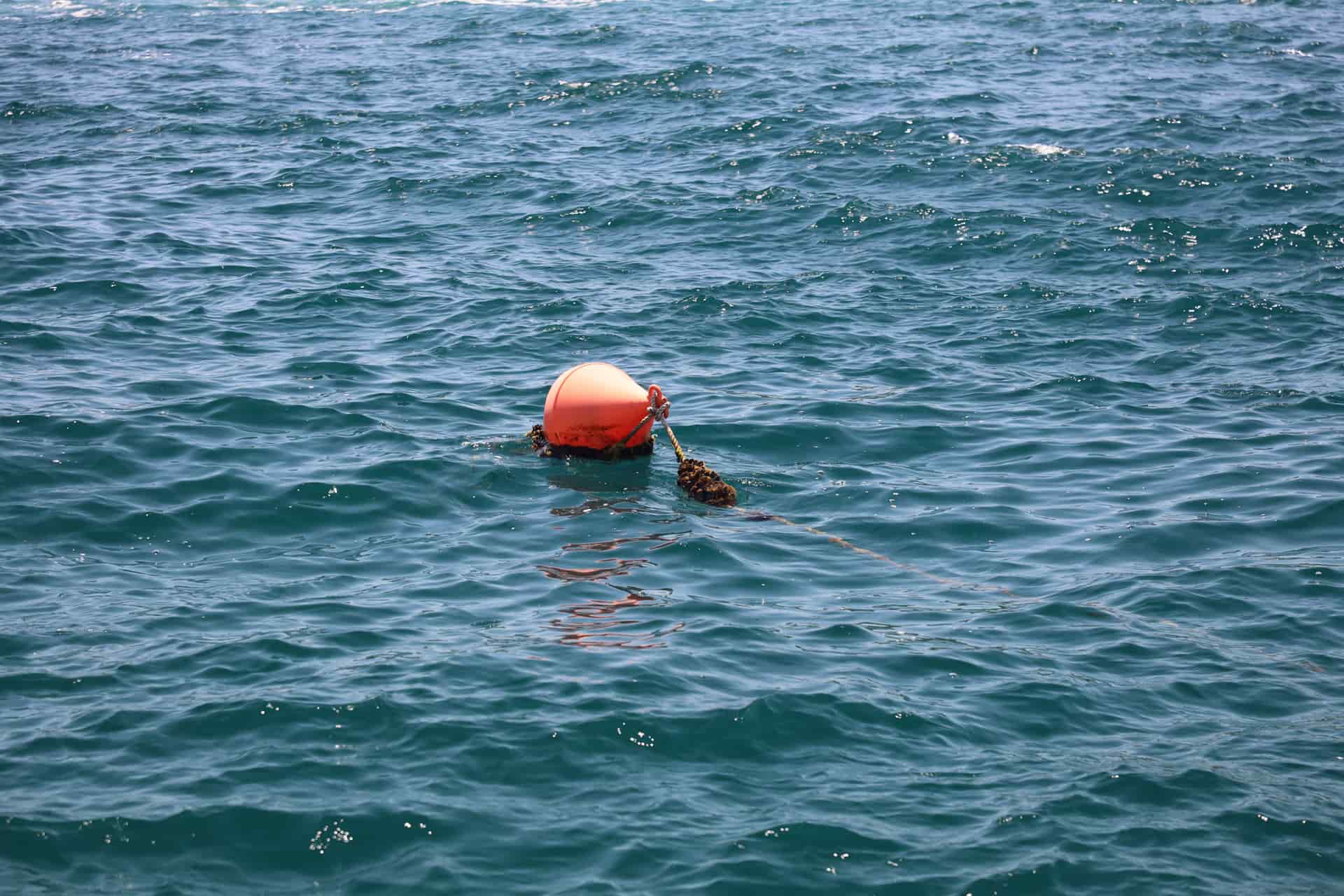 GoPro Floaty The one accessory that decides whether a dropped camera is a bad moment or a lost camera. Buy it with the camera, not after. | Every single person putting a camera near open water | 8.7/ 10 |
Scores are our editorial judgment from published specs and named independent reviews, weighted for lake and trail use — not measurements. We have not tested these units and do not own them.
02
How we picked
We do not lab-test, bench-test or dive-test cameras, and we do not own test units. What we do instead is read the manufacturer's published specifications, read the independent reviews that genuinely do test, read owner reports for the failure modes specs never mention — fogging, salt corrosion, cold battery collapse, mount slippage — and then weight all of it for action cameras used on lake and trail. Where a number is not published, the page says “not published” rather than filling the cell.
The full method, including what we refuse to do, is on the editorial policy page.
- 30%Water survival
- Rated depth without a case, door design, and what the manufacturer actually publishes.
- 25%Stabilization in chop
- A kayak deck and a rooty trail shake in ways a handheld walk test never shows.
- 20%Battery in the cold
- Published runtime, spare-battery cost, and whether it charges while recording.
- 15%Mount ecosystem
- Finger mount, threaded, magnetic — and how much of it you have to re-buy.
- 10%Footage you will keep
- Lens replaceability, low-light behavior, and how much cutting the footage needs.
What we ranked on, and why a beach is its own problem
Most camera advice for holidays is really advice about image quality. A beach week is not mainly an image quality problem — it is a survival and endurance problem, and five criteria follow from that, in this order.
Bare water rating, weighted hardest. Nobody carries a housing on a beach day. You are in and out of the water a dozen times, the camera gets handed to people, and a wave does not ask first. Every camera here is rated to swim and be dunked with nothing fitted, and the spread runs from 10m to 20m. The more margin you have, the less of the holiday you spend thinking about it. How deep an action camera can actually go covers what those ratings do and do not promise.
Published runtime, second. A beach day is six to ten hours long and there is no outlet in the sand. What matters is the manufacturer's own figure with its conditions attached — and the conditions always matter, because every quoted number is a best case at a low resolution with the screens off. A removable battery is worth more than any single runtime claim, because it turns a dead camera into a ten-second problem.
Heat, third, and almost nobody mentions it. A camera on hot sand in direct sun, or in a closed bag, or on a car dashboard, is in the hottest conditions it will ever see. Action cameras throttle and stop recording when they get too hot, and the only body here with a published upper operating limit is the Osmo Action 5 Pro at 45°C. That is not a claim the others fail — it is a claim they do not make. Fogging and overheating covers the settings that reduce the risk on any body.
Sand and salt, fourth. Salt is corrosive and sand is abrasive, and between them they account for most of the damage a coastal trip actually does. The two things that help are a replaceable front element — the HERO13 Black's lens cover, the X5's whole lenses — and a freshwater soak at the end of every day. Salt water care and rinsing is the five-minute routine that decides whether the camera is still fine next summer.
Loss prevention, fifth, and non-negotiable. A float is not an accessory on a beach, it is part of the camera. Surf moves a dropped camera immediately and sand buries it within a tide.
Resolution is deliberately not on that list. How to choose an action camera explains why it comes last, and 4K vs 5.3K vs 8K covers what the extra pixels actually buy.
| Camera | Bare water rating | Published runtime | Published heat limit | Replaceable front glass |
|---|---|---|---|---|
| DJI Osmo Action 5 Pro | 20m | 240 min at 1080p24, screens off | 45°C upper limit | No |
| GoPro HERO13 Black | 33ft (10m) | Over 2.5h at 1080p30 / over 1.5h at 4K30 and 5.3K30 | Not published for the camera | Yes — replaceable lens cover |
| Insta360 X5 | IP68 to 49ft (15m) | ~88 min at 8K30 | Not published | Yes — user-replaceable lenses |
| Insta360 GO Ultra | IPX8 to 33ft (10m), camera only | Up to 170 min with the Action Pod | Not published | No |
| AKASO Brave 8 Lite | IPX8 10m / 60m with case | 140 min at 4K / 150 min at 1080p across two batteries | Not published | No |
Sand is the damage you cannot undo
Water is the risk everybody plans for and it is the one modern cameras handle. Sand is the risk nobody plans for and it is the one that leaves a mark.
The mechanism is simple and worth understanding, because it changes what you do. Fine grit lands on the front element and on the body. You wipe it with whatever is nearest — a towel, a shirt, the inside of a bag — and that wipe drags the grit across the glass. One pass does nothing visible. A week of passes puts fine scratches on the front element, and scratches on a front element show up in footage as a soft haze whenever you shoot toward the sun, which on a beach is most of the time.
Two things prevent it. First, rinse before you wipe: fresh water off the grit, then dry with something clean. Second, buy a camera whose front glass is a spare part. That is exactly why the HERO13 Black is second here rather than fourth, and why the X5's user-replaceable lenses matter more on a beach than anywhere else on this site.
The second sand problem is mechanical. Grit in a battery door seal, a port cover or a mount gets ground in every time the door closes. Open doors as rarely as possible on the beach itself, and never open a battery door with sandy hands — walk to the bag, rinse, dry, then open.
Glare, and why beach footage often looks worse than it was
A beach is the highest-contrast scene most people ever film. White sand and a bright sky at one end, dark water and shaded faces at the other, and a camera with a fixed aperture has to choose. The usual result is blown-out sky, or silhouetted faces, or both in the same clip.
Three things help, none of which is resolution. A larger sensor handles the range better, which is the practical argument for the 1/1.3-inch class over the smaller sensors in budget bodies. Shooting with the sun behind you rather than in front changes more than any setting. And filming faces during the first and last two hours of daylight — when the light is low and soft — produces footage that looks like a holiday rather than like a security camera.
If you are shooting in the water rather than at the edge of it, a red filter at the right depth is the one in-camera fix for the color water strips out — filters and dome ports for water covers which filter at which depth, and settings for snorkeling is the configuration to set once and leave.
Who should take which camera
A family week at a resort or a rental. The Osmo Action 5 Pro or the HERO13 Black, a float, and a spare battery. One camera, mounted or handheld, is enough — and the family travel picks go deeper on the trips that are not mainly about water.
A surf trip. The HERO13 Black, because adhesive board mounts and a floating grip are both solved problems in GoPro's catalog. The surfing roundup is the dedicated version of that decision.
Snorkeling as the main event. Depth and color matter more than runtime, which changes the order — the snorkeling picks rank for exactly that.
Kids who will be handed the camera. The AKASO Brave 8 Lite or a second-angle body you are not precious about, plus a float and a wrist tether. The picks for kids rank on whether a child can actually operate the thing.
Nobody wants to be the camera operator. The Insta360 X5 on a short invisible pole, and accept the editing.
03
Every pick, in detail
- 20m bare / 60m with case
- 1950mAh · 240 min at 1080p24
- -20° to 45°C
- 9.5
- 9.0
- 9.5
- 8.0
- 9.0
DJI Osmo Action 5 Pro
DJI
Goes to 20m with no housing at all and publishes a 240-minute runtime — the two numbers that decide a long, wet, cold day.
Long paddles, cold water, and anyone tired of buying a housing to get past 10m
Top pick, on the three figures a coastal week actually leans on. 20m bare is double the shallowest flagship rating, which is the difference between "fine in the shallows" and not thinking about depth at all when a wave takes the camera under or a kid swims off with it. The 1950mAh battery is removable and DJI publishes 240 minutes at 1080p/24 with the screens off, which is the longest runtime claim in the category and the one that gets you from breakfast to the evening swim.
The specification nothing else here publishes is the upper end of the operating range. DJI states -20° to 45°C for the camera itself. A beach is the hottest place most people will ever leave a camera — on sand, in a bag, in a car — and 45°C is a stated limit rather than a hope. The 1/1.3-inch sensor also helps with the other beach problem, which is that the scene has bright white sand and dark water in the same frame.
Honest cons: at 146g it is a substantial thing to clip to anything, the mount catalog is much smaller than GoPro's and the magnetic quick-release adapters are a separate purchase, and it sits at the top of the category on price. There is no replaceable lens cover either, so a sand scratch on the front element is permanent — a real consideration on a beach specifically. The full specification read has every published figure, and the newer Osmo Action 6 adds a variable aperture on a larger sensor while keeping the same 20m rating and the same 240-minute figure.
- 20m without the Waterproof Case — double the bare-camera depth of the HERO13 Black
- DJI publishes 240 minutes of recording at 1080p/24 with screens off, the longest figure in this set
- Rated to -20°C, which matters more on an October lake than any resolution number
- 1/1.3-inch sensor holds detail when the light goes flat
- Mount ecosystem is smaller than GoPro's, and magnetic quick-release adapters are their own purchase
- 146g — the heaviest of the flagship three
- Fewer third-party mounts and filters exist for it
Specs from DJI Osmo Action 5 Pro published specifications.
- 33ft (10m), no housing
- 1900mAh Enduro
- 1.5h at 5.3K30 / 2.5h at 1080p30
- 8.0
- 9.5
- 8.5
- 9.5
- 9.0
GoPro HERO13 Black
GoPro
The safest default for lake and trail: 33ft without a housing, the steadiest footage in the category, and a mount for literally everything.
Anyone who wants one camera to handle the kayak, the bike and the family trip
The pick if sand is the thing you are most worried about, and that is a better reason than it sounds. The HERO13 Black's lens cover is a replaceable part. On a beach — where fine grit gets on everything, into every cloth you wipe with, and then across the front element — that turns the most likely permanent damage into a cheap spare you carry in the bag. No other body here offers that except the X5, which does it with whole lenses.
It is also the camera that mounts to anything you will find on a coastal trip. Built-in folding fingers plus a 1/4-20 thread, the largest accessory catalog in the category, and the one every third-party clamp and adhesive maker designs around — so a surfboard, a rail on a boat, a pole or a chest harness are all solved. GoPro publishes over 2.5 hours at 1080p30 and over 1.5 hours at 4K30 and 5.3K30, and Enduro spares are pocket-sized.
The trade is depth: 33ft (10m) bare is the shallowest flagship rating here, which is still far past anything a swim or a wave will do but leaves the least margin if the trip turns into free-diving. GoPro's temperature figure describes the Enduro battery rather than the camera, so there is no published heat limit for the body. The HERO13 Black review has the detail, and the GoPro-only vacation picks are the page to read if you have already decided on the brand.
- HyperSmooth 6.0 with AutoBoost is the steadiest stabilization we can find published figures for
- Built-in mounting fingers plus 1/4-20 threads — it fits the GoPro ecosystem and a normal tripod
- Enduro battery is rated to keep full camera functionality down to 14°F (-10°C)
- Replaceable lens cover, so a scratched lens is a $20 problem and not a $400 one
- 33ft is shallower than the DJI and it is the shallowest of the three flagships
- Anything past 33ft needs the separate Protective Housing
- HB-Series lenses and ND filters are all extra purchases
Specs from GoPro HERO13 Black published specifications.
- IP68 to 49ft (15m)
- 2400mAh · ~88 min at 8K30
- User-replaceable
- 9.5
- 9.5
- 9.0
- 8.5
- 7.5
Insta360 X5
Insta360
15m rated, replaceable lenses, and the one camera that means you never have to aim while you are paddling.
Anyone filming themselves on the water who cannot stop to frame a shot
The pick for the problem nobody admits to on holiday: somebody has to hold the camera and point it, and that person is not in the footage. A 360 camera removes the aiming step entirely — you capture everything around the camera and choose the shot afterwards, which on a beach means the wave, the kids and your own face all exist in the same clip. On a short invisible pole it also produces the third-person shot that no flat camera can.
IP68 to 49ft (15m) covers surf, swimming and a dropped camera, the 2400mAh battery is rated at roughly 88 minutes at 8K30, and the lenses are user-replaceable. That last point is the most beach-relevant thing about it: the exposed curved lenses are the most scratch-prone glass in this group, and they are also the only glass here you can simply replace.
The honest cons are real. Every clip needs reframing before it is watchable, which is editing work a flat camera does not ask for; the files are large; and 88 minutes at 8K is the shortest runtime figure here. Buy it understanding that it is a camera with homework. The X5 review covers the specifications, and 360 versus flat is the decision to settle before you spend.
- 15m IP68 is the deepest bare rating of any camera on this site
- User-replaceable lenses — the single biggest fix for the 360 format's worst failure mode
- 185 minutes in Endurance mode at 5.7K24, which is a whole day of clips
- Invisible-selfie-stick reframing means you point the camera at nothing and pick the angle later
- Exposed lenses still scratch; lens guards are a purchase, not an option
- Every clip needs a reframing pass before anyone else can watch it
- 8K30 files are large and the edit is slower than flat footage
Specs from CineD, Insta360 X5 announcement with published specifications.
- IPX8 to 33ft (10m), camera only
- 53g
- Up to 170 min with the Action Pod
- 7.0
- 8.0
- 7.5
- 8.0
- 8.0
Insta360 GO Ultra
Insta360
53 grams and IPX8 to 10m on its own — the camera you actually clip on for a paddle instead of leaving in the dry bag.
Hands-free clips where a full-size camera would never leave the bag
The camera that actually films the parts of a beach day a full-size body misses. At 53g it clips to a hat brim, a strap or a swimsuit waistband and then you forget it, which means it records carrying the chairs down, the first run into the water, lunch, and the thing your kid did while both your hands were full. A camera in a bag films none of that.
IPX8 to 33ft (10m) for the camera itself is a genuine water rating rather than a splash claim, the 1/1.28-inch sensor is far larger than the size implies, and the Action Pod adds a flip screen plus up to 170 minutes of runtime when you want the long version of the day.
Read the two water ratings separately — the Action Pod is not rated to the same depth as the camera, and on a beach the Pod is the part most likely to get splashed. There is no interchangeable lens cover, so a sand scratch is permanent, and the magnetic mounting is convenience rather than a mechanical lock, which near surf is worth a tether. The GO Ultra specification read has the rest.
- 53g means it goes on a hat brim, a PFD strap or a chest magnet and you forget it is there
- IPX8 to 10m for the camera itself, with a 1/1.28" sensor that is far larger than the size suggests
- Action Pod adds a flip screen and the long runtime when you want it
- Removable microSD, so you are not stuck with fixed onboard storage
- The Action Pod is not rated to the same depth as the camera — read the two ratings separately
- Magnetic mounting is convenient but is not a mechanical lock in real chop
- No interchangeable lens cover, so a scratch is permanent
Specs from Insta360 GO Ultra published specifications.
- IPX8 10m / 60m with case
- 2 × 1550mAh included
- 140 min at 4K / 150 min at 1080p
- 7.5
- 6.5
- 8.0
- 8.5
- 6.5
AKASO Brave 8 Lite
AKASO
Two batteries and a bag of mounts in the box at a fraction of flagship money — buy it knowing the stabilization gives up first.
A pool, a calm lake, a first camera you are not precious about
The pick when you do not want to take a $400 camera to a beach at all, and that is a legitimate position. IPX8 to 10m bare covers everything a holiday asks of it, two 1550mAh batteries come in the box — which is the single most useful thing about it on a day with no outlet — and so does a bag of mounts, so there is no accessory bill on top.
AKASO publishes 140 minutes at 4K and 150 minutes at 1080p. For a pool, a calm bay, a snorkel in the shallows or a first camera you hand to a child, that is enough camera.
Cons, clearly: stabilization is the thing that gives up first, and on a beach that means handheld walking shots and anything in moving water look noticeably rougher than the flagships. The low-light performance is the second thing to go, which costs you the end of the day. Treat it as a bright-sun, calm-water camera and it is good value; GoPro vs AKASO sets out exactly what the price gap buys.
- IPX8 to 10m bare, which matches the HERO13 Black's rating on paper
- Ships with two batteries, a charger and seven mounts — nothing else to buy on day one
- 4K60 and dual screens at a price well under the flagships
- Uses GoPro-standard two-prong mounting, so the whole accessory world fits
- SuperSmooth stabilization is a step behind HyperSmooth and RockSteady in chop
- The 60m rating belongs to the separate housing, not the camera
- Low light is where the price shows most
Specs from AKASO Brave 8 Lite published specifications.
- ADFLT-001
- HERO13, 12, 11, 10, 9 Black
- Keeps the camera at the surface
- 8.5
- 9.0
- 9.5
- 7.5
GoPro Floaty
GoPro
The one accessory that decides whether a dropped camera is a bad moment or a lost camera. Buy it with the camera, not after.
Every single person putting a camera near open water
Buy this with the camera, not after it. A beach is the one environment where a dropped camera does not sit waiting to be picked up: surf moves it, sand buries it, and a camera that sinks in two feet of churning water is effectively gone. The Floaty (ADFLT-001) keeps a HERO13, 12, 11, 10 or 9 Black at the surface where you can see it. It is the cheapest insurance on this page by a wide margin, and floats, tethers and not losing your camera covers the equivalents for the other bodies here plus the tether habits that matter more than the float does.
- Attaches directly to the camera rather than to a mount you might swap off
- Bright orange, which is the difference between finding it and not
- Cheap next to the camera it saves
- Works with the standard door, so nothing else changes about your setup
- Model numbers matter — the older AFLTY-004 does not fit HERO13, 12, 11, 10 or 9
- Adds bulk that changes how the camera sits in a tight mount
- It floats the camera, not the camera plus a heavy housing and mount — check the whole rig
Specs from GoPro Floaty (ADFLT-001) product page.
04
What decides this category
What to pack, in order of how much it changes the week
A float. First, cheapest, and the only item on this list whose absence can cost you the whole camera. Fit it before you leave the house, not on the beach.
A spare battery. Second. A beach day outlasts every camera here, and a swap takes seconds. On a body with a built-in battery this becomes a power bank instead, which is slower and needs a dry bag — power on long days has the arithmetic.
A fast enough memory card. V30 or better for 4K, and a card with room for a week rather than a day, because deleting footage on a phone in the sun is nobody's holiday. What size card covers the capacity question and speed classes compared covers the rating.
A spare lens cover, if your camera takes one. A few dollars against a permanently hazy front element.
One mount, not five. Whatever you are actually going to attach the camera to — a board, a rail, a chest harness — and nothing else. The bag of mounts stays home. The first five accessories is the honest short list.
What to leave at home: a protective housing, unless you are diving past your camera's bare rating. On a beach it costs you audio and the touchscreen, adds a surface for sand to scratch, and introduces a fogging risk you did not have — do you need a protective housing works through that properly.
Three settings to choose before you go
Resolution one step below the maximum. On every camera here, dropping from the top mode buys meaningfully more runtime and less heat for a difference you will not see on a phone or a TV. On a beach, heat and battery are the real constraints.
Stabilization on, horizon leveling on if you have it. Handheld beach footage is walking footage, and walking footage is what stabilization was built for.
Short clips, deliberately. Fifteen to thirty seconds at a time. It saves battery, saves card space, saves heat, and makes the footage editable afterwards instead of being forty minutes of nothing — editing a trip video people watch is built around that one habit.
05
Questions people actually ask
01What is the best action camera for a beach vacation?
The DJI Osmo Action 5 Pro, on the three published figures a beach week depends on: 20m waterproof bare, 240 minutes at 1080p/24, and a 45°C upper operating limit that no other body here publishes. The GoPro HERO13 Black is the better choice if sand scratches worry you, because its lens cover is a replaceable part.
02Do I need a waterproof case for a beach holiday?
No. Every camera here is rated between 10m and 20m with nothing fitted, which covers swimming, surf and being dunked. A case costs you audio and touchscreen control, adds a surface for sand to scratch, and introduces a fogging risk — only fit one if you are diving past the bare rating.
03Will sand ruin an action camera?
It can, and the usual route is wiping grit across the front element with a towel until the glass is finely scratched. Rinse with fresh water before you wipe, keep doors closed on the beach itself, and prefer a camera whose front glass is a spare part.
04How do I stop my camera overheating on the beach?
Keep it out of direct sun when it is not recording, shoot one resolution step below the maximum, record short clips instead of continuously, and do not leave it in a closed bag in the sun. The only camera here with a published upper limit is the Osmo Action 5 Pro at 45°C.
05Do I need to rinse my camera after the beach?
Yes, every day. Soak it in fresh water with the doors closed for a few minutes, work the buttons under the water, then rinse and dry out of direct sun. A quick rinse does not dissolve salt that has already dried into a seal.
06Is a 360 camera better for a beach trip?
It is better at one specific thing: nobody has to aim, so the person holding the camera is in the footage too. The cost is that every clip needs reframing before it is watchable. Take an X5 if you will do that editing, and a flat camera if you will not.
07What should I buy with the camera?
A float first, a spare battery second, a card with a week of space third. Those three change a beach week more than any upgrade in camera body does.
06
Read this next
Salt water care and rinsing
The five-minute end-of-day routine that decides whether the camera survives the week.
The best action cameras for snorkeling
If the water is the point of the trip, depth and color change the order.
The best action cameras for surfing
Board mounts, floating grips and the bodies that take a wipeout.
The best action camera for family travel
The wider trip version, for holidays that are not mainly about water.
Floats, tethers and not losing your camera
The cheapest purchase on this page, and the habits that matter more than the float.
Waterproof mounting options for water sports
Where to attach the camera once you are in the water rather than beside it.
07
Sources
- DJI Osmo Action 5 Pro specifications
- GoPro HERO13 Black specifications
- Insta360 X5 product page
- Insta360 GO Ultra product page
- AKASO Brave 8 Lite product page
- GoPro Floaty (ADFLT-001) product page
- CineD, Insta360 X5 announcement with published specifications
Specifications are quoted from the manufacturer pages above as they read on the dates shown. Where a figure is not published, this site says so rather than estimating one. We have not tested these products.