The best action cameras for kayaking
A kayak punishes a camera in three specific ways. These are the six that handle all three, ranked by the ones that actually matter on the water.
Part of On the Water.
We earn a commission if you buy through our links, at no extra cost to you. It never changes what we recommend or the order we rank it in — how this works.
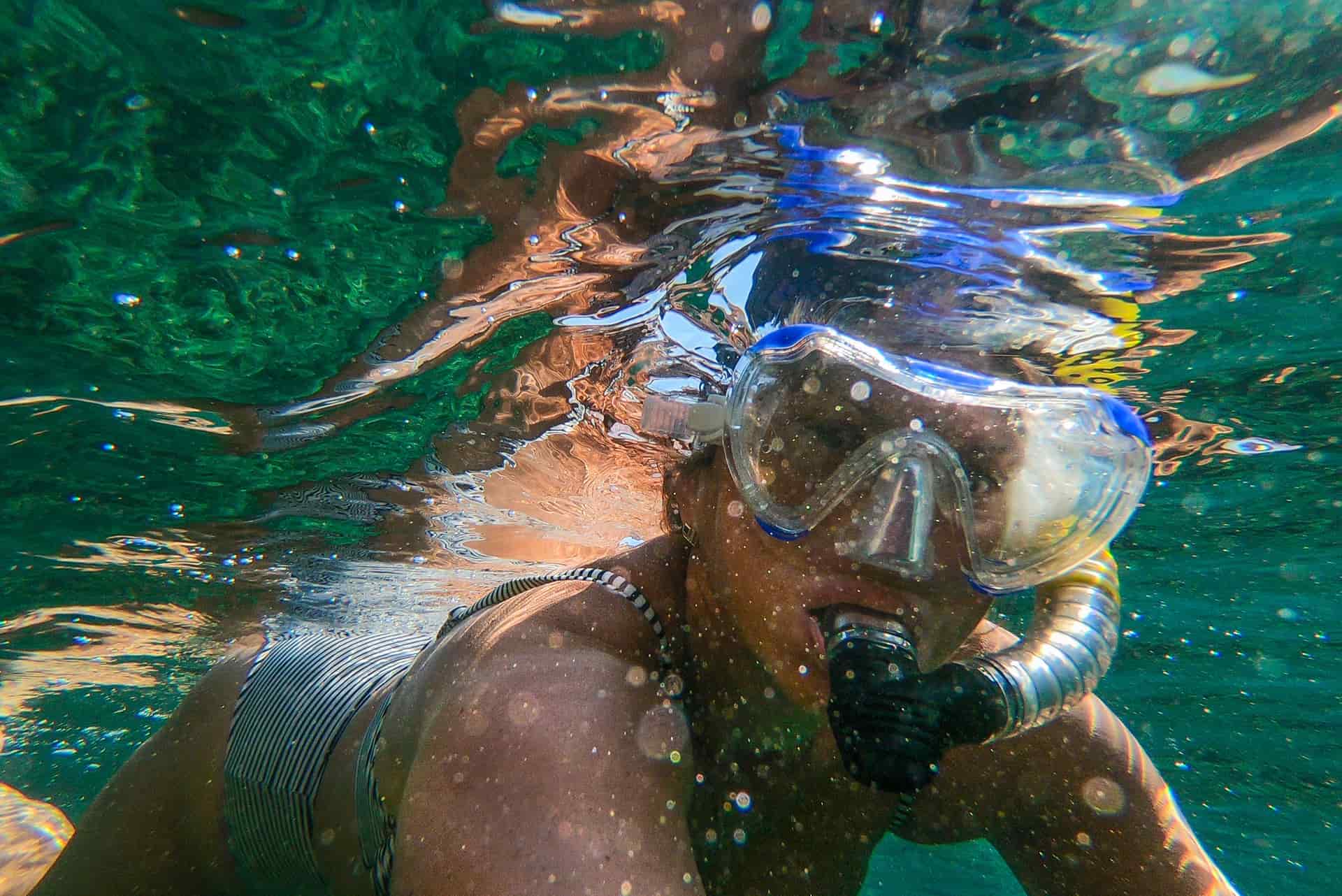
01
Quick picks
| # | Product | Best for | Score | Price |
|---|---|---|---|---|
| 01 | DJI Osmo Action 5 Pro Goes to 20m with no housing at all and publishes a 240-minute runtime — the two numbers that decide a long, wet, cold day. | Long paddles, cold water, and anyone tired of buying a housing to get past 10m | 9.1/ 10 | |
| 02 | 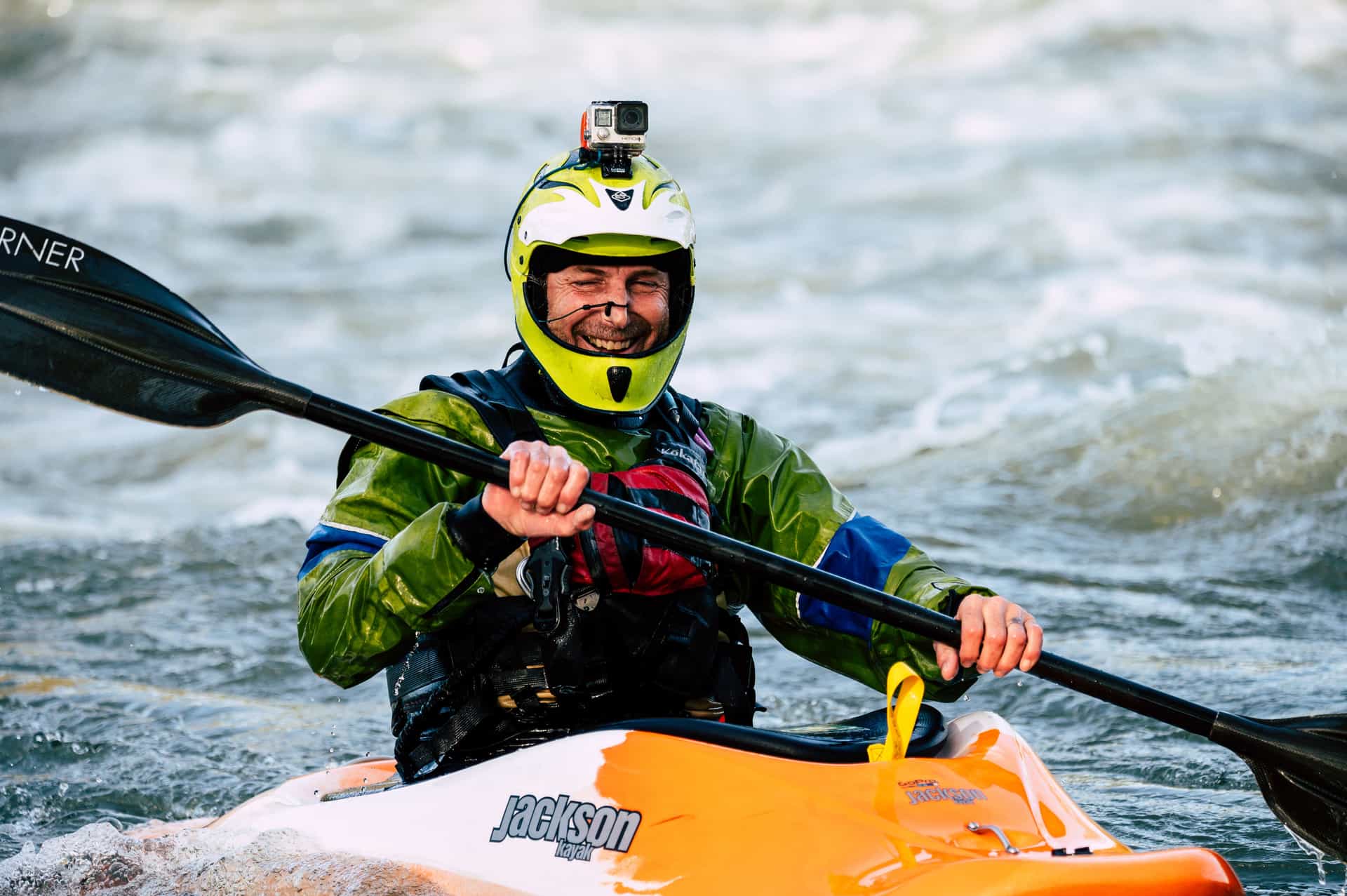 GoPro HERO13 Black The safest default for lake and trail: 33ft without a housing, the steadiest footage in the category, and a mount for literally everything. | Anyone who wants one camera to handle the kayak, the bike and the family trip | 8.8/ 10 | |
| 03 |  Insta360 X5 15m rated, replaceable lenses, and the one camera that means you never have to aim while you are paddling. | Anyone filming themselves on the water who cannot stop to frame a shot | 9.1/ 10 | |
| 04 | 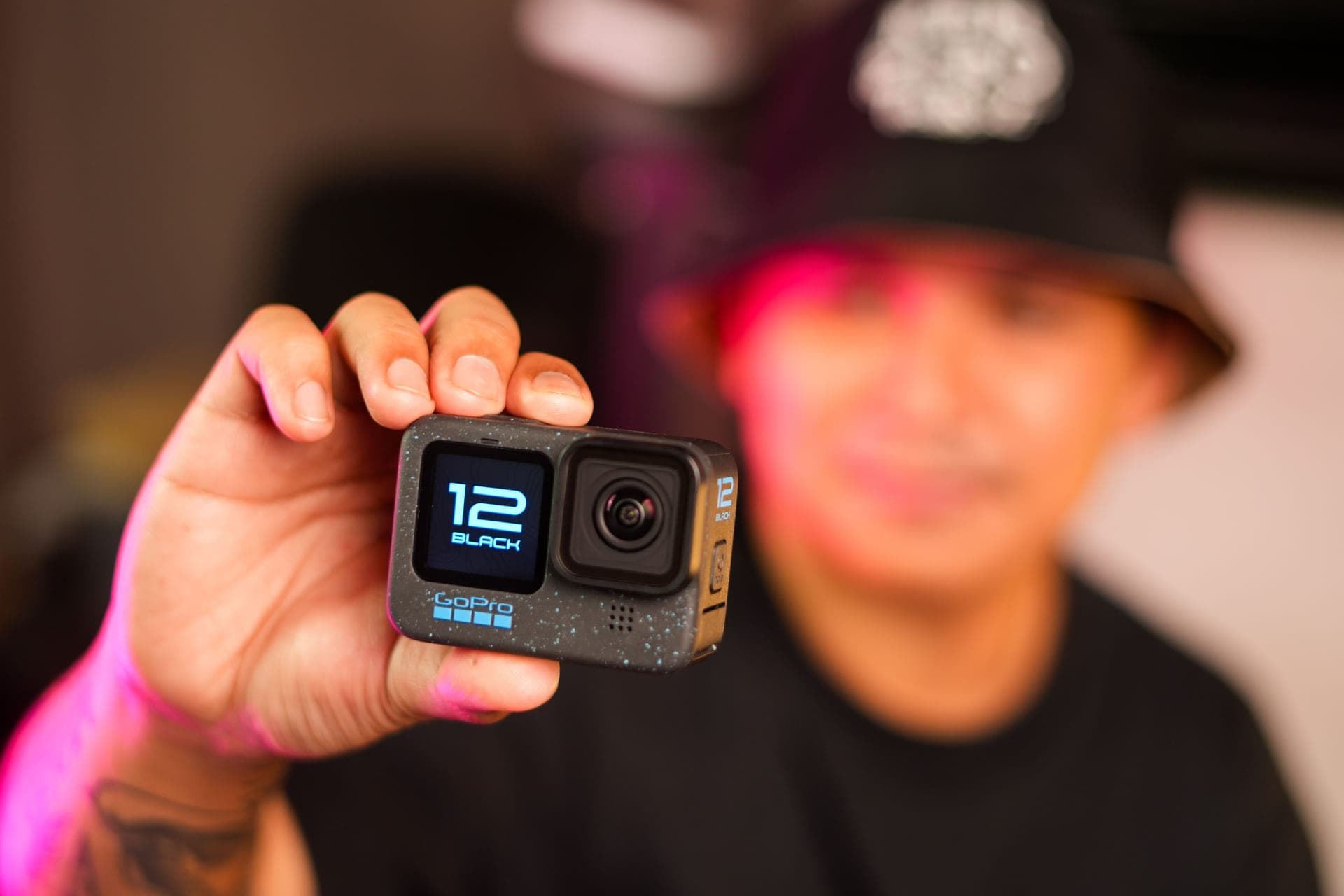 Insta360 Ace Pro 2 The best-looking image of the three flagships, with a flip screen that finally makes a chest-mounted shot something you can frame. | Family trips where you want the footage to look like more than dashcam clips | 8.6/ 10 | |
| 05 |  DJI Osmo Action 4 The previous DJI flagship, still 18m bare and still on shelves — the most water rating per dollar in this list. | Buyers who want deep-water capability without paying flagship money | 8.5/ 10 | |
| 06 | 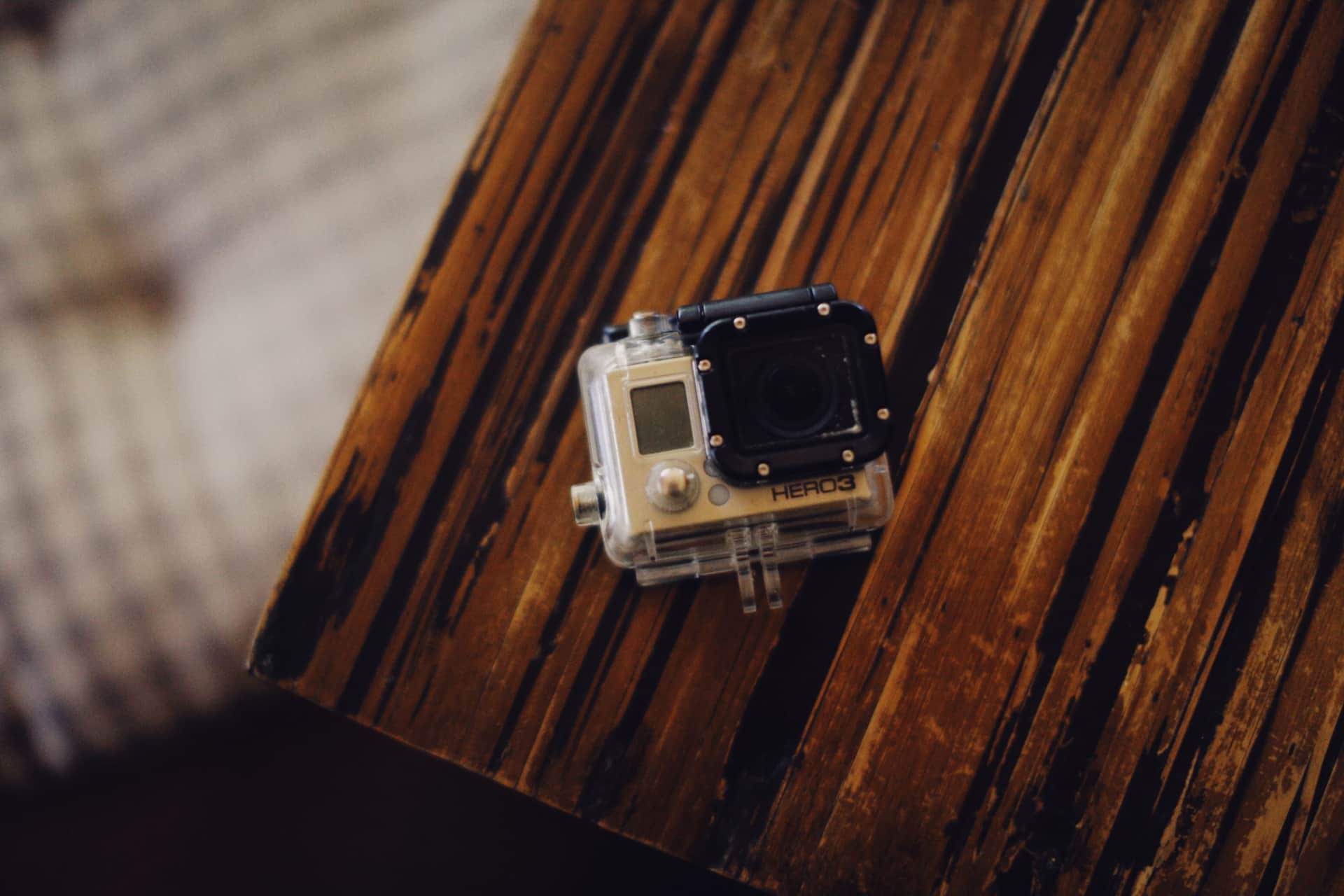 AKASO Brave 8 Lite Two batteries and a bag of mounts in the box at a fraction of flagship money — buy it knowing the stabilization gives up first. | A pool, a calm lake, a first camera you are not precious about | 7.4/ 10 |
Scores are our editorial judgment from published specs and named independent reviews, weighted for lake and trail use — not measurements. We have not tested these units and do not own them.
02
How we picked
We do not lab-test, bench-test or dive-test cameras, and we do not own test units. What we do instead is read the manufacturer's published specifications, read the independent reviews that genuinely do test, read owner reports for the failure modes specs never mention — fogging, salt corrosion, cold battery collapse, mount slippage — and then weight all of it for action cameras used on lake and trail. Where a number is not published, the page says “not published” rather than filling the cell.
The full method, including what we refuse to do, is on the editorial policy page.
- 30%Water survival
- Rated depth without a case, door design, and what the manufacturer actually publishes.
- 25%Stabilization in chop
- A kayak deck and a rooty trail shake in ways a handheld walk test never shows.
- 20%Battery in the cold
- Published runtime, spare-battery cost, and whether it charges while recording.
- 15%Mount ecosystem
- Finger mount, threaded, magnetic — and how much of it you have to re-buy.
- 10%Footage you will keep
- Lens replaceability, low-light behavior, and how much cutting the footage needs.
What a kayak actually does to a camera
Kayaking is not the hardest environment an action camera faces, but it is the most specific. Three things happen on every trip, and they are what the ranking above is built on.
Spray, constantly. A camera mounted low and forward on a sit-on-top collects water on the front element every few strokes. Not enough to trigger the waterproof rating, more than enough to ruin the shot — a bead of water on the lens is the single most common reason paddling footage is unusable. This is a mounting problem more than a camera problem, and the fix is height and position rather than spending more money.
Vibration, at a frequency stabilization struggles with. A hull slapping chop transmits a sharp, high-frequency knock through a deck mount that is genuinely different from the smooth pitch of a bike. It is where the gap between good and mediocre stabilization shows up most clearly, and it is why stabilization carries 25% of the score in our rubric.
Cold, which nobody budgets for. Water is cold long after the air warms up and long after the air cools down. A battery that gives you 90 minutes in July gives you noticeably less in October, and the cameras that publish an operating temperature range — DJI at -20°C, GoPro's Enduro battery at 14°F — are being more useful than the ones that publish another resolution number.
Depth: what you actually need
The honest answer for most kayakers is: less than you think, and more than the camera's rating suggests.
You are not diving. But you will drop the camera, you will roll or be rolled, and rescue practice puts everything underwater at once. A bare rating of 10m or better covers all of that with room to spare. Where the higher ratings earn their money is in confidence — a 20m camera in eight feet of water is not approaching its limit, and that changes how you use it.
| Camera | Rated depth, no housing | With the maker's case |
|---|---|---|
| DJI Osmo Action 5 Pro | 20m | 60m |
| DJI Osmo Action 4 | 18m | 60m |
| Insta360 X5 | 15m (IP68) | Not published |
| Insta360 Ace Pro 2 | 12m (39ft) | 60m |
| GoPro HERO13 Black | 10m (33ft) | 60m |
| AKASO Brave 8 Lite | 10m (IPX8) | 60m |
| GoPro HERO (2024) | 5m (16ft) | Not published |
The full model-by-model breakdown, including what the housings change, is in how deep an action camera can actually go.
The two accessories that matter more than the camera choice
A float. This is the recommendation on this page we feel most strongly about. Every camera here sinks. So does most of the housing range. A bright float attached to the camera — not to a mount you might swap off — turns a dropped camera into a two-minute recovery instead of a replacement purchase. Floats and tethers covers what floats what, including the model-number trap that catches people buying the wrong GoPro Floaty.
A mount that suits your specific boat. A fishing kayak with accessory track takes a track mount and nothing else comes close. A recreational sit-on-top with no track needs a clamp or an adhesive pad. A sit-inside with a tight cockpit may not want a boom at all. The kayak mount roundup splits by exactly that question, and it is worth answering before you choose a camera, not after.
If you fish from the kayak
Kayak fishing is a different filming problem from paddling: the camera needs to see the rod tip, the water and your hands, often all three at once, and usually from a mast rather than a deck mount. The cameras overlap heavily with this list, but the mounting and framing advice does not — the kayak fishing roundup covers it properly.
03
Every pick, in detail
- 20m bare / 60m with case
- 1950mAh · 240 min at 1080p24
- -20° to 45°C
- 9.5
- 9.0
- 9.5
- 8.0
- 9.0
DJI Osmo Action 5 Pro
DJI
Goes to 20m with no housing at all and publishes a 240-minute runtime — the two numbers that decide a long, wet, cold day.
Long paddles, cold water, and anyone tired of buying a housing to get past 10m
It wins here on two published numbers. 20m without the Waterproof Case means a capsize, a rescue practice or a dropped camera in eight feet of water is a non-event — you are nowhere near the rating. And 240 minutes at 1080p/24 with the screens off is the longest runtime figure any manufacturer in this group publishes, on a day where cold is already working against you.
The -20°C operating range is the third thing, and it is the one that matters in October. A camera that keeps working when the air is near freezing is worth more on a lake than an extra 1.3K of resolution nobody will notice.
- 20m without the Waterproof Case — double the bare-camera depth of the HERO13 Black
- DJI publishes 240 minutes of recording at 1080p/24 with screens off, the longest figure in this set
- Rated to -20°C, which matters more on an October lake than any resolution number
- 1/1.3-inch sensor holds detail when the light goes flat
- Mount ecosystem is smaller than GoPro's, and magnetic quick-release adapters are their own purchase
- 146g — the heaviest of the flagship three
- Fewer third-party mounts and filters exist for it
Specs from DJI Osmo Action 5 Pro published specifications.
- 33ft (10m), no housing
- 1900mAh Enduro
- 1.5h at 5.3K30 / 2.5h at 1080p30
- 8.0
- 9.5
- 8.5
- 9.5
- 9.0
GoPro HERO13 Black
GoPro
The safest default for lake and trail: 33ft without a housing, the steadiest footage in the category, and a mount for literally everything.
Anyone who wants one camera to handle the kayak, the bike and the family trip
If you already own GoPro mounts, this is almost certainly the right buy regardless of what the depth column says — the mount ecosystem is genuinely the largest, and adapters are a tax you avoid. On a kayak that matters more than it sounds, because kayak mounting is the fiddliest mounting problem in this whole category.
HyperSmooth 6.0 with AutoBoost is the steadiest published stabilization here, which shows up most in chop rather than on flat water. The 33ft rating is the compromise: fine for everything a paddler normally does, short of the DJI if you expect to be under the water rather than on it.
- HyperSmooth 6.0 with AutoBoost is the steadiest stabilization we can find published figures for
- Built-in mounting fingers plus 1/4-20 threads — it fits the GoPro ecosystem and a normal tripod
- Enduro battery is rated to keep full camera functionality down to 14°F (-10°C)
- Replaceable lens cover, so a scratched lens is a $20 problem and not a $400 one
- 33ft is shallower than the DJI and it is the shallowest of the three flagships
- Anything past 33ft needs the separate Protective Housing
- HB-Series lenses and ND filters are all extra purchases
Specs from GoPro HERO13 Black published specifications.
- IP68 to 49ft (15m)
- 2400mAh · ~88 min at 8K30
- User-replaceable
- 9.5
- 9.5
- 9.0
- 8.5
- 7.5
Insta360 X5
Insta360
15m rated, replaceable lenses, and the one camera that means you never have to aim while you are paddling.
Anyone filming themselves on the water who cannot stop to frame a shot
This is the pick if you paddle alone. You cannot stop mid-stroke to reframe, and a 360 camera means you never have to — you point it at nothing, paddle, and choose the angle afterwards. On an invisible pole mount it produces the third-person shot that flat cameras simply cannot get without a second person.
15m and user-replaceable lenses make it the most water-appropriate 360 camera sold. The cost is real: every clip needs a reframing pass before anyone else can watch it, which is why it sits at three rather than one.
- 15m IP68 is the deepest bare rating of any camera on this site
- User-replaceable lenses — the single biggest fix for the 360 format's worst failure mode
- 185 minutes in Endurance mode at 5.7K24, which is a whole day of clips
- Invisible-selfie-stick reframing means you point the camera at nothing and pick the angle later
- Exposed lenses still scratch; lens guards are a purchase, not an option
- Every clip needs a reframing pass before anyone else can watch it
- 8K30 files are large and the edit is slower than flat footage
Specs from CineD, Insta360 X5 announcement with published specifications.
- 39ft (12m) / 60m with dive case
- 1800mAh · 180 min published
- 1/1.3" with Leica lens
- 8.5
- 8.5
- 9.0
- 7.5
- 9.5
Insta360 Ace Pro 2
Insta360
The best-looking image of the three flagships, with a flip screen that finally makes a chest-mounted shot something you can frame.
Family trips where you want the footage to look like more than dashcam clips
The best-looking footage in this group by a clear margin, and 12m clears anything a paddler does on the surface. The flip screen is the underrated part: on a kayak you are usually in front of the camera, not behind it, and being able to see the frame before you commit to an angle saves a trip's worth of badly composed clips.
It sits at four rather than higher because the mount ecosystem is smaller and, on the water, mounting is the harder problem.
- 8K30 with a 1/1.3-inch sensor — the most detail in the group
- 12m bare, which clears every snorkel depth without a housing
- 180-minute published battery life and 80% charge in 18 minutes
- Flip screen means you can frame a shot you are standing in front of
- 12m is still short of the DJI's 20m
- The dive case is a separate purchase for anything past 12m
- Fewer mount options than GoPro, and an adapter tax if you switch
Specs from Insta360 Ace Pro 2 published specifications.
- 18m bare / 60m with case
- 1770mAh · 160 min at 1080p24
- -20° to 45°C
- 9.0
- 8.5
- 8.5
- 8.0
- 8.0
DJI Osmo Action 4
DJI
The previous DJI flagship, still 18m bare and still on shelves — the most water rating per dollar in this list.
Buyers who want deep-water capability without paying flagship money
Still 18m bare, still rated to -20°C, and usually a good deal cheaper than anything above it. If budget is the constraint and depth is the priority, this is the most water rating per dollar on the page.
The 160-minute runtime against the Action 5 Pro's 240 is the trade, along with a dimmer front screen. Neither ends a paddling day.
- 18m without a case still beats every current GoPro by a wide margin
- Same 1/1.3-inch sensor size as the Action 5 Pro
- Rated to -20°C like its replacement
- Usually the cheapest way into serious bare-camera depth
- 160 minutes published against the Action 5 Pro's 240
- Superseded, so accessories and support will taper off first
- No front OLED — the Action 5 Pro's front screen is genuinely more useful for framing
Specs from DJI Osmo Action 4 published specifications.
- IPX8 10m / 60m with case
- 2 × 1550mAh included
- 140 min at 4K / 150 min at 1080p
- 7.5
- 6.5
- 8.0
- 8.5
- 6.5
AKASO Brave 8 Lite
AKASO
Two batteries and a bag of mounts in the box at a fraction of flagship money — buy it knowing the stabilization gives up first.
A pool, a calm lake, a first camera you are not precious about
Included because the price is genuinely different and the IPX8 10m rating is real. Two batteries and a set of mounts in the box means it is usable on day one with nothing else bought.
The honest limit is stabilization. On flat water at dawn it is fine. In chop, or on a river, SuperSmooth gives up in a way HyperSmooth and RockSteady do not, and no setting recovers it. Buy it knowing which of those two days you paddle.
- IPX8 to 10m bare, which matches the HERO13 Black's rating on paper
- Ships with two batteries, a charger and seven mounts — nothing else to buy on day one
- 4K60 and dual screens at a price well under the flagships
- Uses GoPro-standard two-prong mounting, so the whole accessory world fits
- SuperSmooth stabilization is a step behind HyperSmooth and RockSteady in chop
- The 60m rating belongs to the separate housing, not the camera
- Low light is where the price shows most
Specs from AKASO Brave 8 Lite published specifications.
04
What decides this category
Bare depth rating, not the number on the box
A camera advertised as “waterproof to 60m” is almost always a camera rated to 10m inside a housing rated to 60m. Those are different products with different failure modes: a bare camera fails only if the door seal fails, a housed camera fails if a grain of sand lands on an O-ring. For kayaking, the bare rating is the one to shop on.
Stabilization, measured in chop and not on a footpath
Every review of these cameras walks down a street with one in each hand. That test tells you almost nothing about a hull slapping into short chop. The published stabilization systems — HyperSmooth 6.0, RockSteady 3.0, FlowState — all handle smooth motion beautifully; where they separate is sharp, repetitive impact, which is exactly what a kayak deck delivers. The stabilization comparison works through what each one does differently.
Battery, at the temperature you actually paddle in
Read the conditions attached to any runtime figure. DJI's 240 minutes is at 1080p/24 with RockSteady on, Wi-Fi off and screens off — a genuinely sensible test, and nothing like how most people shoot. GoPro's 1.5 hours at 5.3K30 is closer to real use and correspondingly shorter. Either way, carry a spare from autumn onwards, and carry it somewhere warm. Batteries and power banks covers which spare and where to keep it.
Mount ecosystem, because that is what you buy next
The two-prong GoPro finger mount has become the closest thing this category has to a standard, and most brands either use it or adapt to it. “Adapt to it” means an adapter, and adapters add height, flex and one more thing to lose overboard. Mount compatibility covers what genuinely fits what.
What we would skip
A gimbal. Electronic stabilization has closed that gap, and a gimbal on a kayak is another thing to charge, keep dry and rebalance — the reasoning in full is in do you need a gimbal. Also skip a dive housing unless you are genuinely going below about 30ft: on the surface it muffles the audio and adds a fogging risk you did not have before.
05
Questions people actually ask
01Do I need a waterproof case for kayaking?
Almost certainly not. Every camera on this list except the GoPro HERO (2024) is rated to at least 10m without any housing, which covers capsizes, rescue practice and dropping it in the shallows. A case only becomes necessary if you are going deeper than the camera's bare rating — and on the surface it costs you audio quality and adds a fogging risk.
02Will my action camera float if I drop it?
No. Every camera here sinks, and so does most of the housing range. This is the single most common way people lose an action camera on the water. Fit a float to the camera itself before your first trip — the floats and tethers guide covers which float fits which camera, including the model-number trap that catches GoPro owners.
03Where should I mount the camera on a kayak?
Higher and further back than instinct suggests. Low and forward is the easiest place to reach and the worst place for the lens, because spray lands on it every few strokes. A track mount behind the seat, a clamp on a rail, or a boom off the side all produce a drier lens and a more interesting angle — the kayak mounting guide works through each position.
04How long will the battery last on the water?
Less than the box says, especially in cold water. Published figures are measured at room temperature, at low resolution, with the screens off. DJI publishes 240 minutes at 1080p/24 for the Osmo Action 5 Pro and 160 for the Action 4; GoPro publishes over 1.5 hours at 5.3K30 for the HERO13 Black. Treat those as ceilings, not expectations, and carry a spare.
05Is a 360 camera better than a normal action camera for kayaking?
It is better at one specific thing: filming yourself when both hands are busy. You point it at nothing and pick the angle afterwards, which is genuinely transformative for solo paddling. The cost is an editing pass on every clip. The 360 versus flat comparison lays out both sides.
06Can I use these in salt water?
Yes, and the rinse afterwards matters more than the camera you chose. Salt left to dry in a door seal or a mount thread is how cameras and mounts die early. The salt water care guide has the routine, including how quickly it needs to happen.
06
Read this next
The best kayak camera mounts
Camera chosen. Now attach it to a boat that is moving and wet.
Floats, tethers and not losing your camera
The cheapest accessory on the site, and the one that saves the most money.
Best action camera for kayak fishing
Same water, different framing problem — the rod tip has to be in shot.
Best waterproof action cameras
The wider list, ranked purely on what survives submersion.
How to film yourself paddling
The rigs that work when both of your hands are on a paddle.
07
Sources
- GoPro HERO13 Black published specifications
- DJI Osmo Action 5 Pro specifications
- DJI Osmo Action 4 specifications
- CineD, Insta360 X5 announcement with published specifications
- Insta360 Ace Pro 2 published specifications
- AKASO Brave 8 Lite published specifications
Specifications are quoted from the manufacturer pages above as they read on the dates shown. Where a figure is not published, this site says so rather than estimating one. We have not tested these products.