The best action cameras for sea kayaking
A lake paddle forgives a short battery. A four-hour crossing in salt and swell does not forgive anything.
Part of On the Water.
We earn a commission if you buy through our links, at no extra cost to you. It never changes what we recommend or the order we rank it in — how this works.
The DJI Osmo Action 5 Pro is the best action camera for sea kayaking, because sea kayaking is decided by endurance and margin rather than by image quality. It publishes 240 minutes of recording at 1080p/24 — the longest figure of any camera here — is rated to 20m bare so spray, swell and a capsize are nowhere near its limit, and holds a -20°C operating range for cold mornings on open water. Take the Insta360 X5 instead if you want third-person footage of yourself paddling without ever aiming a camera, and the GoPro HERO13 Black if you already own GoPro mounts and want the steadiest footage in chop.
01
Quick picks
| # | Product | Best for | Score | Price |
|---|---|---|---|---|
| 01 | 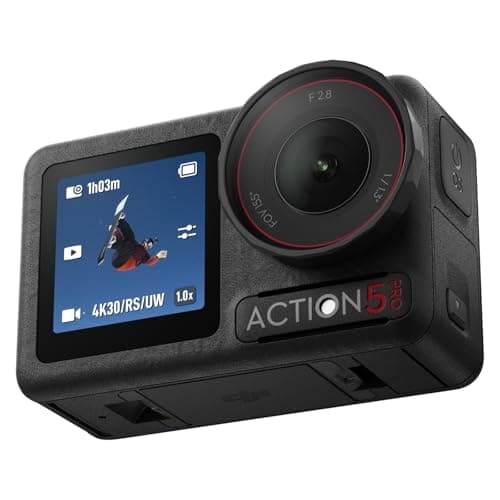 DJI Osmo Action 5 Pro Goes to 20m with no housing at all and publishes a 240-minute runtime — the two numbers that decide a long, wet, cold day. | Long paddles, cold water, and anyone tired of buying a housing to get past 10m | 9.1/ 10 | |
| 02 | 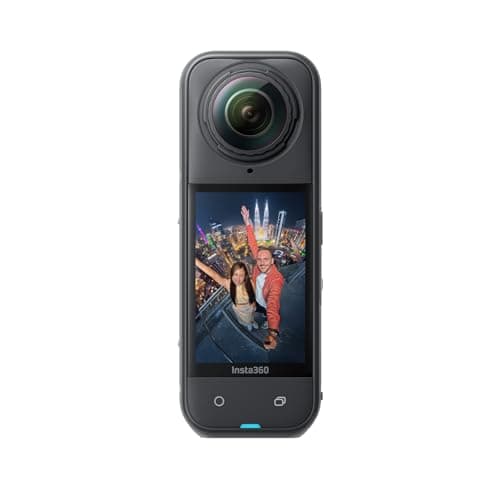 Insta360 X5 15m rated, replaceable lenses, and the one camera that means you never have to aim while you are paddling. | Anyone filming themselves on the water who cannot stop to frame a shot | 9.1/ 10 | |
| 03 | 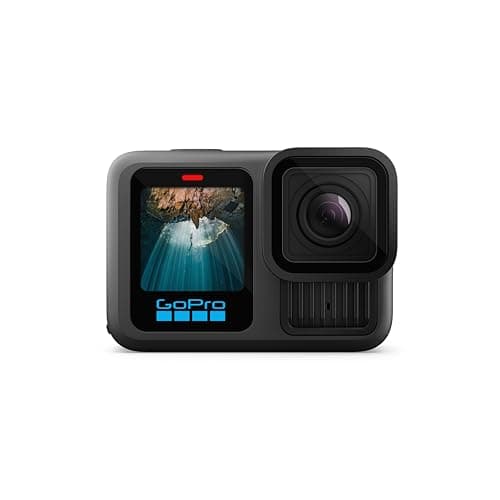 GoPro HERO13 Black The safest default for lake and trail: 33ft without a housing, the steadiest footage in the category, and a mount for literally everything. | Anyone who wants one camera to handle the kayak, the bike and the family trip | 8.8/ 10 | |
| 04 | 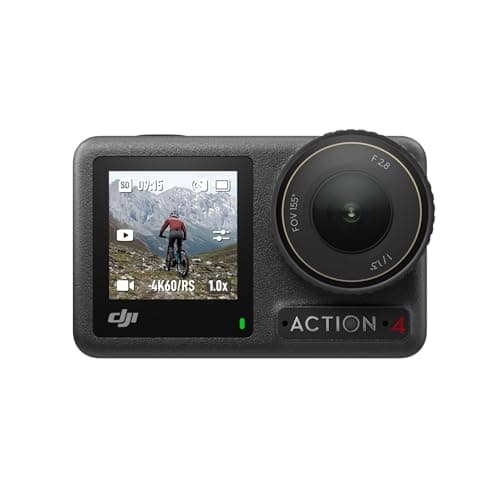 DJI Osmo Action 4 The previous DJI flagship, still 18m bare and still on shelves — the most water rating per dollar in this list. | Buyers who want deep-water capability without paying flagship money | 8.5/ 10 | |
| 05 |  RAILBLAZA Camera Boom 600 R-Lock A 750mm boom that gets the camera off the hull and far enough out to show the boat, the paddle and the water at once. | Wide over-the-shoulder shots from a sit-on-top or fishing kayak | 8.5/ 10 |
Scores are our editorial judgment from published specs and named independent reviews, weighted for lake and trail use — not measurements. We have not tested these units and do not own them.
02
How we picked
We do not lab-test, bench-test or dive-test cameras, and we do not own test units. What we do instead is read the manufacturer's published specifications, read the independent reviews that genuinely do test, read owner reports for the failure modes specs never mention — fogging, salt corrosion, cold battery collapse, mount slippage — and then weight all of it for action cameras used on lake and trail. Where a number is not published, the page says “not published” rather than filling the cell.
The full method, including what we refuse to do, is on the editorial policy page.
- 30%Water survival
- Rated depth without a case, door design, and what the manufacturer actually publishes.
- 25%Stabilization in chop
- A kayak deck and a rooty trail shake in ways a handheld walk test never shows.
- 20%Battery in the cold
- Published runtime, spare-battery cost, and whether it charges while recording.
- 15%Mount ecosystem
- Finger mount, threaded, magnetic — and how much of it you have to re-buy.
- 10%Footage you will keep
- Lens replaceability, low-light behavior, and how much cutting the footage needs.
What makes sea kayaking different from lake paddling
We rank cameras differently on this page than on the general kayaking roundup, and it is worth saying exactly why rather than pretending the two are the same page with different words.
You cannot stop. On a lake you can raft up, open a hatch, swap a battery and carry on. On an exposed crossing with wind and tide running, taking a hand off the paddle to fiddle with a camera ranges from unwise to genuinely dangerous. Everything about the setup has to be decided on the beach.
It is salt, every time. Salt is a slow failure rather than a fast one. It crystallizes in the door seal and around the ports as the camera dries, and the damage accumulates over weeks of trips rather than announcing itself on the day. This is the single biggest difference in long-term camera survival between a lake paddler and a sea paddler.
The days are long and often cold. A four-hour crossing is a normal day out. Published runtimes assume modest settings and screens off; cold takes a further bite out of them. Runtime stops being a convenience specification and becomes the one that decides what you come home with.
The camera will be fully submerged at some point. Not necessarily deep — a wet exit, a re-entry roll, a wave filling the cockpit. It is not a diving question and it is absolutely a “rated bare” question.
The horizon is the subject. Open water footage is a flat composition with nothing in the foreground, which is why so much of it is boring. Fixing that is a mounting problem, not a camera problem.
| Camera | Published runtime | Bare depth | Cold rating | Battery swappable |
|---|---|---|---|---|
| DJI Osmo Action 5 Pro | 240 min at 1080p24 | 20m | -20° to 45°C | Yes, 1950mAh |
| DJI Osmo Action 4 | 160 min at 1080p24 | 18m | -20° to 45°C | Yes, 1770mAh |
| Insta360 X5 | 185 min Endurance at 5.7K24 | 15m (IP68) | Not published | Yes, 2400mAh |
| GoPro HERO13 Black | 1.5h at 5.3K30 / 2.5h at 1080p30 | 10m (33ft) | Enduro to 14°F (-10°C) | Yes, 1900mAh Enduro |
| Insta360 Ace Pro 2 | 180 min published | 12m (39ft) | Not published | Yes, 1800mAh |
Salt is the real enemy, and the fix is free
Every camera on this page survives being dunked in salt water. What kills them is salt water left to dry on them, repeatedly, for a season.
As salt water evaporates it leaves crystals, and crystals form exactly where you do not want them: in the groove the battery-door gasket seats into, around the microphone and speaker membranes, in the lens thread, in the button travel. The seal no longer seals cleanly, the buttons get gritty, and the depth rating you bought quietly stops applying. None of this shows up on the day of the trip.
The fix takes five minutes and the order matters: rinse in fresh water with the doors shut, soak rather than scrub, and only open anything once the outside is completely dry. Doing it in the wrong order introduces salt water to the inside of the camera, which is worse than not rinsing at all. The full routine is in salt water care and rinsing, and it is the highest-value five minutes in this entire category.
Where to put it so the footage is not boring
Open water is the hardest thing to film well, because there is nothing in the frame to give it scale. A camera pointed at the sea records gray. The fix is always to put something in the foreground, and that means the mount, not the camera.
A boom or pole, out and behind. The best sea kayaking shot available: you, the boat and the coast in one frame, with the paddle moving. It needs a deck fitting or a solid rail, and it is the reason a mount appears in the picks above.
A paddle-shaft mount. Cheap, dramatic, and the blade entering the water gives the viewer rhythm and scale for free. The shot is strongest in rough water. Options are in paddle and pole mounts.
Foredeck, pointing back at you. A suction cup or an adhesive mount on the deck forward of the cockpit, aimed at your face and the horizon behind. This is the one that captures the expression on a rough crossing, and it is the angle people actually watch.
What not to do: helmet-only. A head-mounted camera on flat water produces four hours of your own bow and the sea beyond it, with no sense of movement at all. The practical guide is how to mount a camera on a kayak.
Settings for a long day
Shoot 4K/30 or 1080p/60 and leave it there. 5.3K and 8K on a four-hour paddle cost you battery and card space in exchange for resolution nobody will see, and resolution is not what is wrong with open-water footage — composition is. Turn the rear screen off if the camera lets you; it is the biggest single drain after the sensor. Leave stabilization on. If there is spray, wipe the lens before each clip, because a droplet sitting on the front element ruins a twenty-minute take and you will not notice until you are home. The rest is in best settings for water.
03
Every pick, in detail
- 20m bare / 60m with case
- 1950mAh · 240 min at 1080p24
- -20° to 45°C
- 9.5
- 9.0
- 9.5
- 8.0
- 9.0
DJI Osmo Action 5 Pro
DJI
Goes to 20m with no housing at all and publishes a 240-minute runtime — the two numbers that decide a long, wet, cold day.
Long paddles, cold water, and anyone tired of buying a housing to get past 10m
A sea kayak trip is three to six hours of paddling with the camera somewhere you cannot easily reach, which makes runtime the deciding specification rather than a nice-to-have. 240 published minutes at 1080p/24 with screens off is the longest figure in this set by a wide margin, and it means you can leave the camera running through a crossing rather than deciding in advance which twenty minutes are worth recording.
The other two numbers matter for the same reason. 20m bare is not about diving — it is about a wet exit in swell, a wave over the foredeck, and a camera that spends four hours being rained and splashed on with a rating nowhere near its limit. And -20°C means an early start in October is a weather question rather than an equipment one.
Against it: a smaller mount ecosystem than GoPro, magnetic quick-release adapters as a separate purchase, and 146g — the heaviest of the flagships. On a deck mount, none of those three matters much.
- 20m without the Waterproof Case — double the bare-camera depth of the HERO13 Black
- DJI publishes 240 minutes of recording at 1080p/24 with screens off, the longest figure in this set
- Rated to -20°C, which matters more on an October lake than any resolution number
- 1/1.3-inch sensor holds detail when the light goes flat
- Mount ecosystem is smaller than GoPro's, and magnetic quick-release adapters are their own purchase
- 146g — the heaviest of the flagship three
- Fewer third-party mounts and filters exist for it
Specs from DJI Osmo Action 5 Pro published specifications.
- IP68 to 49ft (15m)
- 2400mAh · ~88 min at 8K30
- User-replaceable
- 9.5
- 9.5
- 9.0
- 8.5
- 7.5
Insta360 X5
Insta360
15m rated, replaceable lenses, and the one camera that means you never have to aim while you are paddling.
Anyone filming themselves on the water who cannot stop to frame a shot
The pick if the footage is meant to show you in it. You cannot stop mid-crossing to reposition a camera, and you certainly cannot frame a shot while bracing in beam swell — so the right answer is a camera that does not need aiming. Put the X5 on a pole or a deck boom, record, and choose the angle at home: the coast over your shoulder, your own face, the paddle blade entering the water, all out of one clip.
It is also the most sea-appropriate 360 body on published specs: 15m IP68 is the deepest bare rating of anything on this site, and the lenses are user-replaceable, which matters enormously on a boat that launches off shingle. Lens guards are still a purchase rather than an option. The cost, as always with 360, is a reframing pass on every clip before anyone else can watch it.
- 15m IP68 is the deepest bare rating of any camera on this site
- User-replaceable lenses — the single biggest fix for the 360 format's worst failure mode
- 185 minutes in Endurance mode at 5.7K24, which is a whole day of clips
- Invisible-selfie-stick reframing means you point the camera at nothing and pick the angle later
- Exposed lenses still scratch; lens guards are a purchase, not an option
- Every clip needs a reframing pass before anyone else can watch it
- 8K30 files are large and the edit is slower than flat footage
Specs from CineD, Insta360 X5 announcement with published specifications.
- 33ft (10m), no housing
- 1900mAh Enduro
- 1.5h at 5.3K30 / 2.5h at 1080p30
- 8.0
- 9.5
- 8.5
- 9.5
- 9.0
GoPro HERO13 Black
GoPro
The safest default for lake and trail: 33ft without a housing, the steadiest footage in the category, and a mount for literally everything.
Anyone who wants one camera to handle the kayak, the bike and the family trip
The camera to take if the sea is rough. HyperSmooth 6.0 with AutoBoost is the steadiest stabilization we can find published figures for, and swell is exactly the condition that separates good stabilization from adequate stabilization — a hull pitching through a meter of chop produces footage that most cameras turn into motion sickness. It also has the largest mount ecosystem by a wide margin, which on a sea kayak means there is a properly engineered bracket for the deck line, the rear hatch and the paddle shaft.
Two honest marks against it here. 33ft (10m) is the shallowest bare rating of the three flagships, and the published 1.5 hours at 5.3K30 is short for a crossing — plan on two Enduro batteries, not one. See batteries and power banks.
- HyperSmooth 6.0 with AutoBoost is the steadiest stabilization we can find published figures for
- Built-in mounting fingers plus 1/4-20 threads — it fits the GoPro ecosystem and a normal tripod
- Enduro battery is rated to keep full camera functionality down to 14°F (-10°C)
- Replaceable lens cover, so a scratched lens is a $20 problem and not a $400 one
- 33ft is shallower than the DJI and it is the shallowest of the three flagships
- Anything past 33ft needs the separate Protective Housing
- HB-Series lenses and ND filters are all extra purchases
Specs from GoPro HERO13 Black published specifications.
- 18m bare / 60m with case
- 1770mAh · 160 min at 1080p24
- -20° to 45°C
- 9.0
- 8.5
- 8.5
- 8.0
- 8.0
DJI Osmo Action 4
DJI
The previous DJI flagship, still 18m bare and still on shelves — the most water rating per dollar in this list.
Buyers who want deep-water capability without paying flagship money
The value route to the same approach. 18m bare still beats every current GoPro by a wide margin, it is rated to -20°C like its replacement, and it carries the same 1/1.3-inch sensor. The trade is 160 published minutes against the Action 5 Pro's 240, no front OLED, and a superseded model whose accessories will taper off first. For a paddler who does two or three trips a season rather than twenty, the saving is worth more than the hundred and twenty minutes.
- 18m without a case still beats every current GoPro by a wide margin
- Same 1/1.3-inch sensor size as the Action 5 Pro
- Rated to -20°C like its replacement
- Usually the cheapest way into serious bare-camera depth
- 160 minutes published against the Action 5 Pro's 240
- Superseded, so accessories and support will taper off first
- No front OLED — the Action 5 Pro's front screen is genuinely more useful for framing
Specs from DJI Osmo Action 4 published specifications.
- 31in (750mm)
- Any RAILBLAZA StarPort
- GoPro and 1/4-20 thread
- 8.5
- 7.5
- 9.5
- 9.0
- 8.0
RAILBLAZA Camera Boom 600 R-Lock
RAILBLAZA
A 750mm boom that gets the camera off the hull and far enough out to show the boat, the paddle and the water at once.
Wide over-the-shoulder shots from a sit-on-top or fishing kayak
Not a camera, and the thing that most changes sea kayak footage. A camera on a helmet gives you a shot of your own bow forever; a boom puts it out and behind, so the frame has you, the boat and the coast in it at once — which is the shot that makes a crossing look like a crossing. It mounts through a RAILBLAZA StarPort, so it needs a deck fitting rather than a clamp, and that is the honest limitation: this is a considered installation, not something you add on the beach. The alternatives, including the clamp and suction routes, are in the best kayak camera mounts.
- R-Lock friction joints and a 360-degree rotating platform hold an angle instead of creeping
- UV-stabilized fiberglass-reinforced plastic, which is the right material for a boat that lives outside
- Mounts to any StarPort in seconds and breaks down just as fast for stowing
- Takes GoPro-fitting cameras and anything with a standard 1/4-20 thread
- You need a StarPort installed, which usually means drilling the deck
- 750mm of leverage in wind is real — it moves in a way a deck mount does not
- Long enough to catch a paddle stroke if you place it badly
Specs from RAILBLAZA Camera Boom 600 R-Lock published specifications.
04
What decides this category
Published runtime first, resolution last
On a crossing, a camera that records for four hours at 1080p beats one that records for ninety minutes at 5.3K, every time. Read the manufacturer's figure, then assume you will get less in cold.
Bare depth rating, with margin
You are not diving; you are getting submerged unpredictably. Buy a rating far above where you will actually be, because the rating assumes clean seals and still water and you will have neither.
A swappable battery
Every pick here has one, and it is the reason the GoPro HERO (2024) is not on this page — a built-in battery means the camera is finished when it is finished.
What we would skip
A housing, on a camera already rated past 15m. On open water a housing buys you depth you will never use and costs you audio, adds an O-ring to check in a launch zone and introduces a fogging risk in exactly the warm-air-to-cold-water transition a coast gives you. Spend the money on a second battery and a deck mount instead.
05
Questions people actually ask
01What is the best action camera for sea kayaking?
The DJI Osmo Action 5 Pro, on published figures: 240 minutes of runtime, 20m of bare depth and a -20°C rating are the three numbers a long, cold, salty day actually tests. The Insta360 X5 is the pick if you want third-person footage of yourself without aiming anything.
02Do I need to rinse my camera after sea kayaking?
Yes, every time, and it is the single most valuable habit in this category. Rinse in fresh water with all doors closed, soak rather than scrub, and open nothing until the outside is dry. Salt left to crystallize in the door seal is what eventually defeats the depth rating.
03Where should I mount a camera on a sea kayak?
A boom or pole out and behind for the you-plus-boat-plus-coast shot, a paddle-shaft mount for rhythm and scale, or the foredeck pointing back at you for expression. Avoid a helmet-only setup on open water — it records your own bow for hours.
04Is a 360 camera good for sea kayaking?
Very, because you cannot stop to aim and the X5 removes the need to. You record and choose the angle at home. The cost is a reframing pass on every clip, which is real work if you shoot a lot.
05How many batteries do I need for a day on the sea?
Two as a minimum on anything except the DJI bodies, and three for a full day in cold. Published runtimes are measured at modest settings with screens off, and cold water days come in below them.
06
Read this next
The best action cameras for kayaking
The general case, where a shorter battery is forgivable.
The best action cameras for whitewater kayaking
The other end of the discipline: short, violent, and about mount security.
Salt water care and rinsing
The five minutes after every sea trip that decides the next three seasons.
The best kayak camera mounts
Booms, tracks, clamps and suction, with what each needs on the deck.
How to film yourself paddling
The angles that make paddling footage watchable rather than long.
07
Sources
- DJI Osmo Action 5 Pro specifications
- CineD, Insta360 X5 announcement with published specifications
- GoPro HERO13 Black published specifications
- DJI Osmo Action 4 published specifications
- RAILBLAZA Camera Boom 600 R-Lock published specifications
Specifications are quoted from the manufacturer pages above as they read on the dates shown. Where a figure is not published, this site says so rather than estimating one. We have not tested these products.