Paddle and pole camera mounts
A pole is the only flat-camera way to get the camera off the boat and pointed back at you. It is also the easiest way to lose one.
Part of Mounts.
We earn a commission if you buy through our links, at no extra cost to you. It never changes what we recommend or the order we rank it in — how this works.

01
Quick picks
| # | Product | Best for | Score | Price |
|---|---|---|---|---|
| 01 | Insta360 114cm Invisible Selfie Stick The pole that disappears in a 360 shot — the single accessory that makes a 360 camera worth owning on the water. | Third-person paddling shots from an X-series camera | 7.5/ 10 | |
| 02 |  GoPro El Grande Extension Pole 38 inches of aluminum with a ball-and-socket head, so you change the angle without unmounting the camera. | Reaching out from a boat, or getting the camera down near the water without going in | 7.7/ 10 | |
| 03 | 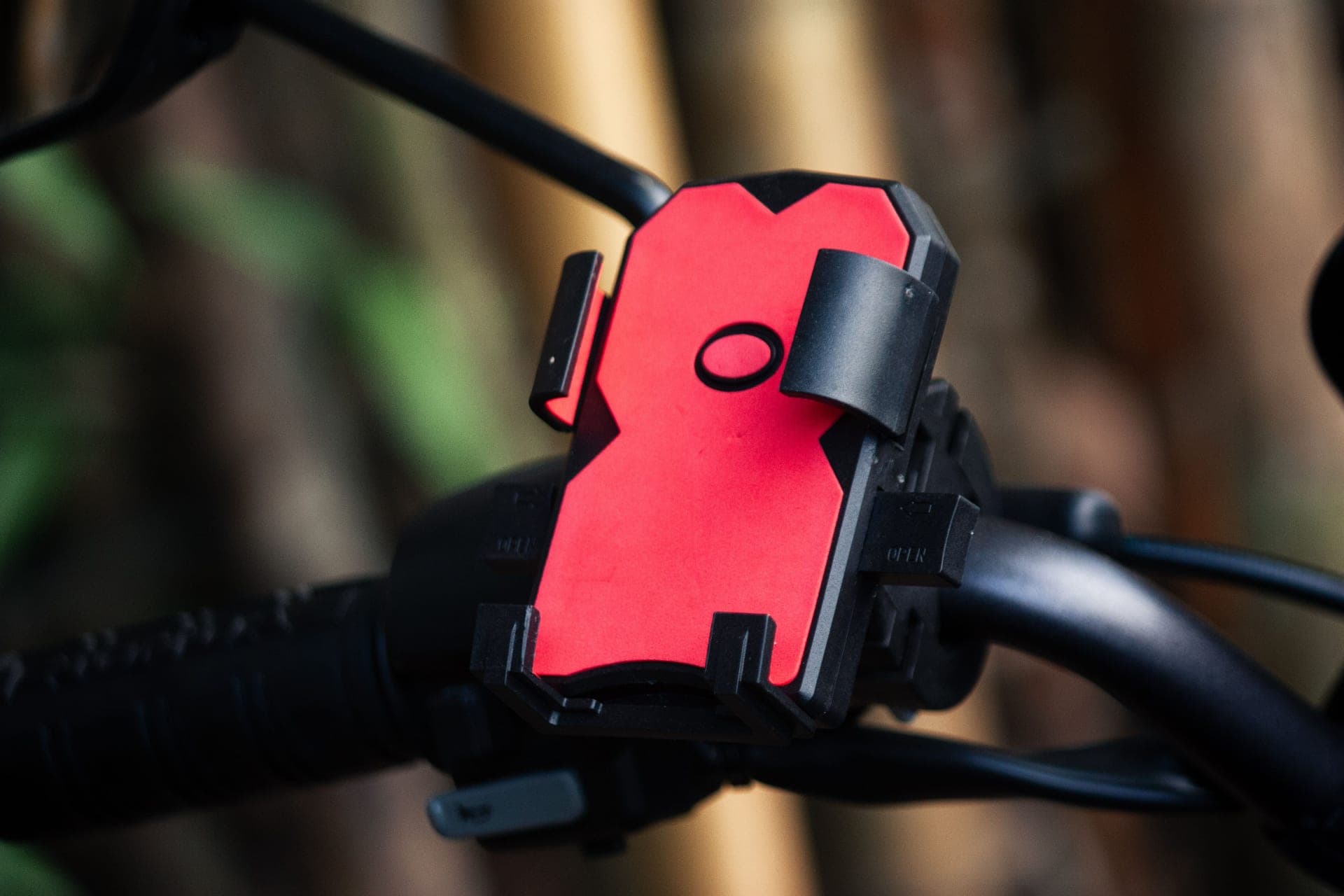 GoPro Handlebar / Seatpost / Pole Mount Fits 9mm to 35mm tubes, which covers handlebars, seatposts, ski poles and — the reason it is here — most paddle shafts. | Bike bars, and the paddle-shaft shot nobody sells a dedicated mount for | 7.8/ 10 | |
| 04 | 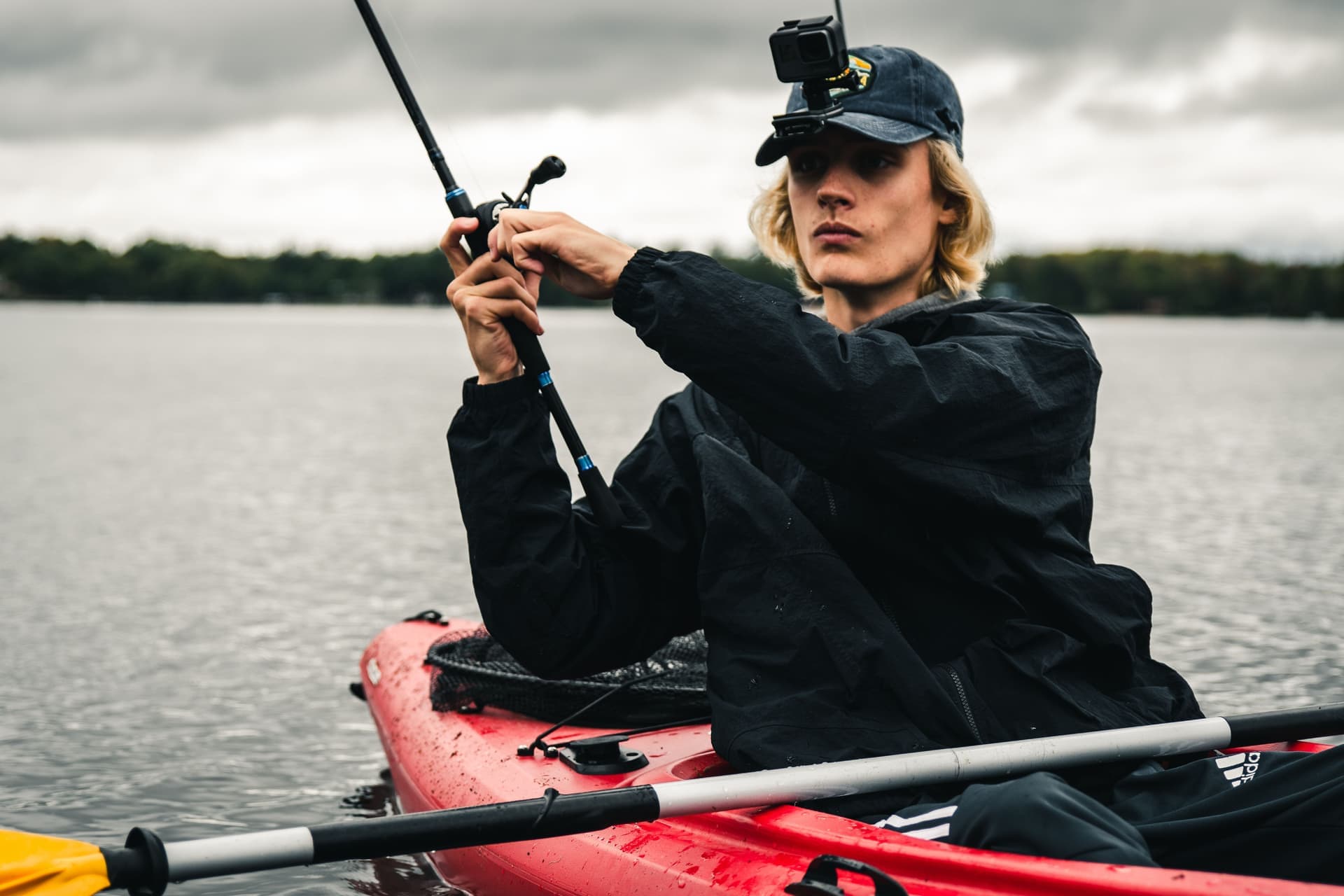 RAILBLAZA Camera Boom 600 R-Lock A 750mm boom that gets the camera off the hull and far enough out to show the boat, the paddle and the water at once. | Wide over-the-shoulder shots from a sit-on-top or fishing kayak | 8.5/ 10 | |
| 05 |  GoPro The Handler Floating Hand Grip A grip that floats bright-orange-end-up when you drop it, with a quick release so the camera moves to a mount without tools. | Handheld water shots — snorkeling, swimming, filming from the boat | 8.2/ 10 |
Scores are our editorial judgment from published specs and named independent reviews, weighted for lake and trail use — not measurements. We have not tested these units and do not own them.
02
How we picked
We do not lab-test, bench-test or dive-test cameras, and we do not own test units. What we do instead is read the manufacturer's published specifications, read the independent reviews that genuinely do test, read owner reports for the failure modes specs never mention — fogging, salt corrosion, cold battery collapse, mount slippage — and then weight all of it for mounts used on lake and trail. Where a number is not published, the page says “not published” rather than filling the cell.
The full method, including what we refuse to do, is on the editorial policy page.
- 35%Hold under load
- Vibration, chop and a wet hull are what actually break a mount.
- 25%Fit range
- Rail width, bar diameter, helmet curve — the spec that decides whether it fits at all.
- 20%Water and salt tolerance
- Stainless vs plated hardware, and what happens after a season of rinses.
- 12%Adjustability
- Getting the angle right on the water, with cold hands.
- 8%Tether point
- A mount with nowhere to clip a leash is a mount that loses cameras.
Why a pole, when you already have mounts
Every boat-mounted camera has the same limitation: it can only see what is in front of it, from where the boat is. It can never see the boat.
A pole moves the camera off the vessel and points it back, which is the difference between footage of a lake and footage of you crossing one. On a flat camera it is the only way to get that shot without a second person in a second boat. On a 360 camera it is what makes the whole format work.
The trade is that a pole is held, extended, over water, and none of the rigid ones float.
| Option | Reach | Hands needed | Floats? |
|---|---|---|---|
| Invisible 360 stick | Up to 114cm | One | No |
| Extension pole | 38in (97cm) | One or two | No |
| Paddle shaft clamp | Paddle length | None — it is on the paddle | Paddle does, camera assembly may not |
| Deck boom | 750mm from a StarPort | None | Mounted to the boat |
| Floating grip | Arm's length | One | Yes — bright end up |
The paddle shaft, which nobody sells a mount for
There is no dedicated paddle mount from any major brand, and the angle is genuinely good: a camera on the shaft, a foot or so above the blade, gives you water entering frame at blade level with the boat behind it.
A standard tube clamp does the job — the GoPro mount's 9 to 35mm range covers most kayak and SUP paddle shafts, and the RAM Tough-Claw covers 0.625in to 1.14in.
Three things to know before you do it. It adds swing weight to a thing you are swinging thousands of times — you will feel it by the end of a long paddle. It will get dunked on every stroke on that side, so it needs a camera rated for it. And a clamp on a carbon shaft needs care: overtightening a plastic clamp on thin carbon is a way to damage an expensive paddle.
The boom, if you will drill
A fixed boom is the answer for anyone who wants the shot without holding anything. The RAILBLAZA Camera Boom 600 swings 750mm out from a StarPort and stays where you put it, which means both hands stay on the paddle and the camera runs the whole trip.
The cost is the base. A StarPort usually means drilling the deck — a reasonable decision on a fishing kayak that already has hardware on it, a bigger one on a new touring boat. Some boats have compatible mounting points already.
Also worth knowing: 750mm of boom in wind has real leverage, and it swings in a way a deck mount does not. Set it where a paddle blade cannot reach it.
Length, and why shorter is usually better
Longer poles are tempting and mostly worse. Leverage scales with length, so a longer pole is heavier to hold, moves more in wind, and puts more strain on whatever clamp is holding it.
For a 360 camera, the invisible-stick effect works at any length — a 60cm extension gives you most of the floating-drone look with far less to manage. For a flat camera on an extension pole, the useful range is about an arm plus the pole, and beyond that you cannot aim it anyway.
Use the shortest pole that gets the shot.
Salt, and aluminum sections
Telescoping aluminum poles are the single most salt-vulnerable item in this whole category. Salt crystallizes in the section joints and then grinds them, and a seized pole section is permanent — there is no recovery.
Extend the pole fully, soak it in fresh water, work the sections, then dry it extended. Five minutes. The salt routine covers the rest of the kit.
03
Every pick, in detail
- 23.3cm to 114.1cm
- Aluminum
- 1/4-20 screw
- 6.5
- 9.0
- 7.0
- 9.0
- 7.0
Insta360 114cm Invisible Selfie Stick
Insta360
The pole that disappears in a 360 shot — the single accessory that makes a 360 camera worth owning on the water.
Third-person paddling shots from an X-series camera
The one that matters if you shoot 360. It vanishes from the footage because it sits exactly on the stitch line, which is what produces the floating third-person shot. Two honest warnings: Insta360 states plainly it is not designed for high-speed use, and it does not float.
- Vanishes from 360 footage, which is the whole reason the format works for self-filming
- Collapses to 23cm and stows in a deck bag
- Standard 1/4-20, so it takes more than just Insta360 cameras
- Light enough to hold out one-handed while the other hand paddles
- Insta360 says plainly it is not designed for high-speed adventures
- Aluminum sections seize if you put them away wet and salty
- It does not float, and a dropped pole with a camera on it sinks fast
Specs from Insta360 114cm Invisible Selfie Stick product page.
- 38in (97cm) extended
- 15in (38cm)
- Integrated ball and socket, 360-degree swivel
- 7.5
- 8.5
- 6.5
- 9.0
- 7.0
GoPro El Grande Extension Pole
GoPro
38 inches of aluminum with a ball-and-socket head, so you change the angle without unmounting the camera.
Reaching out from a boat, or getting the camera down near the water without going in
38 inches of aluminum with an integrated ball-and-socket head, so you change the angle without unmounting. Collapses to 15in for stowing. It does not float, and 38 inches of wet aluminum held out one-handed is heavier than it sounds after ten minutes.
- The integrated ball-and-socket means angle changes without stopping to unmount
- Oversized two-handed grip, which matters when it is wet
- Collapses to 15in for stowing
- Aluminum — stiffer than the plastic poles at the same length
- It does not float; over the side is over the side
- 38in of wet aluminum is heavy held out one-handed
- Salt in the joints is a real maintenance job
Specs from GoPro El Grande product page.
- 0.35" to 1.4" (9 to 35mm) tubes
- 360-degree positioning
- Thumb screw, no tools needed
- 7.0
- 9.0
- 8.0
- 8.5
- 7.0
GoPro Handlebar / Seatpost / Pole Mount
GoPro
Fits 9mm to 35mm tubes, which covers handlebars, seatposts, ski poles and — the reason it is here — most paddle shafts.
Bike bars, and the paddle-shaft shot nobody sells a dedicated mount for
Here for the paddle shaft, which nobody makes a dedicated mount for. The 9-35mm range covers most kayak and SUP paddle shafts, and a camera on the shaft gives you a blade-level view of the water that no other mount produces. It adds swing weight you will feel by the end of a long day.
- The 9-35mm range is wide enough to cover bars, posts, poles and paddle shafts
- Tool-free, so you can move it mid-ride or mid-paddle
- Cheap enough to own two and leave one on the bike
- Rotates a full 360 degrees for the angle you actually want
- Plastic clamp — it will flex on a rough trail in a way an aluminum mount does not
- Oversized bars over 35mm are out of range
- On a paddle shaft it adds swing weight you will feel by the end of the day
Specs from GoPro Handlebar / Seatpost / Pole Mount product page.
- 31in (750mm)
- Any RAILBLAZA StarPort
- GoPro and 1/4-20 thread
- 8.5
- 7.5
- 9.5
- 9.0
- 8.0
RAILBLAZA Camera Boom 600 R-Lock
RAILBLAZA
A 750mm boom that gets the camera off the hull and far enough out to show the boat, the paddle and the water at once.
Wide over-the-shoulder shots from a sit-on-top or fishing kayak
The fixed-pole answer: 750mm swinging out from a StarPort, with R-Lock joints that hold an angle rather than creeping. It frees both hands entirely, which on a paddle is the whole problem a handheld pole does not solve.
- R-Lock friction joints and a 360-degree rotating platform hold an angle instead of creeping
- UV-stabilized fiberglass-reinforced plastic, which is the right material for a boat that lives outside
- Mounts to any StarPort in seconds and breaks down just as fast for stowing
- Takes GoPro-fitting cameras and anything with a standard 1/4-20 thread
- You need a StarPort installed, which usually means drilling the deck
- 750mm of leverage in wind is real — it moves in a way a deck mount does not
- Long enough to catch a paddle stroke if you place it badly
Specs from RAILBLAZA Camera Boom 600 R-Lock published specifications.
- Bright orange end pops to the surface
- Quick release, switches between mounts
- Non-slip construction
- 8.0
- 8.5
- 9.0
- 7.0
GoPro The Handler Floating Hand Grip
GoPro
A grip that floats bright-orange-end-up when you drop it, with a quick release so the camera moves to a mount without tools.
Handheld water shots — snorkeling, swimming, filming from the boat
Not a pole, but the correct tool for most handheld water shots — it floats bright-orange-end-up when you drop it, which none of the poles do. Short reach, and a quick-release base so the camera moves to a mount without tools.
- Floats end-up so you can actually spot it in chop
- Quick-release base means the same camera goes from hand to deck mount in seconds
- Non-slip even with wet or cold hands
- GoPro lists it specifically for surfing, kayaking and wakeboarding
- It floats the grip; a heavy housing on the end changes that calculation
- No wrist strap included in every configuration — add one
- Bulky in a PFD pocket
Specs from GoPro The Handler product page.
04
What decides this category
Does it float?
The first question for anything you hold over water. Rigid poles generally do not. A floating grip does, and a wrist strap makes the difference for everything else.
Match the pole to the format
A 360 camera needs a thin invisible stick to get its signature shot. A flat camera needs reach and a head you can angle. They are not interchangeable.
Shorter than you think
Leverage, weight and wind all scale with length, and the shot rarely improves past about a meter.
Check the clamp against your actual shaft
Paddle shafts vary and carbon is easy to overtighten. Measure, and do not crank a plastic clamp onto thin carbon.
What we would skip
A long rigid pole as your only water mount. It is the highest-risk item here and it needs both a wrist strap and a float on the camera before it is sensible.
05
Questions people actually ask
01Do selfie sticks and extension poles float?
Generally no — the Insta360 invisible stick and the GoPro El Grande are both aluminum and both sink. A floating hand grip is the option that floats, at the cost of reach.
02Is there a paddle mount for an action camera?
Not a dedicated one from the major brands, but a standard tube clamp works — the GoPro mount covers 9 to 35mm, which fits most kayak and SUP paddle shafts. Mind the swing weight and be careful clamping carbon.
03How does an invisible selfie stick work?
It sits exactly on the stitch line between a 360 camera's two lenses, so the software fills that region from the surrounding view and the pole disappears. It only works with a thin pole on a 360 camera.
04How long should a camera pole be?
Shorter than most people buy. Leverage, weight and wind all scale with length, and the shot rarely improves past about a meter. A 60cm stick gets most of the 360 effect.
05How do I stop a telescoping pole seizing?
Extend it fully, soak it in fresh water, work the sections, and dry it extended. Salt in the section joints is the most permanent damage in this category.
06
Read this next
How to film yourself paddling
Where to hold the pole and how long to hold it there.
Best 360 cameras for kayaking
The format the invisible stick exists for.
Floats and tethers
Necessary before you hold anything out over deep water.
Best kayak camera mounts
The boat-mounted alternatives, including the boom base.
Salt water care and rinsing
Aluminum pole sections are the most salt-vulnerable gear you own.
07
Sources
- Insta360 114cm Invisible Selfie Stick product page
- GoPro El Grande extension pole product page
- RAILBLAZA Camera Boom 600 R-Lock specifications
- GoPro Handlebar / Seatpost / Pole Mount product page
- GoPro The Handler product page
Specifications are quoted from the manufacturer pages above as they read on the dates shown. Where a figure is not published, this site says so rather than estimating one. We have not tested these products.