Batteries and power banks for action cameras
Every runtime figure you have read was measured at 1080p with the screens off, at room temperature. Your day is none of those.
Part of Gear.
We earn a commission if you buy through our links, at no extra cost to you. It never changes what we recommend or the order we rank it in — how this works.

01
Quick picks
| # | Product | Best for | Score | Price |
|---|---|---|---|---|
| 01 | GoPro Enduro Battery (HERO13 Black) 1900mAh, and GoPro publishes full camera functionality down to 14°F — the only battery claim on this page that names a temperature. | Cold-water days, and anyone who has watched a camera die at 40 minutes | 8.8/ 10 | |
| 02 | 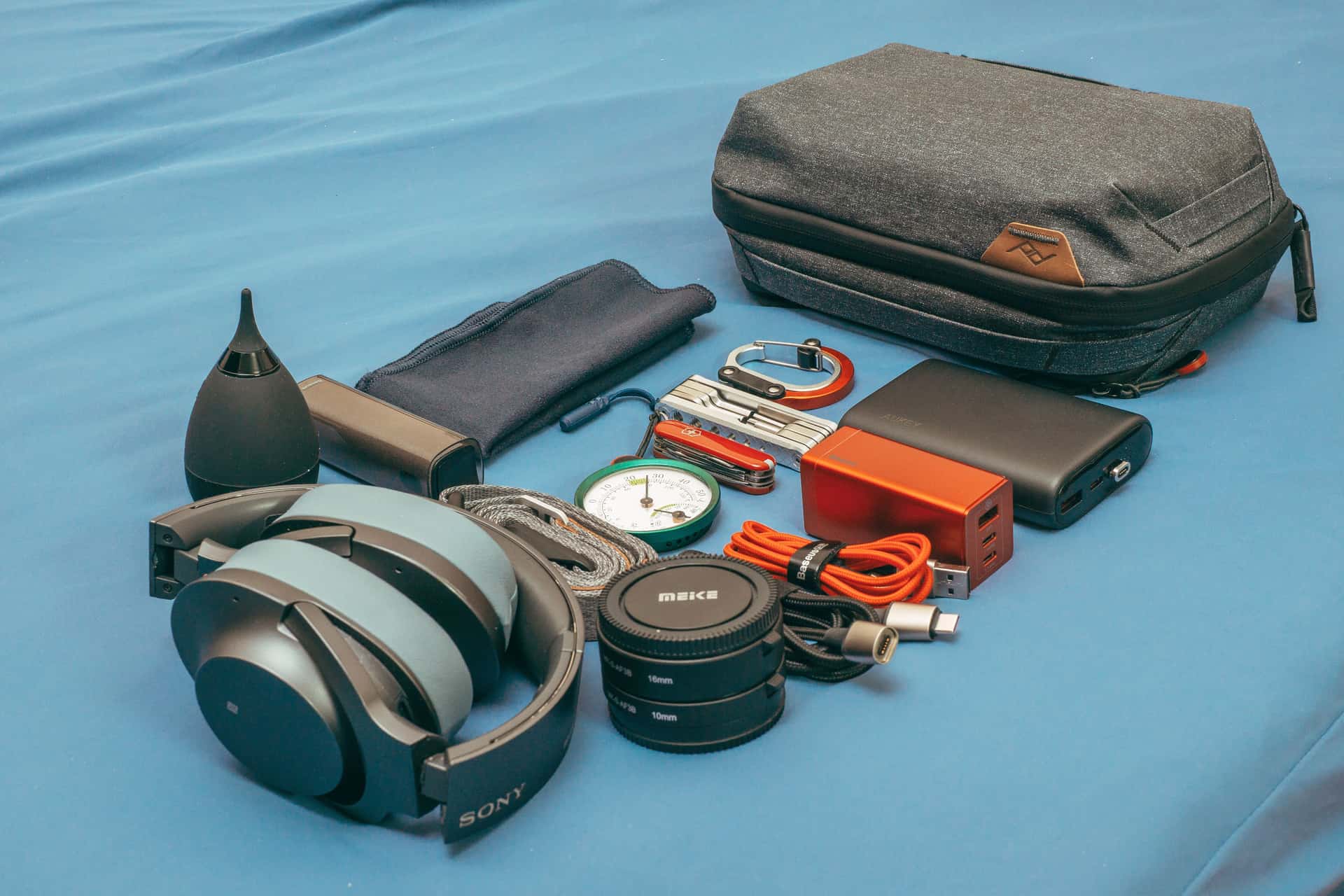 Anker PowerCore Select 10000 10,000mAh in 211 grams — enough to refill a camera several times, small enough that it actually comes with you. | Multi-day trips, and cameras whose battery is not removable | 8.2/ 10 |
Scores are our editorial judgment from published specs and named independent reviews, weighted for lake and trail use — not measurements. We have not tested these units and do not own them.
02
How we picked
We do not lab-test, bench-test or dive-test cameras, and we do not own test units. What we do instead is read the manufacturer's published specifications, read the independent reviews that genuinely do test, read owner reports for the failure modes specs never mention — fogging, salt corrosion, cold battery collapse, mount slippage — and then weight all of it for batteries and power used on lake and trail. Where a number is not published, the page says “not published” rather than filling the cell.
The full method, including what we refuse to do, is on the editorial policy page.
- 35%Real runtime
- Published minutes at the mode you actually record in, not the best case.
- 25%Cold-weather behavior
- The stated operating range, and how fast capacity falls below it.
- 20%Charge while recording
- Whether a long day is possible at all without stopping.
- 12%Bulk on the boat
- Weight and size in a dry bag you also have to paddle with.
- 8%Cell quality signals
- Certifications and warranty, since cell quality itself is never published.
What published runtimes actually mean
Every manufacturer states a runtime, and every one of them is measured under conditions chosen to be repeatable rather than realistic. The conditions are usually stated clearly, and almost nobody reads them.
| Camera | Published runtime | Under what conditions |
|---|---|---|
| DJI Osmo Action 5 Pro | 240 min | 1080p/24, RockSteady on, Wi-Fi off, screens off |
| DJI Osmo Action 4 | 160 min | 1080p/24, room temperature (25°C), RockSteady on, screen off |
| GoPro HERO13 Black | Over 2.5h | 1080p30 |
| GoPro HERO13 Black | Over 1.5h | 5.3K30 |
| Insta360 Ace Pro 2 | 180 min | Not fully stated on the page we read |
| Insta360 X5 | ~88 min / 185 min | 8K30 / 5.7K24 Endurance mode |
| AKASO Brave 8 Lite | 140 min / 150 min | 4K / 1080p |
Two things follow. First, comparing DJI's 240 minutes with GoPro's 1.5 hours is comparing a 1080p figure with a 5.3K figure — GoPro's own 1080p30 number is over 2.5 hours, which is a much closer race. Second, all of these are ceilings. Shooting 4K with the screen on in November will be well under any of them.
Cold is the thing that actually ends days
Lithium cells lose usable capacity as temperature falls. Voltage sags under load, the camera reads that as an empty battery, and it shuts down with charge still in it.
This is why the published temperature figures matter more than the runtime figures. DJI states -20° to 45°C for both Osmo bodies — an operating range for the camera. GoPro states full camera functionality down to 14°F (-10°C) with the Enduro battery — a narrower claim about the battery. Insta360 does not publish an equivalent for the X5, Ace Pro 2 or GO Ultra, so we do not compare them on it.
Spares or a power bank?
Two approaches, and the right one depends on how long you are out and whether your camera has a removable battery at all.
Spare batteries are faster (a ten-second swap), lighter for short trips, and the only option that works properly in the cold — you cannot warm a power bank into producing more charge. They stop scaling past two or three days because you cannot recharge them.
A power bank scales indefinitely, charges a phone and a light as well, and is the only option for cameras with a built-in battery like the GoPro HERO (2024). It is slower, and a charging cable on a moving kayak or bike is a genuine snag risk — charging while recording covers the practicalities.
Most people out for a day want two spares. Most people out for a week want two spares and a power bank.
Third-party batteries
They are cheaper, often by a lot, and the honest position is this: we cannot verify cell quality for any of them, and none that we can find publishes a cold-weather figure.
What is knowable: capacity claims on unbranded cells are frequently optimistic, some cameras restrict features when they detect a non-genuine battery, and lithium cells are the one component in this hobby where a manufacturing shortcut has a genuinely bad failure mode.
For a summer spare that lives in a bag, a reputable third-party cell is a reasonable saving. For cold weather, where the published figure is the whole point, buy the branded one.
Making a battery last longer, for free
Four things, in order of how much they help.
Shoot in bursts, not continuously. By far the biggest lever, and it improves the footage too. Thirty to ninety seconds at a time — the editing guide explains why.
Turn the screen off, or down to a 30-second timeout. The screen is the largest draw after the sensor.
Drop one resolution step. 4K instead of 5.3K, or 5.7K instead of 8K on a 360 camera. Longer battery, cooler running, smaller files, no visible difference on a phone.
Turn Wi-Fi off. It hunts for a phone constantly, and it is included in the off state of every published runtime figure.
03
Every pick, in detail
- 1900mAh
- Full functionality down to 14°F (-10°C)
- 1.5h at 5.3K30 / 2.5h at 1080p30
- 8.5
- 9.5
- 8.0
- 9.5
- 9.0
GoPro Enduro Battery (HERO13 Black)
GoPro
1900mAh, and GoPro publishes full camera functionality down to 14°F — the only battery claim on this page that names a temperature.
Cold-water days, and anyone who has watched a camera die at 40 minutes
The reason to buy the branded battery rather than an unbranded cell is the published cold figure: GoPro states it maintains full camera functionality down to 14°F (-10°C). No third-party cell we can find publishes an equivalent claim, and cold is the thing that actually ends days. Fits the HERO13 Black and the MISSION 1 series — check the model before ordering.
- The published cold figure is the reason to buy this instead of a third-party cell
- Same runtime figures GoPro quotes for the camera itself
- Swappable in seconds, which a built-in battery never is
- Two spares is still cheaper than any power bank setup
- Only fits HERO13 Black and the MISSION 1 series — check before you buy
- Costs several times what an unbranded cell does
- Cold still shortens it; the rating is about functioning, not about full capacity
Specs from GoPro Enduro Battery (HERO13 Black) product page.
- 10000mAh
- 12W total
- 7.44oz (211g)
- 8.5
- 7.0
- 9.0
- 7.5
- 8.5
Anker PowerCore Select 10000
Anker
10,000mAh in 211 grams — enough to refill a camera several times, small enough that it actually comes with you.
Multi-day trips, and cameras whose battery is not removable
The answer for cameras with a built-in battery, and for multi-day trips. 10,000mAh in 211g is several full camera charges plus a phone. 12W output means it tops up overnight rather than fast-charging, and it is not waterproof — it lives in a dry bag.
- Enough capacity for several full camera charges from one brick
- 211g is genuinely pocketable in a PFD or deck bag
- Dual USB-A outputs, so the camera and a phone charge together
- The only workable answer for cameras with a built-in battery
- 12W total output is slow — this tops up overnight, it does not fast-charge
- Micro-USB input, so you may be carrying a second cable type
- Not waterproof. It lives in a dry bag or it does not live long
Specs from Anker PowerCore 10K product page.
04
What decides this category
A published cold figure, if you use it in winter
The only comparable data anyone gives you. GoPro's Enduro states 14°F; DJI states -20°C for the camera. That number is most of what you are paying for.
Model compatibility, checked twice
Batteries are model-specific and often generation-specific. The Enduro for the HERO13 Black fits the HERO13 Black and the MISSION 1 series — not earlier bodies.
Enough power bank, not the biggest one
10,000mAh at around 200g is several camera charges plus a phone. A 20,000mAh brick is twice the weight for a capacity most day trips never touch.
Somewhere dry for the power bank
No consumer power bank is waterproof. On a boat it lives in a dry bag, and the cable run is the thing to plan before you leave.
What we would skip
Unbranded cells for cold-weather use, and any battery whose seller publishes a capacity but no certifications. Also skip carrying a power bank on a single-day trip if your camera takes spares — two spares are lighter and faster.
05
Questions people actually ask
01How long does an action camera battery last?
Less than published, and much less in the cold. DJI states 240 minutes for the Osmo Action 5 Pro at 1080p/24 with screens off; GoPro states over 1.5 hours at 5.3K30. Treat both as ceilings.
02Why does my battery die so fast in cold weather?
Cold reduces usable capacity and makes voltage sag under load, which the camera reads as empty. Keep spares in an inside pocket against your body — a battery that quit cold will often work again once warmed.
03Are third-party action camera batteries safe?
Reputable ones are a reasonable saving for summer use. None that we can find publishes a cold-weather figure, capacity claims are often optimistic, and some cameras restrict features with non-genuine batteries.
04Should I buy spare batteries or a power bank?
Spares for day trips and cold weather — faster and lighter. A power bank for multi-day trips, and as the only option for cameras with a built-in battery.
05How many spare batteries do I need?
Two for a full day if you shoot in bursts, three if it is properly cold. Continuous recording changes that calculation entirely and is worth avoiding for other reasons too.
06What is the easiest way to make a battery last longer?
Stop recording continuously. It is the biggest single lever by a distance, and it makes the footage better as well. After that: screen timeout, one resolution step down, Wi-Fi off.
06
Read this next
Battery life compared
Every published runtime in one table, with its test conditions.
Power on long days
Charging while recording, and the heat trade-off.
Best action cameras for skiing
Where the published cold figures decide the purchase.
Best action camera for kayak fishing
Six-hour days, and how to power them.
The first five accessories
Where a spare battery sits in the buying order.
07
Sources
- GoPro Enduro Battery (HERO13 Black) product page
- DJI Osmo Action 5 Pro specifications
- DJI Osmo Action 4 specifications
- Anker PowerCore 10K product page
Specifications are quoted from the manufacturer pages above as they read on the dates shown. Where a figure is not published, this site says so rather than estimating one. We have not tested these products.