The best action cameras for skiing and snowboarding
Snow is a battery problem and a fogging problem before it is anything else. These five publish the numbers that matter.
Part of On the Trail.
We earn a commission if you buy through our links, at no extra cost to you. It never changes what we recommend or the order we rank it in — how this works.
01
Quick picks
| # | Product | Best for | Score | Price |
|---|---|---|---|---|
| 01 | DJI Osmo Action 5 Pro Goes to 20m with no housing at all and publishes a 240-minute runtime — the two numbers that decide a long, wet, cold day. | Long paddles, cold water, and anyone tired of buying a housing to get past 10m | 9.1/ 10 | |
| 02 |  GoPro HERO13 Black The safest default for lake and trail: 33ft without a housing, the steadiest footage in the category, and a mount for literally everything. | Anyone who wants one camera to handle the kayak, the bike and the family trip | 8.8/ 10 | |
| 03 |  DJI Osmo Action 4 The previous DJI flagship, still 18m bare and still on shelves — the most water rating per dollar in this list. | Buyers who want deep-water capability without paying flagship money | 8.5/ 10 | |
| 04 | 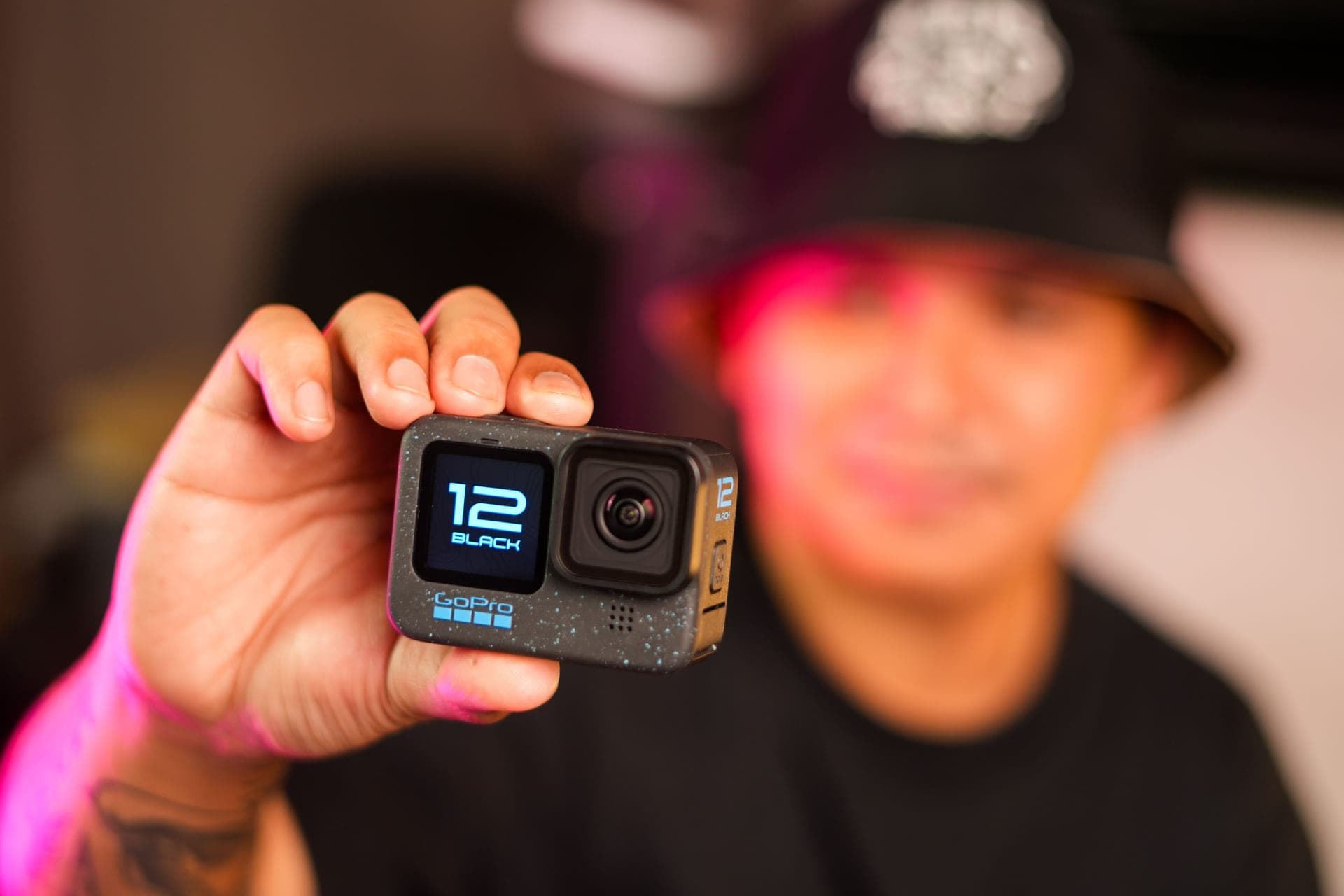 Insta360 Ace Pro 2 The best-looking image of the three flagships, with a flip screen that finally makes a chest-mounted shot something you can frame. | Family trips where you want the footage to look like more than dashcam clips | 8.6/ 10 | |
| 05 |  Insta360 GO Ultra 53 grams and IPX8 to 10m on its own — the camera you actually clip on for a paddle instead of leaving in the dry bag. | Hands-free clips where a full-size camera would never leave the bag | 7.6/ 10 |
Scores are our editorial judgment from published specs and named independent reviews, weighted for lake and trail use — not measurements. We have not tested these units and do not own them.
02
How we picked
We do not lab-test, bench-test or dive-test cameras, and we do not own test units. What we do instead is read the manufacturer's published specifications, read the independent reviews that genuinely do test, read owner reports for the failure modes specs never mention — fogging, salt corrosion, cold battery collapse, mount slippage — and then weight all of it for action cameras used on lake and trail. Where a number is not published, the page says “not published” rather than filling the cell.
The full method, including what we refuse to do, is on the editorial policy page.
- 30%Water survival
- Rated depth without a case, door design, and what the manufacturer actually publishes.
- 25%Stabilization in chop
- A kayak deck and a rooty trail shake in ways a handheld walk test never shows.
- 20%Battery in the cold
- Published runtime, spare-battery cost, and whether it charges while recording.
- 15%Mount ecosystem
- Finger mount, threaded, magnetic — and how much of it you have to re-buy.
- 10%Footage you will keep
- Lens replaceability, low-light behavior, and how much cutting the footage needs.
What cold actually does
Lithium cells lose usable capacity as they get colder — the chemistry slows down, voltage sags under load, and the camera reads it as an empty battery. A camera that gives you 90 minutes at room temperature may give you far less at -10°C, and the drop is not linear.
Two things follow, and neither costs money.
Keep spares against your body. An inside jacket pocket, not the pack lid. A warm battery swapped into a cold camera behaves like a warm battery.
A cold battery is not a dead battery. A battery that quit on the hill will often work again once warmed. Do not throw it away on the lift.
| Camera | Published cold figure | What it covers |
|---|---|---|
| DJI Osmo Action 5 Pro | -20° to 45°C | The camera's operating range |
| DJI Osmo Action 4 | -20° to 45°C (-4° to 113°F) | The camera's operating range |
| GoPro HERO13 Black | Full function to 14°F (-10°C) | With the Enduro battery |
| Insta360 Ace Pro 2 | Not published | — |
| Insta360 GO Ultra | Not published | — |
“Not published” means exactly that. Those cameras may well perform perfectly in cold; we have no figure to cite and we are not going to invent one.
The fogging problem nobody packs for
Skiing produces the textbook condensation scenario, and it catches people out every season.
You take a warm camera out of a warm jacket into cold air. Or you ski a run, stop in a warm lodge, and go back out. Each transition moves warm humid air against cold glass, and it condenses — inside a housing if you are using one, and on the outside of the lens if you are not.
Three practical fixes. Use anti-fog inserts if the camera is in a housing — GoPro publishes that its inserts are reusable up to four times and dry out in an oven at 300°F for five minutes. Let the camera acclimatize outside rather than pulling it straight from a warm pocket. And carry a microfiber cloth somewhere you can reach with gloves on, because external condensation wipes off and internal condensation does not.
Exposure on snow, which is genuinely hard
Snow is the brightest surface most cameras ever meet, and auto exposure consistently underexposes it — the camera sees an overwhelmingly bright frame and pulls it down toward gray, so your snow comes out dull and anyone in shadow comes out black.
If your camera offers exposure compensation, dialing in a positive value is the single most effective change you can make to ski footage. Beyond that, a larger sensor genuinely helps with the range between bright snow and dark trees, which is the argument for the Insta360 Ace Pro 2 on this list.
Where to mount it on snow
Chest mount: steadiest, shows your skis or board and the slope arriving. The best default — and a chest harness adjusts over a ski jacket, which most manufacturers design for.
Helmet side mount: shows where you look, keeps the camera out of the wind better than a top mount, and is the classic ski angle. Helmet mounts covers the hardware.
Pole or handheld: the one that actually shows you skiing rather than the slope in front of you. Cold hands make this harder than it sounds; a grip with a wrist strap is not optional.
Not the goggle strap on its own for a full day — it works, but it puts the camera in the coldest, most exposed position on your body.
03
Every pick, in detail
- 20m bare / 60m with case
- 1950mAh · 240 min at 1080p24
- -20° to 45°C
- 9.5
- 9.0
- 9.5
- 8.0
- 9.0
DJI Osmo Action 5 Pro
DJI
Goes to 20m with no housing at all and publishes a 240-minute runtime — the two numbers that decide a long, wet, cold day.
Long paddles, cold water, and anyone tired of buying a housing to get past 10m
It leads because DJI publishes a number for the camera rather than for a battery: -20° to 45°C. On a chairlift at altitude in January that is the specification that decides whether you are filming or troubleshooting. The 240-minute published runtime is the other half of a full ski day.
- 20m without the Waterproof Case — double the bare-camera depth of the HERO13 Black
- DJI publishes 240 minutes of recording at 1080p/24 with screens off, the longest figure in this set
- Rated to -20°C, which matters more on an October lake than any resolution number
- 1/1.3-inch sensor holds detail when the light goes flat
- Mount ecosystem is smaller than GoPro's, and magnetic quick-release adapters are their own purchase
- 146g — the heaviest of the flagship three
- Fewer third-party mounts and filters exist for it
Specs from DJI Osmo Action 5 Pro published specifications.
- 33ft (10m), no housing
- 1900mAh Enduro
- 1.5h at 5.3K30 / 2.5h at 1080p30
- 8.0
- 9.5
- 8.5
- 9.5
- 9.0
GoPro HERO13 Black
GoPro
The safest default for lake and trail: 33ft without a housing, the steadiest footage in the category, and a mount for literally everything.
Anyone who wants one camera to handle the kayak, the bike and the family trip
GoPro's published cold claim is narrower but real: the Enduro battery maintains full camera functionality down to 14°F (-10°C). Combined with the best stabilization in the category and the widest helmet mounting options, it is a very close second for snow.
- HyperSmooth 6.0 with AutoBoost is the steadiest stabilization we can find published figures for
- Built-in mounting fingers plus 1/4-20 threads — it fits the GoPro ecosystem and a normal tripod
- Enduro battery is rated to keep full camera functionality down to 14°F (-10°C)
- Replaceable lens cover, so a scratched lens is a $20 problem and not a $400 one
- 33ft is shallower than the DJI and it is the shallowest of the three flagships
- Anything past 33ft needs the separate Protective Housing
- HB-Series lenses and ND filters are all extra purchases
Specs from GoPro HERO13 Black published specifications.
- 18m bare / 60m with case
- 1770mAh · 160 min at 1080p24
- -20° to 45°C
- 9.0
- 8.5
- 8.5
- 8.0
- 8.0
DJI Osmo Action 4
DJI
The previous DJI flagship, still 18m bare and still on shelves — the most water rating per dollar in this list.
Buyers who want deep-water capability without paying flagship money
The same -20°C range at a superseded price. If you ski a week a year and do not want to spend flagship money on a camera that lives in a drawer for eleven months, this is the sensible answer.
- 18m without a case still beats every current GoPro by a wide margin
- Same 1/1.3-inch sensor size as the Action 5 Pro
- Rated to -20°C like its replacement
- Usually the cheapest way into serious bare-camera depth
- 160 minutes published against the Action 5 Pro's 240
- Superseded, so accessories and support will taper off first
- No front OLED — the Action 5 Pro's front screen is genuinely more useful for framing
Specs from DJI Osmo Action 4 published specifications.
- 39ft (12m) / 60m with dive case
- 1800mAh · 180 min published
- 1/1.3" with Leica lens
- 8.5
- 8.5
- 9.0
- 7.5
- 9.5
Insta360 Ace Pro 2
Insta360
The best-looking image of the three flagships, with a flip screen that finally makes a chest-mounted shot something you can frame.
Family trips where you want the footage to look like more than dashcam clips
The best image of the group, which matters on snow — bright white with deep shadow is a hard exposure, and a larger sensor handles it better. Insta360 does not publish an operating temperature range for it, so we cannot compare it on the criterion this page leads with.
- 8K30 with a 1/1.3-inch sensor — the most detail in the group
- 12m bare, which clears every snorkel depth without a housing
- 180-minute published battery life and 80% charge in 18 minutes
- Flip screen means you can frame a shot you are standing in front of
- 12m is still short of the DJI's 20m
- The dive case is a separate purchase for anything past 12m
- Fewer mount options than GoPro, and an adapter tax if you switch
Specs from Insta360 Ace Pro 2 published specifications.
- IPX8 to 33ft (10m), camera only
- 53g
- Up to 170 min with the Action Pod
- 7.0
- 8.0
- 7.5
- 8.0
- 8.0
Insta360 GO Ultra
Insta360
53 grams and IPX8 to 10m on its own — the camera you actually clip on for a paddle instead of leaving in the dry bag.
Hands-free clips where a full-size camera would never leave the bag
53 grams means it goes on a goggle strap or inside a jacket, where it stays warm — which is a genuinely clever answer to the cold problem rather than a workaround. The Action Pod is rated separately from the camera; read the two numbers apart.
- 53g means it goes on a hat brim, a PFD strap or a chest magnet and you forget it is there
- IPX8 to 10m for the camera itself, with a 1/1.28" sensor that is far larger than the size suggests
- Action Pod adds a flip screen and the long runtime when you want it
- Removable microSD, so you are not stuck with fixed onboard storage
- The Action Pod is not rated to the same depth as the camera — read the two ratings separately
- Magnetic mounting is convenient but is not a mechanical lock in real chop
- No interchangeable lens cover, so a scratch is permanent
Specs from Insta360 GO Ultra published specifications.
04
What decides this category
A published operating temperature
The only comparable cold-weather data anyone gives you. DJI publishes a camera range; GoPro publishes a battery claim; Insta360 publishes neither for these bodies. Prefer a stated number.
Removable battery
Non-negotiable for a full ski day. Swapping a warm spare takes ten seconds on a chairlift; charging a built-in battery does not happen on the hill at all.
Glove-friendly controls and mounting
A camera you cannot operate with gloves is a camera you stop using by lunchtime. DJI's magnetic quick-release is the easiest here; GoPro's thumb screw is easier with a metal replacement.
Waterproofing, because snow is water
Snow melts on a warm camera and runs into seams. Any rating on this page covers it, but do not treat a snow day as a dry day — dry the camera before opening any door, exactly as you would after a lake.
What we would skip
A dive housing. It adds fogging risk in precisely the conditions where fogging is already the main problem, and you gain nothing — snow is not depth. Also skip an external microphone; wind at speed defeats it.
05
Questions people actually ask
01Which action camera works best in cold weather?
On published figures, the DJI Osmo Action 5 Pro and Action 4, both rated -20° to 45°C for the camera. GoPro publishes full camera functionality to 14°F (-10°C) with the Enduro battery, which is a narrower claim about a different thing.
02Why does my battery die so fast when skiing?
Cold reduces usable capacity, and the camera reads sagging voltage as empty. Keep spares in an inside jacket pocket and swap them warm — a battery that quit on the hill will often work again once warmed.
03How do I stop my camera fogging up on the slopes?
Avoid taking a warm camera straight into cold air, use anti-fog inserts if it is in a housing, and carry a cloth you can reach with gloves. External condensation wipes off; internal condensation does not.
04Can I mount a camera on a ski helmet?
Check your helmet manufacturer's guidance first — some advise against attaching anything to the shell. A goggle strap mount or a chest harness avoids the question, and the chest position produces steadier footage anyway.
05Why does my snow footage look gray and flat?
Auto exposure underexposes snow, because the camera pulls a very bright frame down toward gray. Dial in positive exposure compensation and the snow comes back.
06
Read this next
Batteries and power banks
What the published cold figures mean, and what to carry.
Anti-fog inserts that work
The consumable that prevents the second-biggest snow problem.
Best helmet mounts
Including the certification question worth asking first.
Best action cameras for a helmet
If the helmet position is the one you have settled on.
Best action cameras for hiking
The same cold-battery problem, without the speed.
07
Sources
- DJI Osmo Action 5 Pro specifications
- DJI Osmo Action 4 specifications
- GoPro Enduro Battery (HERO13 Black) product page
- GoPro Anti-Fog Inserts product page
- GoPro HERO13 Black published specifications
- Insta360 Ace Pro 2 published specifications
- Insta360 GO Ultra published specifications
Specifications are quoted from the manufacturer pages above as they read on the dates shown. Where a figure is not published, this site says so rather than estimating one. We have not tested these products.