The best action cameras for a helmet
Weight and profile decide a helmet camera. A heavy camera on a swivel mount is a lever, and levers move.
Part of On the Trail.
We earn a commission if you buy through our links, at no extra cost to you. It never changes what we recommend or the order we rank it in — how this works.
01
Quick picks
| # | Product | Best for | Score | Price |
|---|---|---|---|---|
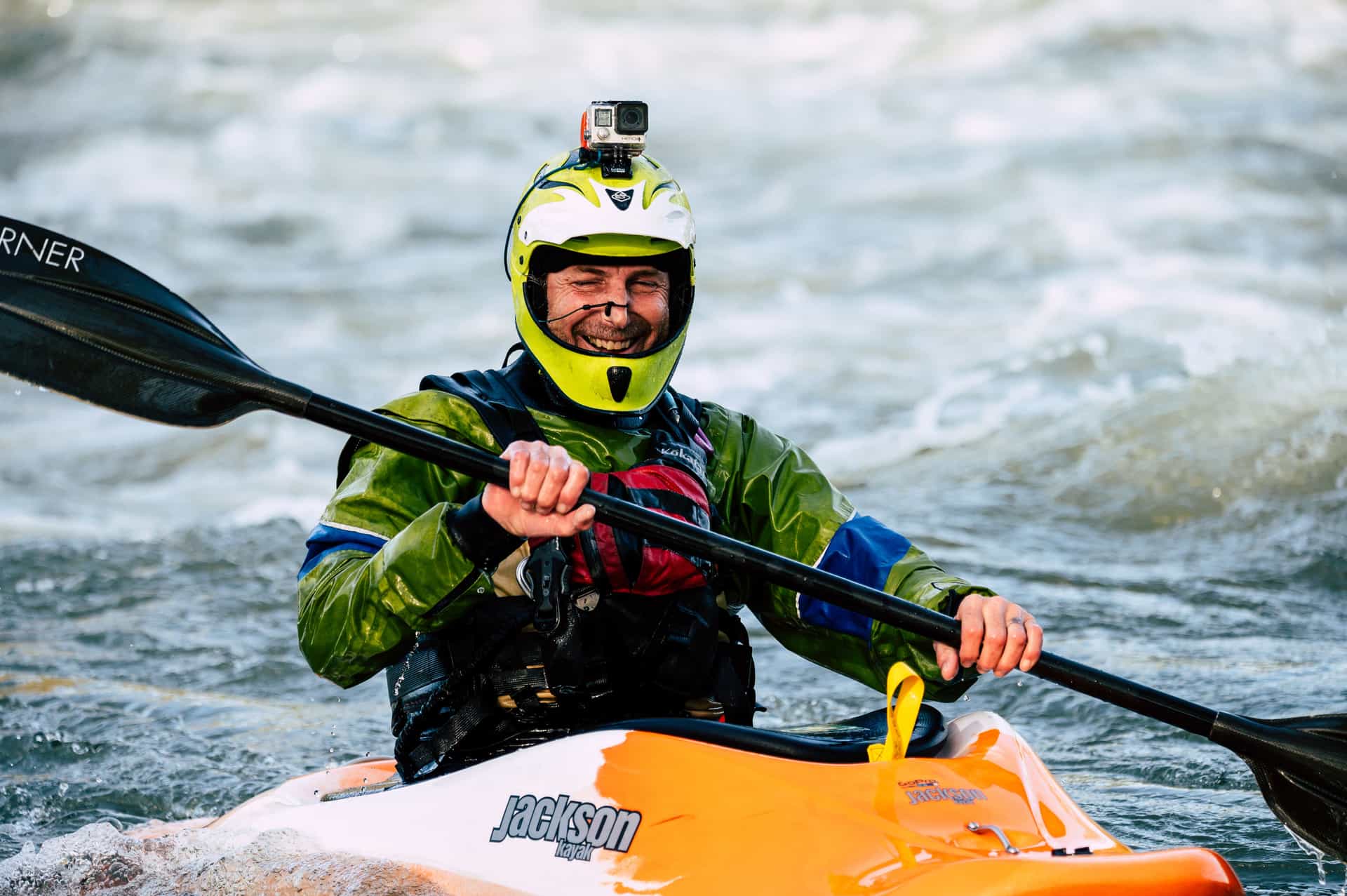
| 01 | GoPro HERO13 Black The safest default for lake and trail: 33ft without a housing, the steadiest footage in the category, and a mount for literally everything. | Anyone who wants one camera to handle the kayak, the bike and the family trip | 8.8/ 10 | |
| 02 | 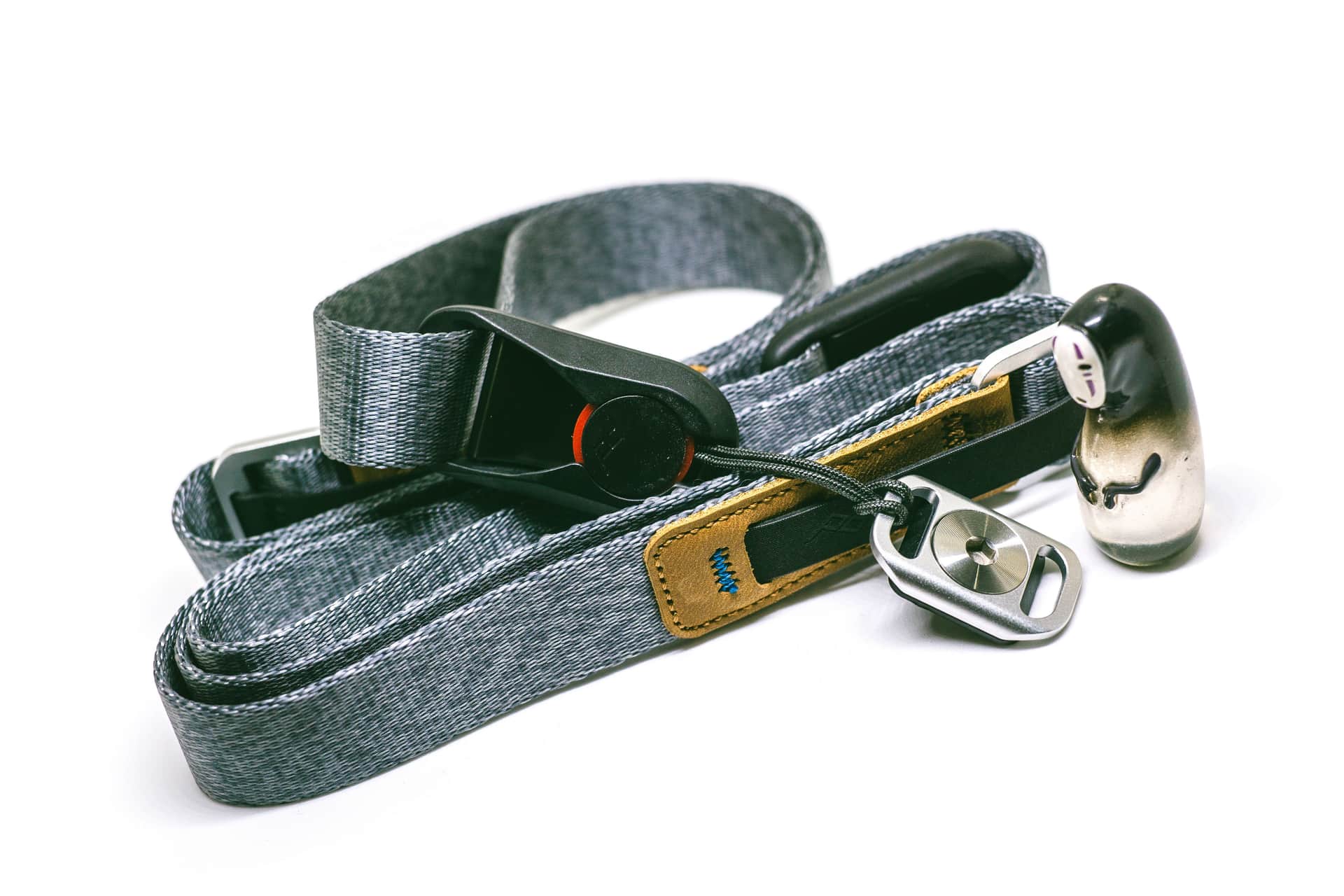 Insta360 GO Ultra 53 grams and IPX8 to 10m on its own — the camera you actually clip on for a paddle instead of leaving in the dry bag. | Hands-free clips where a full-size camera would never leave the bag | 7.6/ 10 | |
| 03 | 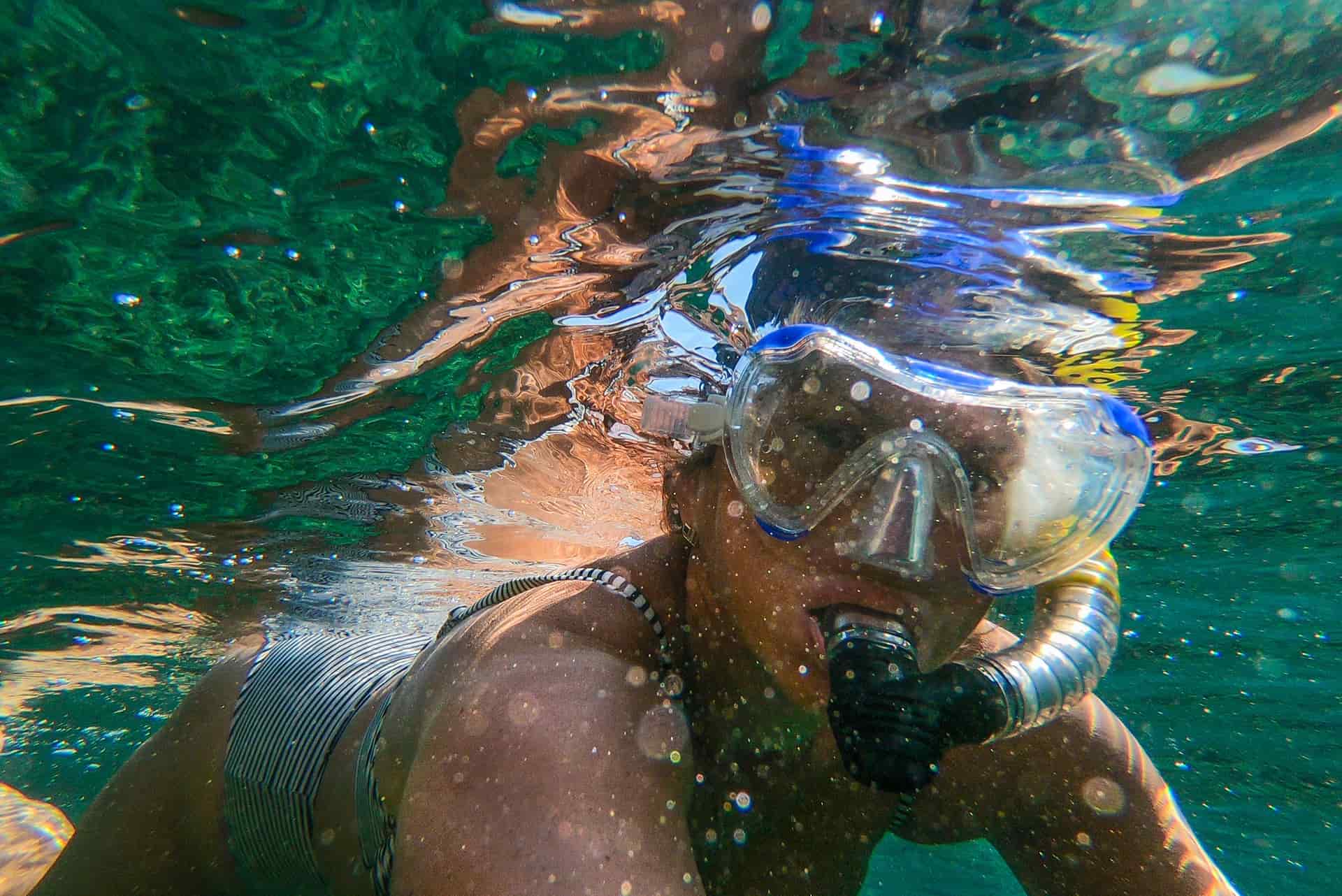 DJI Osmo Action 5 Pro Goes to 20m with no housing at all and publishes a 240-minute runtime — the two numbers that decide a long, wet, cold day. | Long paddles, cold water, and anyone tired of buying a housing to get past 10m | 9.1/ 10 | |
| 04 | 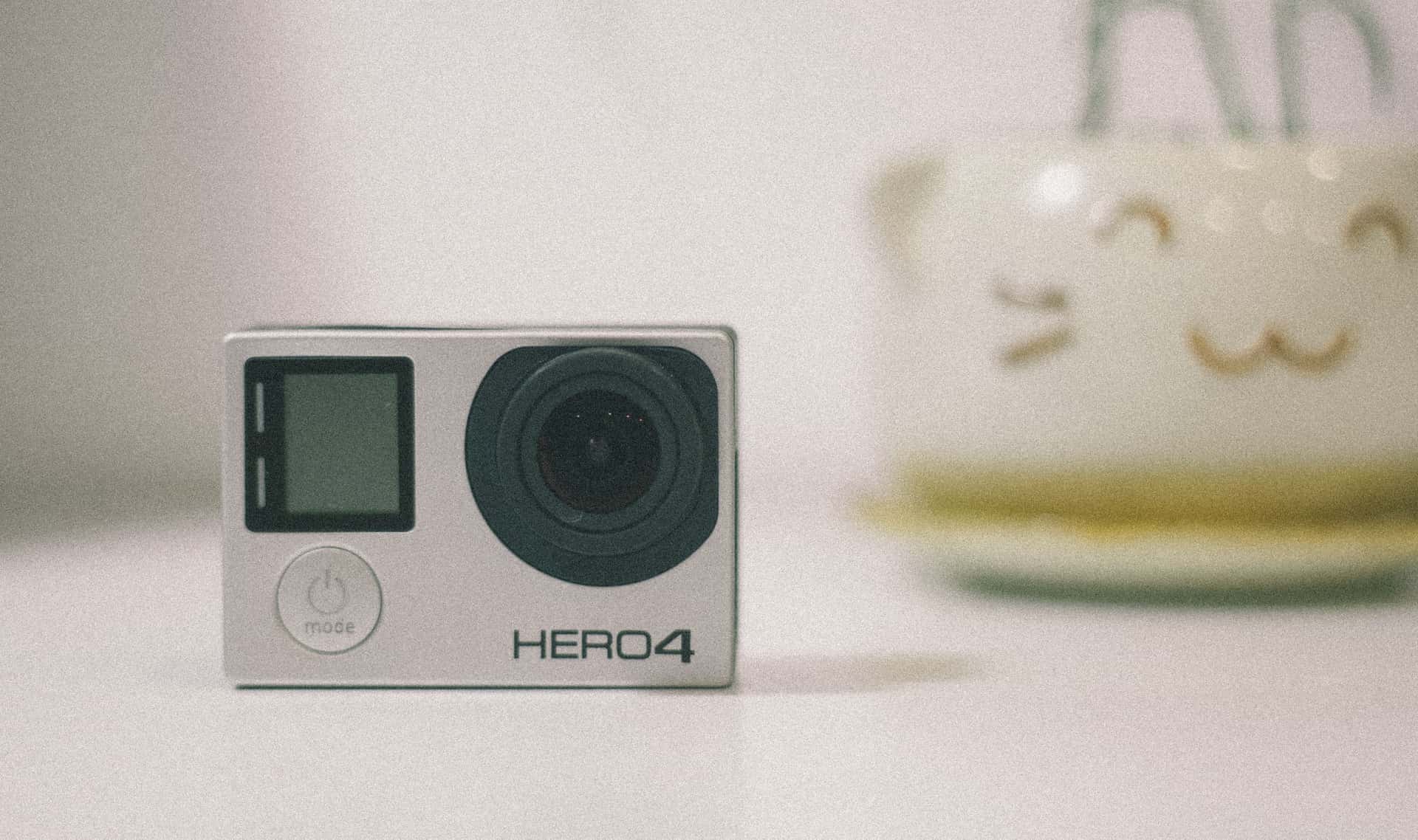 GoPro HERO (2024) The cheapest real GoPro, and the one whose 16ft rating you have to take seriously before you take it snorkeling. | A first camera, a kid's camera, or a second angle that mounts anywhere | 7.1/ 10 | |
| 05 | 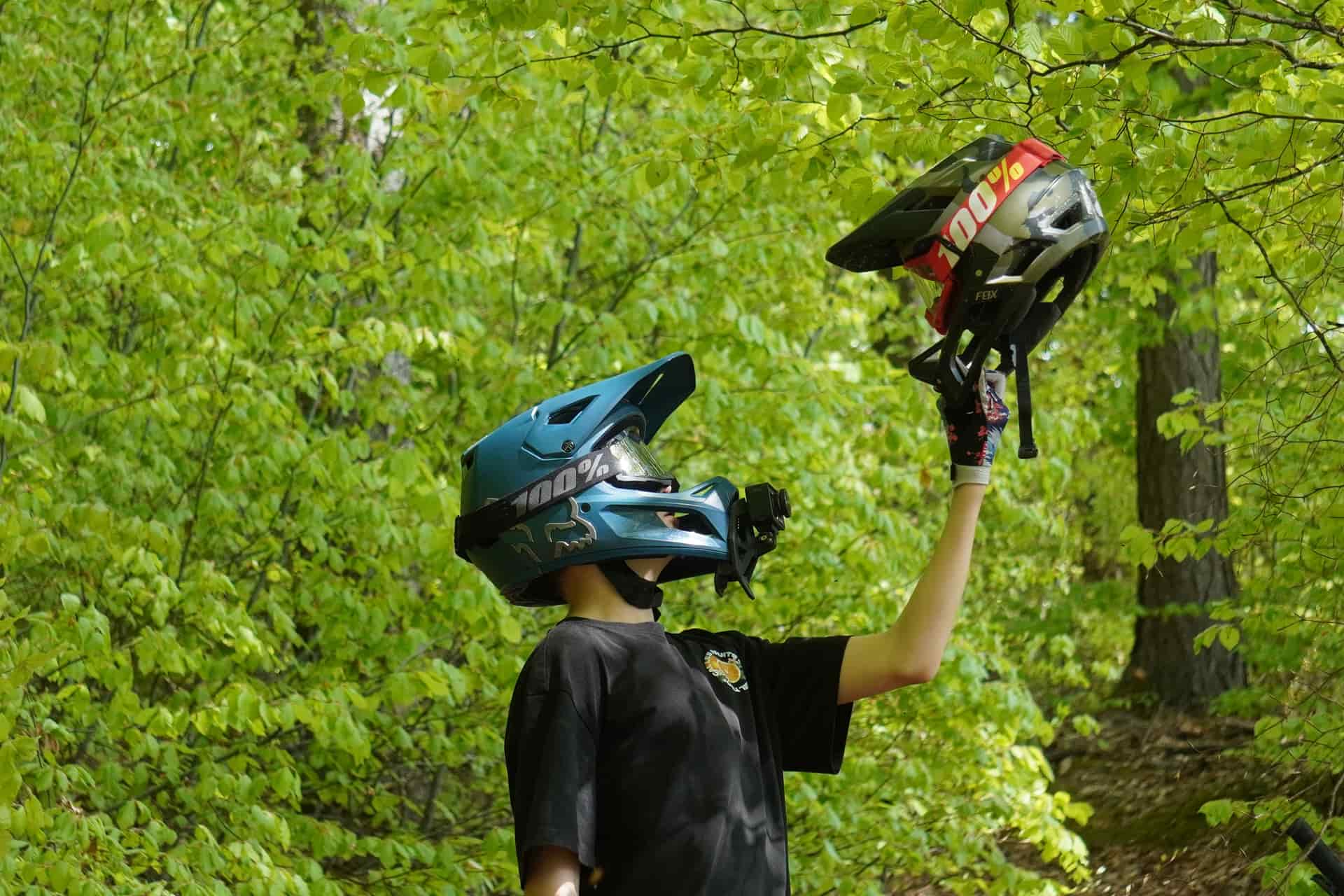 GoPro Helmet Front + Side Mount A swivel assembly and two curved adhesive pads — the only official way to get a side-of-helmet angle that is not a chin bar. | Bike and ski helmets where a top mount is too tall and a chest mount sees too little | 8.2/ 10 |
Scores are our editorial judgment from published specs and named independent reviews, weighted for lake and trail use — not measurements. We have not tested these units and do not own them.
02
How we picked
We do not lab-test, bench-test or dive-test cameras, and we do not own test units. What we do instead is read the manufacturer's published specifications, read the independent reviews that genuinely do test, read owner reports for the failure modes specs never mention — fogging, salt corrosion, cold battery collapse, mount slippage — and then weight all of it for action cameras used on lake and trail. Where a number is not published, the page says “not published” rather than filling the cell.
The full method, including what we refuse to do, is on the editorial policy page.
- 30%Water survival
- Rated depth without a case, door design, and what the manufacturer actually publishes.
- 25%Stabilization in chop
- A kayak deck and a rooty trail shake in ways a handheld walk test never shows.
- 20%Battery in the cold
- Published runtime, spare-battery cost, and whether it charges while recording.
- 15%Mount ecosystem
- Finger mount, threaded, magnetic — and how much of it you have to re-buy.
- 10%Footage you will keep
- Lens replaceability, low-light behavior, and how much cutting the footage needs.
What makes a good helmet camera
Three things, and none of them is resolution.
Weight, because a helmet mount is a lever. The camera sits on an arm several centimeters from the shell, so its mass is multiplied. A heavy camera on a swivel mount will slowly walk out of position over a ride, and you will find out when you watch the footage and the horizon has drifted. Lighter cameras hold their angle.
Profile, because things catch. Branches on a trail, the roof of a car, a lift bar, a doorway. A tall camera on top of a helmet meets all of them. A side mount sits lower and out of the wind.
Horizon lock, because your head turns. Helmet footage follows your eyeline, which is its whole appeal and also why it can be nauseating — every glance is a camera move. Horizon lock keeps the frame level while your head rotates, and it is the difference between watchable and unwatchable.
Front, side or top
| Position | What it gives | What it costs |
|---|---|---|
| Side | Lowest profile, least wind noise, natural eyeline | Slightly off-center framing |
| Front / chin | Centered, closest to your actual view | Most exposed in a face-first impact |
| Top | Highest viewpoint, sees over obstacles | Catches on things, most leverage, most wind |
For most riding, side is the best default: low, out of the wind, and the framing offset is small enough that nobody notices. Helmet mounts covers the hardware for each.
Adhesive versus strap
Adhesive pads are lower profile, more secure and permanent. GoPro's curved pads are designed for helmet shells and use an industrial waterproof adhesive that removes by heating with a hair dryer. You get one placement attempt, and the surface needs to be clean, dry and above freezing with 24 hours to cure.
Strap mounts move between helmets, cost nothing to reposition, and are the right answer if you are still experimenting with angles or if your helmet manufacturer advises against adhesive. They sit higher and can slip on a vented shell.
The sensible order: strap first, find the angle you actually like over two or three rides, then commit to adhesive if you want the lower profile.
Getting the angle right
The most common helmet-camera mistake is aiming it where you think you are looking. You are not — riders and skiers look further ahead than they realize, and a camera aimed at your actual eyeline films the ground.
Point it slightly higher than feels right. Then check it properly before committing: record thirty seconds, actually watch it, adjust. Two minutes in a car park saves a whole ride of footage aimed at your front wheel.
And tighten the swivel harder than feels necessary. Vibration walks a friction joint over an hour, which is why a mount with a positive lock is worth more than one with a knurled knob.
Wind noise, which you will not fix
A helmet puts the camera directly in the airflow, and above about 15 mph the onboard microphone records mostly wind. This is close to unfixable at the camera.
The realistic options are music, or recording voices separately when stopped. A side mount is marginally better than a top mount because it sits in slightly less disturbed air, which is a small win rather than a solution — the microphone guide is honest about the limits.
03
Every pick, in detail
- 33ft (10m), no housing
- 1900mAh Enduro
- 1.5h at 5.3K30 / 2.5h at 1080p30
- 8.0
- 9.5
- 8.5
- 9.5
- 9.0
GoPro HERO13 Black
GoPro
The safest default for lake and trail: 33ft without a housing, the steadiest footage in the category, and a mount for literally everything.
Anyone who wants one camera to handle the kayak, the bike and the family trip
Built-in mounting fingers mean no adapter, which on a helmet matters more than anywhere else — every adapter adds height, and height on a helmet is leverage. HyperSmooth 6.0 plus horizon lock handles the head movement that makes helmet footage disorienting.
- HyperSmooth 6.0 with AutoBoost is the steadiest stabilization we can find published figures for
- Built-in mounting fingers plus 1/4-20 threads — it fits the GoPro ecosystem and a normal tripod
- Enduro battery is rated to keep full camera functionality down to 14°F (-10°C)
- Replaceable lens cover, so a scratched lens is a $20 problem and not a $400 one
- 33ft is shallower than the DJI and it is the shallowest of the three flagships
- Anything past 33ft needs the separate Protective Housing
- HB-Series lenses and ND filters are all extra purchases
Specs from GoPro HERO13 Black published specifications.
- IPX8 to 33ft (10m), camera only
- 53g
- Up to 170 min with the Action Pod
- 7.0
- 8.0
- 7.5
- 8.0
- 8.0
Insta360 GO Ultra
Insta360
53 grams and IPX8 to 10m on its own — the camera you actually clip on for a paddle instead of leaving in the dry bag.
Hands-free clips where a full-size camera would never leave the bag
53 grams. On a helmet that is transformative: no wobble, no neck fatigue after two hours, and a profile low enough that it does not catch on branches. The Action Pod stays in a pocket, which also keeps the battery warm.
- 53g means it goes on a hat brim, a PFD strap or a chest magnet and you forget it is there
- IPX8 to 10m for the camera itself, with a 1/1.28" sensor that is far larger than the size suggests
- Action Pod adds a flip screen and the long runtime when you want it
- Removable microSD, so you are not stuck with fixed onboard storage
- The Action Pod is not rated to the same depth as the camera — read the two ratings separately
- Magnetic mounting is convenient but is not a mechanical lock in real chop
- No interchangeable lens cover, so a scratch is permanent
Specs from Insta360 GO Ultra published specifications.
- 20m bare / 60m with case
- 1950mAh · 240 min at 1080p24
- -20° to 45°C
- 9.5
- 9.0
- 9.5
- 8.0
- 9.0
DJI Osmo Action 5 Pro
DJI
Goes to 20m with no housing at all and publishes a 240-minute runtime — the two numbers that decide a long, wet, cold day.
Long paddles, cold water, and anyone tired of buying a housing to get past 10m
The 146g body is the heaviest here, and on a helmet that is a genuine consideration. It earns its place on the cold rating and the runtime — and if you use the two-prong adapter rather than the magnetic mount, it is as secure as anything.
- 20m without the Waterproof Case — double the bare-camera depth of the HERO13 Black
- DJI publishes 240 minutes of recording at 1080p/24 with screens off, the longest figure in this set
- Rated to -20°C, which matters more on an October lake than any resolution number
- 1/1.3-inch sensor holds detail when the light goes flat
- Mount ecosystem is smaller than GoPro's, and magnetic quick-release adapters are their own purchase
- 146g — the heaviest of the flagship three
- Fewer third-party mounts and filters exist for it
Specs from DJI Osmo Action 5 Pro published specifications.
- 16ft (5m)
- 4K30, 2.7K60 slo-mo
- Built in, not user-removable
- 6.0
- 7.5
- 6.0
- 9.0
- 7.0
GoPro HERO (2024)
GoPro
The cheapest real GoPro, and the one whose 16ft rating you have to take seriously before you take it snorkeling.
A first camera, a kid's camera, or a second angle that mounts anywhere
46% less mass than the HERO13 Black, with built-in fingers and the same mount ecosystem. The cheapest sensible helmet camera, provided the 16ft (5m) rating suits what you do.
- Genuinely tiny — 46% less mass than HERO13 Black
- Built-in mounting fingers, and GoPro lists it as compatible with 35+ mounts
- HyperSmooth stabilization at the lowest GoPro price
- Simple enough to hand to someone who has never used one
- 16ft (5m) is a snorkel-adjacent rating, not a diving one
- The battery is built in — you cannot carry a spare, you carry a power bank
- 4K30 is the ceiling; no 4K60, no high-frame-rate 4K
Specs from GoPro HERO published specifications.
- Swivel mount, 2 curved adhesive mounts
- Vertical mounting buckle and thumb screw
- Curved helmet shells
- 8.5
- 8.0
- 8.0
- 9.0
- 6.5
GoPro Helmet Front + Side Mount
GoPro
A swivel assembly and two curved adhesive pads — the only official way to get a side-of-helmet angle that is not a chin bar.
Bike and ski helmets where a top mount is too tall and a chest mount sees too little
Included as a pick because the mount is half the decision. The swivel assembly lets you set the angle once and ride, and the two curved adhesive pads are designed for a helmet shell rather than a flat panel. Adhesive is one-shot: get the position right before you press.
- The swivel assembly means you set the angle once and ride, instead of guessing
- Curved adhesive pads are made for helmet shells rather than flat panels
- Side mounting keeps the camera out of the wind better than a top mount
- Industrial-strength waterproof adhesive from the same family as the curved and flat mounts
- Adhesive is a one-shot decision — get the position right before you press
- Removing it means heating the adhesive with a hair dryer
- Adds a side profile that some helmet certifications discourage; check yours
Specs from GoPro Helmet Front + Side Mount product page.
04
What decides this category
Weight first
On a lever arm, mass is multiplied. A lighter camera holds its angle through a ride and does not give you neck fatigue on a long day. This is the criterion that reorders this list relative to every other roundup on the site.
Built-in mounting fingers
A camera with native two-prong fingers sits lower than one on an adapter, and lower means less leverage and less to catch. It is a small structural advantage that matters specifically here.
Horizon lock
Check the camera has it. Helmet footage rolls with your head, and without horizon lock a berm or a lean makes the whole frame tip.
A mount with a positive lock
Friction joints creep under vibration. A swivel that clicks into detents, or a thumb screw you can genuinely tighten, keeps the angle you set.
What we would skip
A top mount, for most people — more leverage, more wind, more to catch, in exchange for a viewpoint two inches higher. And skip adhesive on the first ride; use a strap until you know the angle.
05
Questions people actually ask
01Is it safe to mount a camera on a helmet?
Check your helmet manufacturer's guidance first — some advise against attaching anything to the shell and some say it affects certification. Where it is permitted, a low side mount with a curved adhesive pad is the standard approach.
02Where is the best place on a helmet to mount a camera?
The side, for most riding: lowest profile, least wind noise and a natural eyeline. Top mounts catch on branches and create the most leverage; chin mounts are centered but the most exposed.
03Why does my helmet camera footage look wonky?
Two causes. The angle is usually aimed too low — riders look further ahead than they think. And without horizon lock, every lean rolls the whole frame. Aim higher than feels right and turn horizon lock on.
04Adhesive or strap mount?
Strap first, while you find the angle you like. Adhesive once you are sure — it is lower, more secure and permanent, and you get one attempt at placement.
05How do I stop wind noise on a helmet camera?
Largely you cannot, above about 15 mph. A side mount sits in slightly less disturbed air than a top mount, which helps a little. Most helmet footage ends up with music.
06Does the camera's weight really matter on a helmet?
More than anywhere else. The mount is a lever, so mass is multiplied — a heavier camera walks out of angle under vibration and causes neck fatigue over a long day.
06
Read this next
How to mount a camera on a helmet
The step-by-step, including surface prep and cure time.
Best helmet mounts
The hardware for front, side and strap positions.
Chest mount vs helmet mount
The alternative, if your helmet manufacturer says no.
Best action cameras for mountain biking
The full trail list, where stabilization leads instead.
Best action cameras for skiing
The same mount question with a cold-weather answer.
07
Sources
- GoPro Helmet Front + Side Mount product page
- GoPro Curved + Flat Adhesive Mounts product page
- Insta360 GO Ultra published specifications
- GoPro HERO13 Black published specifications
- DJI Osmo Action 5 Pro published specifications
- GoPro HERO published specifications
Specifications are quoted from the manufacturer pages above as they read on the dates shown. Where a figure is not published, this site says so rather than estimating one. We have not tested these products.