The best action cameras for running
Every bad running video has the same two problems, and neither one is the camera's sensor. It is weight, and it is bounce.
Part of On the Trail.
We earn a commission if you buy through our links, at no extra cost to you. It never changes what we recommend or the order we rank it in — how this works.
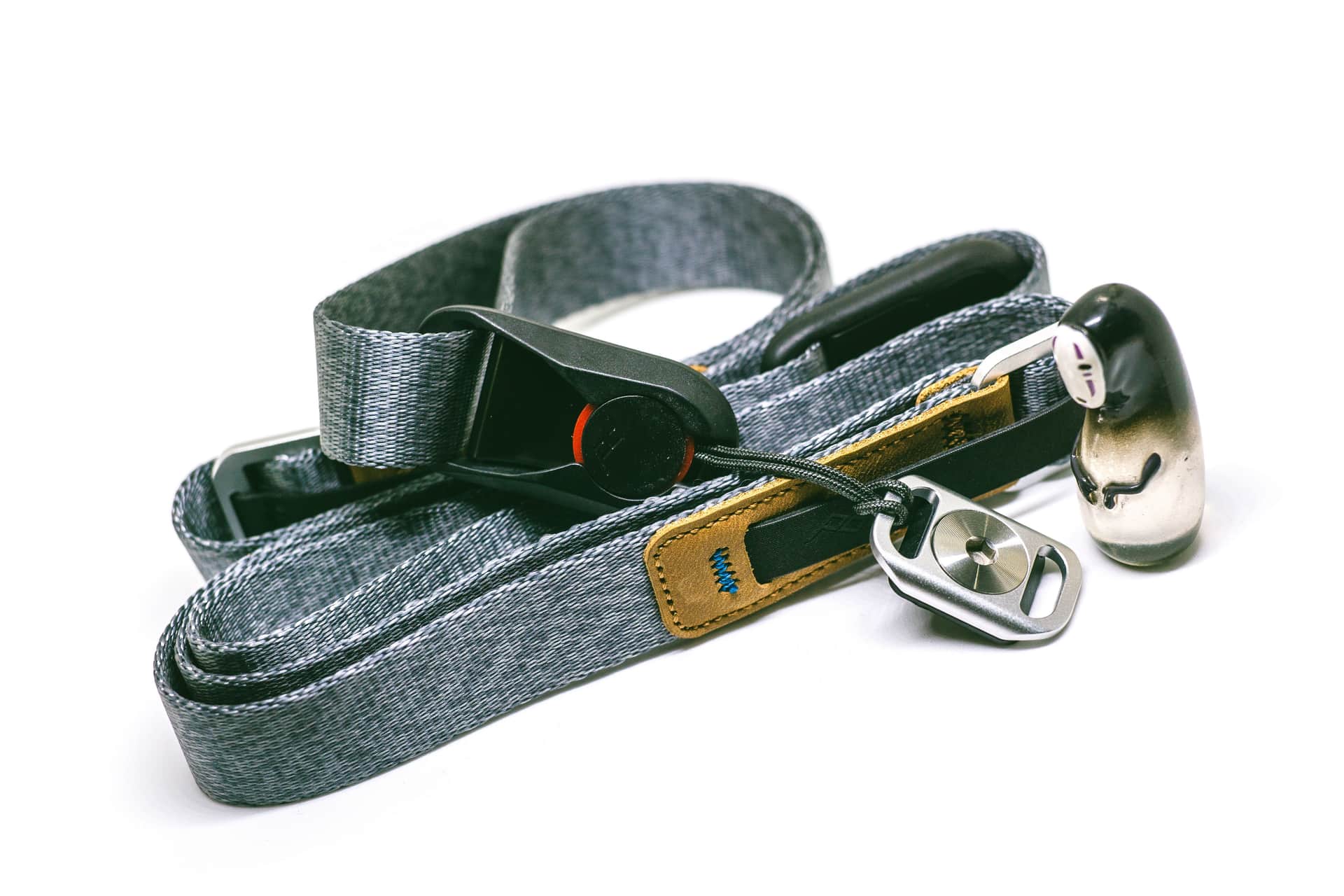
The Insta360 GO Ultra is the best action camera for most runners — at 53g it is the only body here light enough that you stop noticing it within a mile, and worn weight is the specification that decides whether a running camera gets used twice. It clips to a cap brim, a shirt placket or a vest strap and is rated IPX8 to 33ft (10m), so sweat and rain are irrelevant. Choose the GoPro HERO13 Black with a chest harness if footage quality matters more than grams: HyperSmooth 6.0 with AutoBoost is the steadiest stabilization published in the category, and bounce is the other thing that ruins running video.
01
Quick picks
| # | Product | Best for | Score | Price |
|---|---|---|---|---|
| 01 | 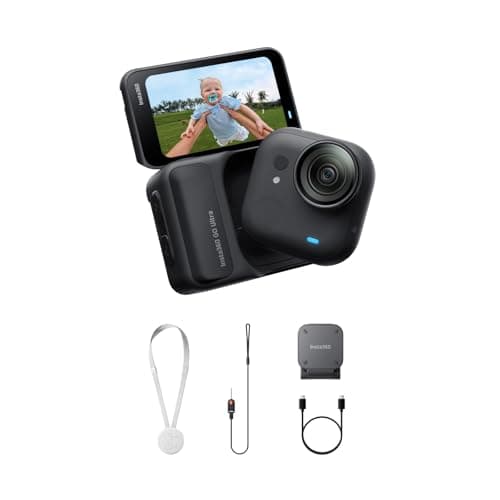 Insta360 GO Ultra 53 grams and IPX8 to 10m on its own — the camera you actually clip on for a paddle instead of leaving in the dry bag. | Hands-free clips where a full-size camera would never leave the bag | 7.6/ 10 | |
| 02 | 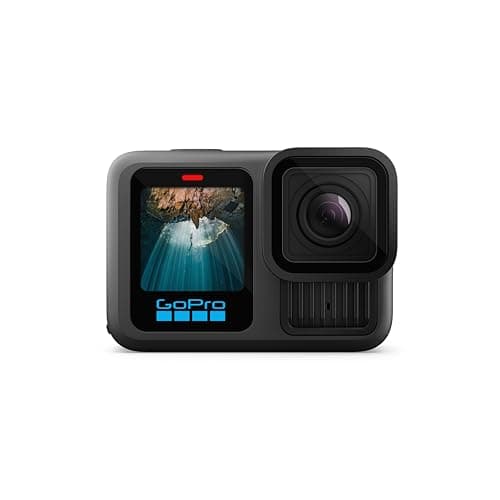 GoPro HERO13 Black The safest default for lake and trail: 33ft without a housing, the steadiest footage in the category, and a mount for literally everything. | Anyone who wants one camera to handle the kayak, the bike and the family trip | 8.8/ 10 | |
| 03 | 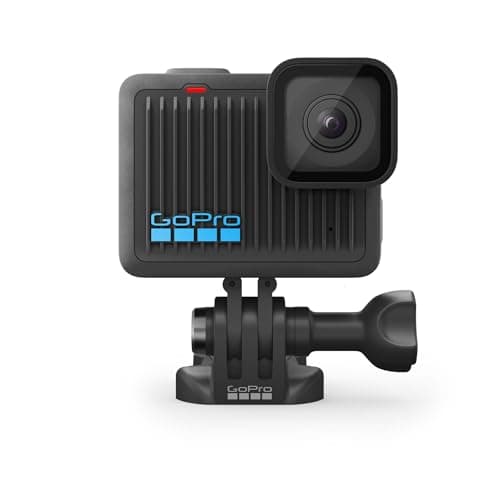 GoPro HERO (2024) The cheapest real GoPro, and the one whose 16ft rating you have to take seriously before you take it snorkeling. | A first camera, a kid's camera, or a second angle that mounts anywhere | 7.1/ 10 | |
| 04 | 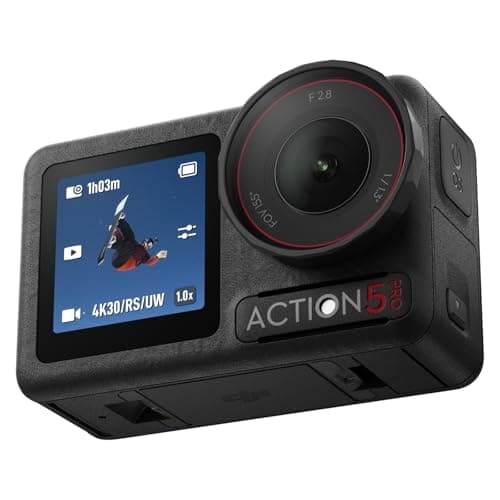 DJI Osmo Action 5 Pro Goes to 20m with no housing at all and publishes a 240-minute runtime — the two numbers that decide a long, wet, cold day. | Long paddles, cold water, and anyone tired of buying a housing to get past 10m | 9.1/ 10 | |
| 05 | 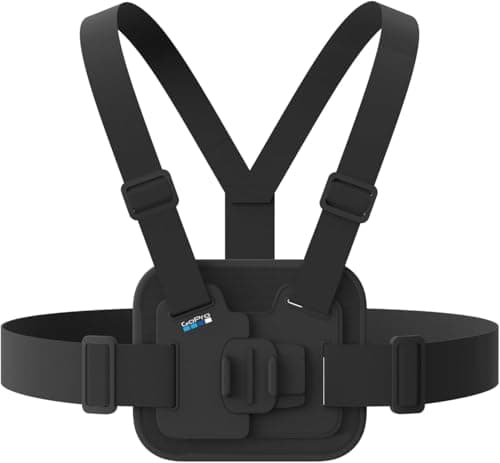 GoPro Chesty Performance Chest Mount The mount that shows your hands — which on a kayak means the paddle, and on a bike means the trail arriving. | Paddling and riding footage where the hands are the story | 8.1/ 10 |
Scores are our editorial judgment from published specs and named independent reviews, weighted for lake and trail use — not measurements. We have not tested these units and do not own them.
02
How we picked
We do not lab-test, bench-test or dive-test cameras, and we do not own test units. What we do instead is read the manufacturer's published specifications, read the independent reviews that genuinely do test, read owner reports for the failure modes specs never mention — fogging, salt corrosion, cold battery collapse, mount slippage — and then weight all of it for action cameras used on lake and trail. Where a number is not published, the page says “not published” rather than filling the cell.
The full method, including what we refuse to do, is on the editorial policy page.
- 30%Water survival
- Rated depth without a case, door design, and what the manufacturer actually publishes.
- 25%Stabilization in chop
- A kayak deck and a rooty trail shake in ways a handheld walk test never shows.
- 20%Battery in the cold
- Published runtime, spare-battery cost, and whether it charges while recording.
- 15%Mount ecosystem
- Finger mount, threaded, magnetic — and how much of it you have to re-buy.
- 10%Footage you will keep
- Lens replaceability, low-light behavior, and how much cutting the footage needs.
What actually decides this
Running is the use case where action camera marketing is least useful, because the two things that ruin running footage are not on any spec sheet.
Worn weight. Not the number in the specifications — the number you feel at mile eight. 53g clipped to a shirt is nothing. 150g on a chest harness is a presence, and a presence is something you eventually decide not to bring. This is the single best predictor of whether a running camera gets used more than twice.
Bounce, and where the camera is mounted. A runner delivers a sharp vertical impact roughly 170 times a minute. Stabilizers are built to smooth continuous motion, not periodic impact, so the mount position does more work than the stabilizer does. Chest beats head; head beats hand; hand is the worst option in the sport.
Battery against the length of the effort. A 5K needs nothing. A long trail run needs either a swappable battery or a published runtime in hours rather than minutes, and recording continuously for three hours is a different purchase from recording clips.
Sweat, which is salt water. Every camera here is waterproof enough for rain. Sweat is more corrosive than rain because it is saline, and it pools in exactly the places a chest harness holds the camera. Rinse accordingly.
| Camera | Weight / size | Water rating | Published runtime | Cold rating |
|---|---|---|---|---|
| Insta360 GO Ultra | 53g | IPX8 to 33ft (10m), camera only | Up to 170 min with the Action Pod | Not published |
| GoPro HERO13 Black | Not published | 33ft (10m) | 1.5h at 5.3K30 / 2.5h at 1080p30 | Enduro rated to 14°F (-10°C) |
| GoPro HERO (2024) | 46% less mass than HERO13 Black | 16ft (5m) | Not published | Not published |
| DJI Osmo Action 5 Pro | 146g | 20m bare / 60m with case | 240 min at 1080p24 | -20° to 45°C |
Where to mount it, in order of how good the footage looks
Chest harness — the default. The sternum is the most stable large platform on a running body. You get hands, trail and horizon in frame, and the stride shows as a gentle rise rather than a hammer. Pull the straps properly tight; most complaints about chest mounts are complaints about loose chest mounts.
Vest strap or shoulder — good, and only with a light body. A clip-on camera on a race vest strap sits high enough to see over your hands and is asymmetric, which actually looks more natural than dead-center footage. This is the GO Ultra's home.
Cap brim or headband — distinctive, bouncy. It gives true eye-line footage, which is great for trail technicality and terrible for cadence. Use it at easy paces and for the shots where looking where you are going is the story.
Handheld — avoid. Your arm swings through a 90-degree arc every stride and no stabilizer fixes that. If you must hold it, hold it still against your chest and accept the shot is fifteen seconds.
Waist or belt — the dark horse. A clip at the waist is low, stable and shows feet and ground, which is the one angle that communicates speed. Worth a try on gravel and single track.
Settings worth changing for running
4K/60 if the camera offers it, otherwise 1080p/60. The frame rate is the point: 60fps gives you clean half-speed for the moments worth slowing down, and running has a lot of those. 4K/30 is fine if the clip goes out as shot.
Linear or wide, not SuperView. The widest field of view exaggerates arm swing and bends the horizon, which on a chest mount makes the footage look like a fisheye of your own hands. Linear is the flattering choice for running.
Expect to lose the audio. What a chest-mounted camera records is breathing and fabric rustle, neither of which anybody wants. Score the edit to music, or record a voiceover after the run. What actually helps is in how to cut wind noise.
Shoot short clips. Nobody watches forty minutes of a run, including the person who ran it. Ten to fifteen seconds at each thing worth showing — a climb, a view, a stream crossing — is a far better use of the battery and edits into something people finish. The method is in editing a trip video people watch.
Trail running versus road running
They are different purchases, which is worth saying because the search results treat them as one.
Trail rewards a wider view and a higher mount, because the subject is terrain — roots, rock, the line you picked. It punishes weight, because trail runs are longer and climbs make grams matter. The GO Ultra on a vest strap or the HERO (2024) on a chest harness is the sweet spot, and the DJI is the answer for anything over three hours.
Road is less about terrain and more about pace, traffic and scenery. Footage of flat asphalt is dull, so road clips live or die on what is beside the road. A camera that films both directions at once is genuinely useful here for the same reason it is on a bike — see the road cycling roundup for that argument in full.
What to ignore
Deep water ratings. Rain and sweat. 16ft (5m) is already overkill for running and 20m buys you nothing on a trail.
8K and 5.3K. They cost frame rate, battery and card space, and running footage wants frame rate. Resolution above 4K exists for cropping in an edit you are probably not doing.
Headbands sold in accessory bundles. They slide once they are wet with sweat, which is about four minutes in. If you want a head angle, use a cap mount on a cap that fits.
03
Every pick, in detail
- IPX8 to 33ft (10m), camera only
- 53g
- Up to 170 min with the Action Pod
- 7.0
- 8.0
- 7.5
- 8.0
- 8.0
Insta360 GO Ultra
Insta360
53 grams and IPX8 to 10m on its own — the camera you actually clip on for a paddle instead of leaving in the dry bag.
Hands-free clips where a full-size camera would never leave the bag
Top pick, and for running it is not a close contest. 53g is roughly the weight of a gel. It clips to a hat brim, a race vest strap or a shirt placket with a magnet and then stops existing — no harness to chafe, no bar across the chest, nothing bouncing on a strap. For anyone who has tried running with a full-size camera and quietly given up, this is the body that changes the answer.
Two things to know. A hat-brim mount inherits every bit of head movement, so on a cap it looks better at an easy pace than at a hard one — on a vest strap or placket it is calmer. And read the depth ratings separately: the camera is IPX8 to 33ft (10m), the Action Pod it docks into is a different product with its own rating. Sweat is not a problem for either, but it is salty, so rinse the camera after hot runs the same way you would after the sea.
- 53g means it goes on a hat brim, a PFD strap or a chest magnet and you forget it is there
- IPX8 to 10m for the camera itself, with a 1/1.28" sensor that is far larger than the size suggests
- Action Pod adds a flip screen and the long runtime when you want it
- Removable microSD, so you are not stuck with fixed onboard storage
- The Action Pod is not rated to the same depth as the camera — read the two ratings separately
- Magnetic mounting is convenient but is not a mechanical lock in real chop
- No interchangeable lens cover, so a scratch is permanent
Specs from Insta360 GO Ultra published specifications.
- 33ft (10m), no housing
- 1900mAh Enduro
- 1.5h at 5.3K30 / 2.5h at 1080p30
- 8.0
- 9.5
- 8.5
- 9.5
- 9.0
GoPro HERO13 Black
GoPro
The safest default for lake and trail: 33ft without a housing, the steadiest footage in the category, and a mount for literally everything.
Anyone who wants one camera to handle the kayak, the bike and the family trip
The pick when the footage is the point rather than the run. HyperSmooth 6.0 with AutoBoost is the steadiest stabilization we can find published figures for, and running is a hard case for a stabilizer: a regular vertical impact twice a second plus a horizontal sway. Combined with horizon lock on a chest harness, it produces footage that reads as a smooth glide rather than a pogo stick.
33ft (10m) bare makes rain a non-event, the 1900mAh Enduro battery is rated by GoPro for full functionality down to 14°F (-10°C) which is the real specification for winter running, and the replaceable lens cover means a trip on gravel is a $20 part. The cost is weight: on a chest harness you know it is there for the first two miles, and that is the honest reason it is second here rather than first.
- HyperSmooth 6.0 with AutoBoost is the steadiest stabilization we can find published figures for
- Built-in mounting fingers plus 1/4-20 threads — it fits the GoPro ecosystem and a normal tripod
- Enduro battery is rated to keep full camera functionality down to 14°F (-10°C)
- Replaceable lens cover, so a scratched lens is a $20 problem and not a $400 one
- 33ft is shallower than the DJI and it is the shallowest of the three flagships
- Anything past 33ft needs the separate Protective Housing
- HB-Series lenses and ND filters are all extra purchases
Specs from GoPro HERO13 Black published specifications.
- 16ft (5m)
- 4K30, 2.7K60 slo-mo
- Built in, not user-removable
- 6.0
- 7.5
- 6.0
- 9.0
- 7.0
GoPro HERO (2024)
GoPro
The cheapest real GoPro, and the one whose 16ft rating you have to take seriously before you take it snorkeling.
A first camera, a kid's camera, or a second angle that mounts anywhere
The compromise pick, and a good one. GoPro's smallest current body — 46% less mass than a HERO13 Black — with one shutter button, a rear screen and HyperSmooth running by default. It is light enough for a chest harness to be comfortable on a long run and cheap enough that you are not precious about taking it on a muddy trail.
Two limits. The 16ft (5m) rating is fine for sweat and rain and nothing deeper, which for running is genuinely all you need. And the battery is built in, so a long effort means carrying a power bank rather than a spare — on a two-hour trail run that is the reason to look at the DJI below instead.
- Genuinely tiny — 46% less mass than HERO13 Black
- Built-in mounting fingers, and GoPro lists it as compatible with 35+ mounts
- HyperSmooth stabilization at the lowest GoPro price
- Simple enough to hand to someone who has never used one
- 16ft (5m) is a snorkel-adjacent rating, not a diving one
- The battery is built in — you cannot carry a spare, you carry a power bank
- 4K30 is the ceiling; no 4K60, no high-frame-rate 4K
Specs from GoPro HERO published specifications.
- 20m bare / 60m with case
- 1950mAh · 240 min at 1080p24
- -20° to 45°C
- 9.5
- 9.0
- 9.5
- 8.0
- 9.0
DJI Osmo Action 5 Pro
DJI
Goes to 20m with no housing at all and publishes a 240-minute runtime — the two numbers that decide a long, wet, cold day.
Long paddles, cold water, and anyone tired of buying a housing to get past 10m
The pick for long efforts. DJI publishes 240 minutes of recording at 1080p/24 with the screens off, which is the longest figure in this group and the only one that covers an ultra or a long day in the hills without intervention. The battery is a removable 1950mAh unit, so a swap is thirty seconds at an aid station, and it is rated to -20°C — the specification that matters for a February long run, not the resolution.
The cons for a runner are real: at 146g it is the heaviest body here, and the mount ecosystem is smaller than GoPro's so a chest harness needs an adapter. If you are running with it for an hour, the weight wins the argument. If you are running with it for six, the battery does.
- 20m without the Waterproof Case — double the bare-camera depth of the HERO13 Black
- DJI publishes 240 minutes of recording at 1080p/24 with screens off, the longest figure in this set
- Rated to -20°C, which matters more on an October lake than any resolution number
- 1/1.3-inch sensor holds detail when the light goes flat
- Mount ecosystem is smaller than GoPro's, and magnetic quick-release adapters are their own purchase
- 146g — the heaviest of the flagship three
- Fewer third-party mounts and filters exist for it
Specs from DJI Osmo Action 5 Pro published specifications.
- Adjustable, fits over heavy winter jackets
- Quick-release buckle, usable with gloves
- Harness, vertical buckle, thumb screw
- 8.0
- 9.0
- 7.0
- 8.5
- 8.0
GoPro Chesty Performance Chest Mount
GoPro
The mount that shows your hands — which on a kayak means the paddle, and on a bike means the trail arriving.
Paddling and riding footage where the hands are the story
The mount that fixes bounce, and the reason it is on this page rather than in a footnote. A head or cap mount sits at the end of the longest lever on your body and amplifies every stride; the sternum barely moves by comparison, and a chest harness puts the camera there with both hands free. It adjusts over a winter layer and the quick-release buckle works with gloves. Fit it tight — a loose harness is a bouncing harness, which is the problem you bought it to solve. The alternatives are weighed up in chest mount vs helmet mount.
- Padded and breathable, and genuinely adjustable across body types and layers
- The quick-release buckle works with gloves on, which matters in cold water
- Lower and steadier than a helmet mount — less head-turn, less nausea in the edit
- Shows the paddle stroke, which is the shot most people are actually trying to get
- A PFD over the top changes the angle, so set it up wearing what you will actually wear
- Sits low; on a sit-inside kayak it can end up framing mostly deck
- Nothing about it is waterproof — it gets wet and stays wet
Specs from GoPro Chesty product page.
04
What decides this category
Weight is the first specification
Whatever you buy has to be something you will still want to put on in week six. Grams beat sensor size for running, every time.
A chest harness, tight
The sternum is the stable platform. Buy the harness with the camera and pull the straps properly — a loose harness bounces as badly as a head mount.
60 frames per second and horizon lock
Those two settings do more for running footage than any upgrade in body. Set them once and never open the menu again.
Battery matched to the effort
Clips on a 10K: anything works. Continuous recording on a long trail run: a swappable battery or a published multi-hour runtime, plus a plan for power on long days.
What we would skip
Head straps, mouth mounts and gimbals. A gimbal is heavy, needs a hand and does not solve periodic impact — the reasoning is in do you need a gimbal.
05
Questions people actually ask
01What is the best action camera for running?
The Insta360 GO Ultra, because at 53g it is the only body light enough to stop noticing mid-run, and worn weight decides whether a running camera gets used. The GoPro HERO13 Black on a chest harness is the better pick if footage quality matters more than grams.
02Where should I mount an action camera for running?
On your chest. A chest harness sits on the sternum, which moves least, and keeps your hands free. A cap or head mount gives true eye-line footage but amplifies every stride, and handheld is the worst option because your arm swings through a 90-degree arc each step.
03How do you stop running footage from bouncing?
Three things, in order of effect: mount it on your chest rather than your head, pull the harness tight, and turn horizon lock on. Stabilization helps, but it is built for continuous motion rather than the periodic impact of a footstrike, so mount position does more work than the stabilizer.
04Is sweat bad for an action camera?
It will not get inside a camera rated to 5m or more, but it is saline, so it corrodes seals and contacts over time the way sea water does. Rinse the camera in fresh water after hot runs and dry it with the door open — the routine is in salt water care and rinsing.
05Can an action camera record a whole marathon?
Only with a plan. The longest published runtime here is 240 minutes at 1080p/24 with the screens off on the DJI Osmo Action 5 Pro, and that is in ideal conditions. For anything over about two hours, carry a spare battery or a power bank and shoot clips rather than continuously.
06
Read this next
The best action cameras for hiking
The same weight-first argument at walking pace and over longer days.
The best chest mounts
The mount that fixes bounce, and how to fit it so it does.
HyperSmooth vs FlowState vs RockSteady
What each stabilizer actually does with a footstrike.
The best action cameras for road cycling
The road version of this problem, including the both-directions argument.
Editing a trip video people watch
Why ten-second clips beat a forty-minute recording of the same run.
07
Sources
- Insta360 GO Ultra published specifications
- GoPro HERO13 Black published specifications
- GoPro HERO published specifications
- DJI Osmo Action 5 Pro published specifications
- GoPro Chesty product page
Specifications are quoted from the manufacturer pages above as they read on the dates shown. Where a figure is not published, this site says so rather than estimating one. We have not tested these products.