Power on long days
Charging while recording works, and it makes the camera hotter. Here is when that trade is worth it.
Part of Gear.
We earn a commission if you buy through our links, at no extra cost to you. It never changes what we recommend or the order we rank it in — how this works.
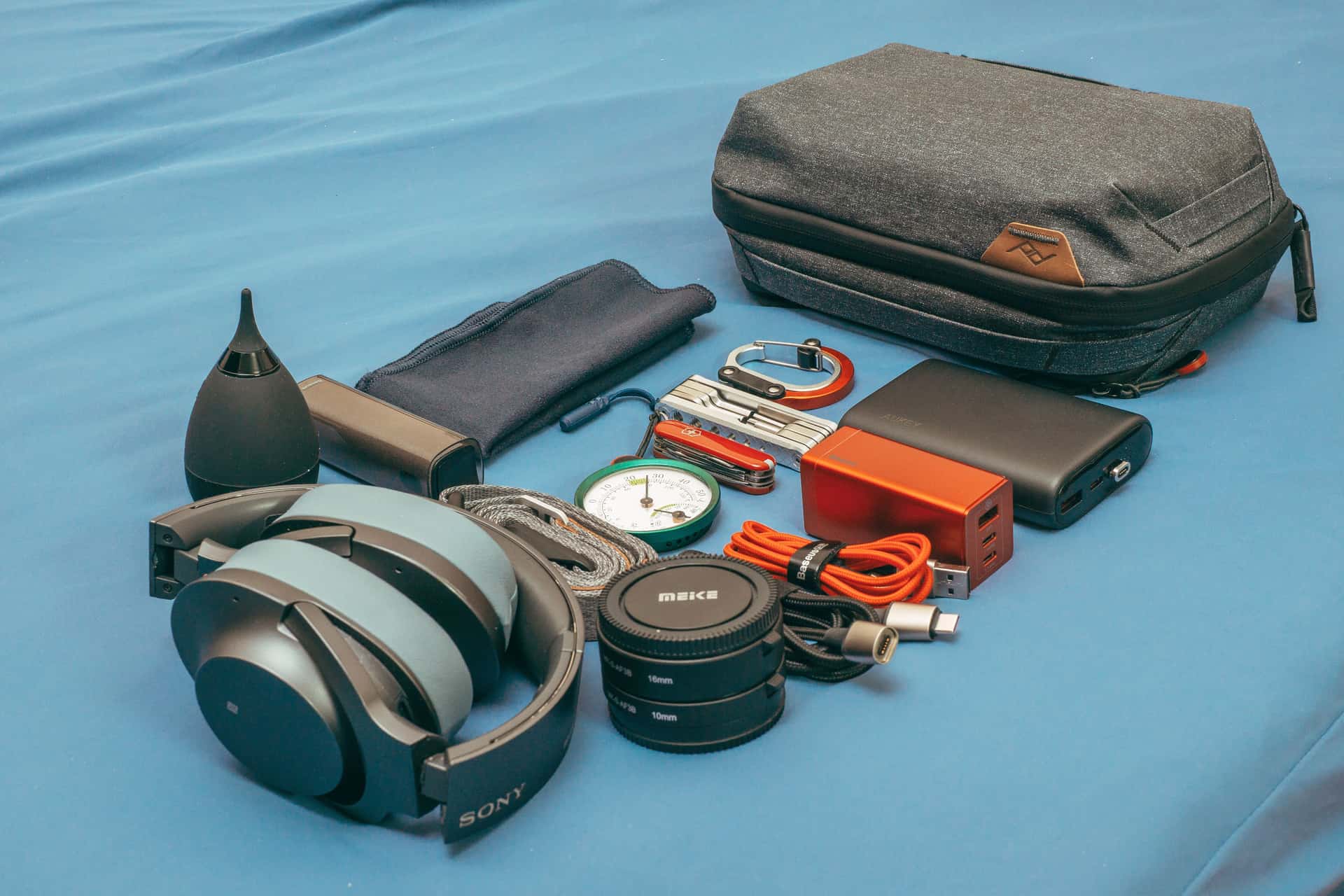
Yes — most current action cameras record while charging over USB-C, and it is the standard solution for cameras with a built-in battery or for multi-day trips. Two caveats. It makes the camera run hotter, because charging and recording both generate heat, which can bring on thermal shutdown sooner in warm weather. And a charging cable on a moving kayak or bike is a genuine snag risk — route it deliberately or use spare batteries instead.
When charging while recording is the right answer
Cameras with a built-in battery. The GoPro HERO (2024) has no removable cell, so a power bank is the only way to extend a day. This is the clearest case.
Fixed-position long takes. A camera on a tripod filming a sunset, a time-lapse, or a static shot from a boat at anchor. Nothing is moving, the cable is not in the way, and heat is manageable.
Multi-day trips. Beyond about three days, spares stop scaling because you cannot recharge them. A power bank scales as far as its capacity — bike touring is the obvious case.
Between clips rather than during them. Often the best approach: plug in during the drive, the lunch stop, or the paddle back, and unplug to film.
When it is the wrong answer
On a moving kayak. A cable running from a deck bag to a mast-mounted camera is a snag, and a snag on a boat is how equipment goes overboard. It also has to be waterproof at the camera end, which it is not.
On a bike, on trail. Same reasoning, with branches involved.
In warm weather at high resolution. Charging generates heat inside the camera at exactly the moment the sensor and processor are also generating it. If you are already near thermal limits, plugging in brings the shutdown forward — the overheating guide covers the rest.
In the cold. A cold power bank delivers less than a warm one, and unlike a battery you cannot warm it in a pocket and swap it in. Spares win in winter.
Spares or a brick: the honest comparison
Spare batteries win for day trips, for cold weather, and for anything where a trailing cable is a hazard. A swap takes ten seconds, adds no heat, and a battery warmed in an inside pocket performs like a warm battery. They stop scaling past two or three days.
A power bank wins for multi-day trips, for cameras with a built-in battery, and when you also need to charge a phone, a light or a GPS. A 10,000mAh brick at around 200g is several full camera charges. It is slower — a 12W output tops up overnight rather than fast-charging — and no consumer power bank is waterproof, so it lives in a dry bag.
Most people out for a week end up carrying both, which is the correct answer: the power roundup covers what to pick.
Routing a cable so it does not cost you a camera
If you are going to run a cable on a boat or a bike, four rules.
Shortest cable that reaches. Every spare centimeter is loop waiting to catch on something.
Secure it at both ends and in the middle. Tape, a cable tie or a clip. A cable that can move will move.
Route it away from the paddle arc or the drivetrain. Obvious, and regularly forgotten.
Accept the camera is no longer sealed. The USB port is open. A wave, rain or spray at that port ends the trip, which on water is the real argument for spares.
The free lever, again
Before any of this: stop recording continuously. A camera shooting thirty to ninety-second bursts across a day uses a fraction of the power of one recording the whole time, runs cooler, fills less card, and produces footage you will actually edit.
Most power problems are shot-length problems wearing a different hat — the editing guide makes the case in full.
01
The two ways to solve it
A brick, or spares. Which one is right depends almost entirely on how cold it is and how long you are out.
- 10000mAh
- 12W total
- 7.44oz (211g)
- 8.5
- 7.0
- 9.0
- 7.5
- 8.5
Anker PowerCore Select 10000
Anker
10,000mAh in 211 grams — enough to refill a camera several times, small enough that it actually comes with you.
Multi-day trips, and cameras whose battery is not removable
- Enough capacity for several full camera charges from one brick
- 211g is genuinely pocketable in a PFD or deck bag
- Dual USB-A outputs, so the camera and a phone charge together
- The only workable answer for cameras with a built-in battery
- 12W total output is slow — this tops up overnight, it does not fast-charge
- Micro-USB input, so you may be carrying a second cable type
- Not waterproof. It lives in a dry bag or it does not live long
Specs from Anker PowerCore 10K product page.

- 1900mAh
- Full functionality down to 14°F (-10°C)
- 1.5h at 5.3K30 / 2.5h at 1080p30
- 8.5
- 9.5
- 8.0
- 9.5
- 9.0
GoPro Enduro Battery (HERO13 Black)
GoPro
1900mAh, and GoPro publishes full camera functionality down to 14°F — the only battery claim on this page that names a temperature.
Cold-water days, and anyone who has watched a camera die at 40 minutes
- The published cold figure is the reason to buy this instead of a third-party cell
- Same runtime figures GoPro quotes for the camera itself
- Swappable in seconds, which a built-in battery never is
- Two spares is still cheaper than any power bank setup
- Only fits HERO13 Black and the MISSION 1 series — check before you buy
- Costs several times what an unbranded cell does
- Cold still shortens it; the rating is about functioning, not about full capacity
Specs from GoPro Enduro Battery (HERO13 Black) product page.
02
How we picked
We do not lab-test, bench-test or dive-test cameras, and we do not own test units. What we do instead is read the manufacturer's published specifications, read the independent reviews that genuinely do test, read owner reports for the failure modes specs never mention — fogging, salt corrosion, cold battery collapse, mount slippage — and then weight all of it for batteries and power used on lake and trail. Where a number is not published, the page says “not published” rather than filling the cell.
The full method, including what we refuse to do, is on the editorial policy page.
- 35%Real runtime
- Published minutes at the mode you actually record in, not the best case.
- 25%Cold-weather behavior
- The stated operating range, and how fast capacity falls below it.
- 20%Charge while recording
- Whether a long day is possible at all without stopping.
- 12%Bulk on the boat
- Weight and size in a dry bag you also have to paddle with.
- 8%Cell quality signals
- Certifications and warranty, since cell quality itself is never published.
03
Questions people actually ask
01Can you charge a GoPro while recording?
Yes, on current models, over USB-C. It makes the camera run hotter, because charging and recording both generate heat, so in warm weather it can bring thermal shutdown forward.
02How do I keep an action camera charged on a long trip?
Spare batteries up to about three days, a power bank beyond that, and both on a week-long trip. Shooting in bursts rather than continuously does more than either.
03Is it safe to run a charging cable on a kayak?
It is a snag risk, and the camera is not sealed with the port open. On moving water, spare batteries are the better answer.
04Does charging while recording damage the battery?
It is a supported mode on cameras that offer it. The practical concern is heat rather than damage — combined charging and recording heat is what brings on thermal shutdown.
05What size power bank do I need?
10,000mAh at around 200g is several full camera charges plus a phone, and it is the sensible size for most trips. A 20,000mAh brick doubles the weight for capacity most day trips never use.
06Can I charge a camera with a built-in battery any other way?
No — a power bank and a cable is the only option, which is the main practical drawback of cameras like the GoPro HERO (2024).
04
Read this next
Batteries and power banks
Which spare, which brick, and where to keep them.
Stop fogging and overheating
The heat side of this trade, in detail.
Best action cameras for bike touring
Where power is the whole problem.
Battery life compared
Every published runtime, with its test conditions.
Best action camera for kayak fishing
Six-hour days where a cable is a hazard.
05
Sources
- Anker PowerCore 10K product page
- GoPro Enduro Battery (HERO13 Black) product page
- GoPro HERO (2024) published specifications, including the built-in battery
Specifications are quoted from the manufacturer pages above as they read on the dates shown. Where a figure is not published, this site says so rather than estimating one. We have not tested these products.