Are third-party action camera batteries safe?
Usually, with caveats that matter more in cold water than anywhere else. Here is what the price difference actually buys.
Part of Gear.
We earn a commission if you buy through our links, at no extra cost to you. It never changes what we recommend or the order we rank it in — how this works.

A third-party battery from a reputable seller is usually safe, and it is usually worse in the cold than the manufacturer's own. What you are buying in any spare is three things: the cell, the protection circuit around it, and the handshake with the camera's firmware. Cheap spares most often compromise on the first two — delivering less real capacity than the label claims and losing more of it in low temperatures — and occasionally on the third, where a camera refuses an unrecognized battery or disables its highest recording modes. For a warm-weather second spare, third-party is a reasonable economy. For cold water, buy the manufacturer cell: GoPro publishes a 1900mAh Enduro rated for full functionality down to 14°F (-10°C), and that published cold rating is the specification a third-party label almost never matches.
What is actually inside a spare battery
A camera battery looks like a sealed brick and is really three components, each of which can be built well or cheaply.
The cell. The chemistry and build quality that determine real capacity, how many charge cycles it survives and how it behaves when cold. This is where most of the cost sits and where most of the saving comes from.
The protection circuit. A small board that prevents overcharge, over-discharge, short circuit and excess current. It is the part that makes a lithium cell safe to carry in a dry bag, and it is invisible from outside the wrapper.
The firmware handshake. Modern cameras identify the battery and may limit modes or refuse to run at all if they do not recognize it. That is not purely commercial — the camera needs to know the cell can deliver the current a high-bitrate mode demands — but it does mean a cheap battery can turn a 5.3K camera into a 1080p one.
The five things that go wrong
| Problem | Symptom | How to check first |
|---|---|---|
| Overstated capacity | A '2000mAh' spare that runs shorter than the 1900mAh original | Compare against the manufacturer's published figure; a large claimed jump is a warning, not a feature |
| Poor cold performance | Camera dies in minutes on a frosty morning | Look for a published temperature rating; most third-party listings have none |
| No real protection circuit | Swelling, heat during charge, refusal to charge | Buy from a seller you can return to and a brand with a warranty you could claim on |
| Firmware rejection or mode limits | Camera warns about the battery, or the highest modes vanish | Check recent reports for your specific camera model and firmware version |
| Charger mismatch | Battery charges in the camera but not in a multi-charger, or vice versa | Prefer a battery and charger from the same maker |
The cold-weather argument, which is the one that matters here
This site exists for cameras used wet and cold, and cold is where battery quality stops being an abstraction. Lithium cells deliver less of their capacity as the temperature drops, and a cheap cell drops off faster. The practical result is a camera that dies at twenty minutes on an October lake while the figure on the label says ninety.
GoPro publishes a specific figure for the Enduro cell — full camera functionality down to 14°F (-10°C) — and that published rating is the thing you are buying. Third-party listings almost never publish an equivalent, and the absence of a number is not the same as the number being fine. If your paddling season includes frost, this is the one accessory where we would not economize.
The handling advice is the same whatever you buy: keep spares in an inside pocket rather than on the deck, swap a cold battery for a warm one rather than waiting for the camera to die, and expect every published runtime figure to shrink. Batteries and power banks compares the hardware, and battery life compared puts the published runtimes side by side with the conditions attached.
When a third-party battery is the sensible buy
As a third or fourth spare for warm weather. If you already own one manufacturer cell for the cold days, extra capacity for July is a reasonable place to save money.
For a camera whose official battery is discontinued. On an older body, third-party may be the only option, and a working camera with an imperfect cell beats a dead one.
When the kit includes a charger you actually want. Two-battery-plus-charger kits are the most common way third-party makers compete, and a dual charger is genuinely useful on a trip.
For a camera that lives in a warm pocket. The small clip-on bodies spend their life against clothing, where cold performance is much less of an issue.
When to buy a power bank instead of another battery
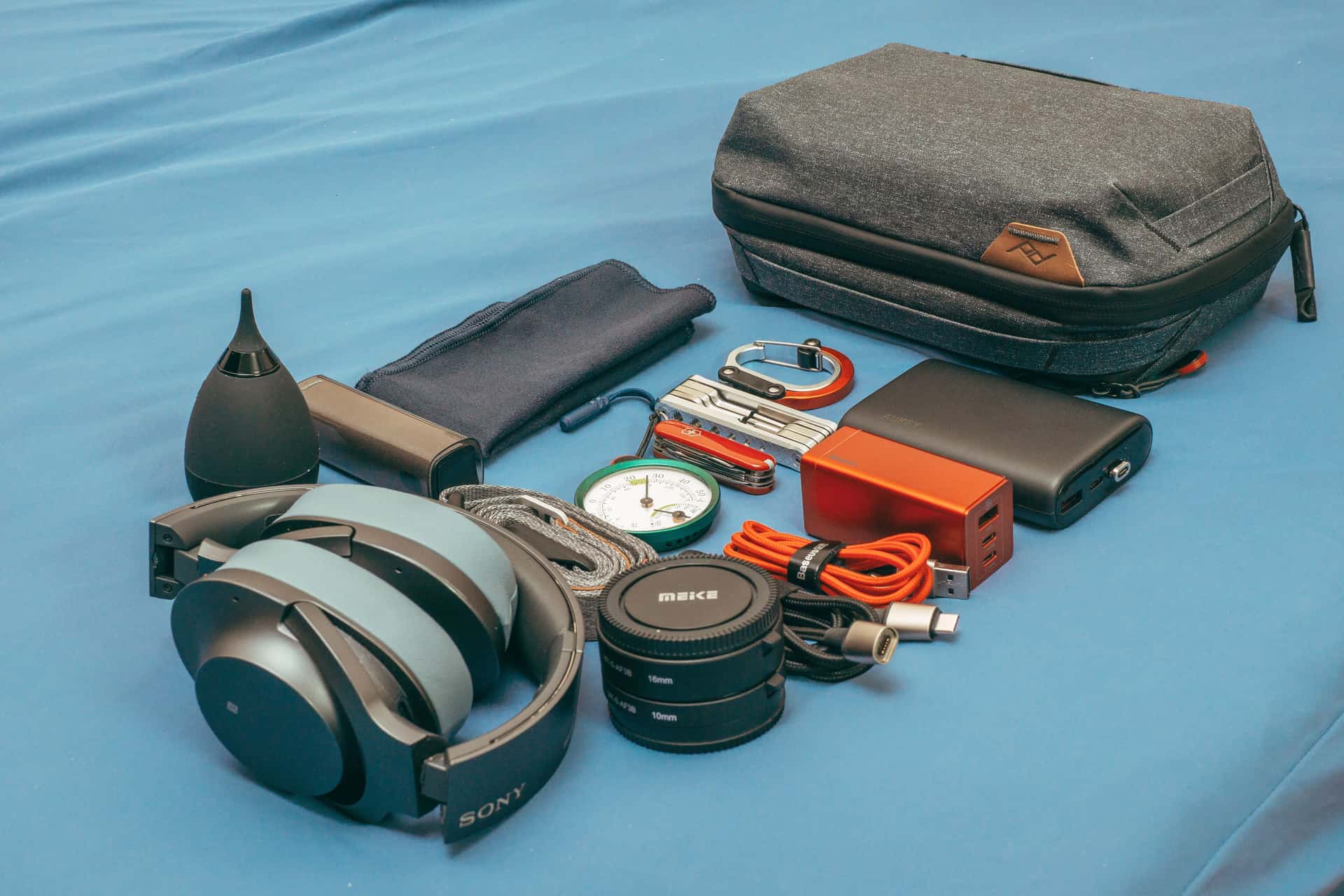
This is the recommendation most people should take, and it is why a power bank is one of the two picks on this page. A 10000mAh bank — the Anker above publishes 10000mAh, 12W of output and 7.44oz (211g) — refills a camera battery several times over, charges a phone, and on bodies that record while charging it also extends a single long clip indefinitely.
It is the only option at all for cameras with a built-in battery, such as the GoPro HERO (2024), and it is the simpler answer for a multi-day trip where you would otherwise be carrying four cells. Power on long days covers which cameras allow charging while recording, which is the detail that decides whether a bank replaces a spare or merely supplements one.
Handling rules for every lithium battery
Do not charge unattended overnight, and do not charge a battery that has been in water until it is completely dry — including the contacts.
Store at a partial charge, not full and not empty, if the camera is going in a cupboard for the winter. Around half is the usual advice for lithium cells.
Retire any cell that swells, gets hot in normal use, or will not hold a charge. A swollen battery is not a battery with a reduced capacity; it is one to stop using immediately.
Carry spares in a case, not loose in a pocket with keys and coins. A shorted terminal is the one failure that turns a battery into a hazard, and it is entirely preventable.
Dispose of them properly. Lithium cells do not belong in household waste or in a recycling bin where they can be crushed. Most hardware and electronics retailers take them.
Check airline rules before you fly. Spare lithium batteries generally have to travel in carry-on baggage rather than checked bags, and your airline publishes the specifics.
01
The two things we would actually buy
The manufacturer cell for the camera that goes in cold water, and a power bank for everything else — which is often the better answer than a third spare battery.

- 1900mAh
- Full functionality down to 14°F (-10°C)
- 1.5h at 5.3K30 / 2.5h at 1080p30
- 8.5
- 9.5
- 8.0
- 9.5
- 9.0
GoPro Enduro Battery (HERO13 Black)
GoPro
1900mAh, and GoPro publishes full camera functionality down to 14°F — the only battery claim on this page that names a temperature.
Cold-water days, and anyone who has watched a camera die at 40 minutes
- The published cold figure is the reason to buy this instead of a third-party cell
- Same runtime figures GoPro quotes for the camera itself
- Swappable in seconds, which a built-in battery never is
- Two spares is still cheaper than any power bank setup
- Only fits HERO13 Black and the MISSION 1 series — check before you buy
- Costs several times what an unbranded cell does
- Cold still shortens it; the rating is about functioning, not about full capacity
Specs from GoPro Enduro Battery (HERO13 Black) product page.
- 10000mAh
- 12W total
- 7.44oz (211g)
- 8.5
- 7.0
- 9.0
- 7.5
- 8.5
Anker PowerCore Select 10000
Anker
10,000mAh in 211 grams — enough to refill a camera several times, small enough that it actually comes with you.
Multi-day trips, and cameras whose battery is not removable
- Enough capacity for several full camera charges from one brick
- 211g is genuinely pocketable in a PFD or deck bag
- Dual USB-A outputs, so the camera and a phone charge together
- The only workable answer for cameras with a built-in battery
- 12W total output is slow — this tops up overnight, it does not fast-charge
- Micro-USB input, so you may be carrying a second cable type
- Not waterproof. It lives in a dry bag or it does not live long
Specs from Anker PowerCore 10K product page.
02
How we picked
We do not lab-test, bench-test or dive-test cameras, and we do not own test units. What we do instead is read the manufacturer's published specifications, read the independent reviews that genuinely do test, read owner reports for the failure modes specs never mention — fogging, salt corrosion, cold battery collapse, mount slippage — and then weight all of it for batteries and power used on lake and trail. Where a number is not published, the page says “not published” rather than filling the cell.
The full method, including what we refuse to do, is on the editorial policy page.
- 35%Real runtime
- Published minutes at the mode you actually record in, not the best case.
- 25%Cold-weather behavior
- The stated operating range, and how fast capacity falls below it.
- 20%Charge while recording
- Whether a long day is possible at all without stopping.
- 12%Bulk on the boat
- Weight and size in a dry bag you also have to paddle with.
- 8%Cell quality signals
- Certifications and warranty, since cell quality itself is never published.
03
Questions people actually ask
01Are third-party GoPro batteries safe?
From a reputable seller with a warranty, generally yes — the risk is less about safety than about getting less real capacity than the label claims and worse performance in the cold. Buy where you can return it, and retire any cell that swells or gets hot.
02Do third-party batteries work as well as the originals?
Usually not in cold weather. GoPro publishes a specific cold rating for the Enduro cell — full functionality down to 14°F (-10°C) — and third-party listings rarely publish any temperature figure at all. In warm conditions a good third-party cell can be close.
03Will my camera reject a third-party battery?
It can. Current cameras identify the battery and may warn you, limit the highest recording modes, or refuse to run. Check reports for your specific model and firmware version before buying, because the behavior changes with updates.
04Is a power bank better than a spare battery?
For multi-day trips and for cameras with a built-in battery, yes. A 10000mAh bank refills a camera several times and charges a phone too. For a quick swap in a boat, nothing beats a charged spare in a warm pocket.
05How should I store camera batteries over winter?
At a partial charge of roughly half, somewhere cool and dry, out of the camera and in a case so the contacts cannot short. Do not leave a battery flat for months, and do not store it in a cold garage if you can avoid it.
04
Read this next
The best batteries and power banks
The hardware ranking, with the published cold and capacity figures.
Action camera battery life compared
Every published runtime figure with the conditions it was measured under.
Power on long days
Which cameras record while charging, and what that actually enables.
The best GoPro accessories for kayaking
Where a spare battery sits in a kayak kit, and what matters more.
The best action camera for skiing
The conditions that make the cold rating the deciding specification.
05
Sources
Specifications are quoted from the manufacturer pages above as they read on the dates shown. Where a figure is not published, this site says so rather than estimating one. We have not tested these products.