The best GoPro accessories for kayaking
A kayak has no spare room and no spare hands. These are the five items worth the deck space, in the order they change the footage.
Part of Gear.
We earn a commission if you buy through our links, at no extra cost to you. It never changes what we recommend or the order we rank it in — how this works.
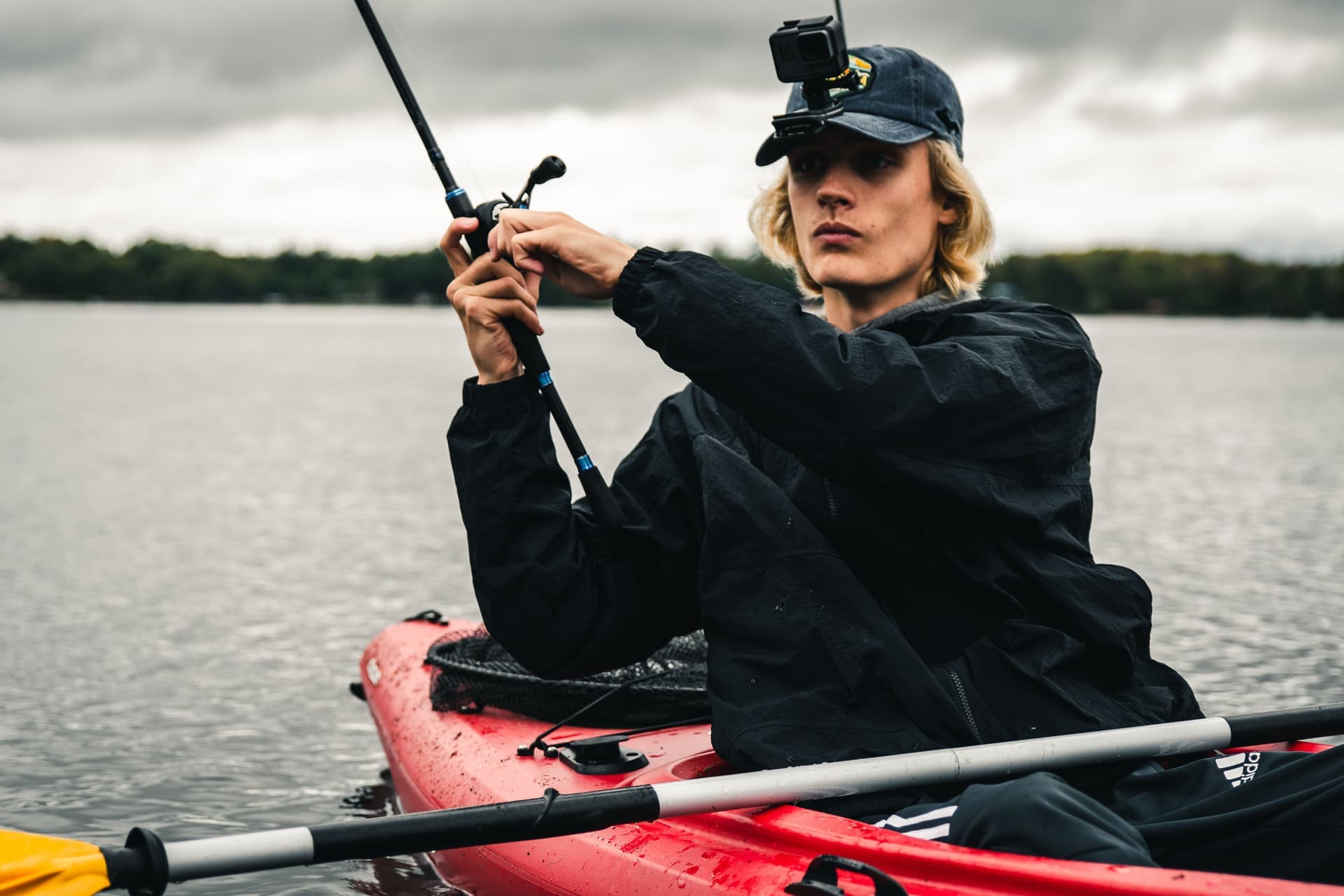
The one accessory that changes kayaking footage most is a deck mount with reach — a boom or arm that gets the camera off the hull and above the deck line, like the RAILBLAZA Camera Boom 600 R-Lock at 31in on any RAILBLAZA StarPort base. After that the list is short and cheap: a float so a dropped camera comes back, a spare battery because cold water eats runtime, a V30 card that can sustain the write, and a pole for the third-person shot no fixed mount can produce. Everything else sold as a "kayak kit" is packaging.
01
Quick picks
| # | Product | Best for | Score | Price |
|---|---|---|---|---|
| 01 | RAILBLAZA Camera Boom 600 R-Lock A 750mm boom that gets the camera off the hull and far enough out to show the boat, the paddle and the water at once. | Wide over-the-shoulder shots from a sit-on-top or fishing kayak | 8.5/ 10 | |
| 02 | 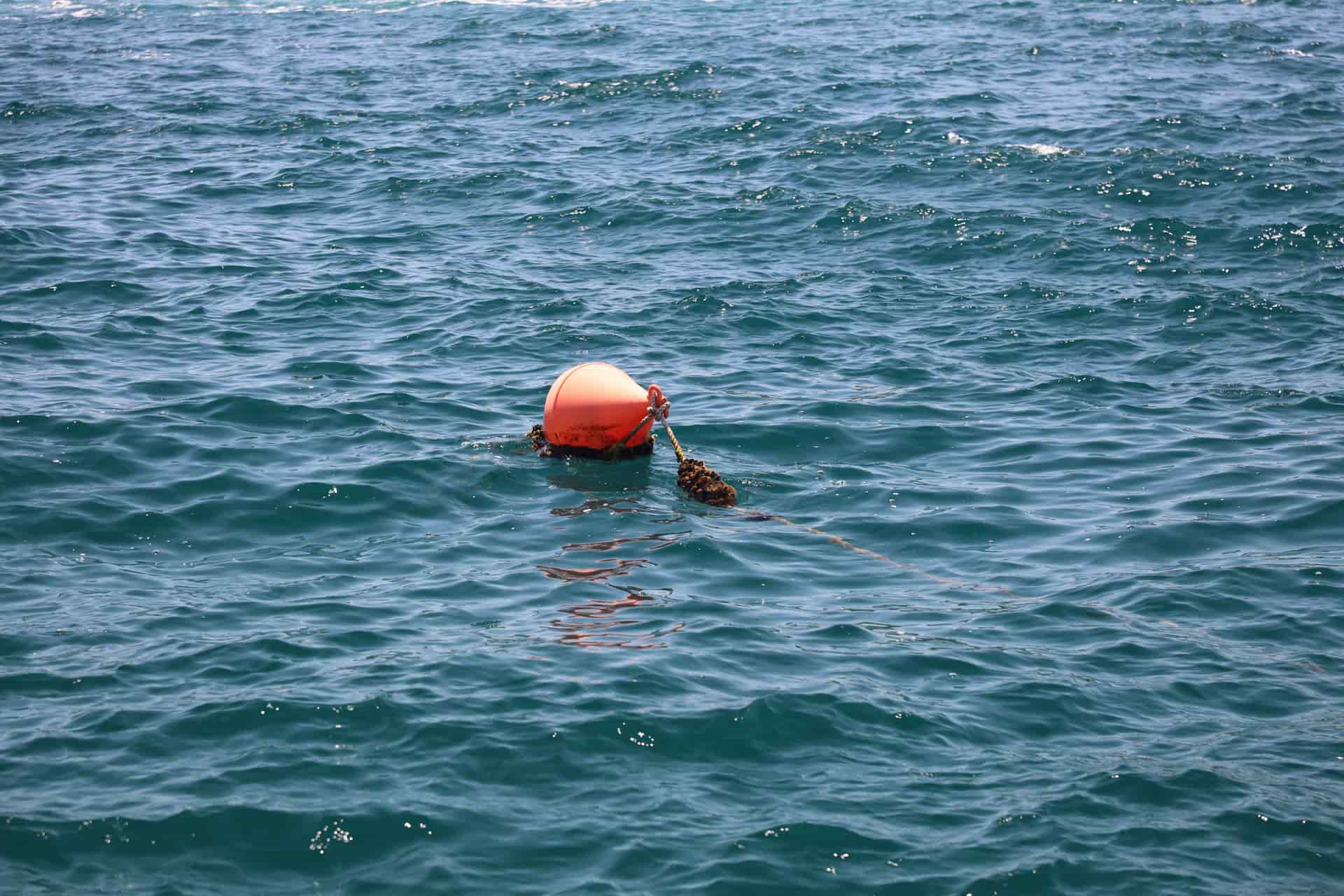 GoPro Floaty The one accessory that decides whether a dropped camera is a bad moment or a lost camera. Buy it with the camera, not after. | Every single person putting a camera near open water | 8.7/ 10 | |
| 03 |  GoPro Enduro Battery (HERO13 Black) 1900mAh, and GoPro publishes full camera functionality down to 14°F — the only battery claim on this page that names a temperature. | Cold-water days, and anyone who has watched a camera die at 40 minutes | 8.8/ 10 | |
| 04 | 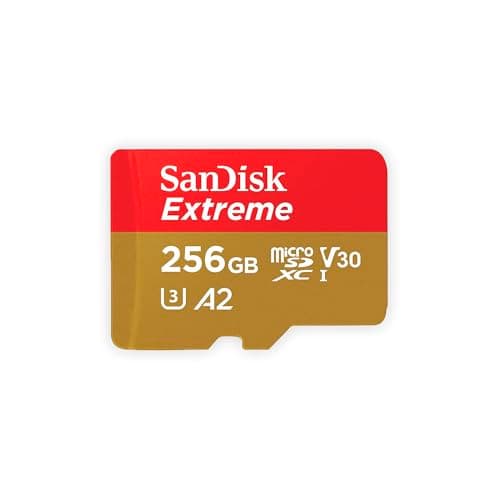 SanDisk Extreme microSDXC UHS-I The card that appears on every manufacturer compatibility list, rated V30 and built to survive being wet, cold and dropped. | Anyone who does not want to think about cards again | 8.9/ 10 | |
| 05 | 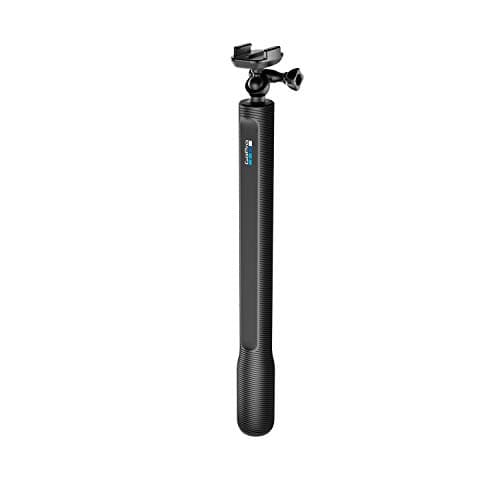 GoPro El Grande Extension Pole 38 inches of aluminum with a ball-and-socket head, so you change the angle without unmounting the camera. | Reaching out from a boat, or getting the camera down near the water without going in | 7.7/ 10 |
Scores are our editorial judgment from published specs and named independent reviews, weighted for lake and trail use — not measurements. We have not tested these units and do not own them.
02
How we picked
We do not lab-test, bench-test or dive-test cameras, and we do not own test units. What we do instead is read the manufacturer's published specifications, read the independent reviews that genuinely do test, read owner reports for the failure modes specs never mention — fogging, salt corrosion, cold battery collapse, mount slippage — and then weight all of it for mounts used on lake and trail. Where a number is not published, the page says “not published” rather than filling the cell.
The full method, including what we refuse to do, is on the editorial policy page.
- 35%Hold under load
- Vibration, chop and a wet hull are what actually break a mount.
- 25%Fit range
- Rail width, bar diameter, helmet curve — the spec that decides whether it fits at all.
- 20%Water and salt tolerance
- Stainless vs plated hardware, and what happens after a season of rinses.
- 12%Adjustability
- Getting the angle right on the water, with cold hands.
- 8%Tether point
- A mount with nowhere to clip a leash is a mount that loses cameras.
What a kayak actually asks of an accessory
Deck space on a kayak is measured in inches and hands are fully committed to a paddle. That is a harsher filter than any other environment this site covers, and it rules out most of what gets sold in "action camera accessory kits".
It has to work one-handed, or not need hands at all. Anything that takes two hands to adjust will not be adjusted on the water. Mounts get set on the beach.
It has to survive being submerged and then dried out. Not a dive rating — a dunk rating. Salt makes it worse; plastics and stainless hardware survive, mild steel does not.
It has to be tied on. If it is not attached to the boat, assume you will lose it on the day you need it. A mount that holds a camera perfectly and has no tether point is half a product.
It has to earn its volume. Every accessory competes with water, a pump, a dry bag and a spare layer. That is the real reason this list is five items long and not fifteen.
| Item | The job | Buy it if |
|---|---|---|
| Deck boom or arm | Gets the camera outboard and above the deck line | Your footage is mostly deck, knees and sky |
| Float | Keeps a dropped camera at the surface | You are putting a camera near open water at all |
| Spare battery | Turns a dead camera into a 30-second swap | Your camera has a removable cell and your days run long |
| V30 card | Sustains the write so the clip does not stop | You are shooting 4K or above on any card you did not check |
| Extension pole | The third-person shot no hull mount can get | You paddle calm water and want the whole-boat angle |
The order matters more than the list
Buy the mount first. It is the only item that changes the content of the frame, and the difference between a camera on the foredeck and a camera on a boom is the difference between footage you delete and footage you keep. Every other item on this page protects or extends what the mount is already filming.
Buy the float second, and buy it at the same time as the camera if you can. It costs a fraction of the body it saves, and the failure it prevents happens to everybody eventually.
Battery and card third and fourth. Both are cheap, both prevent the specific failure of a session ending early, and neither improves the picture. A pole is fifth because it is a shot you choose to go get rather than one that happens while you paddle.
Setting the rig up before you launch
Ten minutes on the beach is worth more than any accessory on this page.
Set the angle with the camera on and the screen visible. Sit in the boat, not beside it. A mount aimed while the kayak is on the grass is aimed at a different horizon than the one you paddle on.
Tighten everything, then tighten it again after the first mile. Vibration and a warm deck both loosen fittings, and a boom that creeps a degree every ten minutes points at the sky by lunch.
Leash the camera to the boat and the mount to the deck. Two separate short leashes, not one long one; a long leash in moving water is its own hazard.
Start the clip before you need it. Fumbling for a shutter button in chop is how cameras and paddles get dropped in the same second. How to film yourself paddling covers the angles this rig makes possible.
After the paddle
Rinse the mount as well as the camera. Salt crystallizes in the threads of a boom head and in the ball joint of an arm, and the part that seizes first is the one you adjust most. Fresh water, shut door, dry before opening — the full routine is in salt water care and rinsing, and it applies to hardware as much as to the body.
Then pull the card and dump the clips the same evening. A card left in the camera is a card that goes back on the water with a full session already on it, and the one thing worse than losing a camera is losing a camera with a trip on it.
03
Every pick, in detail
- 31in (750mm)
- Any RAILBLAZA StarPort
- GoPro and 1/4-20 thread
- 8.5
- 7.5
- 9.5
- 9.0
- 8.0
RAILBLAZA Camera Boom 600 R-Lock
RAILBLAZA
A 750mm boom that gets the camera off the hull and far enough out to show the boat, the paddle and the water at once.
Wide over-the-shoulder shots from a sit-on-top or fishing kayak
First because it is the only item here that changes what the footage looks like. A camera stuck flat to a kayak deck films the deck, your knees and a lot of sky. A 31in (750mm) boom on a StarPort base puts the lens outboard and above the gunwale, which is where the over-the-shoulder shot lives — hull, paddle blade, water and horizon in one frame.
It carries both a GoPro fitting and a 1/4-20 thread, so it takes any camera we rank, and the R-Lock base is a mechanical lock rather than a friction fit. The requirement is a StarPort or an equivalent base already fitted to the boat; if your kayak has a bare deck, start with track vs clamp vs suction to pick the fixing before you buy the arm.
- R-Lock friction joints and a 360-degree rotating platform hold an angle instead of creeping
- UV-stabilized fiberglass-reinforced plastic, which is the right material for a boat that lives outside
- Mounts to any StarPort in seconds and breaks down just as fast for stowing
- Takes GoPro-fitting cameras and anything with a standard 1/4-20 thread
- You need a StarPort installed, which usually means drilling the deck
- 750mm of leverage in wind is real — it moves in a way a deck mount does not
- Long enough to catch a paddle stroke if you place it badly
Specs from RAILBLAZA Camera Boom 600 R-Lock published specifications.
- ADFLT-001
- HERO13, 12, 11, 10, 9 Black
- Keeps the camera at the surface
- 8.5
- 9.0
- 9.5
- 7.5
GoPro Floaty
GoPro
The one accessory that decides whether a dropped camera is a bad moment or a lost camera. Buy it with the camera, not after.
Every single person putting a camera near open water
Second, and the cheapest decision on this page by a wide margin. No action camera on this site floats on its own — they all sink, and a kayak is the environment where that happens: a camera knocked off a mount while you are bracing, a fumbled swap in chop, a roll. The Floaty clips to the camera and keeps it at the surface where you can collect it.
Check the fit list against your body before buying — GoPro publishes it for the HERO13, 12, 11, 10 and 9 Black — and treat the float as separate from a leash, because they solve different problems. The float keeps it visible; the leash keeps it attached. Floats, tethers and not losing your camera is the longer version.
- Attaches directly to the camera rather than to a mount you might swap off
- Bright orange, which is the difference between finding it and not
- Cheap next to the camera it saves
- Works with the standard door, so nothing else changes about your setup
- Model numbers matter — the older AFLTY-004 does not fit HERO13, 12, 11, 10 or 9
- Adds bulk that changes how the camera sits in a tight mount
- It floats the camera, not the camera plus a heavy housing and mount — check the whole rig
Specs from GoPro Floaty (ADFLT-001) product page.
- 1900mAh
- Full functionality down to 14°F (-10°C)
- 1.5h at 5.3K30 / 2.5h at 1080p30
- 8.5
- 9.5
- 8.0
- 9.5
- 9.0
GoPro Enduro Battery (HERO13 Black)
GoPro
1900mAh, and GoPro publishes full camera functionality down to 14°F — the only battery claim on this page that names a temperature.
Cold-water days, and anyone who has watched a camera die at 40 minutes
Third because a kayak day is longer than any published runtime figure. GoPro rates the 1900mAh Enduro for 1.5 hours at 5.3K30 and 2.5 hours at 1080p30, with full functionality down to 14°F (-10°C) — and cold water is exactly the condition that shortens the number you get. A spare is pocket-sized and swaps in under a minute, which a power bank in a dry bag does not.
Carry it warm, not on the deck. A battery that has been sitting in forty-degree air is a battery already down on its rating before you fit it. Batteries and power banks compares the options, including the power-bank route for cameras with built-in cells.
- The published cold figure is the reason to buy this instead of a third-party cell
- Same runtime figures GoPro quotes for the camera itself
- Swappable in seconds, which a built-in battery never is
- Two spares is still cheaper than any power bank setup
- Only fits HERO13 Black and the MISSION 1 series — check before you buy
- Costs several times what an unbranded cell does
- Cold still shortens it; the rating is about functioning, not about full capacity
Specs from GoPro Enduro Battery (HERO13 Black) product page.
- U3 · V30 · A2 · Class 10
- Up to 190MB/s read, 130MB/s write
- Shock, temperature, water and X-ray proof
- 8.5
- 9.5
- 9.0
- 9.0
- 8.0
SanDisk Extreme microSDXC UHS-I
SanDisk
The card that appears on every manufacturer compatibility list, rated V30 and built to survive being wet, cold and dropped.
Anyone who does not want to think about cards again
Fourth, and the item people skip until a recording stops by itself in the middle of something. A card too slow for the bitrate ends the clip without asking — the Extreme publishes U3, V30, A2 and Class 10 with up to 190MB/s read and 130MB/s write, which is comfortably above what any camera here needs, and SanDisk rates it shock, temperature, water and X-ray proof. V30 is the floor on a kayak, not the target; speed classes compared explains why, and what size to buy covers the capacity half.
- V30 guarantees a 30MB/s minimum sustained write, which is what high-bitrate video actually needs
- SanDisk publishes shockproof, temperature-proof, waterproof and X-ray-proof ratings
- Appears on GoPro, DJI and Insta360 tested-card lists more often than any other card
- Capacities up to 1TB, so a long trip does not need a card swap
- Write speeds vary by capacity — the 64GB tops out at 80MB/s write, the 128GB at 90MB/s
- Counterfeits are common; buy from a seller you trust
- V30 is the floor, not the ceiling — 8K on some cameras wants more headroom
Specs from SanDisk Extreme microSDXC UHS-I product page.
- 38in (97cm) extended
- 15in (38cm)
- Integrated ball and socket, 360-degree swivel
- 7.5
- 8.5
- 6.5
- 9.0
- 7.0
GoPro El Grande Extension Pole
GoPro
38 inches of aluminum with a ball-and-socket head, so you change the angle without unmounting the camera.
Reaching out from a boat, or getting the camera down near the water without going in
Fifth, and the one that is optional rather than foundational. 38in (97cm) extended, 15in (38cm) collapsed, with an integrated ball and socket head — it gets the camera out over the water or down near the surface without you going in, and it produces the third-person shot a hull-mounted camera physically cannot. Handheld means a hand off the paddle, so it belongs on calm water and in a leash, not in a rapid. The paddle and pole mount options cover the alternatives, including the mounts that put a camera on the shaft instead.
- The integrated ball-and-socket means angle changes without stopping to unmount
- Oversized two-handed grip, which matters when it is wet
- Collapses to 15in for stowing
- Aluminum — stiffer than the plastic poles at the same length
- It does not float; over the side is over the side
- 38in of wet aluminum is heavy held out one-handed
- Salt in the joints is a real maintenance job
Specs from GoPro El Grande product page.
04
What decides this category
Check the fixing before the arm
A boom needs a base, a clamp needs a rail within its published diameter range, and an adhesive pad needs a smooth flat surface. Decide which of the three your kayak gives you before you buy anything that bolts to it.
Stainless and composite, not painted steel
Published materials matter in salt water. Composite bodies with stainless hardware survive seasons; a cheap arm with plated steel bolts leaves rust streaks on a hull after one trip.
One good mount beats seven bad ones
The seven-piece mount bundles exist to make a listing look generous. The parts that slip are exactly the parts you need to hold.
What we would skip
Chest harnesses, for kayaking specifically. They are excellent for hiking and riding and they frame a paddler's own forearms and PFD, which is the least interesting view available on a boat. Use the deck arm instead, and keep the chest mount for the portage.
05
Questions people actually ask
01What GoPro accessories do I actually need for kayaking?
A deck mount with reach, a float, a spare battery, a V30 card and — optionally — an extension pole. That is the whole list. The mount is the only item that changes the footage; the rest keep the camera recording and keep it out of the lake.
02Do I need a waterproof case for a GoPro on a kayak?
No. The cameras we rank are rated between 10m and 20m without a housing, which covers everything a kayak does to a camera. A housing adds a fogging risk and buttons you cannot feel, and it only earns its place below about 30ft.
03Will a suction cup mount hold on a kayak?
Sometimes, and not reliably. Suction needs a smooth, clean, non-porous surface and most kayak decks are textured plastic. A track base or a clamp is the dependable fixing; suction belongs on a powerboat hull or a windscreen.
04Does a GoPro float without a floaty?
No. Every action camera we rank sinks on its own, with or without a mount attached. A float or a floating grip is the cheapest insurance in this hobby.
05What size SD card should I put in a kayak camera?
A V30-rated card large enough for the day without a swap on the water, since changing a card in a kayak is how cards get dropped. We work the capacity arithmetic through on what size SD card an action camera needs.
06
Read this next
The best kayak camera mounts
The mount half of this kit, compared across booms, arms and track fittings.
The first five accessories worth owning
The same question without the kayak, for a camera used everywhere.
The best action camera for kayaking
The body this kit hangs off, ranked for water.
Floats, tethers and not losing your camera
Why the float and the leash are two purchases, not one.
How to film yourself paddling
The angles a deck boom and a pole make available.
07
Sources
- RAILBLAZA Camera Boom 600 R-Lock published specifications
- GoPro Floaty (ADFLT-001) product page
- GoPro Enduro Battery (HERO13 Black) product page
- SanDisk Extreme microSDXC UHS-I product page
- GoPro El Grande product page
Specifications are quoted from the manufacturer pages above as they read on the dates shown. Where a figure is not published, this site says so rather than estimating one. We have not tested these products.