The best action cameras for mountain biking
Roots and chunk break stabilization systems in a way a walking test never will. These five handle it, in this order.
Part of On the Trail.
We earn a commission if you buy through our links, at no extra cost to you. It never changes what we recommend or the order we rank it in — how this works.
01
Quick picks
| # | Product | Best for | Score | Price |
|---|---|---|---|---|
| 01 | GoPro HERO13 Black The safest default for lake and trail: 33ft without a housing, the steadiest footage in the category, and a mount for literally everything. | Anyone who wants one camera to handle the kayak, the bike and the family trip | 8.8/ 10 | |
| 02 |  DJI Osmo Action 5 Pro Goes to 20m with no housing at all and publishes a 240-minute runtime — the two numbers that decide a long, wet, cold day. | Long paddles, cold water, and anyone tired of buying a housing to get past 10m | 9.1/ 10 | |
| 03 | 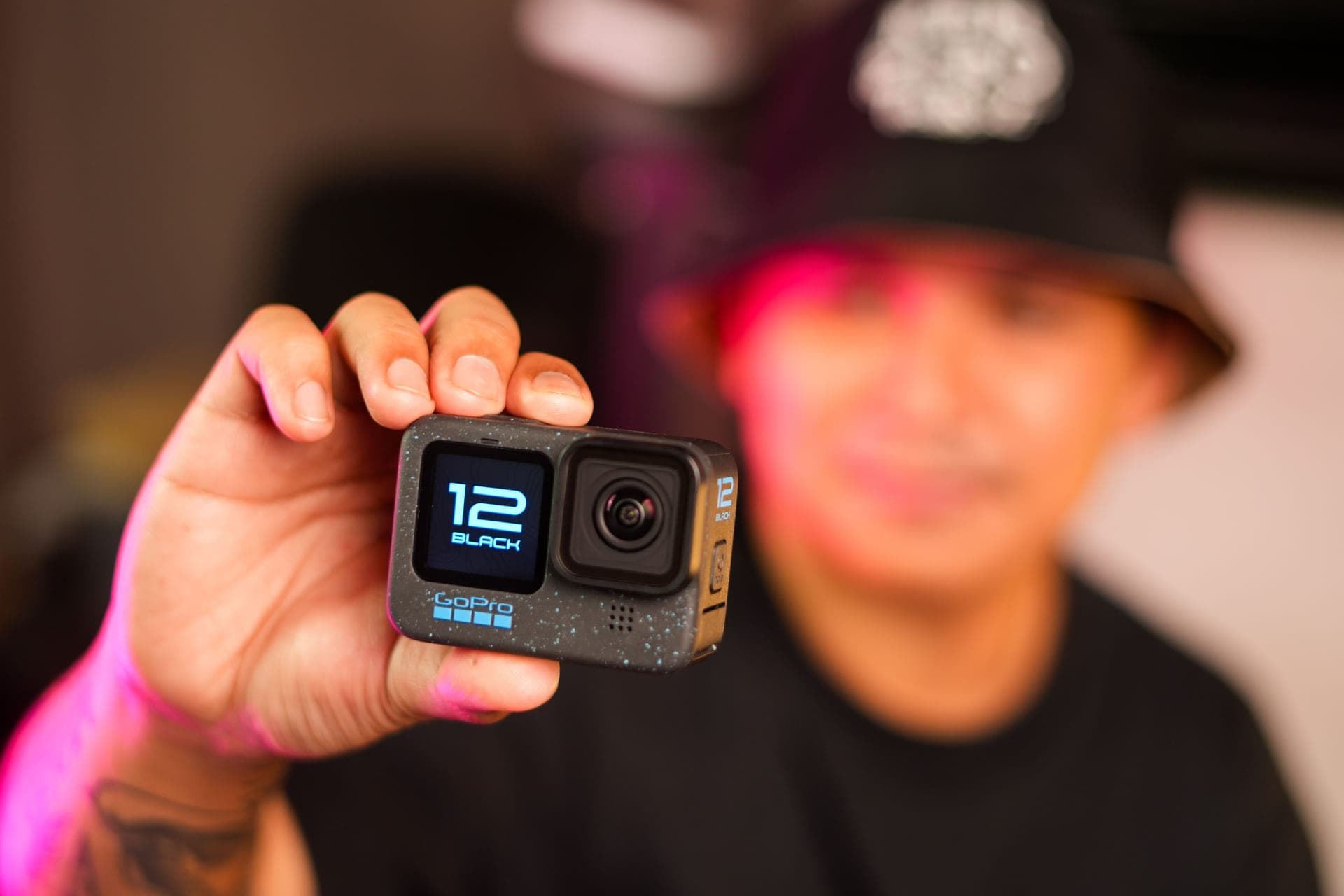 Insta360 Ace Pro 2 The best-looking image of the three flagships, with a flip screen that finally makes a chest-mounted shot something you can frame. | Family trips where you want the footage to look like more than dashcam clips | 8.6/ 10 | |
| 04 |  Insta360 X5 15m rated, replaceable lenses, and the one camera that means you never have to aim while you are paddling. | Anyone filming themselves on the water who cannot stop to frame a shot | 9.1/ 10 | |
| 05 |  DJI Osmo Action 4 The previous DJI flagship, still 18m bare and still on shelves — the most water rating per dollar in this list. | Buyers who want deep-water capability without paying flagship money | 8.5/ 10 |
Scores are our editorial judgment from published specs and named independent reviews, weighted for lake and trail use — not measurements. We have not tested these units and do not own them.
02
How we picked
We do not lab-test, bench-test or dive-test cameras, and we do not own test units. What we do instead is read the manufacturer's published specifications, read the independent reviews that genuinely do test, read owner reports for the failure modes specs never mention — fogging, salt corrosion, cold battery collapse, mount slippage — and then weight all of it for action cameras used on lake and trail. Where a number is not published, the page says “not published” rather than filling the cell.
The full method, including what we refuse to do, is on the editorial policy page.
- 30%Water survival
- Rated depth without a case, door design, and what the manufacturer actually publishes.
- 25%Stabilization in chop
- A kayak deck and a rooty trail shake in ways a handheld walk test never shows.
- 20%Battery in the cold
- Published runtime, spare-battery cost, and whether it charges while recording.
- 15%Mount ecosystem
- Finger mount, threaded, magnetic — and how much of it you have to re-buy.
- 10%Footage you will keep
- Lens replaceability, low-light behavior, and how much cutting the footage needs.
Why trail breaks stabilization
Every action camera handles smooth motion beautifully, which is why every review walks down a street with one. That test tells you almost nothing about mountain biking.
A bike on trail delivers two things a footpath does not. Sharp repetitive impact — roots, rocks, braking bumps — arriving faster than a stabilization system can smoothly compensate for. And rotation: a berm, a steep chute or a lean into a corner rolls the camera through angles that make footage genuinely disorienting unless the horizon is locked.
That is why horizon lock matters as much as the stabilization itself on trail, and why it is worth checking a camera has it before you buy for riding — the stabilization comparison covers which system does what.
Where to mount it, which matters more than which you buy
| Position | Shows | Steadiness | Best for |
|---|---|---|---|
| Chest | Your hands, the bars, the trail arriving | Steadiest — your torso barely rotates | Most riding footage |
| Helmet | Where you are looking | Good — your neck damps impact | Technical lines, looking through corners |
| Bars | The trail, very close, very fast | Shakiest — every impact goes through it | Flow trail, drama |
| Seatpost, facing back | You, riding | Moderate | Self-filming without a 360 camera |
If you are buying one mount, buy a chest harness. It is the steadiest, the most flattering, and it shows the hands and the bike, which is what makes riding footage readable — chest versus helmet compares the top two properly.
The low-light problem
Trail riding happens under trees, often in the last usable hour of the day, and that combination is a harder exposure than anything on open water. Dappled light through canopy is also the worst case for auto exposure, which hunts constantly between bright patches and deep shade.
Two things help. A larger sensor genuinely matters here — it is the strongest argument for the Insta360 Ace Pro 2 on this list. And locking exposure rather than leaving it automatic stops the hunting, at the cost of blowing out the brightest patches. Neither is a complete fix; riding an hour earlier is.
Shot length, and why trail footage goes unwatched
A 45-minute descent recorded continuously produces a 45-minute file, and nobody watches it — not friends, not family, and usually not the rider either.
Trail footage works in short pieces: the technical section, the drop, the bit where the light came through. Thirty to ninety seconds at a time, deliberately. You come home with less footage and far more of it usable, the battery lasts the ride, and the camera runs cooler — overheating on long clips is a real limit on warm days.
03
Every pick, in detail
- 33ft (10m), no housing
- 1900mAh Enduro
- 1.5h at 5.3K30 / 2.5h at 1080p30
- 8.0
- 9.5
- 8.5
- 9.5
- 9.0
GoPro HERO13 Black
GoPro
The safest default for lake and trail: 33ft without a housing, the steadiest footage in the category, and a mount for literally everything.
Anyone who wants one camera to handle the kayak, the bike and the family trip
On trail, stabilization is not one factor among several — it is most of the decision, and HyperSmooth 6.0 with AutoBoost is the strongest published system in the category. 360 Horizon Lock is the other half: keeping the horizon level through a berm is what turns a disorienting clip into a watchable one. The mount ecosystem seals it, because bike and helmet mounting is overwhelmingly built around this fitting.
- HyperSmooth 6.0 with AutoBoost is the steadiest stabilization we can find published figures for
- Built-in mounting fingers plus 1/4-20 threads — it fits the GoPro ecosystem and a normal tripod
- Enduro battery is rated to keep full camera functionality down to 14°F (-10°C)
- Replaceable lens cover, so a scratched lens is a $20 problem and not a $400 one
- 33ft is shallower than the DJI and it is the shallowest of the three flagships
- Anything past 33ft needs the separate Protective Housing
- HB-Series lenses and ND filters are all extra purchases
Specs from GoPro HERO13 Black published specifications.
- 20m bare / 60m with case
- 1950mAh · 240 min at 1080p24
- -20° to 45°C
- 9.5
- 9.0
- 9.5
- 8.0
- 9.0
DJI Osmo Action 5 Pro
DJI
Goes to 20m with no housing at all and publishes a 240-minute runtime — the two numbers that decide a long, wet, cold day.
Long paddles, cold water, and anyone tired of buying a housing to get past 10m
RockSteady 3.0 is very close behind, and DJI wins the things that matter on a long ride: 240 published minutes and a -20°C operating range for winter. The magnetic quick-release is excellent with gloves and is not a mechanical lock — on a helmet or rough descent, use the two-prong adapter.
- 20m without the Waterproof Case — double the bare-camera depth of the HERO13 Black
- DJI publishes 240 minutes of recording at 1080p/24 with screens off, the longest figure in this set
- Rated to -20°C, which matters more on an October lake than any resolution number
- 1/1.3-inch sensor holds detail when the light goes flat
- Mount ecosystem is smaller than GoPro's, and magnetic quick-release adapters are their own purchase
- 146g — the heaviest of the flagship three
- Fewer third-party mounts and filters exist for it
Specs from DJI Osmo Action 5 Pro published specifications.
- 39ft (12m) / 60m with dive case
- 1800mAh · 180 min published
- 1/1.3" with Leica lens
- 8.5
- 8.5
- 9.0
- 7.5
- 9.5
Insta360 Ace Pro 2
Insta360
The best-looking image of the three flagships, with a flip screen that finally makes a chest-mounted shot something you can frame.
Family trips where you want the footage to look like more than dashcam clips
The largest sensor here, which matters more on trail than people expect: a ride at four in the afternoon under tree cover is a genuinely difficult exposure, and this is the camera that handles it best. Stabilization is a step behind the two above it in the roughest sections.
- 8K30 with a 1/1.3-inch sensor — the most detail in the group
- 12m bare, which clears every snorkel depth without a housing
- 180-minute published battery life and 80% charge in 18 minutes
- Flip screen means you can frame a shot you are standing in front of
- 12m is still short of the DJI's 20m
- The dive case is a separate purchase for anything past 12m
- Fewer mount options than GoPro, and an adapter tax if you switch
Specs from Insta360 Ace Pro 2 published specifications.
- IP68 to 49ft (15m)
- 2400mAh · ~88 min at 8K30
- User-replaceable
- 9.5
- 9.5
- 9.0
- 8.5
- 7.5
Insta360 X5
Insta360
15m rated, replaceable lenses, and the one camera that means you never have to aim while you are paddling.
Anyone filming themselves on the water who cannot stop to frame a shot
The self-filming answer. Riding alone with a flat camera gives you footage of a trail; a 360 camera on a bar-mounted pole gives you footage of you riding it. The cost is a reframing pass on every clip, which after a long ride is a real consideration — the 360 trail comparison covers it.
- 15m IP68 is the deepest bare rating of any camera on this site
- User-replaceable lenses — the single biggest fix for the 360 format's worst failure mode
- 185 minutes in Endurance mode at 5.7K24, which is a whole day of clips
- Invisible-selfie-stick reframing means you point the camera at nothing and pick the angle later
- Exposed lenses still scratch; lens guards are a purchase, not an option
- Every clip needs a reframing pass before anyone else can watch it
- 8K30 files are large and the edit is slower than flat footage
Specs from CineD, Insta360 X5 announcement with published specifications.
- 18m bare / 60m with case
- 1770mAh · 160 min at 1080p24
- -20° to 45°C
- 9.0
- 8.5
- 8.5
- 8.0
- 8.0
DJI Osmo Action 4
DJI
The previous DJI flagship, still 18m bare and still on shelves — the most water rating per dollar in this list.
Buyers who want deep-water capability without paying flagship money
The value pick. Same stabilization family, same 1/1.3-inch sensor, same -20°C range, at a superseded price. It gives up 80 minutes of published runtime and a brighter front screen, neither of which ends a ride.
- 18m without a case still beats every current GoPro by a wide margin
- Same 1/1.3-inch sensor size as the Action 5 Pro
- Rated to -20°C like its replacement
- Usually the cheapest way into serious bare-camera depth
- 160 minutes published against the Action 5 Pro's 240
- Superseded, so accessories and support will taper off first
- No front OLED — the Action 5 Pro's front screen is genuinely more useful for framing
Specs from DJI Osmo Action 4 published specifications.
04
What decides this category
Stabilization, and specifically horizon lock
Check both. Excellent stabilization without horizon lock still produces disorienting footage through berms and off-camber corners, because the whole frame rolls with the bike.
Mount interface, because bike mounting is a GoPro world
Bar clamps, helmet mounts, chest harnesses and seatpost fittings are overwhelmingly built around the two-prong finger interface. Other brands adapt, and each adapter adds height and a flex point on a platform that is already vibrating.
Sensor size, for the last hour of light
The difference between a 1/1.3-inch and a 1/1.9-inch sensor is invisible at midday and obvious under tree cover at dusk. If most of your riding is after work, weight this heavily.
Cold, if you ride through winter
DJI publishes -20°C to 45°C for both Osmo bodies. GoPro publishes full camera functionality down to 14°F with the Enduro battery. Keep the spare in an inside pocket either way.
What we would skip
A gimbal — electronic stabilization has closed that gap and a gimbal on a bike is one more thing to charge, mount and knock off (the full reasoning). Also skip an external microphone: wind noise at speed defeats them, and most riding footage ends up with music anyway.
05
Questions people actually ask
01What is the best action camera for mountain biking?
The GoPro HERO13 Black, on stabilization and mounting — the two things that decide trail footage. The DJI Osmo Action 5 Pro is close behind and better for long, cold rides.
02Chest mount or helmet mount for mountain biking?
Chest for most riding: steadier, shows the hands and bars, and reads better. Helmet when you want the footage to follow your eyeline through technical sections — the comparison goes further.
03Why does my mountain bike footage look so shaky?
Usually a bar mount. Handlebars take every impact the front wheel does, and no stabilization fully removes that. Move to a chest mount and the same camera looks like a different one.
04Is horizon lock worth it for riding?
Yes — arguably more than on any other activity. Berms and off-camber corners roll the whole frame, and keeping the horizon level is the difference between watchable and disorienting.
05Can I mount a camera to my helmet safely?
Check your helmet manufacturer's guidance first — some advise against attaching anything to the shell, and adhesive is a one-shot decision. Where it is permitted, a curved adhesive pad with a swivel mount is the standard approach.
06How long will the battery last on a ride?
Far longer than you expect if you shoot in bursts, and far less than published if you record continuously. Published runtimes are measured at 1080p with the screens off. Carry a spare in winter.
06
Read this next
Bike and handlebar mounts
The hardware for each of the three positions.
Chest mount vs helmet mount
The decision that changes your footage more than the camera does.
HyperSmooth vs FlowState vs RockSteady
What each stabilization system actually does, and where it gives up.
Best budget camera for mountain biking
Where the cheaper options genuinely fall down on trail.
Best action cameras for a helmet
If the helmet position is the one you have chosen.
07
Sources
- GoPro HERO13 Black published specifications
- DJI Osmo Action 5 Pro specifications
- GoPro Helmet Front + Side Mount product page
- Insta360 Ace Pro 2 published specifications
- CineD, Insta360 X5 announcement with published specifications
- DJI Osmo Action 4 published specifications
Specifications are quoted from the manufacturer pages above as they read on the dates shown. Where a figure is not published, this site says so rather than estimating one. We have not tested these products.