Chest mount vs helmet mount
The most consequential mounting decision most people make, and the one they make by accident.
Part of Mounts.
We earn a commission if you buy through our links, at no extra cost to you. It never changes what we recommend or the order we rank it in — how this works.
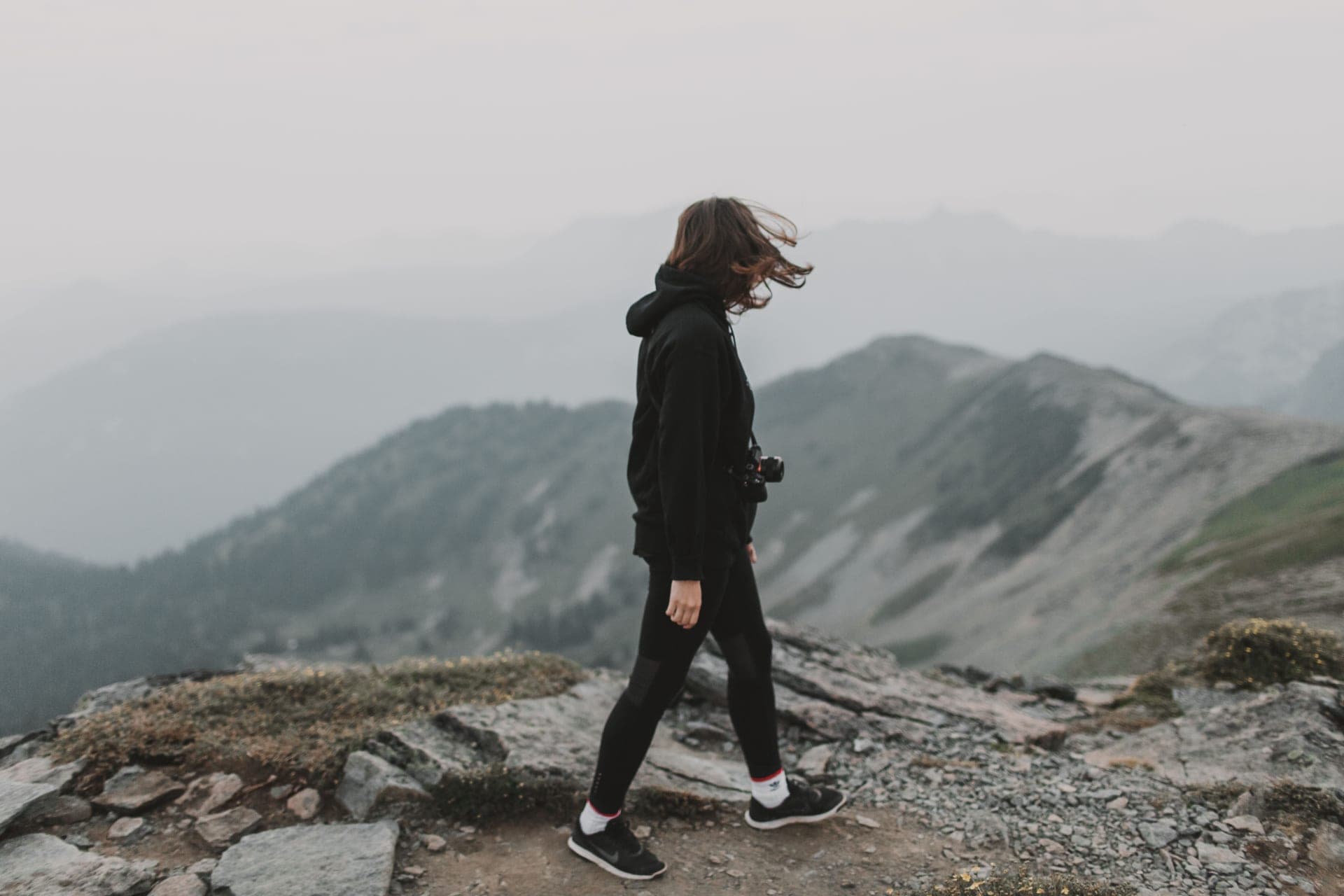
The comparison
| Chest | Helmet | |
|---|---|---|
| Steadiness | Best — torso rotates least | Good — neck damps impact, but every glance is a pan |
| Shows your hands | Yes — paddle, bars, poles | No |
| Follows your eyeline | No | Yes |
| Perceived speed | Exaggerated, flatteringly | Realistic |
| Wind noise | Sheltered by your body | Directly in the airflow |
| Comfort over hours | Good, if adjusted over your layers | Neck fatigue with a heavy camera |
| Safety considerations | None | Check your helmet maker's guidance |
| Catches on things | No | Yes — branches, lift bars, car roofs |
| Setup risk | Angle drifts as straps settle | Adhesive is one-shot |
Why chest is steadier than people expect
It is not only about impact absorption. The bigger factor is involuntary movement.
Your head moves constantly and you do not notice: checking a line, glancing at a friend, looking at the view, turning into a corner. On a helmet camera every one of those is a camera pan, and the footage reads as restless even when the riding was smooth.
Your torso does almost none of that. It rotates slowly, stays level, and points roughly where you are going. Combined with electronic stabilization, that produces footage that looks deliberate rather than distracted.
Why hands matter more than eyeline
This is the argument most people have not heard, and it is the strongest one for the chest position.
Point-of-view footage with nothing in the foreground is hard to read. There is no scale, no sense of speed, and nothing that connects the viewer to a person. It could be footage from a drone or a dashcam.
Hands fix that instantly. A paddle entering the water tells you the pace, the effort and the direction. Bars moving under braking tell you the terrain is rough. Poles planting tell you it is steep. The foreground is what makes the background legible.
A helmet camera has no foreground, which is why helmet footage of a beautiful view often looks like less than it was.
Where the helmet genuinely wins
Technical riding where line choice is the story. If the interesting thing is which way you went through a rock garden, the camera should look where you looked.
Following someone. A helmet camera tracks the rider in front as you turn; a chest camera loses them in every corner.
When something is above you. Climbing, canyon walls, tree cover. A chest mount points forward and slightly down.
When a chest mount conflicts with your kit. A pack sternum strap or a bulky PFD can simply occupy the space — the chest mount guide covers fitting over layers.
Wind noise, where chest wins clearly
A helmet puts the microphone directly in undisturbed airflow at the highest point on your body. Above about 15 mph it records mostly wind, and this is close to unfixable at the camera.
A chest-mounted camera sits in the turbulent, sheltered pocket in front of your body, and records noticeably less wind. If you want any usable audio from a moving activity, chest is the position.
The safety asymmetry
Worth stating plainly because it is not symmetrical. A chest mount raises no safety questions. A helmet mount does: some manufacturers advise against attaching anything to the shell, and some state it affects certification, because a mount can change how a shell behaves in an impact.
Check the guidance for your specific helmet before committing, and note that adhesive is permanent. Where mounting is not advised, the chest position gives you steadier footage anyway — the helmet mount guide has the detail.
Where each one loses
Chest loses when you need the camera to look where you look, when something is above you, and when a pack strap is in the way. It also cannot ever show you.
Helmet loses on wind noise, on involuntary camera movement, on the foreground that makes footage legible, and on neck fatigue with a heavy camera over a long day. It also raises a safety question the chest position does not.
01
The two mounts
Both cheap relative to a camera, and plenty of people end up owning both.
- Adjustable, fits over heavy winter jackets
- Quick-release buckle, usable with gloves
- Harness, vertical buckle, thumb screw
- 8.0
- 9.0
- 7.0
- 8.5
- 8.0
GoPro Chesty Performance Chest Mount
GoPro
The mount that shows your hands — which on a kayak means the paddle, and on a bike means the trail arriving.
Paddling and riding footage where the hands are the story
- Padded and breathable, and genuinely adjustable across body types and layers
- The quick-release buckle works with gloves on, which matters in cold water
- Lower and steadier than a helmet mount — less head-turn, less nausea in the edit
- Shows the paddle stroke, which is the shot most people are actually trying to get
- A PFD over the top changes the angle, so set it up wearing what you will actually wear
- Sits low; on a sit-inside kayak it can end up framing mostly deck
- Nothing about it is waterproof — it gets wet and stays wet
Specs from GoPro Chesty product page.
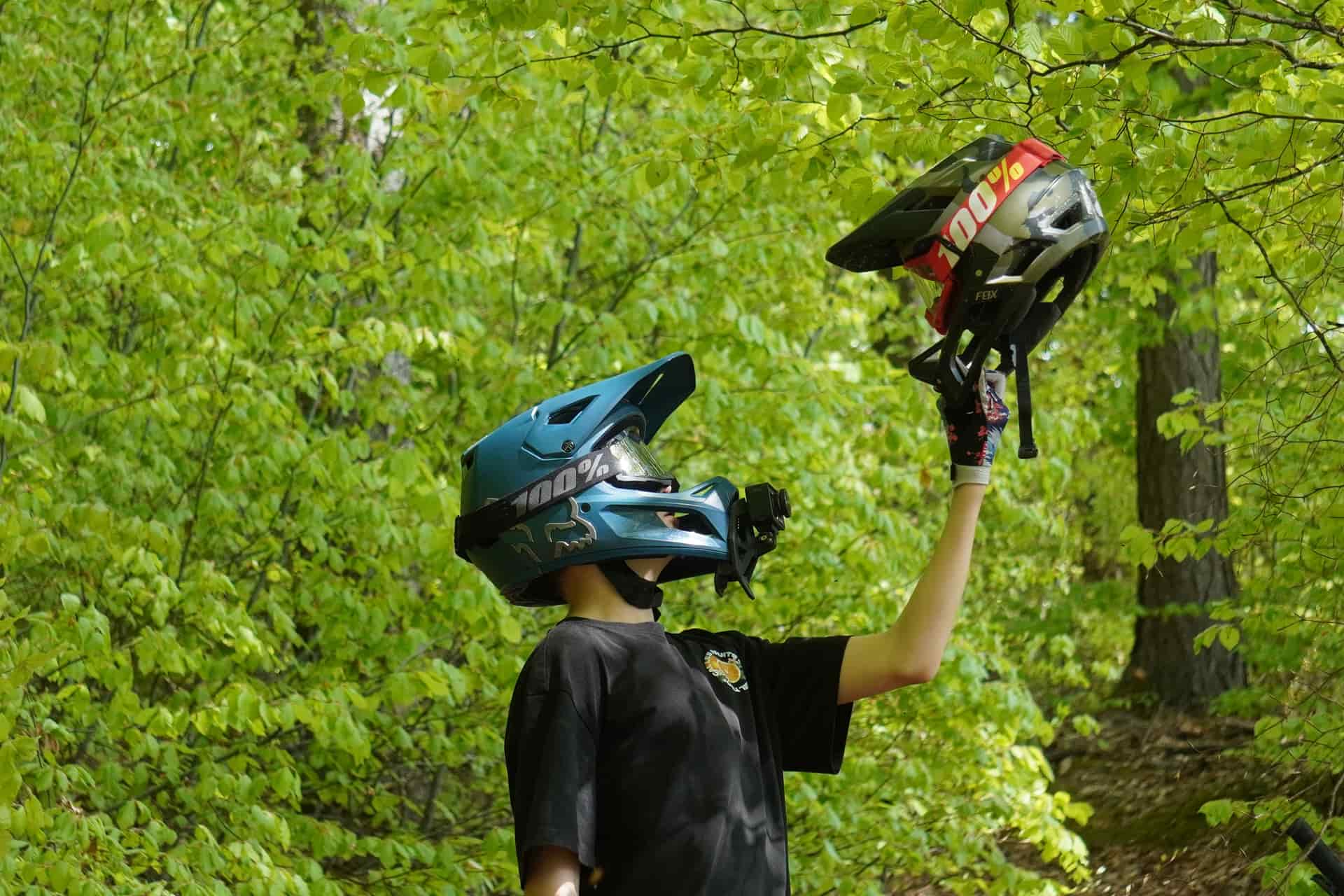
- Swivel mount, 2 curved adhesive mounts
- Vertical mounting buckle and thumb screw
- Curved helmet shells
- 8.5
- 8.0
- 8.0
- 9.0
- 6.5
GoPro Helmet Front + Side Mount
GoPro
A swivel assembly and two curved adhesive pads — the only official way to get a side-of-helmet angle that is not a chin bar.
Bike and ski helmets where a top mount is too tall and a chest mount sees too little
- The swivel assembly means you set the angle once and ride, instead of guessing
- Curved adhesive pads are made for helmet shells rather than flat panels
- Side mounting keeps the camera out of the wind better than a top mount
- Industrial-strength waterproof adhesive from the same family as the curved and flat mounts
- Adhesive is a one-shot decision — get the position right before you press
- Removing it means heating the adhesive with a hair dryer
- Adds a side profile that some helmet certifications discourage; check yours
Specs from GoPro Helmet Front + Side Mount product page.
02
How we picked
We do not lab-test, bench-test or dive-test cameras, and we do not own test units. What we do instead is read the manufacturer's published specifications, read the independent reviews that genuinely do test, read owner reports for the failure modes specs never mention — fogging, salt corrosion, cold battery collapse, mount slippage — and then weight all of it for mounts used on lake and trail. Where a number is not published, the page says “not published” rather than filling the cell.
The full method, including what we refuse to do, is on the editorial policy page.
- 35%Hold under load
- Vibration, chop and a wet hull are what actually break a mount.
- 25%Fit range
- Rail width, bar diameter, helmet curve — the spec that decides whether it fits at all.
- 20%Water and salt tolerance
- Stainless vs plated hardware, and what happens after a season of rinses.
- 12%Adjustability
- Getting the angle right on the water, with cold hands.
- 8%Tether point
- A mount with nowhere to clip a leash is a mount that loses cameras.
03
Questions people actually ask
01Is a chest mount better than a helmet mount?
For most footage, yes: steadier, less wind noise, and it shows your hands, which is what makes point-of-view footage readable. The helmet wins when where you are looking is the story.
02Which is better for mountain biking?
Chest for general riding, helmet for technical sections where line choice matters. The MTB roundup goes further.
03Which is better for skiing?
Chest, usually — steadier, less wind, and it adjusts over a ski jacket. It also avoids the helmet certification question entirely, which on a ski helmet is worth checking.
04Which has less wind noise?
Chest, clearly. A helmet puts the microphone in undisturbed airflow at the highest point on your body; a chest mount sits in a sheltered pocket in front of you.
05Can I use a chest mount for kayaking?
Yes, and it is genuinely good — it shows the paddle, which is the shot that makes paddling footage work. Fit it over your PFD and tilt it up more than feels right.
06Do I need both?
Plenty of people end up with both, because cutting between two angles is most of what makes an edit work. If you buy one, buy the chest mount.
04
Read this next
Best chest mounts
How to set one up over a PFD or a winter jacket.
Best helmet mounts
Front, side or strap — and the certification question.
Best action cameras for mountain biking
The camera that goes on whichever you chose.
Bike and handlebar mounts
The third option, and why it is the shakiest.
Best action cameras for skiing
Where the chest position avoids a helmet question.
05
Sources
Specifications are quoted from the manufacturer pages above as they read on the dates shown. Where a figure is not published, this site says so rather than estimating one. We have not tested these products.