The best budget action cameras for mountain biking
Trail is the hardest test of the thing budget cameras cut first. Here is where the line actually falls.
Part of On the Trail.
We earn a commission if you buy through our links, at no extra cost to you. It never changes what we recommend or the order we rank it in — how this works.
01
Quick picks
| # | Product | Best for | Score | Price |
|---|---|---|---|---|
| 01 | DJI Osmo Action 4 The previous DJI flagship, still 18m bare and still on shelves — the most water rating per dollar in this list. | Buyers who want deep-water capability without paying flagship money | 8.5/ 10 | |
| 02 | 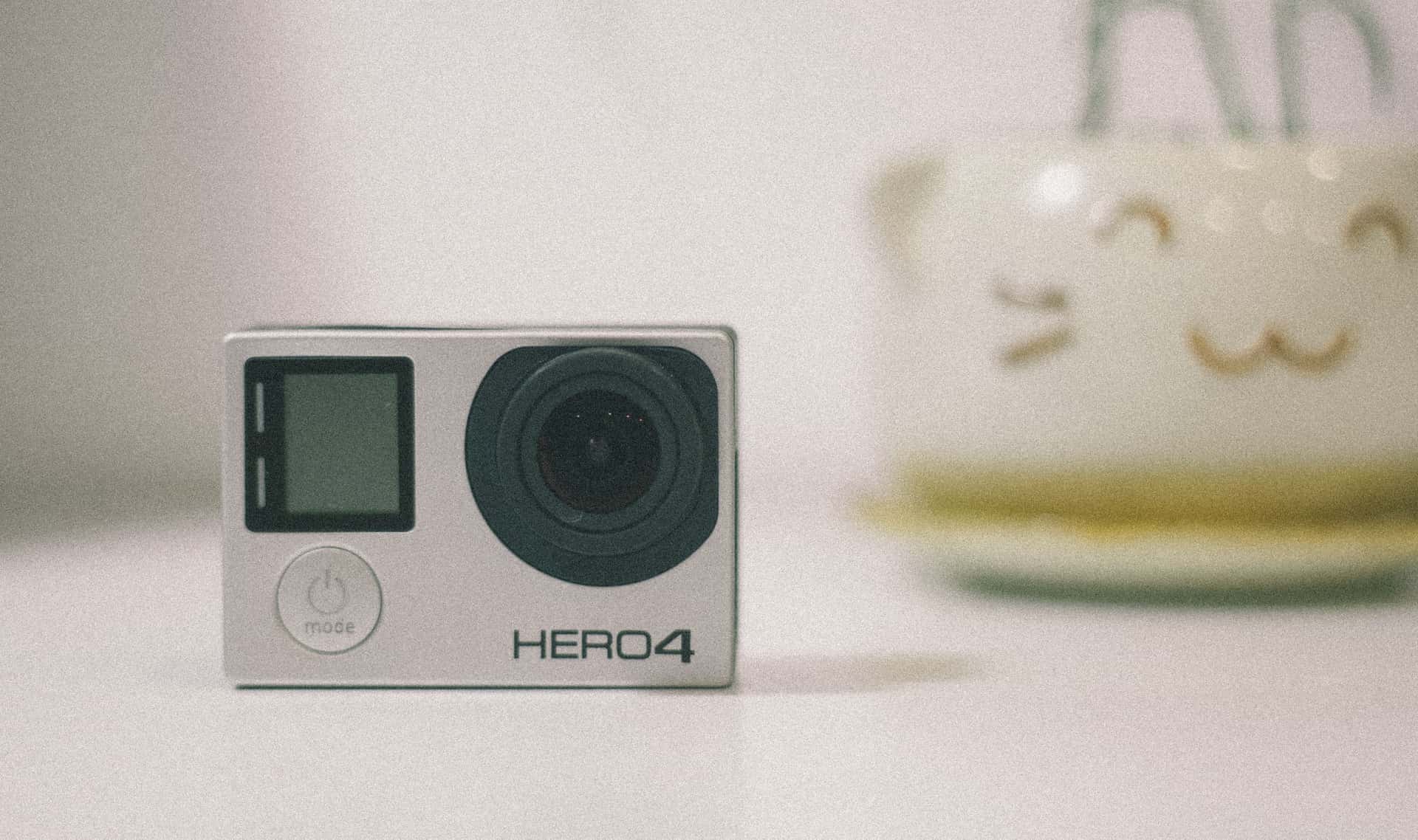 GoPro HERO (2024) The cheapest real GoPro, and the one whose 16ft rating you have to take seriously before you take it snorkeling. | A first camera, a kid's camera, or a second angle that mounts anywhere | 7.1/ 10 | |
| 03 |  AKASO Brave 8 Lite Two batteries and a bag of mounts in the box at a fraction of flagship money — buy it knowing the stabilization gives up first. | A pool, a calm lake, a first camera you are not precious about | 7.4/ 10 | |
| 04 |  Insta360 GO Ultra 53 grams and IPX8 to 10m on its own — the camera you actually clip on for a paddle instead of leaving in the dry bag. | Hands-free clips where a full-size camera would never leave the bag | 7.6/ 10 |
Scores are our editorial judgment from published specs and named independent reviews, weighted for lake and trail use — not measurements. We have not tested these units and do not own them.
02
How we picked
We do not lab-test, bench-test or dive-test cameras, and we do not own test units. What we do instead is read the manufacturer's published specifications, read the independent reviews that genuinely do test, read owner reports for the failure modes specs never mention — fogging, salt corrosion, cold battery collapse, mount slippage — and then weight all of it for action cameras used on lake and trail. Where a number is not published, the page says “not published” rather than filling the cell.
The full method, including what we refuse to do, is on the editorial policy page.
- 30%Water survival
- Rated depth without a case, door design, and what the manufacturer actually publishes.
- 25%Stabilization in chop
- A kayak deck and a rooty trail shake in ways a handheld walk test never shows.
- 20%Battery in the cold
- Published runtime, spare-battery cost, and whether it charges while recording.
- 15%Mount ecosystem
- Finger mount, threaded, magnetic — and how much of it you have to re-buy.
- 10%Footage you will keep
- Lens replaceability, low-light behavior, and how much cutting the footage needs.
Why trail is the hardest budget test
Budget action cameras have improved enormously, and on flat water or a gravel path the gap to a flagship is genuinely small. Mountain biking is where that stops being true, because trail delivers exactly the thing budget cameras cut first.
Stabilization systems work by cropping into the sensor and computing a steadier frame from a moving one. Smooth motion is straightforward. What is hard is sharp, repetitive, high-frequency impact— roots, braking bumps, rock — arriving faster than the system can smoothly compensate for. That is expensive to do well, and it is the first thing to go at a lower price.
The second is horizon lock. Berms and off-camber corners roll the whole frame, and budget systems often either lack a horizon-lock mode or offer a limited version that gives up past a certain angle. On a bike that shows immediately.
The line, stated plainly
Flow trail, gravel, smooth singletrack, fire road: a budget camera is genuinely fine, and most people would struggle to pick it out of a lineup.
Rooty, rocky, technical descents: the gap is large and immediately visible. The footage does not look slightly worse; it looks like a different quality of thing.
That is the whole decision. Be honest about which describes your riding, because buying a budget camera for chunk is the one purchase on this site people most reliably regret.
Where a budget camera is genuinely the right call
As a second angle. Two cameras produce far better footage than one, because cutting between angles is most of what makes a trail edit work. A cheap second camera on the bars while your main camera is on your chest is a better upgrade than spending the same money going one model up.
When it might get destroyed. A camera low on a downtube, on a jump line, or on a bike you are lending to someone. Cheap cameras are easier to be relaxed about, and relaxed is how you get the interesting angles.
While you work out what you want. Buying cheap first and discovering you always use a chest mount on flow trail is a useful thing to learn for very little money.
Where not to save on a trail setup
The mount. A flexing plastic clamp on a bar adds wobble that stabilization then has to remove, so a cheap mount actively undoes what an expensive camera does. Bike mounts covers the difference.
The card. A slow card drops frames or stops recording mid-descent, and you find out at home. V30 is the floor — the card roundup.
The thumb screw, oddly. The supplied plastic one is the single most annoying part of a budget setup, and a metal replacement costs almost nothing.
03
Every pick, in detail
- 18m bare / 60m with case
- 1770mAh · 160 min at 1080p24
- -20° to 45°C
- 9.0
- 8.5
- 8.5
- 8.0
- 8.0
DJI Osmo Action 4
DJI
The previous DJI flagship, still 18m bare and still on shelves — the most water rating per dollar in this list.
Buyers who want deep-water capability without paying flagship money
The clear winner, and it is not really a budget camera — it is a superseded flagship. RockSteady 3.0 is the same stabilization family as the current model, the sensor is the same 1/1.3-inch, and the -20°C range covers winter riding. On trail, where stabilization is the whole decision, buying last year's flagship beats buying this year's budget model every time.
- 18m without a case still beats every current GoPro by a wide margin
- Same 1/1.3-inch sensor size as the Action 5 Pro
- Rated to -20°C like its replacement
- Usually the cheapest way into serious bare-camera depth
- 160 minutes published against the Action 5 Pro's 240
- Superseded, so accessories and support will taper off first
- No front OLED — the Action 5 Pro's front screen is genuinely more useful for framing
Specs from DJI Osmo Action 4 published specifications.
- 16ft (5m)
- 4K30, 2.7K60 slo-mo
- Built in, not user-removable
- 6.0
- 7.5
- 6.0
- 9.0
- 7.0
GoPro HERO (2024)
GoPro
The cheapest real GoPro, and the one whose 16ft rating you have to take seriously before you take it snorkeling.
A first camera, a kid's camera, or a second angle that mounts anywhere
HyperSmooth at the cheapest GoPro price, with built-in mounting fingers and 46% less mass than the HERO13 Black — which on a helmet is a genuine advantage. Two limits: 4K30 is the ceiling, and the built-in battery means a power bank rather than a spare.
- Genuinely tiny — 46% less mass than HERO13 Black
- Built-in mounting fingers, and GoPro lists it as compatible with 35+ mounts
- HyperSmooth stabilization at the lowest GoPro price
- Simple enough to hand to someone who has never used one
- 16ft (5m) is a snorkel-adjacent rating, not a diving one
- The battery is built in — you cannot carry a spare, you carry a power bank
- 4K30 is the ceiling; no 4K60, no high-frame-rate 4K
Specs from GoPro HERO published specifications.
- IPX8 10m / 60m with case
- 2 × 1550mAh included
- 140 min at 4K / 150 min at 1080p
- 7.5
- 6.5
- 8.0
- 8.5
- 6.5
AKASO Brave 8 Lite
AKASO
Two batteries and a bag of mounts in the box at a fraction of flagship money — buy it knowing the stabilization gives up first.
A pool, a calm lake, a first camera you are not precious about
Everything in the box, including seven mounts and two batteries, which on a first trail camera removes a second purchase. This is also where the honest line falls: SuperSmooth handles flow trail and gives up on chunk, and no setting recovers it.
- IPX8 to 10m bare, which matches the HERO13 Black's rating on paper
- Ships with two batteries, a charger and seven mounts — nothing else to buy on day one
- 4K60 and dual screens at a price well under the flagships
- Uses GoPro-standard two-prong mounting, so the whole accessory world fits
- SuperSmooth stabilization is a step behind HyperSmooth and RockSteady in chop
- The 60m rating belongs to the separate housing, not the camera
- Low light is where the price shows most
Specs from AKASO Brave 8 Lite published specifications.
- IPX8 to 33ft (10m), camera only
- 53g
- Up to 170 min with the Action Pod
- 7.0
- 8.0
- 7.5
- 8.0
- 8.0
Insta360 GO Ultra
Insta360
53 grams and IPX8 to 10m on its own — the camera you actually clip on for a paddle instead of leaving in the dry bag.
Hands-free clips where a full-size camera would never leave the bag
Not the cheapest, but the lightest by a wide margin — and on a helmet, weight is leverage. Magnetic mounting is fast and is not a mechanical lock, so for genuinely rough descents use a clip rather than the magnet alone.
- 53g means it goes on a hat brim, a PFD strap or a chest magnet and you forget it is there
- IPX8 to 10m for the camera itself, with a 1/1.28" sensor that is far larger than the size suggests
- Action Pod adds a flip screen and the long runtime when you want it
- Removable microSD, so you are not stuck with fixed onboard storage
- The Action Pod is not rated to the same depth as the camera — read the two ratings separately
- Magnetic mounting is convenient but is not a mechanical lock in real chop
- No interchangeable lens cover, so a scratch is permanent
Specs from Insta360 GO Ultra published specifications.
04
What decides this category
Prefer a superseded flagship
On trail this is the strongest advice on the page. Stabilization is what decides the footage, it is what budget models cut, and a last-generation flagship keeps it.
Check for horizon lock specifically
Not just “has stabilization”. Berms roll the frame, and a camera without horizon lock produces footage that tilts through every corner.
Two-prong mounting
Almost all bike and helmet hardware assumes it. A budget camera with a proprietary mount is a camera that will cost you more later.
Count the batteries
Two in the box is meaningful money at this price point. A built-in battery means a power bank and a cable, which on a bike is a snag.
What we would skip
The twenty-piece bundle as a reason to buy. Most of it is mounts for activities you do not do, in plastic that flexes on the ones you do. Two good mounts beat twenty poor ones.
05
Questions people actually ask
01Can a budget action camera handle mountain biking?
On flow trail and gravel, comfortably. On rooty, rocky descents the stabilization gives up in a way that is immediately visible and that no setting recovers. Be honest about which you ride.
02What is the best cheap camera for mountain biking?
A superseded flagship — the DJI Osmo Action 4 is the current example. It keeps the stabilization family and sensor of the current model at a discounted price, which on trail matters more than anything else.
03Why does my cheap camera's footage look shaky on trail?
Budget stabilization handles smooth motion and gives up on sharp repetitive impact, which is exactly what roots and rock deliver. Moving from a bar mount to a chest mount helps more than any setting will.
04Is a used GoPro a good budget trail camera?
Usually the best value available. A two-generation-old body keeps most of the stabilization and all of the mount ecosystem. Inspect the door gasket if it will see rain.
05Should I buy one good camera or two cheap ones?
For trail editing specifically, two angles beat one better angle — cutting between a chest and a bar view is most of what makes a riding edit watchable.
06
Read this next
Best action cameras for mountain biking
The full list, including what the extra money actually buys.
Best budget action cameras
The wider budget picture, across every activity.
Bike and handlebar mounts
Where a cheap mount undoes what an expensive camera does.
Stabilization systems compared
What each one does, and where each gives up.
Best SD cards for action cameras
The one place a budget choice costs you footage.
07
Sources
- DJI Osmo Action 4 specifications
- AKASO Brave 8 Lite specifications
- GoPro HERO (2024) published specifications
- Insta360 GO Ultra published specifications
Specifications are quoted from the manufacturer pages above as they read on the dates shown. Where a figure is not published, this site says so rather than estimating one. We have not tested these products.