The best action cameras for road cycling
Smooth tarmac solves the shake. What it does not solve is a four-hour ride, a crowded handlebar and the fact that the camera you want pointing backwards is the one nobody sells you.
Part of On the Trail.
We earn a commission if you buy through our links, at no extra cost to you. It never changes what we recommend or the order we rank it in — how this works.
01
Quick picks
| # | Product | Best for | Score | Price |
|---|---|---|---|---|
| 01 | 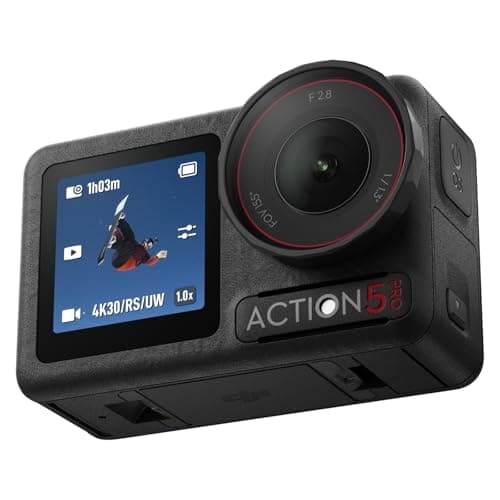 DJI Osmo Action 5 Pro Goes to 20m with no housing at all and publishes a 240-minute runtime — the two numbers that decide a long, wet, cold day. | Long paddles, cold water, and anyone tired of buying a housing to get past 10m | 9.1/ 10 | |
| 02 | 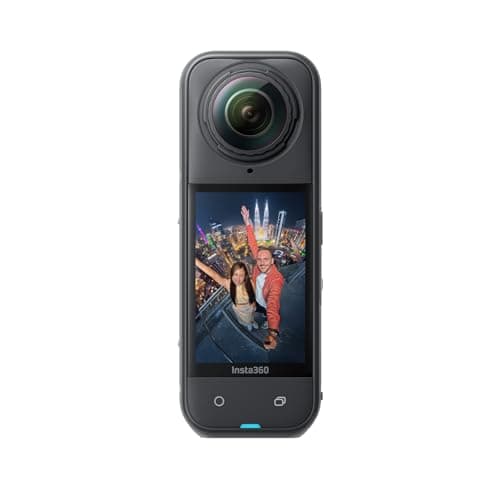 Insta360 X5 15m rated, replaceable lenses, and the one camera that means you never have to aim while you are paddling. | Anyone filming themselves on the water who cannot stop to frame a shot | 9.1/ 10 | |
| 03 | 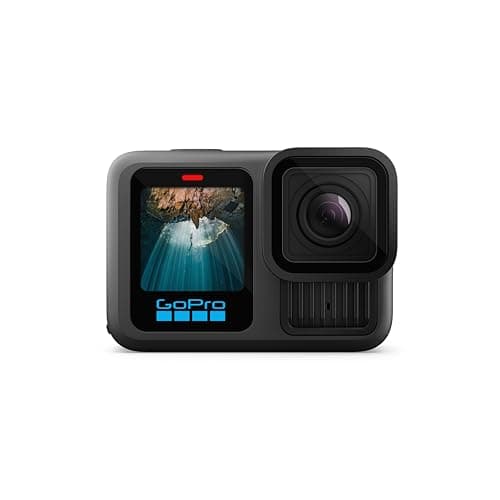 GoPro HERO13 Black The safest default for lake and trail: 33ft without a housing, the steadiest footage in the category, and a mount for literally everything. | Anyone who wants one camera to handle the kayak, the bike and the family trip | 8.8/ 10 | |
| 04 | 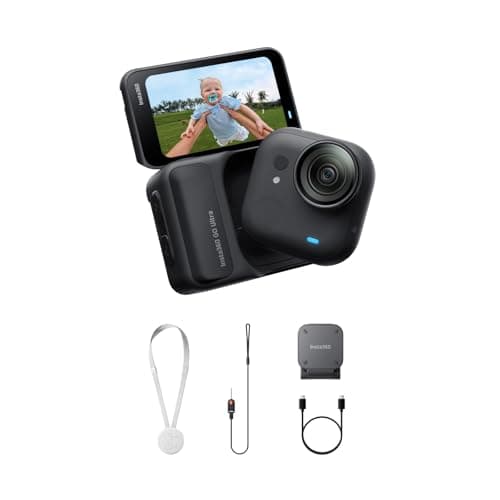 Insta360 GO Ultra 53 grams and IPX8 to 10m on its own — the camera you actually clip on for a paddle instead of leaving in the dry bag. | Hands-free clips where a full-size camera would never leave the bag | 7.6/ 10 | |
| 05 | 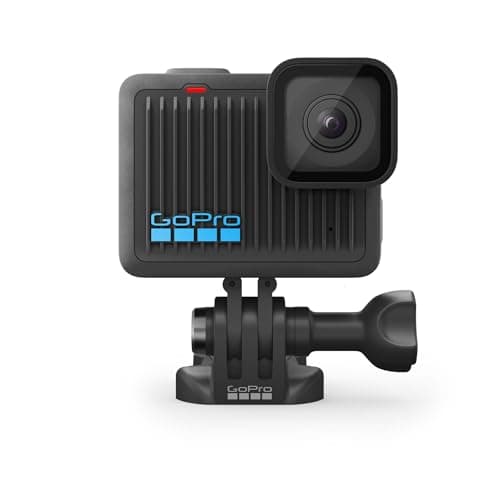 GoPro HERO (2024) The cheapest real GoPro, and the one whose 16ft rating you have to take seriously before you take it snorkeling. | A first camera, a kid's camera, or a second angle that mounts anywhere | 7.1/ 10 | |
| 06 | 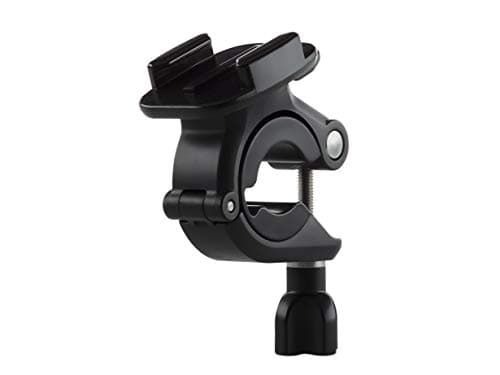 GoPro Handlebar / Seatpost / Pole Mount Fits 9mm to 35mm tubes, which covers handlebars, seatposts, ski poles and — the reason it is here — most paddle shafts. | Bike bars, and the paddle-shaft shot nobody sells a dedicated mount for | 7.8/ 10 |
Scores are our editorial judgment from published specs and named independent reviews, weighted for lake and trail use — not measurements. We have not tested these units and do not own them.
02
How we picked
We do not lab-test, bench-test or dive-test cameras, and we do not own test units. What we do instead is read the manufacturer's published specifications, read the independent reviews that genuinely do test, read owner reports for the failure modes specs never mention — fogging, salt corrosion, cold battery collapse, mount slippage — and then weight all of it for action cameras used on lake and trail. Where a number is not published, the page says “not published” rather than filling the cell.
The full method, including what we refuse to do, is on the editorial policy page.
- 30%Water survival
- Rated depth without a case, door design, and what the manufacturer actually publishes.
- 25%Stabilization in chop
- A kayak deck and a rooty trail shake in ways a handheld walk test never shows.
- 20%Battery in the cold
- Published runtime, spare-battery cost, and whether it charges while recording.
- 15%Mount ecosystem
- Finger mount, threaded, magnetic — and how much of it you have to re-buy.
- 10%Footage you will keep
- Lens replaceability, low-light behavior, and how much cutting the footage needs.
Why road cycling needs its own page
Almost every action camera review is written around rough ground. Stabilization tests are shot on trail, chest mounts are sold on mountain biking footage, and the specs that get argued about are the ones that matter when the bike is being thrown around. Road cycling inverts most of that.
The surface is smooth, so stabilization stops being a differentiator — all five cameras above produce watchable footage on tarmac, which is not true on a rooty descent. What replaces it is a set of problems the trail pages barely touch: rides that run three to five hours instead of one, a handlebar that is already carrying a computer and a light, speeds where wind noise destroys the audio, and the single most common reason road cyclists buy a camera at all, which is to have a record of what happens behind them.
So this ranking weights runtime and mounting first, image quality second, and durability last. If you ride off-road too, the mountain biking roundup re-weights the same cameras for ground that actually hits them, and the bike touring picks go further again on power and charging for multi-day riding.
How we ranked these
Five criteria, in the order they change what you come home with. The scoring rubric above the picks is the site-wide one for action cameras; this is what each criterion means on a road bike.
| Criterion | What it measures here | Why it is weighted this way |
|---|---|---|
| Published runtime | Manufacturer recording time, screens off | A club ride is three to five hours. This is the spec that decides whether the camera is on for the part you wanted. |
| Where it fits on the bike | Mount options for bar, seatpost, helmet and chest | Bar space is contested and most road bikes have nowhere obvious to point a camera backwards. |
| Weight on a helmet | Grams you wear for four hours | Trail riders wear a camera for 40 minutes. Road riders wear it all morning, and your neck keeps the score. |
| Cold tolerance | Published operating range and battery behavior | Road cycling happens year round at dawn. Cold is the condition that ends sessions early. |
| Stabilization | Published stabilization system | Weighted lowest on this page only. Tarmac asks very little of it; the same spec is first on the trail pages. |
The runtime problem, honestly
This is the part most cycling camera roundups skip. Read the published figures in the picks above against the length of a real ride and the arithmetic does not work: the longest number here is DJI's 240 minutes at 1080p/24 with the screens off, and that is a best-case laboratory figure at the lowest useful setting. Shoot 4K, leave a screen on, start cold, and the number that matters to you is a good deal smaller.
There are only three honest ways out, and picking one before you buy will save you a disappointment.
Shoot highlights, not the ride. Start the camera for the descent, the sprint, the bit of the route that is actually worth watching, and leave it off for the forty minutes of rolling out of town. This is what most people end up doing, it produces better footage than continuous recording, and it means battery stops being a factor entirely.
Record continuously and feed it. A camera running off a USB power source behaves differently from one on its own battery, and whether a given model records while charging is a per-model question with a per-model catch — power on long days covers which bodies do it, what gets warm, and why the cable is the weak link on a moving bike.
Carry a spare battery and swap at the cafe. The simplest answer, and the reason the GoPro HERO (2024)'s built-in battery is the one spec that keeps it off the top of this list. A swappable battery turns a runtime limit into a thirty-second stop. Cold makes the spare matter more, not less, because capacity you lose to the temperature comes straight off the end of your ride.
Where a camera goes on a road bike
A mountain bike has space. A road bike has a 31.8mm clamp area shared between a stem, a computer mount and maybe a light, two narrow bar tops, and a seatpost that may not be round. These are the five positions that work.
Handlebar, forward. The default. Shows the road arriving, the wheel and your hands, which is what makes point-of-view footage legible. On tarmac it is far steadier than the same mount on trail. The cost is bar space and the fact that a camera out front catches a lot of road spray.
Under an out-front computer mount. The quietly best option on a modern road bike. Many out-front mounts have a secondary interface underneath for a light or a camera, and plenty of them use the GoPro-style two-prong pattern, which every camera in this roundup fits either natively or with the small adapter in the box. Check what your specific mount uses before you buy anything — the interface is not standardized across brands.
Seatpost, rearward. The reason a lot of road cyclists are on this page at all. A clamp on a round seatpost with the vertical buckle points the camera back down the road at the traffic, and it is out of the wind and out of your sightline. Two caveats: aero posts are not round, and a camera slung off the back of a saddle can foul a saddlebag or a rear light.
Helmet. Shows where you are looking, which on a road ride is more interesting than where the bike is pointing. It is also the position where weight is felt for hours rather than minutes, which is exactly why the 53g pick ranks where it does. Helmet mounts covers front versus side and which adhesive actually holds; a vented road helmet is a different gluing problem from a full-face.
Chest. Underrated on the road. A chest harness is lower than your head, so it gets the bars, the hands and the front wheel in frame, and your torso damps more than a bar mount does. It reads oddly on a club run and it rides over a jersey rather than a jacket, but the footage is good — chest mount versus helmet mount is the honest comparison of the two.
Filming the traffic behind you
Being candid about this, because it is the single most common reason a road cyclist buys an action camera and it is usually written about badly.
A rear-facing camera records what happened behind you. That is all it does. It is not a deterrent — a driver cannot see it at a distance and will not behave differently because of it — and it is not a safety device in any sense. What footage can do is give you an accurate record of an incident instead of a memory, which is worth having if something does happen. What it cannot do is promise any particular outcome from it. Police forces, insurers and courts each handle submitted footage differently, by jurisdiction and case by case, and anyone who tells you otherwise is selling something. If that is your reason for buying, buy for a clear, continuous, time-stamped record and keep your expectations about what happens next in the right place.
Practically, that pushes you towards two things. A camera that films both directions at once, which is the Insta360 X5's entire argument here and means one mount and one battery instead of two of each. Or a rear-facing camera on a seatpost with a resolution high enough that a plate is legible at distance — which in practice means shooting at the highest resolution the battery plan allows, and accepting that a wet lens or a low sun ruins legibility no matter what the sensor is.
Wind noise is the spec nobody lists
At 20mph an action camera microphone is in a hurricane. The audio from a bar-mounted or helmet-mounted camera on a fast road ride is close to unusable, and there is no setting that fixes it — physics is physics. Some bodies handle it better than others; the X5 ships with a built-in wind guard, which helps and does not solve it.
The realistic options are to mute the audio and score the edit to music, to tuck the camera somewhere sheltered like under an out-front mount or on a chest harness behind your own body, or to record a voiceover afterwards. If you genuinely need speech from the ride, that is a microphone question rather than a camera one and the microphone guide covers what actually works outdoors. On a road bike, a wireless mic under a jersey collar is the only version of this that produces listenable audio.
Heat, rain and road grit
Three things end road-cycling footage early, and only one of them is the camera's fault.
Heat. A camera in direct sun, bolted to a bar, recording high-resolution video with no airflow over it during a climb is the hottest condition these bodies meet. Overheating shows up as a stopped recording, usually at the moment the ride got interesting. Stop fogging and overheating covers which settings lower the load and why a shaded mount beats an exposed one.
Rain. Every camera here survives rain without a housing — that is what the depth ratings in the picks above buy you, and they are vast overkill for weather. What rain ruins is the image: a bead of water on the lens is a blurred frame for the rest of the ride, and nobody notices at the time. Carry a microfiber cloth, wipe the lens whenever you stop, and point the camera slightly downwards where the mount allows it.
Grit. A wet road throws a fine slurry over everything forward-facing for hours. It scratches lens covers and it works into every seam. Rinse the camera with clean fresh water after a wet ride — the routine in our rinsing guide was written for salt water and applies exactly to winter road spray, which carries road salt in most of the country anyway.
What to shoot so the footage gets watched
Four hours of continuous road is unwatchable and almost everybody learns this the expensive way. The rides that produce good films are the ones where you decided in advance what the film was: a climb, a descent, a sprint finish, a cafe stop, the weather turning. Record those and you come home with eight minutes of material that cuts into something worth sending to people.
One practical habit is worth more than any setting: start recording a few seconds before the thing and stop a few seconds after. Clips that begin mid-event are hard to cut and clips that run for twenty minutes never get opened. Editing a trip video people watch is the workflow end of this, including what to do with the hours you did shoot.
03
Every pick, in detail
- 20m bare / 60m with case
- 1950mAh · 240 min at 1080p24
- -20° to 45°C
- 9.5
- 9.0
- 9.5
- 8.0
- 9.0
DJI Osmo Action 5 Pro
DJI
Goes to 20m with no housing at all and publishes a 240-minute runtime — the two numbers that decide a long, wet, cold day.
Long paddles, cold water, and anyone tired of buying a housing to get past 10m
It wins here on one number: DJI publishes 240 minutes of recording at 1080p/24 with the screens off, which is the only runtime figure in this list that gets near the length of an actual club ride. Road cycling is the one discipline on this site where you are out for four hours and genuinely might want the camera running for most of it, and every other pick needs a plan to get there.
The -20°C operating range is the second reason. A 7am start in October is the condition that flattens cameras, and DJI is the only brand here publishing a cold figure that low. The 20m depth rating is irrelevant on a road bike and we are not counting it; rain is not depth.
Against it: at 146g it is the heaviest body in this set, the mount ecosystem is smaller than GoPro's and the magnetic quick-release adapters are separate purchases. If your bars already carry a computer and a light, check the real estate before you buy the biggest camera here.
- 20m without the Waterproof Case — double the bare-camera depth of the HERO13 Black
- DJI publishes 240 minutes of recording at 1080p/24 with screens off, the longest figure in this set
- Rated to -20°C, which matters more on an October lake than any resolution number
- 1/1.3-inch sensor holds detail when the light goes flat
- Mount ecosystem is smaller than GoPro's, and magnetic quick-release adapters are their own purchase
- 146g — the heaviest of the flagship three
- Fewer third-party mounts and filters exist for it
Specs from DJI Osmo Action 5 Pro published specifications.
- IP68 to 49ft (15m)
- 2400mAh · ~88 min at 8K30
- User-replaceable
- 9.5
- 9.5
- 9.0
- 8.5
- 7.5
Insta360 X5
Insta360
15m rated, replaceable lenses, and the one camera that means you never have to aim while you are paddling.
Anyone filming themselves on the water who cannot stop to frame a shot
The only camera in this roundup that solves the problem road cyclists actually talk about: it films forwards and backwards at the same time. One camera, one mount, one battery, and both the car behind you and the road ahead are in the file. If the reason you are shopping is close passes, nothing else here competes, and the 185 minutes Insta360 publishes in Endurance mode at 5.7K24 covers a long ride.
It is also the camera that asks the most of you afterwards. Every clip needs a reframing pass before anyone can watch it, including the one clip you want to send to someone — so the moment you care about is twenty minutes of desk work away, not a file you can hand over at the roadside. The exposed lenses scratch, which is why user-replaceable lenses matter so much on this model, and 8K files are slow to move around.
- 15m IP68 is the deepest bare rating of any camera on this site
- User-replaceable lenses — the single biggest fix for the 360 format's worst failure mode
- 185 minutes in Endurance mode at 5.7K24, which is a whole day of clips
- Invisible-selfie-stick reframing means you point the camera at nothing and pick the angle later
- Exposed lenses still scratch; lens guards are a purchase, not an option
- Every clip needs a reframing pass before anyone else can watch it
- 8K30 files are large and the edit is slower than flat footage
Specs from CineD, Insta360 X5 announcement with published specifications.
- 33ft (10m), no housing
- 1900mAh Enduro
- 1.5h at 5.3K30 / 2.5h at 1080p30
- 8.0
- 9.5
- 8.5
- 9.5
- 9.0
GoPro HERO13 Black
GoPro
The safest default for lake and trail: 33ft without a housing, the steadiest footage in the category, and a mount for literally everything.
Anyone who wants one camera to handle the kayak, the bike and the family trip
The pick if you want the camera to be the easy part. GoPro's published runtimes are the honest weakness for this use — 1.5 hours at 5.3K30, over 2.5 hours at 1080p30 — but everything around the camera is the most road-friendly setup here. Built-in mounting fingers plus a 1/4-20 thread means it bolts to a bar mount, a computer mount adapter, a chest harness or a cheap tripod with nothing special ordered, and HyperSmooth 6.0 with AutoBoost cleans up the chatter that a 28mm tire at 80psi still transmits through a stiff front end.
The replaceable lens cover deserves a mention on a road page specifically: grit thrown off a wet road for four hours sandblasts whatever is at the front of the camera, and on this body that is a cheap part rather than a new camera. The Enduro battery's published 14°F figure covers winter starts.
- HyperSmooth 6.0 with AutoBoost is the steadiest stabilization we can find published figures for
- Built-in mounting fingers plus 1/4-20 threads — it fits the GoPro ecosystem and a normal tripod
- Enduro battery is rated to keep full camera functionality down to 14°F (-10°C)
- Replaceable lens cover, so a scratched lens is a $20 problem and not a $400 one
- 33ft is shallower than the DJI and it is the shallowest of the three flagships
- Anything past 33ft needs the separate Protective Housing
- HB-Series lenses and ND filters are all extra purchases
Specs from GoPro HERO13 Black published specifications.
- IPX8 to 33ft (10m), camera only
- 53g
- Up to 170 min with the Action Pod
- 7.0
- 8.0
- 7.5
- 8.0
- 8.0
Insta360 GO Ultra
Insta360
53 grams and IPX8 to 10m on its own — the camera you actually clip on for a paddle instead of leaving in the dry bag.
Hands-free clips where a full-size camera would never leave the bag
53 grams, and that is the whole argument. On a helmet, on a shoulder strap or clipped to a jersey it is the only camera here that does not change how your head sits or how your bars feel, and for commuting it is the one you will actually bring on a Tuesday. The 1/1.28-inch sensor is far better than 53g suggests, and the removable microSD means a long ride is not limited by fixed storage.
Two honest problems for road use. The magnetic mounting that makes it so convenient is not a mechanical lock, and a road bike hits speeds and vibration frequencies where we would not trust a magnet alone — run it through a strap or a clamp. And the camera and the Action Pod have different water ratings, so read them as two products rather than one.
- 53g means it goes on a hat brim, a PFD strap or a chest magnet and you forget it is there
- IPX8 to 10m for the camera itself, with a 1/1.28" sensor that is far larger than the size suggests
- Action Pod adds a flip screen and the long runtime when you want it
- Removable microSD, so you are not stuck with fixed onboard storage
- The Action Pod is not rated to the same depth as the camera — read the two ratings separately
- Magnetic mounting is convenient but is not a mechanical lock in real chop
- No interchangeable lens cover, so a scratch is permanent
Specs from Insta360 GO Ultra published specifications.
- 16ft (5m)
- 4K30, 2.7K60 slo-mo
- Built in, not user-removable
- 6.0
- 7.5
- 6.0
- 9.0
- 7.0
GoPro HERO (2024)
GoPro
The cheapest real GoPro, and the one whose 16ft rating you have to take seriously before you take it snorkeling.
A first camera, a kid's camera, or a second angle that mounts anywhere
The budget answer, and on a road bike its weaknesses matter less than anywhere else on this site. 16ft of water rating is irrelevant when the worst thing you meet is rain, the 4K30 ceiling is more than enough for footage of a road, and it is 46% less mass than a HERO13 Black, which you notice on a helmet and on a bar that already holds a computer.
The built-in battery is the thing that stops it being ranked higher: when it is flat, the ride is over for the camera, and you cannot carry a spare the way you can with every other camera above it. For a commute or a two-hour group ride that is fine. For an all-day event it is the wrong tool.
- Genuinely tiny — 46% less mass than HERO13 Black
- Built-in mounting fingers, and GoPro lists it as compatible with 35+ mounts
- HyperSmooth stabilization at the lowest GoPro price
- Simple enough to hand to someone who has never used one
- 16ft (5m) is a snorkel-adjacent rating, not a diving one
- The battery is built in — you cannot carry a spare, you carry a power bank
- 4K30 is the ceiling; no 4K60, no high-frame-rate 4K
Specs from GoPro HERO published specifications.
- 0.35" to 1.4" (9 to 35mm) tubes
- 360-degree positioning
- Thumb screw, no tools needed
- 7.0
- 9.0
- 8.0
- 8.5
- 7.0
GoPro Handlebar / Seatpost / Pole Mount
GoPro
Fits 9mm to 35mm tubes, which covers handlebars, seatposts, ski poles and — the reason it is here — most paddle shafts.
Bike bars, and the paddle-shaft shot nobody sells a dedicated mount for
Included as a pick rather than a footnote, because on a road bike the mount decides more than the camera does. GoPro publishes a 0.35in to 1.4in (9 to 35mm) clamping range for this one, which covers a modern 31.8mm bar clamp area, the roughly 24mm tops and drops either side of it, and a round 27.2mm or 31.6mm seatpost — the three places a road camera actually goes. Both rubber inserts and the vertical mounting buckle are in the box, so the rear-facing seatpost build needs nothing else.
What it does not fit: an aero seatpost, a one-piece integrated cockpit, or anything else that is not round. Measure before you order, and if the answer is “not round”, a saddle-rail or computer-mount adapter is the route instead.
- The 9-35mm range is wide enough to cover bars, posts, poles and paddle shafts
- Tool-free, so you can move it mid-ride or mid-paddle
- Cheap enough to own two and leave one on the bike
- Rotates a full 360 degrees for the angle you actually want
- Plastic clamp — it will flex on a rough trail in a way an aluminum mount does not
- Oversized bars over 35mm are out of range
- On a paddle shaft it adds swing weight you will feel by the end of the day
Specs from GoPro Handlebar / Seatpost / Pole Mount product page.
04
What decides this category
Buy on runtime, then on where it fits
On tarmac, every camera here produces footage you will be happy with. What separates them is whether the camera is still recording when you reach the interesting part of the ride and whether it has somewhere sensible to live on your bike. Start with the published runtime figure, decide which of the three battery strategies above you will actually use, and only then compare sensors.
Measure the bike before you buy the mount
Two measurements save most of the returns in this category. The diameter of the bar where you want the camera — 31.8mm at the stem clamp on most modern road bars, roughly 24mm out along the tops — and the seatpost, if you want to film backwards. A round 27.2mm or 31.6mm post is easy. An aero post or an integrated cockpit means a clamp will not work and you need a saddle-rail or computer-mount adapter instead. Bar and handlebar mounts has the fit ranges for every mount on this site in one table.
Skip the depth ratings
Three of the cameras above are rated to 10m or deeper and it changes nothing for you. Rain is not depth. If you are comparing a road camera against a water camera on the same spreadsheet, the depth column is noise — spend the attention on runtime, weight and mounting. The depth table exists for people for whom it does matter.
The cheaper route
If this is a commuting camera and the footage is incidental, the bottom of this list is genuinely enough: a cheap body on a bar mount, shooting 1080p, with the audio muted. If the rider is a child, go cheaper still and read the picks for kids instead, where survivability and cost of loss outrank every image spec. Add a bigger card before you add anything else — the card guide explains why the cheap card is the most common cause of corrupted cycling footage. The budget roundup covers bodies below the ones here.
What we would skip
A dive housing, for obvious reasons. A chest harness, if you ride in a group and care how you look — buy it for solo riding. Any twenty-piece mount bundle, which is nineteen mounts for sports you do not do. And a second camera for the rear: if filming both directions is the point, one 360 camera is less to charge, less to mount and less to forget.
05
Questions people actually ask
01What is the best action camera for road cycling?
For long rides, the DJI Osmo Action 5 Pro — it publishes 240 minutes of recording at 1080p/24 and a -20°C operating range, which are the two numbers that decide a four-hour winter ride. If your reason for buying is to record traffic behind you, the Insta360 X5 is the better answer because it films forwards and backwards on one mount and one battery.
02Can an action camera record a whole four-hour ride?
Not on its own battery. The longest published figure in this roundup is 240 minutes at the lowest useful setting with the screens off, and real-world numbers come in under that once you shoot 4K or start in the cold. Either shoot highlights, carry a spare battery, or run the camera from a USB power source.
03Where do you mount a camera on a road bike?
Five positions work: the handlebar, underneath an out-front computer mount, on a round seatpost pointing backwards, on your helmet, or on a chest harness. The out-front mount is the neatest on a modern road bike because the bar clamp area is already crowded, and many of those mounts have a GoPro-style interface underneath.
04Will a camera fit an aero seatpost?
Not with a round clamp mount. The handlebar/seatpost/pole mount here covers 9 to 35mm of round tube, which fits a standard 27.2mm or 31.6mm post and nothing shaped like a wing. For an aero post, use a saddle-rail adapter or mount the camera elsewhere.
05Is a rear-facing camera worth it for close passes?
It gives you an accurate record of an incident rather than a memory, which is worth having. It is not a deterrent, it is not a safety device, and no camera can promise any particular outcome from the footage — how submitted video is handled varies by jurisdiction and by case. Buy it for the record, and shoot at the highest resolution your battery plan allows so detail is legible at distance.
06How do you stop wind noise on a cycling camera?
You reduce it rather than stop it. A sheltered mounting position helps, a built-in wind guard helps, and both are better than any in-camera setting. For usable speech, record a voiceover afterwards or use a wireless microphone tucked under a jersey collar. Most riders mute the audio and use music.
07Does an action camera slow you down?
Not in any way you can measure against the drag of a human body. A 150g camera on the bars is negligible aerodynamically; what it genuinely costs you is handlebar space shared with a computer and a light, and neck comfort if you wear it on a helmet for several hours. Choose by weight for helmet use and by fit for bar use.
06
Read this next
Best action cameras for bike touring
Same bike, multi-day. Power and charging take over from runtime entirely.
Best action cameras for mountain biking
The same cameras re-weighted for ground that actually hits them.
Bar and handlebar mounts
Every fit range on this site in one table, including what a 31.8mm bar takes.
Power on long days
Whether you can charge while recording, and what gets warm when you do.
Chest mount versus helmet mount
The two wearable positions compared, including hours-long comfort.
07
Sources
- GoPro Handlebar / Seatpost / Pole Mount product page (clamping range, box contents)
- GoPro HERO (2024) published specifications
- DJI Osmo Action 5 Pro published specifications
- CineD, Insta360 X5 announcement with published specifications
- GoPro HERO13 Black published specifications
- Insta360 GO Ultra published specifications
Specifications are quoted from the manufacturer pages above as they read on the dates shown. Where a figure is not published, this site says so rather than estimating one. We have not tested these products.