360 cameras for mountain biking
The only way to film yourself riding without a second person. Also the format with the most to lose on a rock garden.
Part of On the Trail.
We earn a commission if you buy through our links, at no extra cost to you. It never changes what we recommend or the order we rank it in — how this works.

What a 360 camera does for riding specifically
The shot is the whole argument. A short pole mounted to the bars or the seatpost, with a 360 camera on the end, produces footage that looks like a drone flying alongside you — because the pole stitches out and the software can look back at you from a point in space above the bike.
There is no flat-camera equivalent. A rear-facing seatpost mount shows your front wheel and your knees. A friend with a camera shows you once, from where they were standing. The 360 camera gives you the third-person riding shot on every run.
Two secondary advantages worth knowing. You never have to aim, so a mount that walked out of angle does not cost you the run. And the interesting thing that happened to the side — a rider passing, a deer, a crash — is in frame, because there is no frame.
What trail does to a 360 camera
This is where the format is most exposed, literally.
Two lenses protruding on opposite sides of the body, with no recessed plane protecting either. On a bike that means branches at bar height, rock in a crash, and the ordinary business of laying the bike down at a trailhead. Lens guards are not optional, and even with them a hard hit is a real possibility.
Leverage on a pole. A camera on the end of a stick clamped to a bar is a lever multiplying every impact. A clamp rated for a static camera is not necessarily rated for that plus trail vibration. Tether it separately from the pole.
The reframing backlog. A ride produces a lot of clips, and every one needs a pass. After a long day that is a real disincentive, and it is why most riders who own both use the 360 camera selectively rather than for everything.
| Insta360 X5 | Insta360 X4 | GoPro HERO13 Black | |
|---|---|---|---|
| Format | 360 | 360 | Flat |
| Bare waterproof | 15m, IP68 | 10m (33ft) | 33ft (10m) |
| Lens protection | User-replaceable lenses | Removable lens guards | Flat recessed replaceable cover |
| Battery | 2400mAh | 2290mAh | 1900mAh Enduro |
| Published runtime | ~88 min at 8K30 / 185 min at 5.7K24 | 135 min at 5.7K30 / 75 min at 8K30 | 1.5h at 5.3K30 |
| Stabilization | FlowState + Horizon Lock | FlowState + Horizon Lock | HyperSmooth 6.0 + AutoBoost |
| Weight | Not published here | 203g | Not published here |
| Editing per clip | Reframing pass | Reframing pass | None |
X5 or X4 for trail
The X5's advantage on trail is specific and it is about the lenses. User-replaceable lenses mean a rock strike is a part you order rather than a camera you send away — and on a mountain bike, a rock strike is not a hypothetical.
The X4 has removable lens guards, which protect against scuffs and do not make a deep scratch recoverable. It is 10m rather than 15m, and it is usually meaningfully cheaper.
If you ride technical terrain, spend the difference on the X5. If you ride flow trail and are careful where you set the bike down, the X4 does the same job for less.
Where to mount it
A short pole on the bars, angled up and back. The classic chase-cam shot. Use the shortest pole that gets the angle — leverage scales with length and so does the chance of clipping a tree.
A seatpost pole. Cleaner lines, less in your way, and a slightly lower viewpoint. Good on flow trail; more exposed in a crash.
Chest mount. Underrated with a 360 camera, because you get the point-of-view shot and the look-back-at-yourself shot from one mount. Steadier than anything on the bike.
Bike mounts covers the clamps, and pole mounts covers the poles.
Where each one loses
The 360 cameras lose on stabilization in the roughest sections, on exposed glass in an environment full of rock, on mounting (adapter plus pole plus leverage), and on the editing time that applies to every clip forever.
The flat camera loses the one shot people most want from a trail edit: themselves, riding, from outside. That is a significant loss and it is why this page exists.
01
Two 360 cameras and the flat benchmark
The HERO13 Black is here as the comparison point, not as a 360 camera — it is what you are giving up to gain the reframing.
- IP68 to 49ft (15m)
- 2400mAh · ~88 min at 8K30
- User-replaceable
- 9.5
- 9.5
- 9.0
- 8.5
- 7.5
Insta360 X5
Insta360
15m rated, replaceable lenses, and the one camera that means you never have to aim while you are paddling.
Anyone filming themselves on the water who cannot stop to frame a shot
- 15m IP68 is the deepest bare rating of any camera on this site
- User-replaceable lenses — the single biggest fix for the 360 format's worst failure mode
- 185 minutes in Endurance mode at 5.7K24, which is a whole day of clips
- Invisible-selfie-stick reframing means you point the camera at nothing and pick the angle later
- Exposed lenses still scratch; lens guards are a purchase, not an option
- Every clip needs a reframing pass before anyone else can watch it
- 8K30 files are large and the edit is slower than flat footage
Specs from CineD, Insta360 X5 announcement with published specifications.
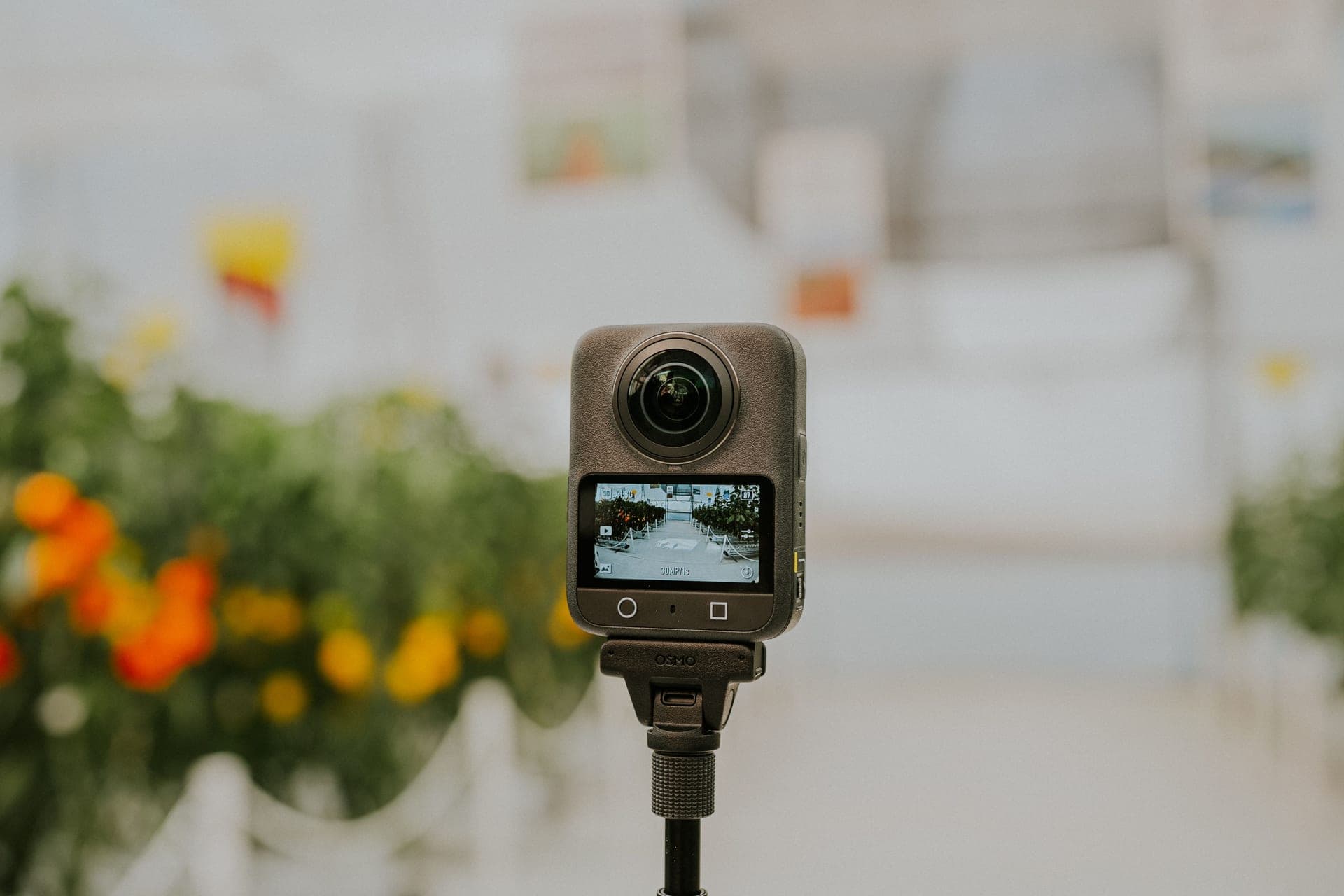
- 33ft (10m) / 50m with dive case
- 2290mAh · 135 min at 5.7K30
- 203g
- 8.5
- 9.0
- 8.5
- 8.5
- 7.5
Insta360 X4
Insta360
The previous X-series flagship: same 8K reframing trick, 10m rated, and usually a good deal less money.
A first 360 camera when the X5's deeper rating is not worth the difference
- 8K30 360 capture and the same invisible-selfie-stick effect as the X5
- Removable lens guards, so the lenses are protectable
- 135 minutes at 5.7K30 is a real day on the water
- Invisible Dive Case takes it to 50m when you need it
- 10m bare against the X5's 15m
- Lenses are not user-replaceable the way the X5's are — a deep scratch is a service job
- 203g on a pole is noticeable after an hour
Specs from Insta360 X4 published specifications.
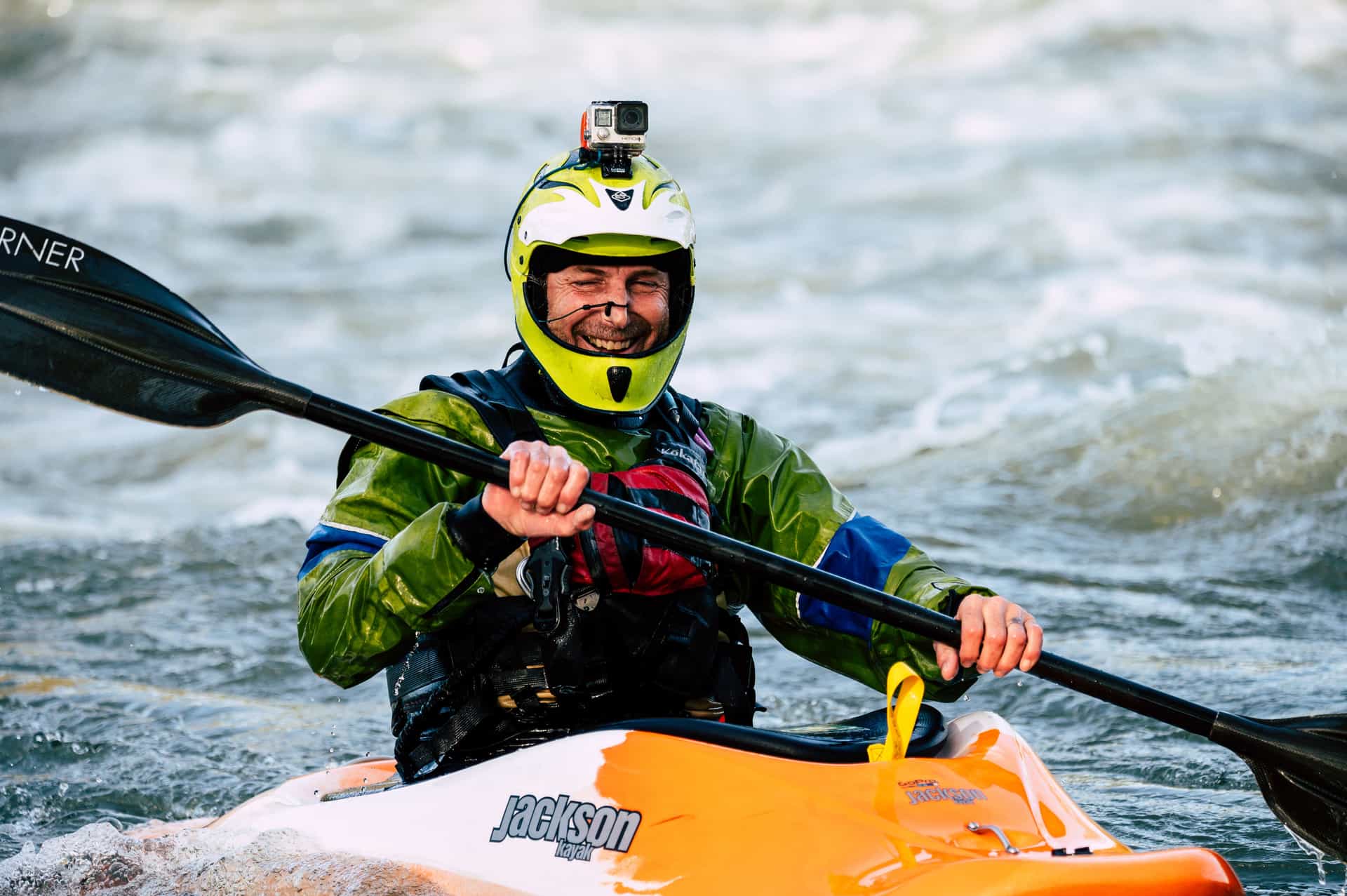
- 33ft (10m), no housing
- 1900mAh Enduro
- 1.5h at 5.3K30 / 2.5h at 1080p30
- 8.0
- 9.5
- 8.5
- 9.5
- 9.0
GoPro HERO13 Black
GoPro
The safest default for lake and trail: 33ft without a housing, the steadiest footage in the category, and a mount for literally everything.
Anyone who wants one camera to handle the kayak, the bike and the family trip
- HyperSmooth 6.0 with AutoBoost is the steadiest stabilization we can find published figures for
- Built-in mounting fingers plus 1/4-20 threads — it fits the GoPro ecosystem and a normal tripod
- Enduro battery is rated to keep full camera functionality down to 14°F (-10°C)
- Replaceable lens cover, so a scratched lens is a $20 problem and not a $400 one
- 33ft is shallower than the DJI and it is the shallowest of the three flagships
- Anything past 33ft needs the separate Protective Housing
- HB-Series lenses and ND filters are all extra purchases
Specs from GoPro HERO13 Black published specifications.
02
How we picked
We do not lab-test, bench-test or dive-test cameras, and we do not own test units. What we do instead is read the manufacturer's published specifications, read the independent reviews that genuinely do test, read owner reports for the failure modes specs never mention — fogging, salt corrosion, cold battery collapse, mount slippage — and then weight all of it for 360 cameras used on lake and trail. Where a number is not published, the page says “not published” rather than filling the cell.
The full method, including what we refuse to do, is on the editorial policy page.
- 30%Water survival
- Exposed lenses change the rules — rated depth and lens-guard availability both count.
- 25%Reframing payoff
- A 360 camera is only worth it if the reframing genuinely saves shots you would have missed.
- 20%Battery in the cold
- Stitching two sensors costs power; cold costs more.
- 15%Mount ecosystem
- Invisible-selfie-stick geometry is the whole trick, and it depends on the mount.
- 10%Edit time
- Every 360 clip needs a pass before anyone can watch it.
03
Questions people actually ask
01Is a 360 camera good for mountain biking?
For filming yourself riding, it is the only practical option without a second person. For everything else a flat camera is steadier, more robust and finished the moment you stop recording.
02Will the lenses survive a crash?
Not guaranteed — they protrude with no recessed plane protecting them. Lens guards are mandatory, and the X5's user-replaceable lenses make a bad hit recoverable rather than terminal.
03How does the invisible pole shot work on a bike?
The pole sits exactly on the stitch line between the two lenses, so the software fills that region from the surrounding view and it disappears. The result looks like a camera floating beside the bike.
04X5 or X4 for trail riding?
X5 if you ride technical terrain — replaceable lenses are the difference between a part and a repair. X4 if you ride flow trail and want the same trick for less.
05Do I still need a flat camera as well?
Most riders who own both end up using the flat camera for ordinary rides and the 360 for the days they intend to make something. The two are complementary rather than competing.
04
Read this next
360 camera vs action camera
The format argument in general, before the trail specifics.
Best action cameras for mountain biking
The flat-camera list, where stabilization leads.
Bike and handlebar mounts
Clamps that hold a pole plus a camera on rough ground.
Best 360 cameras for kayaking
The water version, where the format's case is even stronger.
Stabilization systems compared
How FlowState compares with the flat-camera systems.
05
Sources
- CineD, Insta360 X5 announcement with published specifications
- Insta360 X4 product page
- GoPro HERO13 Black published specifications
Specifications are quoted from the manufacturer pages above as they read on the dates shown. Where a figure is not published, this site says so rather than estimating one. We have not tested these products.