The best 360 cameras for kayaking
You cannot stop mid-stroke to frame a shot. This is the one format that removes aiming from the problem entirely.
Part of On the Water.
We earn a commission if you buy through our links, at no extra cost to you. It never changes what we recommend or the order we rank it in — how this works.

01
Quick picks
| # | Product | Best for | Score | Price |
|---|---|---|---|---|
| 01 | Insta360 X5 15m rated, replaceable lenses, and the one camera that means you never have to aim while you are paddling. | Anyone filming themselves on the water who cannot stop to frame a shot | 9.1/ 10 | |
| 02 | 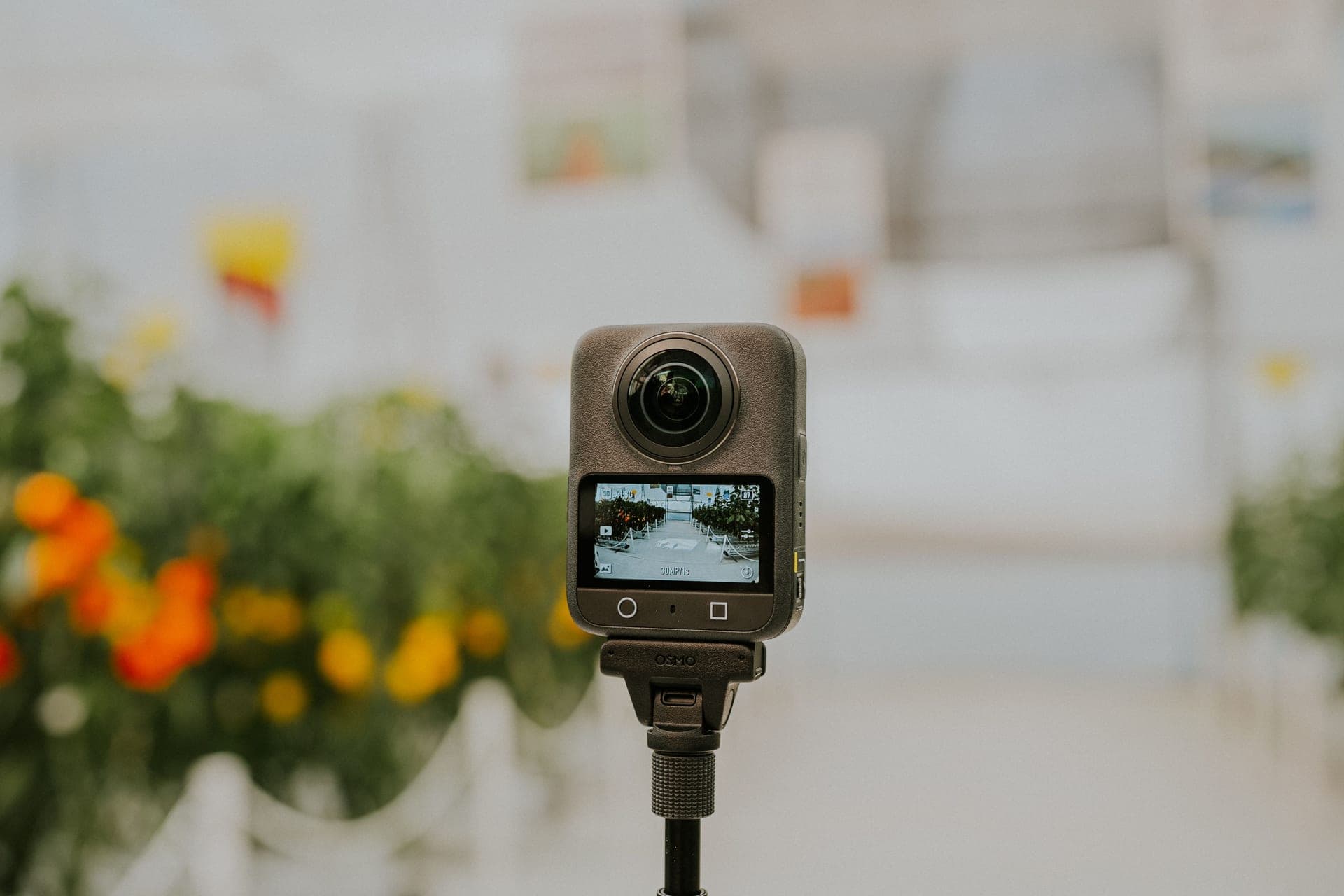 Insta360 X4 The previous X-series flagship: same 8K reframing trick, 10m rated, and usually a good deal less money. | A first 360 camera when the X5's deeper rating is not worth the difference | 8.5/ 10 | |
| 03 |  Insta360 114cm Invisible Selfie Stick The pole that disappears in a 360 shot — the single accessory that makes a 360 camera worth owning on the water. | Third-person paddling shots from an X-series camera | 7.5/ 10 |
Scores are our editorial judgment from published specs and named independent reviews, weighted for lake and trail use — not measurements. We have not tested these units and do not own them.
02
How we picked
We do not lab-test, bench-test or dive-test cameras, and we do not own test units. What we do instead is read the manufacturer's published specifications, read the independent reviews that genuinely do test, read owner reports for the failure modes specs never mention — fogging, salt corrosion, cold battery collapse, mount slippage — and then weight all of it for 360 cameras used on lake and trail. Where a number is not published, the page says “not published” rather than filling the cell.
The full method, including what we refuse to do, is on the editorial policy page.
- 30%Water survival
- Exposed lenses change the rules — rated depth and lens-guard availability both count.
- 25%Reframing payoff
- A 360 camera is only worth it if the reframing genuinely saves shots you would have missed.
- 20%Battery in the cold
- Stitching two sensors costs power; cold costs more.
- 15%Mount ecosystem
- Invisible-selfie-stick geometry is the whole trick, and it depends on the mount.
- 10%Edit time
- Every 360 clip needs a pass before anyone can watch it.
Why 360 works on a kayak specifically
Both of your hands are on a paddle. You cannot reach forward to re-aim a camera mid-stroke, you cannot check a screen, and the interesting thing — an eagle, a wake, a bend in the river — happens for about four seconds somewhere you were not pointing.
A 360 camera solves exactly that problem. It records every direction at once, and you decide what the camera was looking at afterwards. On the water that is not a gimmick, it is the difference between bringing home the moment and bringing home the three seconds after it.
The second thing it does is the invisible-pole trick. Because the camera sees in every direction, the software can stitch out the thin pole it is mounted on — so a shot taken from a stick held at arm's length looks like it came from a drone hovering beside the boat. That one shot is the reason most people buy into the format.
What it actually costs you
This page would be dishonest without this section. Three real costs:
Every clip needs work before anyone can watch it. A 360 file is not a video, it is a sphere. You have to choose a path through it — which direction the virtual camera looks, and when it turns. That is a genuine editing step on every single clip, and it is why plenty of people buy a 360 camera, love the first week and never use it again.
Resolution is spread over a sphere. 8K sounds enormous, and it is — spread over 360 degrees. The flat 16:9 clip you export from it is closer to good 4K than to 8K. It looks excellent; it does not look like 8K.
Exposed lenses. Both flagship 360 cameras have glass protruding on two sides with no recessed plane to protect it. On a kayak — sand, rock, docks, a paddle shaft — that is a real risk, and lens guards or replaceable lenses are not optional.
How to mount one on a kayak
The three positions that work, in order of how often they are worth it.
An invisible pole, held or clamped. The signature shot. Held out to one side in your off-hand for short bursts, or clamped to a rail with the pole angled up and back. This is what the format is for.
On a deck mount, centered. Simple, stable, and gives you the full sphere from a fixed point. Good for rivers where you want to catch whatever happens on either bank.
On a mast or boom. Combining a 360 camera with a 33-inch mast is excellent for fishing, because it sees the rod, the water and you from a single mount.
One caution about pole mounts: a long pole with a camera on the end has real leverage, and a clamp rated for a static camera is not necessarily rated for that plus wind. Check the clamp, and tether the camera separately from the pole.
Battery, because stitching is expensive
Two sensors plus real-time stitching costs more power than a flat camera doing the same length of clip. Insta360 publishes around 88 minutes at 8K30 for the X5 and up to 185 minutes at 5.7K24 in Endurance mode — which is a useful hint. Shooting 5.7K instead of 8K roughly doubles your day and produces files that are far less painful to reframe.
03
Every pick, in detail
- IP68 to 49ft (15m)
- 2400mAh · ~88 min at 8K30
- User-replaceable
- 9.5
- 9.5
- 9.0
- 8.5
- 7.5
Insta360 X5
Insta360
15m rated, replaceable lenses, and the one camera that means you never have to aim while you are paddling.
Anyone filming themselves on the water who cannot stop to frame a shot
15m IP68 and user-replaceable lenses make this the only 360 camera we would recommend without qualification for water use. The replaceable lens part matters more than it sounds: exposed glass on both sides of a camera that lives on a kayak deck will eventually meet a rock, a dock or a paddle blade, and this is the one where that is a part swap rather than a service job.
- 15m IP68 is the deepest bare rating of any camera on this site
- User-replaceable lenses — the single biggest fix for the 360 format's worst failure mode
- 185 minutes in Endurance mode at 5.7K24, which is a whole day of clips
- Invisible-selfie-stick reframing means you point the camera at nothing and pick the angle later
- Exposed lenses still scratch; lens guards are a purchase, not an option
- Every clip needs a reframing pass before anyone else can watch it
- 8K30 files are large and the edit is slower than flat footage
Specs from CineD, Insta360 X5 announcement with published specifications.
- 33ft (10m) / 50m with dive case
- 2290mAh · 135 min at 5.7K30
- 203g
- 8.5
- 9.0
- 8.5
- 8.5
- 7.5
Insta360 X4
Insta360
The previous X-series flagship: same 8K reframing trick, 10m rated, and usually a good deal less money.
A first 360 camera when the X5's deeper rating is not worth the difference
The same reframing trick at 10m bare, usually for meaningfully less money. Removable lens guards protect the glass, but they are guards rather than replaceable lenses. If you paddle open lake and are careful about where you set the camera down, the saving is real.
- 8K30 360 capture and the same invisible-selfie-stick effect as the X5
- Removable lens guards, so the lenses are protectable
- 135 minutes at 5.7K30 is a real day on the water
- Invisible Dive Case takes it to 50m when you need it
- 10m bare against the X5's 15m
- Lenses are not user-replaceable the way the X5's are — a deep scratch is a service job
- 203g on a pole is noticeable after an hour
Specs from Insta360 X4 published specifications.
- 23.3cm to 114.1cm
- Aluminum
- 1/4-20 screw
- 6.5
- 9.0
- 7.0
- 9.0
- 7.0
Insta360 114cm Invisible Selfie Stick
Insta360
The pole that disappears in a 360 shot — the single accessory that makes a 360 camera worth owning on the water.
Third-person paddling shots from an X-series camera
Included as a pick because a 360 camera without an invisible pole is a 360 camera with half its point removed. The stick vanishes from the footage, which is what produces the floating third-person shot. Two honest warnings: Insta360 says plainly it is not designed for high-speed use, and it does not float. Tether it.
- Vanishes from 360 footage, which is the whole reason the format works for self-filming
- Collapses to 23cm and stows in a deck bag
- Standard 1/4-20, so it takes more than just Insta360 cameras
- Light enough to hold out one-handed while the other hand paddles
- Insta360 says plainly it is not designed for high-speed adventures
- Aluminum sections seize if you put them away wet and salty
- It does not float, and a dropped pole with a camera on it sinks fast
Specs from Insta360 114cm Invisible Selfie Stick product page.
04
What decides this category
Replaceable lenses versus lens guards
This is the main practical difference between the X5 and the X4, and on the water it is the one that matters. Guards protect against scuffs; replaceable lenses mean a deep scratch is a part you order rather than a camera you send away.
Bare depth rating
15m on the X5, 10m on the X4, both plenty for kayaking. Dive cases exist for both if you want to go further, but a housing removes the invisible-pole trick, because the housing is in every frame.
Shoot the mode you will actually finish
8K30 is the headline; 5.7K is the mode most people should live in. Longer battery, smaller files, faster reframing, and a final export that is essentially indistinguishable once it is 16:9 on a phone.
What we would skip
A second 360 camera. One is plenty, and the money is better spent on a good pole, a float and a mount that holds it steady — which is the difference between a shot that works and a shot that swings.
05
Questions people actually ask
01How does the invisible selfie stick actually work?
The camera sees in every direction, so the software knows the thin pole is directly below the stitch line between the two lenses — exactly where the image is being blended. It fills that region from the surrounding view, and the pole disappears. It only works with a thin pole held roughly in line with the camera body.
02Is 8K on a 360 camera really 8K?
Not in the way you are used to. The 8K is spread across a full sphere, so the flat clip you export looks more like good 4K. That is not a criticism — it looks excellent — but it is worth knowing before the number sets your expectations.
03Can I use a 360 camera underwater?
Yes, within its rating — 15m for the X5, 10m for the X4. Note that the stitch line is more visible underwater, because water refracts differently at each lens, and that a dive case puts itself into every frame, which removes the invisible-pole effect.
04Do I need a special pole, or will any selfie stick do?
It has to be thin enough to fall inside the stitch blend and roughly in line with the camera. Insta360's own invisible sticks are designed for it; a fat phone selfie stick will show up in the frame.
05Is a 360 camera better than a normal action camera for kayaking?
For filming yourself, clearly. For everything else, it is a trade — you gain never having to aim, and you pay with an editing pass on every clip. The full comparison covers both sides.
06
Read this next
360 camera vs action camera
The full argument for and against, with neither side padded.
GoPro or Insta360 for kayaking?
The brand question, answered by what each one is actually better at.
Paddle and pole mounts
The poles that make the invisible-stick shot work, and the ones that float.
How to film yourself paddling
Where to hold the pole, and how long to hold it there.
Best action camera for kayak fishing
Where a 360 camera on a mast is arguably the strongest setup there is.
07
Sources
- CineD, Insta360 X5 announcement with published specifications
- Insta360 X4 product page
- Insta360 114cm Invisible Selfie Stick product page
Specifications are quoted from the manufacturer pages above as they read on the dates shown. Where a figure is not published, this site says so rather than estimating one. We have not tested these products.