GoPro MAX2 vs Insta360 X5
GoPro finally shipped a serious 360 camera. It is rated to 5m. That one number reorders the whole comparison for anyone who paddles.
Part of Cameras.
We earn a commission if you buy through our links, at no extra cost to you. It never changes what we recommend or the order we rank it in — how this works.

The specifications
Figures below are published specifications, read on 2026-10-30. GoPro's MAX2 numbers are taken from the full specification listing at Backscatter, a dive retailer that publishes the complete table; the Insta360 figures are the ones on our own X5 specification read. Where a figure is not published, the cell says so rather than filling in an estimate.
| GoPro MAX2 | Insta360 X5 | |
|---|---|---|
| Bare waterproof | 5m (16ft) | IP68 to 49ft (15m) |
| Max 360 video | 8K (7680x3840) at 30/25/24fps | 8K30 |
| Second 360 mode | 5.6K (5376x2688) at 60/50/30/25fps | 5.7K, 185 min in Endurance at 5.7K24 |
| High frame rate 360 | 4K (3328x1664) at 100/90/60/50fps | Not published |
| Single-lens video | 4K (3840x2160) at 60fps, plus 9:16 and 4:3 | Single-lens mode available |
| 360 photo | 29MP (7680x3840) | Not published in the figures we read |
| Battery | 1960mAh Enduro | 2400mAh, user-removable |
| Published runtime | Not published | ~88 min at 8K30 |
| Lenses | Replaceable, change in the field | User-replaceable |
| Stabilization | Max HyperSmooth with 360° Horizon Lock | FlowState |
| Microphones | 6 | Not published in the figures we read |
| Weight | 195g with fingers and battery | Not published in the figures we read |
| Mounting | Built-in GoPro fingers | 1/4-20 thread, pole-first design |
| Card | microSD rated A2 V30 or higher | microSD |
| Operating temperature | Not published | Not published |
The 5m problem
GoPro rates the MAX2 to 5m, or 16ft, with no housing. Insta360 rates the X5 to 15m. On a specification sheet that looks like a detail. On this site it is the headline, because of what 360 cameras are actually used for.
A 360 camera earns its money on a pole. You hold it out over the water, past the bow, off the side of the board, and you let it see everything so you do not have to aim. That is also precisely the geometry that puts the camera underwater without warning: the pole dips, the board goes over, the dog pulls, the swell arrives early. A 5m rating survives all of that — it is not fragile — but it leaves far less margin than 15m does, and it rules the camera out of the one thing paddlers keep asking for, which is holding it under the surface to film what is down there.
Put it the other way around. If your camera never goes below your waist, 5m is three times more depth than you will ever use and the rating is irrelevant. That is a real description of mountain biking, hiking, skiing and most riding. It is not a description of a kayak. How deep an action camera can go sets out what every rating on this site actually promises.
Where the MAX2 wins
Resolution, and on a 360 camera it counts. This is the one place where more pixels is not a marketing trick. A 360 camera spreads its resolution across an entire sphere, and the flat clip you export is a slice of that sphere — so the frame size is the budget your reframing spends. GoPro publishes 7680x3840 at up to 30fps; that is the highest 360 frame size of any camera we rank. The arithmetic is in 4K vs 5.3K vs 8K, and the 360 section is the part that applies here.
Frame rate at lower resolutions. 5.6K at 60fps and 4K at 100fps in 360 mode are published MAX2 modes. Insta360 does not publish an equivalent high-frame-rate 360 figure in the specifications we read, so we cannot compare directly — but a 100fps 360 mode is a genuinely useful thing to have for anything fast.
Mounting, as always. The MAX2 has GoPro's folding fingers built into the body. Every two-prong mount, clamp, boom, helmet bracket and chest harness in your drawer fits it with nothing bought in between. The X5 is a 1/4-20 pole-first design, which is right for the way 360 cameras are mostly used and wrong for the moment you want it on a helmet. Mount compatibility has the adapter costs.
Audio. Six microphones is a published number and it is a lot. 360 audio that rotates with the reframe is one of the few genuinely cinematic things in this category, and wind is the enemy on both bodies — cutting wind noise applies to either.
It can pretend to be a flat camera. Published single-lens modes cover 4K60 in 16:9, 9:16 and 4:3. That makes the MAX2 a plausible one-camera answer for someone who wants vertical clips for a phone and a normal wide shot without carrying two bodies.
Where the X5 wins
Water, threefold. 15m bare against 5m. Covered above, and for this site's buyer it outweighs everything in the section above.
Published endurance. Insta360 states roughly 88 minutes at 8K30 and 185 minutes in Endurance mode at 5.7K24, on a 2400mAh removable battery. GoPro publishes a 1960mAh Enduro battery and no recording time at all for the MAX2. We rank on what manufacturers publish, and an absent figure counts against: a day on the water is planned around runtime, and one of these two companies will tell you what to plan for.
The lower-resolution mode is the one you will live in. Insta360's 5.7K Endurance mode exists because 8K on a sphere is enormous to store and slow to reframe. Having a published long-runtime mode, with a figure attached, is worth more on a three-day trip than a higher ceiling you will turn off by lunchtime.
Pole geometry. The invisible selfie stick trick works on both, but the X5 was designed around it, and Insta360's own poles are the ones the reframing software expects to erase. Paddle and pole mounts covers what makes a pole worth trusting over water.
Published figures, where GoPro leaves gaps. Runtime, operating temperature, microphone count and weight: Insta360 states the first, GoPro states the last two for the MAX2 and neither states a cold rating. On a site that ranks by what manufacturers publish, the body with more numbers attached is easier to plan a trip around. Both sit in the flagship price bracket and both move constantly, so the only number worth quoting is the live one on the buy links above, not anything typed into this copy.
Scenario by scenario
Kayak, canoe, paddle board. X5, clearly. Depth, published runtime and pole-first design all point the same way — the 360 picks for kayaking rank the field on exactly those criteria.
Mountain biking and trail. MAX2. The resolution advantage, the mount compatibility and the 4K100 mode all land here, and 5m is more water than a trail will ever produce. The 360 mountain-biking comparison has the mounting detail.
Snorkeling. X5, and not close. Anything that involves putting the camera under the surface on purpose needs the deeper rating.
Family trips where you want everything covered. Either, and this is the honest answer to the question people actually ask. The MAX2 covers a birthday, a hike and a beach afternoon with better resolution and mounts you already own. The X5 covers the same trip and survives the swimming pool, the lake and the kid who drops it off the dock.
Skiing and cold. Neither company publishes an operating temperature for these bodies, so nobody should pretend to compare them on cold. Carry spare batteries and keep them warm; power on long days covers the rest.
The thing both of them cost you
Every 360 clip needs a reframing pass before another human can watch it. That is not a flaw in either camera, it is the format, and it is the single biggest reason people sell 360 cameras. 360 camera vs action camera is the page to read before you buy either of these, and filming a paddling trip on a 360 camera is the workflow if you decide the payoff is worth it.
We have not had either camera on the water. This comparison is published specifications plus our reading of what they mean for lake and trail use, which is exactly what our editorial policy says we do — no lab, no test units, and no figure quoted that we could not find published.
01
The two cameras, and the pole they both need
Either body is only worth buying with a pole — the invisible selfie stick is the reason the 360 format exists at all.
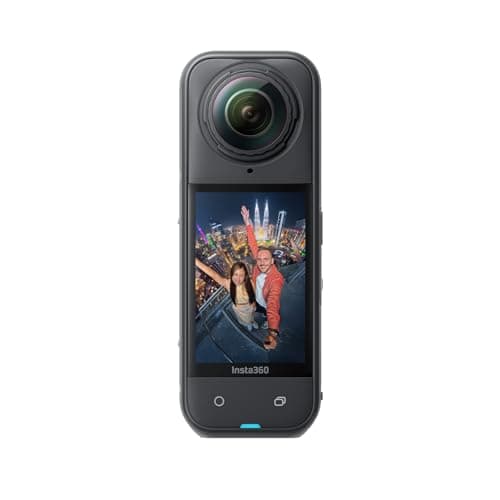
- IP68 to 49ft (15m)
- 2400mAh · ~88 min at 8K30
- User-replaceable
- 9.5
- 9.5
- 9.0
- 8.5
- 7.5
Insta360 X5
Insta360
15m rated, replaceable lenses, and the one camera that means you never have to aim while you are paddling.
Anyone filming themselves on the water who cannot stop to frame a shot
- 15m IP68 is the deepest bare rating of any camera on this site
- User-replaceable lenses — the single biggest fix for the 360 format's worst failure mode
- 185 minutes in Endurance mode at 5.7K24, which is a whole day of clips
- Invisible-selfie-stick reframing means you point the camera at nothing and pick the angle later
- Exposed lenses still scratch; lens guards are a purchase, not an option
- Every clip needs a reframing pass before anyone else can watch it
- 8K30 files are large and the edit is slower than flat footage
Specs from CineD, Insta360 X5 announcement with published specifications.
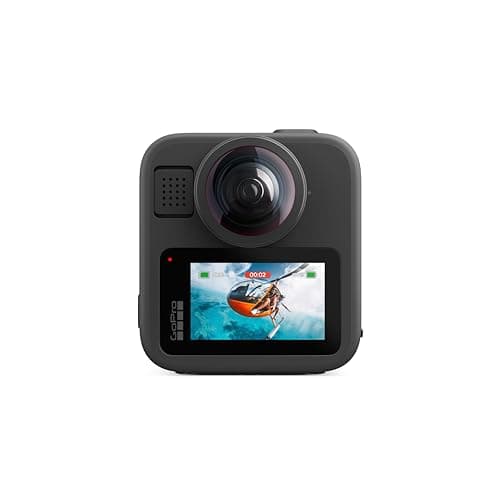
- 5m (16ft) bare
- 8K 7680x3840 at 30/25/24
- 1960mAh Enduro · runtime not published
- 6.5
- 9.5
- 7.5
- 9.5
- 7.0
GoPro MAX2
GoPro
True 8K on a sphere, replaceable lenses and GoPro's own mounting fingers — held back on this site by a 5m water rating, the shallowest of any 360 camera we rank.
Riders and hikers who want one camera to cover everything and already own GoPro mounts
- 8K 360 at 7680x3840 — the highest published 360 frame size of any camera we rank, which is what reframing actually spends
- Replaceable lenses, changeable in the field, so a scratched lens is a part and not a service job
- Built-in GoPro mounting fingers: every two-prong mount, clamp and boom already fits
- Six microphones for 360 audio, and Max HyperSmooth with 360-degree Horizon Lock
- Single-lens 4K at 60fps in 16:9, 9:16 and 4:3, so it can stand in for a flat camera
- 5m (16ft) bare is the shallowest 360 rating here — a third of the Insta360 X5's 15m
- GoPro publishes no recording time for the 1960mAh battery, so endurance cannot be compared on paper
- 195g with fingers and battery, the heaviest 360 body we rank
- 8K 360 files are slow to reframe and heavy to edit on an older laptop
Specs from Backscatter, GoPro MAX2 published specification listing.
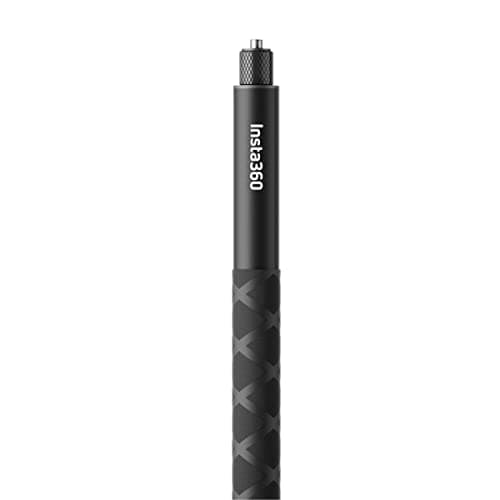
- 23.3cm to 114.1cm
- Aluminum
- 1/4-20 screw
- 6.5
- 9.0
- 7.0
- 9.0
- 7.0
Insta360 114cm Invisible Selfie Stick
Insta360
The pole that disappears in a 360 shot — the single accessory that makes a 360 camera worth owning on the water.
Third-person paddling shots from an X-series camera
- Vanishes from 360 footage, which is the whole reason the format works for self-filming
- Collapses to 23cm and stows in a deck bag
- Standard 1/4-20, so it takes more than just Insta360 cameras
- Light enough to hold out one-handed while the other hand paddles
- Insta360 says plainly it is not designed for high-speed adventures
- Aluminum sections seize if you put them away wet and salty
- It does not float, and a dropped pole with a camera on it sinks fast
Specs from Insta360 114cm Invisible Selfie Stick product page.
02
How we picked
We do not lab-test, bench-test or dive-test cameras, and we do not own test units. What we do instead is read the manufacturer's published specifications, read the independent reviews that genuinely do test, read owner reports for the failure modes specs never mention — fogging, salt corrosion, cold battery collapse, mount slippage — and then weight all of it for 360 cameras used on lake and trail. Where a number is not published, the page says “not published” rather than filling the cell.
The full method, including what we refuse to do, is on the editorial policy page.
- 30%Water survival
- Exposed lenses change the rules — rated depth and lens-guard availability both count.
- 25%Reframing payoff
- A 360 camera is only worth it if the reframing genuinely saves shots you would have missed.
- 20%Battery in the cold
- Stitching two sensors costs power; cold costs more.
- 15%Mount ecosystem
- Invisible-selfie-stick geometry is the whole trick, and it depends on the mount.
- 10%Edit time
- Every 360 clip needs a pass before anyone can watch it.
03
Questions people actually ask
01Is the GoPro MAX2 waterproof enough for kayaking?
It is rated to 5m (16ft) bare, which survives rain, spray and a brief dunk. It is not the right choice if the camera is going to be held under the surface or go over with the boat regularly — the Insta360 X5's 15m IP68 rating gives three times the margin for the same money bracket.
02Which has better image quality, the MAX2 or the X5?
On published frame size, the MAX2: 8K 360 at 7680x3840, the highest we have found published. On a 360 camera that genuinely matters, because the flat clip you export is a slice of the sphere. Both also publish 8K-class capture, so the practical gap is smaller than the marketing suggests.
03Do GoPro mounts fit the MAX2 and the X5?
The MAX2 has GoPro's folding fingers built in, so every two-prong mount fits directly. The X5 uses a 1/4-20 thread and is designed around poles, so a two-prong mount needs an adapter.
04How long does the GoPro MAX2 record for?
GoPro publishes a 1960mAh Enduro battery and no recording time for the MAX2 in the specifications we read. Insta360 publishes roughly 88 minutes at 8K30 for the X5. We will not estimate a figure a manufacturer has not stated.
05Can the MAX2 replace a normal action camera?
Partly. Published single-lens modes include 4K at 60fps in 16:9, 9:16 and 4:3, which covers a normal wide shot and a vertical clip. What it cannot remove is the reframing step on anything shot in 360, and that is the real cost of the format.
04
Read this next
Insta360 X5 review
Every published X5 figure, including the reframing tax.
360 camera vs action camera
Read this before buying either one — the format decision comes first.
Best 360 camera for kayaking
Where the 15m rating stops being a specification and starts being the answer.
Best 360 camera for mountain biking
The trail case, where mounting and resolution outrank depth.
4K vs 5.3K vs 8K
Why 8K means something different on a sphere than on a flat camera.
05
Sources
- Backscatter, GoPro MAX2 published specification listing
- Insta360 X5 product page, published specifications
- CineD, Insta360 X5 announcement with published specifications
- Insta360 114cm Invisible Selfie Stick product page
Specifications are quoted from the manufacturer pages above as they read on the dates shown. Where a figure is not published, this site says so rather than estimating one. We have not tested these products.