Floats, tethers and not losing your camera
The cheapest accessory on this site, and the one that prevents the most expensive mistake in it.
Part of On the Water.
We earn a commission if you buy through our links, at no extra cost to you. It never changes what we recommend or the order we rank it in — how this works.
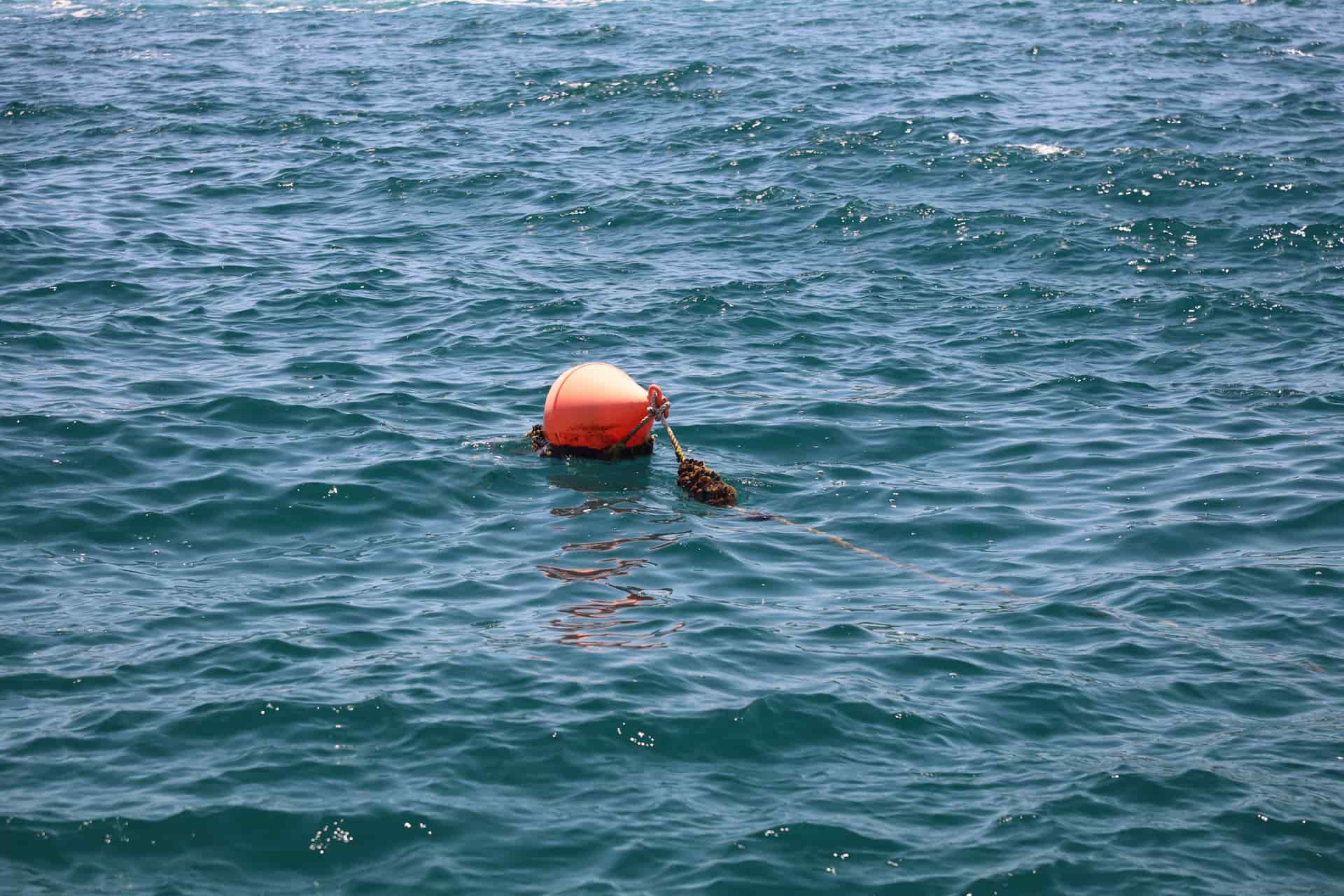
No. A GoPro does not float. It sinks, and so does most of the housing range, the Insta360 X-series, both DJI Osmo Action bodies and every other camera on this site. A camera in a dive housing sinks faster than a bare one, because the housing adds more weight than displacement. If you are on open water you need a float on the back door or a tethered floating grip — one or the other, before the first paddle stroke.
Why this is the first thing we tell people
A flooded camera is the failure everyone worries about. A sunk camera is the failure that actually happens, and it is far more common.
The cameras on this site are rated between 5m and 20m. A lake is frequently deeper than that, and even where it is not, a small dark object on a silty bottom in moving water is effectively gone. The camera was working perfectly the whole way down. The waterproofing did its job. You still lost it.
A float costs a small fraction of the camera and removes that entire failure mode.
Check the model number — this is the trap
GoPro has shipped several Floaty products over the years and the model numbers are not interchangeable. The current one, ADFLT-001, is listed as compatible with the HERO13 Black, HERO12 Black, HERO11 Black, HERO10 Black and HERO9 Black. The older AFLTY-004 is a different part for much older cameras and housings, and it is still widely sold.
People buy the wrong one constantly, because the listings look nearly identical and the photos are close enough. Check the model number against your camera before you order, not after.
The three ways to keep a camera at the surface
| Approach | What it does | Where it fails |
|---|---|---|
| A float on the camera | Attaches to the door or frame and stays with the camera through every mount change | Adds bulk; check it still floats your camera plus its housing and mount |
| A floating grip | Floats end-up in bright orange, doubles as the handheld rig | Only helps when the camera is in your hand, not when it is on a deck mount |
| A leash to the boat | Cheapest option. The camera never leaves the boat at all | Does nothing if the boat is what capsized; can snag in a swim |
On a kayak, the honest answer for most people is a float on the camera plus a short leash to a deck loop. Belt and braces, and between them they cover every way the camera comes off.
Where cameras actually get lost
Patterns worth knowing, because each has a different fix.
The mount let go. Suction released, adhesive lifted in the heat, a thumb screw backed out over two hours of vibration. The fix is a tether to the boat, not a better mount — every mount here can fail and the tether is what makes that survivable.
It was handed over. Passing a camera between boats or to someone in the water is where a surprising number go. A wrist strap on a floating grip solves it.
It was on the deck, not on a mount. Set down “just for a second” while something else happened. A float turns this into a retrieval.
The boat went over. Everything not tethered leaves. This is the one where a leash to the boat is genuinely better than a float, because the camera stays with the hull you are about to right.
Make it findable, not just floating
Two things matter once it is in the water: color and size. Bright orange exists for a reason — a black camera bobbing in gray chop is essentially invisible at twenty meters, and the difference between a two-minute recovery and a lost afternoon is whether you can see it.
This is also the argument for a floating grip over a bare float if you shoot handheld: the grip is longer, it floats end-up so part of it stands proud of the surface, and it is much easier to spot.
What we would not bother with
A float on a camera that never leaves a deck mount inside a cockpit, on flat water, in a sheltered bay — the risk genuinely is low, and a leash covers it. Be honest about which of those describes you, though; most people paddle somewhere less sheltered than they picture.
Improvised floats. Pool noodles and foam taped to a housing change the balance in unpredictable ways and come off exactly when they are needed. The purpose-made parts cost very little.
01
What to fit before the first trip
One attaches to the camera and stays there. One is a grip you hold. Most people on open water want the first; people shooting handheld want both.
- ADFLT-001
- HERO13, 12, 11, 10, 9 Black
- Keeps the camera at the surface
- 8.5
- 9.0
- 9.5
- 7.5
GoPro Floaty
GoPro
The one accessory that decides whether a dropped camera is a bad moment or a lost camera. Buy it with the camera, not after.
Every single person putting a camera near open water
- Attaches directly to the camera rather than to a mount you might swap off
- Bright orange, which is the difference between finding it and not
- Cheap next to the camera it saves
- Works with the standard door, so nothing else changes about your setup
- Model numbers matter — the older AFLTY-004 does not fit HERO13, 12, 11, 10 or 9
- Adds bulk that changes how the camera sits in a tight mount
- It floats the camera, not the camera plus a heavy housing and mount — check the whole rig
Specs from GoPro Floaty (ADFLT-001) product page.
- Bright orange end pops to the surface
- Quick release, switches between mounts
- Non-slip construction
- 8.0
- 8.5
- 9.0
- 7.0
GoPro The Handler Floating Hand Grip
GoPro
A grip that floats bright-orange-end-up when you drop it, with a quick release so the camera moves to a mount without tools.
Handheld water shots — snorkeling, swimming, filming from the boat
- Floats end-up so you can actually spot it in chop
- Quick-release base means the same camera goes from hand to deck mount in seconds
- Non-slip even with wet or cold hands
- GoPro lists it specifically for surfing, kayaking and wakeboarding
- It floats the grip; a heavy housing on the end changes that calculation
- No wrist strap included in every configuration — add one
- Bulky in a PFD pocket
Specs from GoPro The Handler product page.
02
How we picked
We do not lab-test, bench-test or dive-test cameras, and we do not own test units. What we do instead is read the manufacturer's published specifications, read the independent reviews that genuinely do test, read owner reports for the failure modes specs never mention — fogging, salt corrosion, cold battery collapse, mount slippage — and then weight all of it for floats and tethers used on lake and trail. Where a number is not published, the page says “not published” rather than filling the cell.
The full method, including what we refuse to do, is on the editorial policy page.
- 40%Buoyancy with the real rig
- Camera plus case plus mount — a float rated for the bare camera sinks.
- 30%Attachment security
- The float has to stay attached in the moment you need it.
- 18%Visibility
- Finding it in chop is the whole point of the color.
- 12%Bulk
- It has to not ruin the shot it is attached to.
03
Questions people actually ask
01Do GoPros float in water?
No. A GoPro sinks, and so does the standard protective housing. Only a purpose-made float or floating grip keeps one at the surface. This is true of every current action camera, not just GoPro.
02Does the GoPro Floaty fit the HERO13?
The current model, ADFLT-001, is listed as compatible with the HERO13 Black, HERO12 Black, HERO11 Black, HERO10 Black and HERO9 Black. The older AFLTY-004 does not fit those cameras — check the model number before ordering, because both are still sold and the listings look alike.
03Does a waterproof case float?
No. A dive housing adds more weight than displacement, so a housed camera sinks faster than a bare one. If anything, a housing makes a float more necessary rather than less.
04Should I use a float or a tether?
On a kayak, both. A float handles the camera coming off in open water; a leash to a deck loop handles the mount failing while you are moving. They cover different failures and together they cost very little.
05Will a float still work with my mount and housing attached?
Not necessarily — floats are rated for the camera, and a camera plus housing plus mount can be heavy enough to sink one. Test the actual assembly in a sink before you trust it on the water.
06Does a floating hand grip keep the camera at the surface?
Yes, while it is attached. GoPro's Handler floats with a bright orange end that pops to the surface, which is what makes it findable. It only helps for handheld shooting, though — it does nothing for a camera that is on a deck mount.
04
Read this next
Best action cameras for kayaking
Choose the camera, then come straight back here before the first trip.
Best kayak camera mounts
Every mount can fail. This is why they all need a tether point.
How deep can an action camera go?
The depth rating is irrelevant once it is on the bottom.
Paddle and pole mounts
Which poles float and which ones take the camera down with them.
Action camera gifts under $50
A float is the best inexpensive gift in this whole category.
05
Sources
Specifications are quoted from the manufacturer pages above as they read on the dates shown. Where a figure is not published, this site says so rather than estimating one. We have not tested these products.