The safest action camera
Three different things get called safety: surviving water, surviving impact, and not being left at the bottom of a lake. Only one of them is a camera spec.
Part of Cameras.
We earn a commission if you buy through our links, at no extra cost to you. It never changes what we recommend or the order we rank it in — how this works.
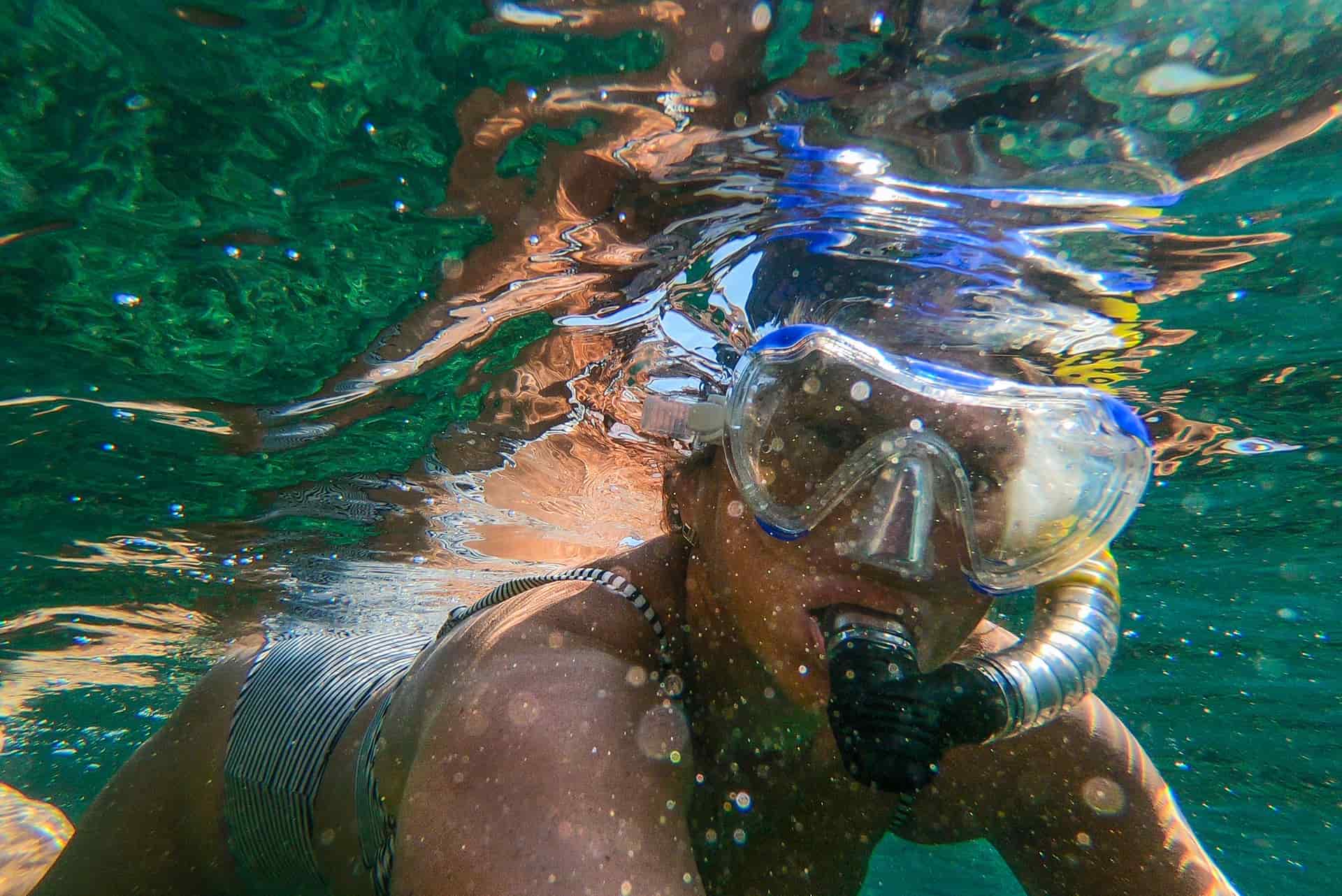
The DJI Osmo Action 5 Pro is the safest action camera you can buy bare, because safety here is mostly margin: it is rated to 20m with no housing — double the bare depth of any current GoPro — and to -20°C, so the two conditions that kill cameras on a lake are both well outside what it is rated for. If “safest” means the camera most likely to come home at all, the honest answer is any of these plus a $20 float, because none of them are buoyant on their own and the most common way an action camera dies is sinking, not flooding.
01
Quick picks
| # | Product | Best for | Score | Price |
|---|---|---|---|---|
| 01 | 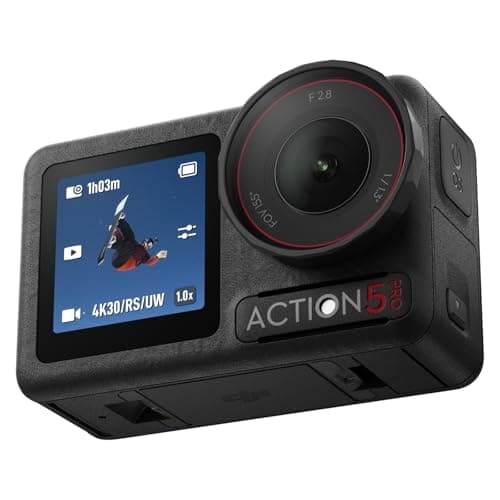 DJI Osmo Action 5 Pro Goes to 20m with no housing at all and publishes a 240-minute runtime — the two numbers that decide a long, wet, cold day. | Long paddles, cold water, and anyone tired of buying a housing to get past 10m | 9.1/ 10 | |
| 02 | 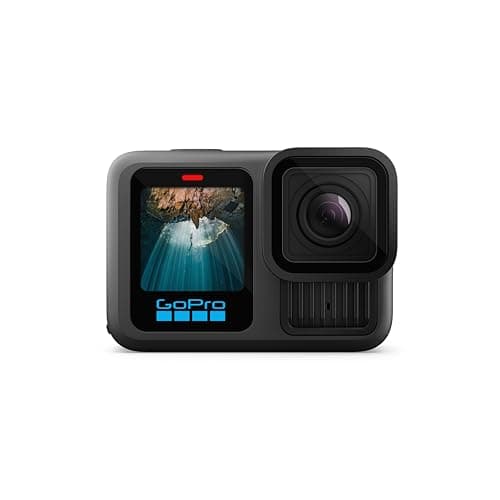 GoPro HERO13 Black The safest default for lake and trail: 33ft without a housing, the steadiest footage in the category, and a mount for literally everything. | Anyone who wants one camera to handle the kayak, the bike and the family trip | 8.8/ 10 | |
| 03 | 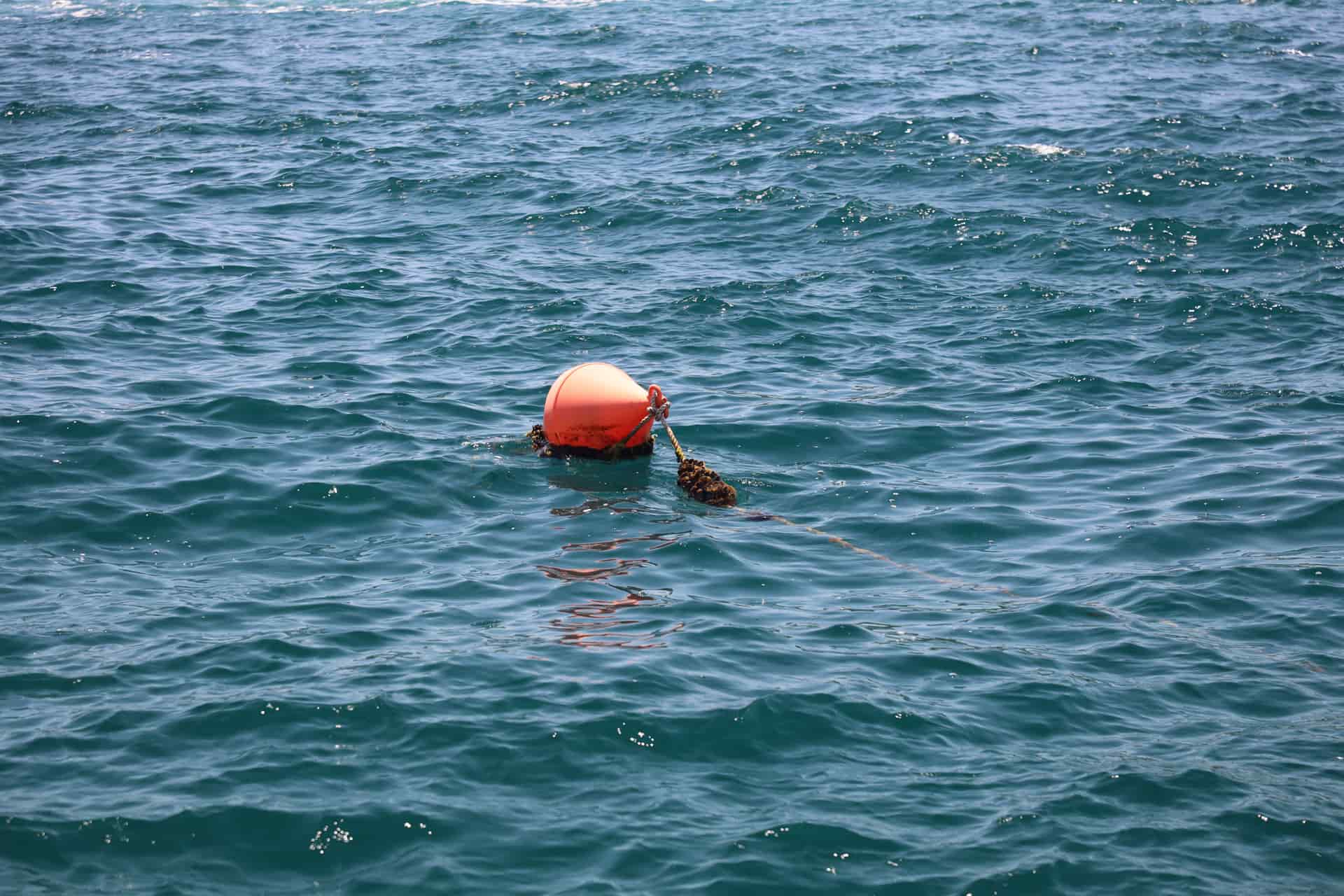 GoPro Floaty The one accessory that decides whether a dropped camera is a bad moment or a lost camera. Buy it with the camera, not after. | Every single person putting a camera near open water | 8.7/ 10 | |
| 04 | 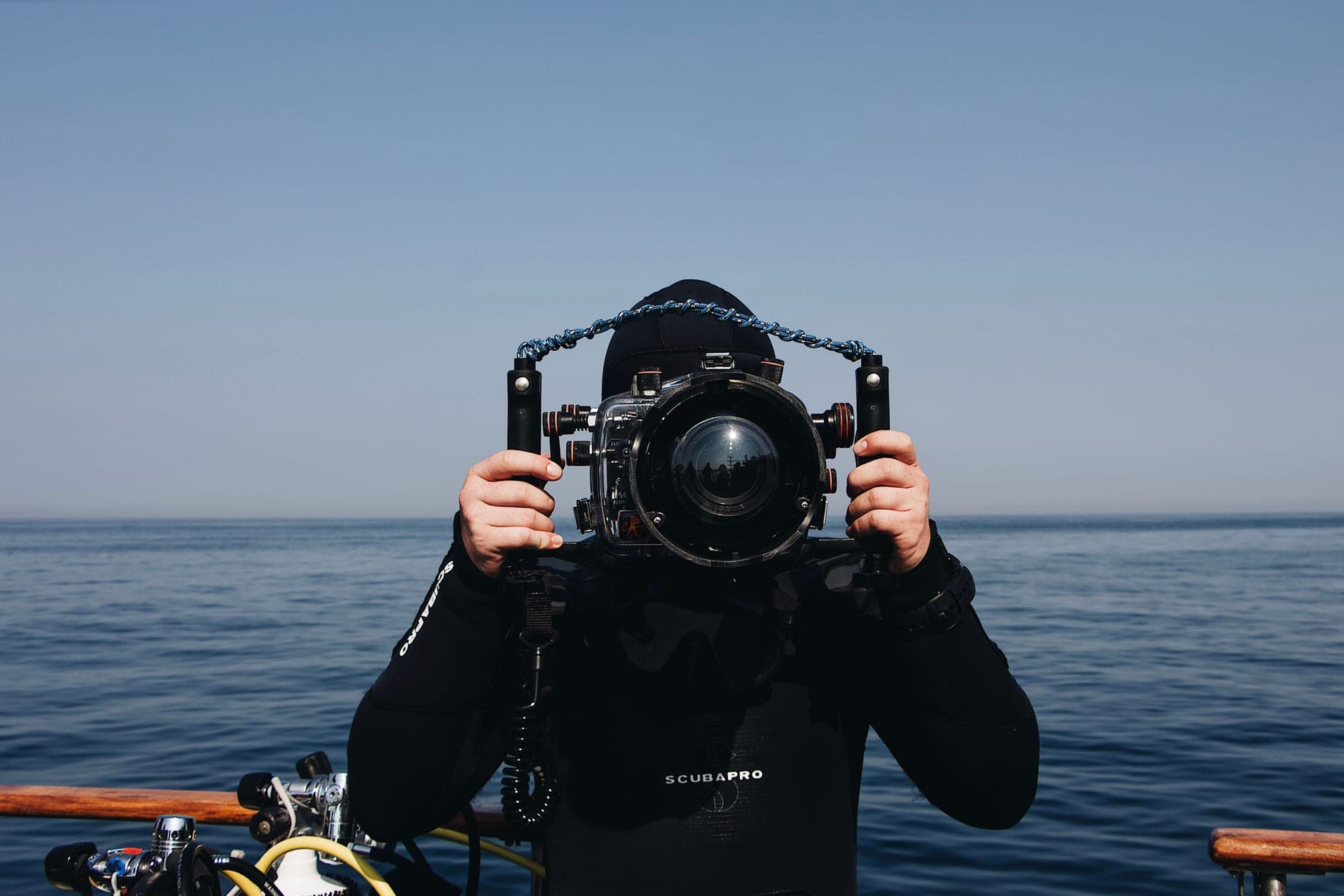 GoPro Protective Housing 196ft (60m) rated, with a flat glass lens — the piece that turns a 33ft camera into a diving camera. | Anything below about 30ft, and any camera going anywhere near a tank | 8.4/ 10 | |
| 05 | 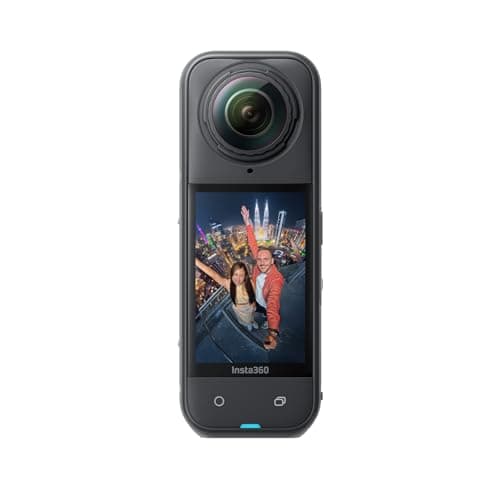 Insta360 X5 15m rated, replaceable lenses, and the one camera that means you never have to aim while you are paddling. | Anyone filming themselves on the water who cannot stop to frame a shot | 9.1/ 10 |
Scores are our editorial judgment from published specs and named independent reviews, weighted for lake and trail use — not measurements. We have not tested these units and do not own them.
02
How we picked
We do not lab-test, bench-test or dive-test cameras, and we do not own test units. What we do instead is read the manufacturer's published specifications, read the independent reviews that genuinely do test, read owner reports for the failure modes specs never mention — fogging, salt corrosion, cold battery collapse, mount slippage — and then weight all of it for action cameras used on lake and trail. Where a number is not published, the page says “not published” rather than filling the cell.
The full method, including what we refuse to do, is on the editorial policy page.
- 30%Water survival
- Rated depth without a case, door design, and what the manufacturer actually publishes.
- 25%Stabilization in chop
- A kayak deck and a rooty trail shake in ways a handheld walk test never shows.
- 20%Battery in the cold
- Published runtime, spare-battery cost, and whether it charges while recording.
- 15%Mount ecosystem
- Finger mount, threaded, magnetic — and how much of it you have to re-buy.
- 10%Footage you will keep
- Lens replaceability, low-light behavior, and how much cutting the footage needs.
Three questions get asked as one
“Safest action camera” is really three different questions, and the answer changes depending on which one you mean. Worth separating them before spending anything.
Safe from water. This is the one with a number on it, and the number is less useful than it looks. A depth rating describes a new, undamaged camera with clean seals and closed doors in still water. It says nothing about a three-season-old gasket, a grain of sand on the seal, the pressure spike of hitting water hard from a jump, or thermal shock from a hot deck into cold water. So the right way to read a depth rating is as a ceiling you should not be approaching — which is why we rank on margin rather than on the largest number. The full breakdown is on how deep an action camera can actually go.
Safe from impact and abrasion. Almost nobody shops on this and it is where cameras actually get damaged. Sand on a lens, a drop onto a dock, a bike on its side, a hull scraping a rock. The specification that matters is not toughness — it is whether the part that breaks is replaceable.
Safe from loss. The most common total loss is not a flood. It is a camera that came off a mount, or out of a hand, and sank. This is the cheapest problem on the page to solve and the one people skip.
| Camera | Bare depth | Cold rating | Replaceable glass | Housing available |
|---|---|---|---|---|
| DJI Osmo Action 5 Pro | 20m | -20° to 45°C | No | Yes, 60m |
| DJI Osmo Action 4 | 18m | -20° to 45°C | No | Yes, 60m |
| Insta360 X5 | 15m (IP68) | Not published | Yes — user-replaceable lenses | Not published for the X5 case |
| Insta360 Ace Pro 2 | 12m (39ft) | Not published | No | Yes, 60m |
| GoPro HERO13 Black | 10m (33ft) | Enduro rated to 14°F (-10°C) | Yes — lens cover | Yes, 196ft (60m) |
| AKASO Brave 8 Lite | 10m (IPX8) | Not published | No | Yes, 60m |
| GoPro HERO (2024) | 5m (16ft) | Not published | No | Not published |
What makes a mount safe
A camera is only as secure as the weakest link between it and whatever it is attached to, and the weakest link is almost never the camera.
Prefer mechanical to magnetic. Magnetic quick-release is genuinely pleasant on a jacket or a hat. On a handlebar at speed, on a kayak in chop or on a helmet, we want two prongs and a thumbscrew that has to be unthreaded to come apart.
Suction cups have a duty cycle. They hold well on clean, smooth, non-porous surfaces and they let go on textured gelcoat, dusty paint and in heat. If you use one on a boat, use it with a tether as well. There is more on this in track vs clamp vs suction.
Adhesive mounts need 24 hours. The pads reach full bond strength overnight. Mounting one and riding an hour later is the single most common cause of a camera parting company with a helmet.
Tether anything over water. A short leash to a PFD, a deck line or a wrist costs almost nothing and converts a lost camera into an inconvenience.
The things that actually destroy cameras
In rough order of how often we see them reported by owners, none of which appear on a spec sheet.
Sinking. Dropped off a dock, off a paddleboard, out of a boat. Solved by a float, for twenty dollars, permanently.
Salt left to dry. Salt crystallizes in the door seal and around the ports as it dries, and the damage happens over weeks rather than on the day. A five-minute freshwater rinse prevents effectively all of it — see salt water care and rinsing.
A door closed on grit. One grain of sand on the battery-door gasket defeats the entire depth rating. Look at the seal before you close it, every time, and keep the camera off the beach.
A scratched lens. Which is the whole argument for a replaceable lens cover.
Heat on a dashboard or deck. Published operating ranges top out around 45°C. A black camera on a sunlit hull exceeds that comfortably, and overheating shutdowns are the symptom before the damage. There is a longer treatment in stop fogging and overheating.
03
Every pick, in detail
- 20m bare / 60m with case
- 1950mAh · 240 min at 1080p24
- -20° to 45°C
- 9.5
- 9.0
- 9.5
- 8.0
- 9.0
DJI Osmo Action 5 Pro
DJI
Goes to 20m with no housing at all and publishes a 240-minute runtime — the two numbers that decide a long, wet, cold day.
Long paddles, cold water, and anyone tired of buying a housing to get past 10m
The safest bare camera, and the reason is margin rather than any single feature. 20m of depth rating means the three or four meters an ordinary paddle or swim actually reaches is nowhere near the limit, so an aging gasket or a grain of sand in the door seal has a long way to go before it matters. The -20°C operating range does the same job for cold: a camera that is rated far below the conditions it meets is a camera that does not surprise you.
It is not perfect on this axis. The mount ecosystem is smaller than GoPro's and magnetic quick-release adapters are a separate purchase, and a magnetic interface is a convenience fitting rather than a mechanical lock — on anything moving fast we want two prongs and a screw. See mount compatibility for what adapts to what.
- 20m without the Waterproof Case — double the bare-camera depth of the HERO13 Black
- DJI publishes 240 minutes of recording at 1080p/24 with screens off, the longest figure in this set
- Rated to -20°C, which matters more on an October lake than any resolution number
- 1/1.3-inch sensor holds detail when the light goes flat
- Mount ecosystem is smaller than GoPro's, and magnetic quick-release adapters are their own purchase
- 146g — the heaviest of the flagship three
- Fewer third-party mounts and filters exist for it
Specs from DJI Osmo Action 5 Pro published specifications.
- 33ft (10m), no housing
- 1900mAh Enduro
- 1.5h at 5.3K30 / 2.5h at 1080p30
- 8.0
- 9.5
- 8.5
- 9.5
- 9.0
GoPro HERO13 Black
GoPro
The safest default for lake and trail: 33ft without a housing, the steadiest footage in the category, and a mount for literally everything.
Anyone who wants one camera to handle the kayak, the bike and the family trip
Second, and it wins the two categories the DJI does not. The lens cover is user-replaceable, which turns the single most likely cosmetic-to-fatal damage on an action camera — a scratched front element from sand, rock or a dropped bag — into a $20 part rather than a service job or a write-off. And the mount ecosystem is the largest in the category, which matters more for safety than it sounds: a camera is as secure as the cheapest part of the chain holding it, and GoPro's two-prong standard has the widest selection of properly engineered clamps and harnesses behind it.
Against it: 33ft (10m) bare is the shallowest of the three flagships, so there is less margin than the DJI has. Anything past that needs the Protective Housing below.
- HyperSmooth 6.0 with AutoBoost is the steadiest stabilization we can find published figures for
- Built-in mounting fingers plus 1/4-20 threads — it fits the GoPro ecosystem and a normal tripod
- Enduro battery is rated to keep full camera functionality down to 14°F (-10°C)
- Replaceable lens cover, so a scratched lens is a $20 problem and not a $400 one
- 33ft is shallower than the DJI and it is the shallowest of the three flagships
- Anything past 33ft needs the separate Protective Housing
- HB-Series lenses and ND filters are all extra purchases
Specs from GoPro HERO13 Black published specifications.
- ADFLT-001
- HERO13, 12, 11, 10, 9 Black
- Keeps the camera at the surface
- 8.5
- 9.0
- 9.5
- 7.5
GoPro Floaty
GoPro
The one accessory that decides whether a dropped camera is a bad moment or a lost camera. Buy it with the camera, not after.
Every single person putting a camera near open water
The actual answer to the question most people are asking. No action camera floats — they all sink, fast, and a dropped camera in four feet of silty lake water is usually gone. A floaty adds enough buoyancy to keep a HERO on the surface, and it is bright so you can see it. If you buy one thing off this page, buy this one. It is also the cheapest item here by a wide margin, which is the whole point. The longer version is floats, tethers and not losing your camera.
- Attaches directly to the camera rather than to a mount you might swap off
- Bright orange, which is the difference between finding it and not
- Cheap next to the camera it saves
- Works with the standard door, so nothing else changes about your setup
- Model numbers matter — the older AFLTY-004 does not fit HERO13, 12, 11, 10 or 9
- Adds bulk that changes how the camera sits in a tight mount
- It floats the camera, not the camera plus a heavy housing and mount — check the whole rig
Specs from GoPro Floaty (ADFLT-001) product page.
- 196ft (60m)
- HERO13, 12, 11, 10 Black
- Flat glass front
- 9.5
- 8.5
- 8.0
- 7.0
- 6.0
GoPro Protective Housing
GoPro
196ft (60m) rated, with a flat glass lens — the piece that turns a 33ft camera into a diving camera.
Anything below about 30ft, and any camera going anywhere near a tank
Safety as armor. The housing takes a HERO13, 12, 11 or 10 Black to 196ft (60m), and it also puts a sacrificial shell between the camera and rock, boat hulls and the deck it will eventually land on. The trade is real: muffled audio, an O-ring to inspect before every use, and a fogging risk the bare camera does not have — which is why anti-fog inserts stop being optional the moment a housing enters the picture. Use it for diving and for whitewater. Leave it off for a flat-water paddle.
- 60m is six times the HERO13 Black's bare rating
- Flat glass lens rather than plastic, so the image holds up
- Includes a skeleton backdoor for better audio when you are not underwater
- Also the best impact protection the camera can wear
- Muffles audio badly with the sealed door — that is physics, not a defect
- Sealed air plus a temperature change is exactly how fogging happens; budget for inserts
- Buttons are harder to work with gloves on
Specs from GoPro Protective Housing product page.
- IP68 to 49ft (15m)
- 2400mAh · ~88 min at 8K30
- User-replaceable
- 9.5
- 9.5
- 9.0
- 8.5
- 7.5
Insta360 X5
Insta360
15m rated, replaceable lenses, and the one camera that means you never have to aim while you are paddling.
Anyone filming themselves on the water who cannot stop to frame a shot
The 360 pick, and it belongs here for one unusual reason: the lenses are user-replaceable. Exposed hemispherical glass is the 360 format's worst failure mode, and the X5 is the first X-series body where a deep scratch is a part you order rather than a camera you replace. 15m IP68 is also the deepest bare rating of anything on this site. The catch is that you are still carrying two exposed domes, so lens guards are a purchase and not an option.
- 15m IP68 is the deepest bare rating of any camera on this site
- User-replaceable lenses — the single biggest fix for the 360 format's worst failure mode
- 185 minutes in Endurance mode at 5.7K24, which is a whole day of clips
- Invisible-selfie-stick reframing means you point the camera at nothing and pick the angle later
- Exposed lenses still scratch; lens guards are a purchase, not an option
- Every clip needs a reframing pass before anyone else can watch it
- 8K30 files are large and the edit is slower than flat footage
Specs from CineD, Insta360 X5 announcement with published specifications.
04
What decides this category
Buy depth margin, not depth
Pick a camera rated to roughly double the depth you will actually reach. The margin is what absorbs an aging seal, a hard entry and a hot-to-cold transition — all three of which a rating assumes away.
Prefer a camera whose glass is a part number
A replaceable lens cover or replaceable lens turns the most likely damage on the camera into a cheap consumable. Over three seasons this matters more than any sensor specification.
Spend on the mount, not the bundle
A properly engineered clamp or harness is where safety actually lives. The seven-piece plastic mount kits that pad out budget bundles are the parts that slip.
What we would skip
Housings on flat water. A housing bought for “extra safety” on a calm lake adds a fogging risk, an O-ring to maintain and muffled audio in exchange for depth you will not reach. Buy the float instead, and keep the housing for diving and whitewater.
05
Questions people actually ask
01What is the safest action camera for water?
The DJI Osmo Action 5 Pro, on published figures: 20m bare is double any current GoPro and gives the most margin over the depths ordinary use reaches. Pair it with a float — depth rating protects against flooding, not against sinking.
02Do action cameras float?
No. Every camera on this page sinks on its own. A floaty, a floating hand grip or a short tether is what makes a dropped camera recoverable, and it is the cheapest accessory you will buy.
03Is a waterproof case safer than a waterproof camera?
Deeper, and not automatically safer. A housing adds depth and impact protection, and it also adds a fogging risk, an O-ring you have to inspect, and one more thing that can be assembled wrong. For anything inside the camera's bare rating, bare is the safer choice.
04Does a depth rating mean the camera cannot flood?
It means a new, undamaged camera with clean, closed seals was tested to that depth in still water. It makes no promise about a worn gasket, grit on the seal, a hard entry, or hours of submersion. Treat it as a ceiling, not a target.
05What is the safest way to mount a camera on a helmet?
A low-profile adhesive front-or-side mount, bonded for a full 24 hours, that will shear away in a crash. Never drill a helmet, and keep the camera off the crown where it both snags and sits on the most likely impact point.
06
Read this next
How deep can an action camera go?
Every published rating in one table, and what a rating does not promise.
Floats, tethers and not losing your camera
The cheapest fix for the most common total loss.
The best waterproof action cameras
Ranked on water survival specifically, rather than on all four safety axes.
Cases and dive housings
When armor is the right answer, and what it costs you.
Salt water care and rinsing
The five minutes after a salt day that decides the next three seasons.
07
Sources
- GoPro HERO13 Black published specifications
- DJI Osmo Action 5 Pro specifications
- GoPro Floaty (ADFLT-001) product page
- GoPro Protective Housing product page
- CineD, Insta360 X5 announcement with published specifications
Specifications are quoted from the manufacturer pages above as they read on the dates shown. Where a figure is not published, this site says so rather than estimating one. We have not tested these products.