Waterproof mounting options for water sports
Nobody publishes a waterproof rating for a mount, because the mount is not the thing that leaks. What decides a wet mount is corrosion, grip when everything is slick, and what happens to the camera when it lets go.
Part of Mounts.
We earn a commission if you buy through our links, at no extra cost to you. It never changes what we recommend or the order we rank it in — how this works.
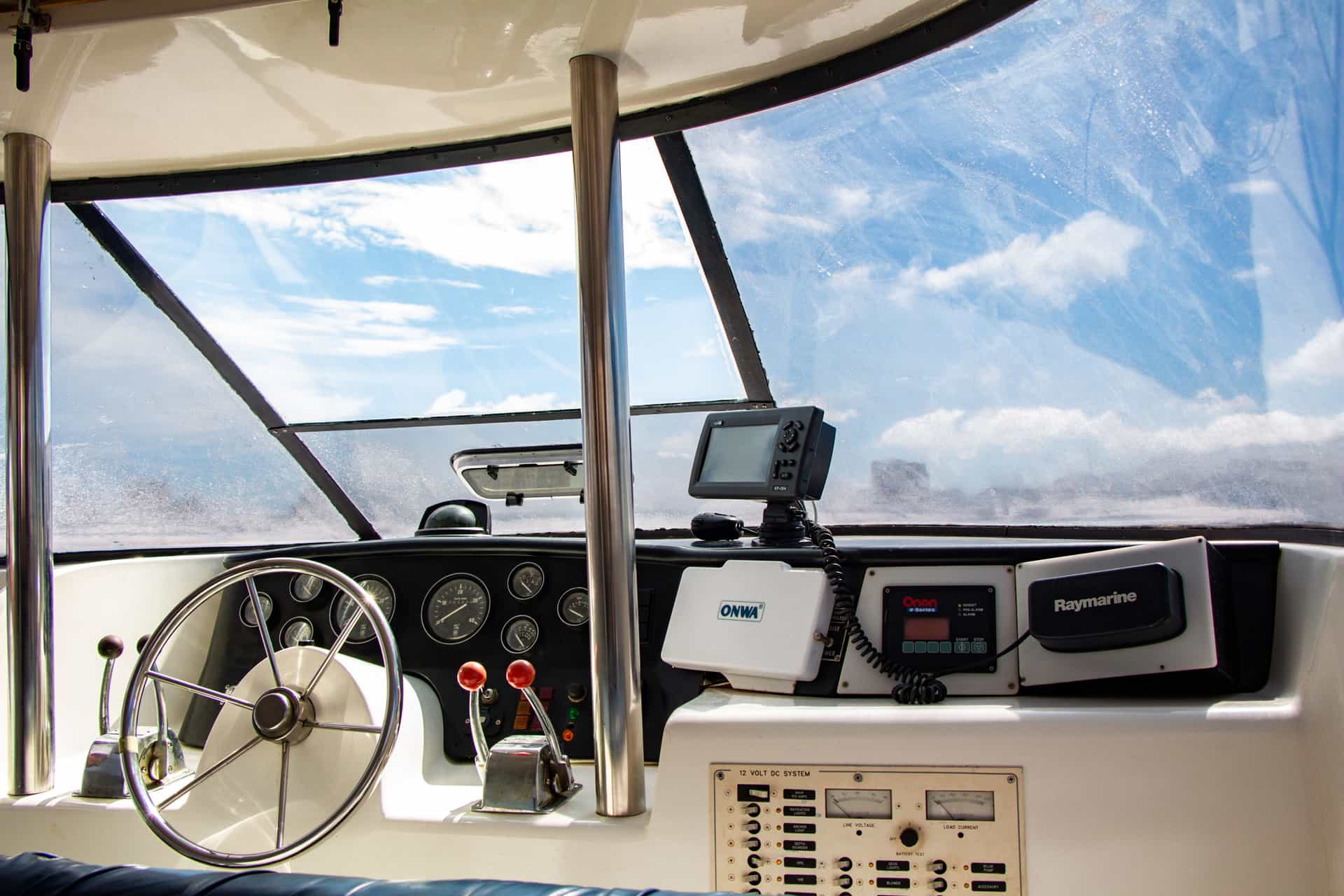
No action camera mount is sold with a waterproof rating, and none needs one — a mount has no electronics and nothing to flood. What makes a mount suitable for water sports is three different things: corrosion-resistant materials and hardware, a joint that holds its angle when everything is wet and slick, and a retention plan for when it lets go anyway. In practice that means a mechanical mount first — a track-mounted mast or a clamp with stainless hardware — an adhesive pad where there is nothing to clamp to, a handheld floating grip for shots in the water itself, and suction only on a genuinely smooth, genuinely dry hull. Every one of them gets a tether, because a GoPro-fitting mount releases in exactly the direction the water is already moving.
There is no waterproof rating to look for
It is worth getting this out of the way, because "waterproof mount" is a search people make and a claim listings happily print. An IP or depth rating describes a sealed enclosure protecting something inside it. A mount is a bracket. There is nothing inside to protect, so no manufacturer publishes a rating, and any listing that prints one is describing nothing.
What the honest manufacturers publish instead is three things, and those are the things to read:
Material. Aluminum, UV-stabilized glass-reinforced nylon and high-strength composite are all fine in water for years. Unspecified "metal" and unspecified plastic are not claims. The YakAttack PanFish Pro is aluminum; the RAM Tough-Claw is high-strength composite with stainless hardware; the RAILBLAZA booms are UV-stabilized fiberglass-reinforced plastic. Those are real statements about a part that will live outdoors.
Hardware. This is where cheap mounts actually fail, and it is almost never mentioned. Thumbscrews, bolts and pivot pins are the parts salt attacks, and a seized or rusted thumbscrew is a mount you cannot adjust and eventually cannot remove. Stainless is the word to look for.
A published fit range. A clamp that states its range — the Tough-Claw covers 0.625in to 1.14in outer diameter, the GoPro handlebar mount covers 9mm to 35mm tubes — is a mount you can check against your boat with a tape measure before you buy. A clamp that says "fits most" is a return.
The five families, and how each behaves wet
Every way of attaching a camera on the water is one of five things. They are not equally good, and the ranking changes less by sport than people expect.
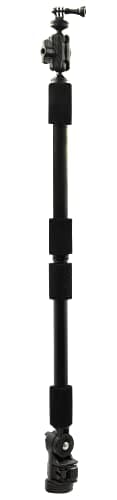
1. Track and bolted bases — the best case. If your boat has accessory track, you have the strongest option available: a mechanical connection into a rail designed to carry load, with a mast that gets the camera above the spray line. The PanFish Pro is 33 inches tall on a LockNLoad base with 360-degree rotation, and it floats if you drop it in — which is a design decision somebody made specifically about this failure. The cost is that it only exists if your boat has the track, or you are willing to install it.
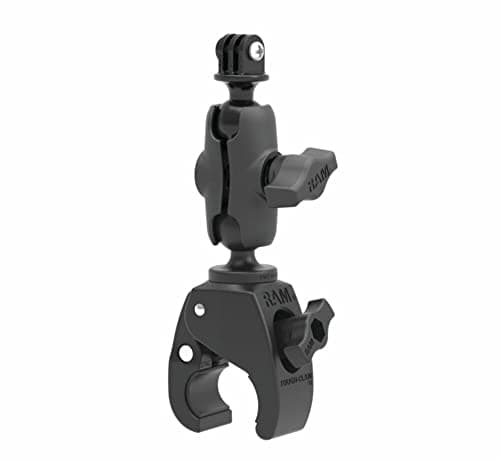
2. Clamps — the versatile fallback, and the right answer most often. A clamp needs a rail, a bar, a seat frame, a rod holder or a grab handle, and almost every boat has one of those. The Tough-Claw does not care whether the thing is round, square or an odd extrusion, which is why it solves the boats that have nothing a purpose-built mount expects. Wet does not reduce a clamp's grip, because the grip is mechanical rather than frictional. That is the key difference from the next two.
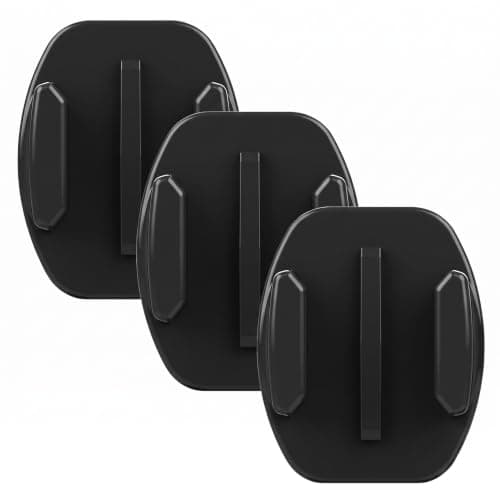
3. Adhesive pads — permanent, cheap, and unforgiving. GoPro's curved and flat adhesive mounts use industrial-strength waterproof adhesive and come off with heat from a hair dryer. Once bonded they are superb: no moving parts for salt to attack, no joint to creep, the lowest profile of anything here, and the only option on a surfboard or a smooth hull with nothing to clamp. The catch is that the bond is made once. A pad applied to a wet, cold, waxed or dusty surface on the morning you need it is the classic way a camera leaves a board mid-session. Apply it indoors, to a clean dry surface, and give it time before you load it.
4. Suction — the one to be skeptical about on water. GoPro's suction cup is proven at speeds of 150+ mph, which tells you the cup itself is strong. The condition attached to that number is what matters: a smooth, non-porous, clean surface. Powerboat windscreens and smooth fiberglass decks qualify. Textured kayak hulls, non-slip deck coatings, inflatable SUPs and anything with a film of salt or sunscreen on it do not. Suction is a legitimate choice on the specific surfaces it was designed for and a bad bet everywhere else — suction and clamp mounts goes through which surfaces work.
5. Held, not mounted — the family people forget. A floating hand grip or a pole is not a worse mount, it is a different shot. The Handler floats bright-orange-end-up when you drop it and has a quick release so the camera moves to a fixed mount without tools, and an extension pole gets the camera away from the boat and down near the water in a way no fixed base can. For snorkeling, swimming, and filming other people from a boat, handheld is the correct answer and a fixed mount is the compromise.
| Family | Grip when wet | What salt attacks | Retention if it fails |
|---|---|---|---|
| Track / bolted base | Unaffected — mechanical | Fasteners and the pivot | Stays with the boat; tether the camera |
| Clamp | Unaffected — mechanical | Thumbscrew and ball joint | Whole assembly can go; tether to the boat |
| Adhesive pad | Unaffected once bonded; the bond is the risk | Nothing — no moving parts | Pad stays, buckle releases; tether the camera |
| Suction cup | Degrades — needs smooth, clean, dry | The lever and the arm joints | Loses the camera and the mount; tether both |
| Handheld / pole | You are the grip | The pole's locking collars | A floating grip is its own retention |
Salt is what actually ends a mount
Fresh water does nothing to a decent mount. Salt is a different material problem, and it works on the parts you cannot see.
Salt crystals form in every gap as the water dries — in the thumbscrew thread, under the ball of a ball-and-socket joint, inside the locking collar of an extension pole, in the track channel a base slides along. Each cycle leaves more behind. The first symptom is a joint that is stiff, then one that will not hold an angle because the crystals have worn the friction surface, then a fastener that will not turn at all. None of that is sudden, which is why it surprises people after a season rather than after a day.
The fix is the same one the camera gets, and it takes the same five minutes: soak and rinse in fresh water with the joints worked through their range while they are submerged, so the water gets into the threads rather than just over them. Dry it out of direct sun. Once a season, back the thumbscrews all the way out, rinse the threads and put them back. On aluminum mounts with steel hardware, that one habit is also what prevents the fasteners seizing into the mount for good.
Which mount for which water sport
The sport changes the answer less than the boat does, but there are real patterns.
| Sport | First choice | Why | What to avoid |
|---|---|---|---|
| Kayaking, sit-on-top | Track-mounted mast | Gets the camera above the spray line and shows the boat | Low deck mounts — the lens collects spray every few strokes |
| Kayaking, no track | Clamp on a grab rail or seat frame | Mechanical grip, nothing to drill | Suction on a textured hull |
| Paddle boarding | Adhesive pad, or a pole | Nothing on a board to clamp; a pad is the only fixed option | Clamps — there is usually nothing of the right diameter |
| Surfing | Adhesive pad on the board, plus a floating grip | The only attachment that survives a wipeout | Anything with a thumbscrew near the nose of the board |
| Powerboating / pontoon | Suction on the windscreen, clamp on a rail | Smooth non-porous glass is what suction was designed for | Adhesive on gelcoat you care about |
| Snorkeling / swimming | Floating hand grip | You need to aim, and a float is its own retention | Head and chest mounts — they film the bottom, not the reef |
| Fishing from a kayak | Track mast plus a boom | The shot needs the rod tip and the water in frame | A single low mount — it will miss the strike |
The kayak-specific version of this decision, with the three methods compared head to head, is in track vs clamp vs suction, and the ranked hardware is in the kayak mount roundup. For the pole and paddle-shaft options specifically, paddle and pole mounts covers what fits what.
Three ways a wet mount fails, and the fix for each
The joint creeps. You set the angle, and twenty minutes later the camera is filming the sky or the deck. This is friction loss in a ball-and-socket or a pivot, and it is worse wet because water is a lubricant. The fix is to buy joints that lock rather than grip — R-Lock friction joints, a proper double socket arm with a real clamping knob — and to tighten them while the mount is dry and loaded, not while it is wet and empty.
The thumbscrew backs out. Vibration from a hull slapping chop undoes thumbscrews, slowly, over an hour. The fix is a habit: hand-tighten, then check it once after the first ten minutes on the water. If you are checking it twice a day, it is the wrong mount for your boat — mount compatibility covers the adapters that add a second thumbscrew to the chain, each of which is another thing to come loose.
The bond or the cup releases. Both are surface-preparation failures far more often than product failures. An adhesive pad needs a clean, dry, room-temperature surface and time; a suction cup needs a smooth non-porous surface wiped dry immediately before it goes on. Neither forgives being fitted in a hurry on a wet morning.
Height and angle beat the family you chose
Two mounts of different families, placed well, both produce usable footage. Two mounts of the same family, placed badly, both produce footage you will delete. Placement is the larger variable and it costs nothing.
Get above the spray. The lowest, most convenient position on any boat is also the one that collects water on the lens every few seconds and makes flat water look flatter. Above shoulder height is the target, which is the whole reason a 33-inch mast exists.
Include something that is not horizon. A camera pointed straight ahead films a line. Angle it slightly down and slightly toward you so the frame contains the deck edge, the paddle or the bow — that is what gives footage a sense of speed and place. How to film yourself paddling works through the angles that actually read on screen.
Check it before you launch, not after. Thirty seconds of recording, played back on the camera screen while you are still standing on the bank, catches every framing error there is. Nobody has ever regretted doing this.
And the thing a mount cannot fix: whether the camera survives the day at all. That is the camera's own water rating and your retention plan — covered in the best waterproof action cameras and, for the cold-weather version of the same question, protective housing for snow and ice.
01
One mount from each family that holds up wet
A mast that bolts to a track, a clamp for the boats with no track, an adhesive pad for a surface nothing can grip, and a floating grip for the shots that should never be mounted at all.
- 33in (4.25" W x 36.5" H x 2.0" D)
- LockNLoad, 360-degree rotation
- GoPro interface + 1/4-20 adapter
- 9.0
- 8.5
- 9.0
- 9.0
- 8.5
YakAttack PanFish Pro Camera Mount
YakAttack
Aluminum, 33 inches tall, mounts to almost every kayak track system, and floats if you drop it in.
Kayak fishing, where the camera has to see the rod tip and the water
- Rigid aluminum construction specifically to reduce camera shake
- LockNLoad base gives full 360-degree rotation while staying locked to the track
- Compatible with YakAttack MightyMounts and GearTrac plus most Scotty, RAM and YakGear tracks
- Made from marine-grade materials, and it floats if it goes over
- FeelFree, 3 Waters and Jonny Boat kayaks need a separate adapter
- 33 inches is a lot of mast in a crosswind
- Costs noticeably more than a plain track mount
Specs from YakAttack PanFish Pro published specifications.
- 0.625" to 1.14" outer diameter
- High-strength composite, stainless hardware
- Ball adapter, double socket arm, clamp base
- 8.5
- 7.5
- 8.5
- 9.5
- 7.0
RAM Tough-Claw Clamp Mount with Action Camera Adapter
RAM Mounts
Clamps to anything between 0.625in and 1.14in and does not care whether it is round, square or odd — the mount that solves the boats with no track.
Rails, bars, seat frames and anything you cannot or will not drill
- Fits round, square and odd-shaped rails in the same jaw
- Stainless hardware is the right call for anything that gets rinsed
- The RAM ball-and-socket arm holds an angle far better than a friction hinge
- No drilling, so it moves between boats, bikes and rails
- 0.625in to 1.14in is a narrow band — measure before you buy
- The composite version is not the stiffest option in the RAM range
- Three separate pieces means three things to lose
Specs from RAM Mounts Tough-Claw with Action Camera Adapter specifications.
- Curved and flat pads
- Industrial-strength, waterproof
- Heat with a hair dryer, then peel
- 8.5
- 8.0
- 8.5
- 5.0
- 7.5
GoPro Curved + Flat Adhesive Mounts
GoPro
Industrial-strength waterproof adhesive pads — the cheapest permanent mount, and the one you have to get right the first time.
Boards, hulls, helmets and anywhere a clamp has nothing to grip
- Waterproof adhesive designed for exactly this job
- The lowest profile of any mount here — nothing to catch a line or a branch
- Both curvatures in the pack, so you are not guessing which one fits
- Cheap enough to leave pads semi-permanently on several boats
- One shot at placement; repositioning means a new pad
- Needs a clean, dry, above-freezing surface and 24 hours to cure properly
- Removal takes heat, and can mark some finishes
Specs from GoPro Curved + Flat Adhesive Mounts product page.
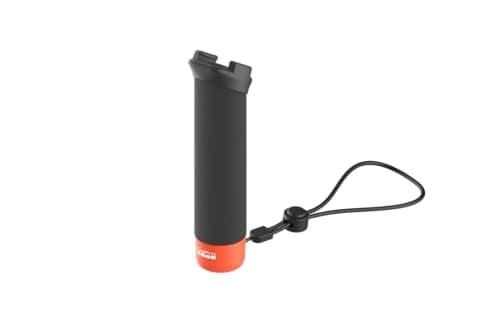
- Bright orange end pops to the surface
- Quick release, switches between mounts
- Non-slip construction
- 8.0
- 8.5
- 9.0
- 7.0
GoPro The Handler Floating Hand Grip
GoPro
A grip that floats bright-orange-end-up when you drop it, with a quick release so the camera moves to a mount without tools.
Handheld water shots — snorkeling, swimming, filming from the boat
- Floats end-up so you can actually spot it in chop
- Quick-release base means the same camera goes from hand to deck mount in seconds
- Non-slip even with wet or cold hands
- GoPro lists it specifically for surfing, kayaking and wakeboarding
- It floats the grip; a heavy housing on the end changes that calculation
- No wrist strap included in every configuration — add one
- Bulky in a PFD pocket
Specs from GoPro The Handler product page.
02
How we picked
We do not lab-test, bench-test or dive-test cameras, and we do not own test units. What we do instead is read the manufacturer's published specifications, read the independent reviews that genuinely do test, read owner reports for the failure modes specs never mention — fogging, salt corrosion, cold battery collapse, mount slippage — and then weight all of it for mounts used on lake and trail. Where a number is not published, the page says “not published” rather than filling the cell.
The full method, including what we refuse to do, is on the editorial policy page.
- 35%Hold under load
- Vibration, chop and a wet hull are what actually break a mount.
- 25%Fit range
- Rail width, bar diameter, helmet curve — the spec that decides whether it fits at all.
- 20%Water and salt tolerance
- Stainless vs plated hardware, and what happens after a season of rinses.
- 12%Adjustability
- Getting the angle right on the water, with cold hands.
- 8%Tether point
- A mount with nowhere to clip a leash is a mount that loses cameras.
03
Questions people actually ask
01Are action camera mounts waterproof?
Mounts are not rated waterproof because there is nothing inside them to protect — a mount is a bracket with no electronics. What matters for water use is the material, whether the hardware is stainless, and whether the grip is mechanical rather than frictional. Any listing printing an IP rating for a mount is describing nothing.
02What is the best mount for water sports?
A mechanical one. A track-mounted mast if your boat has accessory track, a clamp with stainless hardware if it does not, an adhesive pad where there is nothing to clamp to, and a floating hand grip for shots taken in the water rather than from a boat.
03Do suction cup mounts work on a kayak?
Usually not. GoPro's suction cup is proven at 150+ mph but only on a smooth, non-porous, clean surface — which describes a powerboat windscreen, not a textured kayak hull or a non-slip deck coating. Use a clamp or a track base on a kayak instead.
04Will adhesive mounts hold on a wet surfboard?
Not if you apply them wet. The adhesive is waterproof once bonded and holds extremely well, but the bond is made once and needs a clean, dry, room-temperature surface plus time before it carries load. Fit it at home the day before, not on the beach.
05Do I need a tether if the mount is solid?
Yes. Every GoPro-fitting mount releases by the camera sliding out of the finger joint, which on water means straight down. A tether and a float on the camera, plus a second tether from any clamp or suction mount to the boat, is the whole insurance policy.
06How do I stop a mount seizing up in salt water?
Soak and rinse it in fresh water with the joints worked through their range while submerged, so water reaches the threads rather than running over them, then dry it out of the sun. Once a season, remove the thumbscrews entirely, rinse the threads and refit them.
04
Read this next
Track vs clamp vs suction mounts
The kayak-specific version of this decision, with the three methods head to head.
The best kayak camera mounts
The ranked hardware, once you know which family you need.
Floats, tethers and not losing your camera
Retention is a separate problem from attachment, and it loses more cameras.
Salt water care and rinsing
The five-minute routine that keeps thumbscrews turning after a season on the coast.
Paddle and pole mounts
The held-not-mounted family, and what fits a paddle shaft.
The best action camera for a beach vacation
Which body to put on the mount for a week of sand and salt.
05
Sources
- YakAttack PanFish Pro Camera Mount product page
- RAM Tough-Claw with action camera adapter (RAP-B-400-A-GOP1U)
- GoPro Curved + Flat Adhesive Mounts product page
- GoPro Suction Cup Mount product page
- GoPro The Handler Floating Hand Grip product page
- RAILBLAZA Camera Boom 600 product page
Specifications are quoted from the manufacturer pages above as they read on the dates shown. Where a figure is not published, this site says so rather than estimating one. We have not tested these products.