Protective housing for snow and ice
A housing fixes exactly one of the three things that end a camera in winter. It is neutral on the second and it makes the third worse. Which one you have decides whether to fit it.
Part of Gear.
We earn a commission if you buy through our links, at no extra cost to you. It never changes what we recommend or the order we rank it in — how this works.

Most people do not need a protective housing for snow. Snow and ice cannot reach the depth any modern action camera is already rated for — the threat in winter is impact, cold and condensation, and a housing only addresses the first of those. Fit one when the camera will strike hard ice, rock or a ski edge: tree runs, park features, a helmet mount in terrain where a crash is likely. Leave it off for ordinary cold, falling snow, a dropped camera in powder and a day of lift laps. A sealed housing does nothing for battery life, and it makes fogging measurably worse, because winter produces the biggest temperature swings of any season you will shoot in.
Snow cannot test a waterproof rating
Start here, because it removes the reason most people reach for a housing. A depth rating is a statement about water pressure. Snow sitting on a camera, melting on a camera, or packed around a camera that has gone into a drift exerts essentially none, and the published bare ratings across the cameras we cover run from 16ft (5m) to 20m. Falling snow is a less demanding environment than the rain those same cameras handle unhoused all summer.
So if the question is "will snow get into my camera", the answer for every current flagship is no, and a housing is solving a problem you do not have. What a depth rating actually promises covers the fine print, including the conditions that void one — and none of those conditions is snow either.
The one body worth being careful with is the cheapest GoPro: the HERO (2024) is rated to 16ft (5m), which is still well past anything snow can do, but it is also a camera with a built-in, non-removable battery, which matters a great deal for the second of the three winter problems.
The three things that actually end a camera in winter
Winter failures fall into one of three buckets. It is worth naming them separately, because the right purchase is different for each and a housing only touches one.
1. Impact. Hard-packed snow is not soft, ice is not soft, and the rock under a thin early-season cover is not soft at all. A camera on a helmet in trees, on a chest harness in a park, or on a pole you are holding during a fall is at more mechanical risk in winter than in summer, because the surfaces are harder and the speeds are higher. This is the bucket a housing genuinely fixes, and it fixes it well — a hard shell is the best impact protection a camera can wear.
2. Cold. Lithium cells lose usable capacity as temperature drops. This is chemistry, not a defect, and it is why the manufacturers that publish an operating temperature are telling you more than the ones that stay quiet. A housing does nothing about this. It adds a thin plastic air gap, which is not insulation in any useful sense, and it makes swapping a battery slower — which in cold weather is actively worse, because a battery swap is how you solve the problem.
3. Condensation. The one almost nobody plans for and the one that ruins the most footage. Moisture in air condenses on the coldest surface available. Winter shooting means moving a camera between a freezing chairlift and a heated lodge several times a day, and every one of those transitions is a chance for water to appear somewhere you cannot wipe it. A sealed housing takes that risk and multiplies it, because it traps a fixed volume of air with nowhere for the moisture to go.
| Failure mode | What causes it | Does a housing help? | What actually fixes it |
|---|---|---|---|
| Impact | Ice, rock, ski edges, a crash with the camera on a helmet or pole | Yes — this is its real job | A hard shell, or a replaceable lens cover plus a lower-risk mount position |
| Cold / battery | Lithium cells losing capacity below freezing | No — and it slows the swap that fixes it | A battery with a published cold rating, spares kept warm, a camera that publishes a range |
| Condensation / fogging | Warm humid air meeting a cold surface, in both directions | No — it makes it worse | Anti-fog inserts, sealing in cold dry air, and a bag for the trip back indoors |
Why a housing fogs worse in winter than in water
Fogging inside a housing is entirely a function of the air you sealed in. When you close a housing you trap whatever air was in the room, at whatever humidity that room had. Take the housing somewhere colder and the inside of the front glass becomes the coldest surface that air can reach, so the moisture in it condenses there — on the inside, where no amount of wiping helps.
Summer diving produces a modest drop between a warm hand and lake water. A ski day routinely produces a far larger one between a heated lodge and a chairlift, often several times before lunch, and lodge air is humid because it is full of drying gear and people. That is the worst combination there is for a sealed housing, and it is why "I fitted a housing to be safe" produces more ruined winter footage than shooting bare ever does.
The same mechanism runs the other way at the end of the day, and this part catches people with no housing at all. A camera that has been below freezing for four hours is a cold object. Carry it straight into a warm room and water condenses on it, in its ports and under its lens cover. The answer is the one photographers have used for decades: put the cold camera in a sealed bag outside, and do not open the bag until the whole thing has come up to room temperature. Fogging and overheating has the full version, including the in-camera symptoms that look like a hardware fault and are not.
When a housing is the right call in snow
Four situations, and they all come back to the camera hitting something hard rather than getting wet.
Trees and tight terrain. A branch at speed is the classic way a helmet-mounted camera ends its life, and a shell takes that hit instead of the lens. If your skiing or riding happens off-piste and in the trees, a housing is reasonable insurance in front of a camera that costs several times as much.
Park and rails. Hard surfaces, repeated falls, and a camera that is usually mounted somewhere that contacts the ground. Same argument, more often.
Ice specifically. Ice is both hard and abrasive, and a scratch on a front element is permanent and shows up in footage as a smear in bright light. This is the one case where the housing's flat glass front is doing double duty, because it becomes the sacrificial surface instead of the camera's own.
A camera with no replaceable lens cover. The HERO13 Black's lens cover is a replaceable part, which quietly removes most of the reason to own a housing for scratch protection — a new cover is far cheaper than a new housing front. Bodies without that feature have no second line of defense, so the shell carries more weight. Which cameras have what is set out in do you need a protective housing, and the ranked shells are in cases and dive housings.
What a housing costs you specifically in winter
The general trade-offs — muffled audio, no touchscreen, an extra surface to keep clean — apply in every season. Three of them get noticeably worse when it is cold.
Gloves and buttons. A housing turns a touchscreen into two physical buttons pressed through a shell, and winter means those presses happen through a glove. In practice you set the camera up once, seal it, and live with those settings for the day — fine if that was the plan, genuinely frustrating if you expected to change resolution on the chairlift.
Battery changes. Cold is the condition where you most need to swap a battery, and a housing is the thing that makes swapping slowest. Worse, opening a housing in cold humid conditions seals a fresh batch of air into it, which restarts the fogging clock. If a day needs three batteries, a housing works against you three times.
Snow in the seal. A gasket needs to be clean to seal, and a snow crystal or a grain of grit on it is a common cause of a flooded camera inside a housing rated far deeper than the water it failed in. Closing a housing with cold hands, outdoors, in falling snow, is exactly the situation where that happens. Run a finger around the gasket every time, and do it under cover.
Solve cold with the battery, not the shell
If the honest reason you are thinking about winter protection is "I do not want the camera to die at 11am", a housing is the wrong product. Two things fix that, and both are cheaper.
A battery that publishes a temperature. GoPro rates the Enduro battery for full camera functionality down to 14°F (-10°C) at 1900mAh — a stated claim about behavior in the cold rather than a capacity number, and the reason to buy the branded cell over an unbranded one. Note what the claim covers: functioning, not full capacity. Cold still shortens the day. Third-party batteries covers what you give up going cheaper, and battery life compared puts every published figure side by side.
Keeping spares against your body. A battery in an inside jacket pocket stays near body temperature and behaves like a warm battery when you fit it. A battery in an outside pocket is already cold and gives you a fraction of its rated time. This costs nothing and it is the most effective cold-weather habit there is. Power on long days has the charging arithmetic for trips where an outlet is not part of the day.
There is also the option of buying cold resistance into the camera. DJI publishes a -20° to 45°C operating range for the Osmo Action 5 Pro itself, which is the widest camera-level figure among the bodies we cover, alongside 20m bare and a 240-minute runtime figure at 1080p/24. GoPro's cold figure describes the Enduro battery rather than the camera. Insta360 publishes no operating temperature at all for its current bodies. That is not a reason to avoid either brand; it is a reason to know which number you are relying on.
The routine that keeps a winter day's footage
Whether or not you use a housing, the sequence below is what separates a cold day with usable clips from one with a fogged lens in every shot. None of it costs anything.
Set the camera up indoors, seal it outdoors. Choose your resolution, frame rate and stabilization in the warm, then take the camera outside, let it cool for a few minutes, and only then close the housing — with an insert in it. You are trying to trap cold dry air rather than lodge air.
Do not open it indoors at lunch. If you must get at the camera, do it outside. Opening a cold housing in a warm room fills it with the worst possible air, and then you carry that back out.
Bag it on the way in. A zip-top bag with the cold camera sealed inside, closed outdoors, then left alone until it reaches room temperature. The condensation forms on the outside of the bag, which is exactly where you want it.
Brush snow off before it melts. Snow sitting on a camera is harmless; snow that melts into a button recess and then refreezes on the next run is how a button stops working for the afternoon. A glove across the body between runs is enough.
Point the lens down when you are not shooting. Falling snow lands on an upward-facing front element and melts there. A camera angled slightly down between shots stays clean for far longer, which matters most on a helmet mount you cannot see.
What to shoot once the camera is behaving is a separate question — the best action cameras for skiing covers the body choice for cold days, and helmet mounts covers getting the angle right through a helmet and goggles.
The short version, as a decision
Will the camera hit hard ice, rock or a ski edge? Fit a housing, with an insert, sealed in cold air.
Is the camera dying before the day is over? Buy a spare battery with a published cold rating and keep it inside your jacket. A housing will not help and will slow you down.
Are your shots coming back foggy? That is a condensation problem, and if you are already using a housing, the housing is part of the cause. Inserts, cold-air sealing and a bag for the trip indoors fix it.
Is it just snowing? Shoot bare. Keep the audio, keep the touchscreen, keep the quick battery swap, and spend the money on the spare cell instead.
01
What a cold-weather setup actually needs
In the order they change your day: the shell if impact is your real risk, an insert in it every single time, a battery that publishes a temperature, and — if you would rather solve this by not owning a housing — the camera with the widest published operating range we cover.
- 196ft (60m)
- HERO13, 12, 11, 10 Black
- Flat glass front
- 9.5
- 8.5
- 8.0
- 7.0
- 6.0
GoPro Protective Housing
GoPro
196ft (60m) rated, with a flat glass lens — the piece that turns a 33ft camera into a diving camera.
Anything below about 30ft, and any camera going anywhere near a tank
- 60m is six times the HERO13 Black's bare rating
- Flat glass lens rather than plastic, so the image holds up
- Includes a skeleton backdoor for better audio when you are not underwater
- Also the best impact protection the camera can wear
- Muffles audio badly with the sealed door — that is physics, not a defect
- Sealed air plus a temperature change is exactly how fogging happens; budget for inserts
- Buttons are harder to work with gloves on
Specs from GoPro Protective Housing product page.
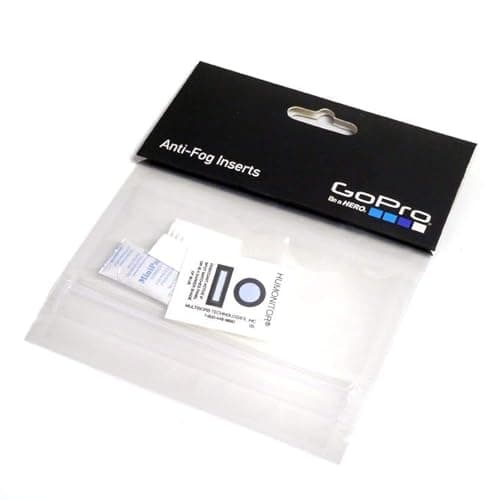
- 15 inserts
- Reusable up to four times
- 300°F for five minutes, then an airtight bag
- 8.5
- 8.0
- 9.5
- 9.0
GoPro Anti-Fog Inserts (15-pack)
GoPro
Fifteen strips, reusable up to four times each, dried in an oven — the cheapest fix for the problem that ruins the most footage.
Anyone putting a camera in a housing in cold or humid air
- GoPro publishes the reuse count and the exact drying procedure
- 15 inserts at four uses each is around 60 sessions from one pack
- Works with both the waterproof and dive housings
- Solves a problem no camera setting can touch
- They are consumables — once saturated they do nothing
- The oven step is easy to forget, and a damp insert is a useless insert
- Only help inside a housing; a bare camera fogs for different reasons
Specs from GoPro Anti-Fog Inserts product page.

- 1900mAh
- Full functionality down to 14°F (-10°C)
- 1.5h at 5.3K30 / 2.5h at 1080p30
- 8.5
- 9.5
- 8.0
- 9.5
- 9.0
GoPro Enduro Battery (HERO13 Black)
GoPro
1900mAh, and GoPro publishes full camera functionality down to 14°F — the only battery claim on this page that names a temperature.
Cold-water days, and anyone who has watched a camera die at 40 minutes
- The published cold figure is the reason to buy this instead of a third-party cell
- Same runtime figures GoPro quotes for the camera itself
- Swappable in seconds, which a built-in battery never is
- Two spares is still cheaper than any power bank setup
- Only fits HERO13 Black and the MISSION 1 series — check before you buy
- Costs several times what an unbranded cell does
- Cold still shortens it; the rating is about functioning, not about full capacity
Specs from GoPro Enduro Battery (HERO13 Black) product page.
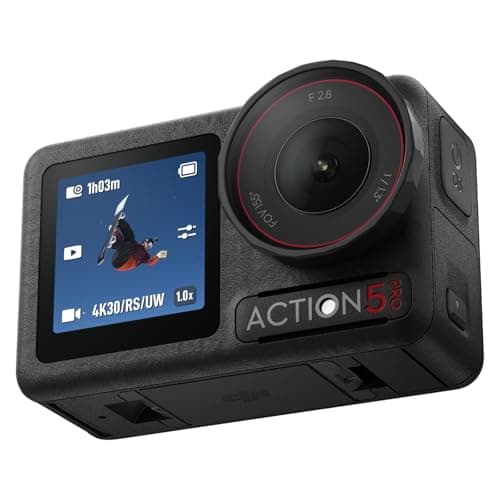
- 20m bare / 60m with case
- 1950mAh · 240 min at 1080p24
- -20° to 45°C
- 9.5
- 9.0
- 9.5
- 8.0
- 9.0
DJI Osmo Action 5 Pro
DJI
Goes to 20m with no housing at all and publishes a 240-minute runtime — the two numbers that decide a long, wet, cold day.
Long paddles, cold water, and anyone tired of buying a housing to get past 10m
- 20m without the Waterproof Case — double the bare-camera depth of the HERO13 Black
- DJI publishes 240 minutes of recording at 1080p/24 with screens off, the longest figure in this set
- Rated to -20°C, which matters more on an October lake than any resolution number
- 1/1.3-inch sensor holds detail when the light goes flat
- Mount ecosystem is smaller than GoPro's, and magnetic quick-release adapters are their own purchase
- 146g — the heaviest of the flagship three
- Fewer third-party mounts and filters exist for it
Specs from DJI Osmo Action 5 Pro published specifications.
02
How we picked
We do not lab-test, bench-test or dive-test cameras, and we do not own test units. What we do instead is read the manufacturer's published specifications, read the independent reviews that genuinely do test, read owner reports for the failure modes specs never mention — fogging, salt corrosion, cold battery collapse, mount slippage — and then weight all of it for cases and housings used on lake and trail. Where a number is not published, the page says “not published” rather than filling the cell.
The full method, including what we refuse to do, is on the editorial policy page.
- 35%Rated depth
- The number the manufacturer publishes, with the model it was rated on.
- 25%Seal design
- O-ring serviceability is the difference between a flood and a rinse.
- 18%Optical clarity
- A flat port costs sharpness underwater; some housings cost more than others.
- 12%Button access
- What you can change without surfacing.
- 10%Fog risk
- Sealed air plus temperature change is how a dive ends up unusable.
03
Questions people actually ask
01Do I need a protective housing for snow?
Usually not. Snow cannot produce the water pressure a depth rating describes, and every current camera we cover is rated from 16ft (5m) to 20m with nothing fitted. Fit a housing for impact protection — trees, park features, ice — not for the snow itself.
02Will a housing keep my camera warm?
No. A thin plastic shell is not insulation, and it does nothing about the capacity a lithium cell loses in the cold. It also makes battery swaps slower, which is the thing that actually fixes a cold-weather runtime problem.
03Why does my housing fog up on a ski day?
Because you sealed warm, humid indoor air inside it and then took it somewhere far colder, so that moisture condensed on the inside of the front glass. Seal the housing outdoors in cold dry air with an anti-fog insert fitted, and never open it in a warm lodge.
04What temperature can an action camera handle?
It depends entirely on who publishes a figure. DJI states a -20° to 45°C operating range for the Osmo Action 5 Pro. GoPro states full camera functionality down to 14°F (-10°C) for the Enduro battery rather than for the camera. Insta360 publishes no operating temperature for its current bodies.
05Should I bring my camera inside after skiing?
Yes, but seal it in a zip-top bag outdoors first and leave it closed until the whole camera has reached room temperature. A cold camera carried straight into a warm room collects condensation on and inside itself — the same failure as a fogged housing, with no housing involved.
06Is ice worse for a camera than snow?
For the lens, yes. Ice is hard and abrasive, and a scratched front element is permanent and shows as a smear in bright light. This is the one argument for a housing in winter that is about the glass rather than the electronics, and a replaceable lens cover covers much of the same ground more cheaply.
04
Read this next
Do you need a protective housing?
The year-round version of this decision, with every bare depth rating in one table.
Anti-fog inserts that work
The ten-cent step that decides whether a cold day's footage exists.
The best action cameras for skiing
Which body to take into the cold, ranked on the figures that survive it.
Stop fogging and overheating
The physics behind condensation, in both directions, and the symptoms that look like a fault.
Battery life compared
Every published runtime figure side by side, with the conditions attached.
Waterproof mounting options for water sports
What makes a mount survive wet conditions, which is a different question from the camera.
05
Sources
- GoPro Protective Housing product page
- GoPro Anti-Fog Inserts product page
- GoPro Enduro Battery (HERO13 Black) product page
- DJI Osmo Action 5 Pro specifications
- GoPro HERO (2024) specifications
Specifications are quoted from the manufacturer pages above as they read on the dates shown. Where a figure is not published, this site says so rather than estimating one. We have not tested these products.