The best action camera for canoeing
A canoe is an open hull with nothing to bolt to and no power for three days. That, not resolution, is what decides the camera.
Part of On the Water.
We earn a commission if you buy through our links, at no extra cost to you. It never changes what we recommend or the order we rank it in — how this works.
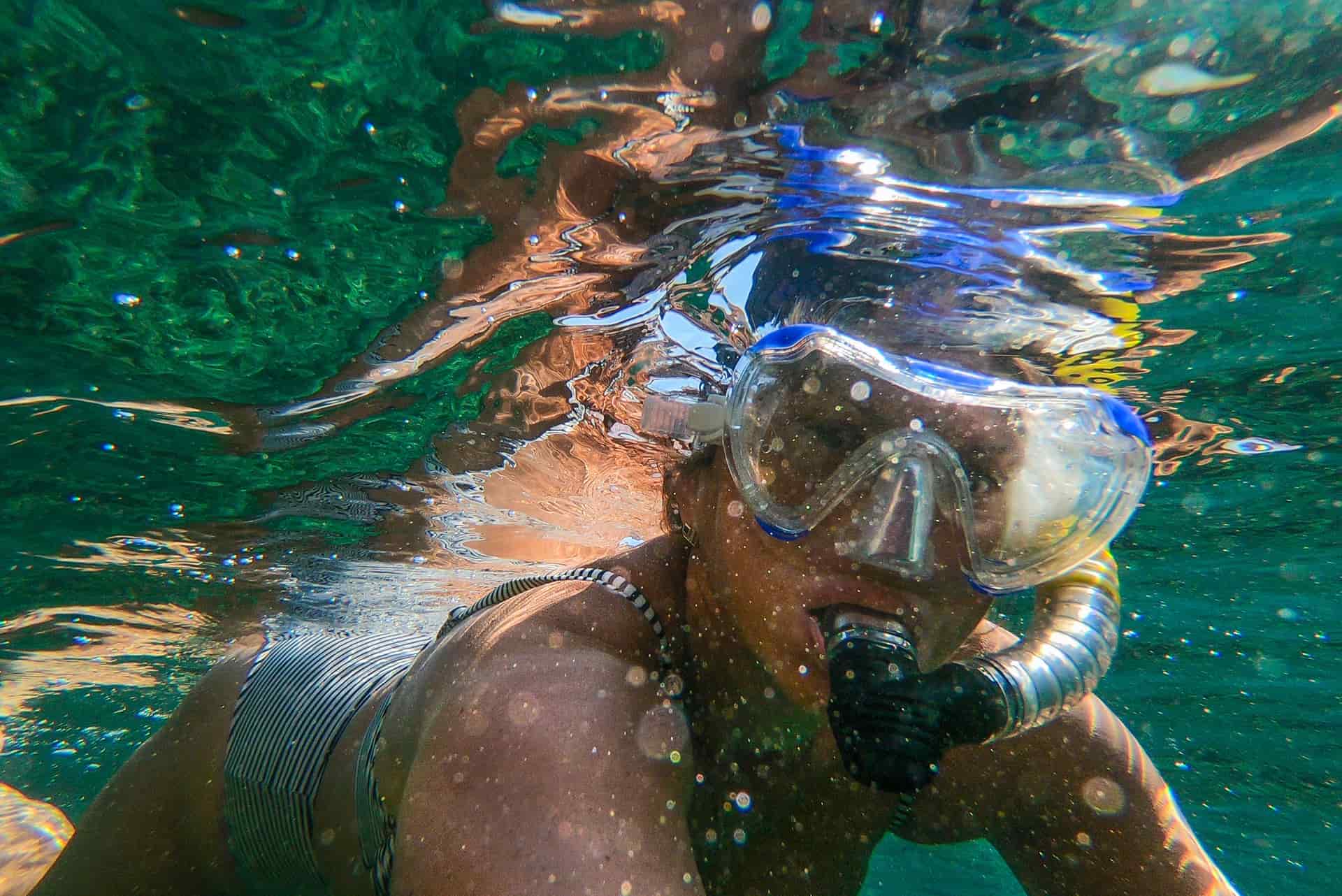
The DJI Osmo Action 5 Pro is the best action camera for canoeing, because a canoe trip is a battery problem before it is anything else: DJI publishes 240 minutes of recording at 1080p/24, a 1950mAh removable battery and a -20° to 45°C operating range, and it is rated to 20m with no housing for the moment the hull goes over. The GoPro HERO13 Black is the pick if you already own GoPro mounts or want the deepest accessory catalog, and the Insta360 X5 is the pick for tandem paddling, where one camera on a pole covers the bow, the stern and the shoreline at once. The fixing matters as much as the body — a canoe has no track system, so plan on a clamp that grips a thwart or a gunwale.
01
Quick picks
| # | Product | Best for | Score | Price |
|---|---|---|---|---|
| 01 | 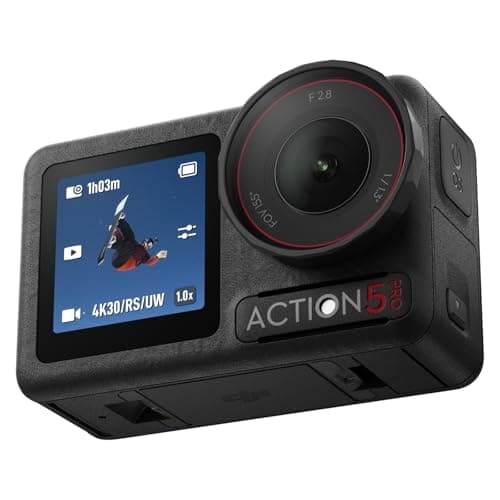 DJI Osmo Action 5 Pro Goes to 20m with no housing at all and publishes a 240-minute runtime — the two numbers that decide a long, wet, cold day. | Long paddles, cold water, and anyone tired of buying a housing to get past 10m | 9.1/ 10 | |
| 02 | 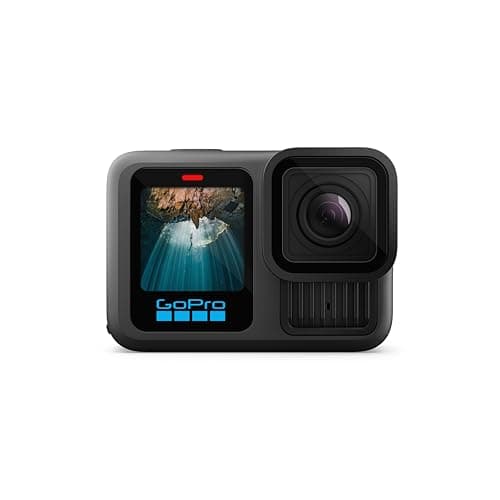 GoPro HERO13 Black The safest default for lake and trail: 33ft without a housing, the steadiest footage in the category, and a mount for literally everything. | Anyone who wants one camera to handle the kayak, the bike and the family trip | 8.8/ 10 | |
| 03 | 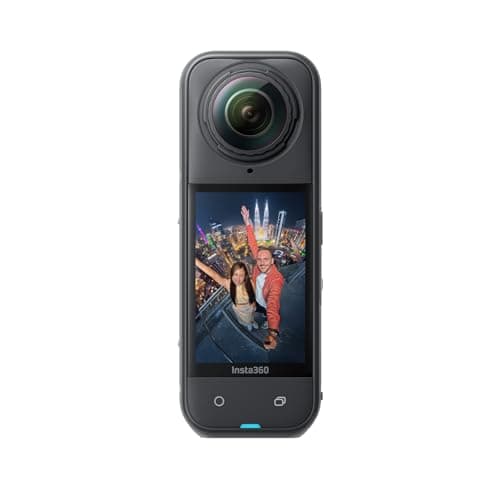 Insta360 X5 15m rated, replaceable lenses, and the one camera that means you never have to aim while you are paddling. | Anyone filming themselves on the water who cannot stop to frame a shot | 9.1/ 10 | |
| 04 | 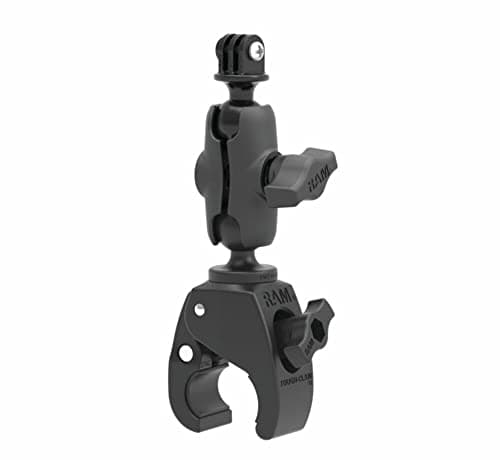 RAM Tough-Claw Clamp Mount with Action Camera Adapter Clamps to anything between 0.625in and 1.14in and does not care whether it is round, square or odd — the mount that solves the boats with no track. | Rails, bars, seat frames and anything you cannot or will not drill | 8.4/ 10 | |
| 05 |  Anker PowerCore Select 10000 10,000mAh in 211 grams — enough to refill a camera several times, small enough that it actually comes with you. | Multi-day trips, and cameras whose battery is not removable | 8.2/ 10 |
Scores are our editorial judgment from published specs and named independent reviews, weighted for lake and trail use — not measurements. We have not tested these units and do not own them.
02
How we picked
We do not lab-test, bench-test or dive-test cameras, and we do not own test units. What we do instead is read the manufacturer's published specifications, read the independent reviews that genuinely do test, read owner reports for the failure modes specs never mention — fogging, salt corrosion, cold battery collapse, mount slippage — and then weight all of it for action cameras used on lake and trail. Where a number is not published, the page says “not published” rather than filling the cell.
The full method, including what we refuse to do, is on the editorial policy page.
- 30%Water survival
- Rated depth without a case, door design, and what the manufacturer actually publishes.
- 25%Stabilization in chop
- A kayak deck and a rooty trail shake in ways a handheld walk test never shows.
- 20%Battery in the cold
- Published runtime, spare-battery cost, and whether it charges while recording.
- 15%Mount ecosystem
- Finger mount, threaded, magnetic — and how much of it you have to re-buy.
- 10%Footage you will keep
- Lens replaceability, low-light behavior, and how much cutting the footage needs.
What makes a canoe different from a kayak
Most "best camera for paddling" advice is written about kayaks, and a canoe breaks three of its assumptions at once.
There is no track system. Sit-on-top and fishing kayaks ship with accessory rails that exist specifically so you can bolt things to them. A canoe has thwarts, a yoke, seats and gunwales — all of which are structural, several of which are wood, and none of which is a mounting point. That makes the clamp the default fixing and makes measuring the tube diameter the first thing you do.
There are usually two of you. Tandem paddling changes what a good shot is. The interesting frame is not the bow wave — it is the two paddles out of sync, the bow paddler calling a line, the gear pile between you. A camera low on the bow deck sees none of that.
The trip is longer. Canoes carry gear, which means canoe trips are measured in days. That moves power from an afterthought to a specification, and it is why the published runtime figures matter more here than any image-quality difference between these bodies.
| Camera | Bare water rating | Published runtime | Cold rating | Removable battery |
|---|---|---|---|---|
| DJI Osmo Action 5 Pro | 20m | 240 min at 1080p24 | -20° to 45°C | Yes, 1950mAh |
| GoPro HERO13 Black | 33ft (10m) | 1.5h at 5.3K30 / 2.5h at 1080p30 | Enduro rated to 14°F (-10°C) | Yes, 1900mAh Enduro |
| Insta360 X5 | IP68 49ft (15m) | 185 min Endurance at 5.7K24 | Not published | Yes, 2400mAh |
Where to put the camera in a canoe
Four positions cover nearly every canoe shot, and only one of them needs anything exotic.
Clamped to the forward thwart, facing back. The best single angle in a tandem canoe: both paddlers, the gear, the water behind. This is the shot that makes a trip video feel like a trip rather than a water-level blur.
Clamped to the rear thwart or yoke, facing forward. The classic over-the-bow view — shoreline, destination, the bow paddler's shoulders for scale. Low enough that it does not wobble, high enough to see over the gear.
On a short pole, held or wedged. The third-person shot of the whole boat, which no fixed mount on the hull can produce. On a 360 camera the pole disappears from the footage entirely, which is the entire reason the format exists — shooting a paddling trip on a 360 camera walks through the workflow.
On your chest. Best for the parts of a canoe trip that are not paddling: loading, lining, portaging, making camp. A chest harness keeps both hands on the boat and films at eye-line height, which is where a portage actually looks hard.
Settings for flat water and long days
A canoe is a slow, steady platform, which lets you shoot in ways a whitewater kayak never allows.
4K/30, not 60. Nothing in a canoe moves fast enough to need 60fps, and half the frame rate is half the card and most of a battery saved. Keep 60fps for the one rapid.
Use a time lapse for the crossing. Forty minutes of flat-water paddling is twelve seconds of watchable footage, and TimeWarp or its equivalent is how you get those twelve seconds instead of forty minutes of nothing. Time lapse vs TimeWarp has the intervals and the arithmetic.
Short clips, started by hand. Hit record when something is happening. A canoe trip films itself badly left running and brilliantly in thirty-second pieces.
Wind on the mic is the biggest audio problem. An open hull gives the microphone no shelter at all, and the fix is positioning before it is hardware — how to cut wind noise has the five fixes in order of effect.
What to ignore
Suction cups, mostly. They want a smooth, clean, non-porous surface, and a canoe is canvas-covered wood, Royalex, aluminum or a textured composite layup. On the few canoes with a smooth flat deck plate they work; on everything else a clamp is the honest answer.
A dive housing. Nothing about canoeing happens below 10m, every pick here is rated past that bare, and a housing fogs exactly when a cool morning meets a warm hand.
Resolution above 4K. 5.3K and 8K exist so you can crop in an edit. If the clip is going to a phone as shot, you are paying for them in battery and card space.
03
Every pick, in detail
- 20m bare / 60m with case
- 1950mAh · 240 min at 1080p24
- -20° to 45°C
- 9.5
- 9.0
- 9.5
- 8.0
- 9.0
DJI Osmo Action 5 Pro
DJI
Goes to 20m with no housing at all and publishes a 240-minute runtime — the two numbers that decide a long, wet, cold day.
Long paddles, cold water, and anyone tired of buying a housing to get past 10m
Top pick for a trip rather than an afternoon. 240 published minutes at 1080p/24 with the screens off is the longest figure in this set, and on a multi-day route where the nearest outlet is Tuesday, the runtime figure is the specification that decides whether you get footage on day three. The -20°C rating covers a frosted morning on a northern lake, which is when canoe trips actually look their best.
20m bare is the other half of the argument. A canoe is a tippy, open boat and the camera will eventually be underwater with no warning; at 20m, a swamping is a wet camera rather than a dead one. The trade is 146g of weight and a smaller mount ecosystem — magnetic quick-release adapters are their own purchase, and there are fewer third-party clamps built around it.
- 20m without the Waterproof Case — double the bare-camera depth of the HERO13 Black
- DJI publishes 240 minutes of recording at 1080p/24 with screens off, the longest figure in this set
- Rated to -20°C, which matters more on an October lake than any resolution number
- 1/1.3-inch sensor holds detail when the light goes flat
- Mount ecosystem is smaller than GoPro's, and magnetic quick-release adapters are their own purchase
- 146g — the heaviest of the flagship three
- Fewer third-party mounts and filters exist for it
Specs from DJI Osmo Action 5 Pro published specifications.
- 33ft (10m), no housing
- 1900mAh Enduro
- 1.5h at 5.3K30 / 2.5h at 1080p30
- 8.0
- 9.5
- 8.5
- 9.5
- 9.0
GoPro HERO13 Black
GoPro
The safest default for lake and trail: 33ft without a housing, the steadiest footage in the category, and a mount for literally everything.
Anyone who wants one camera to handle the kayak, the bike and the family trip
The pick if mounting flexibility is what worries you, which on a canoe it should. Built-in folding fingers plus a 1/4-20 thread means this body fits a clamp, a pole, a chest harness and a tripod with nothing bought in between, and GoPro's catalog is the one every third-party clamp maker designs around. The removable 1900mAh Enduro battery is rated for full functionality down to 14°F (-10°C), and spares are pocket-sized.
33ft (10m) bare is plenty for a swamped canoe and a dropped camera in the shallows, though it is the shallowest of the three flagships. HyperSmooth 6.0 is more stabilization than a canoe needs on flat water and exactly enough when you are lining a rapid or running a shallow riffle.
- HyperSmooth 6.0 with AutoBoost is the steadiest stabilization we can find published figures for
- Built-in mounting fingers plus 1/4-20 threads — it fits the GoPro ecosystem and a normal tripod
- Enduro battery is rated to keep full camera functionality down to 14°F (-10°C)
- Replaceable lens cover, so a scratched lens is a $20 problem and not a $400 one
- 33ft is shallower than the DJI and it is the shallowest of the three flagships
- Anything past 33ft needs the separate Protective Housing
- HB-Series lenses and ND filters are all extra purchases
Specs from GoPro HERO13 Black published specifications.
- IP68 to 49ft (15m)
- 2400mAh · ~88 min at 8K30
- User-replaceable
- 9.5
- 9.5
- 9.0
- 8.5
- 7.5
Insta360 X5
Insta360
15m rated, replaceable lenses, and the one camera that means you never have to aim while you are paddling.
Anyone filming themselves on the water who cannot stop to frame a shot
The tandem answer. A canoe has two paddlers, a bow view, a stern view and a shoreline, and a flat camera makes you choose one of them before you leave. A 360 camera records the sphere and lets you pick afterwards, so a single mount on a thwart or a short pole covers the whole boat — including the paddler's face, which is the shot nobody gets with a bow-mounted flat camera.
IP68 to 49ft (15m) is the deepest bare rating of any camera we rank, the lenses are user-replaceable, and Insta360 publishes 185 minutes in Endurance mode at 5.7K24. The costs are real: every clip needs a reframing pass before anyone else can watch it, and exposed lenses on an open hull meet paddle blades and portage packs — lens guards are a purchase, not an option.
- 15m IP68 is the deepest bare rating of any camera on this site
- User-replaceable lenses — the single biggest fix for the 360 format's worst failure mode
- 185 minutes in Endurance mode at 5.7K24, which is a whole day of clips
- Invisible-selfie-stick reframing means you point the camera at nothing and pick the angle later
- Exposed lenses still scratch; lens guards are a purchase, not an option
- Every clip needs a reframing pass before anyone else can watch it
- 8K30 files are large and the edit is slower than flat footage
Specs from CineD, Insta360 X5 announcement with published specifications.
- 0.625" to 1.14" outer diameter
- High-strength composite, stainless hardware
- Ball adapter, double socket arm, clamp base
- 8.5
- 7.5
- 8.5
- 9.5
- 7.0
RAM Tough-Claw Clamp Mount with Action Camera Adapter
RAM Mounts
Clamps to anything between 0.625in and 1.14in and does not care whether it is round, square or odd — the mount that solves the boats with no track.
Rails, bars, seat frames and anything you cannot or will not drill
The canoe-specific pick, because a canoe gives you nothing to work with: no accessory track, no bolt pattern, and a wood or vinyl gunwale nobody sane is drilling. A composite clamp with stainless hardware, a ball adapter and a double socket arm grips a thwart, a yoke or a gunwale and then points the camera wherever you want it.
Check the published clamp range before you buy — 0.625in to 1.14in outer diameter — against the tube or rail you intend to grip, and measure rather than guess. The thwart on an aluminum canoe is usually inside that range; a laminated wood gunwale is often wider, in which case the camera goes on a pole or an adhesive pad on a flat deck surface instead.
- Fits round, square and odd-shaped rails in the same jaw
- Stainless hardware is the right call for anything that gets rinsed
- The RAM ball-and-socket arm holds an angle far better than a friction hinge
- No drilling, so it moves between boats, bikes and rails
- 0.625in to 1.14in is a narrow band — measure before you buy
- The composite version is not the stiffest option in the RAM range
- Three separate pieces means three things to lose
Specs from RAM Mounts Tough-Claw with Action Camera Adapter specifications.
- 10000mAh
- 12W total
- 7.44oz (211g)
- 8.5
- 7.0
- 9.0
- 7.5
- 8.5
Anker PowerCore Select 10000
Anker
10,000mAh in 211 grams — enough to refill a camera several times, small enough that it actually comes with you.
Multi-day trips, and cameras whose battery is not removable
The pick everybody forgets until day two. 10000mAh in 211g, with 12W total output, is enough to refill a camera battery several times over a weekend, and on cameras that record while charging it is also how you run a long clip from a thwart. It is not waterproof — it lives in the dry bag, not on the deck — and cold weather costs it capacity like every other cell. Power on long days has the charging-while-recording details.
- Enough capacity for several full camera charges from one brick
- 211g is genuinely pocketable in a PFD or deck bag
- Dual USB-A outputs, so the camera and a phone charge together
- The only workable answer for cameras with a built-in battery
- 12W total output is slow — this tops up overnight, it does not fast-charge
- Micro-USB input, so you may be carrying a second cable type
- Not waterproof. It lives in a dry bag or it does not live long
Specs from Anker PowerCore 10K product page.
04
What decides this category
Measure the thwart before you buy the clamp
Published clamp ranges are specific — the RAM Tough-Claw lists 0.625in to 1.14in outer diameter — and a canoe's tubes and rails vary enormously. Two minutes with a tape measure prevents the most common wasted purchase in paddling.
Runtime over resolution, every time
The difference between 4K and 5.3K is invisible on a phone. The difference between 160 and 240 published minutes is whether the camera is alive for the sunset on day two.
One float, one leash
They are not the same item and they do different jobs. A swamped canoe tests both.
What we would skip
Multi-piece telescopic poles sold as "kayak camera arms". The joints work loose, and a loose joint over the water at arm's length is how cameras are lost. A short, solid pole or a clamp beats a long adjustable one here.
05
Questions people actually ask
01What is the best action camera for canoeing?
The DJI Osmo Action 5 Pro, on its published 240-minute runtime, 20m bare water rating and -20°C operating range — the three figures a multi-day canoe trip actually leans on. The GoPro HERO13 Black is the alternative if you want the largest mount catalog, and the Insta360 X5 is the best choice for tandem paddling.
02How do you mount a camera on a canoe with no track system?
With a clamp on a thwart, a yoke or a gunwale, within the clamp's published diameter range; with an adhesive pad on a smooth flat deck plate; or on a short pole. Drilling a canoe gunwale is almost never worth it, and suction cups need a smoother surface than most canoes have.
03Where is the best place to put a camera in a tandem canoe?
Clamped to the forward thwart facing backwards. It frames both paddlers, the gear and the water behind, which is the shot that reads as a canoe trip. A bow-facing camera on the rear thwart is the natural second angle.
04Do I need a waterproof case for canoeing?
No. Every camera here is rated for water on its own — 10m to 20m bare — which covers rain, spray and a capsize in a few feet of lake. A case only matters if you plan to film below the surface, and it introduces a fogging risk in cool air.
05How do you keep a camera charged on a multi-day canoe trip?
A removable battery plus a power bank in the dry bag. A 10000mAh bank refills a camera battery several times, and on bodies that support recording while charging it can also run a long clip. Cold weather reduces what every cell delivers, so carry more than the arithmetic suggests.
06
Read this next
The best action camera for kayaking
The same water with a deck, a track system and one paddler.
Suction cup and clamp mounts
Which fixings grip a thwart or a rail, and which creep in the sun.
How to film yourself paddling
The angles that make a paddling clip watchable instead of long.
Floats, tethers and not losing your camera
A swamped canoe keeps nothing that is not tied in.
Power on long days
Recording while charging, and what a power bank really gets you.
07
Sources
- DJI Osmo Action 5 Pro published specifications
- GoPro HERO13 Black published specifications
- CineD, Insta360 X5 announcement with published specifications
- RAM Mounts Tough-Claw with Action Camera Adapter specifications
- Anker PowerCore 10K product page
Specifications are quoted from the manufacturer pages above as they read on the dates shown. Where a figure is not published, this site says so rather than estimating one. We have not tested these products.