Insta360 GO Ultra: the official specs, and the two depth ratings
A 53-gram camera with a sensor most of the category would be happy with. The thing to get right is which half of it is rated to what.
Part of Cameras.
We earn a commission if you buy through our links, at no extra cost to you. It never changes what we recommend or the order we rank it in — how this works.
The Insta360 GO Ultra is a 53-gram camera rated IPX8 to 33ft (10m) for the camera itself, with a 1/1.28-inch sensor, a removable microSD card and up to 170 minutes of runtime when used with the Action Pod. It is a clip-on, magnet-mounted camera built to be worn and forgotten rather than aimed, and the sensor is far larger than the body size suggests. The one thing to get right before you buy: the camera and the Action Pod are two products with two separate water ratings, and treating them as one waterproof unit is the standard way people destroy one. There is also no interchangeable lens cover, so a scratch is permanent.
The published specifications, and what each one buys you
Everything in the table below is from Insta360's own product page for the GO Ultra, read on the date in our sources. Where Insta360 does not publish a figure we have left the row saying so rather than filling it in.
| Specification | Published figure | What it means in use |
|---|---|---|
| Weight | 53g | Light enough to wear on clothing without a harness. The whole reason to choose this camera. |
| Water rating (camera) | IPX8 to 33ft (10m) | Covers rain, sweat, a pool, a dock, a capsize. Matches the HERO13 Black's bare rating. |
| Water rating (Action Pod) | Separate rating — read it on its own | The pod is not the camera. This is the single most expensive misunderstanding about this product. |
| Sensor | 1/1.28" | Large for the size; the reason indoor and low-light footage is usable. |
| Runtime | Up to 170 min with the Action Pod | The pod carries the battery that makes a long session possible. |
| Storage | Removable microSD | Swap cards rather than being capped by onboard storage. |
| Screen | On the Action Pod (flip screen) | The camera itself has no preview. Framing happens on the pod or the phone. |
| Lens cover | Not interchangeable | A scratch is permanent. Keep it in a pocket, not loose in a bag. |
| Mounting | Magnetic, plus the Action Pod | Excellent on clothing, not a mechanical lock on a hull. |
The two depth ratings, properly
This is the part worth reading twice, because it is how these cameras die.
The GO Ultra is sold as a system: a tiny camera, and an Action Pod that the camera docks into. The pod adds a flip screen, a much larger battery and a conventional camera shape. Insta360 publishes a water rating for the camera — IPX8 to 33ft (10m) — and a separate rating for the pod. They are not the same number, and the pod is the weaker half.
What people do is read "10m" on the camera, dock the camera in the pod because the pod has the screen and the battery, and then take the assembled thing swimming. The camera would have been fine. The pod was not rated for it. The fix is a sentence long: when water is involved, take the camera out of the pod and clip it on bare, and leave the pod dry in a bag. Check both figures on Insta360's own page before the first trip, because they can change between product generations and we would rather point you at the source than quote a number at you.
Where this camera is the right answer
When your hands are already busy. A single parent at a lake, a runner, somebody carrying a toddler and a bag. The GO Ultra is the only body we cover that mounts to clothing and films without occupying a hand. It is why it tops the single parents roundup and the new moms roundup.
As a second angle. Clipped to a PFD strap while a full-size camera is on the deck, it gives you a cutaway that makes a trip edit look like it was filmed by two people. Two angles of the same moment is the single biggest step up in making a trip video people watch.
Where weight genuinely decides things. Hiking and running, where grams get counted and a 150g camera on a chest harness is something you stop bringing. See the running roundup.
Indoors and at dusk. The 1/1.28-inch sensor is the quiet reason this is not a toy. Most cameras this small have sensors to match; this one does not.
Where it is the wrong answer
As your only camera. No preview on the camera body, magnetic mounting rather than mechanical, a lens cover you cannot replace and a two-part water rating. These are all fine on a second camera and all compromises on a first one. If you want one body to handle the kayak, the bike and the family trip, read the main roundup instead.
On a moving hull or a handlebar. Magnets are excellent on clothing and are not a mechanical lock. A deck or a bar needs a clamp, a track mount or an adhesive pad — see what actually fits what.
Anywhere abrasive. No replaceable lens cover means sand, grit and rock are permanent risks rather than $20 ones. For surf and for mountain biking that is a real argument for a GoPro — the surfing roundup explains why that one specification outranks almost everything else there.
If you need to frame carefully. There is no screen on the camera. You either dock it in the pod, use the phone, or accept that you are pointing rather than composing.
How it compares to the obvious alternative
The honest competitor is the GoPro HERO (2024), which is in our picks above. It is a conventional camera: a rear screen you frame on, one shutter button, HyperSmooth, and GoPro's mount ecosystem — but at 16ft (5m) it is rated shallower than the GO Ultra's camera, and it is heavier.
The split is clean. If you want a small camera that behaves like a camera — screen, mounts, hand it to someone — the GoPro is the better buy. If you want a camera that disappears onto clothing and films your day without being operated, nothing else we cover does that, and the GO Ultra is not really competing with the GoPro at all. The wider version of that decision is in the easiest action cameras to use.
The card, and why we put it in the picks
Removable microSD is one of the better changes on this camera, and it comes with the usual caveat: a card below V30 can stop a recording by itself, and you will not find out until you get home and the clip is 45 seconds long. A U3 / V30 / A2 card is the floor. Which classes are safe and why is in SD card speed classes compared, and the ranked picks are in the best SD cards.
01
What we would actually buy with it
The camera, a card that can keep up, and — if you want one body to do everything rather than a second angle — the smallest GoPro instead. Nothing else on day one.
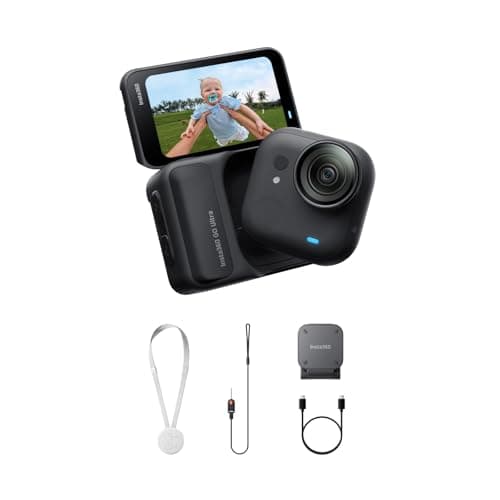
- IPX8 to 33ft (10m), camera only
- 53g
- Up to 170 min with the Action Pod
- 7.0
- 8.0
- 7.5
- 8.0
- 8.0
Insta360 GO Ultra
Insta360
53 grams and IPX8 to 10m on its own — the camera you actually clip on for a paddle instead of leaving in the dry bag.
Hands-free clips where a full-size camera would never leave the bag
- 53g means it goes on a hat brim, a PFD strap or a chest magnet and you forget it is there
- IPX8 to 10m for the camera itself, with a 1/1.28" sensor that is far larger than the size suggests
- Action Pod adds a flip screen and the long runtime when you want it
- Removable microSD, so you are not stuck with fixed onboard storage
- The Action Pod is not rated to the same depth as the camera — read the two ratings separately
- Magnetic mounting is convenient but is not a mechanical lock in real chop
- No interchangeable lens cover, so a scratch is permanent
Specs from Insta360 GO Ultra published specifications.
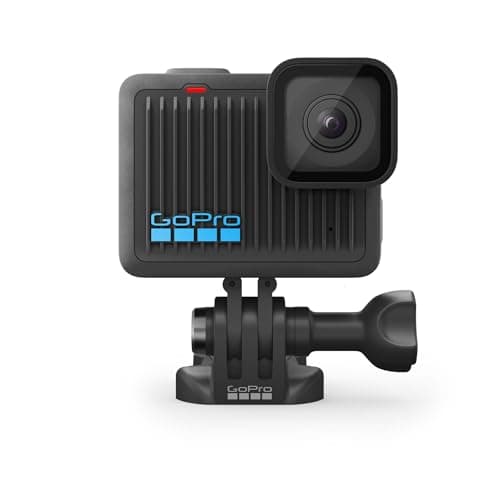
- 16ft (5m)
- 4K30, 2.7K60 slo-mo
- Built in, not user-removable
- 6.0
- 7.5
- 6.0
- 9.0
- 7.0
GoPro HERO (2024)
GoPro
The cheapest real GoPro, and the one whose 16ft rating you have to take seriously before you take it snorkeling.
A first camera, a kid's camera, or a second angle that mounts anywhere
- Genuinely tiny — 46% less mass than HERO13 Black
- Built-in mounting fingers, and GoPro lists it as compatible with 35+ mounts
- HyperSmooth stabilization at the lowest GoPro price
- Simple enough to hand to someone who has never used one
- 16ft (5m) is a snorkel-adjacent rating, not a diving one
- The battery is built in — you cannot carry a spare, you carry a power bank
- 4K30 is the ceiling; no 4K60, no high-frame-rate 4K
Specs from GoPro HERO published specifications.
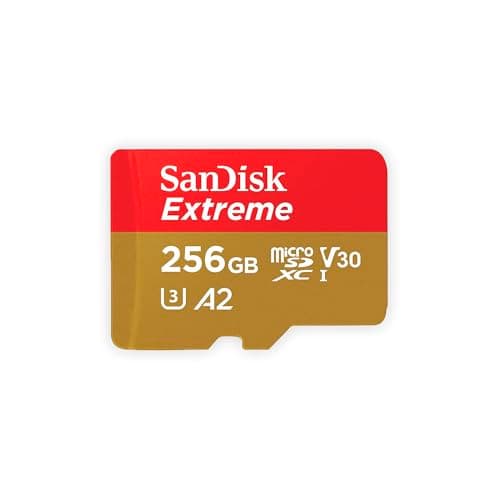
- U3 · V30 · A2 · Class 10
- Up to 190MB/s read, 130MB/s write
- Shock, temperature, water and X-ray proof
- 8.5
- 9.5
- 9.0
- 9.0
- 8.0
SanDisk Extreme microSDXC UHS-I
SanDisk
The card that appears on every manufacturer compatibility list, rated V30 and built to survive being wet, cold and dropped.
Anyone who does not want to think about cards again
- V30 guarantees a 30MB/s minimum sustained write, which is what high-bitrate video actually needs
- SanDisk publishes shockproof, temperature-proof, waterproof and X-ray-proof ratings
- Appears on GoPro, DJI and Insta360 tested-card lists more often than any other card
- Capacities up to 1TB, so a long trip does not need a card swap
- Write speeds vary by capacity — the 64GB tops out at 80MB/s write, the 128GB at 90MB/s
- Counterfeits are common; buy from a seller you trust
- V30 is the floor, not the ceiling — 8K on some cameras wants more headroom
Specs from SanDisk Extreme microSDXC UHS-I product page.
02
How we picked
We do not lab-test, bench-test or dive-test cameras, and we do not own test units. What we do instead is read the manufacturer's published specifications, read the independent reviews that genuinely do test, read owner reports for the failure modes specs never mention — fogging, salt corrosion, cold battery collapse, mount slippage — and then weight all of it for action cameras used on lake and trail. Where a number is not published, the page says “not published” rather than filling the cell.
The full method, including what we refuse to do, is on the editorial policy page.
- 30%Water survival
- Rated depth without a case, door design, and what the manufacturer actually publishes.
- 25%Stabilization in chop
- A kayak deck and a rooty trail shake in ways a handheld walk test never shows.
- 20%Battery in the cold
- Published runtime, spare-battery cost, and whether it charges while recording.
- 15%Mount ecosystem
- Finger mount, threaded, magnetic — and how much of it you have to re-buy.
- 10%Footage you will keep
- Lens replaceability, low-light behavior, and how much cutting the footage needs.
03
Questions people actually ask
01Is the Insta360 GO Ultra waterproof?
The camera is rated IPX8 to 33ft (10m). The Action Pod it docks into is a separate product with its own, weaker rating — so for anything wet, take the camera out of the pod and clip it on bare. Treating the assembled camera-plus-pod as a 10m unit is the most common way these get destroyed.
02How much does the Insta360 GO Ultra weigh?
53g for the camera, on Insta360's published figure. That is the specification the whole product exists for: it clips to clothing and you stop noticing it.
03What is the battery life of the Insta360 GO Ultra?
Up to 170 minutes when used with the Action Pod, which is where the larger battery lives. Insta360 does not publish a comparable figure for the bare camera used alone, so treat the pod as part of any long session plan.
04Does the GO Ultra have a screen?
Not on the camera itself. The flip screen is on the Action Pod, and without the pod you frame using the phone app or simply point it. For a clip-on camera that is usually fine; for composed shots it is not.
05Can the GO Ultra be your only action camera?
We would not. No preview on the body, magnetic rather than mechanical mounting, a lens cover that cannot be replaced and a two-part water rating are acceptable compromises on a second camera and real limitations on a first one.
06Does the Insta360 GO Ultra take a memory card?
Yes — removable microSD, which is an improvement over fixed onboard storage on earlier GO cameras. Use a U3 / V30 / A2 card; slower cards can stop a recording on their own.
04
Read this next
The easiest action cameras to use
Where a clip-on camera sits against cameras with a screen and a button.
The best action cameras for single parents
The roundup this camera tops, and the reason why.
The best action cameras for hiking
Where 53g is worth more than any other specification.
The best action cameras
If you want one body to do everything, start here instead.
The best SD cards for action cameras
The removable card is new on this camera. This is which one to put in it.
05
Sources
- Insta360 GO Ultra published specifications
- GoPro HERO published specifications
- SanDisk Extreme microSDXC UHS-I product page
Specifications are quoted from the manufacturer pages above as they read on the dates shown. Where a figure is not published, this site says so rather than estimating one. We have not tested these products.