The easiest action cameras to use
Every one of these has more settings than you need. What separates them is what happens when you ignore all of them.
Part of Cameras.
We earn a commission if you buy through our links, at no extra cost to you. It never changes what we recommend or the order we rank it in — how this works.
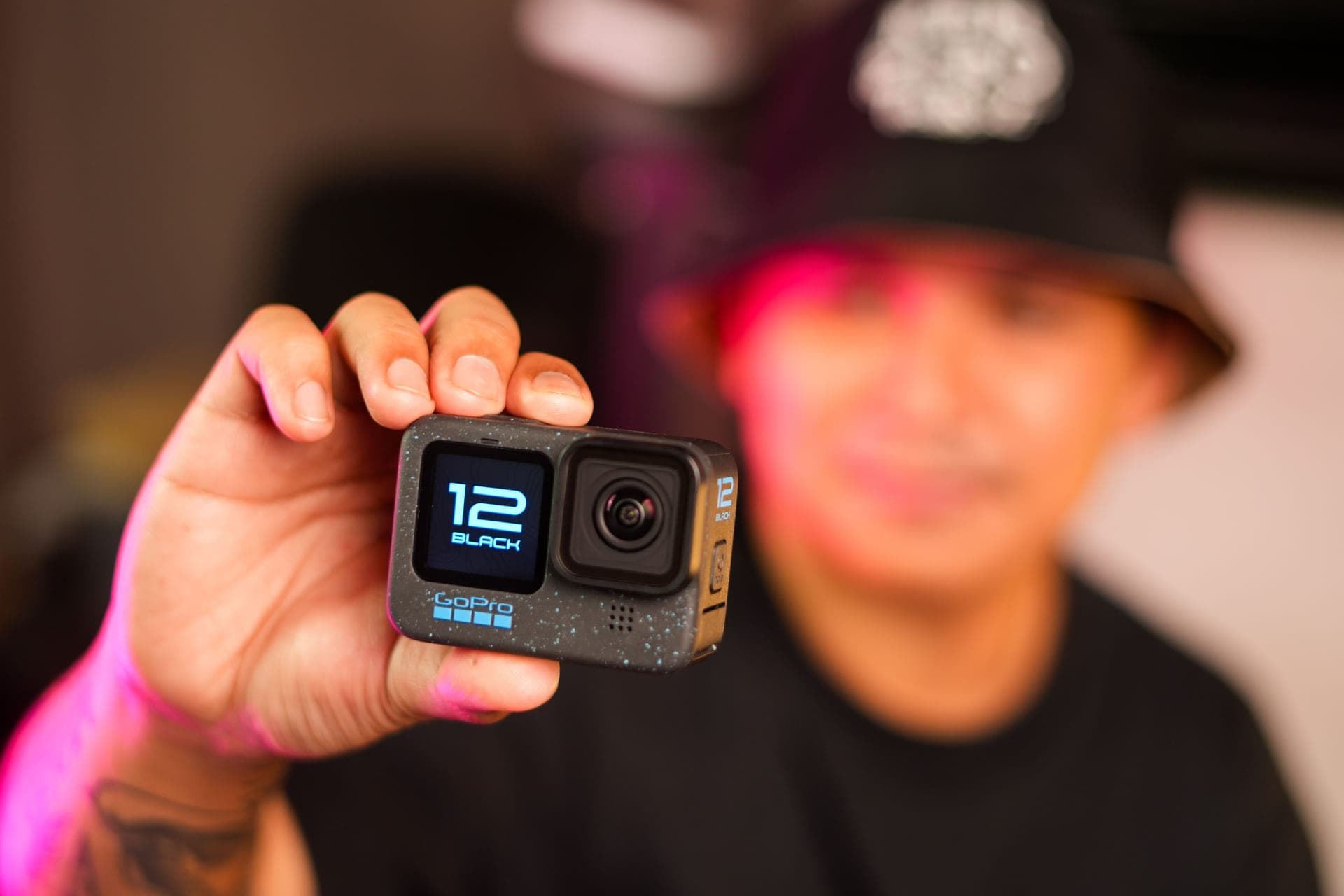
The easiest action camera to use is the one with the fewest decisions between you and a usable clip. In practice that means three things: sensible defaults, so ignoring the menus still produces good footage; a mounting system you can operate with cold, wet hands; and a depth rating you cannot accidentally exceed. The GoPro HERO (2024) and the Insta360 GO Ultra are the simplest to start with; the DJI Osmo Action 5 Pro is the most forgiving to live with; the GoPro HERO13 Black is the easiest to get help with.
Why “fewer features” is the wrong definition
Every camera on this page has dozens of settings. Color profiles, bit rates, log modes, protune controls, frame rates from 24 to 240. None of that makes a camera hard to use, because you can ignore all of it.
What makes a camera hard to use is when ignoring it produces something bad — when the default mode is a setting nobody should shoot, when the mount takes two hands and a thumbnail to open, or when the depth rating is shallow enough that a normal swim is a risk.
So easy, properly defined, is three things.
1. Good defaults
Turn the camera on, press record, and the clip should be usable. That means stabilization on by default, an auto exposure that handles bright water without blowing out the sky, and a sensible default resolution rather than the maximum.
All four cameras here do this well. The main thing to change on day one is to step down from the maximum mode to 4K, which gives you longer battery, cooler running, smaller files and detail nobody can tell apart on a phone — the settings guide covers why.
2. Mounting you can work with cold hands
This is the one nobody lists and everybody experiences. A camera you cannot get on and off a mount while wet, cold and slightly rushed is a camera that stays in the bag.
DJI's magnetic quick-release is the easiest system to operate with gloves or numb fingers — genuinely a click. The trade is that a magnet is not a mechanical lock, so for a tall mast or rough trail you want the adapter to a two-prong fitting.
GoPro's folding fingers plus a thumb screw is the most secure and the fiddliest. A metal thumb screw is far easier to work than the supplied plastic one, and it is one of the cheapest upgrades in this category.
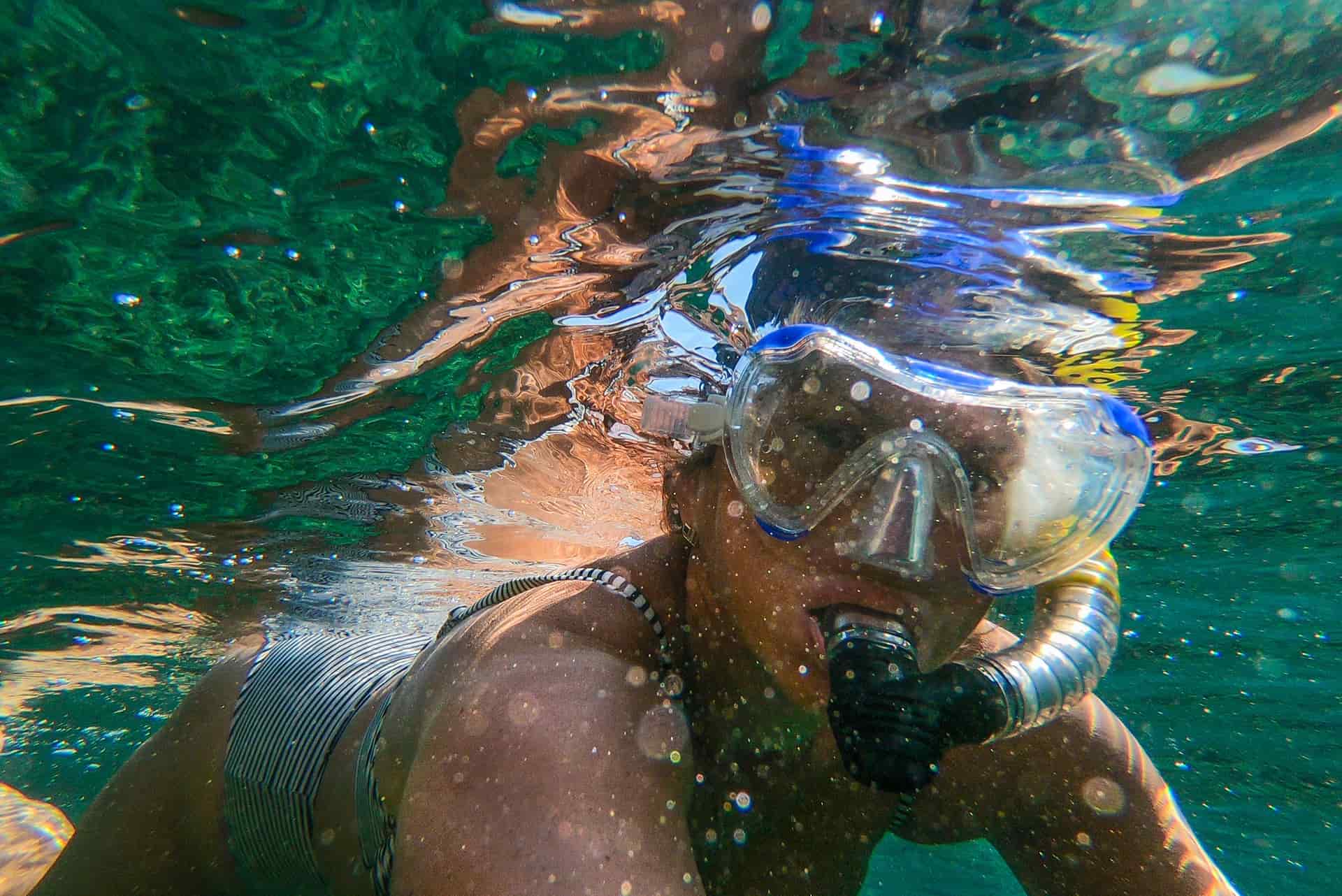
Insta360's magnetic pendant and clips on the GO Ultra are the fastest of all, and the least suited to anything with real vibration.
Mount compatibility covers what fits what.
3. A depth rating you cannot accidentally exceed
A camera rated to 20m makes water a non-event. A camera rated to 5m makes every swim a small decision.
That is the real reason the DJI Osmo Action 5 Pro is the most forgiving camera here despite having the most settings: nothing you do on a normal day gets near the limit, and it publishes a -20°C operating range on top. You stop managing the camera and start using it.
The other kind of easy: getting help
Worth weighting properly. When something confuses you — a mount that will not fit, a setting you cannot find, a card the camera rejects — the speed at which you can find an answer is part of how easy the camera is.
GoPro is well ahead here simply on volume: more tutorials, more forum answers, more third-party accessories with instructions written for it. DJI is close behind. For a first camera this is a genuine reason to lean towards either.
What makes a camera hard to use, in practice
Four things, in the order people hit them.
A card it does not like. The most common early frustration, and it presents as random recording stops rather than an error message. Use a V30 card from the manufacturer's tested list — the card roundup.
A battery that dies mid-trip. Published runtimes are ceilings measured at low resolution with screens off.
A mount that does not fit the thing you own. Measure the bar, the rail or the helmet before ordering.
A lens with water on it. Not a camera problem at all, and the single most common reason a clip is unusable. Carry a cloth you can reach.
01
Four cameras that are genuinely easy to live with
Ordered from simplest to most capable, because 'easiest' and 'best' are not the same list.
- 16ft (5m)
- 4K30, 2.7K60 slo-mo
- Built in, not user-removable
- 6.0
- 7.5
- 6.0
- 9.0
- 7.0
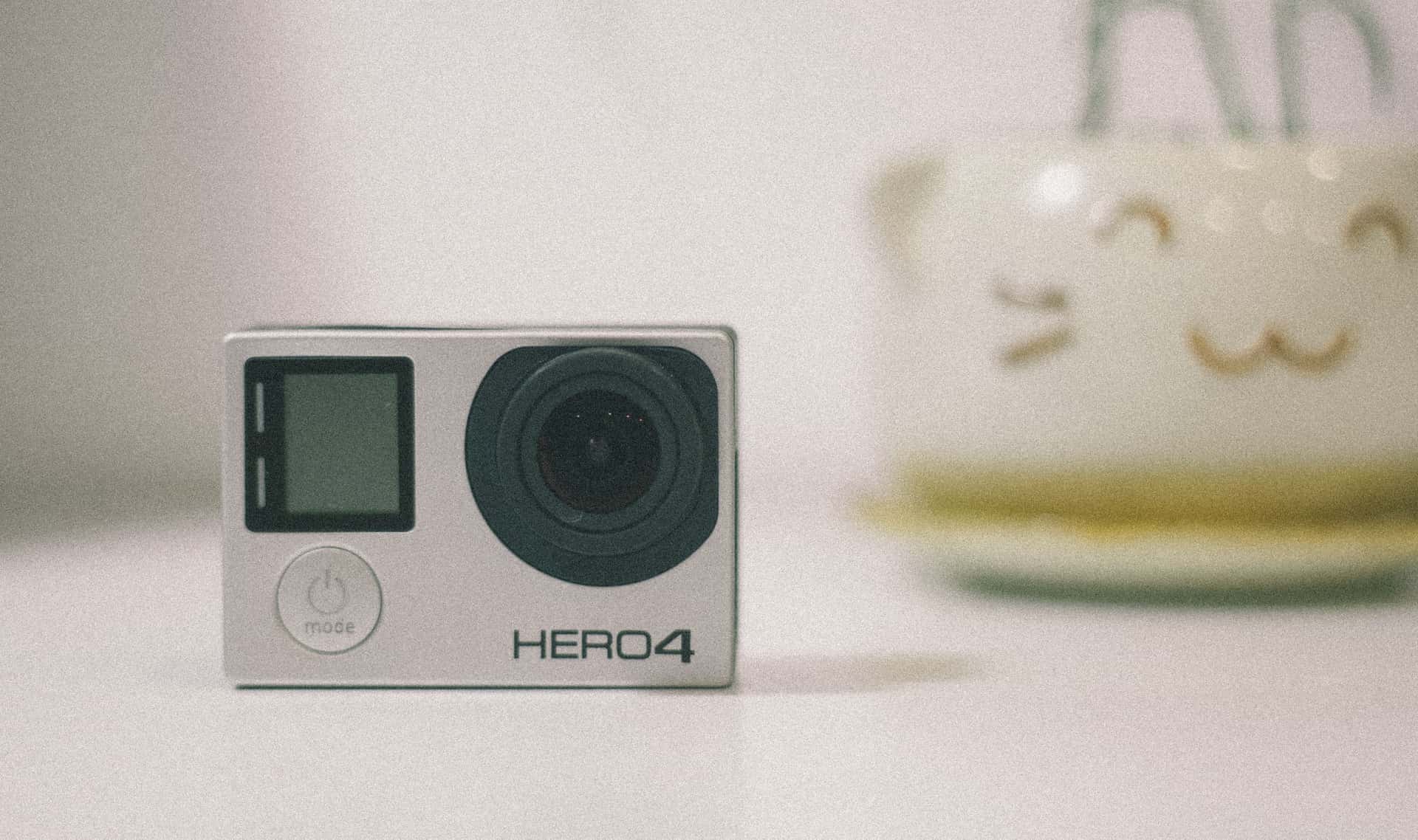
GoPro HERO (2024)
GoPro
The cheapest real GoPro, and the one whose 16ft rating you have to take seriously before you take it snorkeling.
A first camera, a kid's camera, or a second angle that mounts anywhere
- Genuinely tiny — 46% less mass than HERO13 Black
- Built-in mounting fingers, and GoPro lists it as compatible with 35+ mounts
- HyperSmooth stabilization at the lowest GoPro price
- Simple enough to hand to someone who has never used one
- 16ft (5m) is a snorkel-adjacent rating, not a diving one
- The battery is built in — you cannot carry a spare, you carry a power bank
- 4K30 is the ceiling; no 4K60, no high-frame-rate 4K
Specs from GoPro HERO published specifications.
- IPX8 to 33ft (10m), camera only
- 53g
- Up to 170 min with the Action Pod
- 7.0
- 8.0
- 7.5
- 8.0
- 8.0
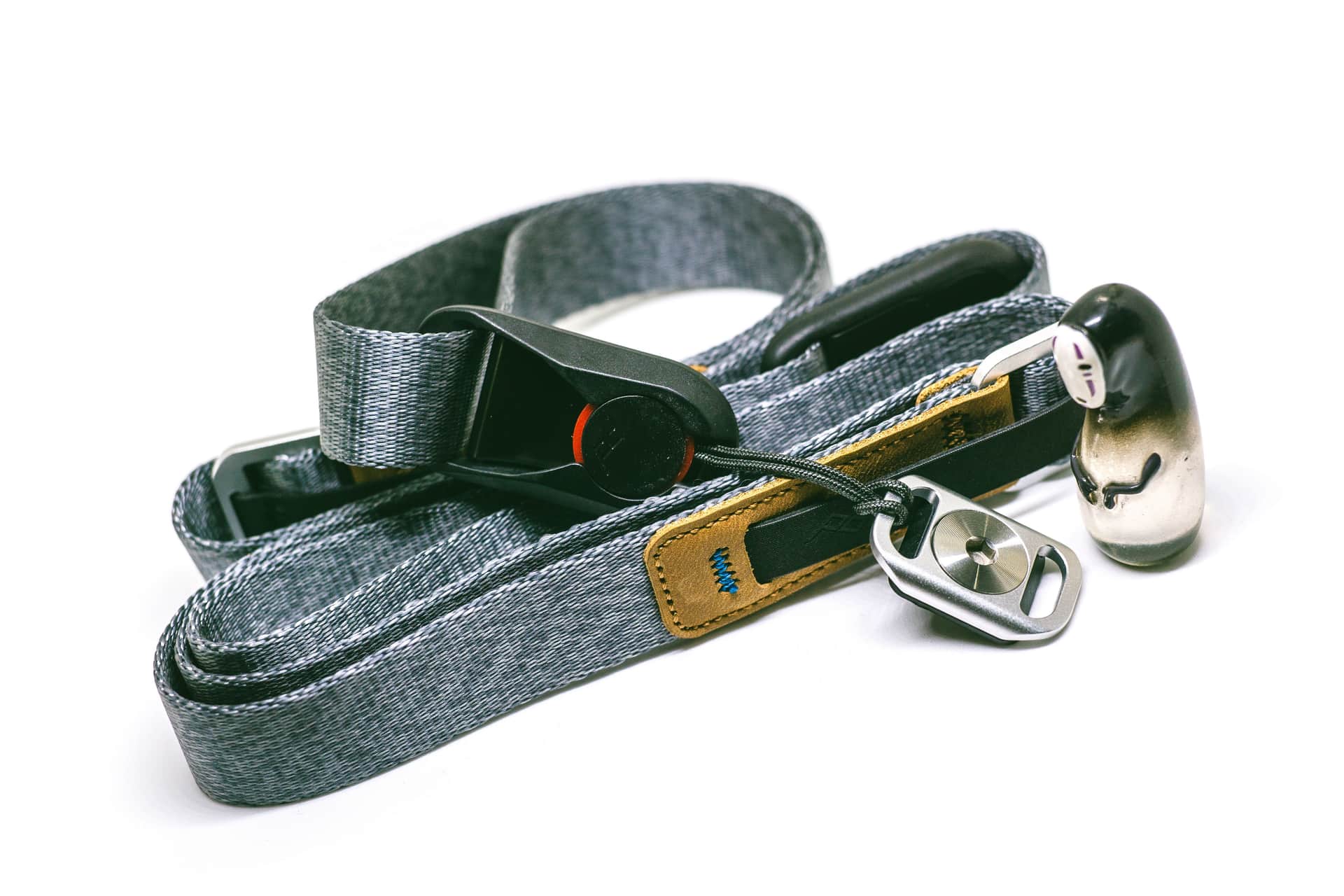
Insta360 GO Ultra
Insta360
53 grams and IPX8 to 10m on its own — the camera you actually clip on for a paddle instead of leaving in the dry bag.
Hands-free clips where a full-size camera would never leave the bag
- 53g means it goes on a hat brim, a PFD strap or a chest magnet and you forget it is there
- IPX8 to 10m for the camera itself, with a 1/1.28" sensor that is far larger than the size suggests
- Action Pod adds a flip screen and the long runtime when you want it
- Removable microSD, so you are not stuck with fixed onboard storage
- The Action Pod is not rated to the same depth as the camera — read the two ratings separately
- Magnetic mounting is convenient but is not a mechanical lock in real chop
- No interchangeable lens cover, so a scratch is permanent
Specs from Insta360 GO Ultra published specifications.
- 20m bare / 60m with case
- 1950mAh · 240 min at 1080p24
- -20° to 45°C
- 9.5
- 9.0
- 9.5
- 8.0
- 9.0
DJI Osmo Action 5 Pro
DJI
Goes to 20m with no housing at all and publishes a 240-minute runtime — the two numbers that decide a long, wet, cold day.
Long paddles, cold water, and anyone tired of buying a housing to get past 10m
- 20m without the Waterproof Case — double the bare-camera depth of the HERO13 Black
- DJI publishes 240 minutes of recording at 1080p/24 with screens off, the longest figure in this set
- Rated to -20°C, which matters more on an October lake than any resolution number
- 1/1.3-inch sensor holds detail when the light goes flat
- Mount ecosystem is smaller than GoPro's, and magnetic quick-release adapters are their own purchase
- 146g — the heaviest of the flagship three
- Fewer third-party mounts and filters exist for it
Specs from DJI Osmo Action 5 Pro published specifications.
- 33ft (10m), no housing
- 1900mAh Enduro
- 1.5h at 5.3K30 / 2.5h at 1080p30
- 8.0
- 9.5
- 8.5
- 9.5
- 9.0
GoPro HERO13 Black
GoPro
The safest default for lake and trail: 33ft without a housing, the steadiest footage in the category, and a mount for literally everything.
Anyone who wants one camera to handle the kayak, the bike and the family trip
- HyperSmooth 6.0 with AutoBoost is the steadiest stabilization we can find published figures for
- Built-in mounting fingers plus 1/4-20 threads — it fits the GoPro ecosystem and a normal tripod
- Enduro battery is rated to keep full camera functionality down to 14°F (-10°C)
- Replaceable lens cover, so a scratched lens is a $20 problem and not a $400 one
- 33ft is shallower than the DJI and it is the shallowest of the three flagships
- Anything past 33ft needs the separate Protective Housing
- HB-Series lenses and ND filters are all extra purchases
Specs from GoPro HERO13 Black published specifications.
02
How we picked
We do not lab-test, bench-test or dive-test cameras, and we do not own test units. What we do instead is read the manufacturer's published specifications, read the independent reviews that genuinely do test, read owner reports for the failure modes specs never mention — fogging, salt corrosion, cold battery collapse, mount slippage — and then weight all of it for action cameras used on lake and trail. Where a number is not published, the page says “not published” rather than filling the cell.
The full method, including what we refuse to do, is on the editorial policy page.
- 30%Water survival
- Rated depth without a case, door design, and what the manufacturer actually publishes.
- 25%Stabilization in chop
- A kayak deck and a rooty trail shake in ways a handheld walk test never shows.
- 20%Battery in the cold
- Published runtime, spare-battery cost, and whether it charges while recording.
- 15%Mount ecosystem
- Finger mount, threaded, magnetic — and how much of it you have to re-buy.
- 10%Footage you will keep
- Lens replaceability, low-light behavior, and how much cutting the footage needs.
03
Questions people actually ask
01What is the easiest action camera for a complete beginner?
The GoPro HERO (2024) or the Insta360 GO Ultra for sheer simplicity, or the GoPro HERO13 Black if you want one camera to grow into — the volume of available help makes it easier than its menu count suggests.
02Is a GoPro hard to use?
No. It has a lot of settings you can ignore entirely, sensible defaults, and more available help than anything else in the category. The fiddliest part is the thumb screw, and a metal replacement fixes that.
03Which action camera is easiest to mount?
DJI's magnetic quick-release, by a distance, especially with cold or gloved hands. It is not a mechanical lock though — for a mast or rough trail, use the two-prong adapter.
04Do I need to learn settings to get good footage?
No. Change three things — 4K rather than the maximum mode, stabilization on, screen timeout short — and leave the rest alone. Shot length and mount position will improve your footage far more than any setting.
05Why does my camera keep stopping recording?
Usually the memory card. A card that cannot sustain the write speed stops mid-clip rather than showing an error. Use a V30-rated card that appears on your camera's tested-card list.
04
Read this next
Best action cameras for beginners
The ranked version, with the day-one settings and the four things to buy.
Editing a trip video people watch
The genuinely hard part, and the habit that solves it.
Best SD cards for action cameras
The most common early frustration, prevented.
Mount compatibility
What fits what, before you order the wrong thing.
Do you actually need a GoPro?
The question before this one.
05
Sources
- GoPro HERO (2024) published specifications
- Insta360 GO Ultra published specifications
- DJI Osmo Action 5 Pro specifications
- GoPro HERO13 Black published specifications
Specifications are quoted from the manufacturer pages above as they read on the dates shown. Where a figure is not published, this site says so rather than estimating one. We have not tested these products.