The best action cameras for new moms
One hand is permanently occupied and a lot of the first year happens indoors. Those two facts rule out most of this category, and they rank what is left.
Part of Cameras.
We earn a commission if you buy through our links, at no extra cost to you. It never changes what we recommend or the order we rank it in — how this works.
The Insta360 GO Ultra is the best action camera for most new moms — 53g, clips to a shirt or a carrier strap, and records without needing a hand at all, which is the one thing that actually matters in the first year. Its 1/1.28-inch sensor is also much larger than the size suggests, so it holds up better indoors than a camera that small has any right to. Choose the Insta360 Ace Pro 2 instead if the footage is mostly indoors and you want it to look genuinely good: a 1/1.3-inch sensor with a Leica lens and a flip screen so you can frame a shot you are standing in. And be honest with yourself about one thing — for a static shot in a dim living room, your phone is still the better tool.
01
Quick picks
| # | Product | Best for | Score | Price |
|---|---|---|---|---|
| 01 | 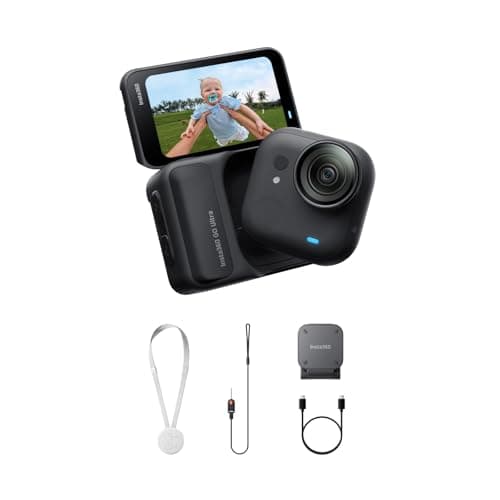 Insta360 GO Ultra 53 grams and IPX8 to 10m on its own — the camera you actually clip on for a paddle instead of leaving in the dry bag. | Hands-free clips where a full-size camera would never leave the bag | 7.6/ 10 | |
| 02 | 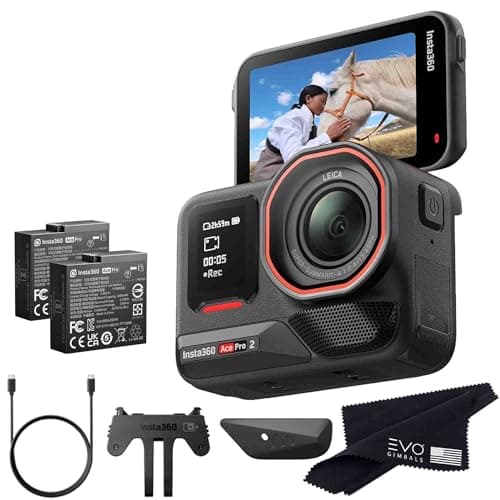 Insta360 Ace Pro 2 The best-looking image of the three flagships, with a flip screen that finally makes a chest-mounted shot something you can frame. | Family trips where you want the footage to look like more than dashcam clips | 8.6/ 10 | |
| 03 | 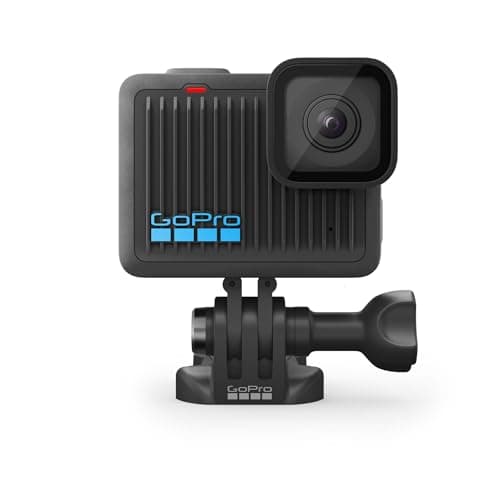 GoPro HERO (2024) The cheapest real GoPro, and the one whose 16ft rating you have to take seriously before you take it snorkeling. | A first camera, a kid's camera, or a second angle that mounts anywhere | 7.1/ 10 | |
| 04 | 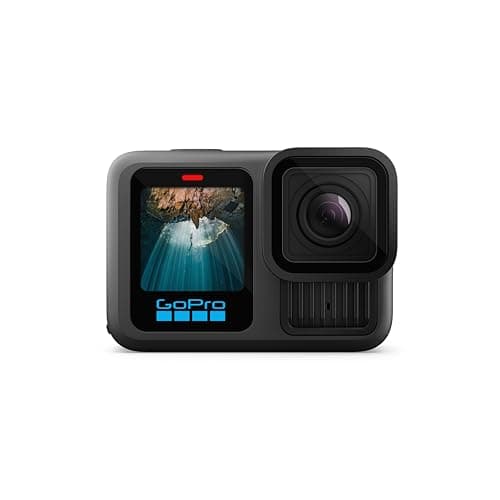 GoPro HERO13 Black The safest default for lake and trail: 33ft without a housing, the steadiest footage in the category, and a mount for literally everything. | Anyone who wants one camera to handle the kayak, the bike and the family trip | 8.8/ 10 | |
| 05 | 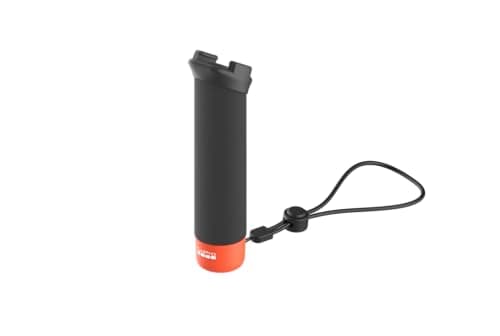 GoPro The Handler Floating Hand Grip A grip that floats bright-orange-end-up when you drop it, with a quick release so the camera moves to a mount without tools. | Handheld water shots — snorkeling, swimming, filming from the boat | 8.2/ 10 |
Scores are our editorial judgment from published specs and named independent reviews, weighted for lake and trail use — not measurements. We have not tested these units and do not own them.
02
How we picked
We do not lab-test, bench-test or dive-test cameras, and we do not own test units. What we do instead is read the manufacturer's published specifications, read the independent reviews that genuinely do test, read owner reports for the failure modes specs never mention — fogging, salt corrosion, cold battery collapse, mount slippage — and then weight all of it for action cameras used on lake and trail. Where a number is not published, the page says “not published” rather than filling the cell.
The full method, including what we refuse to do, is on the editorial policy page.
- 30%Water survival
- Rated depth without a case, door design, and what the manufacturer actually publishes.
- 25%Stabilization in chop
- A kayak deck and a rooty trail shake in ways a handheld walk test never shows.
- 20%Battery in the cold
- Published runtime, spare-battery cost, and whether it charges while recording.
- 15%Mount ecosystem
- Finger mount, threaded, magnetic — and how much of it you have to re-buy.
- 10%Footage you will keep
- Lens replaceability, low-light behavior, and how much cutting the footage needs.
What actually decides this
The specification sheets in this category are written for people filming mountain bikes. The questions that decide whether a camera gets used in the first year are different, and smaller.
How much does it weigh, worn? A 53g camera on a strap is invisible after five minutes. A 154g camera on a chest harness is something you are aware of all afternoon, and awareness is what makes a camera stay in a drawer the second time.
Can you start it one-handed, without looking? One press, no menu, no phone. If getting the camera recording takes two hands or thirty seconds, the thing you wanted to film has finished.
How big is the sensor? This is the specification that matters most and gets mentioned least. Much of the first year happens indoors in mixed light, and sensor size — not resolution — is what decides whether that footage is warm or grainy. A 1/1.3-inch sensor is a real advantage over a smaller one here.
What happens when it gets wet? Not hypothetical: baths, paddling pools, spilled bottles, rain on a walk. A bare-camera depth rating means the camera survives the entire category of accident without a case you would never have fitted in time.
| Camera | Sensor | Weight / size | Bare depth | Framing screen |
|---|---|---|---|---|
| Insta360 GO Ultra | 1/1.28" | 53g | IPX8 to 33ft (10m), camera only | On the Action Pod |
| Insta360 Ace Pro 2 | 1/1.3" with Leica lens | Not published | 39ft (12m) | Flip screen |
| GoPro HERO (2024) | Not published | 46% less mass than HERO13 Black | 16ft (5m) | Rear screen |
| GoPro HERO13 Black | Not published | Not published | 33ft (10m) | Rear plus front screen |
Where a phone is still the better answer
This is a site about action cameras and we are going to say the unpopular thing anyway: for a large share of first-year moments, a modern phone wins. A static shot in a dim room, a video call, a photograph you want to send to a grandparent in the next ninety seconds — the phone has a bigger sensor than most of these cameras, better computational processing, and it is already unlocked in your hand.
An action camera earns its place in three specific situations a phone handles badly. The first is anything wet, where a phone is a risk and these are not. The second is anything hands-free, where a phone has no answer at all. The third is the wide, close, chest-height angle that makes a toddler look like they are in the room with the viewer rather than being filmed from above — that is the look of an action camera and a phone cannot do it. If none of those three describes what you want to film, keep the money. The longer version is in action camera vs phone.
Two habits that matter more than the camera
Shorter clips, more of them. A twelve-minute continuous recording of a baby on a rug is twelve minutes nobody will watch, including you. Fifteen-second clips of the same afternoon edit into something people actually sit through, and they cost nothing to shoot. The method is in editing a trip video people watch.
Give the camera away sometimes. The person doing most of the filming is in almost none of the footage, and that is the thing people regret later. Hand it to a partner, a visiting friend, a grandparent — the GoPro HERO (2024) is simple enough that this takes no explanation, and the grandparents list exists for exactly that handover.
What to ignore
Resolution above 4K. 5.3K and 8K exist to allow cropping in an edit. Straight to a phone or a TV, 4K/30 already exceeds what the screen shows, and the files are half the size — which matters when the only editing time is during a nap.
360 cameras, for this buyer. Genuinely clever, and every clip needs a reframing pass before anybody else can watch it. That is real work added to a year with none spare. See 360 camera vs action camera if you are curious anyway.
Big accessory bundles. Twenty plastic parts, of which you will use two. The mounts in those kits are also the ones that slip. The first five accessories is the honest list.
03
Every pick, in detail
- IPX8 to 33ft (10m), camera only
- 53g
- Up to 170 min with the Action Pod
- 7.0
- 8.0
- 7.5
- 8.0
- 8.0
Insta360 GO Ultra
Insta360
53 grams and IPX8 to 10m on its own — the camera you actually clip on for a paddle instead of leaving in the dry bag.
Hands-free clips where a full-size camera would never leave the bag
Top pick because it is the only camera here you can genuinely forget you are wearing. 53g clips to a placket, a carrier strap or a magnetic pendant, and from there it films your point of view — the hands, the face looking up, the walk to the park — with no hand required and nothing to hold. In a year where one arm is permanently committed, that is not a convenience feature, it is the entire reason this camera is on the list.
Two honest cautions. The camera is IPX8 to 33ft (10m); the Action Pod it docks into is a separate product with its own rating, and treating them as one waterproof unit is the standard way to kill one. And there is no interchangeable lens cover, so a scratch is permanent — keep it in something, not loose in a diaper bag with keys.
- 53g means it goes on a hat brim, a PFD strap or a chest magnet and you forget it is there
- IPX8 to 10m for the camera itself, with a 1/1.28" sensor that is far larger than the size suggests
- Action Pod adds a flip screen and the long runtime when you want it
- Removable microSD, so you are not stuck with fixed onboard storage
- The Action Pod is not rated to the same depth as the camera — read the two ratings separately
- Magnetic mounting is convenient but is not a mechanical lock in real chop
- No interchangeable lens cover, so a scratch is permanent
Specs from Insta360 GO Ultra published specifications.
- 39ft (12m) / 60m with dive case
- 1800mAh · 180 min published
- 1/1.3" with Leica lens
- 8.5
- 8.5
- 9.0
- 7.5
- 9.5
Insta360 Ace Pro 2
Insta360
The best-looking image of the three flagships, with a flip screen that finally makes a chest-mounted shot something you can frame.
Family trips where you want the footage to look like more than dashcam clips
The pick if image quality is the point. A 1/1.3-inch sensor with a Leica lens is the largest sensor in this group, and sensor size is the specification that decides whether indoor footage looks like a memory or like a security camera. The first year happens in living rooms, kitchens and hospital corridors, which is exactly where every other action camera on this page struggles.
The flip screen is the second reason it is here, and it is a bigger deal than it sounds. Holding a camera out one-handed while also holding a baby means you cannot see what you are framing — a flip screen turns that from guesswork into a shot. 12m bare clears every bath, pool and beach situation without a case. The cons: it is heavier than the GO Ultra, the dive case is a separate purchase past 12m, and there are fewer mounts for it than for a GoPro.
- 8K30 with a 1/1.3-inch sensor — the most detail in the group
- 12m bare, which clears every snorkel depth without a housing
- 180-minute published battery life and 80% charge in 18 minutes
- Flip screen means you can frame a shot you are standing in front of
- 12m is still short of the DJI's 20m
- The dive case is a separate purchase for anything past 12m
- Fewer mount options than GoPro, and an adapter tax if you switch
Specs from Insta360 Ace Pro 2 published specifications.
- 16ft (5m)
- 4K30, 2.7K60 slo-mo
- Built in, not user-removable
- 6.0
- 7.5
- 6.0
- 9.0
- 7.0
GoPro HERO (2024)
GoPro
The cheapest real GoPro, and the one whose 16ft rating you have to take seriously before you take it snorkeling.
A first camera, a kid's camera, or a second angle that mounts anywhere
The pick when the budget is the constraint. One shutter button, a rear screen to frame on, HyperSmooth stabilization running without being configured, and 46% less mass than a HERO13 Black. It records when you press it and stops when you press it again, which is the correct amount of interface for a day run on four hours of sleep.
Two limits to take seriously. 16ft (5m) is a splash-and-shallows rating — fine for a bath, a paddling pool and a dock, wrong for anything deeper. And the battery is built in, so a flat camera means a power bank rather than a thirty-second swap. 4K30 is also the ceiling here, and in dim indoor light this is the weakest performer on the page.
- Genuinely tiny — 46% less mass than HERO13 Black
- Built-in mounting fingers, and GoPro lists it as compatible with 35+ mounts
- HyperSmooth stabilization at the lowest GoPro price
- Simple enough to hand to someone who has never used one
- 16ft (5m) is a snorkel-adjacent rating, not a diving one
- The battery is built in — you cannot carry a spare, you carry a power bank
- 4K30 is the ceiling; no 4K60, no high-frame-rate 4K
Specs from GoPro HERO published specifications.
- 33ft (10m), no housing
- 1900mAh Enduro
- 1.5h at 5.3K30 / 2.5h at 1080p30
- 8.0
- 9.5
- 8.5
- 9.5
- 9.0
GoPro HERO13 Black
GoPro
The safest default for lake and trail: 33ft without a housing, the steadiest footage in the category, and a mount for literally everything.
Anyone who wants one camera to handle the kayak, the bike and the family trip
The pick if you are buying one camera for the next several years rather than for this one. 33ft (10m) bare, HyperSmooth 6.0 with AutoBoost, an Enduro battery GoPro rates for full functionality down to 14°F (-10°C), and built-in mounting fingers plus a 1/4-20 thread — so it fits a chest harness now and a bike handlebar in four years when somebody wants it on their own.
The replaceable lens cover is the quiet reason it lasts: a scratched lens is a $20 part, not a dead camera. It is the most capable body here and the one with the most menu, and if the only job is clipping it on and forgetting it, the GO Ultra does that job better for less weight.
- HyperSmooth 6.0 with AutoBoost is the steadiest stabilization we can find published figures for
- Built-in mounting fingers plus 1/4-20 threads — it fits the GoPro ecosystem and a normal tripod
- Enduro battery is rated to keep full camera functionality down to 14°F (-10°C)
- Replaceable lens cover, so a scratched lens is a $20 problem and not a $400 one
- 33ft is shallower than the DJI and it is the shallowest of the three flagships
- Anything past 33ft needs the separate Protective Housing
- HB-Series lenses and ND filters are all extra purchases
Specs from GoPro HERO13 Black published specifications.
- Bright orange end pops to the surface
- Quick release, switches between mounts
- Non-slip construction
- 8.0
- 8.5
- 9.0
- 7.0
GoPro The Handler Floating Hand Grip
GoPro
A grip that floats bright-orange-end-up when you drop it, with a quick release so the camera moves to a mount without tools.
Handheld water shots — snorkeling, swimming, filming from the boat
Not a camera, and the best twenty-dollar decision on this page. It is a floating grip: the camera screws to the end, it is comfortable to hold one-handed, it is easy to grab with wet hands at a bath or a pool, and if it goes in the water it bobs with the bright orange end up instead of sinking. The quick-release base means the same camera moves to a mount in seconds. Read floats, tethers and not losing your camera before you take any camera near water with a toddler.
- Floats end-up so you can actually spot it in chop
- Quick-release base means the same camera goes from hand to deck mount in seconds
- Non-slip even with wet or cold hands
- GoPro lists it specifically for surfing, kayaking and wakeboarding
- It floats the grip; a heavy housing on the end changes that calculation
- No wrist strap included in every configuration — add one
- Bulky in a PFD pocket
Specs from GoPro The Handler product page.
04
What decides this category
Weight first, specs second
Whatever you buy has to be something you will actually wear or carry while holding a baby. Everything else on the spec sheet is downstream of that.
Sensor size over resolution
Indoor light is the hard case in the first year. A larger sensor beats a bigger resolution number every time, and 4K is already more than any screen you will watch it on.
One-press recording, no app in the loop
The app is for pulling clips off afterwards. If it is required to start recording, the camera is the wrong camera.
A float or a grip if there is any water
Baths, pools, beaches, lakes. Twenty dollars against the price of the camera, and these sink unaided.
What we would skip
Chest harnesses in the first weeks — a hard mount against a carrier is not comfortable for either of you. Start with a clip-on body or handheld, and add a chest mount when you are back to walks, bikes and the lake.
05
Questions people actually ask
01What is the best action camera for a new mom?
The Insta360 GO Ultra. It weighs 53g, clips to clothing and records hands-free, which is the only constraint that really matters in the first year. If you want the best-looking indoor footage instead, the Insta360 Ace Pro 2 has the largest sensor here and a flip screen for framing yourself.
02Is an action camera worth it with a newborn?
Only for three things a phone does badly: wet situations, hands-free filming, and the wide chest-height angle that puts the viewer in the room. For static indoor shots your phone is genuinely better. If none of those three describes what you want, keep the money.
03Which action camera is best in low indoor light?
The Insta360 Ace Pro 2, on published specifications — a 1/1.3-inch sensor with a Leica lens is the largest in this group, and sensor size rather than resolution is what decides indoor footage. The GO Ultra's 1/1.28-inch sensor is a close second and far smaller to carry.
04Can an action camera go in the bath or a pool?
Yes, within its rating. 16ft (5m) covers baths and paddling pools, 33ft (10m) and up means nobody has to think about it. Rinse it in fresh water afterwards if there was chlorine or salt — salt water care and rinsing covers why.
05How do I end up in the footage instead of behind the camera?
Mount it rather than hold it, and hand it over regularly. A clipped or chest-mounted camera films your point of view, and a partner or grandparent with a one-button camera films you — those are the only two reliable methods.
06
Read this next
The best action cameras for single parents
The same hands-free problem when there is no second adult at all.
Action camera vs phone
The honest version of when the phone in your pocket is the better tool.
The best action cameras for family travel
For the first trip, and why most trip footage never gets watched.
How to film POV video with kids
Where to clip the camera and how long to leave it running.
The best action cameras for grandparents
The camera to hand over so somebody films you for a change.
07
Sources
- Insta360 GO Ultra published specifications
- Insta360 Ace Pro 2 published specifications
- GoPro HERO published specifications
- GoPro HERO13 Black published specifications
- GoPro The Handler product page
Specifications are quoted from the manufacturer pages above as they read on the dates shown. Where a figure is not published, this site says so rather than estimating one. We have not tested these products.