How to film POV video with kids outdoors
The reason most footage of kids outdoors is unwatchable is a camera held at adult eye level. Fixing the height fixes most of it.
Part of Filming.
We earn a commission if you buy through our links, at no extra cost to you. It never changes what we recommend or the order we rank it in — how this works.
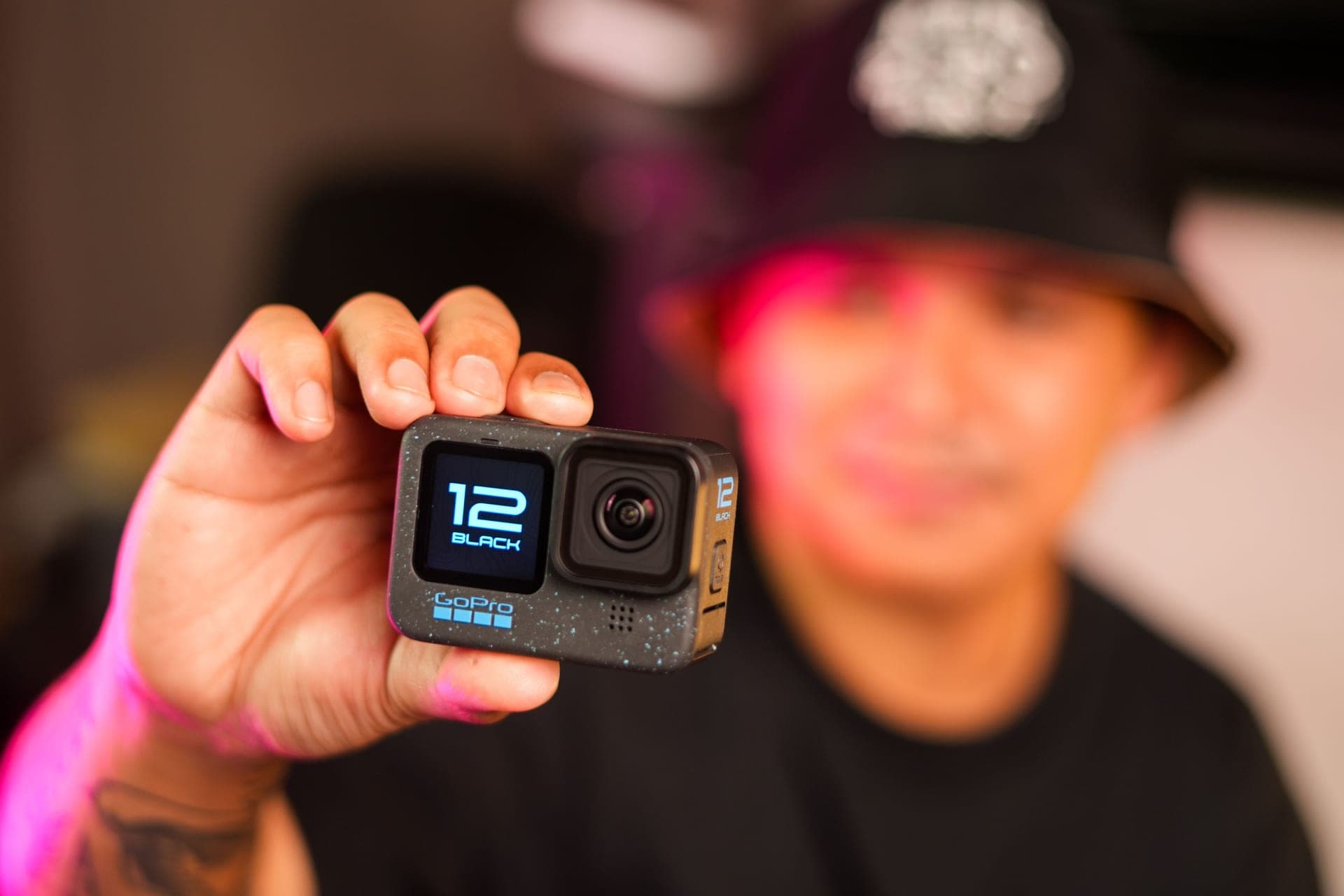
Film children from their height, not yours — mount the camera on your chest rather than holding it at eye level, and give them a camera of their own for part of the day. An action camera on a chest harness sits roughly at a toddler's eye line and about level with a seven-year-old's shoulders, which is the difference between footage that feels like being there and footage that looks like surveillance from above. Shoot in ten-to-fifteen-second clips rather than continuously, keep the camera wide and close rather than zoomed and far, and accept that the best clip of the day will be the one your kid shot of you.
Why adult-height footage looks wrong
Hold a phone or a camera at your own eye level and point it at a four-year-old. The resulting image looks down on them, compresses them against the ground, and puts the horizon above the frame. It reads as an adult observing a child.
Drop the camera to their height and the whole thing changes. They are against the sky instead of the dirt, their face is lit by it, and the viewer is in the scene rather than above it. This is not a matter of taste; it is the single biggest difference between home footage and footage that looks like it was shot deliberately, and it costs nothing.
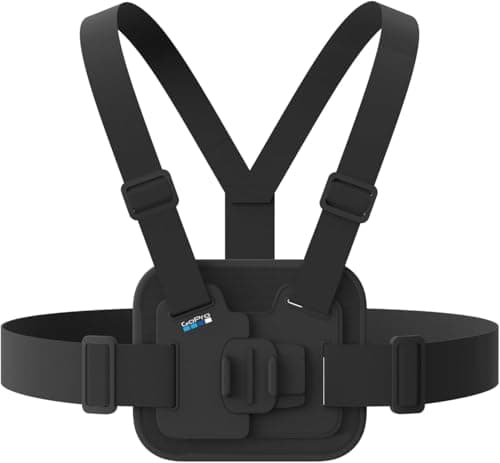
A chest harness happens to put an action camera at close to the right height for most of childhood — a toddler's eye line, a small child's shoulders — while leaving both hands free, which is the other constraint when you are filming and parenting at the same time. That is why it is first in our picks rather than a camera.
The four positions that work, and what each one is for
Your chest. The default. Trail, beach, playground, pushing a bike. It gives the you-were-there angle, keeps your hands available and sits at roughly child height. Pull the straps tight — a loose harness bounces, and bounce is the one thing stabilization cannot fully fix. The options are compared in the best chest mounts.
Their chest or their helmet. True first-person childhood: their hands, their handlebars, the back of a dog. Put a light camera on a child and the footage is a point of view no adult can fake. A helmet mount is the better choice on a bike or a scooter, for the same reason it is on an adult — the best helmet mounts covers the positions.
Low and static, left running. Put the camera on the ground, a rock, a picnic table or a clamp at knee height, aim it roughly at the activity and walk away. Kids behave completely differently when nobody is pointing anything at them, and a static low camera gets the ten seconds of actual play that a held camera never does. This is the highest-yield technique on this page and almost nobody uses it.
In their hand. Hand over a simple one-button camera and let them shoot. It will be shaky, badly framed, and the only footage that exists of you. More on that below.
| The shot | Position | Why it works |
|---|---|---|
| A walk, a beach, a playground | Your chest | Child-height, hands free, steady platform |
| Them riding or scooting | Their helmet | Looks where they look; shows the line they picked |
| Them playing, unobserved | Low and static, left running | Nobody performs for a camera on the ground |
| In water — pool, lake, dock | Floating grip, handheld | Retrieval first; a sinking camera is gone |
| You, in the footage at all | In their hands | The only reliable method. Accept the framing. |
| A long day with no charging | Clipped on, short clips | Battery lasts; nothing to carry |
Settings, kept short
Wide, and close. An action camera lens is very wide, which means you have to be much closer than feels natural — an arm's length from a face, not three meters. Wide-and-close looks intimate; wide-and-far looks like a security camera, because that is exactly what a security camera is.
4K/30, or 1080p/60 if you want slow motion. 4K is already more than the screen it will be watched on, and 60 frames per second buys you a clean half-speed for a jump into a pool. Resolutions above 4K cost battery and card space to buy cropping room you will not use.
Horizon lock on, stabilization on. Children move unpredictably and so do you while following them. These two settings do more for the footage than any upgrade in camera.
Leave the menus alone after that. Set it up once at home and never adjust anything at a playground. Every second spent in a menu is a second the thing you wanted to film is finishing.
How the parent ends up in the footage
Here is the thing worth saying plainly. In most families one person does nearly all the filming, and that person is in almost none of it. In ten years that is the gap people notice, and no camera purchase fixes it. Two habits do.
Mount the camera instead of holding it. A chest-mounted or clipped-on camera films your hands, your point of view and your voice. You are present in that footage in a way you are not when you are behind a phone, even though your face is not in frame.
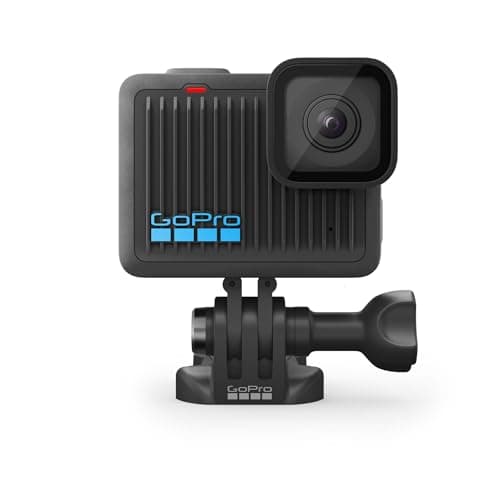
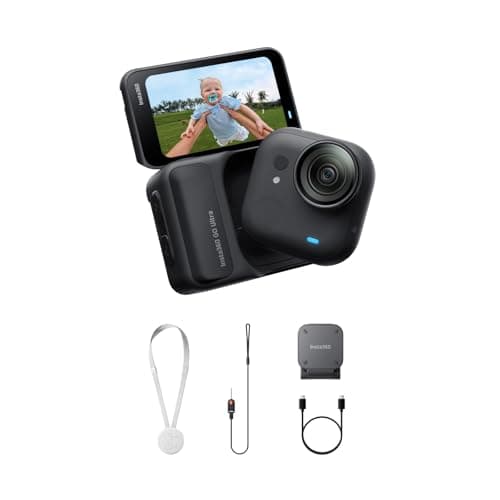
Hand the camera over, routinely. A GoPro HERO (2024) has one shutter button and a screen — a six-year-old can operate it after thirty seconds of explanation, and the Insta360 GO Ultra at 53g can be clipped to them and forgotten. What comes back is badly framed, low-angle, slightly chaotic footage of a parent, and it is the footage you will keep. The same argument, aimed at a different handover, is in the grandparents roundup.
Water, because that is where this goes
Almost every outdoor day with children ends up involving water — a pool, a lake, a hose, a dock. Three things to settle before that happens.
Know your camera's bare depth rating. 16ft (5m) covers a pool and shallow play but requires everyone to be careful. 10m and up means nobody has to be. The full table is in how deep an action camera can actually go.
Fit a float or use a floating grip. Not a precaution — a certainty. Cameras get dropped at docks and in pools, and the ones without floats are on the bottom. Floats, tethers and not losing your camera is the short version.
Rinse it the same day. Chlorine and salt both attack seals as they dry. Thirty seconds under a tap, doors closed, then dried open — salt water care and rinsing.
Which camera, if you are still deciding
For this specific job the ranking is not the same as the general ranking. The three things that matter are weight, whether it can be handed to a child, and whether it mounts hands-free — not sensor size or resolution. Those lists are the best action cameras for kids if the camera is for them, the single parents roundup if your hands are always full, and family travel if this is for a trip.
And one honest note: for a static shot of a child in good light, your phone is a perfectly good camera and probably a better one. An action camera earns its place when the shot is wet, hands-free, or needs to be at knee height — which outdoors is most of the time. The comparison is in action camera vs phone.
01
The three things that make this work
A chest harness so your hands are free, a camera simple enough to hand over, and a clip-on body for the angle neither of those gives you.
- Adjustable, fits over heavy winter jackets
- Quick-release buckle, usable with gloves
- Harness, vertical buckle, thumb screw
- 8.0
- 9.0
- 7.0
- 8.5
- 8.0
GoPro Chesty Performance Chest Mount
GoPro
The mount that shows your hands — which on a kayak means the paddle, and on a bike means the trail arriving.
Paddling and riding footage where the hands are the story
- Padded and breathable, and genuinely adjustable across body types and layers
- The quick-release buckle works with gloves on, which matters in cold water
- Lower and steadier than a helmet mount — less head-turn, less nausea in the edit
- Shows the paddle stroke, which is the shot most people are actually trying to get
- A PFD over the top changes the angle, so set it up wearing what you will actually wear
- Sits low; on a sit-inside kayak it can end up framing mostly deck
- Nothing about it is waterproof — it gets wet and stays wet
Specs from GoPro Chesty product page.
- 16ft (5m)
- 4K30, 2.7K60 slo-mo
- Built in, not user-removable
- 6.0
- 7.5
- 6.0
- 9.0
- 7.0
GoPro HERO (2024)
GoPro
The cheapest real GoPro, and the one whose 16ft rating you have to take seriously before you take it snorkeling.
A first camera, a kid's camera, or a second angle that mounts anywhere
- Genuinely tiny — 46% less mass than HERO13 Black
- Built-in mounting fingers, and GoPro lists it as compatible with 35+ mounts
- HyperSmooth stabilization at the lowest GoPro price
- Simple enough to hand to someone who has never used one
- 16ft (5m) is a snorkel-adjacent rating, not a diving one
- The battery is built in — you cannot carry a spare, you carry a power bank
- 4K30 is the ceiling; no 4K60, no high-frame-rate 4K
Specs from GoPro HERO published specifications.
- IPX8 to 33ft (10m), camera only
- 53g
- Up to 170 min with the Action Pod
- 7.0
- 8.0
- 7.5
- 8.0
- 8.0
Insta360 GO Ultra
Insta360
53 grams and IPX8 to 10m on its own — the camera you actually clip on for a paddle instead of leaving in the dry bag.
Hands-free clips where a full-size camera would never leave the bag
- 53g means it goes on a hat brim, a PFD strap or a chest magnet and you forget it is there
- IPX8 to 10m for the camera itself, with a 1/1.28" sensor that is far larger than the size suggests
- Action Pod adds a flip screen and the long runtime when you want it
- Removable microSD, so you are not stuck with fixed onboard storage
- The Action Pod is not rated to the same depth as the camera — read the two ratings separately
- Magnetic mounting is convenient but is not a mechanical lock in real chop
- No interchangeable lens cover, so a scratch is permanent
Specs from Insta360 GO Ultra published specifications.
02
How we picked
We do not lab-test, bench-test or dive-test cameras, and we do not own test units. What we do instead is read the manufacturer's published specifications, read the independent reviews that genuinely do test, read owner reports for the failure modes specs never mention — fogging, salt corrosion, cold battery collapse, mount slippage — and then weight all of it for mounts used on lake and trail. Where a number is not published, the page says “not published” rather than filling the cell.
The full method, including what we refuse to do, is on the editorial policy page.
- 35%Hold under load
- Vibration, chop and a wet hull are what actually break a mount.
- 25%Fit range
- Rail width, bar diameter, helmet curve — the spec that decides whether it fits at all.
- 20%Water and salt tolerance
- Stainless vs plated hardware, and what happens after a season of rinses.
- 12%Adjustability
- Getting the angle right on the water, with cold hands.
- 8%Tether point
- A mount with nowhere to clip a leash is a mount that loses cameras.
03
Questions people actually ask
01What is the best camera position for filming kids outdoors?
A chest harness on the adult. It sits at roughly a toddler's eye line, keeps both hands free, and gives the you-were-there angle. The next best is a camera placed low and static and simply left running — children behave differently when nobody is pointing anything at them.
02Why does my footage of my kids look bad?
Almost always because it is shot from adult eye level, looking down. That compresses the child against the ground and reads as observation rather than participation. Drop the camera to their height and most of the problem disappears.
03How long should each clip be?
Ten to fifteen seconds. Long enough to establish a moment, short enough that a dozen of them edit into two minutes people will finish. Continuous recording produces files nobody watches and drains the battery before the good part.
04Can a child use an action camera?
Yes — a one-button camera with a rear screen is operable by a six-year-old after about thirty seconds of explanation, and a 53g clip-on body can be attached and forgotten. Fit a float first if there is any water.
05What settings should I use for filming children?
4K/30, or 1080p/60 if you want slow motion, with stabilization and horizon lock on and a wide field of view. Set it once at home and do not open a menu at a playground.
06How do I get myself into the footage?
Mount the camera rather than holding it, so your point of view and your voice are in the recording — and hand the camera to your kids regularly. Their footage of you is shaky and badly framed and it is the only footage of you that will exist.
04
Read this next
Editing a trip video people watch
What to do with a dozen fifteen-second clips once you have them.
The best action cameras for kids
If the camera is going in their hands, this is the ranked list.
The best chest mounts
The mount that puts the camera at child height with your hands free.
The best action cameras for family travel
The trip version, and why most trip footage never gets watched.
How to film yourself paddling
The same framing problem when the camera has to film the person holding it.
05
Sources
- GoPro Chesty product page
- GoPro HERO published specifications
- Insta360 GO Ultra published specifications
Specifications are quoted from the manufacturer pages above as they read on the dates shown. Where a figure is not published, this site says so rather than estimating one. We have not tested these products.