The best action cameras for surfing
Surfing is the harshest ordinary use these cameras get: salt, sand, impact and a board that is trying to leave without you.
Part of On the Water.
We earn a commission if you buy through our links, at no extra cost to you. It never changes what we recommend or the order we rank it in — how this works.
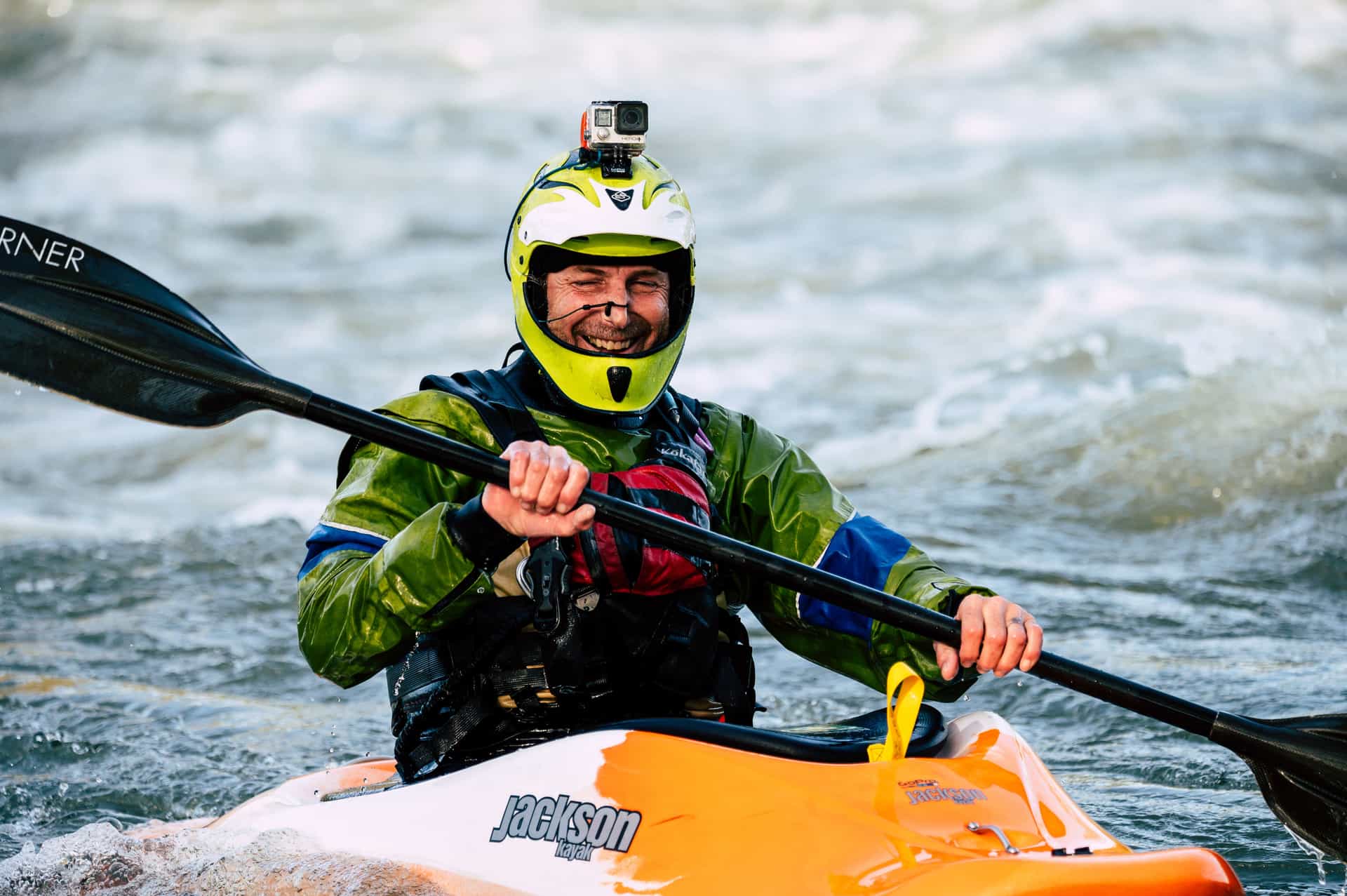
The GoPro HERO13 Black is the best action camera for most surfers — not because it is the deepest or the longest-running, but because its lens cover is a user-replaceable part and sand is the thing that actually destroys surf cameras. 33ft (10m) bare is far more depth than a wipeout needs, HyperSmooth 6.0 with AutoBoost handles a board that is being thrown around, and the mount ecosystem means a board mount, a pole and a float all exist off the shelf. Choose the Insta360 X5 instead if you are filming yourself from a pole and do not want to aim: it is IP68 to 15m and its lenses are also user-replaceable, which is the single most important specification in salt and sand.
01
Quick picks
| # | Product | Best for | Score | Price |
|---|---|---|---|---|
| 01 | 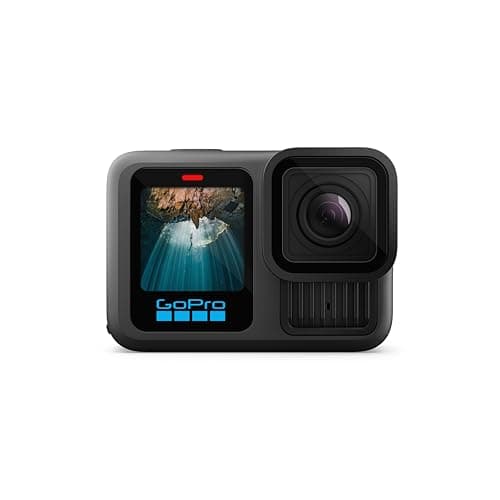 GoPro HERO13 Black The safest default for lake and trail: 33ft without a housing, the steadiest footage in the category, and a mount for literally everything. | Anyone who wants one camera to handle the kayak, the bike and the family trip | 8.8/ 10 | |
| 02 | 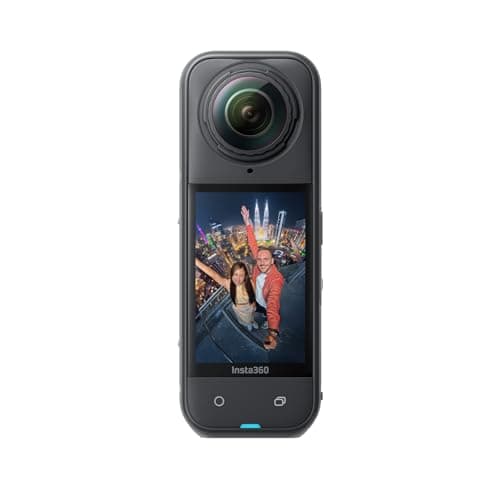 Insta360 X5 15m rated, replaceable lenses, and the one camera that means you never have to aim while you are paddling. | Anyone filming themselves on the water who cannot stop to frame a shot | 9.1/ 10 | |
| 03 | 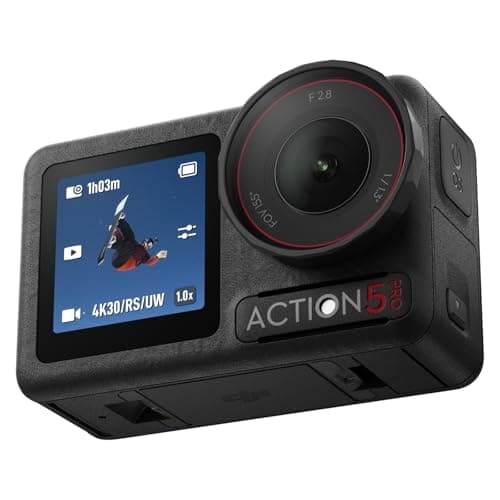 DJI Osmo Action 5 Pro Goes to 20m with no housing at all and publishes a 240-minute runtime — the two numbers that decide a long, wet, cold day. | Long paddles, cold water, and anyone tired of buying a housing to get past 10m | 9.1/ 10 | |
| 04 | 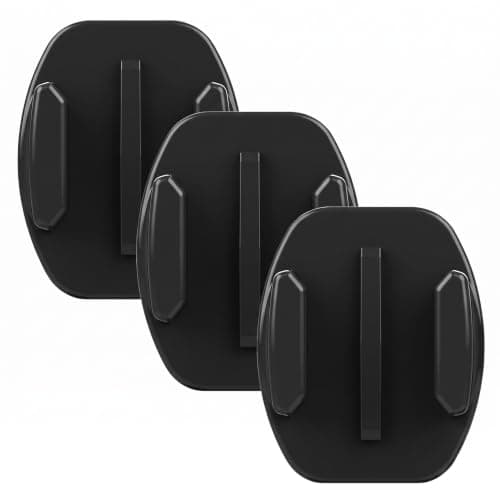 GoPro Curved + Flat Adhesive Mounts Industrial-strength waterproof adhesive pads — the cheapest permanent mount, and the one you have to get right the first time. | Boards, hulls, helmets and anywhere a clamp has nothing to grip | 7.9/ 10 | |
| 05 | 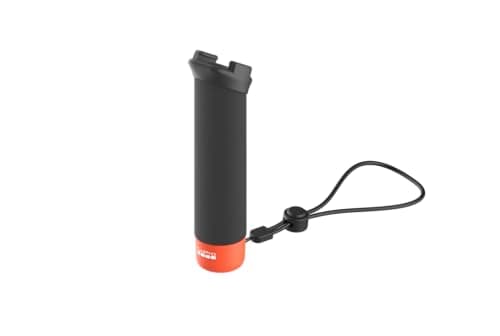 GoPro The Handler Floating Hand Grip A grip that floats bright-orange-end-up when you drop it, with a quick release so the camera moves to a mount without tools. | Handheld water shots — snorkeling, swimming, filming from the boat | 8.2/ 10 |
Scores are our editorial judgment from published specs and named independent reviews, weighted for lake and trail use — not measurements. We have not tested these units and do not own them.
02
How we picked
We do not lab-test, bench-test or dive-test cameras, and we do not own test units. What we do instead is read the manufacturer's published specifications, read the independent reviews that genuinely do test, read owner reports for the failure modes specs never mention — fogging, salt corrosion, cold battery collapse, mount slippage — and then weight all of it for action cameras used on lake and trail. Where a number is not published, the page says “not published” rather than filling the cell.
The full method, including what we refuse to do, is on the editorial policy page.
- 30%Water survival
- Rated depth without a case, door design, and what the manufacturer actually publishes.
- 25%Stabilization in chop
- A kayak deck and a rooty trail shake in ways a handheld walk test never shows.
- 20%Battery in the cold
- Published runtime, spare-battery cost, and whether it charges while recording.
- 15%Mount ecosystem
- Finger mount, threaded, magnetic — and how much of it you have to re-buy.
- 10%Footage you will keep
- Lens replaceability, low-light behavior, and how much cutting the footage needs.
What actually decides this
Surf cameras do not usually fail by drowning. They fail by abrasion, by being lost, and by coming off a mount — and almost nothing in a specification sheet addresses any of the three directly. Here is what to read for instead.
Is the lens a replaceable part? This is the first question and the one nobody asks. Sand suspended in moving water is an abrasive, and the front element of a surf camera takes it from every direction for an hour at a time. Haze from a scratched lens cannot be edited out. A camera whose lens cover unscrews turns the most likely failure in the whole category into a cheap consumable.
What is the bare depth rating? Less important than people assume. A wipeout holds you under a couple of meters at most, so every camera here already has enough depth for surfing. The rating matters because it is also the seal quality: a camera rated to 20m is better sealed against pressurized white water hitting a button than one rated to 5m.
How does it attach, and what is the backup? A board has nothing to clamp to. That leaves adhesive pads, a pole, a grip or a mouth mount, and every one of them needs a leash as well. A tether is not belt-and-braces here; it is the primary retention system and the mount is the convenience.
Can you rinse it properly? Salt crystallizes in seals, hinges and the battery door as it dries, and that is how a waterproof camera stops being waterproof over a season. The cameras with simple doors and no modular accessory stack are easier to flush honestly.
| Camera | Bare depth | Lens serviceable? | Published runtime | Stabilization |
|---|---|---|---|---|
| GoPro HERO13 Black | 33ft (10m) | Yes — replaceable lens cover | 1.5h at 5.3K30 / 2.5h at 1080p30 | HyperSmooth 6.0 with AutoBoost |
| Insta360 X5 | IP68 to 49ft (15m) | Yes — user-replaceable lenses | ~88 min at 8K30 · 185 min Endurance 5.7K24 | FlowState |
| DJI Osmo Action 5 Pro | 20m bare / 60m with case | Not published as replaceable | 240 min at 1080p24 | RockSteady |
Mounting a camera on a surfboard, honestly
There are four real options and each one buys a different shot.
An adhesive pad on the deck or the nose. The classic board angle — you, the wave behind you, the rail throwing water. Bond the pad to a clean, dry, room-temperature deck and leave it overnight before it sees water. Most adhesive failures are rushed installations, not bad adhesive. Always use the tether slot.
A pole or a grip, held. The most flexible and the most likely to be dropped. This is where the floating grip earns its place, and it is also how a 360 camera does its best work: hold it out, do not aim, choose the angle at home. The options are compared in paddle and pole mounts.
A mouth mount. Dedicated bite mounts exist from several makers and give the closest first-person angle in the sport. We do not carry one in our picks because the ones we would trust are not in our registry, and we would rather say that than list something we cannot stand behind. If you use one, tether it to your wrist or your leash.
From the beach, on a pole or a tripod. The shot that actually shows the wave. A 360 camera on a stable base at the water's edge, recording the whole session, is a surprisingly good way to get footage of yourself from the outside with no second person involved.
Settings worth changing for surf
Shoot 4K/60, not 5.3K/30. Surfing is fast and the useful trick is slowing it down — 60 frames per second gives you a clean half-speed, and 4K is more resolution than any screen you will watch it on. Higher resolutions at 30fps cost you the slow motion and buy you nothing.
Leave the horizon leveling on. A board-mounted camera produces footage that rolls with the board, and rolling horizon is the main reason surf clips are hard to watch. Every flagship here can lock it.
Do not use a red filter. Red filters are for depth, where water has already removed the red wavelengths. At the surface they make everything magenta. The explanation is in filters and dome ports for water.
Expect wind noise and plan around it. On a board-mounted camera the audio is wind and water. Score the edit to music, or record a voiceover later. The techniques that do help are in how to cut wind noise.
The rest of the wet-settings advice — white balance, shutter, frame rate — is in the best settings for filming on water.
What to ignore
Deep dive ratings. 60m housings are for diving. Surfing happens in the top two meters, and a housing adds bulk, a second surface to scratch and a fogging risk you did not have before.
8K. It exists for cropping and reframing. On a flat camera in surf it costs you frame rate, which is the thing you actually want.
Cheap unbranded board mounts. The failure is not the camera, it is the pad. A camera drifting out the back of a break is an expensive way to learn which adhesives are real.
03
Every pick, in detail
- 33ft (10m), no housing
- 1900mAh Enduro
- 1.5h at 5.3K30 / 2.5h at 1080p30
- 8.0
- 9.5
- 8.5
- 9.5
- 9.0
GoPro HERO13 Black
GoPro
The safest default for lake and trail: 33ft without a housing, the steadiest footage in the category, and a mount for literally everything.
Anyone who wants one camera to handle the kayak, the bike and the family trip
Top pick, and the reason is the least glamorous specification GoPro publishes: the lens cover comes off and a new one goes on. Surfing is a sandblasting environment. Grit in the water, grit on the board, grit on the hand that wipes the lens between sets — and a scratched front element shows up as haze in every frame of every clip afterwards. On this body that is a $20 consumable. On a camera with a fixed lens it is the end of the camera.
Everything else here is support for that. 33ft (10m) with no housing is more depth than any wipeout involves. HyperSmooth 6.0 with AutoBoost is the steadiest stabilization we can find published figures for, which matters because a surf camera is mounted to something that pitches violently. Built-in mounting fingers plus a 1/4-20 thread mean it fits board adhesives, a pole, a grip and a chest harness without adapters. The honest cons: 33ft is the shallowest bare rating of the three flagships, and the lens covers, poles and filters are all separate purchases.
- HyperSmooth 6.0 with AutoBoost is the steadiest stabilization we can find published figures for
- Built-in mounting fingers plus 1/4-20 threads — it fits the GoPro ecosystem and a normal tripod
- Enduro battery is rated to keep full camera functionality down to 14°F (-10°C)
- Replaceable lens cover, so a scratched lens is a $20 problem and not a $400 one
- 33ft is shallower than the DJI and it is the shallowest of the three flagships
- Anything past 33ft needs the separate Protective Housing
- HB-Series lenses and ND filters are all extra purchases
Specs from GoPro HERO13 Black published specifications.
- IP68 to 49ft (15m)
- 2400mAh · ~88 min at 8K30
- User-replaceable
- 9.5
- 9.5
- 9.0
- 8.5
- 7.5
Insta360 X5
Insta360
15m rated, replaceable lenses, and the one camera that means you never have to aim while you are paddling.
Anyone filming themselves on the water who cannot stop to frame a shot
The pick if you are filming yourself and cannot stop to aim, which in surfing is always. A 360 camera on a pole or a board mount records everything around it and you choose the angle afterwards — so a wave that goes right when you expected left is still a usable clip instead of footage of an empty horizon. It is rated IP68 to 49ft (15m), the deepest bare rating of any camera on this site, and Insta360 publishes 185 minutes in Endurance mode at 5.7K24.
User-replaceable lenses are the reason it is this high rather than a novelty pick. A 360 camera has two exposed, curved front elements with no flat cover over them — in sand that is the worst geometry in the category, and being able to replace them yourself is what makes it survivable. Lens guards are a purchase, not an option. The real cost is time: every clip needs a reframing pass before anyone else can watch it, and 8K30 files are large.
- 15m IP68 is the deepest bare rating of any camera on this site
- User-replaceable lenses — the single biggest fix for the 360 format's worst failure mode
- 185 minutes in Endurance mode at 5.7K24, which is a whole day of clips
- Invisible-selfie-stick reframing means you point the camera at nothing and pick the angle later
- Exposed lenses still scratch; lens guards are a purchase, not an option
- Every clip needs a reframing pass before anyone else can watch it
- 8K30 files are large and the edit is slower than flat footage
Specs from CineD, Insta360 X5 announcement with published specifications.
- 20m bare / 60m with case
- 1950mAh · 240 min at 1080p24
- -20° to 45°C
- 9.5
- 9.0
- 9.5
- 8.0
- 9.0
DJI Osmo Action 5 Pro
DJI
Goes to 20m with no housing at all and publishes a 240-minute runtime — the two numbers that decide a long, wet, cold day.
Long paddles, cold water, and anyone tired of buying a housing to get past 10m
Here on depth and endurance. 20m bare is double the HERO13 Black and removes the housing question entirely, and DJI publishes 240 minutes at 1080p/24 with the screens off — the longest figure in this set, which matters on a session that turns into four hours because the swell got better. The 1/1.3-inch sensor also holds detail when the light goes flat, which at a beach is most of the morning.
Two honest cons for surfing specifically. The mount ecosystem is smaller than GoPro's and the magnetic quick-release adapters are their own purchase, so a board mount setup costs more to assemble. And at 146g it is the heaviest flagship here, which you notice on a pole and on a helmet.
- 20m without the Waterproof Case — double the bare-camera depth of the HERO13 Black
- DJI publishes 240 minutes of recording at 1080p/24 with screens off, the longest figure in this set
- Rated to -20°C, which matters more on an October lake than any resolution number
- 1/1.3-inch sensor holds detail when the light goes flat
- Mount ecosystem is smaller than GoPro's, and magnetic quick-release adapters are their own purchase
- 146g — the heaviest of the flagship three
- Fewer third-party mounts and filters exist for it
Specs from DJI Osmo Action 5 Pro published specifications.
- Curved and flat pads
- Industrial-strength, waterproof
- Heat with a hair dryer, then peel
- 8.5
- 8.0
- 8.5
- 5.0
- 7.5
GoPro Curved + Flat Adhesive Mounts
GoPro
Industrial-strength waterproof adhesive pads — the cheapest permanent mount, and the one you have to get right the first time.
Boards, hulls, helmets and anywhere a clamp has nothing to grip
The mount that actually works on a surfboard. Curved and flat industrial adhesive pads bond to the deck or the nose, with no clamp needed and nothing to grip — which is the problem, because a board has no bars, no rails and no flat clampable anything. Fit them at room temperature on a clean dry deck the day before, not in a parking lot ten minutes before a session, and always run a leash from the camera to the board through the mount's tether slot. Removal is a hair dryer and a peel. The full mount discussion is in what actually fits what.
- Waterproof adhesive designed for exactly this job
- The lowest profile of any mount here — nothing to catch a line or a branch
- Both curvatures in the pack, so you are not guessing which one fits
- Cheap enough to leave pads semi-permanently on several boats
- One shot at placement; repositioning means a new pad
- Needs a clean, dry, above-freezing surface and 24 hours to cure properly
- Removal takes heat, and can mark some finishes
Specs from GoPro Curved + Flat Adhesive Mounts product page.
- Bright orange end pops to the surface
- Quick release, switches between mounts
- Non-slip construction
- 8.0
- 8.5
- 9.0
- 7.0
GoPro The Handler Floating Hand Grip
GoPro
A grip that floats bright-orange-end-up when you drop it, with a quick release so the camera moves to a mount without tools.
Handheld water shots — snorkeling, swimming, filming from the boat
A floating grip, and on a surf list it is close to mandatory rather than optional. The camera screws to the end, it is grippable with cold wet hands, and the bright orange end pops to the surface if it leaves your hand — which, in a break, it will. The quick-release base means the same camera moves from hand to board mount in seconds. Read floats, tethers and not losing your camera before the first session; losing a camera in surf is not a rare event.
- Floats end-up so you can actually spot it in chop
- Quick-release base means the same camera goes from hand to deck mount in seconds
- Non-slip even with wet or cold hands
- GoPro lists it specifically for surfing, kayaking and wakeboarding
- It floats the grip; a heavy housing on the end changes that calculation
- No wrist strap included in every configuration — add one
- Bulky in a PFD pocket
Specs from GoPro The Handler product page.
04
What decides this category
A serviceable lens before anything else
Sand is the thing that ends surf cameras. A replaceable lens cover or replaceable lenses converts the most likely failure into a part you order.
A tether on every configuration
Mount for the angle, tether for retention. Pads let go, grips get knocked loose, and the ocean does not return anything.
4K/60, horizon lock on
The two settings that make surf footage watchable. Everything else can stay at default.
A rinse habit, not a rinse intention
Same day, fresh water, buttons worked under water, then dried open. This is the difference between a camera that lasts five seasons and one that leaks in its second.
What we would skip
Dive housings, red filters at the surface, and twenty-piece mount bundles. The first five accessories is the honest shopping list.
05
Questions people actually ask
01What is the best action camera for surfing?
The GoPro HERO13 Black, because its lens cover is a user-replaceable part and sand abrasion — not water — is what actually ruins surf cameras. The Insta360 X5 is the better answer if you are filming yourself from a pole and want to pick the angle afterwards.
02How deep does a surf camera need to be rated?
Far less than people think. A wipeout holds you in the top couple of meters, so every camera here has more than enough depth. The rating matters as a proxy for seal quality against pressurized white water, not for depth itself.
03How do you mount an action camera to a surfboard?
With a curved or flat adhesive pad bonded to a clean, dry deck at room temperature, left overnight before it gets wet, and always with a leash through the tether slot. A board has nothing to clamp to, so adhesive, a pole or a mouth mount are the only real options.
04Do I need a housing for surfing?
No. Every camera on this page is rated well past surf depth with no housing, and a housing adds bulk, a second scratchable surface and a fogging risk. Housings are for diving — see cases and dive housings.
05Will salt water damage my action camera?
Over time, yes, if you do not rinse it. Salt crystallizes in seals and hinges as it dries and that is how a waterproof camera gradually stops being one. Rinse the same day in fresh water with the doors closed, then dry it open.
06Is a 360 camera good for surfing?
Yes, and for one specific reason: you never have to aim. Hold it on a pole or mount it on the nose and choose the angle at home, which fixes the main problem with self-filmed surfing. The cost is a reframing pass on every clip.
06
Read this next
The best action cameras for paddle boarding
The same board-mounting problem at a tenth of the speed.
Salt water care and rinsing
The ten-minute routine that decides whether the camera survives the season.
The best waterproof action cameras
Every bare depth rating on the site in one table.
What actually fits what
Adhesive pads, poles and adapters, and which combinations hold.
The best settings for filming on water
Frame rate, white balance and the shutter question for wet conditions.
07
Sources
- GoPro HERO13 Black published specifications
- CineD, Insta360 X5 announcement with published specifications
- DJI Osmo Action 5 Pro published specifications
- GoPro Curved + Flat Adhesive Mounts product page
- GoPro The Handler product page
Specifications are quoted from the manufacturer pages above as they read on the dates shown. Where a figure is not published, this site says so rather than estimating one. We have not tested these products.