Filters and dome ports for water
The reason your underwater footage is blue is physics, and the fix is a piece of colored resin cut for a specific depth.
Part of Gear.
We earn a commission if you buy through our links, at no extra cost to you. It never changes what we recommend or the order we rank it in — how this works.
01
Quick picks
| # | Product | Best for | Score | Price |
|---|---|---|---|---|
| 01 | PolarPro DiveMaster Filter 3-Pack The only filter set here that publishes a depth range per filter, which is the whole reason a filter set is worth buying. | Snorkeling and diving where everything on camera comes back blue | 8.4/ 10 | |
| 02 | 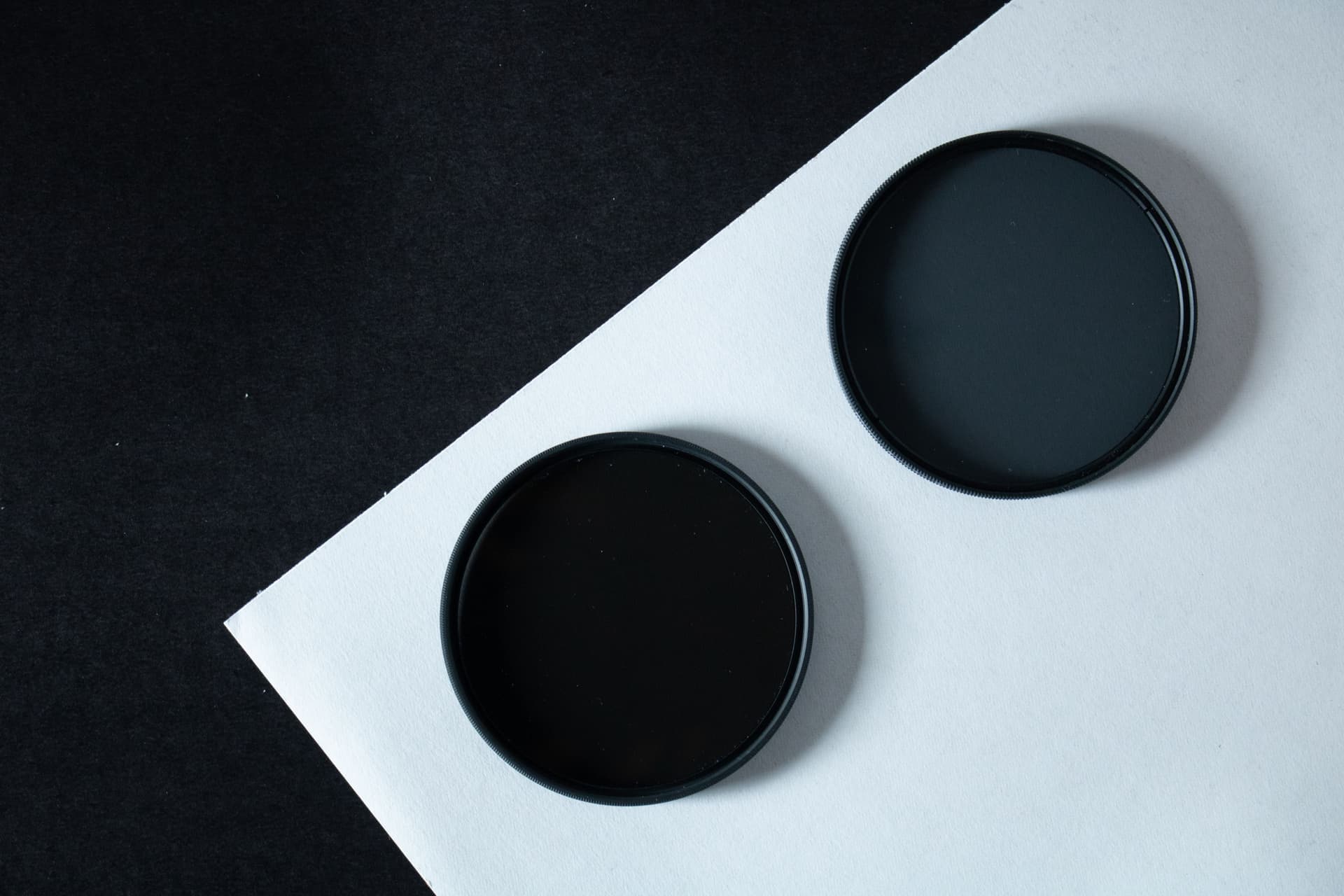 SANDMARC Aqua Filter Kit Red, magenta and yellow in one frame-swap system — the set to buy if you dive in more than one kind of water. | Divers who move between blue water, green water and night dives | 8.2/ 10 | |
| 03 | 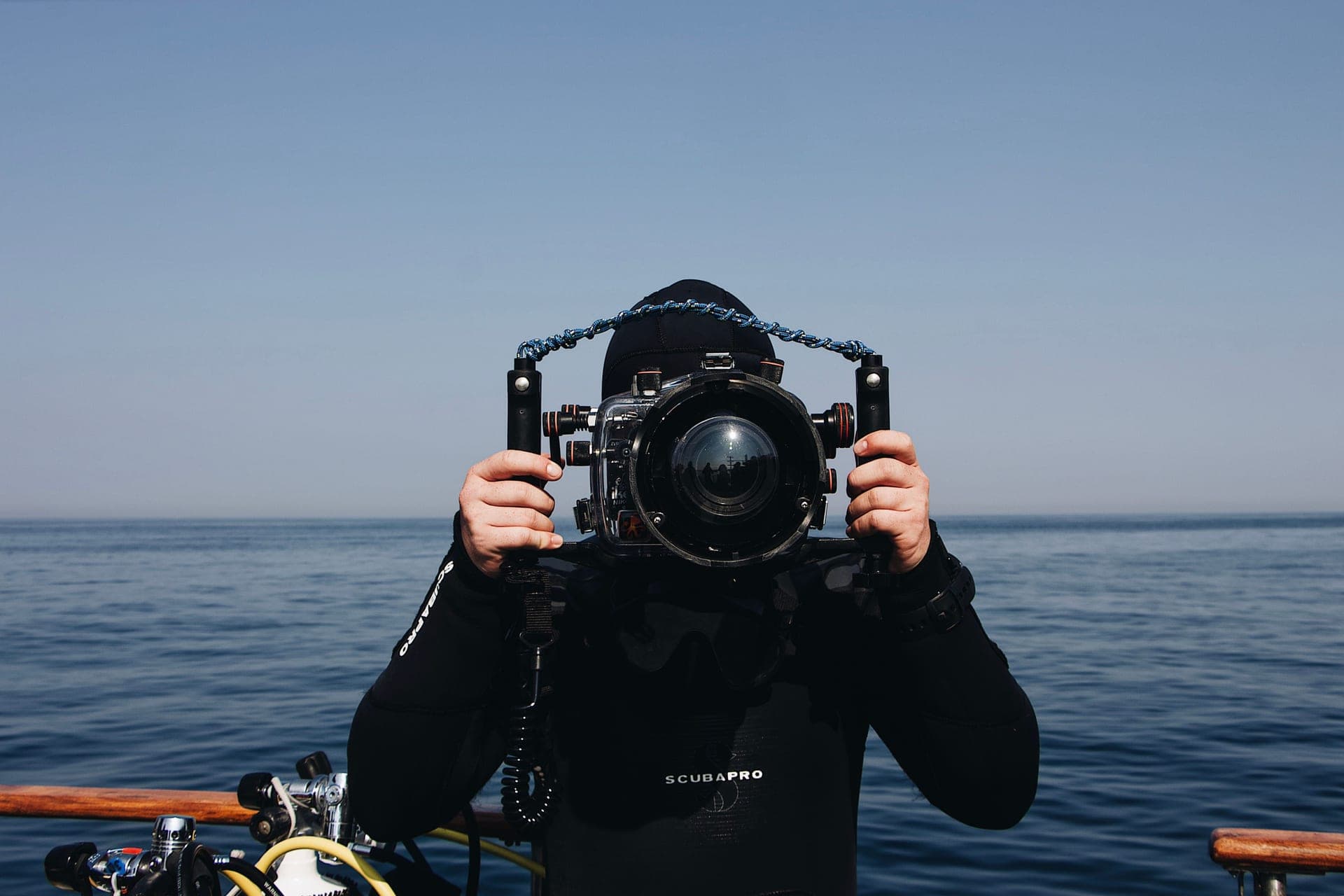 GoPro Protective Housing 196ft (60m) rated, with a flat glass lens — the piece that turns a 33ft camera into a diving camera. | Anything below about 30ft, and any camera going anywhere near a tank | 8.4/ 10 |
Scores are our editorial judgment from published specs and named independent reviews, weighted for lake and trail use — not measurements. We have not tested these units and do not own them.
02
How we picked
We do not lab-test, bench-test or dive-test cameras, and we do not own test units. What we do instead is read the manufacturer's published specifications, read the independent reviews that genuinely do test, read owner reports for the failure modes specs never mention — fogging, salt corrosion, cold battery collapse, mount slippage — and then weight all of it for filters and ports used on lake and trail. Where a number is not published, the page says “not published” rather than filling the cell.
The full method, including what we refuse to do, is on the editorial policy page.
- 35%Color correction at depth
- Red loss starts shallow; the right filter is depth-specific.
- 25%Fit security
- A filter that comes off underwater is gone.
- 20%Optical quality
- Cheap resin costs sharpness the camera cannot recover.
- 12%Swap speed
- Changing filters on a moving boat, wet-handed.
- 8%Scratch resistance
- Sand and neoprene are abrasive.
Why underwater footage goes blue
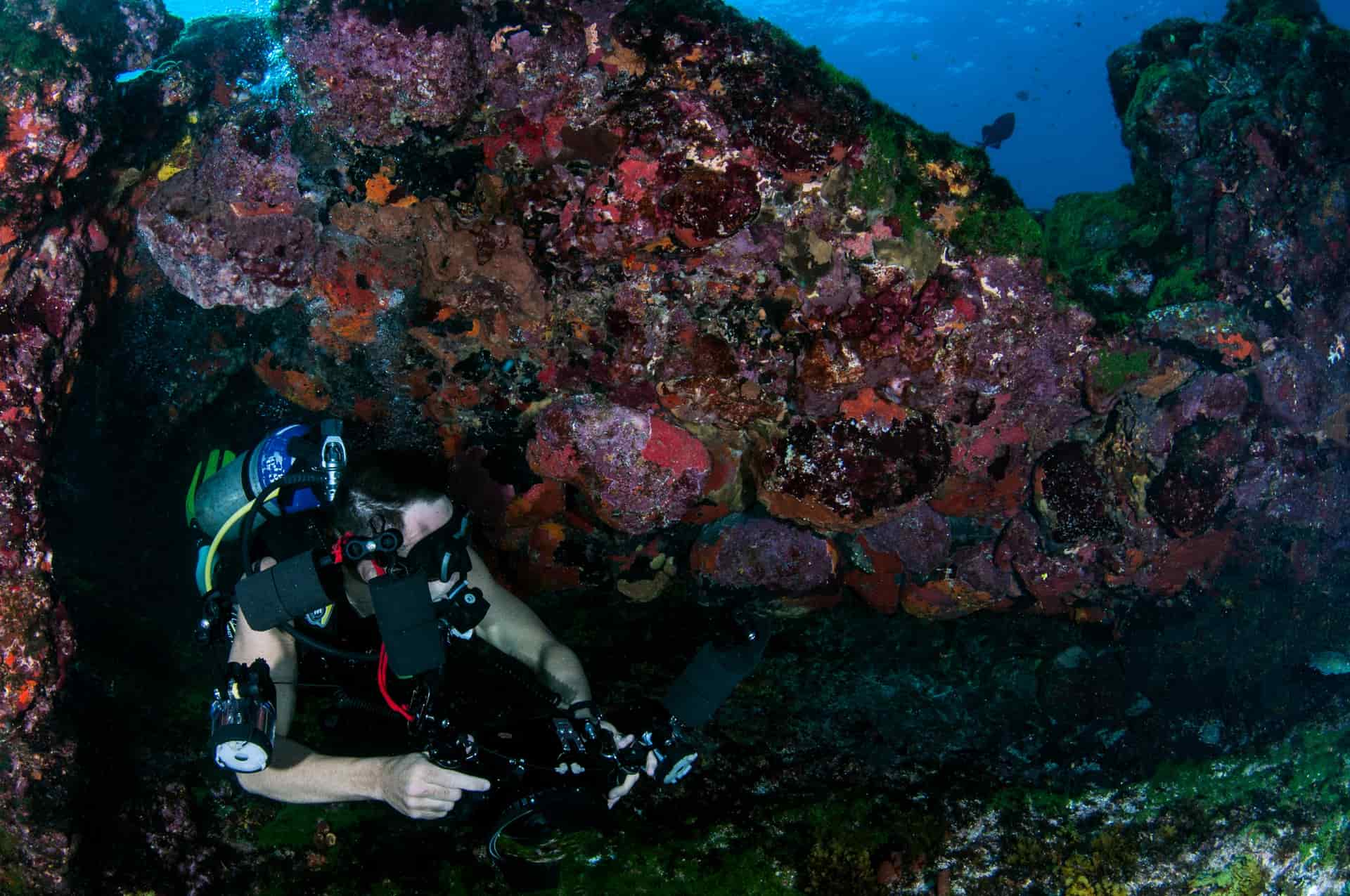
Water absorbs light unevenly, taking the long wavelengths first. Red disappears fastest — most of it is gone within the first few meters — then orange, then yellow. What is left at fifteen feet is predominantly blue-green light, and that is all your sensor has to work with.
Your eyes compensate automatically, which is why the dive looked vivid and the footage does not. The camera records what actually arrived.
A filter is a corrective: it cuts the blue-green that is over-represented, rebalancing the light before it reaches the sensor. That is the crucial difference from fixing it afterwards.
Why you cannot fix it in the edit
Pushing red in an editor does not recover red that was never recorded. The red channel at depth has received almost no light, so amplifying it amplifies noise — you get a muddy, grainy, slightly pink image rather than a corrected one.
An in-camera white balance mode helps a little, because it is at least applied before compression, and it costs nothing. It is not a substitute for a filter.
Which filter, at what depth
| Filter | Water | Published depth range |
|---|---|---|
| Snorkel | Tropical / blue | 5 to 15 feet |
| Red | Tropical / blue | 15 to 75 feet |
| Magenta | Green water | 10 to 75 feet |
Two things to take from that table.
Depth ranges are specific, and using the wrong one is worse than none. A filter cut for 15-75ft used at three feet overcorrects: there is still plenty of red at that depth, and the filter adds more, so everything turns magenta.
Blue water and green water need different filters. A red filter in green water pushes the image further toward a color cast rather than away from it. Lakes, quarries and temperate coastal water are usually green; tropical reef is usually blue.
Dome ports: what they are actually for
A dome port is a large transparent hemisphere that fits over the lens, and it does one thing well: the over-under split shot, with half the frame above water and half below.
It works because the dome pushes the water line away from the lens, so both halves can be in focus at once. Without one, a split shot is a blurred band where the surface crosses the lens.
The costs are real. A dome is large and awkward to swim with, it is fragile, it collects droplets on the upper half that need constant wiping, and it does nothing at all for ordinary underwater footage.
Buy one if split shots are specifically what you want. Do not buy one because an underwater video looked good — that was probably a filter.
The housing requirement
Both filter sets here state that they fit the GoPro Protective Housing only. That is not a preference: the frames key to the housing's lens surround, and there is nothing to attach to on a bare camera.
So the practical decision is a chain. If you want filters, you need the housing. If you have the housing, you need anti-fog inserts, because a sealed housing fogs. And you accept muffled audio.
For surface snorkeling with a camera rated past your depth, that chain is worth thinking about — you may be better off with no housing and slightly bluer footage than with the whole stack.
Practical handling
Small parts, in water, on a moving boat. Three habits.
Tether the frame or keep filters in a case clipped to something. A dropped filter at depth is gone.
Swap at the surface, holding onto the boat. Not while treading water with a camera in one hand.
Rinse filters with the rest of the kit. Salt in a frame mechanism seizes it exactly like a mount thread — the salt routine.
03
Every pick, in detail
- Tropical water, 15-75ft
- Tropical water, 5-15ft
- Green water, 10-75ft
- 9.0
- 8.0
- 8.5
- 7.0
- 8.0
PolarPro DiveMaster Filter 3-Pack
PolarPro
The only filter set here that publishes a depth range per filter, which is the whole reason a filter set is worth buying.
Snorkeling and diving where everything on camera comes back blue
The pick, and the reason is documentation rather than glass: PolarPro publishes a depth range per filter — red for tropical water 15 to 75ft, a snorkel filter for tropical water 5 to 15ft, and magenta for green water 10 to 75ft. Being able to choose correctly rather than guessing is most of the value in a filter set.
- Published depth ranges per filter, so you can pick correctly instead of guessing
- Includes a magenta filter for green water, which most sets skip
- Snorkel filter covers the 5-15ft band where most people actually film
- Fits the GoPro Protective Housing, which is where dive filters belong
- Requires the Protective Housing — these do not clip to a bare camera
- Three filters means swapping at the surface, and dropping one is losing one
- Tropical vs green water is a real distinction; the wrong filter overcorrects badly
Specs from PolarPro Dive Filters product page.
- Red, magenta and yellow
- HERO13, 12, 11, 10, 9 Protective Housing
- Swap frame
- 8.5
- 8.0
- 8.0
- 8.5
- 7.5
SANDMARC Aqua Filter Kit
SANDMARC
Red, magenta and yellow in one frame-swap system — the set to buy if you dive in more than one kind of water.
Divers who move between blue water, green water and night dives
Red, magenta and yellow in one frame-swap system covering five GoPro generations — a genuinely good set, and the yellow filter for night diving is rare at this price. It does not publish per-filter depth ranges for the current models the way PolarPro does, which is why it sits second.
- Three filters covering blue water, green water and night diving
- The frame system makes swapping filters faster than threaded sets
- Covers five GoPro generations, so it survives a camera upgrade
- Yellow filter for night diving is genuinely rare in this price band
- SANDMARC does not publish per-filter depth ranges for the HERO13 set the way PolarPro does
- Protective Housing required, same as the PolarPro set
- Small parts in a wet, moving environment
Specs from SANDMARC Aqua Filter Kit product page.
- 196ft (60m)
- HERO13, 12, 11, 10 Black
- Flat glass front
- 9.5
- 8.5
- 8.0
- 7.0
- 6.0
GoPro Protective Housing
GoPro
196ft (60m) rated, with a flat glass lens — the piece that turns a 33ft camera into a diving camera.
Anything below about 30ft, and any camera going anywhere near a tank
Here because both filter sets above require it — they state “Protective Housing only”, and that is a real constraint rather than a preference. It is also the 196ft (60m) housing, so it is what gets you to the depths the red filters are cut for.
- 60m is six times the HERO13 Black's bare rating
- Flat glass lens rather than plastic, so the image holds up
- Includes a skeleton backdoor for better audio when you are not underwater
- Also the best impact protection the camera can wear
- Muffles audio badly with the sealed door — that is physics, not a defect
- Sealed air plus a temperature change is exactly how fogging happens; budget for inserts
- Buttons are harder to work with gloves on
Specs from GoPro Protective Housing product page.
04
What decides this category
Published depth ranges
The specification that decides whether a filter set is usable. A set that does not tell you which filter for which depth leaves you guessing, and the wrong filter is worse than none.
Blue water and green water are different problems
A set with red and magenta covers both. A red-only set is a tropical-reef product, and it will not help in a lake.
Check the housing requirement
Most dive filter sets require a specific housing. That is a chain of purchases — housing, filters, anti-fog inserts — so decide on the whole chain rather than the first item.
Fit security
A filter that comes off underwater is gone. Frame systems that click positively are worth more than push-on rings.
What we would skip
A dome port, unless split shots are specifically the goal. It is large, fragile, needs constant wiping and does nothing for ordinary underwater footage.
05
Questions people actually ask
01Do I need a red filter for my action camera?
Below about five feet of water, yes — it is the only fix that works in camera. Above five feet a filter overcorrects and makes everything magenta.
02Which filter for which depth?
PolarPro publishes: a snorkel filter for tropical water 5 to 15ft, a red filter for tropical water 15 to 75ft, and a magenta filter for green water 10 to 75ft. Matching the filter to the depth is the whole point.
03Can I just fix the color in editing instead?
Not really. The red channel received almost no light, so pushing red amplifies noise rather than revealing detail. An in-camera underwater white balance helps a little and is free.
04What is a dome port for?
Over-under split shots, with half the frame above water. It pushes the waterline away from the lens so both halves can be sharp. It does nothing for ordinary underwater footage.
05Do dive filters need a housing?
Usually yes — both sets here state Protective Housing only, because the frames key to the housing's lens surround. Budget for the housing and anti-fog inserts as part of the same decision.
06What is the difference between a red and a magenta filter?
Red corrects blue tropical water; magenta corrects green water such as lakes, quarries and temperate coast. Using a red filter in green water makes the cast worse rather than better.
06
Read this next
Best action cameras for snorkeling
Where the color problem shows up most, and the cameras that handle it.
Cases and dive housings
The housing these filters require, and what it costs you.
Anti-fog inserts that work
The other thing a housing makes necessary.
Best settings for water
White balance and the settings that work with a filter rather than against it.
GoPro vs Insta360 underwater
Filter availability is one of the clearest differences between them.
07
Sources
- PolarPro Dive Filters with published depth ranges
- SANDMARC Aqua Filter Kit product page
- GoPro Protective Housing product page
Specifications are quoted from the manufacturer pages above as they read on the dates shown. Where a figure is not published, this site says so rather than estimating one. We have not tested these products.