DJI Osmo Action 5 Pro: the official specs, and which ones matter
Two published numbers on this camera are the best in the category by a wide margin, and they are the two that decide a long, wet, cold day.
Part of Cameras.
We earn a commission if you buy through our links, at no extra cost to you. It never changes what we recommend or the order we rank it in — how this works.
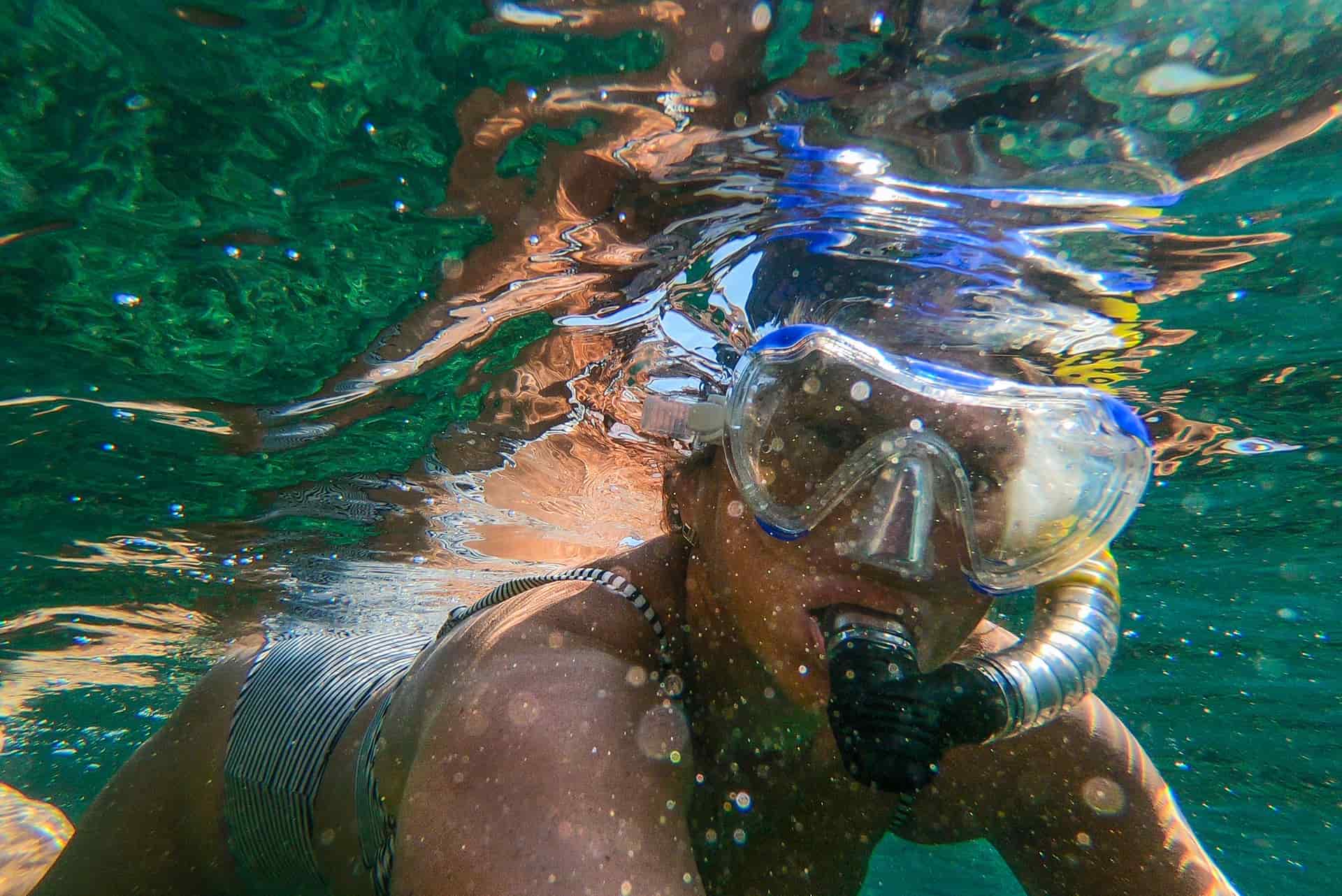
The DJI Osmo Action 5 Pro is rated waterproof to 20m with no housing and 60m with DJI's case, publishes 240 minutes of recording at 1080p/24, and carries a -20° to 45°C operating range. It uses a 1950mAh battery and a 1/1.3-inch sensor with RockSteady stabilization. Those three headline figures — double the bare depth of any current GoPro, the longest published runtime in the category, and a genuine sub-zero rating — make it the strongest flat action camera for long days on cold water. What you give up is the mount ecosystem: fewer third-party brackets and filters exist for it than for GoPro, and the magnetic quick-release adapters are a separate purchase.
The published specification table
Every figure below is quoted from DJI's own Osmo Action 5 Pro specification page, read on 2026-09-23. Where DJI does not publish a number, the row says so rather than filling the cell.
| Specification | Published figure |
|---|---|
| Waterproof | 20m, no housing required |
| With the DJI Waterproof Case | 60m |
| Battery | 1950mAh, user-removable |
| Published runtime | 240 min at 1080p/24 with screens off |
| Operating temperature | -20° to 45°C |
| Sensor | 1/1.3" |
| Stabilization | RockSteady |
| Weight | 146g — the heaviest of the current flagships |
| Front screen | Yes, OLED |
| Mounting | Magnetic quick-release; adapters sold separately |
What 20 meters actually buys you
Not diving. The honest reading of a 20m rating is margin, and margin is the most undervalued thing in this category.
A manufacturer's depth rating describes a new, undamaged camera with its doors correctly closed and its seals clean, submerged in still water. It is a laboratory statement about a specific physical configuration. It does not account for a gasket that has been compressed five hundred times over three seasons, a grain of sand in the door channel, the pressure spike of hitting water hard from a jump, or thermal shock from a hot deck into cold water.
So the useful way to read 20m is: at the three or four meters an ordinary paddle, swim or snorkel actually reaches, this camera is operating nowhere near its limit. A camera rated to 33ft used at 25ft is doing more work than you want it to. That is the entire argument, and it is why this body — not the deepest number, but the deepest number relative to real use — tops the sea kayaking roundup and the safest action camera page. The whole table of published ratings is on how deep can an action camera go.
For actual scuba diving, 20m is still inside recreational limits with no margin, and the answer is DJI's 60m case or a GoPro setup with better filter support — see the scuba roundup.
240 minutes, read honestly
This is the figure that most changes what you come home with, and it needs the same caveat every manufacturer runtime needs.
DJI's 240 minutes is measured at 1080p/24 with the screens off. Shoot 4K with the rear preview on, start and stop forty times, and you will get considerably less. What makes the figure meaningful is not the absolute number but the gap: GoPro publishes 1.5 hours at 5.3K30 and 2.5 hours at 1080p30 for the HERO13 Black, so even after discounting both figures by the same amount, the DJI is comfortably ahead.
On a four-hour crossing, a three-hour ride or a full day with a family, that gap is the difference between choosing which twenty minutes to record and simply recording. The cross-model comparison is in action camera battery life compared, and the battery is removable either way, so a spare is still worth carrying.
Where it loses to GoPro, and it is not the camera
An honest review of this body is mostly a review of the ecosystem around it.
Mounts. GoPro's two-prong interface has been the category standard for over a decade, so the selection of properly engineered brackets — kayak booms, helmet mounts, deck fittings — is far wider for it. The Osmo Action 5 Pro uses a magnetic quick-release, which is genuinely pleasant on a jacket or a hat, and which we would not use on a handlebar at speed or on a hull in chop. Use a mechanical adapter there, and budget for it. The compatibility picture is in are action camera mounts universal?
Filters. Depth-rated color-correction filter availability tracks market share, so GoPro is best served. If underwater color is a priority, that asymmetry is real — filters and dome ports for water covers which sets publish depth ranges.
Stabilization. RockSteady is excellent and, on the evidence we can find published, marginally behind HyperSmooth 6.0 with AutoBoost in the worst conditions. On flat water and gravel you will not see it. On whitewater and rough singletrack you might — HyperSmooth vs RockSteady vs FlowState goes through all three.
Weight. 146g is the heaviest of the flagship three. Irrelevant on a deck mount, noticeable on a helmet after an hour.
Osmo Action 5 Pro or Osmo Action 4?
Worth asking, because the Action 4 is still sold and shares the important part of the recipe: the same 1/1.3-inch sensor size, 18m bare rather than 20m, and the same -20°C rating. What you give up is 80 published minutes of runtime — 160 against 240 — the front OLED, and the brighter screens.
If you paddle or ride a handful of times a season, the Action 4 is the better value and the compromises are ones you will rarely meet. If you are out most weekends, or you self-film and want the front screen, the Action 5 Pro earns the difference. Either way, both beat every current GoPro on bare depth.
How we assessed this
We do not lab-test, bench-test or dive-test cameras and we do not own test units. Every figure above is quoted from DJI's published specification page, linked below, read on the date stated. Which specifications we consider decisive is an editorial judgment weighted for lake-and-trail use, and it is kept visibly separate from the published numbers. Where DJI publishes nothing, we say so. The full method is on the editorial policy page.
01
What we would actually buy with it
The camera, the previous model if the saving matters more than the runtime, and a clip-on microphone if anybody is going to talk in frame.
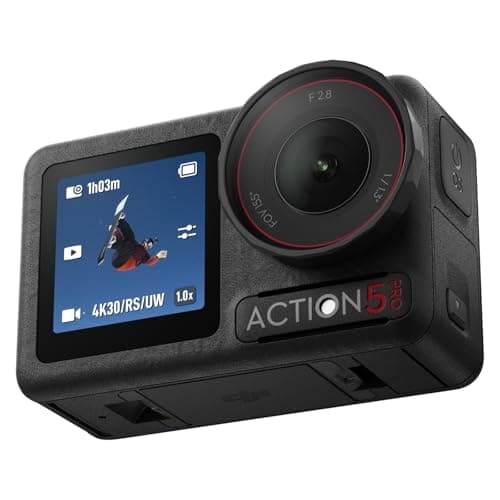
- 20m bare / 60m with case
- 1950mAh · 240 min at 1080p24
- -20° to 45°C
- 9.5
- 9.0
- 9.5
- 8.0
- 9.0
DJI Osmo Action 5 Pro
DJI
Goes to 20m with no housing at all and publishes a 240-minute runtime — the two numbers that decide a long, wet, cold day.
Long paddles, cold water, and anyone tired of buying a housing to get past 10m
- 20m without the Waterproof Case — double the bare-camera depth of the HERO13 Black
- DJI publishes 240 minutes of recording at 1080p/24 with screens off, the longest figure in this set
- Rated to -20°C, which matters more on an October lake than any resolution number
- 1/1.3-inch sensor holds detail when the light goes flat
- Mount ecosystem is smaller than GoPro's, and magnetic quick-release adapters are their own purchase
- 146g — the heaviest of the flagship three
- Fewer third-party mounts and filters exist for it
Specs from DJI Osmo Action 5 Pro published specifications.
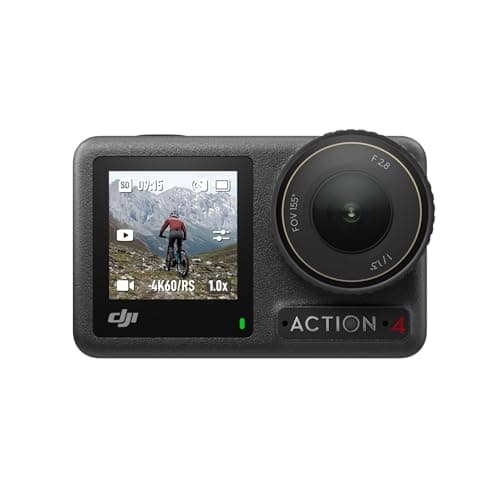
- 18m bare / 60m with case
- 1770mAh · 160 min at 1080p24
- -20° to 45°C
- 9.0
- 8.5
- 8.5
- 8.0
- 8.0
DJI Osmo Action 4
DJI
The previous DJI flagship, still 18m bare and still on shelves — the most water rating per dollar in this list.
Buyers who want deep-water capability without paying flagship money
- 18m without a case still beats every current GoPro by a wide margin
- Same 1/1.3-inch sensor size as the Action 5 Pro
- Rated to -20°C like its replacement
- Usually the cheapest way into serious bare-camera depth
- 160 minutes published against the Action 5 Pro's 240
- Superseded, so accessories and support will taper off first
- No front OLED — the Action 5 Pro's front screen is genuinely more useful for framing
Specs from DJI Osmo Action 4 published specifications.
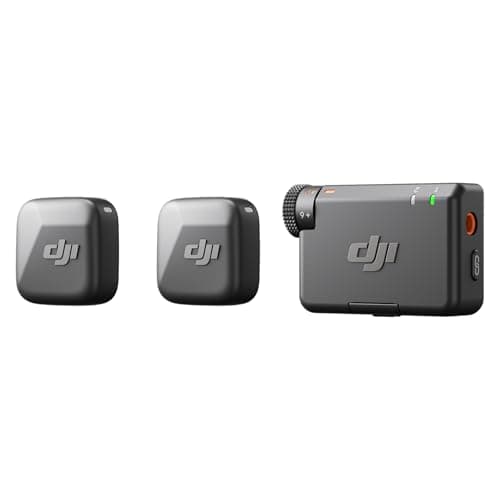
- Approx. 10g
- Approx. 11.5 hours
- 400m, unobstructed
- 8.0
- 7.0
- 4.5
- 9.5
- 9.0
DJI Mic Mini
DJI
A 10-gram transmitter with 11.5 hours of battery and 400m of range — the way to get clean voice without opening the camera up.
Narrating a trip without shouting over wind at the onboard mic
- 10g means it clips to a PFD strap and disappears
- 11.5 hours per transmitter, and the case recharges it roughly 3.6 times over
- 400m of range in the open — far past anything a paddling trip needs
- Keeps the camera sealed, unlike a wired mic adapter
- DJI does not publish a waterproof rating for the transmitter — treat it as not waterproof
- The receiver connects to non-DJI cameras via a 3.5mm cable, which usually means a media mod anyway
- Another thing to charge before a trip
Specs from DJI Mic Mini published specifications.
02
How we picked
We do not lab-test, bench-test or dive-test cameras, and we do not own test units. What we do instead is read the manufacturer's published specifications, read the independent reviews that genuinely do test, read owner reports for the failure modes specs never mention — fogging, salt corrosion, cold battery collapse, mount slippage — and then weight all of it for action cameras used on lake and trail. Where a number is not published, the page says “not published” rather than filling the cell.
The full method, including what we refuse to do, is on the editorial policy page.
- 30%Water survival
- Rated depth without a case, door design, and what the manufacturer actually publishes.
- 25%Stabilization in chop
- A kayak deck and a rooty trail shake in ways a handheld walk test never shows.
- 20%Battery in the cold
- Published runtime, spare-battery cost, and whether it charges while recording.
- 15%Mount ecosystem
- Finger mount, threaded, magnetic — and how much of it you have to re-buy.
- 10%Footage you will keep
- Lens replaceability, low-light behavior, and how much cutting the footage needs.
03
Questions people actually ask
01How deep can the DJI Osmo Action 5 Pro go?
20m with no housing, per DJI's published specification, and 60m in DJI's own Waterproof Case. The 20m bare figure is double the GoPro HERO13 Black's 33ft (10m) rating.
02How long does the Osmo Action 5 Pro record for?
DJI publishes 240 minutes at 1080p/24 with the screens off — the longest published figure in the category. Real use at 4K with the preview on will come in well under that, as it does on every camera.
03Is the Osmo Action 5 Pro better than a GoPro HERO13 Black?
On depth, runtime and cold rating, yes and by a clear margin. On stabilization in the worst conditions, the mount ecosystem and filter availability, the GoPro is ahead. The full head-to-head is in Osmo Action 5 Pro vs GoPro HERO13 Black.
04Do GoPro mounts fit the Osmo Action 5 Pro?
Not directly — DJI uses a magnetic quick-release, and an adapter is needed to use two-prong GoPro brackets. Budget for the adapter if you already own GoPro mounts, and prefer a mechanical adapter over magnetic for anything fast or wet.
05Does it work in cold weather?
DJI publishes a -20° to 45°C operating range, which is the widest published range among the current flagships. Expect reduced runtime in cold regardless, because every lithium cell loses capacity as temperature drops.
04
Read this next
Osmo Action 5 Pro vs GoPro HERO13 Black
The head-to-head, scenario by scenario.
GoPro HERO13 Black: the official specs
The same treatment for the camera this one is usually compared to.
The best waterproof action cameras
Where 20m bare puts this camera against the field.
GoPro alternatives worth considering
The wider case for leaving the GoPro ecosystem.
Action camera battery life, compared
The 240-minute figure next to everybody else's.
05
Sources
- DJI Osmo Action 5 Pro specifications
- DJI Osmo Action 4 specifications
- DJI Mic Mini published specifications
Specifications are quoted from the manufacturer pages above as they read on the dates shown. Where a figure is not published, this site says so rather than estimating one. We have not tested these products.