DJI Osmo Action 5 Pro vs GoPro HERO13 Black
One wins on the numbers that decide a long wet day. The other wins on everything that happens after you decide where to put it.
Part of Cameras.
We earn a commission if you buy through our links, at no extra cost to you. It never changes what we recommend or the order we rank it in — how this works.
The specifications
| DJI Osmo Action 5 Pro | GoPro HERO13 Black | |
|---|---|---|
| Bare waterproof | 20m | 33ft (10m) |
| With the maker's case | 60m | 196ft (60m) |
| Sensor | 1/1.3" CMOS | 1/1.9" |
| Max video | 4K 3840×2160 at 100/120fps | 5.3K60 |
| Battery | 1950mAh | 1900mAh Enduro |
| Published runtime | 240 min at 1080p24, screens off | Over 1.5h at 5.3K30, over 2.5h at 1080p30 |
| Stabilization | RockSteady 3.0 / 3.0+, HorizonSteady | HyperSmooth 6.0 with AutoBoost, 360 Horizon Lock |
| Operating temperature | -20° to 45°C | Enduro battery: full function to 14°F (-10°C) |
| Weight | 146g | Not published on the page we read |
| Mounting | Magnetic quick-release, adapters to two-prong | Built-in fingers, 1/4-20 threads |
| Rear screen | 2.5" 400×712, 800 nits | Touchscreen |
The runtime comparison needs care. DJI's 240 minutes is measured at 1080p/24 with RockSteady on, Wi-Fi off and both screens off. GoPro publishes over 2.5 hours at 1080p30 — a much closer comparison than 240 against 90. At the top modes, GoPro states over 1.5 hours at 5.3K30 and DJI does not publish an equivalent 4K120 figure, so we cannot compare them there and will not guess.
Where the DJI wins
Depth, by a factor of two. 20m bare against 10m. In practice this is not about diving — it is that ordinary use stops being anywhere near the limit. Capsizes, rescue practice, free-diving to look at something, a camera dropped off a dock: all unremarkable on the DJI and all somewhere in the second half of the GoPro's range.
Cold. DJI publishes -20°C to 45°C for the camera. GoPro's published figure is about the Enduro battery maintaining full camera functionality to 14°F (-10°C) — a narrower claim about a different thing. For late-autumn paddling or winter riding, DJI is stating more.
The front screen. A 1.46-inch 800-nit front display makes framing yourself genuinely easy, which matters more than it sounds if you are usually the one in the shot.
Sensor size. 1/1.3-inch against 1/1.9-inch. That difference shows on a gray morning and under water, both of which are this site's weather.
Where the GoPro wins
Stabilization in impact. HyperSmooth 6.0 with AutoBoost is the steadiest published system in the category. RockSteady 3.0 is very good. The gap appears in sharp repetitive impact — a wheel on roots, a hull slapping chop — rather than in smooth motion, and it is real.
Mounts. This is the decisive one for a lot of people. The built-in two-prong fingers and the 1/4-20 thread mean the HERO13 fits essentially every mount, mast, boom, clamp and helmet fitting made. The DJI's magnetic quick-release is faster to use and is not a mechanical lock, so for a tall mast or rough trail you will want an adapter — which adds height and a flex point exactly where you do not want one. Mount compatibility covers this properly.
Resolution and lenses. 5.3K60 against 4K120, plus the HB-Series interchangeable lens system. Neither matters for most footage, and both matter if you crop or reframe.
The ecosystem beyond hardware. Tutorials, community answers, third-party filters and housings. For a first camera this is worth a genuine amount.
Scenario answers
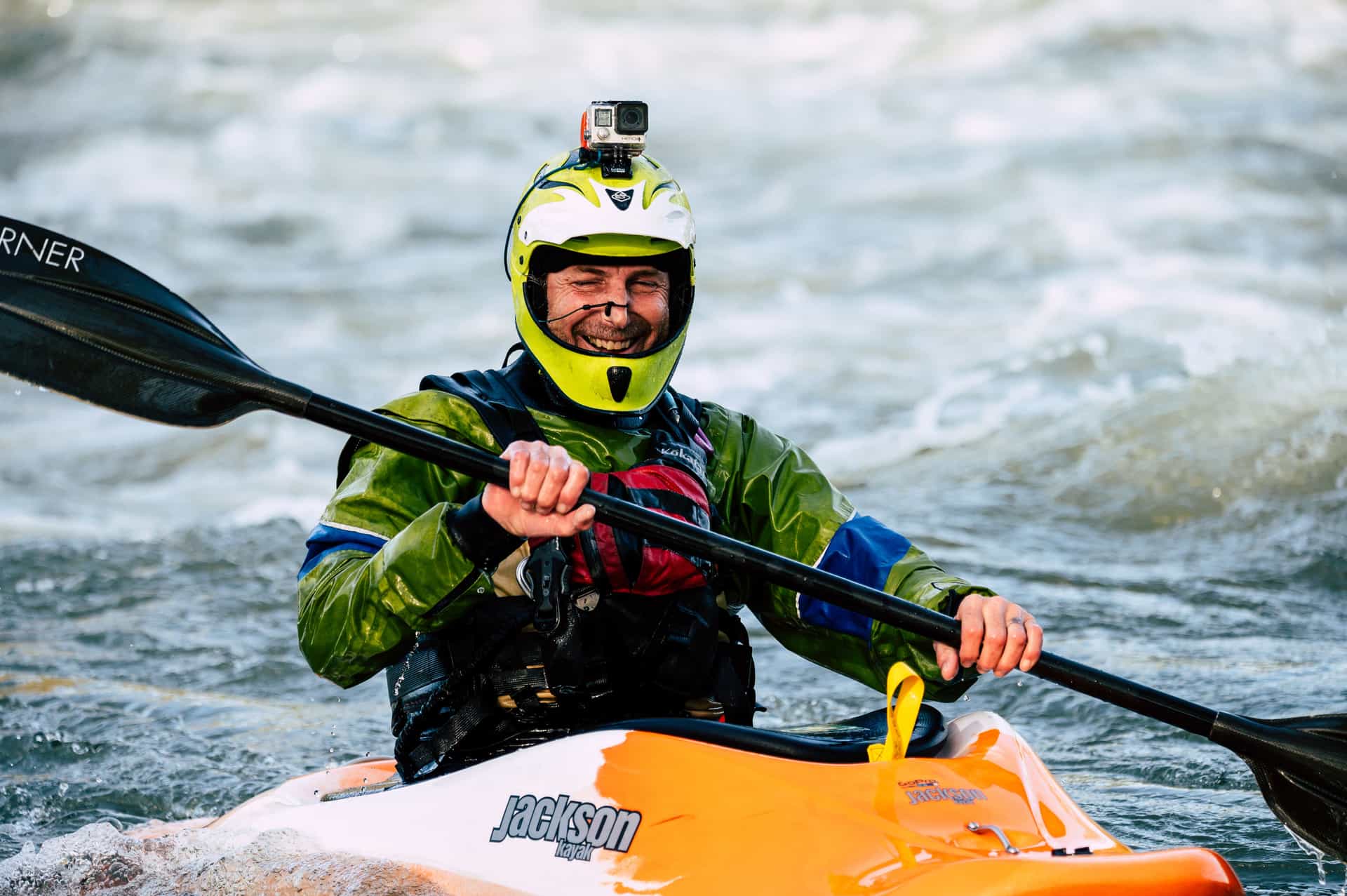
Kayaking and paddling: DJI. Depth and battery decide it, and a deck mount does not stress a magnetic release the way a mast does.
Kayak fishing: GoPro, usually — fishing kayaks are built around two-prong fittings and the camera lives on a tall mast. The fishing roundup explains why.
Mountain biking: GoPro. Stabilization first, mounting second, and both favor it.
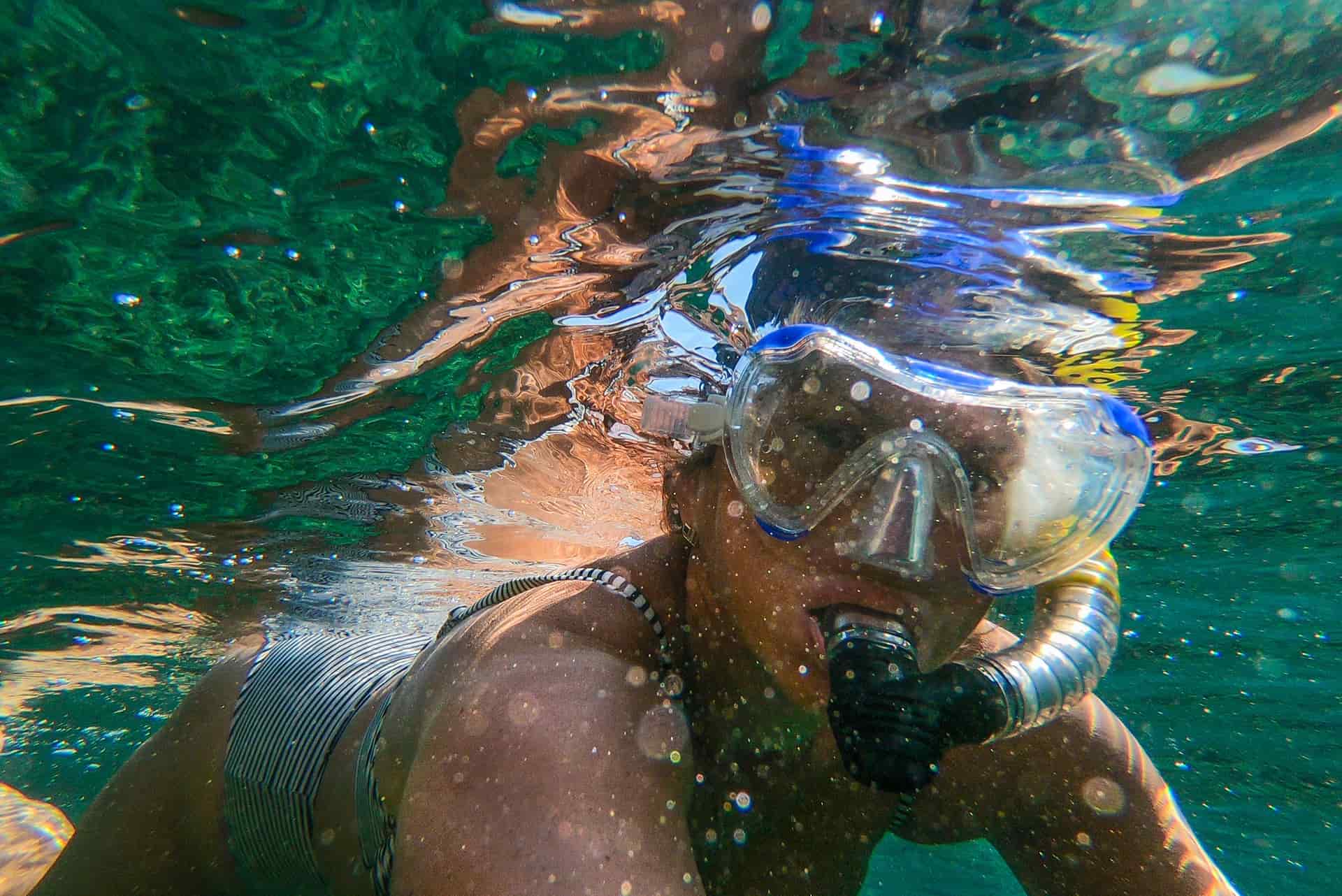
Snorkeling and swimming: DJI. No housing needed, ever.
Skiing and cold-weather riding: DJI, on the published -20°C range.
Diving: GoPro. The 60m Protective Housing plus the depth-rated filter sets are the more complete system below the surface.
Where each one loses
The DJI loses on mounting: a smaller third-party ecosystem and a magnetic primary interface that is convenient rather than locked. It also loses on stabilization in the hardest conditions, by a margin that is small but visible.
The GoPro loses on depth — 33ft is the shallowest of the current flagships — and on stated cold tolerance, where its published claim covers the battery rather than the camera. Its sensor is also the smaller of the two, which shows in low light.
01
The two cameras
Both excellent. The choice is genuinely about which set of compromises suits your day.
- 20m bare / 60m with case
- 1950mAh · 240 min at 1080p24
- -20° to 45°C
- 9.5
- 9.0
- 9.5
- 8.0
- 9.0
DJI Osmo Action 5 Pro
DJI
Goes to 20m with no housing at all and publishes a 240-minute runtime — the two numbers that decide a long, wet, cold day.
Long paddles, cold water, and anyone tired of buying a housing to get past 10m
- 20m without the Waterproof Case — double the bare-camera depth of the HERO13 Black
- DJI publishes 240 minutes of recording at 1080p/24 with screens off, the longest figure in this set
- Rated to -20°C, which matters more on an October lake than any resolution number
- 1/1.3-inch sensor holds detail when the light goes flat
- Mount ecosystem is smaller than GoPro's, and magnetic quick-release adapters are their own purchase
- 146g — the heaviest of the flagship three
- Fewer third-party mounts and filters exist for it
Specs from DJI Osmo Action 5 Pro published specifications.
- 33ft (10m), no housing
- 1900mAh Enduro
- 1.5h at 5.3K30 / 2.5h at 1080p30
- 8.0
- 9.5
- 8.5
- 9.5
- 9.0
GoPro HERO13 Black
GoPro
The safest default for lake and trail: 33ft without a housing, the steadiest footage in the category, and a mount for literally everything.
Anyone who wants one camera to handle the kayak, the bike and the family trip
- HyperSmooth 6.0 with AutoBoost is the steadiest stabilization we can find published figures for
- Built-in mounting fingers plus 1/4-20 threads — it fits the GoPro ecosystem and a normal tripod
- Enduro battery is rated to keep full camera functionality down to 14°F (-10°C)
- Replaceable lens cover, so a scratched lens is a $20 problem and not a $400 one
- 33ft is shallower than the DJI and it is the shallowest of the three flagships
- Anything past 33ft needs the separate Protective Housing
- HB-Series lenses and ND filters are all extra purchases
Specs from GoPro HERO13 Black published specifications.
02
How we picked
We do not lab-test, bench-test or dive-test cameras, and we do not own test units. What we do instead is read the manufacturer's published specifications, read the independent reviews that genuinely do test, read owner reports for the failure modes specs never mention — fogging, salt corrosion, cold battery collapse, mount slippage — and then weight all of it for action cameras used on lake and trail. Where a number is not published, the page says “not published” rather than filling the cell.
The full method, including what we refuse to do, is on the editorial policy page.
- 30%Water survival
- Rated depth without a case, door design, and what the manufacturer actually publishes.
- 25%Stabilization in chop
- A kayak deck and a rooty trail shake in ways a handheld walk test never shows.
- 20%Battery in the cold
- Published runtime, spare-battery cost, and whether it charges while recording.
- 15%Mount ecosystem
- Finger mount, threaded, magnetic — and how much of it you have to re-buy.
- 10%Footage you will keep
- Lens replaceability, low-light behavior, and how much cutting the footage needs.
03
Questions people actually ask
01Is the DJI Osmo Action 5 Pro really waterproof to 20m?
That is DJI's published figure for the camera without the Waterproof Case, and 60m with it. We have not verified it — we have no test tank and own no units — but it is stated clearly on DJI's own specification page.
02Which has better stabilization?
GoPro, on published capability. HyperSmooth 6.0 with AutoBoost leads the category; RockSteady 3.0 is close and the difference shows in sharp repetitive impact rather than in smooth walking footage.
03Can I use my GoPro mounts with the Osmo Action 5 Pro?
With an adapter, yes — DJI supplies one for the two-prong interface. It adds height and a flex point, which matters most on a long mast or on rough ground.
04Does the DJI really last four hours?
Under DJI's stated test conditions — 1080p/24, RockSteady on, Wi-Fi off, screens off. Compare it to GoPro's over-2.5-hours at 1080p30 rather than to its 5.3K figure, and the gap is much smaller than the headline numbers suggest.
05Which is better in cold weather?
DJI, on what is published: -20°C to 45°C for the camera. GoPro publishes a narrower claim about the Enduro battery holding full camera functionality to 14°F. Either way, keep a spare somewhere warm.
06Which one for a first action camera?
GoPro, for the ecosystem and the volume of available help — unless you already know your days are long, wet and cold, in which case the DJI is more forgiving hardware.
04
Read this next
GoPro vs Insta360 vs DJI
The three-way version, with Insta360 added back in.
Best action cameras for kayaking
Where the DJI's depth and battery advantage actually lands.
Best action cameras for mountain biking
Where the GoPro's stabilization advantage actually lands.
Mount compatibility
What an adapter costs you in height, flex and one more thing to lose.
Battery life compared
All the published runtimes in one table, with their test conditions.
05
Sources
- DJI Osmo Action 5 Pro specifications
- GoPro HERO13 Black published specifications
- GoPro Enduro Battery (HERO13 Black) product page
Specifications are quoted from the manufacturer pages above as they read on the dates shown. Where a figure is not published, this site says so rather than estimating one. We have not tested these products.