DJI Osmo Action 5 Pro vs Osmo Action 4
The two cameras share more than they differ on. The honest question is whether 80 extra published minutes and 2 extra meters are worth the difference to you.
Part of Cameras.
We earn a commission if you buy through our links, at no extra cost to you. It never changes what we recommend or the order we rank it in — how this works.
Buy the DJI Osmo Action 5 Pro if you record long and continuously; the Osmo Action 4 is the better value for everyone else. The step up buys three things: 20m of bare depth instead of 18m, a published 240 minutes at 1080p/24 instead of 160, and a front OLED screen for framing yourself. Everything that normally decides an action camera purchase is the same — both use a 1/1.3-inch sensor, both are rated from -20°C to 45°C, and both reach 60m in DJI's case. If your days are under two hours and you are not usually in front of the camera, the Action 4 does the same job for less.
What the step up actually changes
There are three real differences between these cameras on published figures, and it is worth being precise about how much each one is worth.
Depth: 20m against 18m. This is the smallest of the three and it is close to irrelevant. 2m of margin at that depth does not change what you can do — snorkeling happens in the top five meters and anything past 18m is already outside what a bare action camera is for. If depth is your reason to buy either of these, both already win, and how deep an action camera can actually go explains why the rating is more about seal quality than about diving.
Runtime: 240 published minutes against 160. This is the difference that earns the money. Both figures are DJI's own, measured at 1080p/24 with the screens off, so they are directly comparable — and 80 minutes is a 50% increase. For clips it means nothing, because neither camera runs out shooting fifteen-second shots. For continuous recording it is the whole ballgame: a four-hour paddle, a long gravel ride, a time lapse of a sunset. One camera covers that on a battery and one does not.
The front screen. The Action 4 has no front OLED. If you are regularly in front of the camera — vlogging, filming yourself on a boat, holding it out at arm's length — this is the difference between a composed shot and a photograph of your own chin. If you are always behind the camera, it is a feature you will never use.
| Specification | Osmo Action 5 Pro | Osmo Action 4 |
|---|---|---|
| Bare waterproof depth | 20m | 18m |
| With DJI's case | 60m | 60m |
| Sensor | 1/1.3" | 1/1.3" |
| Battery | 1950mAh | 1770mAh |
| Published runtime at 1080p24 | 240 min | 160 min |
| Operating temperature | -20° to 45°C | -20° to 45°C |
| Front screen | Yes | No |
| Stabilization | RockSteady | RockSteady |
| Current or superseded | Current | Superseded but still sold |
What is identical, and why that matters
Both cameras use a 1/1.3-inch sensor. That is the single most important specification for how the footage looks, and it has not changed between generations — which means the usual reason to buy the newer generation does not apply here. Low-light performance, dynamic range and the general character of the image are in the same place.
Both are rated -20°C to 45°C. For a site about lake and trail use that is the specification we care about most after depth, because cold is what actually kills action camera batteries in practice, and the older camera gives up nothing on it.
Both reach 60m in DJI's own waterproof case, which is a separate purchase either way. And both use RockSteady stabilization, which is good enough that where you mount the camera matters more than which of the two you bought — the comparison is in HyperSmooth vs FlowState vs RockSteady.
Where each one lands for the uses this site covers
Kayaking and paddling. Either, and the choice is the length of the paddle. A couple of hours of clips: the Action 4. An all-day trip or a camera left running across a crossing: the Action 5 Pro. Both are ranked against the rest of the field in the best action cameras for kayaking.
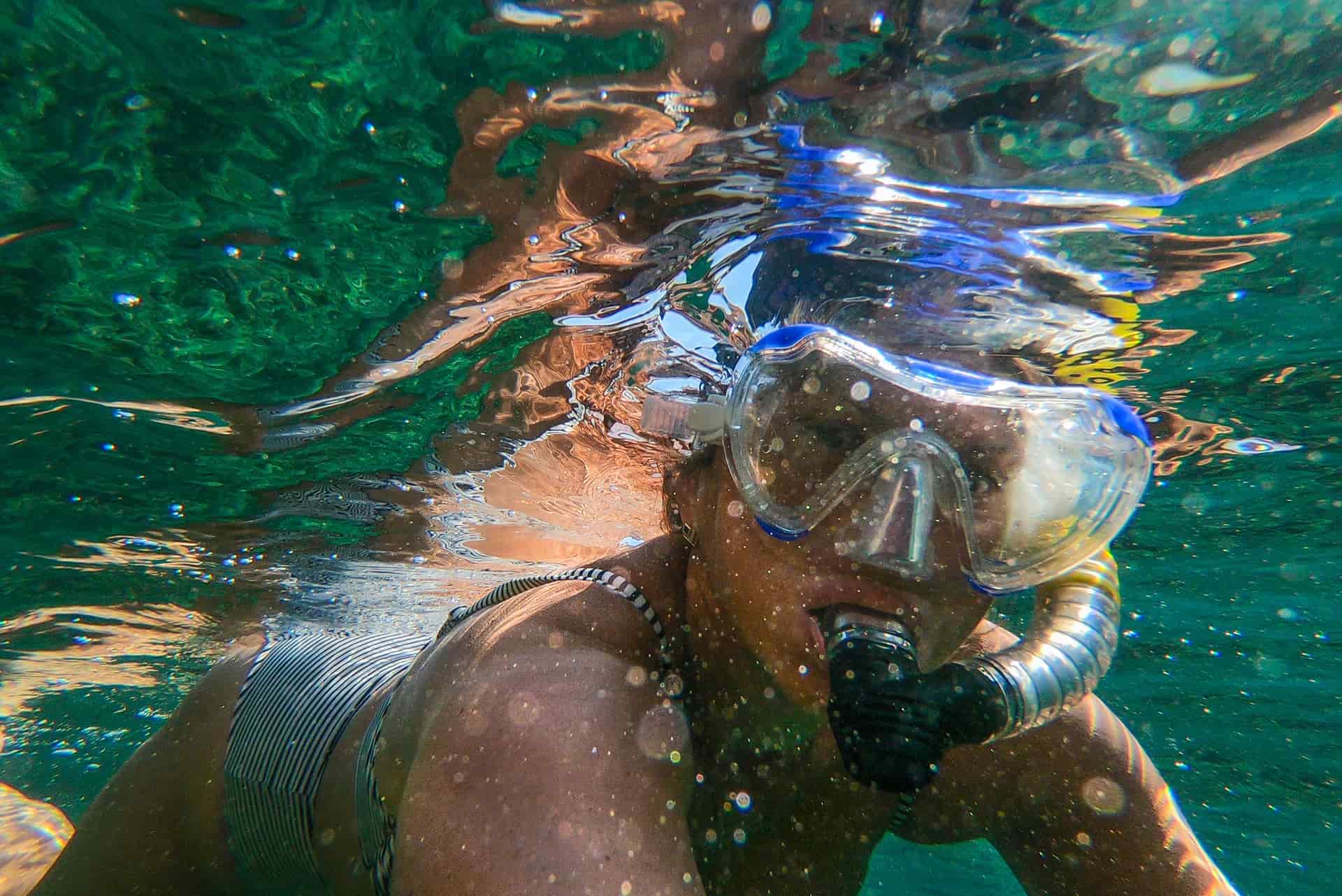
Snorkeling. The Action 4, without hesitation. Snorkeling depth is nowhere near either rating, the sensor is the same, and the money saved buys a filter set, which will do far more for the footage than 2m of extra rating.
Cold-weather use. Identical ratings, so this comes down to runtime again — and cold shortens every battery, which makes the Action 5 Pro's larger margin more valuable in winter than it is in July.
Filming yourself. The Action 5 Pro, for the front screen. Or neither — if being in front of the camera is the main job, the Insta360 Ace Pro 2 in our picks has a flip screen, which shows you the actual frame rather than an approximation. That argument is laid out in Osmo Action 5 Pro vs Insta360 Ace Pro 2.
Should you upgrade from an Action 4 you already own?
No, on these figures. The sensor is the same size, the cold rating is the same, the depth difference is 2m, and the stabilization system has the same name. You would be buying 80 published minutes of runtime and a front screen.
If the battery is the problem you are trying to solve, a spare cell and a power bank cost a fraction of a new camera and solve it more completely — see batteries and power banks and power on long days. If framing yourself is the problem, a phone as a monitor over the DJI app covers it for nothing. Upgrade when the camera breaks or when something genuinely new arrives, not for a generation of refinement.
What we would not base this on
The 2m depth difference. It reads as a meaningful gap and it is not. Both are deep enough that bare-camera depth stops being a constraint.
Published runtimes read literally. 240 and 160 are measured at 1080p/24 with screens off, which is nobody's real shooting mode. Use them as a ratio, not a forecast — the reasoning is in action camera battery life compared.
Being the current model. On its own, not a reason. It matters for accessory availability and support, which is a real argument — but it is a different argument from the camera being better.
01
The two DJIs, and the camera to consider instead
Both of these are deep-water cameras with long batteries and the same cold rating. The Insta360 is here because if image quality is what you actually want, neither DJI is the answer.
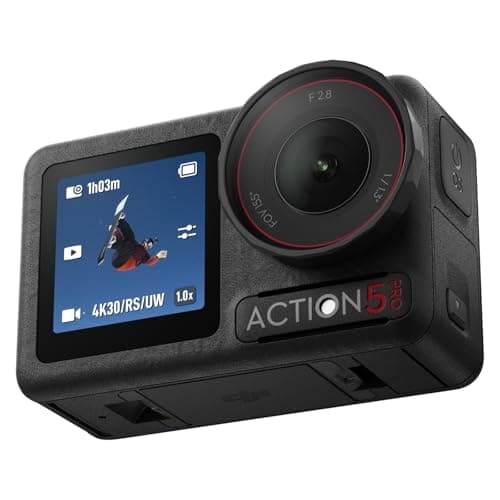
- 20m bare / 60m with case
- 1950mAh · 240 min at 1080p24
- -20° to 45°C
- 9.5
- 9.0
- 9.5
- 8.0
- 9.0
DJI Osmo Action 5 Pro
DJI
Goes to 20m with no housing at all and publishes a 240-minute runtime — the two numbers that decide a long, wet, cold day.
Long paddles, cold water, and anyone tired of buying a housing to get past 10m
- 20m without the Waterproof Case — double the bare-camera depth of the HERO13 Black
- DJI publishes 240 minutes of recording at 1080p/24 with screens off, the longest figure in this set
- Rated to -20°C, which matters more on an October lake than any resolution number
- 1/1.3-inch sensor holds detail when the light goes flat
- Mount ecosystem is smaller than GoPro's, and magnetic quick-release adapters are their own purchase
- 146g — the heaviest of the flagship three
- Fewer third-party mounts and filters exist for it
Specs from DJI Osmo Action 5 Pro published specifications.
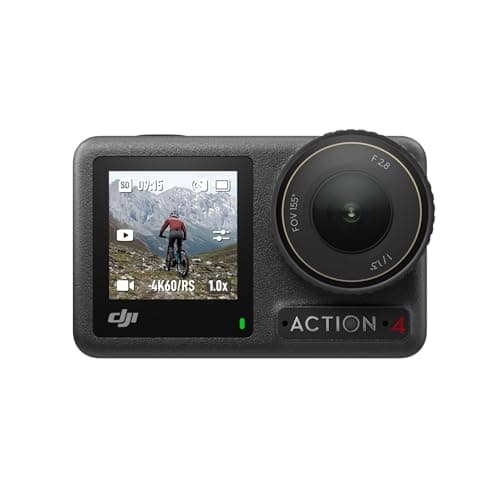
- 18m bare / 60m with case
- 1770mAh · 160 min at 1080p24
- -20° to 45°C
- 9.0
- 8.5
- 8.5
- 8.0
- 8.0
DJI Osmo Action 4
DJI
The previous DJI flagship, still 18m bare and still on shelves — the most water rating per dollar in this list.
Buyers who want deep-water capability without paying flagship money
- 18m without a case still beats every current GoPro by a wide margin
- Same 1/1.3-inch sensor size as the Action 5 Pro
- Rated to -20°C like its replacement
- Usually the cheapest way into serious bare-camera depth
- 160 minutes published against the Action 5 Pro's 240
- Superseded, so accessories and support will taper off first
- No front OLED — the Action 5 Pro's front screen is genuinely more useful for framing
Specs from DJI Osmo Action 4 published specifications.
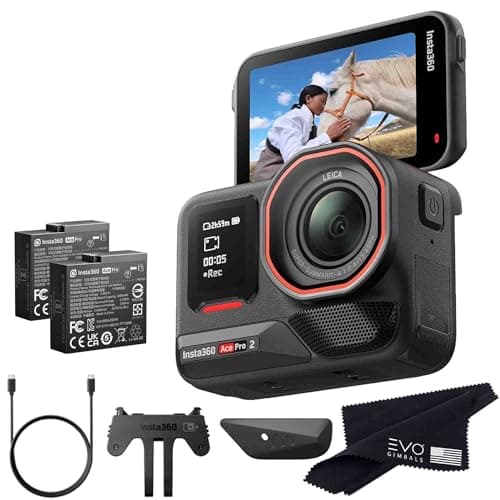
- 39ft (12m) / 60m with dive case
- 1800mAh · 180 min published
- 1/1.3" with Leica lens
- 8.5
- 8.5
- 9.0
- 7.5
- 9.5
Insta360 Ace Pro 2
Insta360
The best-looking image of the three flagships, with a flip screen that finally makes a chest-mounted shot something you can frame.
Family trips where you want the footage to look like more than dashcam clips
- 8K30 with a 1/1.3-inch sensor — the most detail in the group
- 12m bare, which clears every snorkel depth without a housing
- 180-minute published battery life and 80% charge in 18 minutes
- Flip screen means you can frame a shot you are standing in front of
- 12m is still short of the DJI's 20m
- The dive case is a separate purchase for anything past 12m
- Fewer mount options than GoPro, and an adapter tax if you switch
Specs from Insta360 Ace Pro 2 published specifications.
02
How we picked
We do not lab-test, bench-test or dive-test cameras, and we do not own test units. What we do instead is read the manufacturer's published specifications, read the independent reviews that genuinely do test, read owner reports for the failure modes specs never mention — fogging, salt corrosion, cold battery collapse, mount slippage — and then weight all of it for action cameras used on lake and trail. Where a number is not published, the page says “not published” rather than filling the cell.
The full method, including what we refuse to do, is on the editorial policy page.
- 30%Water survival
- Rated depth without a case, door design, and what the manufacturer actually publishes.
- 25%Stabilization in chop
- A kayak deck and a rooty trail shake in ways a handheld walk test never shows.
- 20%Battery in the cold
- Published runtime, spare-battery cost, and whether it charges while recording.
- 15%Mount ecosystem
- Finger mount, threaded, magnetic — and how much of it you have to re-buy.
- 10%Footage you will keep
- Lens replaceability, low-light behavior, and how much cutting the footage needs.
03
Questions people actually ask
01Is the DJI Osmo Action 5 Pro worth it over the Action 4?
Only if you record continuously or film yourself. It buys a published 240 minutes at 1080p/24 against 160, a front screen the Action 4 lacks, and 2m more bare depth. The sensor size, cold rating and stabilization system are the same.
02Do the Osmo Action 4 and Action 5 Pro have the same sensor?
Both use a 1/1.3-inch sensor on published specifications, which is why the image character is similar and why the newer model is not the obvious upgrade it looks like.
03Which DJI action camera goes deeper?
The Action 5 Pro, at 20m bare against the Action 4's 18m. Both reach 60m in DJI's waterproof case, and in practice 2m of difference at that depth does not change what you can film.
04Should I upgrade my Osmo Action 4?
No, on published figures. A spare battery and a power bank solve the runtime difference for a fraction of the cost, and nothing else meaningful changed. Upgrade when the camera fails or when a genuinely new capability arrives.
05Is the Osmo Action 4 still worth buying?
Yes, if you want deep bare-camera water rating cheaply — 18m with no case still beats every current GoPro by a wide margin. The risk of buying superseded is that accessories and support taper off on the older model first.
04
Read this next
DJI Osmo Action 5 Pro: the official specs
Every published figure for the newer camera, in one table.
DJI Osmo Action 5 Pro vs GoPro HERO13 Black
The cross-brand version: depth and runtime against the mount ecosystem.
Osmo Action 5 Pro vs Insta360 Ace Pro 2
If framing yourself is the job, this is the comparison that matters.
The best waterproof action cameras
Where 18m and 20m sit against every other bare rating on the site.
The best budget action cameras
If buying superseded is the strategy, this is where it goes next.
05
Sources
- DJI Osmo Action 5 Pro published specifications
- DJI Osmo Action 4 published specifications
- Insta360 Ace Pro 2 published specifications
Specifications are quoted from the manufacturer pages above as they read on the dates shown. Where a figure is not published, this site says so rather than estimating one. We have not tested these products.