DJI Osmo Action 5 Pro vs Insta360 Ace Pro 2
These two cameras are good at opposite things, which makes this one of the easier comparisons in the category once you know which half you care about.
Part of Cameras.
We earn a commission if you buy through our links, at no extra cost to you. It never changes what we recommend or the order we rank it in — how this works.
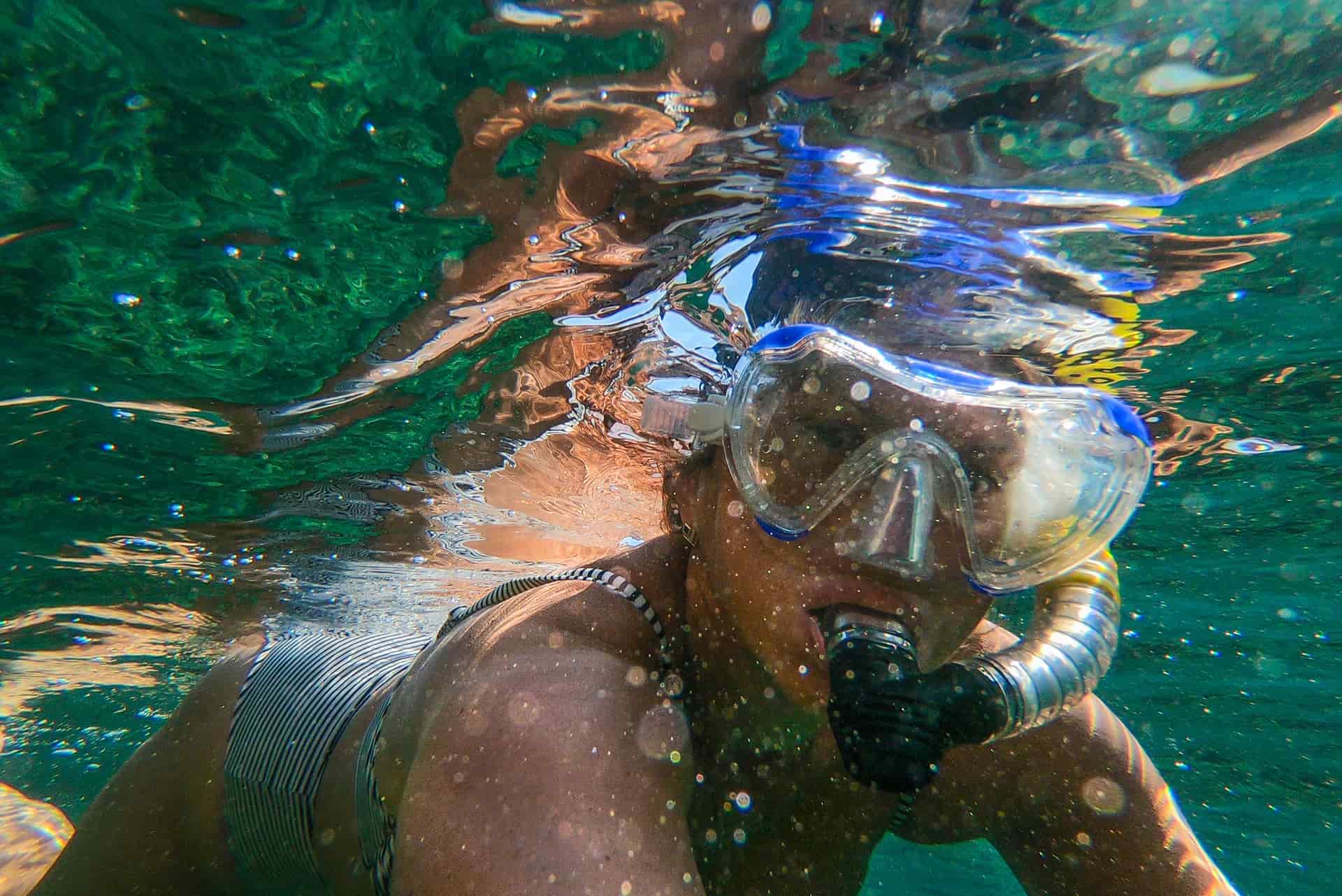
Buy the DJI Osmo Action 5 Pro if the camera has to survive the day; buy the Insta360 Ace Pro 2 if the footage has to look good. The DJI is rated to 20m with no housing, publishes 240 minutes of recording at 1080p/24 and works from -20°C — it is the camera for long, cold, wet days. The Insta360 shoots 8K30 through a Leica lens with a flip screen that lets you frame a shot you are standing in, and is rated to 39ft (12m) with 180 published minutes of battery. Both use a 1/1.3-inch sensor, so this is not an image-quality-versus-nothing choice: it is depth and endurance against resolution and framing.
Where they are actually the same
Both cameras use a 1/1.3-inch sensor. That is the specification most comparisons lead with, and here it tells you nothing, because it is identical. Both stabilize well — RockSteady on the DJI, Insta360's system on the Ace Pro 2 — and in ordinary use neither produces footage you would describe as shaky. Both are rated past any snorkeling depth without a case, both take a separate case for 60m, and both have smaller mount ecosystems than GoPro.
So the comparison is not about which is the better camera in the abstract. It is about which of two very different priorities the manufacturer chose, because they chose differently.
| Specification | DJI Osmo Action 5 Pro | Insta360 Ace Pro 2 |
|---|---|---|
| Bare waterproof depth | 20m | 39ft (12m) |
| With the maker's case | 60m | 60m (197ft) |
| Sensor | 1/1.3" | 1/1.3" with Leica lens |
| Top video mode | Not published in this comparison set | 8K30 |
| Battery | 1950mAh | 1800mAh |
| Published runtime | 240 min at 1080p24 | 180 min |
| Fast charge | Not published | 80% in 18 minutes |
| Operating temperature | -20° to 45°C | Not published |
| Front-facing framing | Front screen | Flip screen |
| Weight | 146g | Not published |
The case for the DJI Osmo Action 5 Pro
Three published figures carry this camera, and all three are about endurance rather than image.
20m bare. Double the HERO13 Black and 8m deeper than the Ace Pro 2. In practice this means the housing question never comes up: snorkeling, swimming, a capsize, a dropped camera in a lake — all of it is inside the rating with nothing fitted. If you have ever bought a dive housing and then found a hair in the seal, you will understand why removing that whole category of worry is worth paying for.
240 minutes at 1080p/24 with the screens off. The longest published runtime of any camera on this site. Real-world figures are always lower than published ones — the conditions behind them are chosen to be repeatable rather than representative — but the gap between 240 and 180 is still a gap, and it is the difference between one battery covering a day on the water and two not quite doing it.
-20°C. The specification nobody notices until October. Cold is what actually kills action camera batteries, and a camera rated to -20°C is making a promise about the whole device, not just the cell. For winter paddling, skiing or a frozen morning on a bike, this is the number that matters more than any resolution figure. The behavior is explained in action camera battery life compared.
What you pay for it: 146g, which is the heaviest flagship we cover, and a mount ecosystem where magnetic quick-release adapters are a separate purchase. If there are already GoPro mounts in a cupboard, the real cost of this camera is higher than the sticker.
The case for the Insta360 Ace Pro 2
Also three things, and all three are about what the footage looks like when somebody else watches it.
8K30 through a Leica lens on a 1/1.3-inch sensor. The most detail of any flat camera we cover. 8K is not useful because screens are 8K — almost none are — it is useful because it lets you crop and reframe in an edit without losing resolution, which on a wide action camera is a genuinely common thing to want.
A flip screen. This is the feature that gets dismissed in spec comparisons and changes the most about using the camera. A front screen tells you roughly whether you are in frame. A flip screen shows you the actual shot, which means a chest-mounted or handheld self-filmed clip is composed rather than hoped for. For anyone who is in front of the camera more than behind it, this is worth more than the 8K.
80% charge in 18 minutes. It does not match the DJI's endurance, so it addresses the problem differently: a coffee stop gets you most of a battery back. Whether that is equivalent depends entirely on whether your day includes power.
What you pay for it: 12m instead of 20m, which is still past every snorkel depth but is a real difference if you dive; the dive case as a separate purchase past 12m; and the smallest mount ecosystem of the three flagships.
How this plays out in the four uses this site covers
Kayaking and paddling. The DJI, comfortably. Depth, cold rating and runtime are the three constraints on a paddle and it wins all three. The ranked list is the best action cameras for kayaking.
Snorkeling and swimming. Either, with a slight edge to the DJI for depth margin — though both clear snorkeling depth with room to spare, and the Ace Pro 2's sensor and lens do better with the flat light under water. See the snorkeling roundup.
Family trips and travel. The Insta360. The flip screen and the image quality are exactly what a trip video needs, and nothing on a family holiday goes past 12m. The travel vlogging roundup makes the case at length.
Bikes and trail. Closer than you would expect, and it comes down to crashes. Neither publishes a replaceable lens cover the way GoPro does, which on a camera that lands on rock is the argument for a third option entirely — see the mountain biking roundup.
What we would not base this decision on
The 8K number by itself. It is useful for cropping and it costs you battery, card space and editing time. If you shoot and upload without an edit, you will never see the benefit.
Published runtimes read as promises. Both figures come from manufacturer test conditions chosen to be repeatable: low resolution, screens off, moderate temperature. Treat them as a ranking, not a forecast.
Stabilization marketing. Both are good enough that the mount position matters more than the algorithm. What each system actually does is in HyperSmooth vs FlowState vs RockSteady.
01
The two cameras, plus the one that breaks a tie
Both of these beat the current GoPro on the specification they are built around. The HERO13 Black is here because if you cannot choose between them, the mount ecosystem is usually what decides it.
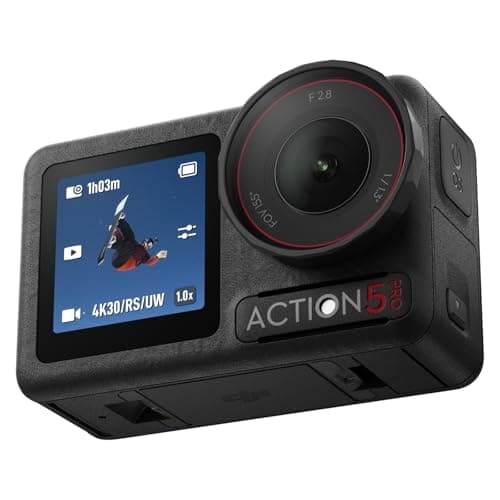
- 20m bare / 60m with case
- 1950mAh · 240 min at 1080p24
- -20° to 45°C
- 9.5
- 9.0
- 9.5
- 8.0
- 9.0
DJI Osmo Action 5 Pro
DJI
Goes to 20m with no housing at all and publishes a 240-minute runtime — the two numbers that decide a long, wet, cold day.
Long paddles, cold water, and anyone tired of buying a housing to get past 10m
- 20m without the Waterproof Case — double the bare-camera depth of the HERO13 Black
- DJI publishes 240 minutes of recording at 1080p/24 with screens off, the longest figure in this set
- Rated to -20°C, which matters more on an October lake than any resolution number
- 1/1.3-inch sensor holds detail when the light goes flat
- Mount ecosystem is smaller than GoPro's, and magnetic quick-release adapters are their own purchase
- 146g — the heaviest of the flagship three
- Fewer third-party mounts and filters exist for it
Specs from DJI Osmo Action 5 Pro published specifications.
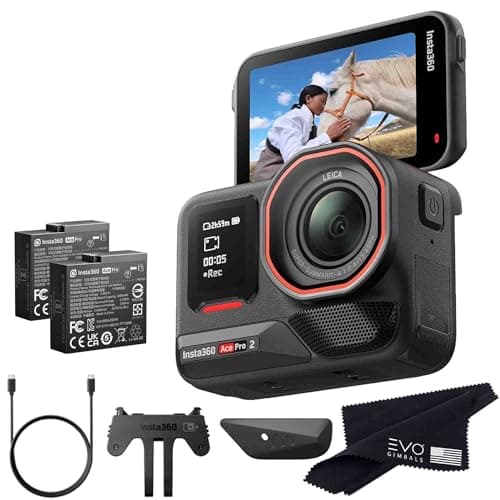
- 39ft (12m) / 60m with dive case
- 1800mAh · 180 min published
- 1/1.3" with Leica lens
- 8.5
- 8.5
- 9.0
- 7.5
- 9.5
Insta360 Ace Pro 2
Insta360
The best-looking image of the three flagships, with a flip screen that finally makes a chest-mounted shot something you can frame.
Family trips where you want the footage to look like more than dashcam clips
- 8K30 with a 1/1.3-inch sensor — the most detail in the group
- 12m bare, which clears every snorkel depth without a housing
- 180-minute published battery life and 80% charge in 18 minutes
- Flip screen means you can frame a shot you are standing in front of
- 12m is still short of the DJI's 20m
- The dive case is a separate purchase for anything past 12m
- Fewer mount options than GoPro, and an adapter tax if you switch
Specs from Insta360 Ace Pro 2 published specifications.
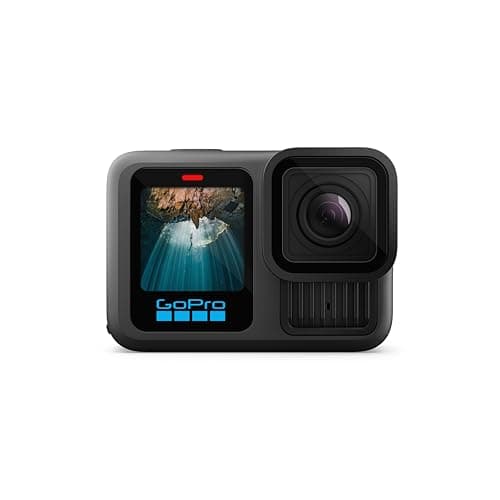
- 33ft (10m), no housing
- 1900mAh Enduro
- 1.5h at 5.3K30 / 2.5h at 1080p30
- 8.0
- 9.5
- 8.5
- 9.5
- 9.0
GoPro HERO13 Black
GoPro
The safest default for lake and trail: 33ft without a housing, the steadiest footage in the category, and a mount for literally everything.
Anyone who wants one camera to handle the kayak, the bike and the family trip
- HyperSmooth 6.0 with AutoBoost is the steadiest stabilization we can find published figures for
- Built-in mounting fingers plus 1/4-20 threads — it fits the GoPro ecosystem and a normal tripod
- Enduro battery is rated to keep full camera functionality down to 14°F (-10°C)
- Replaceable lens cover, so a scratched lens is a $20 problem and not a $400 one
- 33ft is shallower than the DJI and it is the shallowest of the three flagships
- Anything past 33ft needs the separate Protective Housing
- HB-Series lenses and ND filters are all extra purchases
Specs from GoPro HERO13 Black published specifications.
02
How we picked
We do not lab-test, bench-test or dive-test cameras, and we do not own test units. What we do instead is read the manufacturer's published specifications, read the independent reviews that genuinely do test, read owner reports for the failure modes specs never mention — fogging, salt corrosion, cold battery collapse, mount slippage — and then weight all of it for action cameras used on lake and trail. Where a number is not published, the page says “not published” rather than filling the cell.
The full method, including what we refuse to do, is on the editorial policy page.
- 30%Water survival
- Rated depth without a case, door design, and what the manufacturer actually publishes.
- 25%Stabilization in chop
- A kayak deck and a rooty trail shake in ways a handheld walk test never shows.
- 20%Battery in the cold
- Published runtime, spare-battery cost, and whether it charges while recording.
- 15%Mount ecosystem
- Finger mount, threaded, magnetic — and how much of it you have to re-buy.
- 10%Footage you will keep
- Lens replaceability, low-light behavior, and how much cutting the footage needs.
03
Questions people actually ask
01Is the DJI Osmo Action 5 Pro better than the Insta360 Ace Pro 2?
For water, cold and long days, yes — 20m bare, 240 published minutes and a -20°C rating are figures the Ace Pro 2 does not match. For image quality and for framing yourself, the Ace Pro 2 is better: 8K30 through a Leica lens and a flip screen. They are built around different priorities.
02Which one has the better sensor?
Neither. Both use a 1/1.3-inch sensor. The Insta360 pairs it with a Leica lens and an 8K30 mode, which is where its image-quality advantage comes from — not from sensor size.
03Which goes deeper without a case?
The DJI Osmo Action 5 Pro, at 20m against the Ace Pro 2's 39ft (12m). Both reach 60m with the manufacturer's own case, which is a separate purchase in each instance.
04Which has better battery life?
The DJI on published figures: 240 minutes at 1080p/24 with the screens off, against 180 minutes for the Ace Pro 2. The Insta360 answers back with 80% charge in 18 minutes, which helps if your day has power in it and not if it does not.
05Should I buy a GoPro instead?
If you already own GoPro mounts, probably — the ecosystem is the one thing neither of these beats, and the HERO13 Black's replaceable lens cover is a real durability advantage. If you are starting from nothing, these two both beat it on their chosen specification.
04
Read this next
DJI Osmo Action 5 Pro: the official specs
Every published figure for the depth-and-endurance pick, on its own.
Insta360 Ace Pro 2: the official specs
The image-quality pick assessed in detail, including the flip screen.
DJI Osmo Action 5 Pro vs GoPro HERO13 Black
The same DJI against the camera with the biggest mount ecosystem.
GoPro vs Insta360 vs DJI
The three-brand version of this decision, ecosystem included.
How to choose an action camera
The decision one level up, if you are not sure which specs you care about.
05
Sources
- DJI Osmo Action 5 Pro published specifications
- Insta360 Ace Pro 2 published specifications
- GoPro HERO13 Black published specifications
Specifications are quoted from the manufacturer pages above as they read on the dates shown. Where a figure is not published, this site says so rather than estimating one. We have not tested these products.