The best action cameras for travel vlogging
A vlog is a person talking in frame. That makes the screen and the microphone the specifications that matter, and resolution the one that does not.
Part of Cameras.
We earn a commission if you buy through our links, at no extra cost to you. It never changes what we recommend or the order we rank it in — how this works.
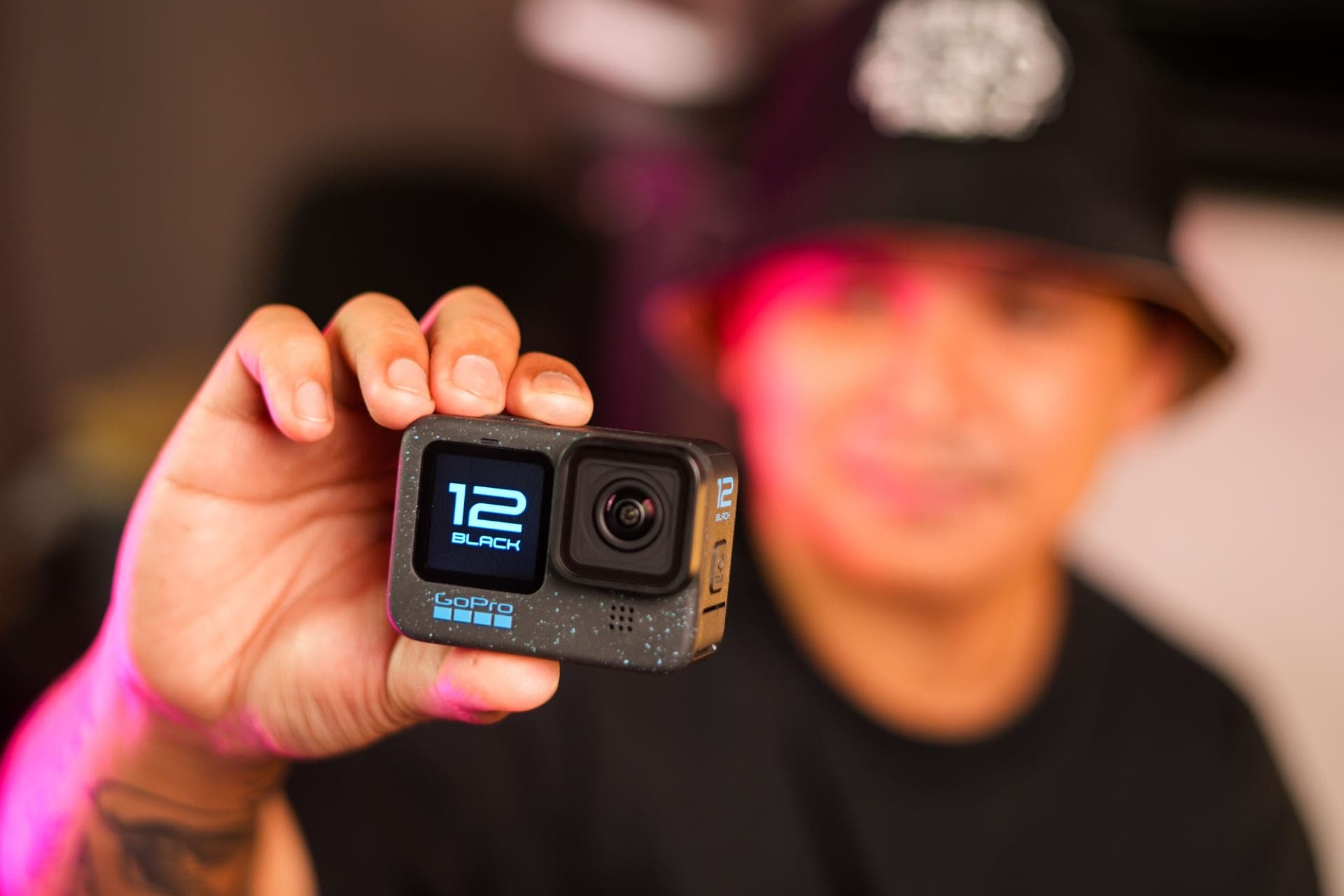
The Insta360 Ace Pro 2 is the best action camera for travel vlogging, because the flip screen is the only one in this category that lets you frame a shot you are standing in front of rather than guessing at it — and vlogging is almost entirely shots you are standing in front of. It pairs that with the largest sensor here (1/1.3-inch, Leica lens) and 180 published minutes of battery. Take the DJI Osmo Action 5 Pro instead if your days are long and wet, and the Insta360 X5 if you would rather shoot everything and choose the framing afterwards.
01
Quick picks
| # | Product | Best for | Score | Price |
|---|---|---|---|---|
| 01 | 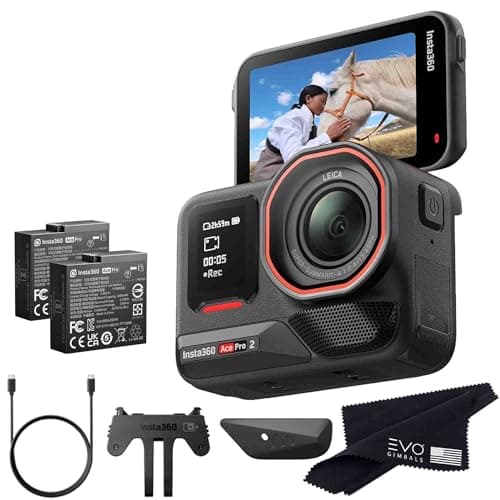 Insta360 Ace Pro 2 The best-looking image of the three flagships, with a flip screen that finally makes a chest-mounted shot something you can frame. | Family trips where you want the footage to look like more than dashcam clips | 8.6/ 10 | |
| 02 | 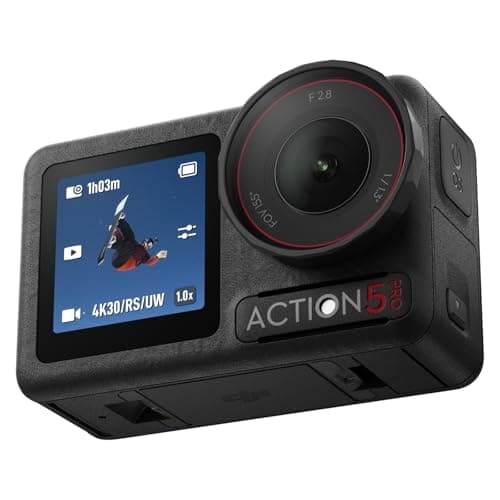 DJI Osmo Action 5 Pro Goes to 20m with no housing at all and publishes a 240-minute runtime — the two numbers that decide a long, wet, cold day. | Long paddles, cold water, and anyone tired of buying a housing to get past 10m | 9.1/ 10 | |
| 03 | 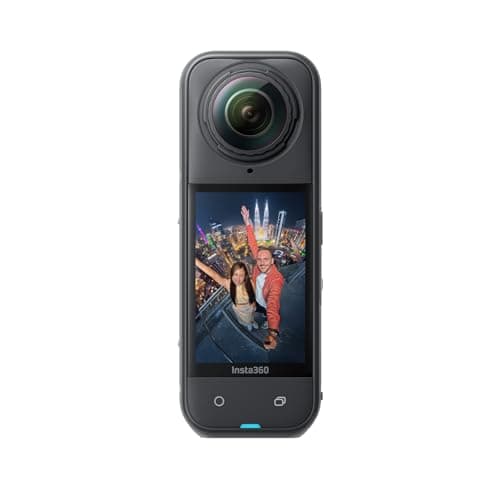 Insta360 X5 15m rated, replaceable lenses, and the one camera that means you never have to aim while you are paddling. | Anyone filming themselves on the water who cannot stop to frame a shot | 9.1/ 10 | |
| 04 | 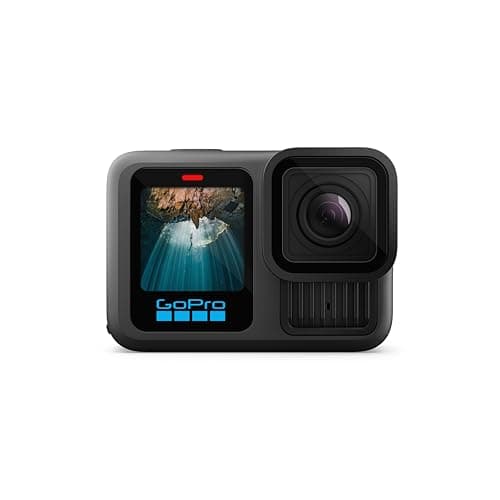 GoPro HERO13 Black The safest default for lake and trail: 33ft without a housing, the steadiest footage in the category, and a mount for literally everything. | Anyone who wants one camera to handle the kayak, the bike and the family trip | 8.8/ 10 | |
| 05 | 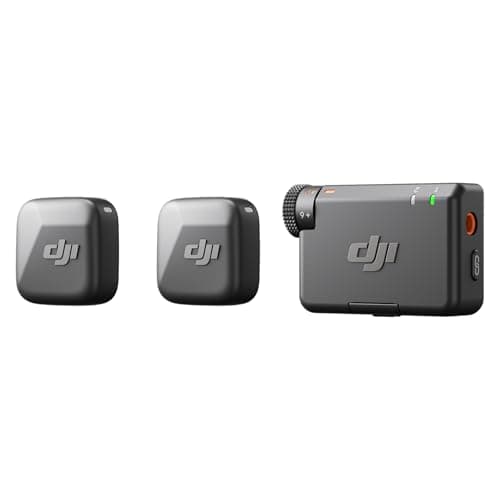 DJI Mic Mini A 10-gram transmitter with 11.5 hours of battery and 400m of range — the way to get clean voice without opening the camera up. | Narrating a trip without shouting over wind at the onboard mic | 7.5/ 10 |
Scores are our editorial judgment from published specs and named independent reviews, weighted for lake and trail use — not measurements. We have not tested these units and do not own them.
02
How we picked
We do not lab-test, bench-test or dive-test cameras, and we do not own test units. What we do instead is read the manufacturer's published specifications, read the independent reviews that genuinely do test, read owner reports for the failure modes specs never mention — fogging, salt corrosion, cold battery collapse, mount slippage — and then weight all of it for action cameras used on lake and trail. Where a number is not published, the page says “not published” rather than filling the cell.
The full method, including what we refuse to do, is on the editorial policy page.
- 30%Water survival
- Rated depth without a case, door design, and what the manufacturer actually publishes.
- 25%Stabilization in chop
- A kayak deck and a rooty trail shake in ways a handheld walk test never shows.
- 20%Battery in the cold
- Published runtime, spare-battery cost, and whether it charges while recording.
- 15%Mount ecosystem
- Finger mount, threaded, magnetic — and how much of it you have to re-buy.
- 10%Footage you will keep
- Lens replaceability, low-light behavior, and how much cutting the footage needs.
What vlogging asks for that other filming does not
Most action camera buying advice is written for footage with nobody in the frame — a bike going downhill, a kayak going through a wave. A vlog inverts that, and the ranking changes with it.
You have to see your own frame. Self-filming without a preview produces the same three mistakes forever: your head is cropped, the horizon is tilted, and the interesting thing behind you is out of shot. A front screen helps. A flip screen solves it.
Your voice has to be intelligible. This is the specification nobody shops on and the one that decides whether anyone watches. Action camera microphones sit behind waterproof membranes, and the same seal that survives a lake muffles speech and roars in wind.
The battery has to last a travel day, not a session. A vlogging day is dozens of short clips spread over twelve hours with the screen on between them, which drains a battery faster than continuous recording at the same resolution.
You are carrying it, all day, with everything else. Which is the quiet argument against rigs. Every add-on you bolt on is a thing you will stop bringing by day three.
| Camera | Self-framing | Published battery | Sensor | External mic route |
|---|---|---|---|---|
| Insta360 Ace Pro 2 | Flip screen — a real preview | 180 min | 1/1.3" with Leica lens | Via accessory |
| DJI Osmo Action 5 Pro | Front OLED | 240 min at 1080p24 | 1/1.3" | Native DJI Mic pairing |
| Insta360 X5 | Reframe afterwards — no framing needed | ~88 min at 8K30 / 185 min Endurance | Dual 360 | Via accessory |
| GoPro HERO13 Black | Front screen | 1.5h at 5.3K30 / 2.5h at 1080p30 | Not published here | Media Mod plus a mic |
| GoPro HERO (2024) | No front screen | Not published in the same form | Not published here | None |
Audio, properly
Three options, in ascending order of how much they fix.
Onboard with the wind at your back. Free. Turning so the wind comes from behind the camera rather than across the microphone port removes most of the roar, and it costs nothing. It is not enough on an exposed headland or a moving boat.
A clip-on wireless transmitter. The real fix. Your voice is recorded six inches from your mouth instead of two feet away behind a membrane, so wind becomes background instead of the subject. This is the single biggest quality jump available for the money on this page.
Record a voiceover later. Unfashionable and extremely effective. A lot of travel narration is better written than said on the spot, and a phone in a quiet hotel room produces cleaner audio than anything you can capture on a windy clifftop.
Mount it so you are not holding it
A vlog shot entirely at arm's length looks like a vlog shot entirely at arm's length. Two changes break the monotony without adding weight.
A short pole or grip gets the camera far enough away that your face is not filling the frame and the place you traveled to is visible behind you — and if it is a floating grip, it also survives being dropped near water. A chest mount gives you the hands-free walking shot that cuts between pieces to camera, which is what makes a vlog feel like a day rather than a series of statements.
For the 360 route specifically, the pole options matter more than the camera, because the whole invisible-stick trick depends on the stick being the right one.
Storage and the thing that ruins trips
Cards fill faster than people plan for, and the failure is unrecoverable: you are in a place you will not return to, with no room to record. Carry at least two cards, keep them in different bags, and offload every evening rather than every few days. A V30-rated card is the floor for 4K and a real requirement rather than a recommendation — the detail is in the best SD cards for action cameras, and the one-line version is that a card too slow for the bitrate stops the recording by itself.
03
Every pick, in detail
- 39ft (12m) / 60m with dive case
- 1800mAh · 180 min published
- 1/1.3" with Leica lens
- 8.5
- 8.5
- 9.0
- 7.5
- 9.5
Insta360 Ace Pro 2
Insta360
The best-looking image of the three flagships, with a flip screen that finally makes a chest-mounted shot something you can frame.
Family trips where you want the footage to look like more than dashcam clips
The top pick on one feature and it is the right feature. A flip-up screen means you see your own frame while you are talking — your head is in it, the horizon is level, the thing behind you that justifies the shot is actually visible. Every other camera here gives you a small front screen at best, which tells you roughly where you are and not what the shot looks like. For a travel vlog, where almost every clip is a piece to camera in an unfamiliar place, that is the difference between usable and nearly-usable.
The rest supports it. The 1/1.3-inch sensor with the Leica lens is the most detailed image in the group and holds up when the light goes flat, which is when you will be filming because that is when you are walking back to the hotel. 180 published minutes is a real travel day, and 80% charge in 18 minutes means a coffee stop is a top-up.
Honest limits: 12m bare is shallower than either DJI, the dive case is a separate purchase, and the mount ecosystem is smaller than GoPro's with an adapter tax if you are switching. None of those three is a vlogging limitation.
- 8K30 with a 1/1.3-inch sensor — the most detail in the group
- 12m bare, which clears every snorkel depth without a housing
- 180-minute published battery life and 80% charge in 18 minutes
- Flip screen means you can frame a shot you are standing in front of
- 12m is still short of the DJI's 20m
- The dive case is a separate purchase for anything past 12m
- Fewer mount options than GoPro, and an adapter tax if you switch
Specs from Insta360 Ace Pro 2 published specifications.
- 20m bare / 60m with case
- 1950mAh · 240 min at 1080p24
- -20° to 45°C
- 9.5
- 9.0
- 9.5
- 8.0
- 9.0
DJI Osmo Action 5 Pro
DJI
Goes to 20m with no housing at all and publishes a 240-minute runtime — the two numbers that decide a long, wet, cold day.
Long paddles, cold water, and anyone tired of buying a housing to get past 10m
The endurance pick, and the one to take if your travel is outdoors rather than urban. DJI publishes 240 minutes of recording at 1080p/24 with the screens off — the longest figure in this set by a wide margin — plus 20m of bare depth and a -20°C rating. On a travel day that means you are not rationing clips, and on a wet or cold day it means the camera is not the limiting factor.
The front OLED is genuinely useful for self-framing, and it is still a small front screen rather than a proper preview, which is the only reason this is second. It also pairs natively with the DJI Mic Mini below, which is the cleanest audio route on this page.
- 20m without the Waterproof Case — double the bare-camera depth of the HERO13 Black
- DJI publishes 240 minutes of recording at 1080p/24 with screens off, the longest figure in this set
- Rated to -20°C, which matters more on an October lake than any resolution number
- 1/1.3-inch sensor holds detail when the light goes flat
- Mount ecosystem is smaller than GoPro's, and magnetic quick-release adapters are their own purchase
- 146g — the heaviest of the flagship three
- Fewer third-party mounts and filters exist for it
Specs from DJI Osmo Action 5 Pro published specifications.
- IP68 to 49ft (15m)
- 2400mAh · ~88 min at 8K30
- User-replaceable
- 9.5
- 9.5
- 9.0
- 8.5
- 7.5
Insta360 X5
Insta360
15m rated, replaceable lenses, and the one camera that means you never have to aim while you are paddling.
Anyone filming themselves on the water who cannot stop to frame a shot
A different approach to the same problem: stop framing entirely. Put the X5 on an invisible selfie stick, walk and talk, and pick the angle afterwards in the app — including shots that point at you and shots that point at what you are describing, from the same clip. For solo travel, where there is nobody to hold the camera, this is the single biggest capability jump available.
The cost is real and you should price it in before buying. Every clip needs a reframing pass before anybody else can watch it, 8K30 files are large, and the edit is slower than flat footage. If you are posting the same week, that is a daily tax. The honest comparison is in 360 camera vs action camera.
- 15m IP68 is the deepest bare rating of any camera on this site
- User-replaceable lenses — the single biggest fix for the 360 format's worst failure mode
- 185 minutes in Endurance mode at 5.7K24, which is a whole day of clips
- Invisible-selfie-stick reframing means you point the camera at nothing and pick the angle later
- Exposed lenses still scratch; lens guards are a purchase, not an option
- Every clip needs a reframing pass before anyone else can watch it
- 8K30 files are large and the edit is slower than flat footage
Specs from CineD, Insta360 X5 announcement with published specifications.
- 33ft (10m), no housing
- 1900mAh Enduro
- 1.5h at 5.3K30 / 2.5h at 1080p30
- 8.0
- 9.5
- 8.5
- 9.5
- 9.0
GoPro HERO13 Black
GoPro
The safest default for lake and trail: 33ft without a housing, the steadiest footage in the category, and a mount for literally everything.
Anyone who wants one camera to handle the kayak, the bike and the family trip
The most reliable camera here and the least vlogging-shaped. HyperSmooth 6.0 means walking footage is the steadiest you will get from anything in this category, which is worth a lot when half your clips are shot on the move, and the mount ecosystem means there is a bracket for whatever you are strapping it to in whatever city you are in.
What holds it back for a vlog specifically is the front screen — it tells you the frame exists, not what is in it — and the audio route, which runs through the Media Mod and a separate mic. If you are already inside the GoPro ecosystem, this is the right camera and the flip screen is the thing you will envy.
- HyperSmooth 6.0 with AutoBoost is the steadiest stabilization we can find published figures for
- Built-in mounting fingers plus 1/4-20 threads — it fits the GoPro ecosystem and a normal tripod
- Enduro battery is rated to keep full camera functionality down to 14°F (-10°C)
- Replaceable lens cover, so a scratched lens is a $20 problem and not a $400 one
- 33ft is shallower than the DJI and it is the shallowest of the three flagships
- Anything past 33ft needs the separate Protective Housing
- HB-Series lenses and ND filters are all extra purchases
Specs from GoPro HERO13 Black published specifications.
- Approx. 10g
- Approx. 11.5 hours
- 400m, unobstructed
- 8.0
- 7.0
- 4.5
- 9.5
- 9.0
DJI Mic Mini
DJI
A 10-gram transmitter with 11.5 hours of battery and 400m of range — the way to get clean voice without opening the camera up.
Narrating a trip without shouting over wind at the onboard mic
Not a camera and arguably the most important purchase on this page. Every onboard microphone on an action camera is behind a weather-sealed port designed to survive water, which is a direct trade against audio quality, and the first thing wind does to a vlog is make the voice unintelligible. A small clip-on transmitter on your collar fixes that completely, and bad audio is the one flaw viewers will not sit through. It pairs natively with the DJI bodies; for other cameras check the route in microphones for action cameras.
- 10g means it clips to a PFD strap and disappears
- 11.5 hours per transmitter, and the case recharges it roughly 3.6 times over
- 400m of range in the open — far past anything a paddling trip needs
- Keeps the camera sealed, unlike a wired mic adapter
- DJI does not publish a waterproof rating for the transmitter — treat it as not waterproof
- The receiver connects to non-DJI cameras via a 3.5mm cable, which usually means a media mod anyway
- Another thing to charge before a trip
Specs from DJI Mic Mini published specifications.
04
What decides this category
A screen you can frame on, not a screen that exists
Rank this first. A flip screen is the only arrangement that shows you the actual shot while you are in it; a front screen is a useful approximation; no front screen means guessing.
Budget for a microphone from day one
Treat it as part of the camera price rather than an upgrade. Viewers forgive soft footage and leave over bad audio.
Published battery minutes, read honestly
Manufacturer runtimes assume modest settings and screens off. A vlogging day — short clips, preview on, constant wake-ups — comes in well under them, so buy the long figure and still carry a spare.
What we would skip
A full cage rig with a shotgun mic and a light. It makes excellent footage and it is the reason the camera stays in the hotel room by day three. A gimbal is the same trade — see do you need a gimbal — because modern in-body stabilization has taken most of its job.
05
Questions people actually ask
01Which action camera is best for vlogging?
The Insta360 Ace Pro 2, because the flip screen is the only real self-framing preview in the category and vlogging is mostly self-framed shots. The DJI Osmo Action 5 Pro is the pick if battery life and water resistance matter more than framing.
02Do I need a front screen to vlog?
You need some way to see your frame. A front screen is the workable minimum; a flip screen is better; no preview at all means cropped heads and tilted horizons that you only discover in the edit.
03Is a 360 camera good for travel vlogging?
Very good for solo travel, because you never have to aim and you can pull both a face shot and a scene shot out of one clip. The cost is a mandatory reframing pass on every clip, which is real daily work if you post often.
04Do I need an external microphone for an action camera vlog?
If there is any wind, yes. Onboard microphones sit behind waterproof seals, which is exactly what makes them poor at speech. A small clip-on transmitter is the biggest single improvement available for the money.
05What resolution should I vlog in?
4K/30 for almost everything, or 1080p/60 if you want headroom to slow a shot down. Higher resolutions cost battery, card space and edit time without changing how a phone viewer sees the clip.
06
Read this next
The best action cameras for family travel
The same trip filmed for the family rather than for an audience.
Microphones for action cameras
Every route to usable speech, and which ones cost you waterproofing.
Editing a trip video people watch
What to do with the footage once you are home.
360 camera vs action camera
Whether the reframing tax is worth paying on your workflow.
Insta360 Ace Pro 2: the specs that matter
The top pick here, in detail, with the flip screen assessed properly.
07
Sources
- Insta360 Ace Pro 2 published specifications
- DJI Osmo Action 5 Pro specifications
- CineD, Insta360 X5 announcement with published specifications
- GoPro HERO13 Black published specifications
- DJI Mic Mini published specifications
Specifications are quoted from the manufacturer pages above as they read on the dates shown. Where a figure is not published, this site says so rather than estimating one. We have not tested these products.