How to choose an action camera
Six specifications decide this. Resolution, which is the number on the box, is the least important of them.
Part of Cameras.
We earn a commission if you buy through our links, at no extra cost to you. It never changes what we recommend or the order we rank it in — how this works.
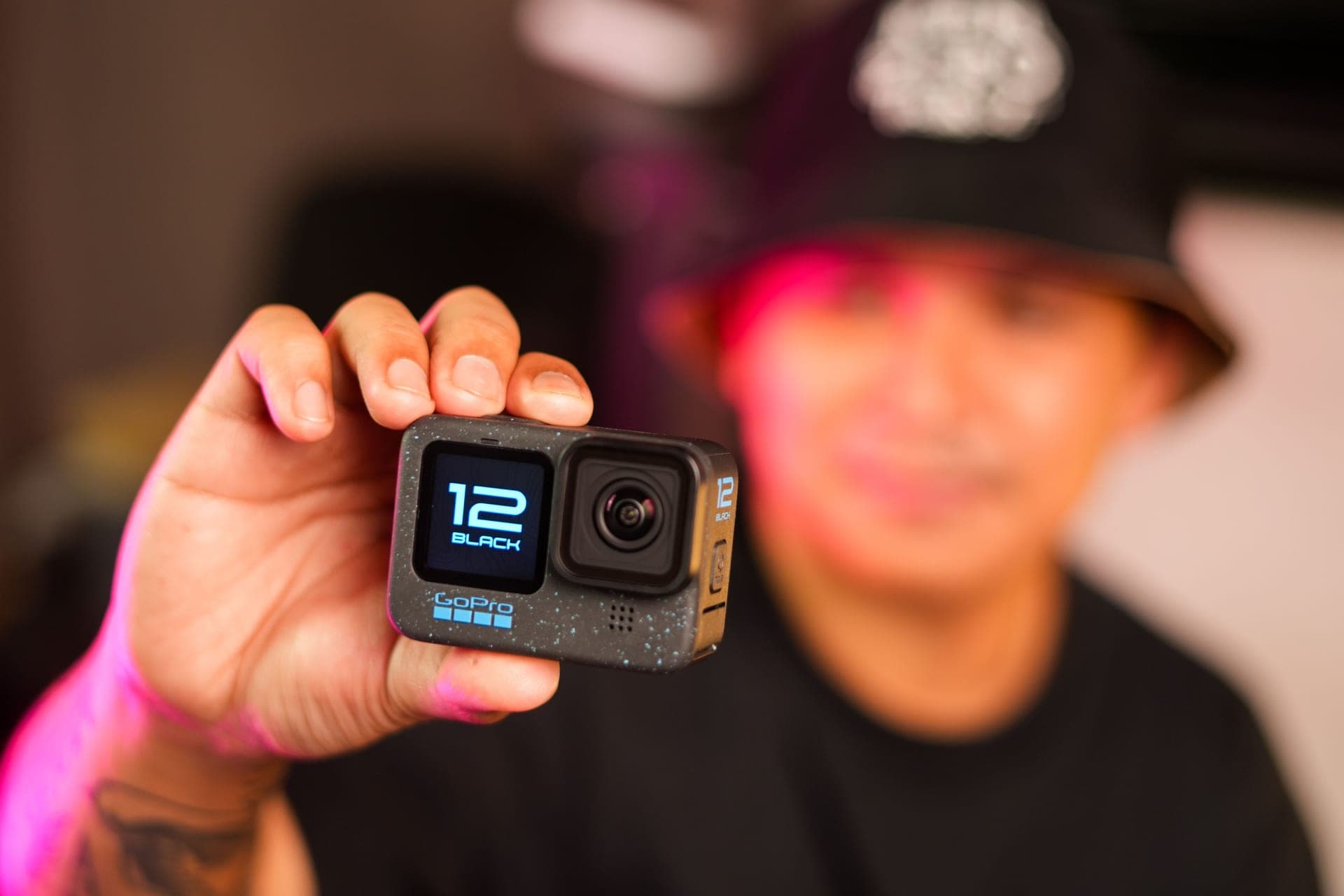
Choose an action camera on six specifications, in this order: bare waterproof depth, mount ecosystem, battery and cold rating, stabilization, sensor size, and whether the lens is replaceable. Resolution belongs at the bottom of the list — every current camera shoots more resolution than the screen you will watch it on, and 4K/60 is the useful ceiling for almost everyone. Before any of that, answer three questions about yourself: how wet does it get, what are you mounting it to, and how long is the longest day. Those three answers eliminate most of the market before you read a single spec sheet, which is the point.
First, three questions about you
Spec sheets are useless until you know what you are filtering for. These three answers do more work than any comparison table.
How wet does it actually get? Be specific and be honest. Rain and a splash is a different camera from snorkeling, which is a different camera from scuba. Most people overestimate this and buy depth they never use; a few underestimate it and flood a camera in year one.
What are you attaching it to? A helmet, a chest, a kayak deck, a handlebar, a surfboard, your shirt. Each of those has a different mount and some of them only exist properly in one brand's ecosystem. A kayak deck in particular needs a mechanical mount, not a magnet — what actually fits what is the map.
How long is the longest day? Clips across an afternoon is a different purchase from recording continuously for four hours. If the answer is the second one, battery stops being a feature and becomes the deciding specification.
The six specifications, in order
1. Bare waterproof depth. First on this site because it eliminates a whole class of anxiety and a whole class of accessory. A camera rated to 20m never needs a housing for anything you are likely to do, which means never losing the audio, never fitting an anti-fog insert and never checking a gasket. The current spread is 16ft (5m) at the bottom to 20m at the top, and the difference in use is enormous. The full table is in the best waterproof action cameras, and whether you need a case at all is in do you need a protective housing.
2. The mount ecosystem. The most underweighted specification in the category, because it is not on the spec sheet at all. GoPro's two-prong fingers plus a 1/4-20 thread is the de facto standard: chest harnesses, suction cups, clamps, poles, adhesive pads and third-party kayak hardware all exist for it off the shelf. DJI and Insta360 are both smaller ecosystems where adapters are a separate purchase. If your gear cupboard already has GoPro mounts in it, switching brands costs more than the sticker difference.
3. Battery, and specifically the cold rating. Capacity in mAh tells you less than you think, because published runtimes are measured at low resolution with the screens off. What matters more is whether the camera publishes an operating temperature. Cold is the real killer: a camera that ran ninety minutes in July manages thirty in January. DJI publishes -20°C on its current cameras; GoPro rates the Enduro cell for full functionality to 14°F (-10°C). The behavior is explained in action camera battery life compared.
4. Stabilization. All three flagship systems are good. The useful distinction is horizon lock — whether the camera can hold a level horizon while the mount rolls — because that is what makes footage from a kayak, a bike or a running chest harness watchable rather than seasick. Treat the brand names as roughly equivalent and check for horizon lock specifically. What each system does is in HyperSmooth vs FlowState vs RockSteady.
5. Sensor size. This is what decides image quality, not resolution. The current flagships cluster around 1/1.3 inch, which is where the meaningful jump happened; smaller sensors show it first in low light and flat weather, which on a lake in October is most of the time. A handful of cameras go bigger — see action cameras with a 1-inch sensor for what actually exists there.
6. Whether the lens is replaceable. Last on the list and first in importance if you surf, mountain bike or spend time in sand. A scratched front element is haze in every frame forever and cannot be edited out. GoPro's replaceable lens cover makes it a $20 consumable; the Insta360 X5's user-replaceable lenses do the same for a 360 camera. On a camera with a fixed lens, the first deep scratch is the end.
| Specification | What to look for | What not to be sold on |
|---|---|---|
| Waterproof depth | The BARE rating, with no case fitted | "60m" that belongs to a separate housing |
| Mounts | Two-prong plus 1/4-20, and third-party support | A big bundle of included plastic adapters |
| Battery | A published operating temperature | mAh on its own, or a runtime with no conditions |
| Stabilization | Horizon lock specifically | The brand name of the algorithm |
| Sensor | Physical sensor size | Megapixels, or video resolution |
| Lens | A replaceable cover or replaceable lenses | Scratch-resistant coating claims |
| Resolution | 4K/60 as the useful ceiling | 8K, unless you genuinely crop in an edit |
| Audio | Whether a real mic input exists at all | Wind-reduction modes |
Flat camera or 360 camera?
This is a fork rather than a spec, and it is worth deciding early because the two formats produce different amounts of work.
A flat camera records what it is pointed at. You aim it, you shoot, you have a clip. A 360 camera records everything and you choose the angle afterwards, which means you never miss a shot and you also cannot skip the reframing pass. One is "shoot and done"; the other is "shoot now, decide later, work later".
The 360 format is genuinely the right answer for self-filming on the water, for cycling where you want both directions recorded, and for anyone who enjoys editing. It is the wrong answer for anybody short of time. The full version is in 360 camera vs action camera.
How much to spend, and on what
One rule that holds up: budget for the camera plus one mount plus a fast card plus a float, and treat that as the price. A flagship camera with no mount and a slow card is a worse purchase than a mid-range camera with the right mount and a V30 card, because the first one records badly from the wrong position and the second one records well from the right one.
If the total is over budget, cut the camera before you cut the mount or the card. The budget bodies worth considering are in the best budget action cameras, and the honest accessory list is the first five accessories.
One more honest check before you buy anything: if what you actually want to film is dry, static and in good light, the phone in your pocket is a better camera than any of these. An action camera earns its money when the shot is wet, mounted or hands-free. That argument is made properly in action camera vs phone and, for the brand question specifically, in do you need a GoPro.
Where to go next, by what you are filming
Water. Start at kayaking or snorkeling, since those two set the depth and mount requirements for everything else wet.
Bikes and trail. Mountain biking for rough ground, road cycling for the both-directions argument.
Family and travel. Family travel, or kids if the camera is for them.
Everything at once. The main roundup, which is the generalist answer and ranks on exactly the six specifications above.
01
Where the four honest answers land
Once you have worked through the six specifications below, almost everybody ends up at one of these four. They are the ecosystem pick, the depth-and-endurance pick, the image-quality pick and the budget pick.
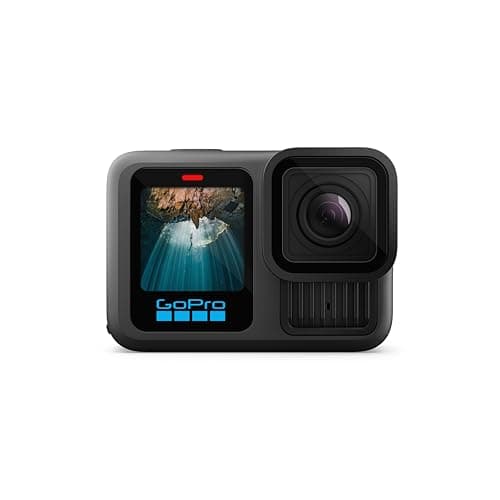
- 33ft (10m), no housing
- 1900mAh Enduro
- 1.5h at 5.3K30 / 2.5h at 1080p30
- 8.0
- 9.5
- 8.5
- 9.5
- 9.0
GoPro HERO13 Black
GoPro
The safest default for lake and trail: 33ft without a housing, the steadiest footage in the category, and a mount for literally everything.
Anyone who wants one camera to handle the kayak, the bike and the family trip
- HyperSmooth 6.0 with AutoBoost is the steadiest stabilization we can find published figures for
- Built-in mounting fingers plus 1/4-20 threads — it fits the GoPro ecosystem and a normal tripod
- Enduro battery is rated to keep full camera functionality down to 14°F (-10°C)
- Replaceable lens cover, so a scratched lens is a $20 problem and not a $400 one
- 33ft is shallower than the DJI and it is the shallowest of the three flagships
- Anything past 33ft needs the separate Protective Housing
- HB-Series lenses and ND filters are all extra purchases
Specs from GoPro HERO13 Black published specifications.
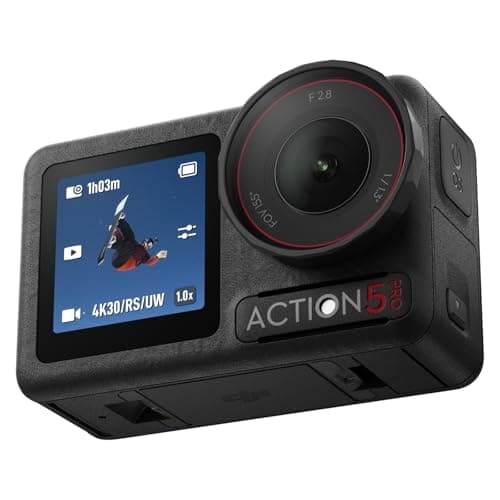
- 20m bare / 60m with case
- 1950mAh · 240 min at 1080p24
- -20° to 45°C
- 9.5
- 9.0
- 9.5
- 8.0
- 9.0
DJI Osmo Action 5 Pro
DJI
Goes to 20m with no housing at all and publishes a 240-minute runtime — the two numbers that decide a long, wet, cold day.
Long paddles, cold water, and anyone tired of buying a housing to get past 10m
- 20m without the Waterproof Case — double the bare-camera depth of the HERO13 Black
- DJI publishes 240 minutes of recording at 1080p/24 with screens off, the longest figure in this set
- Rated to -20°C, which matters more on an October lake than any resolution number
- 1/1.3-inch sensor holds detail when the light goes flat
- Mount ecosystem is smaller than GoPro's, and magnetic quick-release adapters are their own purchase
- 146g — the heaviest of the flagship three
- Fewer third-party mounts and filters exist for it
Specs from DJI Osmo Action 5 Pro published specifications.
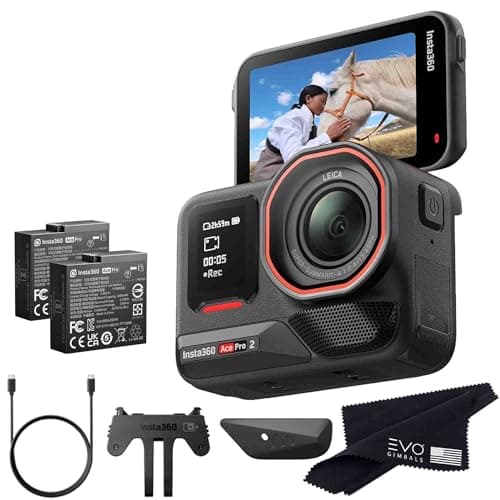
- 39ft (12m) / 60m with dive case
- 1800mAh · 180 min published
- 1/1.3" with Leica lens
- 8.5
- 8.5
- 9.0
- 7.5
- 9.5
Insta360 Ace Pro 2
Insta360
The best-looking image of the three flagships, with a flip screen that finally makes a chest-mounted shot something you can frame.
Family trips where you want the footage to look like more than dashcam clips
- 8K30 with a 1/1.3-inch sensor — the most detail in the group
- 12m bare, which clears every snorkel depth without a housing
- 180-minute published battery life and 80% charge in 18 minutes
- Flip screen means you can frame a shot you are standing in front of
- 12m is still short of the DJI's 20m
- The dive case is a separate purchase for anything past 12m
- Fewer mount options than GoPro, and an adapter tax if you switch
Specs from Insta360 Ace Pro 2 published specifications.
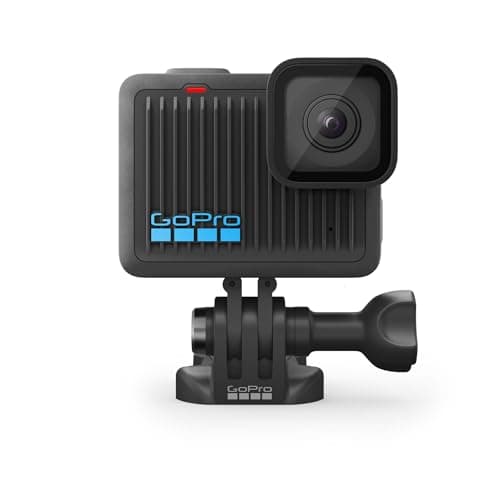
- 16ft (5m)
- 4K30, 2.7K60 slo-mo
- Built in, not user-removable
- 6.0
- 7.5
- 6.0
- 9.0
- 7.0
GoPro HERO (2024)
GoPro
The cheapest real GoPro, and the one whose 16ft rating you have to take seriously before you take it snorkeling.
A first camera, a kid's camera, or a second angle that mounts anywhere
- Genuinely tiny — 46% less mass than HERO13 Black
- Built-in mounting fingers, and GoPro lists it as compatible with 35+ mounts
- HyperSmooth stabilization at the lowest GoPro price
- Simple enough to hand to someone who has never used one
- 16ft (5m) is a snorkel-adjacent rating, not a diving one
- The battery is built in — you cannot carry a spare, you carry a power bank
- 4K30 is the ceiling; no 4K60, no high-frame-rate 4K
Specs from GoPro HERO published specifications.
02
How we picked
We do not lab-test, bench-test or dive-test cameras, and we do not own test units. What we do instead is read the manufacturer's published specifications, read the independent reviews that genuinely do test, read owner reports for the failure modes specs never mention — fogging, salt corrosion, cold battery collapse, mount slippage — and then weight all of it for action cameras used on lake and trail. Where a number is not published, the page says “not published” rather than filling the cell.
The full method, including what we refuse to do, is on the editorial policy page.
- 30%Water survival
- Rated depth without a case, door design, and what the manufacturer actually publishes.
- 25%Stabilization in chop
- A kayak deck and a rooty trail shake in ways a handheld walk test never shows.
- 20%Battery in the cold
- Published runtime, spare-battery cost, and whether it charges while recording.
- 15%Mount ecosystem
- Finger mount, threaded, magnetic — and how much of it you have to re-buy.
- 10%Footage you will keep
- Lens replaceability, low-light behavior, and how much cutting the footage needs.
03
Questions people actually ask
01What should I look for when buying an action camera?
Six specifications, in this order: bare waterproof depth, mount ecosystem, battery and cold rating, stabilization with horizon lock, sensor size, and whether the lens is replaceable. Resolution belongs last — 4K/60 is the useful ceiling for almost everyone.
02Does resolution matter on an action camera?
Much less than the box implies. Every current camera exceeds the screen you will watch it on. Resolution above 4K exists so you can crop or reframe in an edit, and it costs you battery, card space and editing time to buy that option.
03Which specification decides image quality?
Sensor size, not resolution or megapixels. The current flagships cluster around 1/1.3 inch; smaller sensors show the difference first in low light and flat weather, which is most of the autumn.
04Why does the mount ecosystem matter so much?
Because it is the hidden cost of the purchase. GoPro's two-prong standard has chest harnesses, clamps, suction cups and third-party kayak hardware off the shelf; other ecosystems need adapters that are separate purchases. A cheaper camera can end up the more expensive decision.
05How much waterproof depth do I need?
Snorkeling and swimming happen in the top five meters, so 10m covers nearly everything with margin. 5m works but requires care. Buy more depth to remove the housing from your life, not because you plan to dive — if you do plan to dive, you need a housing regardless.
06Should I buy a 360 camera instead?
Only if you enjoy editing. A 360 camera means you never miss a shot and never have to aim, and it means every clip needs a reframing pass before anyone else can watch it. For self-filming on water it is genuinely the better format; for shoot-and-done it is the wrong one.
04
Read this next
The best action cameras
The generalist ranking, built on exactly these six specifications.
GoPro vs Insta360 vs DJI
The brand-level version of the ecosystem argument.
360 camera vs action camera
The format fork, and what the reframing step really costs.
The first five accessories
Budget for the camera plus these, and treat that as the price.
The best budget action cameras
If the total is over budget, this is where to cut the body rather than the mount.
05
Sources
- GoPro HERO13 Black published specifications
- DJI Osmo Action 5 Pro published specifications
- Insta360 Ace Pro 2 published specifications
- GoPro HERO published specifications
Specifications are quoted from the manufacturer pages above as they read on the dates shown. Where a figure is not published, this site says so rather than estimating one. We have not tested these products.