Action cameras with a 1-inch sensor
The honest answer is that this category does not have one yet. The useful answer is what the biggest sensors actually are, and when the difference shows.
Part of Cameras.
We earn a commission if you buy through our links, at no extra cost to you. It never changes what we recommend or the order we rank it in — how this works.
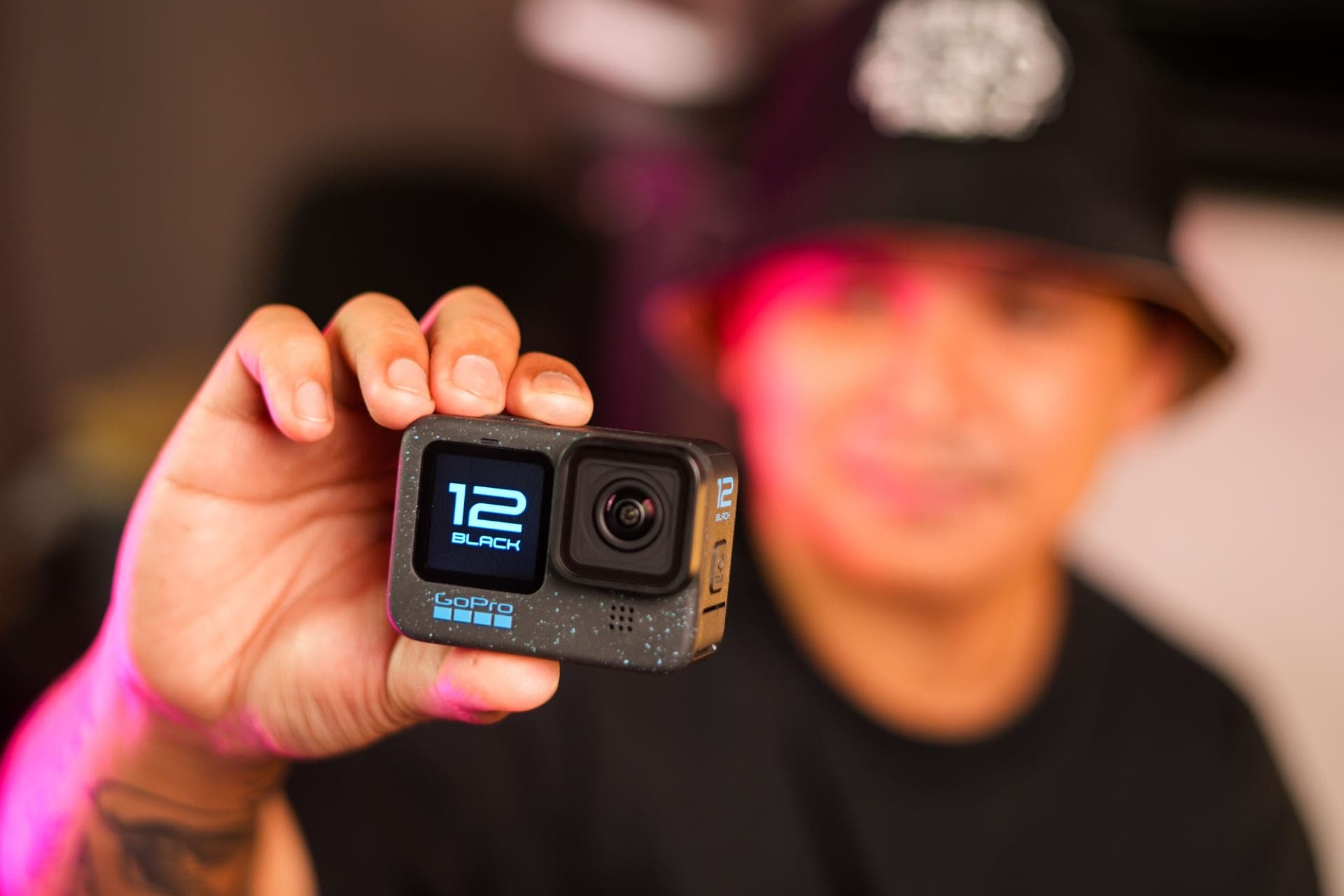
We have found no current mainstream action camera that publishes a 1-inch sensor. The largest published figures in this category are 1/1.3-inch — used by the Insta360 Ace Pro 2, the DJI Osmo Action 5 Pro and the DJI Osmo Action 4 — and 1/1.28-inch in the tiny Insta360 GO Ultra. A 1-inch sensor is roughly four times the area of a 1/1.3-inch one, and nothing with waterproofing, mounting fingers and a hundred-and-fifty-gram body currently carries one. If a listing claims a 1-inch sensor on an action camera at a low price, treat it as a specification worth verifying on the manufacturer's own page before you buy.
What the published figures actually are
Every number below is quoted from the manufacturer's own specification page, read on 2026-09-23. Where a manufacturer does not publish a sensor size, the row says so — that is a complete answer, and we do not fill the cell with an inference.
| Camera | Published sensor size | Notes |
|---|---|---|
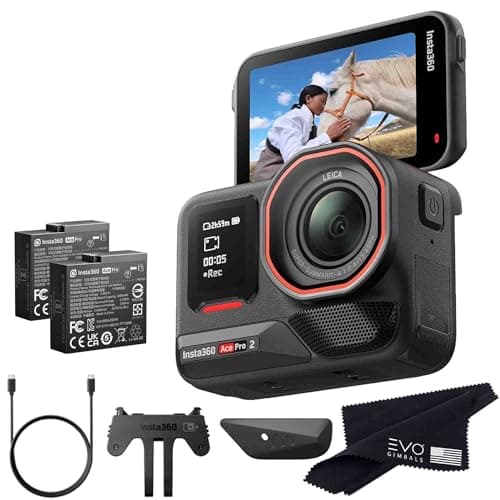
| Insta360 Ace Pro 2 | 1/1.3" with a Leica lens | The largest published figure here, 8K30 |
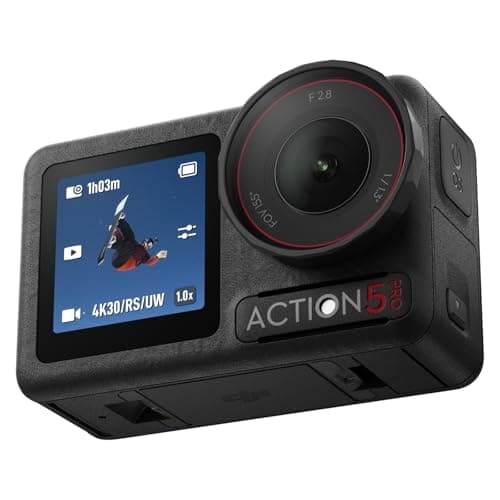
| DJI Osmo Action 5 Pro | 1/1.3" | Also 20m bare and 240 published minutes |
| DJI Osmo Action 4 | 1/1.3" | Same sensor size as its replacement |
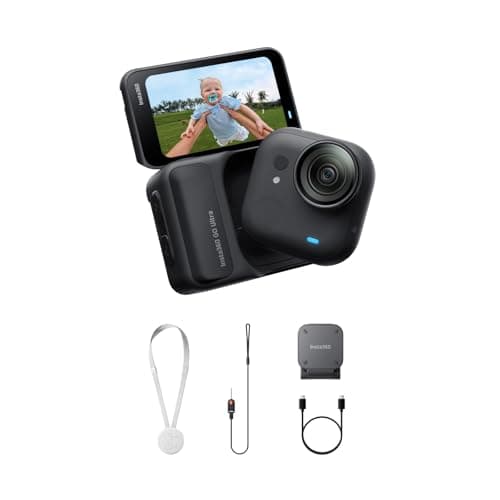
| Insta360 GO Ultra | 1/1.28" | In a 53g body, which is the remarkable part |
| GoPro HERO13 Black | Not published | GoPro does not publish a sensor size on the page we read |
| GoPro HERO (2024) | Not published | 4K30 ceiling |
| AKASO Brave 8 Lite | Not published | Low light is where the price shows |
| Insta360 X5 | Dual 360 sensors | Resolution is divided across a whole sphere |
Why “1 inch” does not mean one inch
This is worth knowing because it explains why the numbers look so strange, and it stops you comparing the wrong things.
Sensor sizes in this format are a legacy of 1950s video camera tubes. A “1-inch” vidicon tube had a glass envelope one inch in outside diameter, and the usable image area inside it was considerably smaller — roughly 16mm on the diagonal. When solid-state sensors arrived, the industry kept the old tube names for sensors of equivalent image size. So a modern “1-inch” sensor has a diagonal of around 16mm, not 25.4mm, and a “1/1.3-inch” sensor is about 9.6mm diagonal rather than any fraction of an inch you could measure.
Two practical consequences. First, the fractions are not linear and they are not intuitive: going from 1/1.3-inch to 1-inch is roughly a four-fold increase in light-collecting area, which is an enormous jump, not an incremental one. Second, because the convention is loose and unregulated, the figure is one of the easiest specifications to overstate on a marketplace listing. If the number only appears in the listing copy and not on a manufacturer's own specification page, it is not a specification.
Why no action camera has one yet
Four constraints, all pulling in the same direction, and together they explain the entire shape of this category.
A bigger sensor needs a bigger lens. Optics scale with the image circle they have to cover, so a 1-inch sensor demands a physically larger lens assembly. Action cameras are sold on being small enough to put on a helmet or a paddle shaft, and the lens is already the largest component.
Waterproofing gets harder as things get bigger. A 10m or 20m depth rating on a sealed body means every joint and every port is holding pressure. Larger internal volume and a larger front element mean more sealing surface and a bigger flat window to resist pressure across — the opposite of what you want.
Heat. Bigger sensors read out more data and generate more heat, in a sealed body with no airflow by design. Overheating shutdowns are already the limiting factor on long high-resolution takes — this is the whole subject of stop fogging and overheating — and a four-times-larger sensor would make it worse before it made anything better.
Power. More data read more often costs battery, and battery is already the specification that decides what you come home with from a long day. The runtime comparison is in action camera battery life compared.
The 1/1.3-inch generation is the current answer to all four at once, and it is a genuine step up from where this category was a few years ago. Whether that step is visible is a separate question.
Resolution is not sensor size, and the difference matters
A lot of listings use the two interchangeably. They are unrelated specifications, and conflating them is how people end up disappointed.
Sensor size is how much light the camera can collect. It sets the floor on noise and the quality of the image in poor conditions.
Resolution is how finely that light is divided. 8K on a small sensor means a very large number of very small photosites, each collecting very little light — which is why a cheap 4K camera and a flagship 4K camera look nothing alike despite the identical headline figure.
In practice, a 1/1.3-inch sensor at 4K will beat a much smaller sensor at 8K in every condition except bright sun, and it will cost you less battery and card space doing it. If you are choosing between headline numbers, choose the sensor.
The 360 cameras are a third case worth flagging, because the arithmetic is different again: an Insta360 X5 divides its capture across an entire sphere, so a reframed clip is softer than a flat camera's native output at the same nominal resolution. That is geometry rather than a flaw — explained in 360 camera vs action camera.
If you genuinely need a 1-inch sensor
Then the honest advice is that you are shopping in the wrong category, and that is not a criticism of either you or the category.
Larger sensors live in compacts, mirrorless bodies and some drones, and they come with the trade that defines those categories: they are not waterproof to 10 meters, they do not mount to a helmet, and they do not survive a kayak. If sensor size is your top priority and the camera does not have to go anywhere hostile, a conventional camera will beat anything on this site at it. If the camera does have to go somewhere hostile, 1/1.3-inch is the current ceiling and the Insta360 Ace Pro 2 is where we would start — its full specification read is in the Ace Pro 2 specs page.
The broader version of that trade-off, with the cases where each wins, is in action camera vs mirrorless.
How to verify a sensor claim before you buy
Three checks, in order, and they take two minutes.
Find the figure on the manufacturer's own specification page. Not the marketplace listing, not a review, not the product photo. If the only place a sensor size appears is a seller's bullet list, treat it as marketing copy.
Check whether the manufacturer publishes anything else. A brand that publishes depth ratings, operating temperature and runtimes is a brand that publishes. One whose page is all adjectives is not, and the sensor figure is no more reliable than the rest of it.
Sanity-check against the price and the size. A four-fold increase in sensor area is one of the most expensive things in a camera. A body claiming it at a fraction of flagship money, in a smaller package, is claiming something the physics does not support cheaply.
01
The largest sensors you can actually buy in an action camera
These are the three bodies with the biggest published sensor figures in the cameras we rank. None is a 1-inch sensor, and we would rather say so than imply otherwise.
- 39ft (12m) / 60m with dive case
- 1800mAh · 180 min published
- 1/1.3" with Leica lens
- 8.5
- 8.5
- 9.0
- 7.5
- 9.5
Insta360 Ace Pro 2
Insta360
The best-looking image of the three flagships, with a flip screen that finally makes a chest-mounted shot something you can frame.
Family trips where you want the footage to look like more than dashcam clips
- 8K30 with a 1/1.3-inch sensor — the most detail in the group
- 12m bare, which clears every snorkel depth without a housing
- 180-minute published battery life and 80% charge in 18 minutes
- Flip screen means you can frame a shot you are standing in front of
- 12m is still short of the DJI's 20m
- The dive case is a separate purchase for anything past 12m
- Fewer mount options than GoPro, and an adapter tax if you switch
Specs from Insta360 Ace Pro 2 published specifications.
- 20m bare / 60m with case
- 1950mAh · 240 min at 1080p24
- -20° to 45°C
- 9.5
- 9.0
- 9.5
- 8.0
- 9.0
DJI Osmo Action 5 Pro
DJI
Goes to 20m with no housing at all and publishes a 240-minute runtime — the two numbers that decide a long, wet, cold day.
Long paddles, cold water, and anyone tired of buying a housing to get past 10m
- 20m without the Waterproof Case — double the bare-camera depth of the HERO13 Black
- DJI publishes 240 minutes of recording at 1080p/24 with screens off, the longest figure in this set
- Rated to -20°C, which matters more on an October lake than any resolution number
- 1/1.3-inch sensor holds detail when the light goes flat
- Mount ecosystem is smaller than GoPro's, and magnetic quick-release adapters are their own purchase
- 146g — the heaviest of the flagship three
- Fewer third-party mounts and filters exist for it
Specs from DJI Osmo Action 5 Pro published specifications.
- IPX8 to 33ft (10m), camera only
- 53g
- Up to 170 min with the Action Pod
- 7.0
- 8.0
- 7.5
- 8.0
- 8.0
Insta360 GO Ultra
Insta360
53 grams and IPX8 to 10m on its own — the camera you actually clip on for a paddle instead of leaving in the dry bag.
Hands-free clips where a full-size camera would never leave the bag
- 53g means it goes on a hat brim, a PFD strap or a chest magnet and you forget it is there
- IPX8 to 10m for the camera itself, with a 1/1.28" sensor that is far larger than the size suggests
- Action Pod adds a flip screen and the long runtime when you want it
- Removable microSD, so you are not stuck with fixed onboard storage
- The Action Pod is not rated to the same depth as the camera — read the two ratings separately
- Magnetic mounting is convenient but is not a mechanical lock in real chop
- No interchangeable lens cover, so a scratch is permanent
Specs from Insta360 GO Ultra published specifications.
02
How we picked
We do not lab-test, bench-test or dive-test cameras, and we do not own test units. What we do instead is read the manufacturer's published specifications, read the independent reviews that genuinely do test, read owner reports for the failure modes specs never mention — fogging, salt corrosion, cold battery collapse, mount slippage — and then weight all of it for action cameras used on lake and trail. Where a number is not published, the page says “not published” rather than filling the cell.
The full method, including what we refuse to do, is on the editorial policy page.
- 30%Water survival
- Rated depth without a case, door design, and what the manufacturer actually publishes.
- 25%Stabilization in chop
- A kayak deck and a rooty trail shake in ways a handheld walk test never shows.
- 20%Battery in the cold
- Published runtime, spare-battery cost, and whether it charges while recording.
- 15%Mount ecosystem
- Finger mount, threaded, magnetic — and how much of it you have to re-buy.
- 10%Footage you will keep
- Lens replaceability, low-light behavior, and how much cutting the footage needs.
03
Questions people actually ask
01Is there an action camera with a 1-inch sensor?
We have found no current mainstream action camera that publishes one. The largest published figures are 1/1.3-inch on the Insta360 Ace Pro 2 and both DJI Osmo Action bodies, and 1/1.28-inch on the Insta360 GO Ultra.
02Which action camera has the biggest sensor?
Among the cameras we rank, the Insta360 Ace Pro 2 and the DJI Osmo Action 5 Pro and Action 4 all publish 1/1.3-inch sensors, which is the largest figure in the category. GoPro does not publish a sensor size on the specification pages we read.
03How much better is a 1-inch sensor than a 1/1.3-inch one?
Roughly four times the light-collecting area, which is a large difference in poor light and almost invisible in bright sun. The sensor-size naming convention is not linear, which is why the fractions mislead.
04Does a bigger sensor mean sharper footage?
Not in good light. It means less noise and better detail retention when light is short — overcast days, dusk, under trees and underwater. In bright sun, resolution and lens quality matter more.
05Why is a 1-inch sensor not actually one inch across?
The naming comes from 1950s video camera tubes, where a one-inch tube had a usable image area of about 16mm diagonal. The industry kept the old tube names for equivalent solid-state sensors, so the fractions describe a historical convention rather than a measurement.
04
Read this next
Action camera vs mirrorless
Where to go if sensor size genuinely is your top priority.
Insta360 Ace Pro 2: the official specs
The largest sensor you can buy in a waterproof, mountable body.
The best action cameras
The whole field, ranked on more than one specification.
360 camera vs action camera
Why a 360 camera's resolution figure works differently again.
Stop fogging and overheating
The heat constraint that keeps sensors in this category small.
05
Sources
- Insta360 Ace Pro 2 published specifications
- DJI Osmo Action 5 Pro specifications
- Insta360 GO Ultra published specifications
Specifications are quoted from the manufacturer pages above as they read on the dates shown. Where a figure is not published, this site says so rather than estimating one. We have not tested these products.