Action camera vs mirrorless
One of these two makes a noticeably better picture. The other one is the one that was actually there when something happened.
Part of Cameras.
We earn a commission if you buy through our links, at no extra cost to you. It never changes what we recommend or the order we rank it in — how this works.
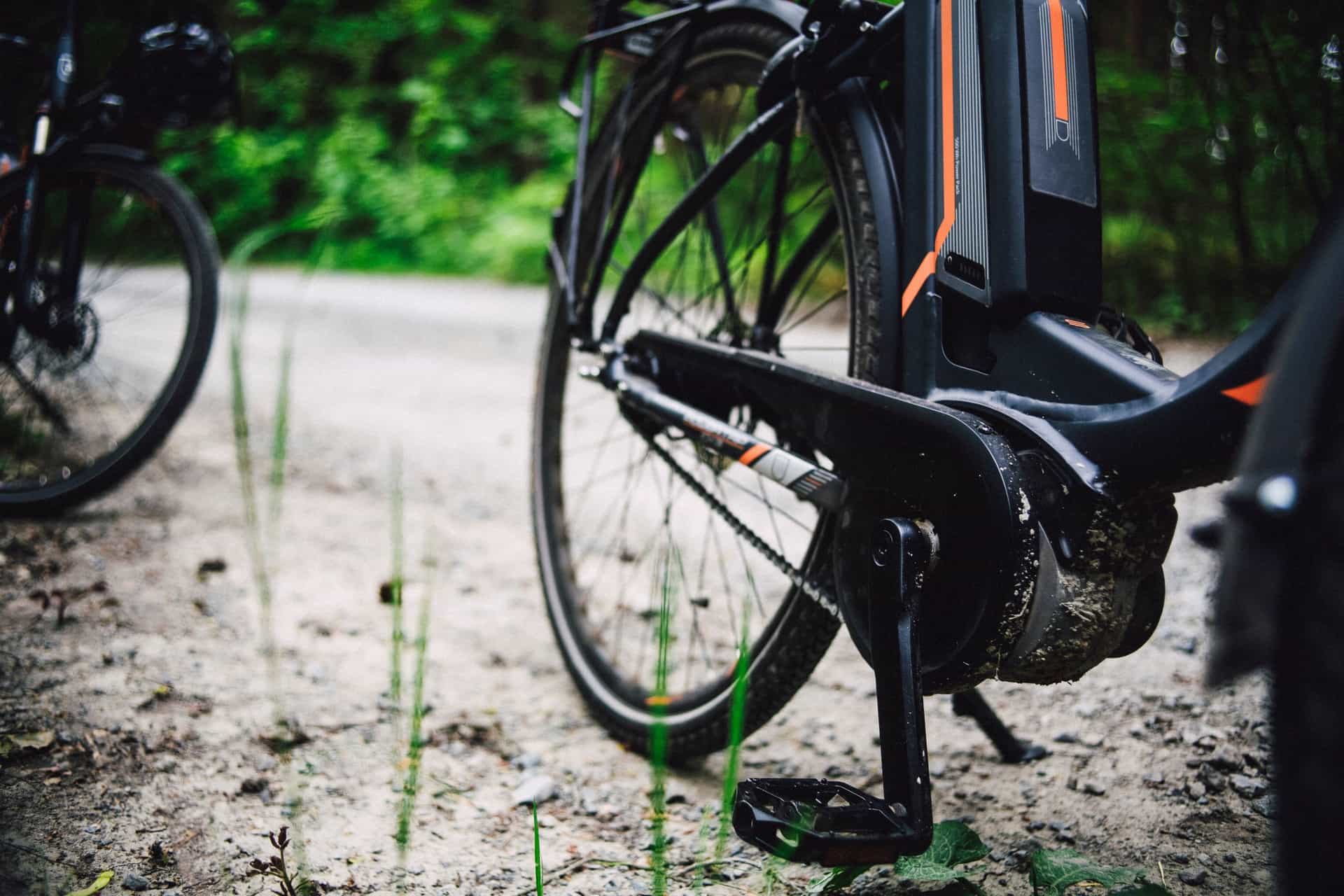
A mirrorless camera produces a clearly better image; an action camera produces footage of things a mirrorless camera could not have been pointed at. Buy mirrorless if the subject holds still, the light is controllable and you want shallow depth of field, interchangeable lenses and professional audio inputs. Buy an action camera if the camera has to be waterproof, mounted, worn, or taken somewhere you would not take an expensive interchangeable-lens body — which is every use case on this site. For lake and trail video specifically, the action camera is the right first purchase, and the honest reason is not image quality: it is that it is the camera that will actually be with you.
The comparison that matters
Specification-for-specification this is a mismatch, and pretending otherwise would be useless. A mirrorless camera wins on sensor size, lens choice, dynamic range, low light, audio inputs and depth of field — all of it, not narrowly. The question is never which produces the better picture. It is which picture you end up with.
| Action camera | Mirrorless | |
|---|---|---|
| Image quality in good light | Good | Clearly better |
| Image quality in poor light | Limited by a small sensor | Much better |
| Waterproof without a case | 5-20m depending on model | No — splash resistance at best |
| Mountable on a helmet, hull or bar | Designed for it | No |
| Lens choice | Fixed, ultra-wide | Interchangeable, any focal length |
| Depth of field control | Effectively none | A primary creative tool |
| Stabilization while moving | Excellent, built for it | Good in body; needs a gimbal for walking |
| Professional audio inputs | Via accessories, with compromises | Standard |
| Weight you will actually carry | Pocketable | A decision each time |
| Cost of destroying it | Replaceable | Significant |
What an action camera is genuinely better at
Five things, and none of them are image quality.
Being wet. Current action cameras publish bare depth ratings between 5m and 20m. No mirrorless body does, at any price — weather sealing on a conventional camera means rain and spray, not submersion. Everything on the water side of this site is a use case where a mirrorless camera is simply not a candidate.
Being mounted. An action camera is designed around a mounting interface — two-prong fingers, magnetic quick release, a 1/4-20 thread. It bolts to a helmet, a kayak deck, a paddle shaft or a handlebar. The whole mounts section exists because of this, and there is no equivalent ecosystem for a mirrorless body because nobody wants a kilogram on their helmet.
Stabilizing violent motion. In-body stabilization on a conventional camera is designed for handheld shake. Action camera stabilization is designed for a camera strapped to something that is being thrown around, and it is genuinely in a different class at that specific job — HyperSmooth vs RockSteady vs FlowState covers the three systems.
Being expendable. This matters more than people admit. A camera you are frightened of damaging gets left in the car, and a shot you did not take has no image quality at all. The replaceable lens cover on a HERO13 Black is the small version of the same principle.
Ultra-wide, up close. The fixed ultra-wide lens is usually listed as a limitation and it is also the format's signature look: a camera eighteen inches from your face on a chest mount with the whole landscape behind you is a shot that genuinely needs that lens.
What a mirrorless camera is genuinely better at
Low light, by a wide margin. Sensor area is the whole game when light is short, and the gap is enormous — the largest sensor published in an action camera is 1/1.3-inch, which is a fraction of even an APS-C frame. Dusk, interiors and night are where an action camera visibly runs out. What the largest action camera sensors actually are has the numbers.
Separating a subject from a background. Shallow depth of field is a creative tool that action cameras do not have at all. An ultra-wide lens on a small sensor holds effectively everything in focus, which is useful for context and useless for a portrait.
Reach. Wildlife, a face across a lake, anything far away. An action camera has one wide lens and digital cropping, which is not reach.
Audio, properly. Standard microphone inputs, no waterproof membrane in the way, no accessory that voids the water rating.
Stills. A mirrorless camera is a photo camera first. Action camera stills are frames from a video sensor through an ultra-wide lens, and they look like it.
So which, for lake and trail video?
The action camera, and the reasoning is about where the camera is rather than what it can do.
Outdoor video is mostly recorded while your hands are occupied, in weather, on or near water, from a moving platform. In those conditions a mirrorless camera is either in a bag or at risk. An action camera is on your chest, your helmet or your deck, already running. Over a season you will come home with more usable footage from the worse camera, by a large margin, and that is not a compromise — it is the correct answer to the actual problem.
There is one real exception: a trip where the goal is a small number of considered shots rather than a record of the day. Golden hour at a lake, a planned portrait, a wildlife sit. Different job, different tool.
The setup most people actually end up with
An action camera for everything that happens while moving, and a phone for the stills and the occasional considered shot. That combination covers more ground than either a mirrorless body alone or an action camera alone, and it costs much less than both.
The phone comparison is its own page, because modern phones are genuinely good and the answer is less obvious than it used to be: action camera vs phone.
If you already own a mirrorless system and are adding an action camera, buy on mounting and water rating rather than on image quality — you already have the image-quality camera. The two bodies above are where we would start, and the whole field is ranked on the best action cameras.
What about camcorders and DSLRs?
Both come up in the same search and both resolve the same way.
A camcorder wins on long continuous recording, a real optical zoom and comfortable handheld ergonomics. It loses on everything to do with water, mounting and being worn, and it is a much larger object. Same conclusion as mirrorless, with less of an image-quality advantage.
A DSLR is a mirrorless camera with a mirror and an optical viewfinder, and for video purposes it is behind modern mirrorless on autofocus and on size while sharing all the same advantages over an action camera. Nothing in the reasoning above changes.
A gimbal plus a phone or a small camera is the other thing people compare against, and the honest answer is that in-body stabilization has taken most of its job for this use case — see do you need a gimbal.
01
If the action camera is the right answer
The safe default, the image-quality pick, and the microphone that closes most of the audio gap to a proper camera.
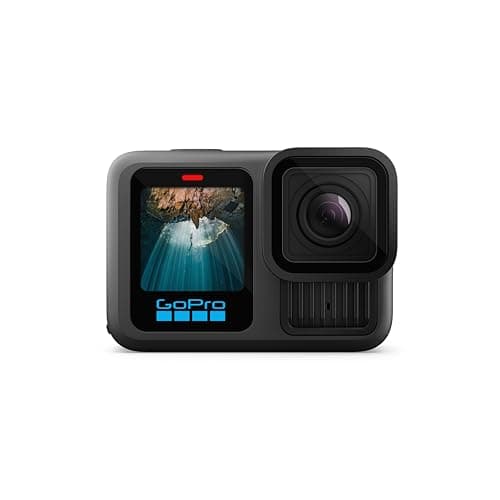
- 33ft (10m), no housing
- 1900mAh Enduro
- 1.5h at 5.3K30 / 2.5h at 1080p30
- 8.0
- 9.5
- 8.5
- 9.5
- 9.0
GoPro HERO13 Black
GoPro
The safest default for lake and trail: 33ft without a housing, the steadiest footage in the category, and a mount for literally everything.
Anyone who wants one camera to handle the kayak, the bike and the family trip
- HyperSmooth 6.0 with AutoBoost is the steadiest stabilization we can find published figures for
- Built-in mounting fingers plus 1/4-20 threads — it fits the GoPro ecosystem and a normal tripod
- Enduro battery is rated to keep full camera functionality down to 14°F (-10°C)
- Replaceable lens cover, so a scratched lens is a $20 problem and not a $400 one
- 33ft is shallower than the DJI and it is the shallowest of the three flagships
- Anything past 33ft needs the separate Protective Housing
- HB-Series lenses and ND filters are all extra purchases
Specs from GoPro HERO13 Black published specifications.
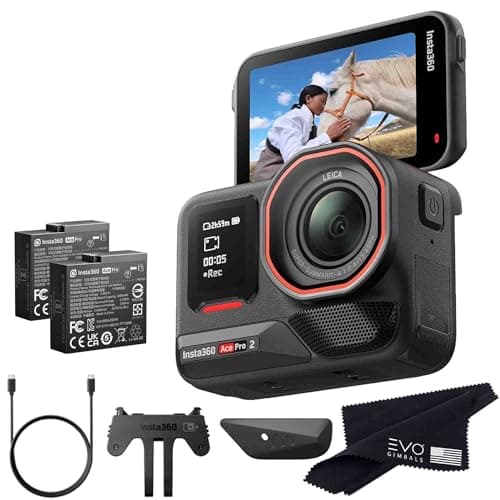
- 39ft (12m) / 60m with dive case
- 1800mAh · 180 min published
- 1/1.3" with Leica lens
- 8.5
- 8.5
- 9.0
- 7.5
- 9.5
Insta360 Ace Pro 2
Insta360
The best-looking image of the three flagships, with a flip screen that finally makes a chest-mounted shot something you can frame.
Family trips where you want the footage to look like more than dashcam clips
- 8K30 with a 1/1.3-inch sensor — the most detail in the group
- 12m bare, which clears every snorkel depth without a housing
- 180-minute published battery life and 80% charge in 18 minutes
- Flip screen means you can frame a shot you are standing in front of
- 12m is still short of the DJI's 20m
- The dive case is a separate purchase for anything past 12m
- Fewer mount options than GoPro, and an adapter tax if you switch
Specs from Insta360 Ace Pro 2 published specifications.
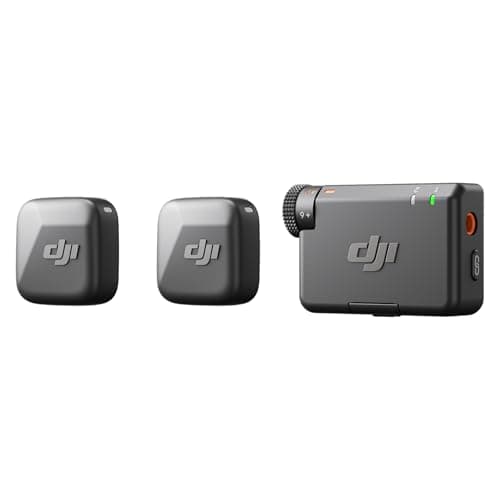
- Approx. 10g
- Approx. 11.5 hours
- 400m, unobstructed
- 8.0
- 7.0
- 4.5
- 9.5
- 9.0
DJI Mic Mini
DJI
A 10-gram transmitter with 11.5 hours of battery and 400m of range — the way to get clean voice without opening the camera up.
Narrating a trip without shouting over wind at the onboard mic
- 10g means it clips to a PFD strap and disappears
- 11.5 hours per transmitter, and the case recharges it roughly 3.6 times over
- 400m of range in the open — far past anything a paddling trip needs
- Keeps the camera sealed, unlike a wired mic adapter
- DJI does not publish a waterproof rating for the transmitter — treat it as not waterproof
- The receiver connects to non-DJI cameras via a 3.5mm cable, which usually means a media mod anyway
- Another thing to charge before a trip
Specs from DJI Mic Mini published specifications.
02
How we picked
We do not lab-test, bench-test or dive-test cameras, and we do not own test units. What we do instead is read the manufacturer's published specifications, read the independent reviews that genuinely do test, read owner reports for the failure modes specs never mention — fogging, salt corrosion, cold battery collapse, mount slippage — and then weight all of it for action cameras used on lake and trail. Where a number is not published, the page says “not published” rather than filling the cell.
The full method, including what we refuse to do, is on the editorial policy page.
- 30%Water survival
- Rated depth without a case, door design, and what the manufacturer actually publishes.
- 25%Stabilization in chop
- A kayak deck and a rooty trail shake in ways a handheld walk test never shows.
- 20%Battery in the cold
- Published runtime, spare-battery cost, and whether it charges while recording.
- 15%Mount ecosystem
- Finger mount, threaded, magnetic — and how much of it you have to re-buy.
- 10%Footage you will keep
- Lens replaceability, low-light behavior, and how much cutting the footage needs.
03
Questions people actually ask
01Is a mirrorless camera better than an action camera?
For image quality, clearly — bigger sensor, interchangeable lenses, far better low light and real depth of field control. For anything wet, mounted, worn or fast, it is not a candidate at all. They answer different questions.
02Can I use a mirrorless camera for kayaking or biking?
Not safely near water — weather sealing means rain and spray, not submersion, and no mirrorless body publishes a depth rating. On a bike it is possible in a bag or a chest harness designed for it, and it is heavy and exposed in a crash.
03Do action cameras have a 1-inch sensor like some compacts?
No. The largest published figures in the category are 1/1.3-inch and 1/1.28-inch, which is a fraction of a 1-inch sensor's area. The constraints are lens size, waterproofing, heat and battery — the detail is in action cameras with a 1-inch sensor.
04What about audio — can an action camera match a proper camera?
Not through the onboard microphone, which sits behind a waterproof membrane by necessity. With a small clip-on wireless transmitter the gap mostly closes, and it is the cheapest large improvement available to an action camera owner.
05Should I buy both?
Most people are better served by an action camera plus the phone they already own. That covers moving, wet and mounted footage plus considered stills, for far less than a second interchangeable-lens system.
04
Read this next
Action camera vs phone
The comparison most people should actually be making.
Action cameras with a 1-inch sensor
The sensor-size ceiling in this category, with the published numbers.
Do you actually need a GoPro?
The honest version of the question underneath this one.
Microphones for action cameras
Closing the one gap that is cheap to close.
Do you need a gimbal?
The other thing people compare against, assessed honestly.
05
Sources
- GoPro HERO13 Black published specifications
- Insta360 Ace Pro 2 published specifications
- DJI Mic Mini published specifications
Specifications are quoted from the manufacturer pages above as they read on the dates shown. Where a figure is not published, this site says so rather than estimating one. We have not tested these products.