GoPro alternatives worth considering
Every camera here beats a GoPro at something specific. None of them beats it at everything, and this page says which is which.
Part of Cameras.
We earn a commission if you buy through our links, at no extra cost to you. It never changes what we recommend or the order we rank it in — how this works.
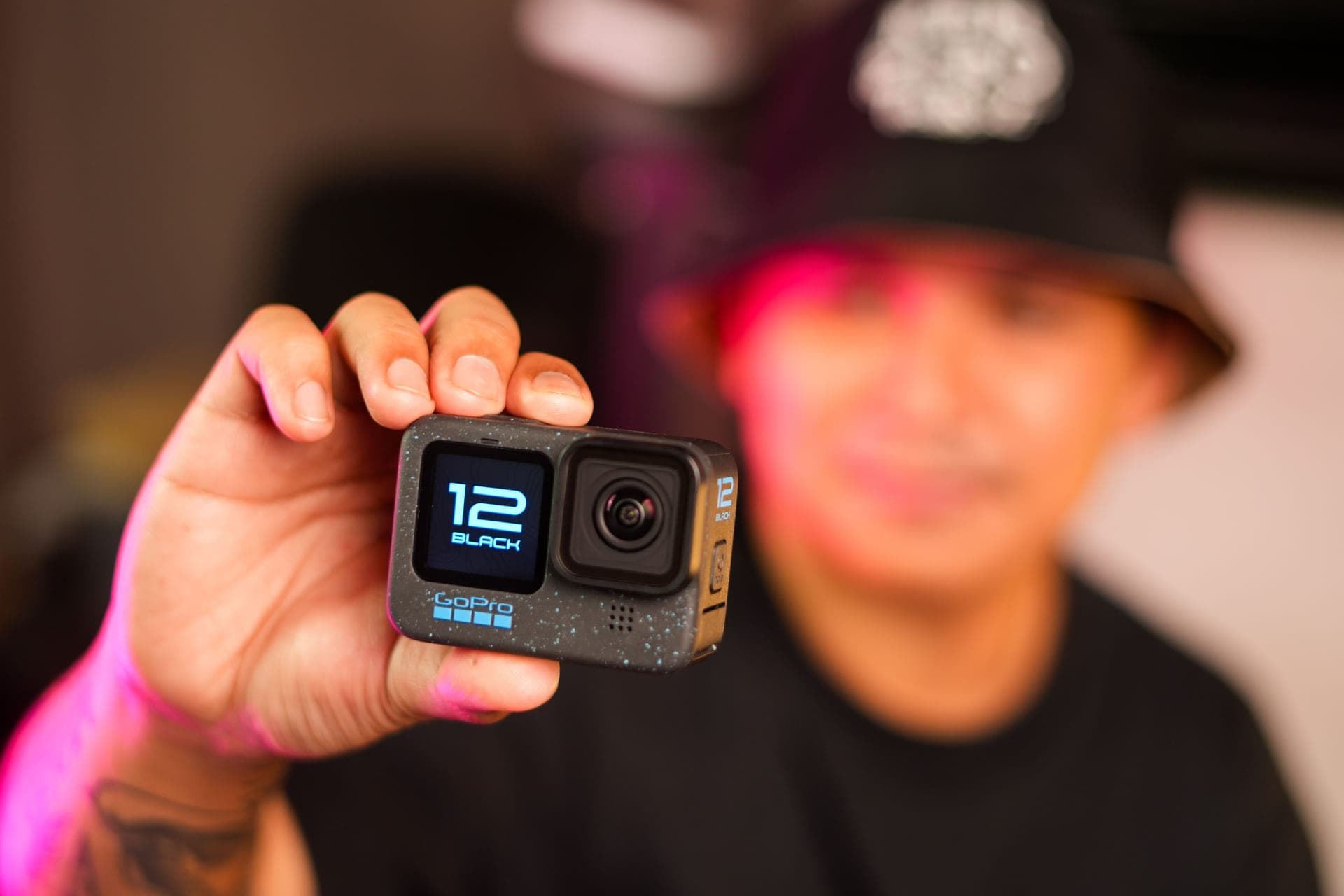
What GoPro is still best at
Worth establishing first, because an “alternatives” page that pretends the incumbent is bad is not useful.
Stabilization. HyperSmooth 6.0 with AutoBoost is the steadiest published system in the category, and the gap shows in sharp repetitive impact — rough trail, choppy water.
Mounts. Built-in two-prong fingers and a 1/4-20 thread, with an accessory ecosystem nothing else approaches. The kayak, bike and helmet worlds are all built around this fitting.
Help. Tutorials, forum answers, third-party filters and housings. For a first camera the volume of available help is a genuine part of what you are buying.
If those three are your priorities, the honest answer is that there is no alternative — buy the GoPro. Everything below is for people whose priorities are different.
| Camera | Beats GoPro at | Gives back |
|---|---|---|
| DJI Osmo Action 5 Pro | Depth (20m vs 10m), battery, cold (-20°C) | Mount ecosystem, stabilization in impact |
| Insta360 Ace Pro 2 | Image quality (1/1.3" sensor), flip screen | Mounts, no published cold figure |
| DJI Osmo Action 4 | Depth per dollar (18m), cold | Superseded; support tapers off |
| Insta360 GO Ultra | Size (53g) — the camera you actually bring | Pod rated separately, no spare battery for it |
| AKASO Brave 8 Lite | Price, and two batteries in the box | Stabilization gives up in chop |
If your priority is depth: DJI
This is the strongest single argument against a GoPro right now. 20m on the Osmo Action 5 Pro and 18m on the Action 4, against 33ft (10m) on the HERO13 Black.
That is not about diving — it is that ordinary water use stops being anywhere near the limit, and it removes an entire accessory chain. No housing means no anti-fog inserts, no muffled audio, no O-ring to inspect. The depth table has every published figure.
You give back the mount ecosystem. DJI's magnetic quick-release is faster and is not a mechanical lock; for a tall mast or rough trail you will want an adapter to a two-prong fitting.
If your priority is how it looks: Insta360
The Ace Pro 2's 1/1.3-inch sensor is larger than the HERO13 Black's 1/1.9-inch, and the difference shows on a gray morning, at dusk and underwater — which between them cover most of when people actually film outdoors.
The flip screen is the other half. If you are in front of the camera — which on a family trip or a solo paddle is most of the time — being able to see the frame is worth more than a specification.
You give back mounting again, and you lose a published cold-weather figure, which on a site that ranks by what manufacturers state counts against it.
If your priority is size: Insta360 GO Ultra
53 grams. That number does something no specification sheet captures: it makes the camera come with you.
A camera clipped to a strap gets used on days a 150-gram camera stays in the dry bag, and footage that exists beats footage that would have been slightly sharper. This is the most underrated argument on the page.
Two things to read carefully: the IPX8 10m rating is for the camera itself, and the Action Pod it docks into is a separate product with its own rating. Treating them as one thing is how people flood a GO.
If your priority is price: AKASO
IPX8 to 10m matches the HERO13 Black's bare rating on paper, and the box includes two batteries, a charger and seven mounts — which at this price is a larger part of the value than the camera itself.
You give back stabilization, and specifically stabilization in chop. On flat water at a sensible hour the difference is small. On a river or rough trail it is large and no setting recovers it. The budget roundup is blunt about where the line falls.
Which alternatives we would not recommend
Unbranded cameras with no published specifications. If a listing states a resolution and a case depth and nothing else — no sensor size, no battery capacity, no bare rating, no named stabilization system — there is nothing to evaluate. This site cannot rank a product whose manufacturer publishes nothing, and neither can you.
A phone in a waterproof pouch. It works until it does not, and the failure takes your phone with it. Action camera versus phone covers where a phone genuinely is the right tool, and this is not it.
01
The five alternatives
Ordered by how strong the argument is against a current GoPro for lake and trail use.
- 20m bare / 60m with case
- 1950mAh · 240 min at 1080p24
- -20° to 45°C
- 9.5
- 9.0
- 9.5
- 8.0
- 9.0
DJI Osmo Action 5 Pro
DJI
Goes to 20m with no housing at all and publishes a 240-minute runtime — the two numbers that decide a long, wet, cold day.
Long paddles, cold water, and anyone tired of buying a housing to get past 10m
- 20m without the Waterproof Case — double the bare-camera depth of the HERO13 Black
- DJI publishes 240 minutes of recording at 1080p/24 with screens off, the longest figure in this set
- Rated to -20°C, which matters more on an October lake than any resolution number
- 1/1.3-inch sensor holds detail when the light goes flat
- Mount ecosystem is smaller than GoPro's, and magnetic quick-release adapters are their own purchase
- 146g — the heaviest of the flagship three
- Fewer third-party mounts and filters exist for it
Specs from DJI Osmo Action 5 Pro published specifications.
- 39ft (12m) / 60m with dive case
- 1800mAh · 180 min published
- 1/1.3" with Leica lens
- 8.5
- 8.5
- 9.0
- 7.5
- 9.5
Insta360 Ace Pro 2
Insta360
The best-looking image of the three flagships, with a flip screen that finally makes a chest-mounted shot something you can frame.
Family trips where you want the footage to look like more than dashcam clips
- 8K30 with a 1/1.3-inch sensor — the most detail in the group
- 12m bare, which clears every snorkel depth without a housing
- 180-minute published battery life and 80% charge in 18 minutes
- Flip screen means you can frame a shot you are standing in front of
- 12m is still short of the DJI's 20m
- The dive case is a separate purchase for anything past 12m
- Fewer mount options than GoPro, and an adapter tax if you switch
Specs from Insta360 Ace Pro 2 published specifications.
- 18m bare / 60m with case
- 1770mAh · 160 min at 1080p24
- -20° to 45°C
- 9.0
- 8.5
- 8.5
- 8.0
- 8.0
DJI Osmo Action 4
DJI
The previous DJI flagship, still 18m bare and still on shelves — the most water rating per dollar in this list.
Buyers who want deep-water capability without paying flagship money
- 18m without a case still beats every current GoPro by a wide margin
- Same 1/1.3-inch sensor size as the Action 5 Pro
- Rated to -20°C like its replacement
- Usually the cheapest way into serious bare-camera depth
- 160 minutes published against the Action 5 Pro's 240
- Superseded, so accessories and support will taper off first
- No front OLED — the Action 5 Pro's front screen is genuinely more useful for framing
Specs from DJI Osmo Action 4 published specifications.
- IPX8 to 33ft (10m), camera only
- 53g
- Up to 170 min with the Action Pod
- 7.0
- 8.0
- 7.5
- 8.0
- 8.0
Insta360 GO Ultra
Insta360
53 grams and IPX8 to 10m on its own — the camera you actually clip on for a paddle instead of leaving in the dry bag.
Hands-free clips where a full-size camera would never leave the bag
- 53g means it goes on a hat brim, a PFD strap or a chest magnet and you forget it is there
- IPX8 to 10m for the camera itself, with a 1/1.28" sensor that is far larger than the size suggests
- Action Pod adds a flip screen and the long runtime when you want it
- Removable microSD, so you are not stuck with fixed onboard storage
- The Action Pod is not rated to the same depth as the camera — read the two ratings separately
- Magnetic mounting is convenient but is not a mechanical lock in real chop
- No interchangeable lens cover, so a scratch is permanent
Specs from Insta360 GO Ultra published specifications.
- IPX8 10m / 60m with case
- 2 × 1550mAh included
- 140 min at 4K / 150 min at 1080p
- 7.5
- 6.5
- 8.0
- 8.5
- 6.5
AKASO Brave 8 Lite
AKASO
Two batteries and a bag of mounts in the box at a fraction of flagship money — buy it knowing the stabilization gives up first.
A pool, a calm lake, a first camera you are not precious about
- IPX8 to 10m bare, which matches the HERO13 Black's rating on paper
- Ships with two batteries, a charger and seven mounts — nothing else to buy on day one
- 4K60 and dual screens at a price well under the flagships
- Uses GoPro-standard two-prong mounting, so the whole accessory world fits
- SuperSmooth stabilization is a step behind HyperSmooth and RockSteady in chop
- The 60m rating belongs to the separate housing, not the camera
- Low light is where the price shows most
Specs from AKASO Brave 8 Lite published specifications.
02
How we picked
We do not lab-test, bench-test or dive-test cameras, and we do not own test units. What we do instead is read the manufacturer's published specifications, read the independent reviews that genuinely do test, read owner reports for the failure modes specs never mention — fogging, salt corrosion, cold battery collapse, mount slippage — and then weight all of it for action cameras used on lake and trail. Where a number is not published, the page says “not published” rather than filling the cell.
The full method, including what we refuse to do, is on the editorial policy page.
- 30%Water survival
- Rated depth without a case, door design, and what the manufacturer actually publishes.
- 25%Stabilization in chop
- A kayak deck and a rooty trail shake in ways a handheld walk test never shows.
- 20%Battery in the cold
- Published runtime, spare-battery cost, and whether it charges while recording.
- 15%Mount ecosystem
- Finger mount, threaded, magnetic — and how much of it you have to re-buy.
- 10%Footage you will keep
- Lens replaceability, low-light behavior, and how much cutting the footage needs.
03
Questions people actually ask
01What is the best GoPro alternative?
The DJI Osmo Action 5 Pro, for most people on the water — 20m bare against 10m, a longer published runtime and a -20°C operating range. You give back the mount ecosystem and a little stabilization.
02Is there a cheap camera as good as a GoPro?
Not as good across the board. Budget cameras now match GoPro on waterproofing and resolution and give up stabilization in hard conditions and low-light performance. On flat water in good light the gap is genuinely small.
03Do GoPro mounts fit other brands?
Usually via an adapter — the two-prong finger interface is effectively a standard. Adapters add height and a flex point, which matters most on a long mast. Mount compatibility covers it.
04Is an older GoPro a good alternative to a new one?
Often the best value in the category. A two-generation-old body keeps most of the stabilization, all of the mount ecosystem and a similar bare rating. Inspect the door gasket before trusting it in water.
05What about unbranded cameras that look identical?
If the manufacturer publishes no sensor size, no battery capacity, no bare depth rating and no named stabilization system, there is nothing to evaluate. We do not rank products whose specifications do not exist.
04
Read this next
GoPro vs Insta360 vs DJI
The three flagships head to head, scenario by scenario.
Do you actually need a GoPro?
The question before this one, answered honestly.
Best budget action cameras
Where the price shows, in the order it shows.
The best action cameras
The full ranked field, GoPro included.
Mount compatibility
What switching brands actually costs you in hardware.
05
Sources
- DJI Osmo Action 5 Pro specifications
- DJI Osmo Action 4 specifications
- AKASO Brave 8 Lite specifications
- Insta360 GO Ultra published specifications
- Insta360 Ace Pro 2 published specifications
Specifications are quoted from the manufacturer pages above as they read on the dates shown. Where a figure is not published, this site says so rather than estimating one. We have not tested these products.