The best 360 action cameras
A 360 camera means you never aim again — you point it at nothing and choose the shot later. Here is which one survives a lake, and what the format costs you in the edit.
Part of Cameras.
We earn a commission if you buy through our links, at no extra cost to you. It never changes what we recommend or the order we rank it in — how this works.

The Insta360 X5 is the best 360 action camera for lake and trail use, on two published figures that decide the format: IP68 to 49ft (15m) bare, the deepest rating of any camera on this site, and user-replaceable lenses — the fix for the one failure that kills a 360 camera, a scratch on exposed glass. The GoPro MAX2 is the pick if you already own GoPro mounts and want the largest published 360 frame size, 8K at 7680x3840, but it is rated to just 5m (16ft). The Insta360 X4 is the cheaper route into the same reframing workflow at 10m bare. Whichever body you buy, budget for an invisible selfie stick in the same order: without it, a 360 camera is an expensive way to film your own hand.
01
Quick picks
| # | Product | Best for | Score | Price |
|---|---|---|---|---|
| 01 | 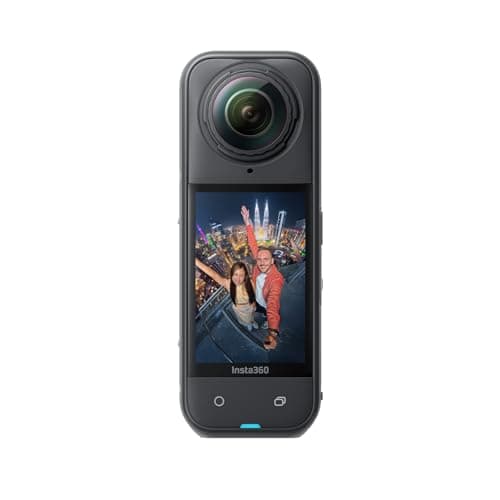 Insta360 X5 15m rated, replaceable lenses, and the one camera that means you never have to aim while you are paddling. | Anyone filming themselves on the water who cannot stop to frame a shot | 9.1/ 10 | |
| 02 | 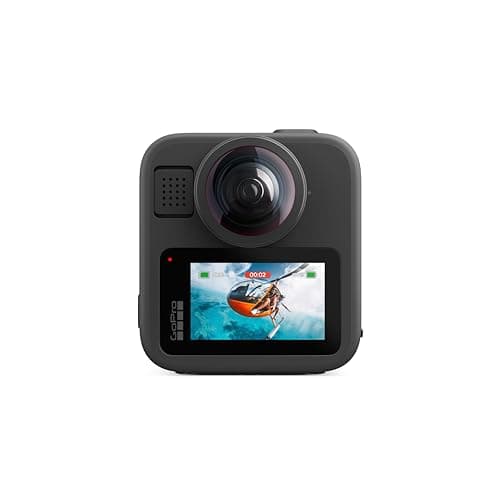 GoPro MAX2 True 8K on a sphere, replaceable lenses and GoPro's own mounting fingers — held back on this site by a 5m water rating, the shallowest of any 360 camera we rank. | Riders and hikers who want one camera to cover everything and already own GoPro mounts | 8.0/ 10 | |
| 03 | 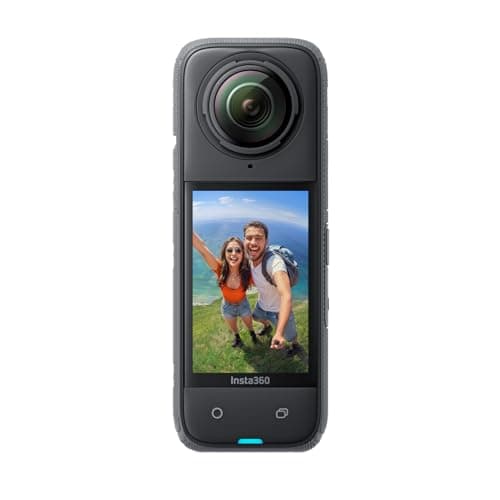 Insta360 X4 The previous X-series flagship: same 8K reframing trick, 10m rated, and usually a good deal less money. | A first 360 camera when the X5's deeper rating is not worth the difference | 8.5/ 10 | |
| 04 | 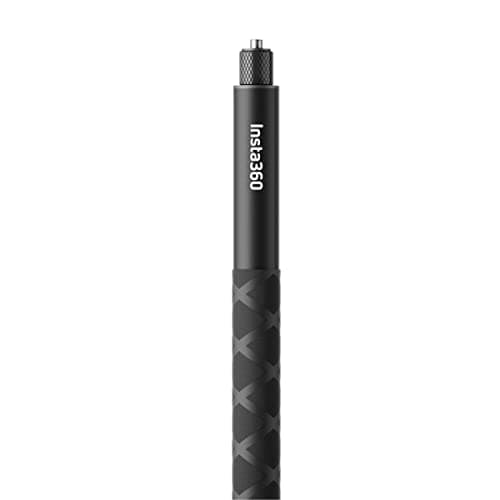 Insta360 114cm Invisible Selfie Stick The pole that disappears in a 360 shot — the single accessory that makes a 360 camera worth owning on the water. | Third-person paddling shots from an X-series camera | 7.5/ 10 |
Scores are our editorial judgment from published specs and named independent reviews, weighted for lake and trail use — not measurements. We have not tested these units and do not own them.
02
How we picked
We do not lab-test, bench-test or dive-test cameras, and we do not own test units. What we do instead is read the manufacturer's published specifications, read the independent reviews that genuinely do test, read owner reports for the failure modes specs never mention — fogging, salt corrosion, cold battery collapse, mount slippage — and then weight all of it for 360 cameras used on lake and trail. Where a number is not published, the page says “not published” rather than filling the cell.
The full method, including what we refuse to do, is on the editorial policy page.
- 30%Water survival
- Exposed lenses change the rules — rated depth and lens-guard availability both count.
- 25%Reframing payoff
- A 360 camera is only worth it if the reframing genuinely saves shots you would have missed.
- 20%Battery in the cold
- Stitching two sensors costs power; cold costs more.
- 15%Mount ecosystem
- Invisible-selfie-stick geometry is the whole trick, and it depends on the mount.
- 10%Edit time
- Every 360 clip needs a pass before anyone can watch it.
What we ranked on, and why a 360 camera is a different purchase
A flat action camera is judged on what it records. A 360 camera is judged on what survives, because the format puts two unprotected lenses on the outside of the body and then asks you to hold it out over water on a stick. Four criteria follow from that, and resolution is not the first one.
Bare water rating, weighted hardest. “Bare” means with no case at all, which is the only way most people will ever use one of these. It matters more here than on a flat camera for a mechanical reason: a 360 camera cannot use a generic flat housing, because a flat port in front of a bulging spherical lens wrecks the stitch. You either buy the manufacturer's own dive case or you live inside the bare rating. The spread in this group is enormous — 15m, 10m and 5m — and how deep an action camera can go explains what those ratings do and do not promise.
The lenses, second. This is the failure mode nobody warns first-time buyers about. On a flat camera a scratched lens cover is a cheap part. On a 360 camera the two domes stick out past the body, they touch the deck every time you set the camera down, and a scratch sits in the stitch line of every frame you shoot afterwards. Ask one question before you buy: can I replace the lens myself? The X5 and the MAX2 answer yes. The X4 answers no, and sells guards instead.
Published 360 frame size, third. Reframing spends resolution. When you pull a normal 16:9 clip out of a sphere you are cropping a slice of the full frame, so the 8K figure on the box is not what lands in your export — it is the budget the crop comes out of. That is why every serious 360 camera shoots at 8K and why a 5.7K 360 clip looks softer than 5.7K from a flat camera. 4K vs 5.3K vs 8K has the card-space and battery arithmetic that comes with shooting at the top setting.
Mount fit, fourth. A 360 camera lives on a pole more than on a mount, but the pole has to attach to something on the days you want the camera on the boat instead of in your hand. The MAX2 has GoPro fingers built in; the Insta360 bodies use a 1/4-20 thread and need a cage or an adapter for two-prong mounts. Kayak mounts covers what that looks like on a hull.
| Camera | Bare water rating | Max 360 video | Published runtime | Replaceable lenses |
|---|---|---|---|---|
| Insta360 X5 | IP68 to 49ft (15m) | 8K30 | 2400mAh, about 88 min at 8K30 (up to 185 min in endurance mode at 5.7K24) | Yes, by the owner |
| GoPro MAX2 | 5m (16ft) | 8K 7680x3840 at 30/25/24 | 1960mAh Enduro, runtime not published | Yes, in the field |
| Insta360 X4 | 33ft (10m), or 50m with the Invisible Dive Case | 8K30 | 2290mAh, 135 min at 5.7K30 | No — removable guards only |
Who should buy a 360 camera, and who should not
The format is transformative for one specific problem and irritating for everything else, so it is worth being blunt about which you have.
Buy one if you film yourself doing something with your hands. Paddling, riding, fishing, swimming with kids. You cannot stop mid-stroke to check framing, and a flat camera on a chest mount points wherever your chest points. A 360 camera on a stick records the whole sphere and lets you pick the angle at the kitchen table a week later — including angles you did not know were there.
Buy one if you keep missing the shot. The thing that happened off to your left while you were filming forward is in the file. That is the entire pitch, and for family trips on the water it is a strong one.
Skip it if you want to shoot, dump the card and be done. Every 360 clip needs a reframing pass before another human can watch it, and that pass is real work — more work than trimming flat footage, every time, forever. If the honest answer is that you will not do it, a flat camera makes better footage for you. 360 vs flat is the full version of that argument.
Skip it if the camera lives on a helmet in rough conditions. Exposed glass plus repeated impact is the worst case for this format, and the 360 picks for mountain biking covers how to mitigate it when you do it anyway.
What a 360 camera costs you after you buy it
Three costs, all of which show up on the first trip and none of which appear on the box.
Edit time. Budget a few minutes per clip to choose the angle, and more if you want keyframed moves. The apps make it as easy as it can be, but “easy” is not “skipped”. Editing on a phone is the realistic workflow for most people, and filming a paddle on a 360 camera walks through a whole trip from launch to export.
Card and storage pressure. 8K 360 files are the largest this site deals with. A fast, large card is not optional here — the card picks and what size card to buy both assume exactly this case.
Battery. Shooting the top mode at the top frame rate is the shortest runtime any of these bodies publishes. Carry a spare, and if the trip is long, power on long days has the charging arithmetic.
Settings that make 360 footage watchable
Four habits do more for a 360 clip than any upgrade.
Shoot at the highest 360 mode you can live with. This is the one place on this site where we tell you to use the big setting, because the crop eats the difference. If the card or the battery cannot take 8K, 5.7K60 is the better compromise than dropping the resolution twice.
Keep the stick still and let the subject move. Waving the pole around produces footage nobody can watch. Hold it out, keep it steady, and do the movement in the edit instead — the camera already recorded every direction.
Rinse and dry the lenses first, every time. A water droplet on a 360 lens is worse than on a flat one because it distorts the stitch, not just one corner of the frame. Salt water care is five minutes that keeps the glass clear and the seals working.
Export flat clips, not spheres. Almost nobody you send footage to wants to drag a sphere around on their phone. Reframe it, export a normal video, and keep the original for later.
03
Every pick, in detail
- IP68 to 49ft (15m)
- 2400mAh · ~88 min at 8K30
- User-replaceable
- 9.5
- 9.5
- 9.0
- 8.5
- 7.5
Insta360 X5
Insta360
15m rated, replaceable lenses, and the one camera that means you never have to aim while you are paddling.
Anyone filming themselves on the water who cannot stop to frame a shot
Top pick, and the water rating is why. IP68 to 49ft (15m) is double what GoPro publishes for the MAX2 and half as deep again as the X4, and on a lake that difference is not about diving — it is about a camera on a pole that goes under when a wave hits, a swamped cockpit, or an afternoon snorkeling with the same body you paddled with. Nothing else in the 360 category states a number that high.
The second reason is the glass. A 360 camera has two lenses that bulge out past the body and cannot be recessed — they are the most exposed surface on any camera you will own, and a deep scratch lands in every single frame because the stitch runs right through it. The X5 is the one body where a scratched lens is a part you swap yourself rather than a service job, which changes what the camera is worth three summers from now.
Published numbers behind the rest of it: a 2400mAh battery rated at roughly 88 minutes at 8K30, with Insta360 quoting up to 185 minutes in its lower-bitrate endurance mode at 5.7K24, and 1/1.28-inch sensors that are large for the format. Honest cons: lens guards are still a purchase rather than an option, 8K30 files are big and slow to work with, and every clip needs a reframing pass before anyone else can watch it. The full X5 specification read has the rest, and X5 against X4 is the upgrade question on its own.
- 15m IP68 is the deepest bare rating of any camera on this site
- User-replaceable lenses — the single biggest fix for the 360 format's worst failure mode
- 185 minutes in Endurance mode at 5.7K24, which is a whole day of clips
- Invisible-selfie-stick reframing means you point the camera at nothing and pick the angle later
- Exposed lenses still scratch; lens guards are a purchase, not an option
- Every clip needs a reframing pass before anyone else can watch it
- 8K30 files are large and the edit is slower than flat footage
Specs from CineD, Insta360 X5 announcement with published specifications.
- 5m (16ft) bare
- 8K 7680x3840 at 30/25/24
- 1960mAh Enduro · runtime not published
- 6.5
- 9.5
- 7.5
- 9.5
- 7.0
GoPro MAX2
GoPro
True 8K on a sphere, replaceable lenses and GoPro's own mounting fingers — held back on this site by a 5m water rating, the shallowest of any 360 camera we rank.
Riders and hikers who want one camera to cover everything and already own GoPro mounts
The pick for people who already own GoPro mounts, and the one with the biggest published sphere. 8K at 7680x3840 is the highest 360 frame size we can find published, and frame size is the currency reframing actually spends — every flat clip you export is a crop out of that sphere. It also shoots single-lens 4K at 60fps in 16:9, 9:16 and 4:3, so it can stand in for a flat camera on the days you do not want to reframe anything.
Built-in GoPro mounting fingers are the quiet advantage. Every two-prong clamp, boom, chesty and suction cup you already own fits with nothing bought in between, which on a kayak or a handlebar is the difference between filming this weekend and waiting for an adapter. Lenses are field-replaceable here too, and Max HyperSmooth with 360-degree Horizon Lock is the steadiest thing GoPro publishes.
The honest con is water, and it is a big one for this site: 5m (16ft) bare is a third of the X5's rating, which puts it below snorkeling depth with any margin. GoPro also publishes no recording time for the 1960mAh Enduro battery, so endurance cannot be compared on paper, and at 195g it is the heaviest 360 body here. MAX2 against the X5 is that trade in full.
- 8K 360 at 7680x3840 — the highest published 360 frame size of any camera we rank, which is what reframing actually spends
- Replaceable lenses, changeable in the field, so a scratched lens is a part and not a service job
- Built-in GoPro mounting fingers: every two-prong mount, clamp and boom already fits
- Six microphones for 360 audio, and Max HyperSmooth with 360-degree Horizon Lock
- Single-lens 4K at 60fps in 16:9, 9:16 and 4:3, so it can stand in for a flat camera
- 5m (16ft) bare is the shallowest 360 rating here — a third of the Insta360 X5's 15m
- GoPro publishes no recording time for the 1960mAh battery, so endurance cannot be compared on paper
- 195g with fingers and battery, the heaviest 360 body we rank
- 8K 360 files are slow to reframe and heavy to edit on an older laptop
Specs from Backscatter, GoPro MAX2 published specification listing.
- 33ft (10m) / 50m with dive case
- 2290mAh · 135 min at 5.7K30
- 203g
- 8.5
- 9.0
- 8.5
- 8.5
- 7.5
Insta360 X4
Insta360
The previous X-series flagship: same 8K reframing trick, 10m rated, and usually a good deal less money.
A first 360 camera when the X5's deeper rating is not worth the difference
The budget route into the format. It is the previous X-series flagship rather than a cut-down design, so it does the same trick — 8K30 capture, the same invisible-selfie-stick effect, the same app and the same reframing workflow — for less money than the current body. If the X5's depth and replaceable lenses are not worth the gap to you, this is the honest alternative rather than a consolation prize.
Published figures: 33ft (10m) bare, a 2290mAh battery rated at 135 minutes at 5.7K30, 203g, and removable lens guards so the glass is at least protectable. Insta360 also sells a dedicated Invisible Dive Case that takes it to 50m — a generic flat housing is not an option on a spherical lens, which is why 360 cameras need their own case or none at all.
Cons, plainly: 10m against the X5's 15m, lenses that are not user-replaceable the way the X5's are, and 203g on the end of a pole that you feel after an hour of holding it out one-handed. It is also a superseded model, so stock narrows as it sells through — check the listing before you plan a trip around it.
- 8K30 360 capture and the same invisible-selfie-stick effect as the X5
- Removable lens guards, so the lenses are protectable
- 135 minutes at 5.7K30 is a real day on the water
- Invisible Dive Case takes it to 50m when you need it
- 10m bare against the X5's 15m
- Lenses are not user-replaceable the way the X5's are — a deep scratch is a service job
- 203g on a pole is noticeable after an hour
Specs from Insta360 X4 published specifications.
- 23.3cm to 114.1cm
- Aluminum
- 1/4-20 screw
- 6.5
- 9.0
- 7.0
- 9.0
- 7.0
Insta360 114cm Invisible Selfie Stick
Insta360
The pole that disappears in a 360 shot — the single accessory that makes a 360 camera worth owning on the water.
Third-person paddling shots from an X-series camera
Not an optional extra. The invisible selfie stick is the accessory that turns a 360 camera into a third-person camera: the pole falls into the stitch line between the two lenses and disappears, so the footage looks like someone else is filming you from six feet away. Buy it with the camera. This one extends from 23.3cm to 114.1cm, collapses into a deck bag and uses a standard 1/4-20 fitting, so it is not locked to Insta360 bodies. Honest cons: Insta360 says plainly it is not designed for high-speed adventures, the aluminum sections seize if you stow them wet and salty, and it does not float — a dropped pole with a camera on the end sinks fast, which is what floats and tethers is about.
- Vanishes from 360 footage, which is the whole reason the format works for self-filming
- Collapses to 23cm and stows in a deck bag
- Standard 1/4-20, so it takes more than just Insta360 cameras
- Light enough to hold out one-handed while the other hand paddles
- Insta360 says plainly it is not designed for high-speed adventures
- Aluminum sections seize if you put them away wet and salty
- It does not float, and a dropped pole with a camera on it sinks fast
Specs from Insta360 114cm Invisible Selfie Stick product page.
04
What decides this category
Buy the water rating, then the glass
Those are the two specifications that decide whether you still own a working 360 camera in two years. Resolution is a distant third, because all three of these shoot 8K.
Budget for the pole in the same order
An invisible selfie stick is not an accessory you add later — it is the thing that makes the format do what you bought it for. Treat it as part of the camera price.
If the budget has a hard ceiling
One of these bodies regularly lands under the $300 mark, which is unusual for a current-generation 360 camera — the picks under $300 put it next to the flat cameras at the same ceiling so you can see what the 360 format costs you in depth and runtime. And if you are weighing the X-series against the rest of the market rather than against the MAX2, Insta360 alternatives maps each reason for looking elsewhere to the camera that answers it.
Match the mount fitting to what you already own
If your kayak, bike and helmet are already full of GoPro two-prong mounts, the MAX2 fits them with nothing bought in between. If you are starting from nothing, the 1/4-20 thread on the Insta360 bodies is just as standard — it is the switching cost that matters, not the fitting.
What we would skip
Bundles padded with a tripod and a case, and the top-end “creator” kits. Buy the body, the invisible stick, a fast card and a spare battery. Lens guards are the one genuinely worthwhile extra, and they cost very little next to a lens.
05
Questions people actually ask
01What is the best 360 action camera?
The Insta360 X5, on its IP68 49ft (15m) bare water rating and its user-replaceable lenses — the two specifications that decide whether a 360 camera survives real outdoor use. The GoPro MAX2 is the pick if you already own GoPro mounts or want the largest published 360 frame size at 8K 7680x3840, and the Insta360 X4 is the cheaper way into the same workflow.
02Are 360 cameras waterproof without a case?
All three current bodies are, to very different depths: Insta360 publishes IP68 to 49ft (15m) for the X5 and 33ft (10m) for the X4, and GoPro publishes 5m (16ft) for the MAX2. Note that a 360 camera cannot use a generic flat housing — the curved lenses need the manufacturer's own case, like Insta360's Invisible Dive Case for the X4, or no case at all.
03Is 8K on a 360 camera the same as 8K on a normal camera?
No, and this is the most useful thing to understand before buying one. The 8K figure describes the whole sphere. When you reframe a clip into a normal rectangular video you are cropping a slice out of that sphere, so the exported file is a fraction of the headline number. That is why 360 cameras shoot at 8K and why dropping to a lower 360 mode costs more visible detail than it would on a flat camera.
04Do you need an invisible selfie stick for a 360 camera?
Practically, yes. The pole sits in the blind seam between the two lenses and vanishes from the footage, which is what produces the floating third-person shot the format is known for. Without it you are holding a 360 camera in frame in your own hand, which looks worse than a flat camera on a chest mount.
05What happens if you scratch a 360 camera lens?
The scratch appears in every frame, because the two lenses are stitched into a single image and there is no part of the shot that avoids them. On the Insta360 X5 and the GoPro MAX2 the lenses are replaceable by the owner, so it is a part. On the Insta360 X4 they are not, which is why removable lens guards are worth fitting on day one.
06Is a 360 camera better than a GoPro for kayaking?
For filming yourself, usually yes — you cannot stop paddling to aim, and a 360 camera records every direction so the framing decision happens later. For shoot-and-share simplicity, no: every clip needs a reframing pass first. Our 360 picks for kayaking and GoPro or Insta360 for kayaking both work through that trade with paddling in mind.
06
Read this next
360 camera vs action camera
The format decision itself, before you choose a body.
GoPro MAX2 vs Insta360 X5
The top two here, head to head on depth and frame size.
Best 360 camera for kayaking
The same bodies ranked for a boat, where the pole does the work.
Best 360 action camera for mountain biking
What exposed glass and repeated impact mean on a trail.
Filming a kayak adventure on a 360 camera
A whole trip, from launch to a reframed export.
07
Sources
- Backscatter, GoPro MAX2 published specification listing
- Insta360 X4 published specifications
- CineD, Insta360 X5 announcement with published specifications
- Insta360 114cm Invisible Selfie Stick product page
Specifications are quoted from the manufacturer pages above as they read on the dates shown. Where a figure is not published, this site says so rather than estimating one. We have not tested these products.