The best action camera under $300
Three hundred dollars buys a superseded flagship, not a cheap camera — which means depth, a removable battery and real stabilization are all still on the table.
Part of Cameras.
We earn a commission if you buy through our links, at no extra cost to you. It never changes what we recommend or the order we rank it in — how this works.
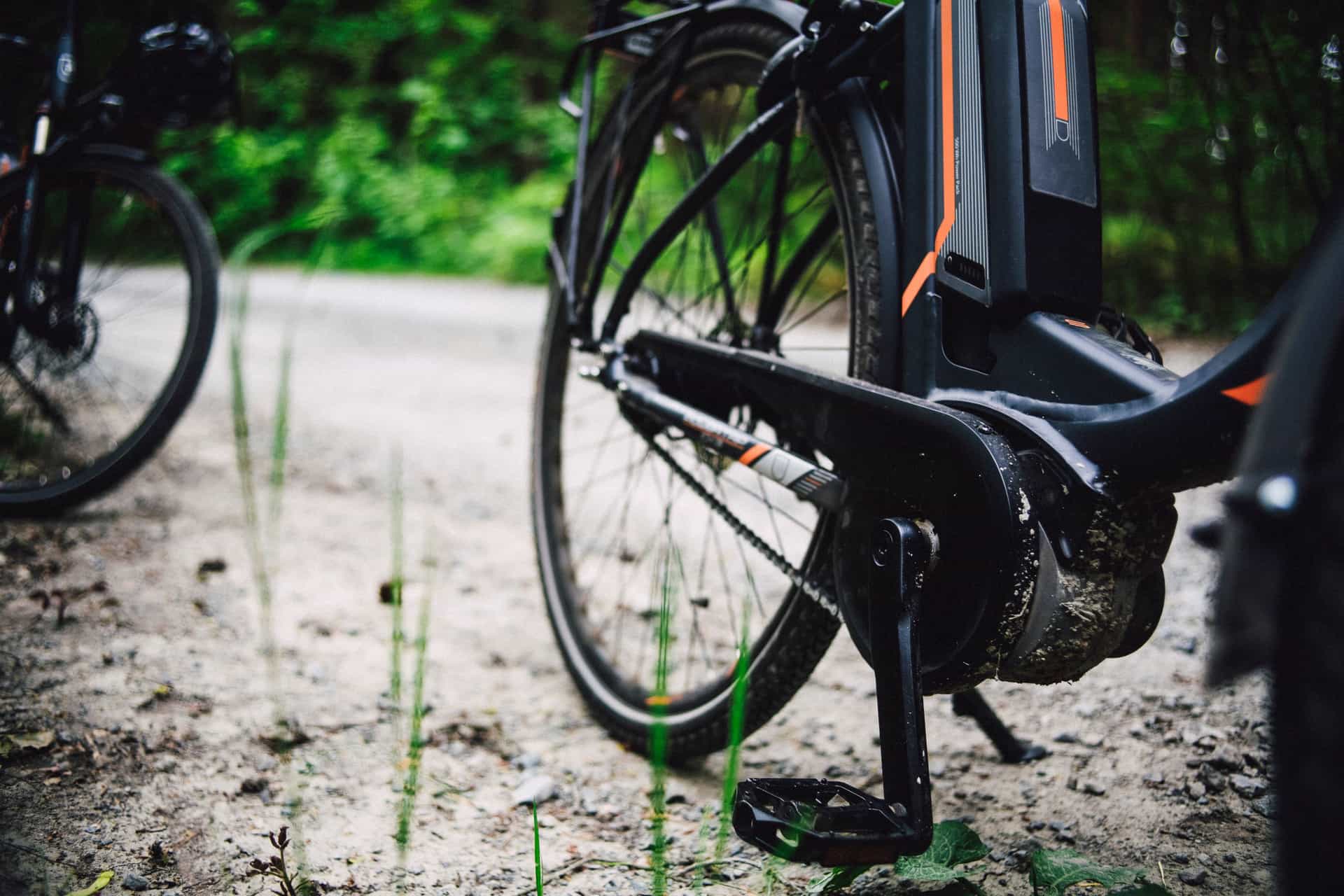
The DJI Osmo Action 4 is the best action camera under $300, because it is a superseded flagship rather than a budget design: DJI publishes 18m of bare waterproofing, a -20° to 45°C operating range, a 1/1.3-inch sensor and 160 minutes at 1080p/24 on a removable 1770mAh battery. Nothing built down to a price offers that combination. The GoPro HERO12 Black is the pick if your mounts are already GoPro, with HyperSmooth 6.0 and the same 33ft (10m) bare rating GoPro publishes for the current flagship. The GoPro MAX2 is the genuine surprise at this ceiling — a true-8K 360 camera — if you can live with 5m. And the AKASO Brave 8 Lite is the budget pick, with two batteries and seven mounts in the box. Every price on this page is pulled live from Amazon; a camera that has crossed $300 since we checked will say so on its own card.
01
Quick picks
| # | Product | Best for | Score | Price |
|---|---|---|---|---|
| 01 | 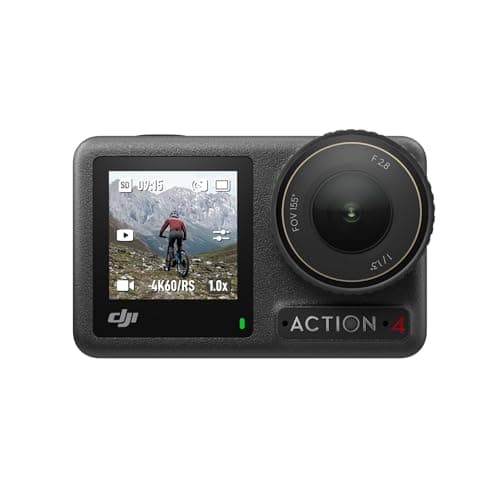 DJI Osmo Action 4 The previous DJI flagship, still 18m bare and still on shelves — the most water rating per dollar in this list. | Buyers who want deep-water capability without paying flagship money | 8.5/ 10 | |
| 02 | 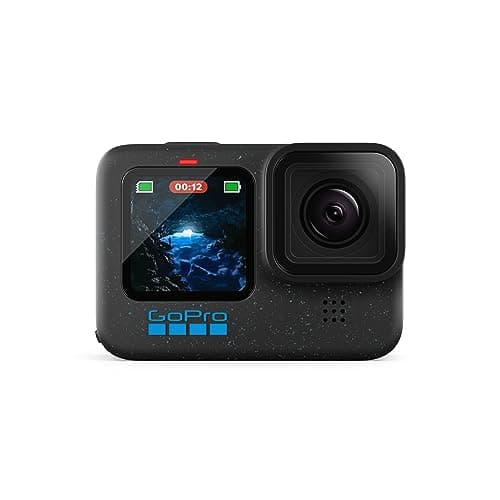 GoPro HERO12 Black The previous flagship, and the water story is identical to the HERO13 Black: 33ft bare, HyperSmooth 6.0, a removable Enduro battery. | Anyone who wants the flagship water rating without paying flagship money | 8.5/ 10 | |
| 03 | 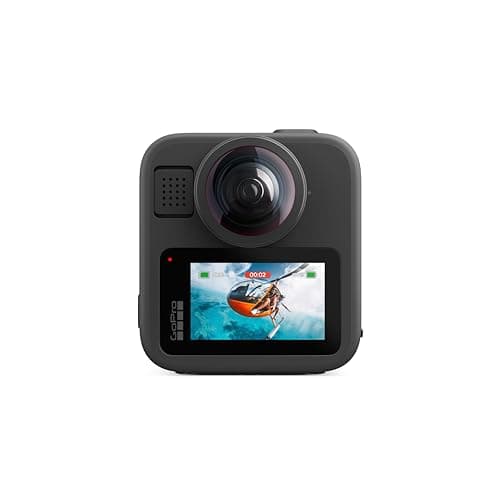 GoPro MAX2 True 8K on a sphere, replaceable lenses and GoPro's own mounting fingers — held back on this site by a 5m water rating, the shallowest of any 360 camera we rank. | Riders and hikers who want one camera to cover everything and already own GoPro mounts | 8.0/ 10 | |
| 04 | 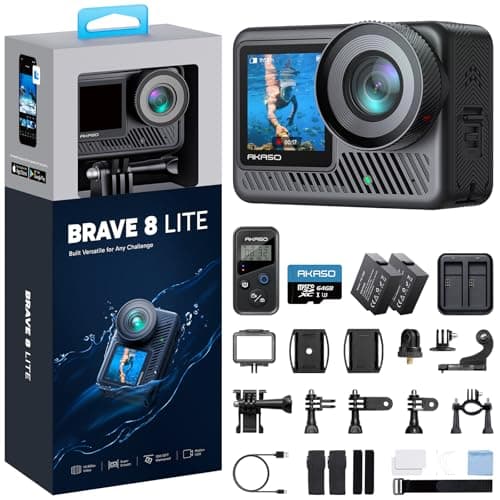 AKASO Brave 8 Lite Two batteries and a bag of mounts in the box at a fraction of flagship money — buy it knowing the stabilization gives up first. | A pool, a calm lake, a first camera you are not precious about | 7.4/ 10 |
Scores are our editorial judgment from published specs and named independent reviews, weighted for lake and trail use — not measurements. We have not tested these units and do not own them.
02
How we picked
We do not lab-test, bench-test or dive-test cameras, and we do not own test units. What we do instead is read the manufacturer's published specifications, read the independent reviews that genuinely do test, read owner reports for the failure modes specs never mention — fogging, salt corrosion, cold battery collapse, mount slippage — and then weight all of it for action cameras used on lake and trail. Where a number is not published, the page says “not published” rather than filling the cell.
The full method, including what we refuse to do, is on the editorial policy page.
- 30%Water survival
- Rated depth without a case, door design, and what the manufacturer actually publishes.
- 25%Stabilization in chop
- A kayak deck and a rooty trail shake in ways a handheld walk test never shows.
- 20%Battery in the cold
- Published runtime, spare-battery cost, and whether it charges while recording.
- 15%Mount ecosystem
- Finger mount, threaded, magnetic — and how much of it you have to re-buy.
- 10%Footage you will keep
- Lens replaceability, low-light behavior, and how much cutting the footage needs.
What $300 actually buys, and what we ranked on
The useful thing about this ceiling is that it is not the budget shelf. At $300 the market is mostly last year's flagships at this year's discount, which means you are choosing between real cameras rather than between compromises. Four criteria decide it, in this order.
Bare water rating, first. “Bare” means with no housing, and it is the specification that decides whether you need to buy a case at all. A case costs money, adds a fogging risk and muffles audio, so a camera that clears your depth on its own is worth more than the spec sheet makes it look. The spread at this ceiling is wide — 18m, 10m, 5m — and how deep an action camera can go explains what each rating does and does not promise.
A removable battery and a published runtime, second. A swappable cell turns a dead camera into a ten-second problem. Three of the four picks here have one; the figure that matters is the published runtime with its conditions attached, because every manufacturer quotes its best case at a low resolution with the screens off. Battery life compared puts every published number side by side.
Stabilization, third. This is the single place where cheap cameras still give up, and it is the difference between footage you keep and footage you delete. On a bike or in chop the gap between HyperSmooth or RockSteady and a budget system is obvious in the first ten seconds — the stabilization systems compared is the detail.
Mount fitting, fourth. Two-prong GoPro fingers are the de facto standard, and if you already own clamps, booms and chesties the switching cost is real. AKASO and GoPro both take the standard two-prong fitting directly; DJI's bodies need an adapter for it, which is a small purchase but one to know about before the first trip. Mount compatibility covers what adapts to what.
| Camera | Bare water rating | Battery | Published runtime | Stabilization |
|---|---|---|---|---|
| DJI Osmo Action 4 | 18m (60m with case) | Removable 1770mAh | 160 min at 1080p24, screen off | RockSteady 3.0 |
| GoPro HERO12 Black | 33ft (10m) bare, 196ft (60m) housed | Removable 1720mAh Enduro | Over 1.5h at 5.3K30 / over 2.5h at 1080p30 | HyperSmooth 6.0 |
| GoPro MAX2 | 5m (16ft) | Removable 1960mAh Enduro | Not published | Max HyperSmooth with 360 Horizon Lock |
| AKASO Brave 8 Lite | IPX8 10m (60m with housing) | Two 1550mAh included | 140 min at 4K / 150 min at 1080p | SuperSmooth |
What the ceiling costs you against a flagship
Four things, and it is worth knowing which of them you actually care about before you decide to spend more.
The newest sensor and the newest trick. The current flagships are where the 1/1.1-inch sensor and the variable aperture live — the two things that matter for glare off bright water and for flat light at dusk. The Osmo Action 6 read covers what that upgrade buys, and the low-light roundup ranks the field on published sensor size.
The longest runtimes. 240 published minutes is a current-flagship figure. 160 is a very good one. On a day trip the difference is a spare battery; on a three-day trip it is a plan.
The support window. A superseded model gets firmware and accessory attention for a shorter remaining time than the model that replaced it. If you keep cameras for five years, that is a real cost. If you keep them for two, it is not.
Nothing about waterproofing. This is the good news, and it is why the ceiling is a sensible place to shop. The Osmo Action 4's 18m is deeper than every current GoPro flagship, and the HERO12 Black's 10m is identical to the HERO13 Black's. Depth is the one specification that did not move much between generations.
The real total: what to budget beyond the camera
A camera at this ceiling is not the whole spend, and discovering that on the second trip is the most common mistake on this site. Four items, in the order they matter.
A card that can keep up. A slow card drops frames at high bitrates and the camera stops recording mid-clip. This is not a place to save money — the card picks and speed classes compared explain which rating actually prevents it.
A spare battery. On the three picks with a removable cell this is the cheapest upgrade available to you, and it changes more about a day on the water than any sensor does.
A float, if the camera goes near water. A $20 float is the difference between a dropped camera and a lost one, and it is the single highest-value accessory on this entire site — floats and tethers makes the case with the arithmetic.
The one mount your trip actually needs. Not a kit of nine. A kayak with an accessory track needs something completely different from a bare hull, and the kayak mount picks and the helmet mount picks start from the thing you are attaching to.
Which of the four is right for your trip
Lake, river and snorkeling: the Osmo Action 4. 18m bare means no case, no fogging risk and no extra purchase, and the cold rating covers an October morning. The kayaking roundup ranks the same decision with a boat in mind.
Bike, helmet and anything with repeated impact: the HERO12 Black. HyperSmooth 6.0 and the mount ecosystem are both built for exactly this, and the mountain biking picks explain why stabilization outranks resolution on a trail.
Filming yourself with both hands busy: the MAX2, if you will do the reframing. A 360 camera on a pole is the only way to get a third-person shot with nobody holding the camera.
Shopping by brand rather than by budget: two pages map the switch in each direction — GoPro alternatives and Insta360 alternatives.
A first camera, a kid's camera, or a second angle: the Brave 8 Lite. Two batteries and seven mounts in the box is the right shape for a camera you are not precious about — the picks for kids start from the same place.
03
Every pick, in detail
- 18m bare / 60m with case
- 1770mAh · 160 min at 1080p24
- -20° to 45°C
- 9.0
- 8.5
- 8.5
- 8.0
- 8.0
DJI Osmo Action 4
DJI
The previous DJI flagship, still 18m bare and still on shelves — the most water rating per dollar in this list.
Buyers who want deep-water capability without paying flagship money
Top pick, and the reason is that it is last year's flagship rather than this year's cheap camera. The published figures are the ones a lake actually leans on: 18m bare, which is deeper than any current GoPro flagship and clears every snorkel depth without a case; -20° to 45°C, which is a claim about the whole camera and not just a battery; and a 1/1.3-inch sensor, the same size class DJI puts in the Osmo Action 5 Pro.
The battery is removable, which at this price is the specification that separates a weekend camera from a half-day one — 1770mAh rated at 160 minutes at 1080p/24 with the screen off, and a spare is a pocket item rather than a charging session. DJI lists RockSteady 3.0 and RockSteady 3.0+ for stabilization, plus HorizonBalancing and HorizonSteady at the lower resolutions and frame rates — worth checking against the mode you actually shoot.
Honest cons: 160 minutes against the Action 5 Pro's 240, no front OLED for framing yourself, and a mount ecosystem that is smaller than GoPro's with adapters as their own purchase. It is also a superseded model, so accessories and firmware attention will taper off before the current bodies do. The full Action 4 specification read has everything, and Action 5 Pro vs Action 4 is the upgrade question if your ceiling moves.
- 18m without a case still beats every current GoPro by a wide margin
- Same 1/1.3-inch sensor size as the Action 5 Pro
- Rated to -20°C like its replacement
- Usually the cheapest way into serious bare-camera depth
- 160 minutes published against the Action 5 Pro's 240
- Superseded, so accessories and support will taper off first
- No front OLED — the Action 5 Pro's front screen is genuinely more useful for framing
Specs from DJI Osmo Action 4 published specifications.
- 33ft (10m) bare / 196ft (60m) housed
- 1720mAh Enduro, removable
- Over 1.5h at 5.3K30 / over 2.5h at 1080p30
- 8.0
- 9.0
- 8.0
- 9.5
- 8.0
GoPro HERO12 Black
GoPro
The previous flagship, and the water story is identical to the HERO13 Black: 33ft bare, HyperSmooth 6.0, a removable Enduro battery.
Anyone who wants the flagship water rating without paying flagship money
The pick if your kayak, bike and helmet are already full of two-prong mounts. GoPro publishes the same 33ft (10m) bare rating for the HERO12 Black as for the HERO13 Black, the same HyperSmooth 6.0 stabilization version, and a removable 1720mAh Enduro battery — so the water story and the steadiness story at this price are the current-flagship ones, not a cut-down version of them.
Published runtimes are over 1.5 hours at 5.3K30 and over 2.5 hours at 1080p30, with about 70 minutes of continuous 5.3K60. Built-in folding fingers plus a 1/4-20 thread mean it fits the entire GoPro accessory catalog and a normal tripod, and it is the shape every third-party clamp maker designs around.
The cons are the honest cost of buying last year's model: a 1720mAh Enduro cell against the HERO13's 1900mAh, no HB-Series lens mount so none of the HERO13's swappable-lens accessories fit, no GPS in GoPro's published specification list, and narrowing stock as it sells through — check the listing before you plan a trip around it. HERO13 against HERO12 is the full comparison.
- 33ft (10m) without a housing — the same bare rating GoPro publishes for the HERO13 Black
- HyperSmooth 6.0, the same stabilization version as the current flagship
- Removable 1720mAh Enduro battery, so a spare is a pocket item rather than a power bank
- Built-in folding fingers plus a 1/4-20 thread: the whole GoPro mount catalog and a normal tripod
- GoPro does not list GPS in the HERO12 Black specifications
- No HB-Series lens mount, so none of the HERO13's swappable-lens accessories fit
- 1720mAh against the HERO13 Black's 1900mAh Enduro cell
- It is a superseded model, so stock narrows as it sells through — check the listing before you plan around it
Specs from GoPro HERO12 Black published specifications.
- 5m (16ft) bare
- 8K 7680x3840 at 30/25/24
- 1960mAh Enduro · runtime not published
- 6.5
- 9.5
- 7.5
- 9.5
- 7.0
GoPro MAX2
GoPro
True 8K on a sphere, replaceable lenses and GoPro's own mounting fingers — held back on this site by a 5m water rating, the shallowest of any 360 camera we rank.
Riders and hikers who want one camera to cover everything and already own GoPro mounts
The pick nobody expects at this ceiling: a current-generation true-8K 360 camera, not an old one. It records a 7680x3840 sphere at 30/25/24, which is the largest published 360 frame size we track, and it shoots single-lens 4K60 in 16:9, 9:16 and 4:3 so it can stand in for a flat camera on days you do not want to reframe anything. Lenses are replaceable in the field, and GoPro mounting fingers are built in.
What a 360 camera buys you is the end of aiming. Hold it out on a pole while you paddle and every direction is in the file; you choose the shot afterwards. For filming yourself on the water that is a bigger change than any sensor upgrade in this price band.
The cons are real and you should weigh them before the price tempts you. 5m (16ft) bare is the shallowest rating on this page by a wide margin. GoPro publishes no recording time for the 1960mAh Enduro battery, so endurance cannot be compared on paper. At 195g it is the heaviest body here. And every single clip needs a reframing pass before anyone else can watch it — real work, every time. The 360 roundup and 360 vs flat both cover whether that workflow suits you.
- 8K 360 at 7680x3840 — the highest published 360 frame size of any camera we rank, which is what reframing actually spends
- Replaceable lenses, changeable in the field, so a scratched lens is a part and not a service job
- Built-in GoPro mounting fingers: every two-prong mount, clamp and boom already fits
- Six microphones for 360 audio, and Max HyperSmooth with 360-degree Horizon Lock
- Single-lens 4K at 60fps in 16:9, 9:16 and 4:3, so it can stand in for a flat camera
- 5m (16ft) bare is the shallowest 360 rating here — a third of the Insta360 X5's 15m
- GoPro publishes no recording time for the 1960mAh battery, so endurance cannot be compared on paper
- 195g with fingers and battery, the heaviest 360 body we rank
- 8K 360 files are slow to reframe and heavy to edit on an older laptop
Specs from Backscatter, GoPro MAX2 published specification listing.
- IPX8 10m / 60m with case
- 2 × 1550mAh included
- 140 min at 4K / 150 min at 1080p
- 7.5
- 6.5
- 8.0
- 8.5
- 6.5
AKASO Brave 8 Lite
AKASO
Two batteries and a bag of mounts in the box at a fraction of flagship money — buy it knowing the stabilization gives up first.
A pool, a calm lake, a first camera you are not precious about
The budget pick, and the floor of this page. IPX8 to 10m bare matches what GoPro publishes for the HERO13 Black, 4K60 and dual screens are both here, and the box includes two batteries, a charger and seven mounts — so the day-one total is the camera, where everything else on this page needs a battery and a mount bought separately. It uses GoPro-standard two-prong mounting, so the whole accessory world fits.
Cons, plainly: SuperSmooth stabilization is a step behind HyperSmooth and RockSteady and it gives up in chop, which is exactly when you want it. Low light is the second place the price shows. And the 60m rating belongs to the separate housing, not to the camera — read those two numbers separately. The listing currently sold is the bundle with a 64GB card, so check what is in the box before you add another card. GoPro vs AKASO is the long version of that trade.
- IPX8 to 10m bare, which matches the HERO13 Black's rating on paper
- Ships with two batteries, a charger and seven mounts — nothing else to buy on day one
- 4K60 and dual screens at a price well under the flagships
- Uses GoPro-standard two-prong mounting, so the whole accessory world fits
- SuperSmooth stabilization is a step behind HyperSmooth and RockSteady in chop
- The 60m rating belongs to the separate housing, not the camera
- Low light is where the price shows most
Specs from AKASO Brave 8 Lite published specifications.
04
What decides this category
Buy last year's flagship, not this year's budget camera
At this ceiling that is almost always the better camera: the depth rating, the stabilization version and the removable battery all come from the flagship design. The things you give up — the newest sensor, the longest runtime, the support window — are the ones most lake and trail buyers never notice.
Check the bare water rating before anything else
It decides whether a case is a purchase you are about to make. 18m, 10m and 5m are three completely different cameras in practice, even at the same price.
Leave room in the budget for the card, the battery and the float
Spending the entire ceiling on the body and nothing on the rest is how people end up with a camera that stops recording, dies at lunchtime, or sinks.
What we would skip
Bundles that pad the price with a tripod, a chest strap and a case you will not use, and any listing that quotes a depth rating belonging to the housing rather than the camera. Buy the body, one fast card, one spare battery and the single mount your trip needs.
05
Questions people actually ask
01What is the best action camera under $300?
The DJI Osmo Action 4, on its published 18m bare water rating, its -20° to 45°C operating range, its 1/1.3-inch sensor and 160 minutes at 1080p/24 from a removable battery. It is a superseded flagship rather than a budget design, which is what makes this price band worth shopping.
02Can you get a waterproof action camera for under $300?
Yes, and you do not have to compromise much. The DJI Osmo Action 4 publishes 18m with no case at all — deeper than any current GoPro flagship — and both the GoPro HERO12 Black and the AKASO Brave 8 Lite are rated to 10m bare. Only the GoPro MAX2, at 5m, asks you to think carefully about depth.
03Is a GoPro worth it under $300?
The HERO12 Black is, if you already own GoPro mounts or value HyperSmooth 6.0: GoPro publishes the same 33ft (10m) bare rating and the same stabilization version as the current flagship. What you give up is the bigger Enduro cell, the HB-Series lens mount and a listed GPS — and a shorter remaining support window, because it is a superseded model.
04Can you get a 360 camera for under $300?
Right now, yes — the GoPro MAX2 has been sitting under that line on a live Amazon price, which is unusual for a current-generation 8K 360 body. Weigh it against the two costs: a 5m (16ft) bare water rating, the shallowest here, and a reframing pass on every clip before anyone else can watch it.
05How much should I budget beyond the camera?
Plan for a fast microSD card, one spare battery, a float if the camera goes near water, and the single mount your trip actually needs. Together those are a meaningful percentage on top of the body, and skipping them is what produces a camera that stops recording, dies early or sinks.
06Is it better to buy a used flagship or a new budget camera?
At this ceiling you rarely have to choose, because a new superseded flagship like the Osmo Action 4 or the HERO12 Black is usually available under $300 with a warranty. If you do look at used, remember that waterproofing depends on seals and a door that has been opened a few hundred times — the one specification you cannot verify in a listing.
06
Read this next
Best action camera under $500
The next ceiling up, where the current generation comes into range.
Best budget action cameras
The shelf below this one, and what the price actually costs you there.
The best action cameras
The same field with no price ceiling at all.
GoPro HERO13 vs HERO12
Exactly what the newer GoPro adds over the one in this list.
Osmo Action 5 Pro vs Osmo Action 4
The upgrade question if your ceiling moves.
The first five accessories
What to budget for after the body, in order.
07
Sources
- DJI Osmo Action 4 published specifications
- GoPro HERO12 Black published specifications
- Backscatter, GoPro MAX2 published specification listing
- AKASO Brave 8 Lite published specifications
Specifications are quoted from the manufacturer pages above as they read on the dates shown. Where a figure is not published, this site says so rather than estimating one. We have not tested these products.