DJI Osmo Action 4: the published specs, and the one number that is genuinely low
The deepest bare water rating of any flat camera we cover, on a superseded model that now sells well below the current one. Here is the whole spec sheet, including the part DJI does not advertise.
Part of Cameras.
We earn a commission if you buy through our links, at no extra cost to you. It never changes what we recommend or the order we rank it in — how this works.
The DJI Osmo Action 4 is rated waterproof to 18m without a case and 60m with the Waterproof Case, carries a 1/1.3-inch sensor, shoots 4K up to 120fps, weighs 145g, runs on a 1770mAh battery DJI publishes at 160 minutes, and is rated from -20°C to 45°C. That bare depth rating is the deepest of any flat action camera we cover — nearly double the current GoPro flagship's 10m — and the operating range is the widest. The catch is stills: DJI publishes approximately 10MP single-shot photos, which is genuinely low in a category where 27MP and 48MP are normal. Buy it as a video camera for water and cold. Do not buy it as a stills camera.
The published specifications
Everything below comes from DJI's own Osmo Action 4 specification page, read on the date in our sources. Where DJI does not publish a figure, the row says so rather than filling it in from a review or a retailer listing.
| Specification | Published figure | What it means in use |
|---|---|---|
| Waterproof, no case | 18m | Clears snorkeling, swimming, a capsize and most recreational free-diving without buying anything. |
| Waterproof, with the case | 60m | The scuba route. A separate product with its own rating, as always. |
| Sensor | 1/1.3" CMOS | The same size class DJI publishes for the current Action 5 Pro. |
| Field of view | 155° | Wide enough for a chest or helmet mount without a lens accessory. |
| Video | 4K 16:9 at 24/25/30/48/50/60fps and 100/120fps; 4K 4:3 up to 60fps | 4K120 for slow motion, and the taller 4:3 ratio for mounted angles. |
| Stills | Approx. 10MP (3648×2736 max) | Low for the category. Frame grabs and stills are not this camera's job. |
| Battery | 1770mAh (6.8Wh) | Removable, so a spare is a pocket item rather than a power bank. |
| Published runtime | 160 min at 25°C, 1080p24, RockSteady on, Wi-Fi off, screen off | A stated best case with stated conditions, which is more than most manufacturers publish. |
| Stabilization | RockSteady 3.0, RockSteady 3.0+, HorizonBalancing, HorizonSteady | Named and versioned, with a true horizon-lock mode for rotating mounts. |
| Operating temperature | -20° to 45°C (-4° to 113°F) | The widest published range of any camera here. |
| Weight | 145g | Lighter than the HERO12 Black's published 154g. |
| Dimensions | 70.5 × 44.2 × 32.8mm | Normal flat-camera footprint; fits standard cages and frames. |
| Mounting | Not published on the specs page | Verify the mount and adapter you need against the listing. |
18 meters is the whole reason to care
Bare waterproof depth is the first specification we weight on any action camera, at 30% of the score, and the reason is simple: a camera that clears your depth without a housing has better audio, no sealed-air fogging risk, nothing extra to flood, and no second product to buy. A camera that does not clear it turns into a two-product purchase.
At 18m, this camera clears essentially every recreational water activity that is not scuba. Snorkeling happens in the top few meters. Swimming and paddling happen at the surface. A capsize puts the camera a meter down, briefly. Even a confident free-dive on one breath rarely passes 10m. Against that, 18m is not a specification you are using up — it is margin, and margin is the correct place for a depth rating to sit, because a rating describes a new camera with clean seals in still water and makes no promise about a three-season-old door or the pressure spike of a wave. The full version of that argument is on how deep an action camera can actually go.
For comparison, on published figures: GoPro rates the HERO13 Black to 33ft (10m) bare, Insta360 rates the Ace Pro 2 to 39ft (12m), and DJI rates the current Osmo Action 5 Pro to 20m. This camera, superseded and cheaper, sits second in that list. If the water rating is the specification that brought you here, this is the most depth per dollar on the site — it is why it appears on the snorkeling picks and why the deep-water route runs through the scuba page.
The cold rating nobody reads
DJI publishes an operating range of -20°C to 45°C (-4°F to 113°F). Most manufacturers publish nothing at all here — GoPro gives no operating temperature range on either of its current flagship pages — so the fact that DJI states one is itself worth something.
It matters for this site's buyer specifically. Shoulder-season paddling means cold hands and colder water; a winter ride means a camera that has to wake up at freezing. Cold is where batteries quietly lose a third of their published runtime, and a camera with no stated low-temperature limit is a camera you are guessing about. Plan for less than 160 minutes when it is near freezing regardless — that is physics — but plan with a number rather than a hope. The arithmetic for a cold day out is on action camera battery life compared.
Stabilization: named, versioned and still current
DJI lists RockSteady 3.0, RockSteady 3.0+, HorizonBalancing and HorizonSteady on this camera. That is a full stabilization suite with version numbers, which is the thing budget cameras cannot match — and stabilization is the criterion we weight second-heaviest, at 25%, because a kayak deck slaps and a rooty descent buzzes in ways a handheld walk test never shows.
HorizonSteady is the one worth understanding. It locks the horizon level through camera rotation, which is what you want on a mount that rolls: a handlebar through a berm, a paddle shaft, a chest mount as you lean. HorizonBalancing is the lighter-touch version that corrects tilt without the full lock and without the same crop. The practical difference between the three stabilization systems in this category is explained on HyperSmooth vs FlowState vs RockSteady.
The 10MP catch
Here is the specification that does not appear in the marketing. DJI publishes a maximum photo resolution of 3648×2736 and describes single-shot stills as approximately 10MP.
In a category where GoPro publishes 27MP and budget cameras advertise 48MP, 10MP is genuinely low. It is enough for a phone screen, a social post or a web image, and it is not enough if you intend to crop hard or print. If you were planning to use this as a stills camera on a trip — the one camera you take, shooting both video and photos — that is the reason to think again.
What it does not affect is video, which is 4K up to 120fps on a 1/1.3-inch sensor and is the entire point of the camera. The honest framing is that this is a video camera with a stills mode attached, not a hybrid. If stills matter as much as video to you, the comparison you actually want is action camera vs mirrorless, which is a different question from which action camera to buy.
What you give up against the current model
DJI replaced this camera with the Osmo Action 5 Pro, and the gap is narrower than a generation usually is. The sensor is the same 1/1.3-inch size class. The low-temperature rating is the same -20°C. The bare depth went from 18m to 20m, which is a rounding difference at depths neither camera will see.
The two real differences: published runtime, 160 minutes against 240, and the front screen. The Action 5 Pro's front OLED is genuinely more useful for framing yourself than the Action 4's front display, and if you film yourself talking to camera it is worth money. If you mostly mount the camera and point it away from you, it is worth nothing. We put the two side by side on Osmo Action 5 Pro vs Osmo Action 4.
The other thing you give up is time. A superseded camera gets less firmware attention, accessories taper off, and stock narrows as it sells through — so prices move around and availability is worth checking before you plan a trip around it. That is the standing trade on any previous-generation body, and it is the same caveat we put on GoPro HERO13 Black vs HERO12 Black.
Who should buy it
Buy it if water is the point: snorkeling, swimming, kayaking, paddleboarding, anything where the bare depth rating is the specification that decides. Buy it if you shoot in the cold and want a published operating range rather than a guess. Buy it if you want flagship-class stabilization and a 1/1.3-inch sensor at a superseded-model price, and you can live with the shorter published runtime.
Skip it if you need stills as well as video, if you film yourself talking to camera and want the better front screen, or if you want the camera to be current for the next five years. Skip it too if you are already inside the GoPro mount ecosystem and do not want to re-buy adapters — the mount question is the one that catches people after the purchase, and it is covered on action camera mount compatibility.
Where it sits against everything else is on the best action cameras, and the three-brand version of the decision is GoPro vs Insta360 vs DJI.
How we scored it
We do not own a test lab and we have never claimed to. The score on this page is an editorial judgment built from published manufacturer specifications, weighted for lake-and-trail use: water survival 30%, stabilization in chop 25%, battery in the cold 20%, mount ecosystem 15%, footage you will keep 10%. This camera scores as highly as it does because it is strong on the three heaviest criteria and the weighting does not reward megapixels — which is also why the 10MP stills figure costs it less here than it would on a general-purpose camera site. The method is on our editorial policy.
01
What we would actually buy with it
The camera, a card that can sustain 4K, and the current model if the longer runtime is worth the difference to you. Nothing else on day one.
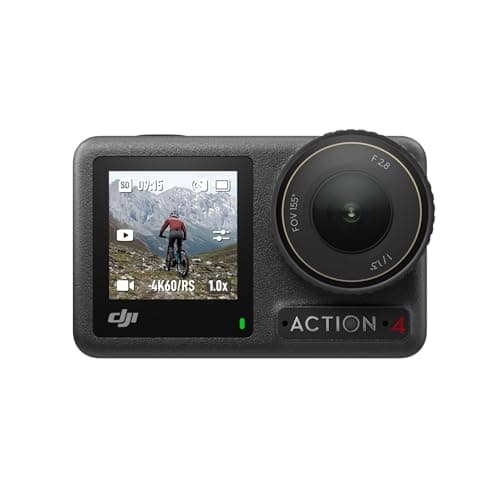
- 18m bare / 60m with case
- 1770mAh · 160 min at 1080p24
- -20° to 45°C
- 9.0
- 8.5
- 8.5
- 8.0
- 8.0
DJI Osmo Action 4
DJI
The previous DJI flagship, still 18m bare and still on shelves — the most water rating per dollar in this list.
Buyers who want deep-water capability without paying flagship money
- 18m without a case still beats every current GoPro by a wide margin
- Same 1/1.3-inch sensor size as the Action 5 Pro
- Rated to -20°C like its replacement
- Usually the cheapest way into serious bare-camera depth
- 160 minutes published against the Action 5 Pro's 240
- Superseded, so accessories and support will taper off first
- No front OLED — the Action 5 Pro's front screen is genuinely more useful for framing
Specs from DJI Osmo Action 4 published specifications.
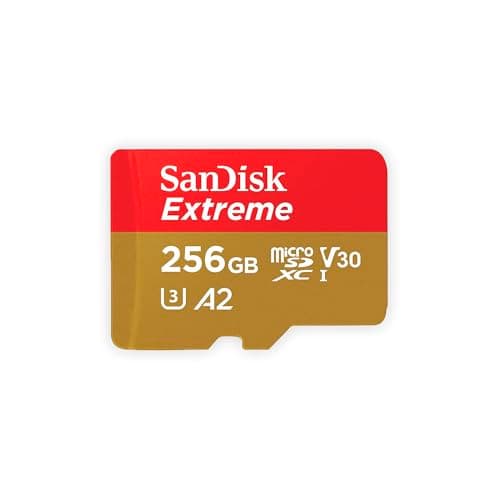
- U3 · V30 · A2 · Class 10
- Up to 190MB/s read, 130MB/s write
- Shock, temperature, water and X-ray proof
- 8.5
- 9.5
- 9.0
- 9.0
- 8.0
SanDisk Extreme microSDXC UHS-I
SanDisk
The card that appears on every manufacturer compatibility list, rated V30 and built to survive being wet, cold and dropped.
Anyone who does not want to think about cards again
- V30 guarantees a 30MB/s minimum sustained write, which is what high-bitrate video actually needs
- SanDisk publishes shockproof, temperature-proof, waterproof and X-ray-proof ratings
- Appears on GoPro, DJI and Insta360 tested-card lists more often than any other card
- Capacities up to 1TB, so a long trip does not need a card swap
- Write speeds vary by capacity — the 64GB tops out at 80MB/s write, the 128GB at 90MB/s
- Counterfeits are common; buy from a seller you trust
- V30 is the floor, not the ceiling — 8K on some cameras wants more headroom
Specs from SanDisk Extreme microSDXC UHS-I product page.
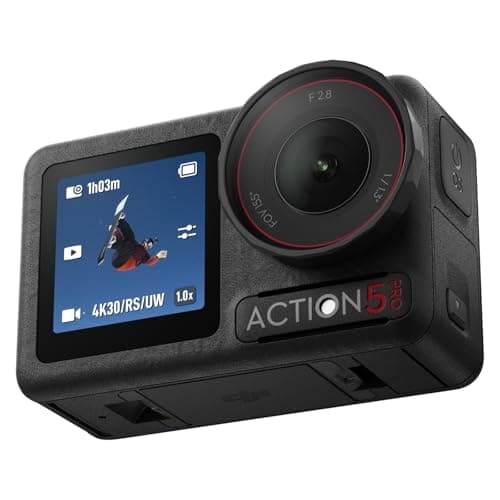
- 20m bare / 60m with case
- 1950mAh · 240 min at 1080p24
- -20° to 45°C
- 9.5
- 9.0
- 9.5
- 8.0
- 9.0
DJI Osmo Action 5 Pro
DJI
Goes to 20m with no housing at all and publishes a 240-minute runtime — the two numbers that decide a long, wet, cold day.
Long paddles, cold water, and anyone tired of buying a housing to get past 10m
- 20m without the Waterproof Case — double the bare-camera depth of the HERO13 Black
- DJI publishes 240 minutes of recording at 1080p/24 with screens off, the longest figure in this set
- Rated to -20°C, which matters more on an October lake than any resolution number
- 1/1.3-inch sensor holds detail when the light goes flat
- Mount ecosystem is smaller than GoPro's, and magnetic quick-release adapters are their own purchase
- 146g — the heaviest of the flagship three
- Fewer third-party mounts and filters exist for it
Specs from DJI Osmo Action 5 Pro published specifications.
02
How we picked
We do not lab-test, bench-test or dive-test cameras, and we do not own test units. What we do instead is read the manufacturer's published specifications, read the independent reviews that genuinely do test, read owner reports for the failure modes specs never mention — fogging, salt corrosion, cold battery collapse, mount slippage — and then weight all of it for action cameras used on lake and trail. Where a number is not published, the page says “not published” rather than filling the cell.
The full method, including what we refuse to do, is on the editorial policy page.
- 30%Water survival
- Rated depth without a case, door design, and what the manufacturer actually publishes.
- 25%Stabilization in chop
- A kayak deck and a rooty trail shake in ways a handheld walk test never shows.
- 20%Battery in the cold
- Published runtime, spare-battery cost, and whether it charges while recording.
- 15%Mount ecosystem
- Finger mount, threaded, magnetic — and how much of it you have to re-buy.
- 10%Footage you will keep
- Lens replaceability, low-light behavior, and how much cutting the footage needs.
03
Questions people actually ask
01How deep can the DJI Osmo Action 4 go without a case?
DJI publishes 18m without the Waterproof Case, and 60m with it. That bare figure is deeper than GoPro publishes for the HERO13 Black (10m) and deeper than Insta360 publishes for the Ace Pro 2 (12m), and it clears every recreational water activity short of scuba.
02Is the DJI Osmo Action 4 still worth buying?
For water and cold-weather video, yes. It keeps the 1/1.3-inch sensor size class and the -20°C rating of the current model, and the bare depth difference is 18m against 20m. What you give up is published runtime — 160 minutes against 240 — and the Action 5 Pro's better front screen. Check availability before planning around it, since it is a superseded model.
03How many megapixels are the Osmo Action 4's photos?
DJI publishes approximately 10MP, with a maximum photo resolution of 3648×2736. That is low for the category — GoPro publishes 27MP on its flagship — so treat this as a video camera with a stills mode rather than a hybrid.
04How long does the Osmo Action 4 battery last?
DJI publishes 160 minutes from the 1770mAh battery, measured at 25°C at 1080p24 with RockSteady on, Wi-Fi off and the screen off. Expect well under that at 4K with the screen on, and less again near freezing. The battery is removable, so carry a spare.
05Does the Osmo Action 4 have horizon leveling?
Yes. DJI lists HorizonSteady, which locks the horizon through camera rotation, and HorizonBalancing, a lighter-touch tilt correction. RockSteady 3.0 and 3.0+ handle general stabilization. Horizon lock is the mode you want on a mount that rolls, like a handlebar or a paddle shaft.
06Is the Osmo Action 4 good for kayaking?
It is one of the better choices on published specs: 18m bare depth covers a capsize with room to spare, RockSteady and HorizonSteady handle a rolling deck, and the -20°C rating covers cold mornings. The paddling shortlist is on our best action camera for kayaking page.
04
Read this next
Osmo Action 5 Pro vs Osmo Action 4
The same two cameras side by side, with the runtime and front-screen gap priced out.
The best action cameras
Where this body ranks against the current GoPro and Insta360 flagships.
The best action camera for snorkeling
Where an 18m bare rating is worth the most.
HyperSmooth vs FlowState vs RockSteady
What RockSteady 3.0 and HorizonSteady actually do differently.
GoPro HERO13 Black vs HERO12 Black
The same previous-generation question, on the GoPro side.
05
Sources
- DJI Osmo Action 4 published specifications
- GoPro HERO13 Black published specifications (depth and stills comparison)
- SanDisk Extreme microSDXC UHS-I product page
- DJI Osmo Action 5 Pro published specifications
Specifications are quoted from the manufacturer pages above as they read on the dates shown. Where a figure is not published, this site says so rather than estimating one. We have not tested these products.