The best action camera for low light
Dawn launches, shaded forest singletrack and the hour after sunset are where these cameras are weakest. Two of them are noticeably less weak.
Part of Cameras.
We earn a commission if you buy through our links, at no extra cost to you. It never changes what we recommend or the order we rank it in — how this works.
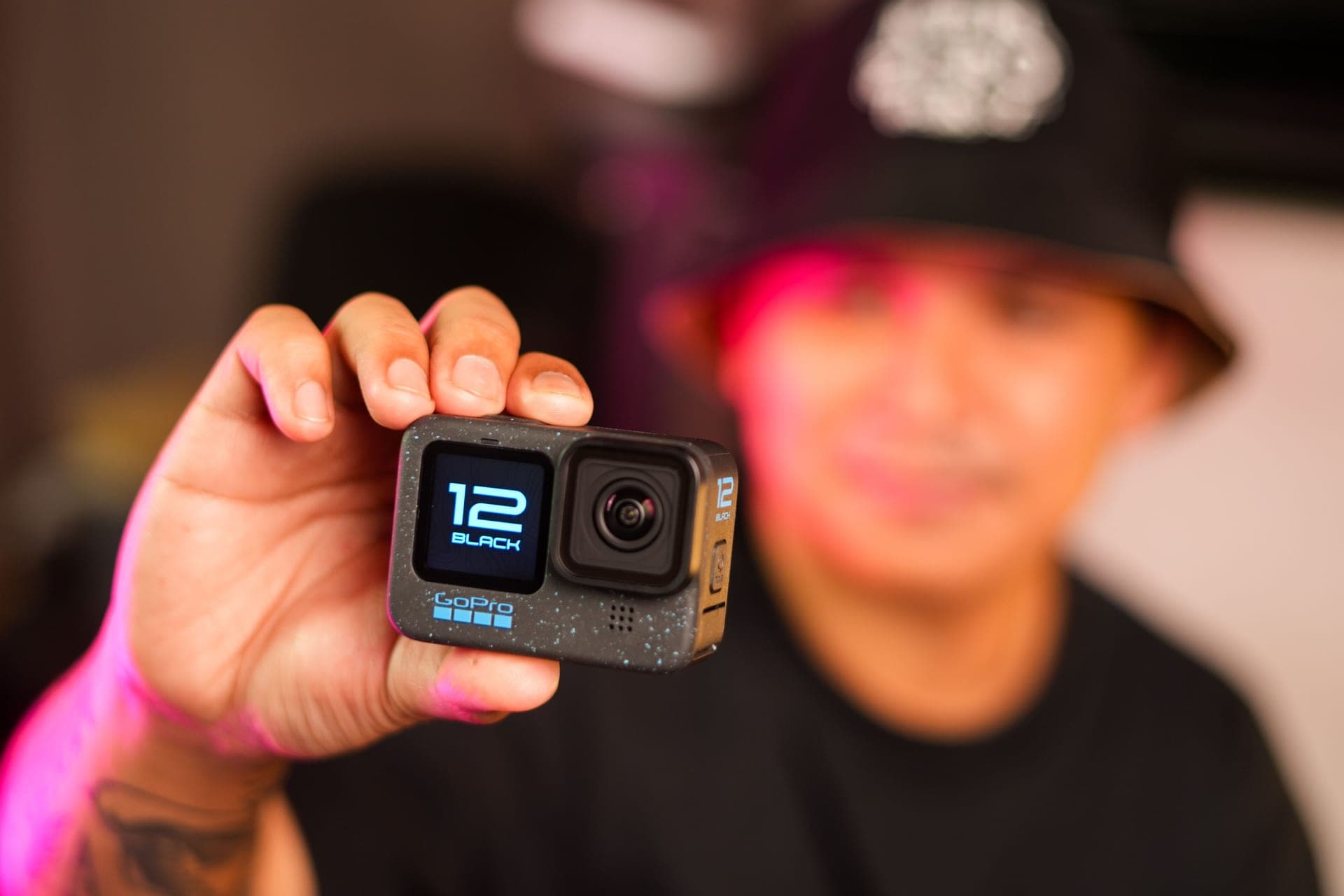
The Insta360 Ace Pro 2 is the best action camera for low light, because it pairs the largest published sensor size in the category — 1/1.3-inch, behind a Leica lens — with 8K30 capture, and sensor area is the only published figure that reliably predicts how a camera behaves when the light runs out. The DJI Osmo Action 5 Pro publishes the same 1/1.3-inch sensor size and is the pick if the day is long or cold, since DJI publishes 240 minutes of recording and a -20°C rating. Nobody publishes a measured low-light figure for any of these cameras, so treat every ranking here — ours included — as a reading of published specifications rather than a laboratory result.
01
Quick picks
| # | Product | Best for | Score | Price |
|---|---|---|---|---|
| 01 | 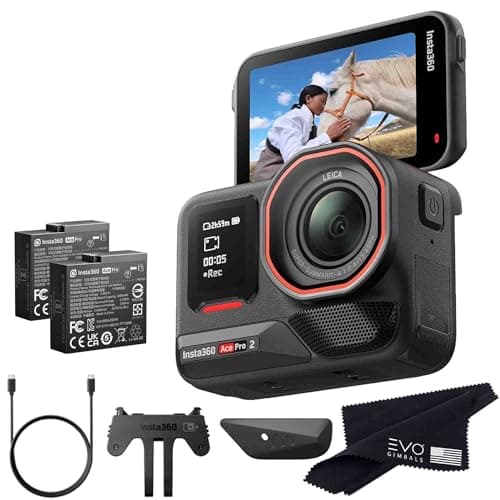 Insta360 Ace Pro 2 The best-looking image of the three flagships, with a flip screen that finally makes a chest-mounted shot something you can frame. | Family trips where you want the footage to look like more than dashcam clips | 8.6/ 10 | |
| 02 | 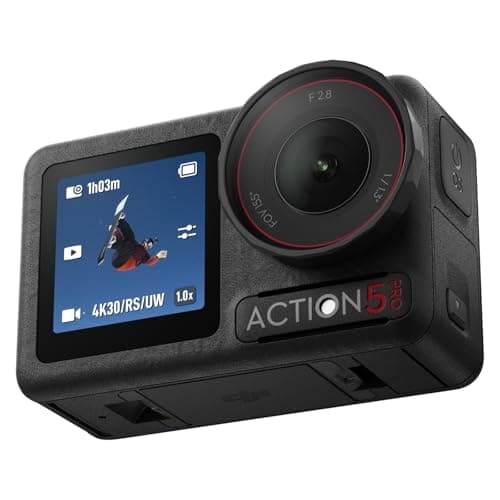 DJI Osmo Action 5 Pro Goes to 20m with no housing at all and publishes a 240-minute runtime — the two numbers that decide a long, wet, cold day. | Long paddles, cold water, and anyone tired of buying a housing to get past 10m | 9.1/ 10 | |
| 03 | 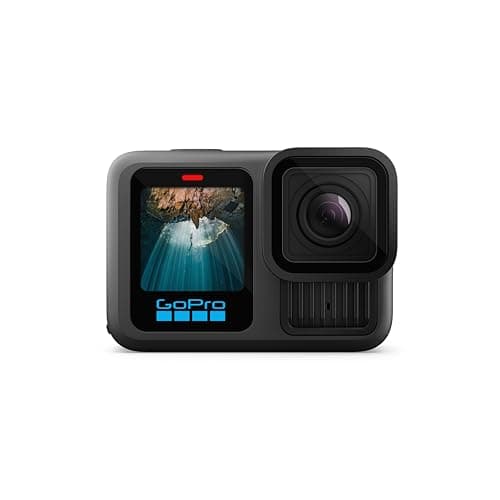 GoPro HERO13 Black The safest default for lake and trail: 33ft without a housing, the steadiest footage in the category, and a mount for literally everything. | Anyone who wants one camera to handle the kayak, the bike and the family trip | 8.8/ 10 | |
| 04 | 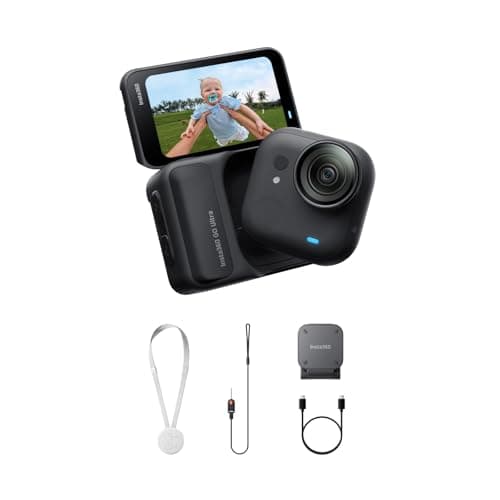 Insta360 GO Ultra 53 grams and IPX8 to 10m on its own — the camera you actually clip on for a paddle instead of leaving in the dry bag. | Hands-free clips where a full-size camera would never leave the bag | 7.6/ 10 | |
| 05 | 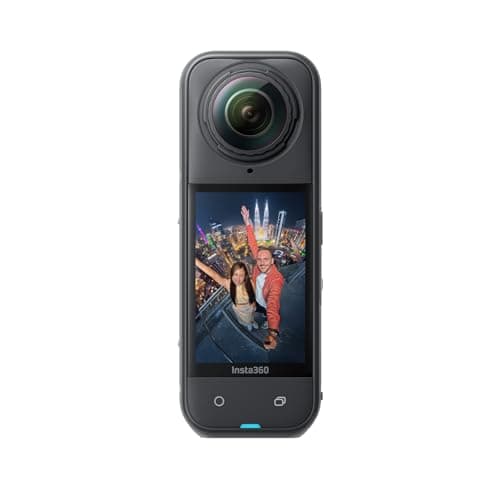 Insta360 X5 15m rated, replaceable lenses, and the one camera that means you never have to aim while you are paddling. | Anyone filming themselves on the water who cannot stop to frame a shot | 9.1/ 10 |
Scores are our editorial judgment from published specs and named independent reviews, weighted for lake and trail use — not measurements. We have not tested these units and do not own them.
02
How we picked
We do not lab-test, bench-test or dive-test cameras, and we do not own test units. What we do instead is read the manufacturer's published specifications, read the independent reviews that genuinely do test, read owner reports for the failure modes specs never mention — fogging, salt corrosion, cold battery collapse, mount slippage — and then weight all of it for action cameras used on lake and trail. Where a number is not published, the page says “not published” rather than filling the cell.
The full method, including what we refuse to do, is on the editorial policy page.
- 30%Water survival
- Rated depth without a case, door design, and what the manufacturer actually publishes.
- 25%Stabilization in chop
- A kayak deck and a rooty trail shake in ways a handheld walk test never shows.
- 20%Battery in the cold
- Published runtime, spare-battery cost, and whether it charges while recording.
- 15%Mount ecosystem
- Finger mount, threaded, magnetic — and how much of it you have to re-buy.
- 10%Footage you will keep
- Lens replaceability, low-light behavior, and how much cutting the footage needs.
What actually decides low-light footage
Action cameras are small-sensor devices in sealed bodies, and dim light is the condition they are worst at. No manufacturer in this category publishes a measured low-light figure — no signal-to-noise number, no usable-ISO ceiling, nothing you could compare like for like. So a page that claims to rank low light precisely is guessing. What we can do is read the specifications that genuinely bear on it.
Sensor size, first and by a distance. A bigger sensor collects more light per frame, which is the entire mechanism. Insta360 and DJI publish 1/1.3-inch sensors on the Ace Pro 2 and the Osmo Action 5 Pro, 1/1.28-inch on the GO Ultra, and GoPro publishes no sensor size at all for the HERO13 Black. The naming is also misleading in a way worth understanding before you shop — the 1-inch sensor explainer has the arithmetic.
Frame rate, which you control. Every frame is an exposure, and the faster you shoot the less light each frame gets. Dropping from 60fps to 30fps is one of the largest low-light improvements available to you, and it costs nothing. Dropping to 24fps buys a little more.
Resolution, which is not the same thing as detail. 8K on a small sensor divides the same light into four times as many photosites as 4K does. In good light that is more detail; at dusk it is more noise per pixel. A 1/1.3-inch sensor shooting 4K will beat a much smaller sensor shooting 8K in anything dim.
Stabilization, which fights you here. This is the part most low-light advice misses. Dim light pushes the camera toward a slower shutter; a slower shutter on a moving mount is motion blur. On a bike or a hull, the steadiest body can out-perform the biggest sensor, which is why the HERO13 Black is on this list at all.
| Camera | Published sensor size | Published battery | Bare depth |
|---|---|---|---|
| Insta360 Ace Pro 2 | 1/1.3" with Leica lens | 1800mAh · 180 min published | 39ft (12m) |
| DJI Osmo Action 5 Pro | 1/1.3" | 1950mAh · 240 min at 1080p24 | 20m |
| GoPro HERO13 Black | Not published | 1900mAh Enduro · 1.5h at 5.3K30 | 33ft (10m) |
| Insta360 GO Ultra | 1/1.28" | Up to 170 min with the Action Pod | IPX8 33ft (10m), camera only |
| Insta360 X5 | Dual 360 sensors | 2400mAh · about 88 min at 8K30 | IP68 49ft (15m) |
The settings that buy you more than the body does
Before spending four hundred dollars to fix a dusk problem, spend four minutes in the menu. In our judgment these changes move the needle further than the gap between any two cameras on this page.
Shoot 4K/30 rather than 4K/60. Halving the frame rate doubles the light per frame. On a paddle or a walk, 30fps is plenty — you only need 60 if you intend to slow the clip down.
Leave the digital zoom alone. Zooming on an action camera is a crop, and a crop at dusk throws away the light you are short of. Get the camera closer instead; the full explanation is in do action cameras have zoom.
Clean the lens, properly. A film of lake water, sunscreen or salt haze scatters light across the whole frame, and the effect is invisible at noon and ruinous at dusk. A smear is the single most common cause of footage people blame on the sensor.
Take the dive filter off. A red or magenta filter is subtractive — it throws away light on purpose to correct color underwater. Above water, or below it in poor light, it is a stop you cannot afford. Filters and dome ports covers which band belongs at which depth.
When the answer is a different camera entirely
If most of your filming happens in poor light and none of it happens in water, an action camera is the wrong tool. The format's whole premise is a tiny sealed body you can mount anywhere, and a tiny sealed body has nowhere to put a large sensor or a fast lens. A mirrorless camera with a bright prime lens will beat everything here at dusk by a margin no action camera can close — action camera vs mirrorless has the honest version of that trade, including everything you give up.
If the light is poor because you are underwater, the problem is not the sensor either. Water removes light and color with depth, and the fix is a filter at the right depth band plus getting physically closer to the subject. Settings for clear snorkeling footage has the depth bands.
Who should buy which
Dawn and dusk on land, footage quality first: the Ace Pro 2. Largest published sensor, highest resolution, and a flip screen for framing in bad light.
Long cold mornings, or a camera that also dives: the Osmo Action 5 Pro. Same sensor size, 240 published minutes, -20°C, 20m bare.
Moving mounts — bike, hull, helmet: the HERO13 Black, because stabilization is doing more work than sensor area once the shutter slows down. If you are deciding between GoPro bodies rather than between brands, which GoPro to buy narrows it.
A clipped-on second angle: the GO Ultra, which carries the largest published sensor figure here in 53 grams.
03
Every pick, in detail
- 39ft (12m) / 60m with dive case
- 1800mAh · 180 min published
- 1/1.3" with Leica lens
- 8.5
- 8.5
- 9.0
- 7.5
- 9.5
Insta360 Ace Pro 2
Insta360
The best-looking image of the three flagships, with a flip screen that finally makes a chest-mounted shot something you can frame.
Family trips where you want the footage to look like more than dashcam clips
Top pick on the specification that matters. Insta360 publishes a 1/1.3-inch sensor behind a Leica lens and 8K30 capture, which is the largest sensor figure and the highest resolution in this group. Those two together are what let it hold detail at dusk where a smaller sensor turns a tree line into smeared mush — and the flip screen means the shot you frame in bad light is the shot you actually get, rather than a guess.
The honest cons are not about light. 12m bare is short of the DJI's 20m, the dive case is a separate purchase past that, and the mount catalog is smaller than GoPro's. If your low-light problem is specifically a long, cold evening, read the DJI entry below before you decide.
- 8K30 with a 1/1.3-inch sensor — the most detail in the group
- 12m bare, which clears every snorkel depth without a housing
- 180-minute published battery life and 80% charge in 18 minutes
- Flip screen means you can frame a shot you are standing in front of
- 12m is still short of the DJI's 20m
- The dive case is a separate purchase for anything past 12m
- Fewer mount options than GoPro, and an adapter tax if you switch
Specs from Insta360 Ace Pro 2 published specifications.
- 20m bare / 60m with case
- 1950mAh · 240 min at 1080p24
- -20° to 45°C
- 9.5
- 9.0
- 9.5
- 8.0
- 9.0
DJI Osmo Action 5 Pro
DJI
Goes to 20m with no housing at all and publishes a 240-minute runtime — the two numbers that decide a long, wet, cold day.
Long paddles, cold water, and anyone tired of buying a housing to get past 10m
The same published sensor size — 1/1.3-inch — in the body with the best endurance numbers in the category. DJI publishes 240 minutes at 1080p/24 with the screens off and a -20° to 45°C operating range, which is the combination that gets you through a dawn launch and the whole golden hour after it without a battery swap in the dark.
It also goes to 20m with no housing at all, double the HERO13 Black's bare rating, so the camera that handles your dim morning also handles the swim at lunch. The trade is weight — 146g, the heaviest of the flagship three — and a smaller mount ecosystem that charges you an adapter tax if you already own GoPro hardware.
- 20m without the Waterproof Case — double the bare-camera depth of the HERO13 Black
- DJI publishes 240 minutes of recording at 1080p/24 with screens off, the longest figure in this set
- Rated to -20°C, which matters more on an October lake than any resolution number
- 1/1.3-inch sensor holds detail when the light goes flat
- Mount ecosystem is smaller than GoPro's, and magnetic quick-release adapters are their own purchase
- 146g — the heaviest of the flagship three
- Fewer third-party mounts and filters exist for it
Specs from DJI Osmo Action 5 Pro published specifications.
- 33ft (10m), no housing
- 1900mAh Enduro
- 1.5h at 5.3K30 / 2.5h at 1080p30
- 8.0
- 9.5
- 8.5
- 9.5
- 9.0
GoPro HERO13 Black
GoPro
The safest default for lake and trail: 33ft without a housing, the steadiest footage in the category, and a mount for literally everything.
Anyone who wants one camera to handle the kayak, the bike and the family trip
Third here, and it is a ranking about one specification rather than about the camera. GoPro does not publish a sensor size for the HERO13 Black on the page we read, so the figure that predicts low-light behavior is simply not available — and we will not invent one. What GoPro does publish is HyperSmooth 6.0 with AutoBoost, a 1900mAh Enduro battery rated for full functionality down to 14°F (-10°C), and 1.5 hours at 5.3K30.
That matters in dim light more than it sounds, because stabilization and low light fight each other: a dark scene pushes the camera to a slower shutter, and a slow shutter plus a moving mount is motion blur that no sensor fixes. If your low-light footage is shot from a bike or a hull rather than from a hand, the steadiest body in the category is a defensible choice. It is also the one with a replaceable lens cover and the HB-Series lens mount, which no other camera here offers.
- HyperSmooth 6.0 with AutoBoost is the steadiest stabilization we can find published figures for
- Built-in mounting fingers plus 1/4-20 threads — it fits the GoPro ecosystem and a normal tripod
- Enduro battery is rated to keep full camera functionality down to 14°F (-10°C)
- Replaceable lens cover, so a scratched lens is a $20 problem and not a $400 one
- 33ft is shallower than the DJI and it is the shallowest of the three flagships
- Anything past 33ft needs the separate Protective Housing
- HB-Series lenses and ND filters are all extra purchases
Specs from GoPro HERO13 Black published specifications.
- IPX8 to 33ft (10m), camera only
- 53g
- Up to 170 min with the Action Pod
- 7.0
- 8.0
- 7.5
- 8.0
- 8.0
Insta360 GO Ultra
Insta360
53 grams and IPX8 to 10m on its own — the camera you actually clip on for a paddle instead of leaving in the dry bag.
Hands-free clips where a full-size camera would never leave the bag
The surprise on a low-light list: Insta360 publishes a 1/1.28-inch sensor in a 53g camera, which is the largest published figure of any body here. It is the pick when the camera has to be clipped to a hat brim or a PFD strap rather than held, and it is rated IPX8 to 33ft (10m) on its own.
Read the two water ratings separately — the Action Pod it docks into is its own product with its own rating — and remember that the magnetic mounting is convenience, not a mechanical lock. There is no interchangeable lens cover either, so a scratch is permanent. It is a second camera with a first-rate sensor, not a one-camera answer.
- 53g means it goes on a hat brim, a PFD strap or a chest magnet and you forget it is there
- IPX8 to 10m for the camera itself, with a 1/1.28" sensor that is far larger than the size suggests
- Action Pod adds a flip screen and the long runtime when you want it
- Removable microSD, so you are not stuck with fixed onboard storage
- The Action Pod is not rated to the same depth as the camera — read the two ratings separately
- Magnetic mounting is convenient but is not a mechanical lock in real chop
- No interchangeable lens cover, so a scratch is permanent
Specs from Insta360 GO Ultra published specifications.
- IP68 to 49ft (15m)
- 2400mAh · ~88 min at 8K30
- User-replaceable
- 9.5
- 9.5
- 9.0
- 8.5
- 7.5
Insta360 X5
Insta360
15m rated, replaceable lenses, and the one camera that means you never have to aim while you are paddling.
Anyone filming themselves on the water who cannot stop to frame a shot
Here with a caveat rather than a recommendation. The X5 is the best 360 camera we rank — IP68 to 49ft (15m), user-replaceable lenses, 185 minutes in Endurance mode at 5.7K24 — but a 360 camera divides its resolution across an entire sphere, and the published sensor figure is "dual 360 sensors" rather than a single large one. In good light that trade buys you reframing you cannot get any other way. In poor light it is the format that struggles first, so buy it for the trick, not for the dusk.
- 15m IP68 is the deepest bare rating of any camera on this site
- User-replaceable lenses — the single biggest fix for the 360 format's worst failure mode
- 185 minutes in Endurance mode at 5.7K24, which is a whole day of clips
- Invisible-selfie-stick reframing means you point the camera at nothing and pick the angle later
- Exposed lenses still scratch; lens guards are a purchase, not an option
- Every clip needs a reframing pass before anyone else can watch it
- 8K30 files are large and the edit is slower than flat footage
Specs from CineD, Insta360 X5 announcement with published specifications.
04
What decides this category
Buy sensor size, not resolution
Where a manufacturer publishes a sensor figure, it is the most useful number on the page for this purpose. Where one does not, say so rather than substituting a resolution number that measures something else entirely.
Check the bare water rating anyway
Low light and water arrive together on a lake — early morning, late evening, and both ends of a dive. A camera that solves dusk and then needs a housing to get wet has solved half the day.
Budget for a spare battery, not a bigger number
Dim light means long sessions at the start and end of the day, and cold mornings cost battery. Batteries and power banks is the cheaper half of this purchase.
What we would skip
Any "night vision" or "super night" mode claim on a listing with no published specification behind it. Those modes are usually frame-averaging, which looks acceptable on a static tripod shot and turns to paste the moment anything moves.
05
Questions people actually ask
01Which action camera is best in low light?
On published specifications, the Insta360 Ace Pro 2 — a 1/1.3-inch sensor with a Leica lens and 8K30 capture. The DJI Osmo Action 5 Pro publishes the same sensor size and better endurance figures. No manufacturer publishes a measured low-light result for any of them, so this is a reading of specs, not a test.
02Do action cameras work at night?
For a lit scene — a campfire, a town, a dock under lights — yes, at 30fps or lower. For a genuinely dark one, no: there is no action camera with a sensor or a lens large enough, and the marketing modes that claim otherwise average frames together, which only works if nothing in the shot moves.
03Does a bigger sensor really improve low light?
Yes, and it is a mechanism rather than a marketing claim: a larger sensor collects more light per frame. The caveat is that the step up from 1/1.3-inch does not exist in this category — no current mainstream action camera publishes a 1-inch sensor.
04Is 8K better than 4K in low light?
No. 8K divides the same light across four times as many photosites as 4K, so each one receives less. Shoot 4K at dusk and keep 8K for bright conditions or for when you intend to crop in an edit.
05What frame rate should I use in low light?
30fps, or 24fps if your edit can take it. Every drop in frame rate lengthens the exposure each frame receives, and it is the one low-light improvement that is free.
06
Read this next
Action cameras with a 1-inch sensor
Why none exists yet, and what the biggest published sensors actually measure.
Do action cameras take good photos?
The same sensor limits, applied to stills instead of video.
Action camera vs mirrorless
The honest version of the trade if poor light is your main condition.
Settings for clear snorkeling footage
When the light is poor because there is water above you.
The best action cameras
The main roundup, ranked across every condition rather than one.
07
Sources
- Insta360 Ace Pro 2 published specifications
- DJI Osmo Action 5 Pro published specifications
- GoPro HERO13 Black published specifications
- Insta360 GO Ultra published specifications
- CineD, Insta360 X5 announcement with published specifications
Specifications are quoted from the manufacturer pages above as they read on the dates shown. Where a figure is not published, this site says so rather than estimating one. We have not tested these products.