Do action cameras take good photos?
In bright light, close to a wide subject, in or on water — yes, and better than your phone. Everywhere else the fixed lens and the small sensor show.
Part of Cameras.
We earn a commission if you buy through our links, at no extra cost to you. It never changes what we recommend or the order we rank it in — how this works.
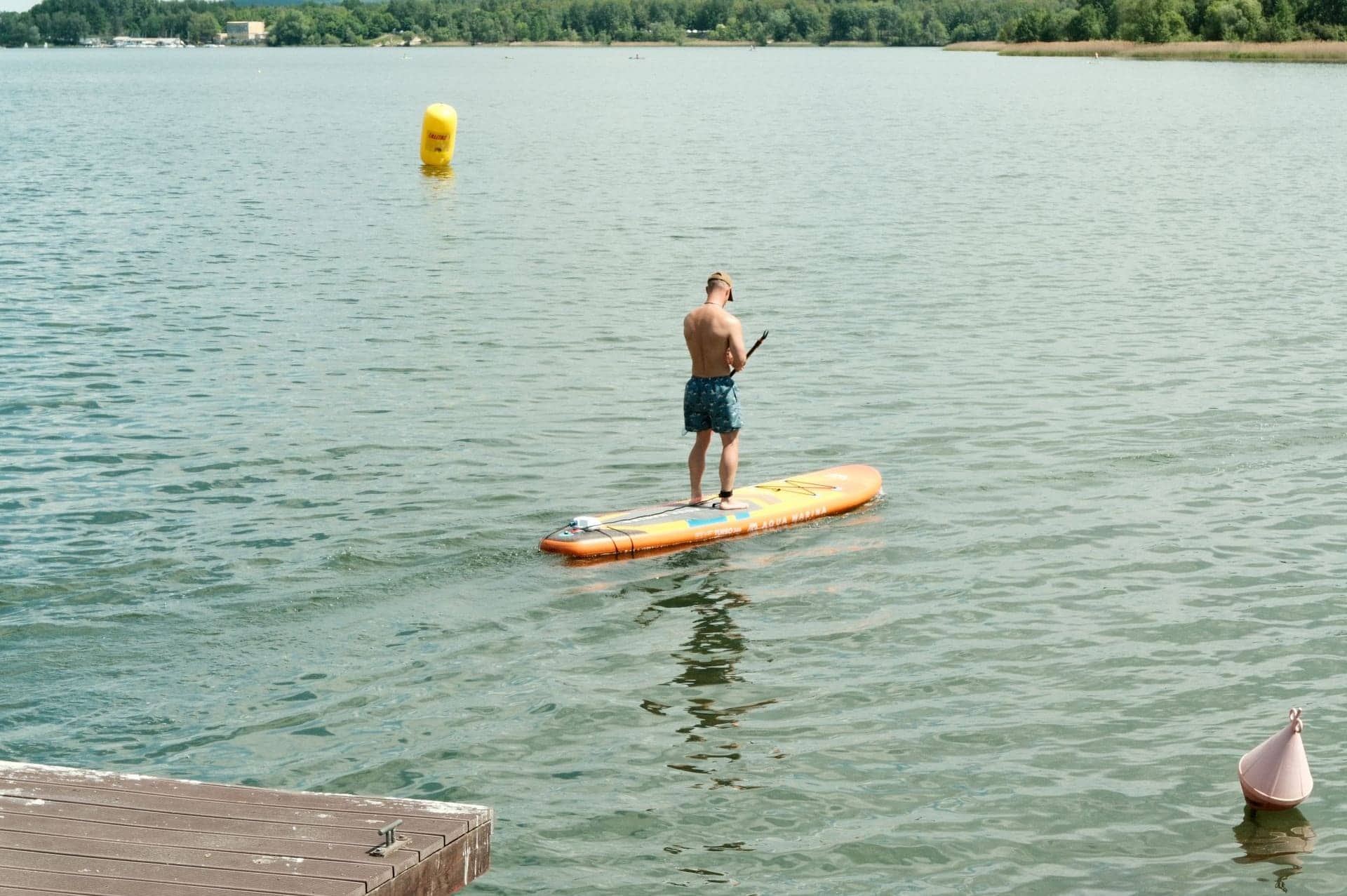
Yes, in four specific situations: bright light, a subject close to a wide lens, anything wet, and anywhere you cannot safely hold a phone. Action camera stills come off a small sensor behind a fixed ultra-wide lens, which makes them excellent for landscapes with a foreground, for close action, for underwater shots and for pictures taken from a kayak in rain. They are poor in low light, impossible for anything distant — there is no optical zoom in the category — and they cannot produce the blurred background a phone fakes in portrait mode. Insta360 publishes a 1/1.3-inch sensor with a Leica lens for the Ace Pro 2 and DJI publishes 1/1.3-inch for the Osmo Action 5 Pro, which are the largest published figures available, so those are the bodies to choose if stills matter.
Where action camera photos genuinely win
Wide scenes with something in the foreground. The fixed ultra-wide lens that ruins portraits is exactly right for a bow, a paddle blade or a pair of boots with a lake behind them. The lens makes the near thing large and the far thing vast, which is the look that reads as adventure.
Close action. At one to three feet, an action camera is in its element and a phone is not — because you are prepared to put the action camera where you would never put a phone.
Anything wet. This is the unanswerable one. The cameras we rank are rated between 16ft (5m) and 20m bare, which means a photograph taken underwater, in surf, in rain or in a swamped boat is just a photograph rather than an insurance claim. How deep an action camera really goes has every published rating.
Where you cannot hold a phone. Mounted on a chest, a helmet, a bar or a pole, an action camera takes photographs while your hands are busy. A phone needs a hand and attention; a camera on a chest mount with an interval set needs neither.
Where they lose, and why
| Weakness | Cause | Workaround |
|---|---|---|
| Low light | A small sensor collects less light; no fast aperture to compensate | Shoot in better light, brace the camera, or use a different camera |
| Nothing distant | Fixed ultra-wide lens, no optical zoom in the category | Get closer, or crop a high-resolution still and accept the loss |
| No background blur | Short focal length and a small sensor give enormous depth of field | Get very close to the subject; it is the only lever you have |
| Edge distortion on faces | Ultra-wide geometry stretches whatever sits near the frame edge | Use linear mode and put faces in the middle of the frame |
None of those is a defect. They are the direct consequences of a design brief that says "be tiny, be sealed, be mountable and survive", and the same constraints that rule out optical zoom and large sensors — which we work through in do action cameras have zoom and action cameras with a 1-inch sensor.
Which camera, if photos matter
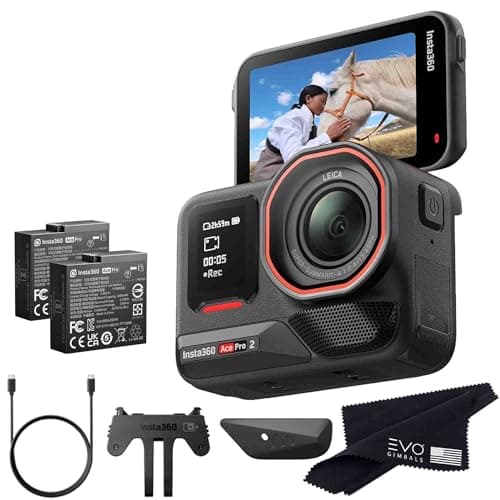
The Insta360 Ace Pro 2 on the published figures: a 1/1.3-inch sensor behind a Leica lens and 8K30 video, with a flip screen that makes composing a still you are in front of actually possible. If your filming is mostly family and travel rather than sport, this is the body we would pick for stills.
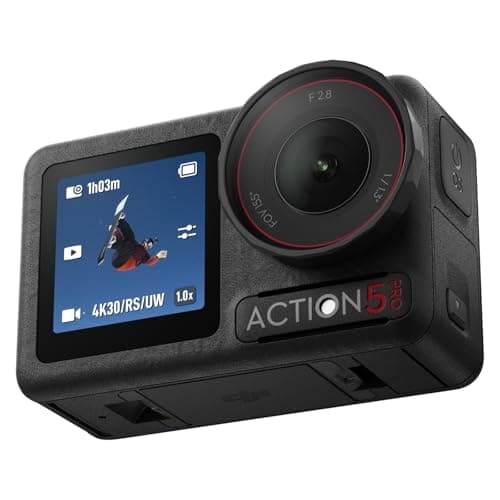
The DJI Osmo Action 5 Pro publishes the same 1/1.3-inch sensor size, with 20m of bare depth and a -20° to 45°C range — the pick for photographs taken in genuinely bad conditions, which is often where the best ones are.
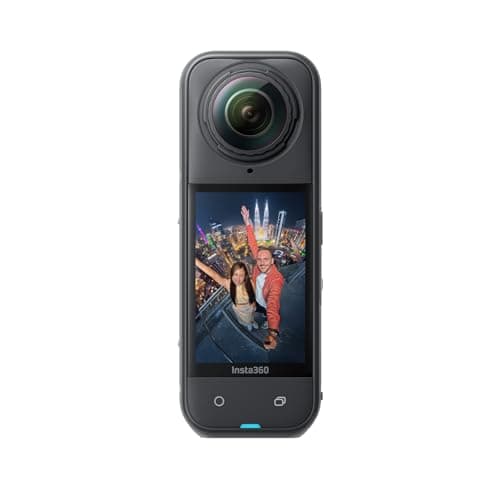
The Insta360 X5 takes a photograph nothing else here can: a full sphere. In practice that means two things — the "tiny planet" image everybody recognizes, and a group photo on a pole with no stick visible and nobody left out because they were holding the camera. It is IP68 to 49ft (15m), which is the deepest bare rating we rank. The cost is the same as always: a 360 photo needs reframing before it is a normal picture.
The GoPro HERO13 Black is not on this list for a specific reason: GoPro does not publish a sensor size for it on the page we read, so we cannot compare it on the one specification that predicts still quality. That is not a claim that its photos are bad — it is a statement about what we can verify. For mounting, stabilization and video it remains our default pick, and which GoPro to buy covers the lineup.
Settings that change stills more than the camera does
Shoot linear, not the widest mode. Barrel distortion looks like a mistake in a still photograph, where a viewer studies the frame instead of watching it go past. Linear mode straightens it.
Use the photo mode, not a video frame grab. A frame pulled from video is limited to the video resolution and carries motion blur from a video shutter. The dedicated photo mode exists for a reason.
Shoot RAW if the camera offers it and you edit. It is the difference between recovering a bright sky and not. If you never open an editor, ignore this entirely.
Use burst for anything moving. Water, dogs, children, fish being landed. One frame in twelve will be the one, and no amount of timing beats taking twelve.
Set an interval and stop thinking about it. Interval photo modes take a picture every few seconds while you paddle or ride, which is how people come home with the shot they would never have stopped for. Time lapse vs TimeWarp covers the interval arithmetic, and it applies to stills too.
Clean the lens before every session, and again after any splash. One droplet is the single most common cause of a soft photograph, and underwater it is the whole frame. The underwater color and clarity settings are in settings for clear snorkeling footage.
What about travel photography specifically
"Best action camera for travel photography" is a common search and it deserves a direct answer: an action camera should be your second travel camera, not your only one. It will take the photographs your phone cannot — in the sea, from a kayak, on a bike, in rain — and it will be noticeably worse at the market stall at dusk, the portrait of a stranger and the mountain across the valley.
If you are carrying one device, carry the phone. If you are carrying two, an action camera is the best second one for a trip that involves water or motion, and the body to choose is the one with the largest published sensor you can afford. For the video side of that decision, the best action camera for travel vlogging ranks the same bodies on a different job, and the low-light ranking covers the condition that catches travelers out.
01
The bodies to pick if stills matter to you
Photos lean on sensor size more than video does, so the two bodies with the largest published sensors lead — plus the 360 camera that takes a photograph nothing else can.
- 39ft (12m) / 60m with dive case
- 1800mAh · 180 min published
- 1/1.3" with Leica lens
- 8.5
- 8.5
- 9.0
- 7.5
- 9.5
Insta360 Ace Pro 2
Insta360
The best-looking image of the three flagships, with a flip screen that finally makes a chest-mounted shot something you can frame.
Family trips where you want the footage to look like more than dashcam clips
- 8K30 with a 1/1.3-inch sensor — the most detail in the group
- 12m bare, which clears every snorkel depth without a housing
- 180-minute published battery life and 80% charge in 18 minutes
- Flip screen means you can frame a shot you are standing in front of
- 12m is still short of the DJI's 20m
- The dive case is a separate purchase for anything past 12m
- Fewer mount options than GoPro, and an adapter tax if you switch
Specs from Insta360 Ace Pro 2 published specifications.
- 20m bare / 60m with case
- 1950mAh · 240 min at 1080p24
- -20° to 45°C
- 9.5
- 9.0
- 9.5
- 8.0
- 9.0
DJI Osmo Action 5 Pro
DJI
Goes to 20m with no housing at all and publishes a 240-minute runtime — the two numbers that decide a long, wet, cold day.
Long paddles, cold water, and anyone tired of buying a housing to get past 10m
- 20m without the Waterproof Case — double the bare-camera depth of the HERO13 Black
- DJI publishes 240 minutes of recording at 1080p/24 with screens off, the longest figure in this set
- Rated to -20°C, which matters more on an October lake than any resolution number
- 1/1.3-inch sensor holds detail when the light goes flat
- Mount ecosystem is smaller than GoPro's, and magnetic quick-release adapters are their own purchase
- 146g — the heaviest of the flagship three
- Fewer third-party mounts and filters exist for it
Specs from DJI Osmo Action 5 Pro published specifications.
- IP68 to 49ft (15m)
- 2400mAh · ~88 min at 8K30
- User-replaceable
- 9.5
- 9.5
- 9.0
- 8.5
- 7.5
Insta360 X5
Insta360
15m rated, replaceable lenses, and the one camera that means you never have to aim while you are paddling.
Anyone filming themselves on the water who cannot stop to frame a shot
- 15m IP68 is the deepest bare rating of any camera on this site
- User-replaceable lenses — the single biggest fix for the 360 format's worst failure mode
- 185 minutes in Endurance mode at 5.7K24, which is a whole day of clips
- Invisible-selfie-stick reframing means you point the camera at nothing and pick the angle later
- Exposed lenses still scratch; lens guards are a purchase, not an option
- Every clip needs a reframing pass before anyone else can watch it
- 8K30 files are large and the edit is slower than flat footage
Specs from CineD, Insta360 X5 announcement with published specifications.
02
How we picked
We do not lab-test, bench-test or dive-test cameras, and we do not own test units. What we do instead is read the manufacturer's published specifications, read the independent reviews that genuinely do test, read owner reports for the failure modes specs never mention — fogging, salt corrosion, cold battery collapse, mount slippage — and then weight all of it for action cameras used on lake and trail. Where a number is not published, the page says “not published” rather than filling the cell.
The full method, including what we refuse to do, is on the editorial policy page.
- 30%Water survival
- Rated depth without a case, door design, and what the manufacturer actually publishes.
- 25%Stabilization in chop
- A kayak deck and a rooty trail shake in ways a handheld walk test never shows.
- 20%Battery in the cold
- Published runtime, spare-battery cost, and whether it charges while recording.
- 15%Mount ecosystem
- Finger mount, threaded, magnetic — and how much of it you have to re-buy.
- 10%Footage you will keep
- Lens replaceability, low-light behavior, and how much cutting the footage needs.
03
Questions people actually ask
01Do action cameras take good photos?
In bright light, close to a wide subject, and anywhere wet or mounted — yes, and better than a phone because you will put the camera where you would not put a phone. In low light, for distant subjects or for portraits with a blurred background, no.
02Which action camera is best for photos?
On published sensor size, the Insta360 Ace Pro 2 — 1/1.3-inch behind a Leica lens — with the DJI Osmo Action 5 Pro matching the sensor figure and adding 20m of bare depth. GoPro does not publish a sensor size for the HERO13 Black, so it cannot be compared on that number.
03Can an action camera replace a camera for travel photography?
Not as your only camera. It is the best second camera for a trip involving water or motion, and noticeably weaker for portraits, dusk and anything distant — there is no optical zoom in the category.
04Should I shoot photos or grab frames from video?
Use the photo mode. A video frame grab is capped at the video resolution and carries motion blur from a video shutter speed, while the photo mode uses the full sensor and an exposure chosen for a still.
05Why do faces look strange in action camera photos?
Ultra-wide geometry stretches anything near the edge of the frame, and the short focal length exaggerates whatever is closest to the lens. Switch to linear mode and keep faces in the middle of the frame.
04
Read this next
Do action cameras have zoom?
Why nothing distant works, and the three ways to get closer anyway.
Action camera vs phone
Which device wins which shot, stated plainly.
The best action camera for low light
The condition that costs stills the most, and the bodies that handle it best.
The best action camera for travel vlogging
The same bodies ranked for video on the same trip.
Settings for clear snorkeling footage
Underwater photographs need a filter and a depth band, not more resolution.
05
Sources
- Insta360 Ace Pro 2 published specifications
- DJI Osmo Action 5 Pro published specifications
- CineD, Insta360 X5 announcement with published specifications
Specifications are quoted from the manufacturer pages above as they read on the dates shown. Where a figure is not published, this site says so rather than estimating one. We have not tested these products.