Do action cameras have zoom?
Not optically. What they have instead is a crop with a friendly name, and knowing the difference saves you a disappointing purchase.
Part of Cameras.
We earn a commission if you buy through our links, at no extra cost to you. It never changes what we recommend or the order we rank it in — how this works.
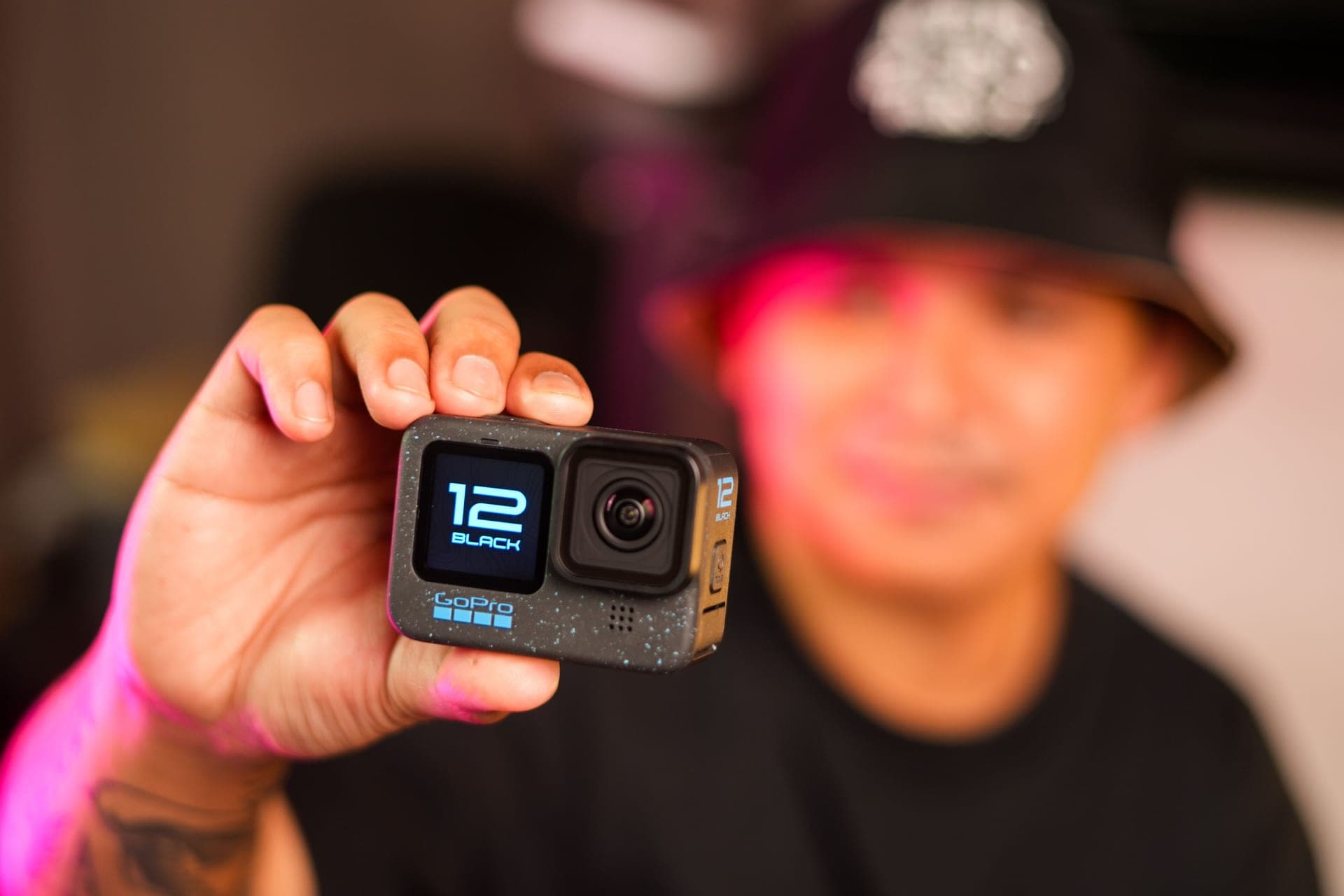
No. None of the action cameras we rank publishes an optical zoom — they all have a fixed ultra-wide lens, and what the menus call zoom is a digital crop. Digital zoom throws away pixels to make the subject larger, so the image gets softer and noisier the further you push it; it does not gather any more detail than the sensor already had. The lens modes — wide, linear, narrow, SuperView and their equivalents — are also crops and corrections of the same fixed lens rather than focal-length changes. The three honest ways to get closer are to physically move the camera, to shoot at a higher resolution and crop in the edit, or on the GoPro HERO13 Black to fit an HB-Series lens. If you genuinely need reach, the camera you want is not an action camera.
Optical zoom, digital zoom and lens modes are three different things
| Term | What it does | What it costs |
|---|---|---|
| Optical zoom | Moves glass to change focal length and gathers detail at the new framing | Not available on any action camera we rank |
| Digital zoom | Crops into the sensor image and scales it back up to the output resolution | Real detail: the deeper the crop, the softer and noisier the result |
| Lens modes (wide / linear / narrow) | Crops and geometric correction applied to the same fixed lens | Field of view and some resolution; linear also removes barrel distortion |
| 360 reframing | Chooses a window out of a captured sphere after the fact | Output resolution, since the flat export is a crop of the whole sphere |
| Swappable lenses (HB-Series) | Physically changes the optic in front of the sensor on the HERO13 Black | An accessory purchase per lens; still not a zoom |
Why the category has no optical zoom
It is not an oversight, and it is not coming. Four physical constraints rule it out, and they are the same four that keep sensors small — the subject we work through in action cameras with a 1-inch sensor.
Moving glass needs room. A zoom lens is several groups of elements that travel relative to each other. An action camera is a body the size of a matchbox with a battery, a processor and a screen already inside it.
Moving parts break the seal. A 10m or 20m water rating depends on a sealed, fixed front element. A barrel that extends or internal groups that travel are both routes for water and grit, and waterproofing is the entire premise of these cameras.
Stabilization needs margin. Electronic stabilization works by cropping the sensor image and moving the window around inside it. That crop budget is spent on keeping the horizon still — spending it on reach as well leaves nothing for either.
Ultra-wide is the point. These cameras are designed to be mounted a foot from the subject, on a chest, a helmet or a handlebar, where a wide lens is the only lens that works. A telephoto action camera would fail at the job the format exists to do.
What the lens modes really are
Every manufacturer names them differently and none of them is a zoom. They are digital treatments of one fixed optic, and they are useful once you know which problem each one solves.
The widest modes — SuperView and its equivalents — stretch the frame to show more at the edges. Dramatic on a bike, unflattering on a face, and the stretch is visible at the corners.
Wide is the native field of view and the sharpest option, because nothing is being corrected or cropped.
Linear removes the barrel distortion so straight lines stay straight. It costs a little field of view and it is the mode that makes footage look like normal video rather than action camera footage — the right default for anything with a horizon in it, including water.
Narrow crops further still. It is the closest thing to a zoom on the body and it is the setting to use for a face on a desk or a talking-head clip, which is the one place the ultra-wide lens is actively wrong — using an action camera as a webcam covers that case.
Three ways to get closer that actually work
Move the camera. Unglamorous and by far the most effective. These lenses are designed for a subject a foot or two away, and the difference between a camera six feet from the action and eighteen inches from it is enormous. A pole is the cheapest zoom you will ever buy — paddle and pole mounts covers the options, and on water it also keeps the camera out of the boat.
Shoot high and crop in the edit. This is the real answer, and it is why 5.3K and 8K settings exist. Cropping a 5.3K frame down to a 4K export gives you roughly 1.4x of reach with no loss in the delivered resolution; cropping 8K to 4K gives you 2x. Do it in the edit, where you can see the result, rather than in the camera where the decision is permanent. Bear in mind the card and battery cost — what size SD card you need has the arithmetic.
Change the optic, on the one body that allows it. The HERO13 Black is the only current GoPro with the HB-Series lens mount. Those are fixed focal length lenses rather than zooms — they change the field of view and the look, not the reach of a single body — but it is the only true optical change available in the category, and which GoPro to buy covers whether that mount is worth the money for you.
What does not work is pushing the in-camera digital zoom and hoping. It is doing the same crop an editor would do, with less information and no undo.
The 360 answer, which is different
A 360 camera does something that feels like zoom but is not. It captures the whole sphere and you pick a window out of it afterwards, so you can punch in on anything that happened — behind you, above you, the other end of the boat. The resolution cost is the same as any crop, and a 360 camera starts with a resolution figure spread over an entire sphere rather than one direction.
That makes it a tool for choosing the angle, not for reaching distant subjects. It is genuinely transformative for self-filming — see filming a kayak adventure on a 360 camera — and no help at all for wildlife on the far bank. The format trade is in 360 camera vs action camera.
When you need a different camera
If reach is a real requirement — birds on the far shore, a boat across the lake, wildlife that will not tolerate a camera a foot away — no action camera will do it and no setting will fix it. A mirrorless camera or a bridge camera with a telephoto lens is the right tool, and the honest comparison, including everything you lose, is in action camera vs mirrorless.
If you only need reach occasionally, the pragmatic answer is both: an action camera for the wet, mounted, close-up work it is unbeatable at, and a phone for the occasional distant shot. Modern phones have multiple lenses and a real telephoto on better models, which is more zoom than any action camera will ever have. Action camera vs phone has the full split.
01
The three bodies with the most room to crop
If you cannot zoom, resolution is what buys you reach in an edit. These are the bodies that publish the most of it — plus the only current GoPro with a swappable-lens mount.
- 33ft (10m), no housing
- 1900mAh Enduro
- 1.5h at 5.3K30 / 2.5h at 1080p30
- 8.0
- 9.5
- 8.5
- 9.5
- 9.0
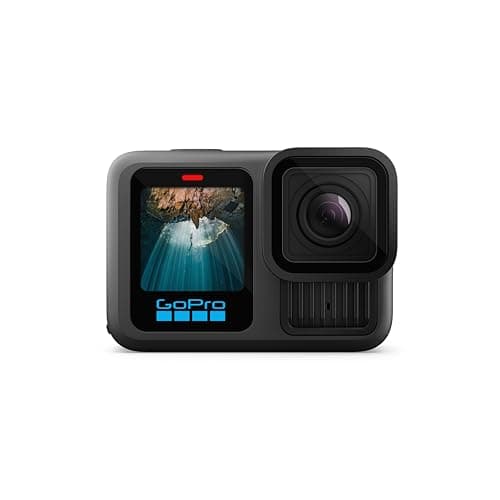
GoPro HERO13 Black
GoPro
The safest default for lake and trail: 33ft without a housing, the steadiest footage in the category, and a mount for literally everything.
Anyone who wants one camera to handle the kayak, the bike and the family trip
- HyperSmooth 6.0 with AutoBoost is the steadiest stabilization we can find published figures for
- Built-in mounting fingers plus 1/4-20 threads — it fits the GoPro ecosystem and a normal tripod
- Enduro battery is rated to keep full camera functionality down to 14°F (-10°C)
- Replaceable lens cover, so a scratched lens is a $20 problem and not a $400 one
- 33ft is shallower than the DJI and it is the shallowest of the three flagships
- Anything past 33ft needs the separate Protective Housing
- HB-Series lenses and ND filters are all extra purchases
Specs from GoPro HERO13 Black published specifications.
- IP68 to 49ft (15m)
- 2400mAh · ~88 min at 8K30
- User-replaceable
- 9.5
- 9.5
- 9.0
- 8.5
- 7.5
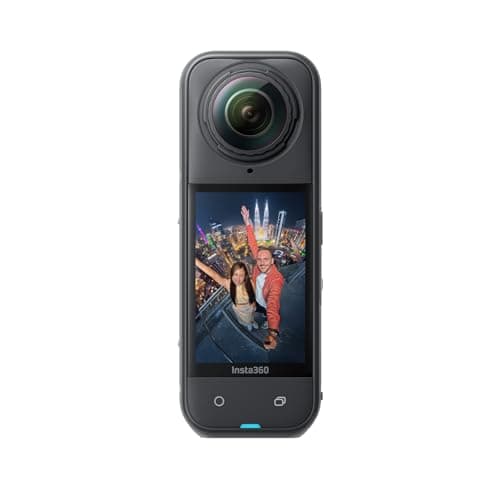
Insta360 X5
Insta360
15m rated, replaceable lenses, and the one camera that means you never have to aim while you are paddling.
Anyone filming themselves on the water who cannot stop to frame a shot
- 15m IP68 is the deepest bare rating of any camera on this site
- User-replaceable lenses — the single biggest fix for the 360 format's worst failure mode
- 185 minutes in Endurance mode at 5.7K24, which is a whole day of clips
- Invisible-selfie-stick reframing means you point the camera at nothing and pick the angle later
- Exposed lenses still scratch; lens guards are a purchase, not an option
- Every clip needs a reframing pass before anyone else can watch it
- 8K30 files are large and the edit is slower than flat footage
Specs from CineD, Insta360 X5 announcement with published specifications.
- 39ft (12m) / 60m with dive case
- 1800mAh · 180 min published
- 1/1.3" with Leica lens
- 8.5
- 8.5
- 9.0
- 7.5
- 9.5
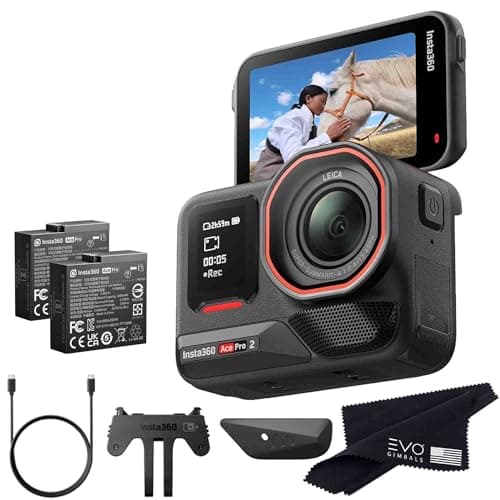
Insta360 Ace Pro 2
Insta360
The best-looking image of the three flagships, with a flip screen that finally makes a chest-mounted shot something you can frame.
Family trips where you want the footage to look like more than dashcam clips
- 8K30 with a 1/1.3-inch sensor — the most detail in the group
- 12m bare, which clears every snorkel depth without a housing
- 180-minute published battery life and 80% charge in 18 minutes
- Flip screen means you can frame a shot you are standing in front of
- 12m is still short of the DJI's 20m
- The dive case is a separate purchase for anything past 12m
- Fewer mount options than GoPro, and an adapter tax if you switch
Specs from Insta360 Ace Pro 2 published specifications.
02
How we picked
We do not lab-test, bench-test or dive-test cameras, and we do not own test units. What we do instead is read the manufacturer's published specifications, read the independent reviews that genuinely do test, read owner reports for the failure modes specs never mention — fogging, salt corrosion, cold battery collapse, mount slippage — and then weight all of it for action cameras used on lake and trail. Where a number is not published, the page says “not published” rather than filling the cell.
The full method, including what we refuse to do, is on the editorial policy page.
- 30%Water survival
- Rated depth without a case, door design, and what the manufacturer actually publishes.
- 25%Stabilization in chop
- A kayak deck and a rooty trail shake in ways a handheld walk test never shows.
- 20%Battery in the cold
- Published runtime, spare-battery cost, and whether it charges while recording.
- 15%Mount ecosystem
- Finger mount, threaded, magnetic — and how much of it you have to re-buy.
- 10%Footage you will keep
- Lens replaceability, low-light behavior, and how much cutting the footage needs.
03
Questions people actually ask
01Do any action cameras have optical zoom?
None of the cameras we rank publishes one. They use a fixed ultra-wide lens, because moving glass needs space and breaks the waterproof seal that is the whole premise of the format. Anything labeled zoom in the menu is a digital crop.
02What does digital zoom do to the image?
It crops into the sensor image and scales the result back up to the output resolution, so detail falls away as you push it and noise becomes more visible. It adds no information — it only discards the parts of the frame outside the crop.
03Is linear mode a zoom?
No. Linear is a distortion correction on the same fixed lens that straightens bent lines, at the cost of a little field of view. Narrow mode crops further and is the closest thing to a zoom on the camera itself.
04How do I get a closer shot with an action camera?
Move the camera closer — a pole is the cheapest reach you can buy — or shoot at 5.3K or 8K and crop to a 4K export in the edit, which gives roughly 1.4x or 2x respectively with no loss in delivered resolution.
05Can you put a telephoto lens on an action camera?
Only in a limited sense. The GoPro HERO13 Black is the one current body with a swappable HB-Series lens mount, and those lenses change the field of view and the look rather than acting as a zoom. For real reach you want a different type of camera entirely.
04
Read this next
Do action cameras take good photos?
The same fixed-lens, small-sensor limits applied to stills.
Action cameras with a 1-inch sensor
The physical constraints that rule out big sensors rule out zooms too.
Action camera vs mirrorless
What to buy instead when reach is a genuine requirement.
360 camera vs action camera
The format that lets you choose the angle afterwards, which is not the same as zoom.
How to choose an action camera
The six specifications that actually decide the purchase.
05
Sources
- GoPro HERO13 Black published specifications
- CineD, Insta360 X5 announcement with published specifications
- Insta360 Ace Pro 2 published specifications
Specifications are quoted from the manufacturer pages above as they read on the dates shown. Where a figure is not published, this site says so rather than estimating one. We have not tested these products.