The best waterproof action camera under $300
Under $300 the water rating is the specification that separates these cameras, and the spread is enormous: 5m at one end of the shelf, 18m at the other.
Part of On the Water.
We earn a commission if you buy through our links, at no extra cost to you. It never changes what we recommend or the order we rank it in — how this works.
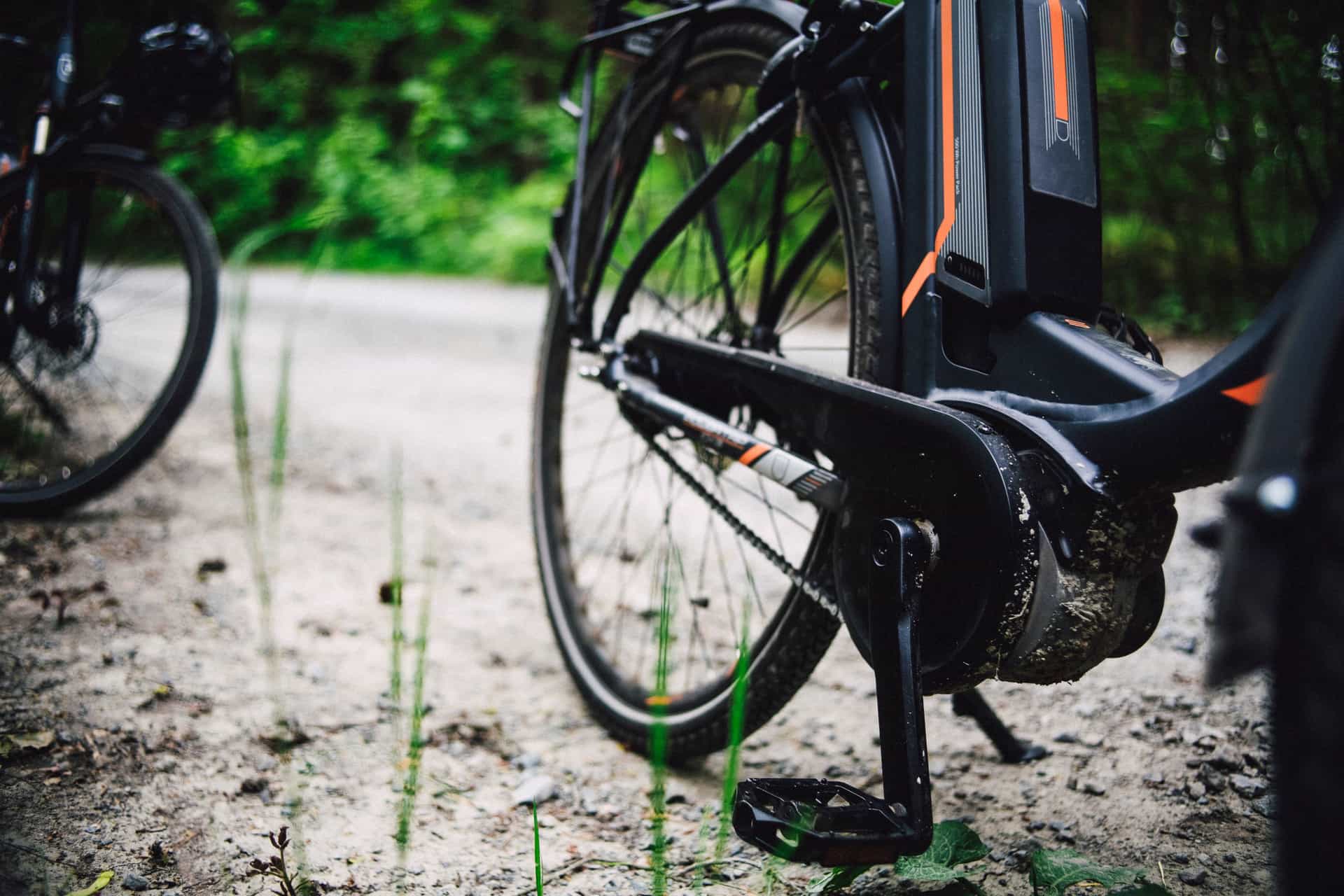
The DJI Osmo Action 4 is the best waterproof action camera under $300, and the reason is a single published figure: 18m of bare waterproofing, which is deeper than any current GoPro flagship and the deepest bare rating available anywhere under this ceiling. It is for anyone who snorkels, swims or paddles and does not want to own a housing. The AKASO Brave 8 Lite is the budget pick - the cheapest camera on this page on a live price, with IPX8 to 10m bare, 60m with the supplied case and two batteries in the box. In between: the GoPro HERO12 Black at 33ft (10m) bare and 196ft (60m) housed if you already own two-prong mounts, the Insta360 GO 3S if you want a 10m-rated camera that weighs 39.1g, and the GoPro MAX2 if 360 capture matters more than depth. Every price on this page is read live at the moment it renders, with the date shown under each buy button - so the ceiling is checked, not claimed.
01
Quick picks
| # | Product | Best for | Score | Price |
|---|---|---|---|---|
| 01 | 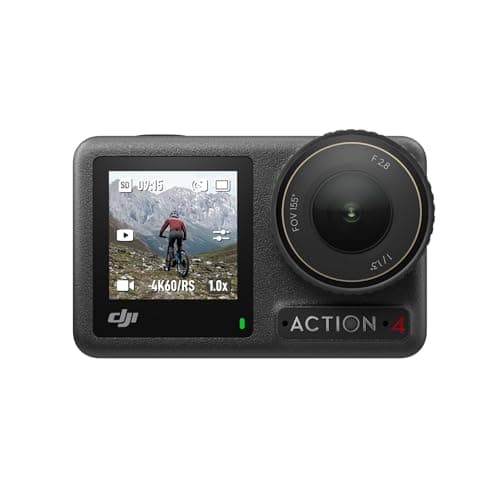 DJI Osmo Action 4 The previous DJI flagship, still 18m bare and still on shelves — the most water rating per dollar in this list. | Buyers who want deep-water capability without paying flagship money | 8.5/ 10 | |
| 02 | 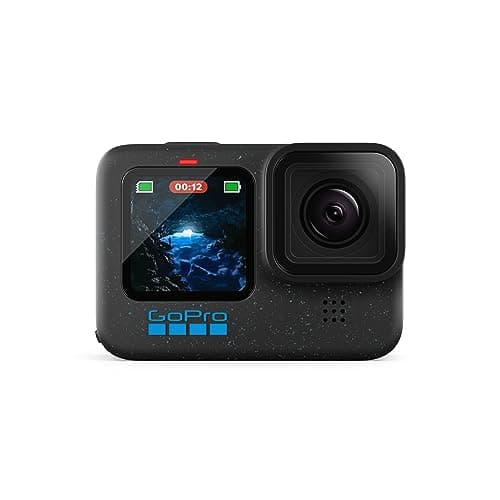 GoPro HERO12 Black The previous flagship, and the water story is identical to the HERO13 Black: 33ft bare, HyperSmooth 6.0, a removable Enduro battery. | Anyone who wants the flagship water rating without paying flagship money | 8.5/ 10 | |
| 03 | 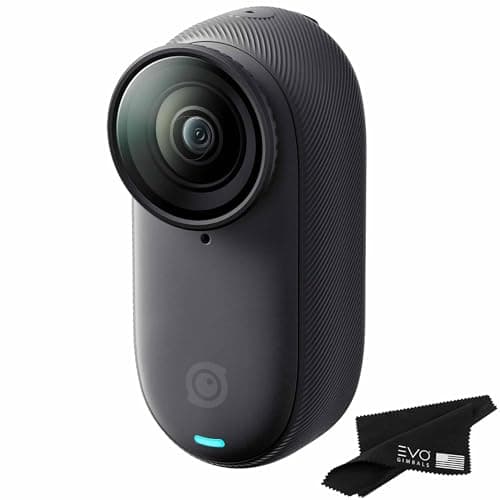 Insta360 GO 3S 39 grams, IPX8 to 33ft on the camera alone, and fixed storage — the cheapest way into the clip-on format if you can live without a card slot. | A second angle you clip to a hat brim or a PFD strap and forget | 7.0/ 10 | |
| 04 | 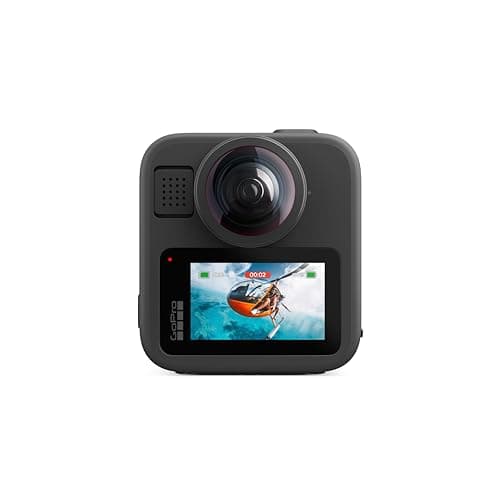 GoPro MAX2 True 8K on a sphere, replaceable lenses and GoPro's own mounting fingers — held back on this site by a 5m water rating, the shallowest of any 360 camera we rank. | Riders and hikers who want one camera to cover everything and already own GoPro mounts | 8.0/ 10 | |
| 05 | 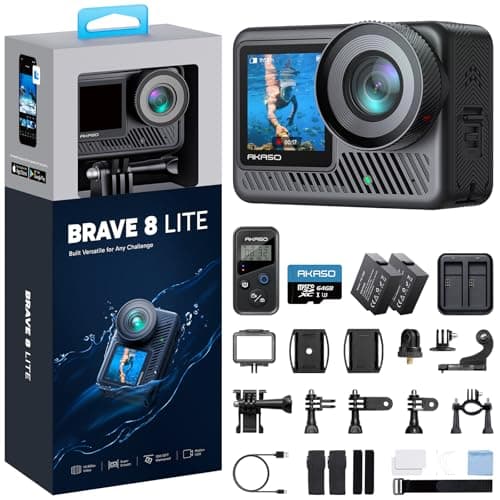 AKASO Brave 8 Lite Two batteries and a bag of mounts in the box at a fraction of flagship money — buy it knowing the stabilization gives up first. | A pool, a calm lake, a first camera you are not precious about | 7.4/ 10 |
Scores are our editorial judgment from published specs and named independent reviews, weighted for lake and trail use — not measurements. We have not tested these units and do not own them.
02
How we picked
We do not lab-test, bench-test or dive-test cameras, and we do not own test units. What we do instead is read the manufacturer's published specifications, read the independent reviews that genuinely do test, read owner reports for the failure modes specs never mention — fogging, salt corrosion, cold battery collapse, mount slippage — and then weight all of it for action cameras used on lake and trail. Where a number is not published, the page says “not published” rather than filling the cell.
The full method, including what we refuse to do, is on the editorial policy page.
- 30%Water survival
- Rated depth without a case, door design, and what the manufacturer actually publishes.
- 25%Stabilization in chop
- A kayak deck and a rooty trail shake in ways a handheld walk test never shows.
- 20%Battery in the cold
- Published runtime, spare-battery cost, and whether it charges while recording.
- 15%Mount ecosystem
- Finger mount, threaded, magnetic — and how much of it you have to re-buy.
- 10%Footage you will keep
- Lens replaceability, low-light behavior, and how much cutting the footage needs.
Why depth, and why this ceiling
“Waterproof” on an action camera listing is close to meaningless on its own - every camera in the category claims it. The number that matters is the bare depth rating, meaning with no housing, and under $300 the spread between the best and worst on this page is 18m against 5m. That is not a detail; it is the difference between a camera that snorkels and a camera that should stay at the surface.
What we ranked on
Bare water rating, first and decisively. It is what decides whether the camera needs a housing, and a housing changes everything about how a camera handles: muffled audio, fogging risk, bigger in the hand and one more seal to get wrong with cold fingers.
Housed rating, second. For the cameras that can take a case, the published housed depth is what determines whether the camera can ever dive.
Runtime and cold, third. Water is cold, cold shortens batteries, and a removable cell is the difference between a swap and the end of the session.
The published figures, side by side
| Camera | Bare water rating | With a housing | Published runtime | Price |
|---|---|---|---|---|
| DJI Osmo Action 4 | 18m bare | 60m with case | 160 min at 1080p/24 | Check price |
| GoPro HERO12 Black | 33ft (10m) bare | 196ft (60m) housed | Over 2.5h at 1080p30 | Check price |
| Insta360 GO 3S | IPX8 to 33ft (10m), camera only | Not published | 38 min alone / 140 min with the Action Pod | Check price |
| GoPro MAX2 | 5m (16ft) bare | Not published | Not published | Check price |
| AKASO Brave 8 Lite | IPX8 10m | 60m with the supplied case | 140 min at 4K / 150 min at 1080p | Check price |
What this ceiling cannot buy
Being straight about the limits of the band is more useful than padding it. Under $300 you do not get the 20m bare rating of DJI's current bodies, you do not get the Insta360 X5's IP68 to 15m with user-replaceable lenses, and you do not get the largest sensors in the category - which is what you feel underwater, where light is scarce. The under-$500 roundup is where those arrive, and the waterproof roundup ranks the whole field with no ceiling at all.
Who should buy which
Snorkeling and swimming without a case: the Osmo Action 4. The snorkeling picks go deeper into that use.
You might dive later: the HERO12 Black plus the housing - the scuba picks cover the rest.
A second angle on a swimmer or a child: the GO 3S.
360 on a budget, near the surface: the MAX2.
The smallest spend that still goes in water: the AKASO Brave 8 Lite.
03
Every pick, in detail
- 18m bare / 60m with case
- 1770mAh · 160 min at 1080p24
- -20° to 45°C
- 9.0
- 8.5
- 8.5
- 8.0
- 8.0
DJI Osmo Action 4
DJI
The previous DJI flagship, still 18m bare and still on shelves — the most water rating per dollar in this list.
Buyers who want deep-water capability without paying flagship money
Who it is for: snorkeling, swimming and paddling, with no housing to buy, seal or fog.
18m bare is the headline and it is a big number for this price band - deeper than the current GoPro flagship, and well past any depth a snorkeler reaches. What that buys you is the removal of a decision: the camera goes in as it is, every time, with no case to fit and nothing to forget. Around it DJI publishes the same 1/1.3-inch sensor size as the Action 5 Pro, a removable 1770mAh cell, 160 minutes at 1080p/24 and a -20° to 45°C battery operating range for cold water.
Honest cons: no front screen; a shorter published runtime than the current bodies; DJI's mount catalog needs an adapter for two-prong fittings; and DJI's Osmo Action 4 page states guaranteed software updates until 31 December 2026, which is a published end date rather than a rumor. The Action 4 read has the full sheet and how deep an action camera can go puts 18m in context.
- 18m without a case still beats every current GoPro by a wide margin
- Same 1/1.3-inch sensor size as the Action 5 Pro
- Rated to -20°C like its replacement
- Usually the cheapest way into serious bare-camera depth
- 160 minutes published against the Action 5 Pro's 240
- Superseded, so accessories and support will taper off first
- No front OLED — the Action 5 Pro's front screen is genuinely more useful for framing
Specs from DJI Osmo Action 4 published specifications.
- 33ft (10m) bare / 196ft (60m) housed
- 1720mAh Enduro, removable
- Over 1.5h at 5.3K30 / over 2.5h at 1080p30
- 8.0
- 9.0
- 8.0
- 9.5
- 8.0
GoPro HERO12 Black
GoPro
The previous flagship, and the water story is identical to the HERO13 Black: 33ft bare, HyperSmooth 6.0, a removable Enduro battery.
Anyone who wants the flagship water rating without paying flagship money
Who it is for: anyone who already owns GoPro mounts, or who wants a real dive option later.
GoPro publishes 33ft (10m) bare and 196ft (60m) with the Protective Housing, and that second number is the argument: it is the deepest housed rating available under this ceiling, so it is the only camera here that can genuinely grow into diving. Built-in folding fingers plus a 1/4-20 thread mean every clamp, pole and adhesive pad you own fits with no adapter, and HyperSmooth 6.0 is the same stabilization version GoPro ships on its current flagship.
Cons: 10m bare is well short of the top pick, so snorkeling at depth is a housing purchase; GoPro does not list GPS in the HERO12 Black specifications; and it is a superseded model, so stock narrows as it sells through. Cases and dive housings covers the 60m option.
- 33ft (10m) without a housing — the same bare rating GoPro publishes for the HERO13 Black
- HyperSmooth 6.0, the same stabilization version as the current flagship
- Removable 1720mAh Enduro battery, so a spare is a pocket item rather than a power bank
- Built-in folding fingers plus a 1/4-20 thread: the whole GoPro mount catalog and a normal tripod
- GoPro does not list GPS in the HERO12 Black specifications
- No HB-Series lens mount, so none of the HERO13's swappable-lens accessories fit
- 1720mAh against the HERO13 Black's 1900mAh Enduro cell
- It is a superseded model, so stock narrows as it sells through — check the listing before you plan around it
Specs from GoPro HERO12 Black published specifications.
- IPX8 to 33ft (10m), camera only
- 39.1g camera / 96.3g Action Pod
- 38 min alone / 140 min with the Action Pod
- 7.0
- 7.5
- 6.0
- 7.5
- 6.5
Insta360 GO 3S
Insta360
39 grams, IPX8 to 33ft on the camera alone, and fixed storage — the cheapest way into the clip-on format if you can live without a card slot.
A second angle you clip to a hat brim or a PFD strap and forget
Who it is for: a tiny waterproof second camera, clipped to a PFD or a hat brim.
Insta360 publishes IPX8 to 33ft (10m) for the camera body at 39.1g - a genuinely waterproof camera that weighs less than a bar of soap. For a second angle in the water, clipped to a swimmer or a child, it does something none of the full-size bodies here can.
Cons, and the runtime one is important in water: 38 minutes for the camera alone and 140 minutes with the Action Pod. The 10m rating belongs to the camera, not the pod. Cold is the other limit - this is the lowest cold-weather score in our registry. The small camera roundup ranks the class.
- 39.1g on Insta360's published figure — light enough to wear on clothing with no harness
- IPX8 to 33ft (10m) for the camera itself, the same bare depth Insta360 publishes for the GO Ultra
- Magnetic pendant and clip mounting that goes where a two-prong cage cannot
- Sits below the GO Ultra on price while doing the same hands-free job
- A 1/2.3" sensor against the GO Ultra's 1/1.28" — low light is where the gap shows
- Fixed 64GB or 128GB storage with no card slot, so the capacity you buy is the capacity you keep
- 38 minutes on the camera alone; the long runtime needs the Action Pod
- The Action Pod is IPX4 splash-resistant only — it is not a part you take swimming
Specs from Insta360 GO series published hardware specifications.
- 5m (16ft) bare
- 8K 7680x3840 at 30/25/24
- 1960mAh Enduro · runtime not published
- 6.5
- 9.5
- 7.5
- 9.5
- 7.0
GoPro MAX2
GoPro
True 8K on a sphere, replaceable lenses and GoPro's own mounting fingers — held back on this site by a 5m water rating, the shallowest of any 360 camera we rank.
Riders and hikers who want one camera to cover everything and already own GoPro mounts
Who it is for: the buyer who wants 360 capture under this ceiling and will stay near the surface.
A 360 body under $300 is unusual, and it does something no flat camera here can: on a pole it records every direction, so you film yourself swimming or paddling without aiming at anything. GoPro publishes 8K 360 capture at 7680x3840 and a 1960mAh Enduro cell, with the two-prong mounting fingers built in.
Cons, and they are the ones that matter on a water page: GoPro publishes 5m (16ft) of bare waterproofing - the shallowest rating here by a wide margin - and does not publish a runtime figure at all. Every clip needs a reframing pass. The 360 roundup ranks the format properly.
- 8K 360 at 7680x3840 — the highest published 360 frame size of any camera we rank, which is what reframing actually spends
- Replaceable lenses, changeable in the field, so a scratched lens is a part and not a service job
- Built-in GoPro mounting fingers: every two-prong mount, clamp and boom already fits
- Six microphones for 360 audio, and Max HyperSmooth with 360-degree Horizon Lock
- Single-lens 4K at 60fps in 16:9, 9:16 and 4:3, so it can stand in for a flat camera
- 5m (16ft) bare is the shallowest 360 rating here — a third of the Insta360 X5's 15m
- GoPro publishes no recording time for the 1960mAh battery, so endurance cannot be compared on paper
- 195g with fingers and battery, the heaviest 360 body we rank
- 8K 360 files are slow to reframe and heavy to edit on an older laptop
Specs from Backscatter, GoPro MAX2 published specification listing.
- IPX8 10m / 60m with case
- 2 × 1550mAh included
- 140 min at 4K / 150 min at 1080p
- 7.5
- 6.5
- 8.0
- 8.5
- 6.5
AKASO Brave 8 Lite
AKASO
Two batteries and a bag of mounts in the box at a fraction of flagship money — buy it knowing the stabilization gives up first.
A pool, a calm lake, a first camera you are not precious about
Who it is for: the budget pick - a pool, a calm lake, a first camera you are not precious about.
AKASO publishes IPX8 to 10m bare and 60m with the case that comes in the box, plus two 1550mAh batteries, a charger and a set of mounts included. At this price the contents of the box are a larger part of the value than any single specification, and 140 minutes of recording at 4K is a real figure.
Cons, plainly: stabilization is the weakest here and it shows in chop; the footage will not hold up beside the DJI or GoPro bodies above it; and the listing is frequently sold as a bundle variant, so check what is actually in the box. GoPro against AKASO is the honest comparison.
- IPX8 to 10m bare, which matches the HERO13 Black's rating on paper
- Ships with two batteries, a charger and seven mounts — nothing else to buy on day one
- 4K60 and dual screens at a price well under the flagships
- Uses GoPro-standard two-prong mounting, so the whole accessory world fits
- SuperSmooth stabilization is a step behind HyperSmooth and RockSteady in chop
- The 60m rating belongs to the separate housing, not the camera
- Low light is where the price shows most
Specs from AKASO Brave 8 Lite published specifications.
04
What decides this category
Read whether the rating belongs to the camera or the case
Listings routinely quote a housing's 60m figure as if it were the camera's. The bare rating is the one that matters day to day, because it decides whether you need the case at all.
A float is not optional under this ceiling
None of these cameras floats. A float keeps it at the surface and a tether keeps it attached to you - together they cost a fraction of the camera. Floats and tethers has the detail.
Expect to fight fogging, not leaking
Modern cameras rarely leak at their rated depth. What actually ruins footage is condensation inside the lens cover when a warm camera meets cold water. Anti-fog inserts and the fogging guide cover the fix.
What we would skip
Any camera advertising a depth figure with no unit or no bare/housed distinction; cheap third-party dive cases with no published rating; and spending the whole $300 on the body with nothing left for a card, a battery and a float.
05
Questions people actually ask
01What is the best waterproof action camera under $300?
The DJI Osmo Action 4, on a published 18m bare water rating - the deepest available under this ceiling and deeper than any current GoPro flagship. The AKASO Brave 8 Lite is the cheapest pick and publishes IPX8 to 10m bare with 60m in the supplied case.
02How deep can a $300 action camera go?
Bare, between 5m and 18m depending on the model - which is a very wide spread. With a housing, two of these publish 60m. How deep an action camera can go lists every published rating on this site, bare and housed.
03Do I need a housing under $300?
Not for snorkeling or swimming if you buy the Osmo Action 4 at 18m bare. You do for anything past the bare rating of the camera you choose, and for scuba you need a case rated for the depth regardless of the body.
04Is a cheaper waterproof camera safe in salt water?
Yes, if you rinse it properly the same day. Salt is what degrades seals and seizes hardware over time, and the routine is five minutes - salt water care and rinsing covers it.
05What else do I need to buy with it?
A fast microSD card, one spare battery, a float and a tether. Those four turn a cheap waterproof body into a camera that comes home with footage on it. The first five accessories has the order.
06
Read this next
Best waterproof action cameras
The same ranking with no price ceiling at all.
Best action camera under $300
The same shelf ranked on everything rather than on depth.
How deep can an action camera go?
Every published rating, bare and housed.
Best action camera for snorkeling
The use this ceiling most often gets bought for.
07
Sources
- DJI Osmo Action 4 published specifications
- GoPro HERO12 Black published specifications
- Insta360 GO series published hardware specifications
- Backscatter, GoPro MAX2 published specification listing
- AKASO Brave 8 Lite published specifications
Specifications are quoted from the manufacturer pages above as they read on the dates shown. Where a figure is not published, this site says so rather than estimating one. We have not tested these products.