The best small action cameras
A camera you leave in the bag films nothing. These four are ranked on the published weight you actually carry, and on what each one gives up to get there.
Part of Cameras.
We earn a commission if you buy through our links, at no extra cost to you. It never changes what we recommend or the order we rank it in — how this works.
The Insta360 GO Ultra is the best small action camera, and it is for the person who keeps not filming because the camera is a decision: 53g of camera that clips to a hat brim or a shirt, rated IPX8 to 33ft (10m) on its own, with up to 170 published minutes once the Action Pod is in the picture. The DJI Osmo Action 4 is the budget pick - the cheapest camera here on a live price, and the only one that publishes 18m of bare waterproofing, which is the honest answer when “small” is a preference and “survives the lake” is a requirement. In between, the Insta360 GO 3S is the lighter, cheaper magnet-mount option at 39.1g, and the GoPro HERO (2024) is the small body that still takes the whole GoPro mount catalog. Every price on this page comes from the live price layer with the date it was read.
01
Quick picks
| # | Product | Best for | Score | Price |
|---|---|---|---|---|
| 01 | 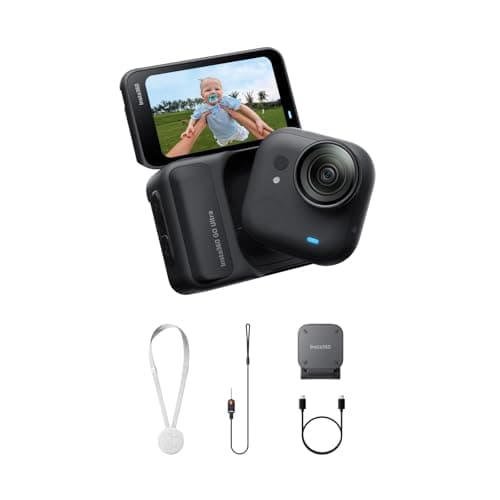 Insta360 GO Ultra 53 grams and IPX8 to 10m on its own — the camera you actually clip on for a paddle instead of leaving in the dry bag. | Hands-free clips where a full-size camera would never leave the bag | 7.6/ 10 | |
| 02 | 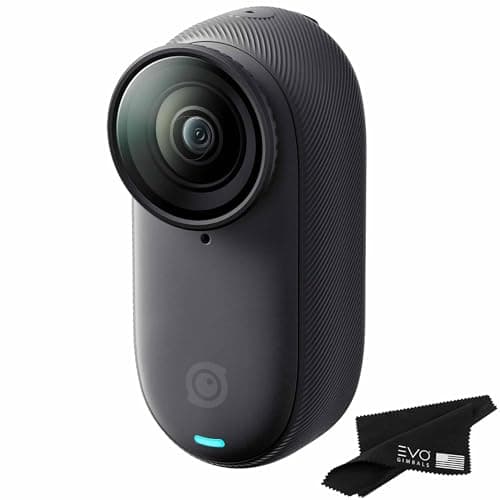 Insta360 GO 3S 39 grams, IPX8 to 33ft on the camera alone, and fixed storage — the cheapest way into the clip-on format if you can live without a card slot. | A second angle you clip to a hat brim or a PFD strap and forget | 7.0/ 10 | |
| 03 | 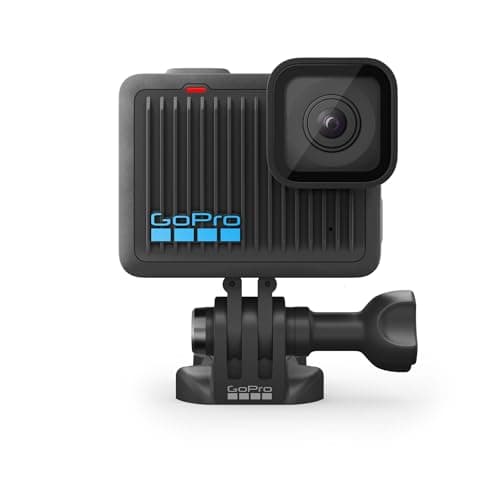 GoPro HERO (2024) The cheapest real GoPro, and the one whose 16ft rating you have to take seriously before you take it snorkeling. | A first camera, a kid's camera, or a second angle that mounts anywhere | 7.1/ 10 | |
| 04 | 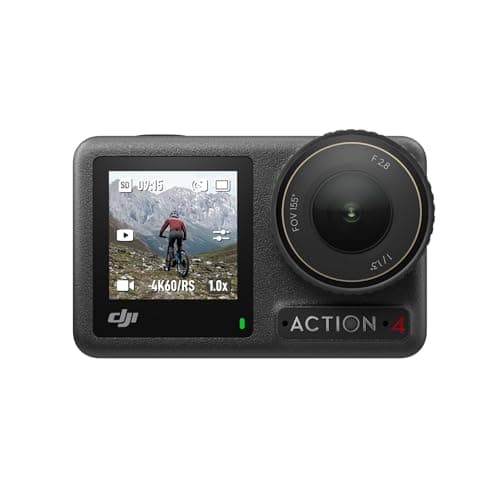 DJI Osmo Action 4 The previous DJI flagship, still 18m bare and still on shelves — the most water rating per dollar in this list. | Buyers who want deep-water capability without paying flagship money | 8.5/ 10 |
Scores are our editorial judgment from published specs and named independent reviews, weighted for lake and trail use — not measurements. We have not tested these units and do not own them.
02
How we picked
We do not lab-test, bench-test or dive-test cameras, and we do not own test units. What we do instead is read the manufacturer's published specifications, read the independent reviews that genuinely do test, read owner reports for the failure modes specs never mention — fogging, salt corrosion, cold battery collapse, mount slippage — and then weight all of it for action cameras used on lake and trail. Where a number is not published, the page says “not published” rather than filling the cell.
The full method, including what we refuse to do, is on the editorial policy page.
- 30%Water survival
- Rated depth without a case, door design, and what the manufacturer actually publishes.
- 25%Stabilization in chop
- A kayak deck and a rooty trail shake in ways a handheld walk test never shows.
- 20%Battery in the cold
- Published runtime, spare-battery cost, and whether it charges while recording.
- 15%Mount ecosystem
- Finger mount, threaded, magnetic — and how much of it you have to re-buy.
- 10%Footage you will keep
- Lens replaceability, low-light behavior, and how much cutting the footage needs.
What we ranked on
“Small” is only useful as a number, so this page starts with the published weight and then asks what each camera gave up to hit it. Three criteria decide the order.
Published weight, first. It is the entire reason this category exists. A 39g body clipped to a cap is a camera you forget you are wearing; a 145g body on the same cap is a camera you take off after twenty minutes. Manufacturer weights are quoted below exactly as published.
Bare water rating, second. “Bare” means with no housing, and it is what decides whether rain, a capsize or a snorkel session is an event. The spread on this page is wide - 16ft (5m) at one end, 18m at the other - and it is the specification that most often makes a compact camera the wrong purchase.
Published runtime, third, with the configuration attached. A small camera has a small cell, and every figure below is only meaningful next to the mode it was measured in. The GO bodies publish two numbers each - camera alone and camera plus Action Pod - and the gap between them is the real cost of going this small.
The published figures, side by side
| Camera | Published weight | Bare water rating | Published runtime | Price |
|---|---|---|---|---|
| Insta360 GO Ultra | 53g (camera) | IPX8 to 33ft (10m), camera only | Up to 170 min with the Action Pod | Check price |
| Insta360 GO 3S | 39.1g camera / 96.3g Action Pod | IPX8 to 33ft (10m), camera only | 38 min alone / 140 min with the Action Pod | Check price |
| GoPro HERO (2024) | Not published as a camera-only figure | 16ft (5m) | Built-in battery, not user-removable | Check price |
| DJI Osmo Action 4 | Full-size body | 18m bare / 60m with case | 160 min at 1080p/24 | Check price |
The two things a small camera actually costs you
Battery, and it is not close. Every gram you remove comes out of the cell. The GO 3S publishes 38 minutes on its own; the full-size Osmo Action 4 publishes 160. That is the difference between planning the day around the camera and not thinking about it, and it is why both GO bodies ship with a dock that is also a battery.
Mounting, in the other direction. The magnet systems on the GO bodies are faster than anything with a thumb screw, but they are proprietary: your GoPro chest harness and kayak boom do not take them. A compact GoPro keeps the catalog and gives up the water rating instead. Decide which of those two you would rather lose before you choose a body - mount compatibility is the page that maps it.
Who should buy which
Hiking and anything where pack weight is the point: the GO Ultra. The hiking picks start from the same place and explain why a 53g body changes how much you actually film.
A cheap second angle on the kid, the dog or the bow of the boat: the GO 3S, with the Action Pod in the bag.
A small body that has to fit mounts you already own: the HERO (2024).
Small was a nice-to-have and water was the real requirement: the Osmo Action 4, or step up through the waterproof roundup.
03
Every pick, in detail
- IPX8 to 33ft (10m), camera only
- 53g
- Up to 170 min with the Action Pod
- 7.0
- 8.0
- 7.5
- 8.0
- 8.0
Insta360 GO Ultra
Insta360
53 grams and IPX8 to 10m on its own — the camera you actually clip on for a paddle instead of leaving in the dry bag.
Hands-free clips where a full-size camera would never leave the bag
Who it is for: anyone whose footage problem is not image quality but the fact that the camera never comes out of the bag.
At 53g the GO Ultra is small enough that the mounting decision stops being a decision. It clips to a cap peak, a shirt placket or a PFD strap with a magnet, which is the one mounting method that works in seconds with cold hands and no tools. Insta360 rates the camera body IPX8 to 33ft (10m) on its own - worth reading precisely, because it is the camera that carries that rating and not the Action Pod it docks into.
Honest cons. The two-part design is the whole trade: the camera is tiny, the system is not, and the pod is the part that gives you a screen, a longer published runtime of up to 170 minutes, and somewhere to put the thing down. Lose the pod and you lose the preview. It is also the most expensive camera on this page at the time of writing, which is a strange thing for the smallest body to be, and the reason the budget pick below exists. The full GO Ultra read has every published figure, and GO Ultra against GO 3S is the in-family comparison most buyers at this size end up making.
- 53g means it goes on a hat brim, a PFD strap or a chest magnet and you forget it is there
- IPX8 to 10m for the camera itself, with a 1/1.28" sensor that is far larger than the size suggests
- Action Pod adds a flip screen and the long runtime when you want it
- Removable microSD, so you are not stuck with fixed onboard storage
- The Action Pod is not rated to the same depth as the camera — read the two ratings separately
- Magnetic mounting is convenient but is not a mechanical lock in real chop
- No interchangeable lens cover, so a scratch is permanent
Specs from Insta360 GO Ultra published specifications.
- IPX8 to 33ft (10m), camera only
- 39.1g camera / 96.3g Action Pod
- 38 min alone / 140 min with the Action Pod
- 7.0
- 7.5
- 6.0
- 7.5
- 6.5
Insta360 GO 3S
Insta360
39 grams, IPX8 to 33ft on the camera alone, and fixed storage — the cheapest way into the clip-on format if you can live without a card slot.
A second angle you clip to a hat brim or a PFD strap and forget
Who it is for: a second angle you clip on and forget, or a first tiny camera at the lowest price Insta360 sells one for.
39.1g for the camera and 96.3g for the Action Pod makes this the lightest body on the site. It carries the same IPX8 33ft (10m) camera-only rating as the GO Ultra, and the same magnet-first mounting logic, for less money on a live price. If what you want is a throwaway-light second camera pointed at the kid in the bow while the main camera does the work, this is the cheapest honest way to get one.
Cons, and the runtime figure is the one to read twice: Insta360 publishes 38 minutes for the camera alone and 140 minutes with the Action Pod. Thirty-eight minutes is a chairlift, not an afternoon, so plan the pod into the kit rather than treating it as an accessory. Cold is the other limit - this is the lowest cold-weather score in our registry, and a 39g cell has very little thermal mass to give. Power on long days covers what to do about both.
- 39.1g on Insta360's published figure — light enough to wear on clothing with no harness
- IPX8 to 33ft (10m) for the camera itself, the same bare depth Insta360 publishes for the GO Ultra
- Magnetic pendant and clip mounting that goes where a two-prong cage cannot
- Sits below the GO Ultra on price while doing the same hands-free job
- A 1/2.3" sensor against the GO Ultra's 1/1.28" — low light is where the gap shows
- Fixed 64GB or 128GB storage with no card slot, so the capacity you buy is the capacity you keep
- 38 minutes on the camera alone; the long runtime needs the Action Pod
- The Action Pod is IPX4 splash-resistant only — it is not a part you take swimming
Specs from Insta360 GO series published hardware specifications.
- 16ft (5m)
- 4K30, 2.7K60 slo-mo
- Built in, not user-removable
- 6.0
- 7.5
- 6.0
- 9.0
- 7.0
GoPro HERO (2024)
GoPro
The cheapest real GoPro, and the one whose 16ft rating you have to take seriously before you take it snorkeling.
A first camera, a kid's camera, or a second angle that mounts anywhere
Who it is for: someone who already owns GoPro mounts and wants the smallest body that clicks straight into them.
This is the compromise that makes sense if your bike, helmet and kayak are already full of two-prong fittings. The HERO (2024) is a small, light GoPro with folding fingers built in, so every clamp, chesty and adhesive pad you own fits with no adapter - which is a bigger practical win than a few grams. It shoots 4K30 with 2.7K60 for slow motion, which is more resolution than a phone screen will ever show.
Cons, plainly. GoPro publishes 16ft (5m) of waterproofing, which is the shallowest rating on this page and means snorkeling at any real depth is a housing purchase. The battery is built in and not user-removable, so a spare is a power bank rather than a pocket cell. And on the day we published this page the live price layer showed no buy-box offer for it, which is why it is not the top pick - the button below goes to the current listing so you can see for yourself. Which GoPro to buy places it in the lineup.
- Genuinely tiny — 46% less mass than HERO13 Black
- Built-in mounting fingers, and GoPro lists it as compatible with 35+ mounts
- HyperSmooth stabilization at the lowest GoPro price
- Simple enough to hand to someone who has never used one
- 16ft (5m) is a snorkel-adjacent rating, not a diving one
- The battery is built in — you cannot carry a spare, you carry a power bank
- 4K30 is the ceiling; no 4K60, no high-frame-rate 4K
Specs from GoPro HERO published specifications.
- 18m bare / 60m with case
- 1770mAh · 160 min at 1080p24
- -20° to 45°C
- 9.0
- 8.5
- 8.5
- 8.0
- 8.0
DJI Osmo Action 4
DJI
The previous DJI flagship, still 18m bare and still on shelves — the most water rating per dollar in this list.
Buyers who want deep-water capability without paying flagship money
Who it is for: the budget pick, and the right answer when “small” has to survive being dropped in a lake.
A full-size action camera is not a compact camera, and it would be dishonest to pretend otherwise. But the Osmo Action 4 is the cheapest camera on this page on a live price, and it publishes 18m of bare waterproofing, a removable 1770mAh cell, 160 minutes at 1080p/24 and a -20° to 45°C battery operating range. Nothing in the 39-to-53g class comes close to any of those four numbers.
Cons: it is three to four times the weight of the GO bodies, it has no front screen, and DJI's Osmo Action 4 page states guaranteed software updates until 31 December 2026 - a published end date worth knowing before you buy. If you want tiny, buy tiny. If you wanted tiny because you wanted easy, this is the camera that is easy in a different way. The Action 4 read has the full sheet.
- 18m without a case still beats every current GoPro by a wide margin
- Same 1/1.3-inch sensor size as the Action 5 Pro
- Rated to -20°C like its replacement
- Usually the cheapest way into serious bare-camera depth
- 160 minutes published against the Action 5 Pro's 240
- Superseded, so accessories and support will taper off first
- No front OLED — the Action 5 Pro's front screen is genuinely more useful for framing
Specs from DJI Osmo Action 4 published specifications.
04
What decides this category
Read the water rating as camera-or-pod, not as one number
Both Insta360 GO bodies publish IPX8 to 33ft (10m) for the camera. That is a real rating and a useful one, but it is not a statement about the Action Pod, and the pod is the part holding your screen and most of your battery. Plan accordingly on the water.
Budget for the dock, not just the camera
On a GO body the Action Pod is not an accessory, it is half the camera: it is the preview screen and it is the published runtime. Price the pair.
A small camera still needs a fast card
Compact bodies write the same high-bitrate files as full-size ones, and a slow card is the most common cause of a recording that stops on its own. The card picks and the speed classes explained cover what to buy.
What we would skip
Any listing that quotes a depth rating belonging to a case rather than the camera; a compact body bought for underwater work it is not rated for; and bundles that pad the price with mounts you cannot use because the magnet system does not take them.
05
Questions people actually ask
01What is the best small action camera?
The Insta360 GO Ultra. At 53g it is small enough to clip to a hat brim and forget, Insta360 rates the camera body IPX8 to 33ft (10m) on its own, and the Action Pod takes the published runtime up to 170 minutes. The DJI Osmo Action 4 is the cheaper pick if a real bare water rating matters more than weight.
02What is the smallest action camera you can actually film with?
The Insta360 GO 3S, at a published 39.1g for the camera and 96.3g for the Action Pod. It is the lightest body in our registry. The honest limit is battery: Insta360 publishes 38 minutes for the camera alone and 140 minutes with the pod.
03Are small action cameras waterproof?
Some are, and the rating belongs to a specific part. Insta360 publishes IPX8 to 33ft (10m) for the GO Ultra and GO 3S camera bodies. GoPro publishes 16ft (5m) for the HERO (2024). A full-size DJI Osmo Action 4 publishes 18m bare. If you snorkel or paddle, read how deep an action camera can go before you choose on weight.
04Is a small action camera worth it over a phone?
For hands-free filming, yes - a 53g camera clipped to your chest films things a phone in a pocket never will, and it is rated for water a phone is not. Action camera against phone works through the whole comparison, including where the phone genuinely wins.
05Do small action cameras use the same mounts as a GoPro?
Not usually. The Insta360 GO bodies mount magnetically on their own system, while the GoPro HERO (2024) has folding fingers built in and takes the entire GoPro catalog. If you already own mounts, that difference is worth more than a few grams - mount compatibility has the detail.
06
Read this next
Insta360 GO Ultra vs GO 3S
The in-family comparison between the top two picks here.
Best action camera for hiking
Where a 53g body matters most, and the rest of the pack-weight argument.
The best action cameras
The same field with no size constraint at all.
Best action camera under $300
If price rather than size is the real ceiling.
07
Sources
- Insta360 GO Ultra published specifications
- Insta360 GO series published hardware specifications
- GoPro HERO published specifications
- DJI Osmo Action 4 published specifications
Specifications are quoted from the manufacturer pages above as they read on the dates shown. Where a figure is not published, this site says so rather than estimating one. We have not tested these products.