The best action camera for photos
Action cameras are sold on video and bought for video, so the ones that take a decent still are the ones with a bigger sensor and something to do about bright water.
Part of Cameras.
We earn a commission if you buy through our links, at no extra cost to you. It never changes what we recommend or the order we rank it in — how this works.
The DJI Osmo Action 6 is the best action camera for photos, and it wins on the two specifications that decide a still rather than a spec sheet: the largest sensor in any flat action camera we track at 1/1.1 inches, behind the first variable f/2.0-f/4.0 aperture in the category. That aperture is the whole argument - it is the only camera here that can stop down against glare off bright water instead of asking you to screw a filter onto the front. It is for the person shooting the same lake at midday and at dusk. The DJI Osmo Action 4 is the budget pick, with the same 1/1.3-inch sensor size DJI uses in the Action 5 Pro at the lowest live price on this page. In between: the Insta360 Ace Pro 2 for anyone who needs to see the frame they are in, the Insta360 X5 if you would rather capture everything and crop later, and the GoPro HERO12 Black if your mounts are already GoPro. Prices come from the live price layer with the date they were read.
01
Quick picks
| # | Product | Best for | Score | Price |
|---|---|---|---|---|
| 01 | 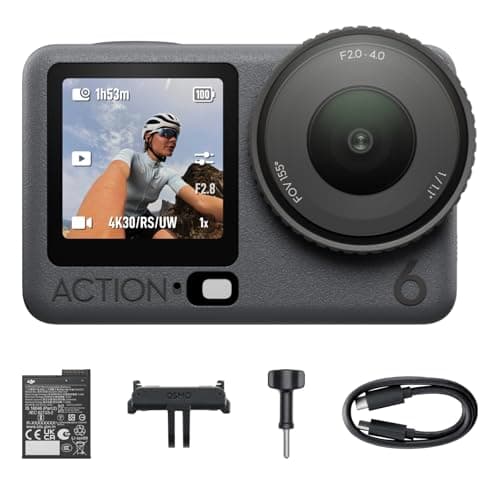 DJI Osmo Action 6 The first action camera with a variable aperture, on the largest sensor in the class — and it keeps the 20m bare rating and the 240-minute runtime that made the Action 5 Pro the long-day pick. | Bright water and flat light in the same afternoon, on trips measured in days rather than hours | 9.2/ 10 | |
| 02 | 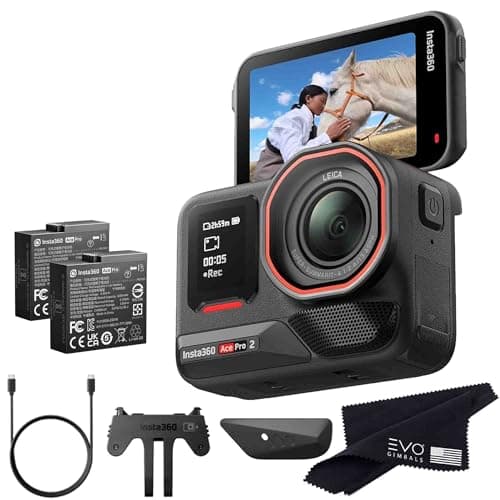 Insta360 Ace Pro 2 The best-looking image of the three flagships, with a flip screen that finally makes a chest-mounted shot something you can frame. | Family trips where you want the footage to look like more than dashcam clips | 8.6/ 10 | |
| 03 | 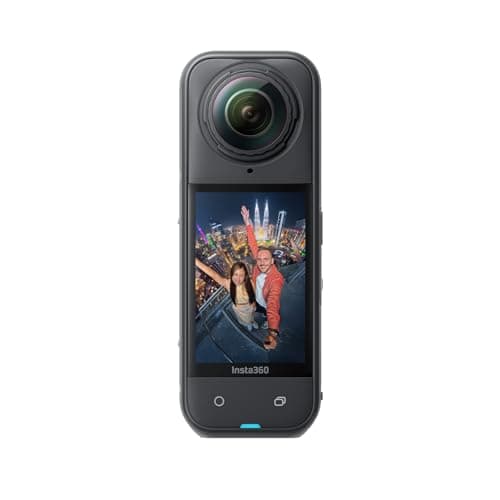 Insta360 X5 15m rated, replaceable lenses, and the one camera that means you never have to aim while you are paddling. | Anyone filming themselves on the water who cannot stop to frame a shot | 9.1/ 10 | |
| 04 | 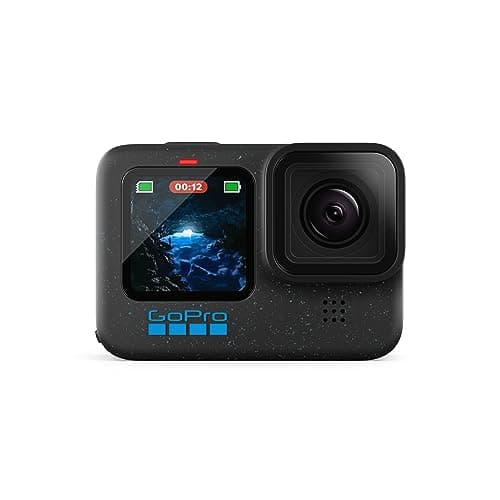 GoPro HERO12 Black The previous flagship, and the water story is identical to the HERO13 Black: 33ft bare, HyperSmooth 6.0, a removable Enduro battery. | Anyone who wants the flagship water rating without paying flagship money | 8.5/ 10 | |
| 05 | 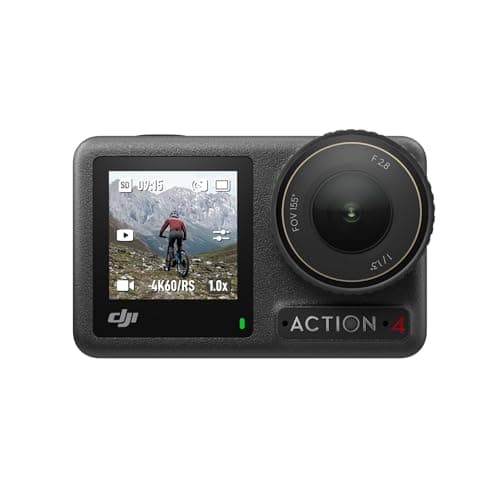 DJI Osmo Action 4 The previous DJI flagship, still 18m bare and still on shelves — the most water rating per dollar in this list. | Buyers who want deep-water capability without paying flagship money | 8.5/ 10 |
Scores are our editorial judgment from published specs and named independent reviews, weighted for lake and trail use — not measurements. We have not tested these units and do not own them.
02
How we picked
We do not lab-test, bench-test or dive-test cameras, and we do not own test units. What we do instead is read the manufacturer's published specifications, read the independent reviews that genuinely do test, read owner reports for the failure modes specs never mention — fogging, salt corrosion, cold battery collapse, mount slippage — and then weight all of it for action cameras used on lake and trail. Where a number is not published, the page says “not published” rather than filling the cell.
The full method, including what we refuse to do, is on the editorial policy page.
- 30%Water survival
- Rated depth without a case, door design, and what the manufacturer actually publishes.
- 25%Stabilization in chop
- A kayak deck and a rooty trail shake in ways a handheld walk test never shows.
- 20%Battery in the cold
- Published runtime, spare-battery cost, and whether it charges while recording.
- 15%Mount ecosystem
- Finger mount, threaded, magnetic — and how much of it you have to re-buy.
- 10%Footage you will keep
- Lens replaceability, low-light behavior, and how much cutting the footage needs.
What we ranked on
Megapixels are the number on the box and the least useful one here. Three published specifications decide whether an action camera takes a photograph you keep.
Sensor size, first. It sets how much light each pixel collects, which is what you actually see in a still at dusk, under tree cover or on a gray morning. The spread on this page runs from 1/1.1 inches down, and it is the single biggest reason two cameras shooting the same scene produce different photographs.
Aperture, second, and only one camera here has a choice about it. Every other action camera has a fixed aperture, which means the only tools against glare off water are a filter and a shutter speed. The Osmo Action 6's f/2.0-f/4.0 range is the exception and it is the reason it leads.
Bare water rating, third. A photograph you did not take because you left the camera in the dry bag is worth nothing, and the bare rating is what decides whether the camera comes out in the rain or over the side of the boat.
The published figures, side by side
| Camera | Published sensor | Aperture | Bare water rating | Price |
|---|---|---|---|---|
| DJI Osmo Action 6 | 1/1.1" | Variable f/2.0-f/4.0 | 20m bare / 60m with case | Check price |
| Insta360 Ace Pro 2 | 1/1.3" with Leica lens | Fixed | 39ft (12m) / 60m with dive case | Check price |
| Insta360 X5 | Dual-lens 360 | Fixed | IP68 to 49ft (15m) | Check price |
| GoPro HERO12 Black | Not published as a sensor dimension | Fixed | 33ft (10m) bare / 196ft (60m) housed | Check price |
| DJI Osmo Action 4 | 1/1.3" | Fixed | 18m bare / 60m with case | Check price |
The one setting that improves your stills most
Shoot in the hour after sunrise or before sunset and the sensor argument largely goes away - every camera on this page takes a good photograph in good light. The reason sensor size and aperture matter is that lake and trail days are not scheduled around light: you are on the water at noon with glare, or under tree cover at four in the afternoon with none. A polarizing or ND filter is the cheapest fix for the first problem on a fixed-aperture body, and filters for water covers what each one does.
Who should buy which
Bright water and flat light on the same trip: the Osmo Action 6, for the variable aperture.
You are in most of the photographs: the Ace Pro 2, for the flip screen. The family travel picks start from the same place.
Landscapes and scenes you want to crop later: the X5, if you accept the reframing pass.
You already own GoPro mounts: the HERO12 Black.
Spending as little as possible without losing the sensor: the Osmo Action 4. The under-$300 roundup ranks the rest of that shelf.
03
Every pick, in detail
- 20m bare / 60m with case
- 1950mAh · 240 min at 1080p24
- 1/1.1" with f/2.0-f/4.0 aperture
- 9.5
- 9.0
- 9.5
- 8.0
- 9.5
DJI Osmo Action 6
DJI
The first action camera with a variable aperture, on the largest sensor in the class — and it keeps the 20m bare rating and the 240-minute runtime that made the Action 5 Pro the long-day pick.
Bright water and flat light in the same afternoon, on trips measured in days rather than hours
Who it is for: the photographer who keeps losing shots to glare off water and to flat overcast light on the same trip.
Two published figures put it first. DJI publishes a 1/1.1-inch sensor - the largest in any flat action camera in our registry - and a variable f/2.0 to f/4.0 aperture, which is the one genuinely new capability in this category this generation. For stills that combination is worth more than any resolution number: the bigger sensor gathers more light at dusk, and the ability to stop down to f/4.0 is a real answer to the hardest lighting condition on a lake, which is midday sun bouncing straight off the surface into a fixed-aperture lens.
Honest cons for a stills buyer. It is the heaviest body on this page, which matters on a helmet and not at all on a hull. DJI's mount catalog is smaller than GoPro's and needs an adapter for two-prong fittings. And an action camera is still an action camera: the lens is wide and fixed, so portraits are distorted and anything far away stays far away. The full Osmo Action 6 read has every published figure, and do action cameras take good photos is the honest version of the question this page answers commercially.
- 1/1.1-inch sensor — the largest in any flat action camera we track, and it shows in flat light
- Variable f/2.0-f/4.0 aperture: it can stop down for glare off the water instead of needing an ND filter
- Keeps the 20m bare rating, the 1950mAh removable battery and the 240-minute published runtime
- -20° to 45°C operating range, and 64GB built in (50GB usable) for the day you forget the card
- 4K at up to 120fps for slow motion, 8K/30 for cropping in the edit
- 149g, the heaviest flagship here — noticeable on a helmet, irrelevant on a hull
- 8K stops at 30fps and costs card space and battery for detail a phone screen never shows
- Mount ecosystem is still smaller than GoPro's, and the magnetic quick-release adapters are a separate purchase
- Sits at the top of the category price bracket — the Action 5 Pro does most of this for less
Specs from DJI Osmo Action 6 published specifications.
- 39ft (12m) / 60m with dive case
- 1800mAh · 180 min published
- 1/1.3" with Leica lens
- 8.5
- 8.5
- 9.0
- 7.5
- 9.5
Insta360 Ace Pro 2
Insta360
The best-looking image of the three flagships, with a flip screen that finally makes a chest-mounted shot something you can frame.
Family trips where you want the footage to look like more than dashcam clips
Who it is for: anyone who is in most of their own photographs and keeps cutting their own head off.
A 1/1.3-inch sensor behind a Leica lens system is the second-largest sensor on this page, and the flip screen is the feature that turns a self-portrait from a guess into something you compose. On a family trip, where the person who owns the camera is usually standing in front of it, that hinge produces more keepable stills than any sensor upgrade. Insta360 also publishes 180 minutes of battery life and 80% charge in 18 minutes, which is the fastest turnaround here.
Cons: a fixed aperture, so bright water is a filter problem rather than a setting. The 39ft (12m) bare rating is good but shallower than the DJI bodies above it. And the mount ecosystem is smaller than GoPro's. The Ace Pro 2 read has the full sheet.
- 8K30 with a 1/1.3-inch sensor — the most detail in the group
- 12m bare, which clears every snorkel depth without a housing
- 180-minute published battery life and 80% charge in 18 minutes
- Flip screen means you can frame a shot you are standing in front of
- 12m is still short of the DJI's 20m
- The dive case is a separate purchase for anything past 12m
- Fewer mount options than GoPro, and an adapter tax if you switch
Specs from Insta360 Ace Pro 2 published specifications.
- IP68 to 49ft (15m)
- 2400mAh · ~88 min at 8K30
- User-replaceable
- 9.5
- 9.5
- 9.0
- 8.5
- 7.5
Insta360 X5
Insta360
15m rated, replaceable lenses, and the one camera that means you never have to aim while you are paddling.
Anyone filming themselves on the water who cannot stop to frame a shot
Who it is for: the person who would rather capture the whole scene and choose the photograph afterwards.
A 360 camera is a different proposition for stills: you are not framing, you are recording everything and extracting a flat image later. For landscapes on open water that is genuinely powerful - the shot you did not know you wanted is already in the file. The X5 is also the toughest camera here on paper, rated IP68 to 49ft (15m) with user-replaceable lenses, which on a 360 body fixes the format's worst failure mode.
Cons, and they are real work. Every extracted still is a reframing pass in software first, so there is no such thing as a quick photo. Stitching lines exist and you will eventually see one. And a flat image pulled from a 360 sphere has fewer pixels in it than the headline resolution suggests. The X5 read covers the specifications and 360 against flat is the format decision.
- 15m IP68 is the deepest bare rating of any camera on this site
- User-replaceable lenses — the single biggest fix for the 360 format's worst failure mode
- 185 minutes in Endurance mode at 5.7K24, which is a whole day of clips
- Invisible-selfie-stick reframing means you point the camera at nothing and pick the angle later
- Exposed lenses still scratch; lens guards are a purchase, not an option
- Every clip needs a reframing pass before anyone else can watch it
- 8K30 files are large and the edit is slower than flat footage
Specs from CineD, Insta360 X5 announcement with published specifications.
- 33ft (10m) bare / 196ft (60m) housed
- 1720mAh Enduro, removable
- Over 1.5h at 5.3K30 / over 2.5h at 1080p30
- 8.0
- 9.0
- 8.0
- 9.5
- 8.0
GoPro HERO12 Black
GoPro
The previous flagship, and the water story is identical to the HERO13 Black: 33ft bare, HyperSmooth 6.0, a removable Enduro battery.
Anyone who wants the flagship water rating without paying flagship money
Who it is for: someone whose kayak, bike and helmet are already full of two-prong mounts and who wants stills without buying into a second ecosystem.
GoPro builds folding mounting fingers and a 1/4-20 thread into the body, so every clamp, boom, chesty and adhesive pad you own fits with no adapter in the chain. For a photographer that matters more than it sounds: the mount you already own is the one you will actually use, and a camera that is mounted is a camera that takes pictures. The published specifications hold up well - 33ft (10m) bare, 196ft (60m) housed, HyperSmooth 6.0 and a removable 1720mAh Enduro cell.
Cons for stills specifically: the smallest effective sensor on this page, a fixed aperture, and no published GPS in the HERO12 Black specifications if you wanted location data attached to the frame. It is also a superseded model, so stock narrows as it sells through. HERO13 against HERO12 is the full comparison.
- 33ft (10m) without a housing — the same bare rating GoPro publishes for the HERO13 Black
- HyperSmooth 6.0, the same stabilization version as the current flagship
- Removable 1720mAh Enduro battery, so a spare is a pocket item rather than a power bank
- Built-in folding fingers plus a 1/4-20 thread: the whole GoPro mount catalog and a normal tripod
- GoPro does not list GPS in the HERO12 Black specifications
- No HB-Series lens mount, so none of the HERO13's swappable-lens accessories fit
- 1720mAh against the HERO13 Black's 1900mAh Enduro cell
- It is a superseded model, so stock narrows as it sells through — check the listing before you plan around it
Specs from GoPro HERO12 Black published specifications.
- 18m bare / 60m with case
- 1770mAh · 160 min at 1080p24
- -20° to 45°C
- 9.0
- 8.5
- 8.5
- 8.0
- 8.0
DJI Osmo Action 4
DJI
The previous DJI flagship, still 18m bare and still on shelves — the most water rating per dollar in this list.
Buyers who want deep-water capability without paying flagship money
Who it is for: the budget pick - most of the sensor, none of the flagship price.
DJI uses the same 1/1.3-inch sensor size here as in the Action 5 Pro, which means the single most important specification for a still photograph is intact at the lowest live price on this page. It also publishes 18m of bare waterproofing - deeper than any current GoPro flagship - a removable 1770mAh cell, 160 minutes at 1080p/24 and a -20° to 45°C battery operating range.
Cons: no front screen, which is a real loss if you photograph yourself, and a fixed aperture. DJI's Osmo Action 4 page also states guaranteed software updates until 31 December 2026 - a published end date, not a rumor, and worth knowing before you buy. The Action 4 read has the detail.
- 18m without a case still beats every current GoPro by a wide margin
- Same 1/1.3-inch sensor size as the Action 5 Pro
- Rated to -20°C like its replacement
- Usually the cheapest way into serious bare-camera depth
- 160 minutes published against the Action 5 Pro's 240
- Superseded, so accessories and support will taper off first
- No front OLED — the Action 5 Pro's front screen is genuinely more useful for framing
Specs from DJI Osmo Action 4 published specifications.
04
What decides this category
Buy sensor, not megapixels
A higher pixel count on the same small sensor makes each pixel smaller, which is the opposite of what a still photograph needs in poor light. Sensor dimension is the published figure that correlates with the result; the megapixel number on the box mostly correlates with file size.
If the aperture is fixed, budget for a filter
Four of the five cameras here cannot stop down. On bright water that means an ND or polarizing filter is not an accessory, it is the fix - and it costs a fraction of stepping up a body.
Shoot RAW if the camera offers it, and keep the card fast
RAW stills and high-bitrate video both punish a slow card, and a card that cannot keep up is the most common cause of a camera that stops on its own. The card picks cover what to buy.
What we would skip
Any listing selling an interpolated megapixel figure; a 360 camera bought for stills by someone who will not do the reframing work; and a step up in body price when a filter would have solved the actual problem.
05
Questions people actually ask
01What is the best action camera for photos?
The DJI Osmo Action 6. It publishes the largest sensor in any flat action camera we track at 1/1.1 inches, behind the only variable aperture in the category at f/2.0-f/4.0 - which is the one real answer to glare off bright water. The Osmo Action 4 keeps the same 1/1.3-inch sensor size as the Action 5 Pro for considerably less.
02Do action cameras take good photos?
For wide scenes, action and anything where you cannot hold a bigger camera, yes. For portraits, distant subjects and low light they are limited by a small sensor and a wide fixed lens. The full answer is here, including what the photo modes on each brand actually do.
03Does sensor size matter on an action camera?
More than any other published figure for stills. It sets how much light each pixel collects, which decides what a photograph looks like at dusk or under tree cover. On this page the published sensors run from 1/1.1 inches down, and action cameras with a 1-inch sensor covers what the biggest sensors in the class actually measure.
04Can you use an action camera instead of a real camera for photos?
As a travel-only camera it can work, as long as you accept a wide fixed lens and no optical zoom. Action camera against mirrorless sets out exactly where the mirrorless wins and where carrying one stops being realistic.
05What filter do I need for photos on the water?
A polarizing filter for surface glare and an ND filter for bright midday light are the two that change a photograph most on a fixed-aperture camera. Underwater is a different problem and needs color correction instead - filters and dome ports for water has the depth bands for each.
06
Read this next
Do action cameras take good photos?
The honest answer, with what each brand's photo modes actually do.
Action cameras with a 1-inch sensor
What the largest sensors in the class really measure.
Best action camera for low light
The same sensor argument, for video at either end of the day.
Filters and dome ports for water
The cheapest fix for glare on a fixed-aperture camera.
07
Sources
- DJI Osmo Action 6 published specifications
- Insta360 Ace Pro 2 published specifications
- CineD, Insta360 X5 announcement with published specifications
- GoPro HERO12 Black published specifications
- DJI Osmo Action 4 published specifications
Specifications are quoted from the manufacturer pages above as they read on the dates shown. Where a figure is not published, this site says so rather than estimating one. We have not tested these products.