The best action camera mounts for hiking
On a trail there is nothing to clamp to except you. These five cover the shoulder strap, the pole, the helmet and the shot of yourself walking away.
Part of Mounts.
We earn a commission if you buy through our links, at no extra cost to you. It never changes what we recommend or the order we rank it in — how this works.
The GoPro Chesty is the best action camera mount for hiking, and it wins because a trail offers nothing else to attach a camera to: worn over clothing it films the trail ahead, your poles, your hands and the dog, it leaves both hands free for scrambling, and GoPro publishes it as adjustable over heavy winter jackets with a quick-release buckle that works with gloves on. It is also the cheapest mount on this page on a live price, which makes it the budget pick as well as the top pick. In between: the GoPro El Grande when you want the shot of yourself on the trail rather than the trail itself, the Insta360 114cm Invisible Selfie Stick if you shoot 360, the adhesive pads for a helmet or a hard surface, and the GoPro Helmet Front + Side Mount for scrambling and via ferrata. Every price comes from the live price layer and carries the date it was read under the buy button.
01
Quick picks
| # | Product | Best for | Score | Price |
|---|---|---|---|---|
| 01 | 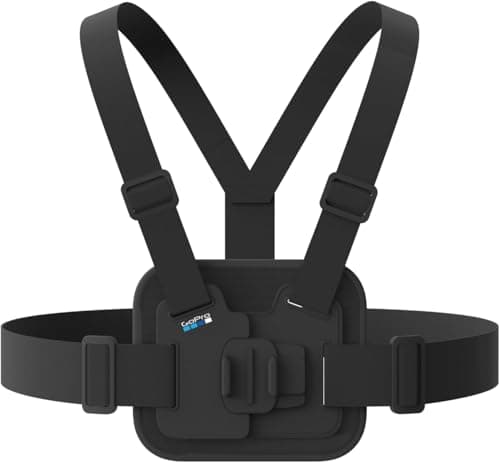 GoPro Chesty Performance Chest Mount The mount that shows your hands — which on a kayak means the paddle, and on a bike means the trail arriving. | Paddling and riding footage where the hands are the story | 8.1/ 10 | |
| 02 | 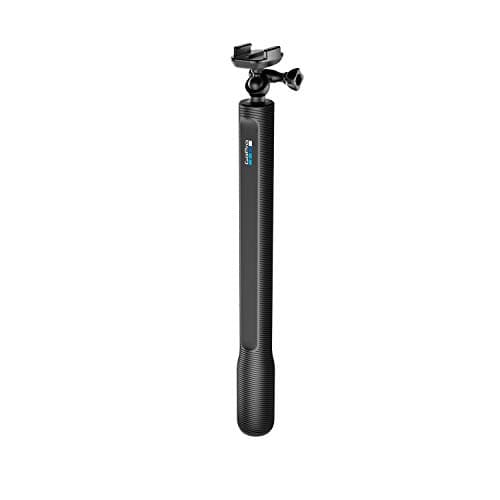 GoPro El Grande Extension Pole 38 inches of aluminum with a ball-and-socket head, so you change the angle without unmounting the camera. | Reaching out from a boat, or getting the camera down near the water without going in | 7.7/ 10 | |
| 03 | 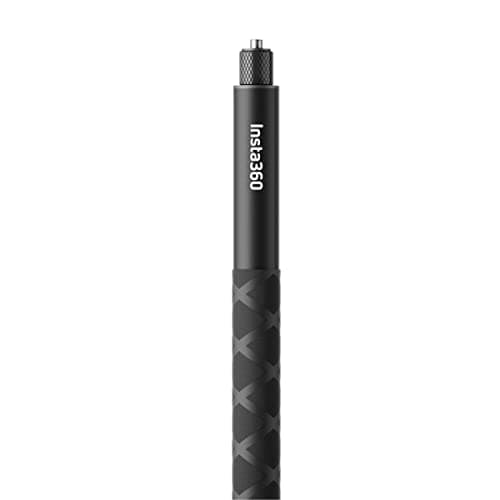 Insta360 114cm Invisible Selfie Stick The pole that disappears in a 360 shot — the single accessory that makes a 360 camera worth owning on the water. | Third-person paddling shots from an X-series camera | 7.5/ 10 | |
| 04 | 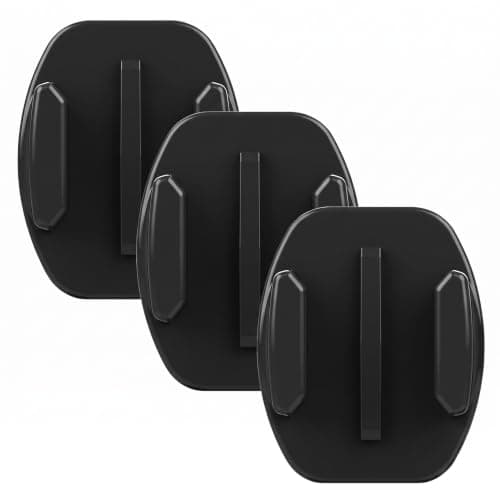 GoPro Curved + Flat Adhesive Mounts Industrial-strength waterproof adhesive pads — the cheapest permanent mount, and the one you have to get right the first time. | Boards, hulls, helmets and anywhere a clamp has nothing to grip | 7.9/ 10 | |
| 05 | 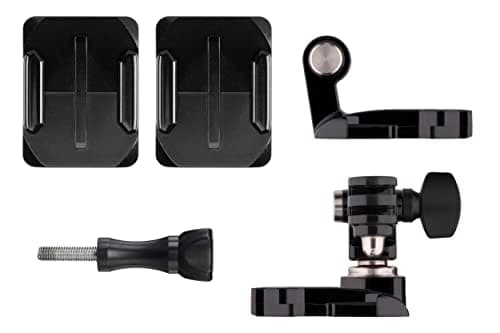 GoPro Helmet Front + Side Mount A swivel assembly and two curved adhesive pads — the only official way to get a side-of-helmet angle that is not a chin bar. | Bike and ski helmets where a top mount is too tall and a chest mount sees too little | 8.2/ 10 |
Scores are our editorial judgment from published specs and named independent reviews, weighted for lake and trail use — not measurements. We have not tested these units and do not own them.
02
How we picked
We do not lab-test, bench-test or dive-test cameras, and we do not own test units. What we do instead is read the manufacturer's published specifications, read the independent reviews that genuinely do test, read owner reports for the failure modes specs never mention — fogging, salt corrosion, cold battery collapse, mount slippage — and then weight all of it for mounts used on lake and trail. Where a number is not published, the page says “not published” rather than filling the cell.
The full method, including what we refuse to do, is on the editorial policy page.
- 35%Hold under load
- Vibration, chop and a wet hull are what actually break a mount.
- 25%Fit range
- Rail width, bar diameter, helmet curve — the spec that decides whether it fits at all.
- 20%Water and salt tolerance
- Stainless vs plated hardware, and what happens after a season of rinses.
- 12%Adjustability
- Getting the angle right on the water, with cold hands.
- 8%Tether point
- A mount with nowhere to clip a leash is a mount that loses cameras.
What we ranked on
Hiking is the mounting problem with the fewest mounting points. There is no handlebar, no deck, no track and nothing to clamp. Three criteria follow.
What it attaches to, first. On a trail that is you, your pack, your helmet or your hand - and that single fact removes most of the mount catalog from consideration.
Weight and bulk, second. Everything on a hike is carried. A mount that lives in a side pocket is used; a mount that needs unpacking is not. Collapsed lengths are published for both poles here and are in the table below.
One-handed use, third. On uneven ground one hand is often holding a pole or a rock. Quick-release buckles and swivel heads are the features that matter, not resolution.
The published figures, side by side
| Mount | Attaches to | Published size | Camera fitting | Price |
|---|---|---|---|---|
| GoPro Chesty | Worn over clothing, fits winter layers | Adjustable harness | GoPro two-prong | Check price |
| GoPro El Grande | Handheld | 38in (97cm) extended, 15in (38cm) collapsed | Integrated ball and socket | Check price |
| Insta360 114cm Invisible Selfie Stick | Handheld | 23.3cm to 114.1cm, aluminum | 1/4-20 screw | Check price |
| GoPro Curved + Flat Adhesive Mounts | Helmet shells and hard surfaces | Curved and flat pads | GoPro two-prong | Check price |
| GoPro Helmet Front + Side Mount | Curved helmet shells | Swivel mount + 2 curved adhesive mounts | GoPro two-prong | Check price |
The trail shots worth planning
The walking shot. Chest mount, left running on the climb. This is the footage that shows the ground covered, and it is the reason the chest harness is the top pick.
The third-person shot. A pole - the El Grande for a flat camera, the invisible stick for a 360 body. It is the single shot that makes a trail video look deliberate.
The summit pan. Handheld, slow, in one direction only. A pole helps; a time-lapse helps more. Time lapse against TimeWarp explains which mode to use for a moving hike.
The camp shot. Adhesive pad on a hard surface, or the camera propped and left to run. The camping picks cover the overnight end of this.
Who should buy which
One mount only: the Chesty.
You want to be in the footage: the El Grande, or the invisible stick on a 360 camera.
Scrambling in a helmet: the Helmet Front + Side Mount, or the adhesive pads if you are placing it yourself.
Picking the camera first: the hiking camera roundup starts from pack weight, and the small camera picks cover the lightest bodies.
03
Every pick, in detail
- Adjustable, fits over heavy winter jackets
- Quick-release buckle, usable with gloves
- Harness, vertical buckle, thumb screw
- 8.0
- 9.0
- 7.0
- 8.5
- 8.0
GoPro Chesty Performance Chest Mount
GoPro
The mount that shows your hands — which on a kayak means the paddle, and on a bike means the trail arriving.
Paddling and riding footage where the hands are the story
Who it is for: almost every hiker, and the first mount to own.
A trail has no handlebars, no deck and no rails. The only mounting point you are guaranteed to have is your own body, and the chest is the best part of it: low enough to show the ground you are covering, stable enough that footage is watchable, and pointed at whatever you are doing with your hands. GoPro publishes the harness as adjustable and fitting over heavy winter layers, with a quick-release buckle usable with gloves on and the vertical buckle and thumb screw included.
Honest cons for hiking specifically. It competes with a pack's sternum strap and hip belt, so expect some fiddling to get both comfortable - put the harness on first, pack second. It films where your torso points, so a view to the left needs you to turn. And breathing and footfall both show in the footage, which is where stabilization earns its keep. The chest mount roundup ranks the category, and chest against helmet is the decision behind it.
- Padded and breathable, and genuinely adjustable across body types and layers
- The quick-release buckle works with gloves on, which matters in cold water
- Lower and steadier than a helmet mount — less head-turn, less nausea in the edit
- Shows the paddle stroke, which is the shot most people are actually trying to get
- A PFD over the top changes the angle, so set it up wearing what you will actually wear
- Sits low; on a sit-inside kayak it can end up framing mostly deck
- Nothing about it is waterproof — it gets wet and stays wet
Specs from GoPro Chesty product page.
- 38in (97cm) extended
- 15in (38cm)
- Integrated ball and socket, 360-degree swivel
- 7.5
- 8.5
- 6.5
- 9.0
- 7.0
GoPro El Grande Extension Pole
GoPro
38 inches of aluminum with a ball-and-socket head, so you change the angle without unmounting the camera.
Reaching out from a boat, or getting the camera down near the water without going in
Who it is for: hikers who want to be in their own footage rather than behind it.
GoPro publishes 38 inches (97cm) extended and 15 inches (38cm) collapsed, with an integrated ball and socket head giving 360-degree swivel. That collapsed length is the figure that matters on a trail: it fits a side pocket and comes out in seconds for the third-person walking shot, the summit pan and the view over an edge you would not lean over yourself.
Cons: it is handheld, so it occupies a hand on terrain where you may want both; and at full extension it is a lever, which shows in windy conditions. There is no float, so near water a wrist strap matters. Pole mounts covers the category.
- The integrated ball-and-socket means angle changes without stopping to unmount
- Oversized two-handed grip, which matters when it is wet
- Collapses to 15in for stowing
- Aluminum — stiffer than the plastic poles at the same length
- It does not float; over the side is over the side
- 38in of wet aluminum is heavy held out one-handed
- Salt in the joints is a real maintenance job
Specs from GoPro El Grande product page.
- 23.3cm to 114.1cm
- Aluminum
- 1/4-20 screw
- 6.5
- 9.0
- 7.0
- 9.0
- 7.0
Insta360 114cm Invisible Selfie Stick
Insta360
The pole that disappears in a 360 shot — the single accessory that makes a 360 camera worth owning on the water.
Third-person paddling shots from an X-series camera
Who it is for: hikers shooting on a 360 camera, where the pole is not optional.
Insta360 publishes 23.3cm collapsed to 114.1cm extended, in aluminum, on a 1/4-20 screw fitting. On a 360 body the pole disappears from the footage entirely, which produces the floating third-person shot that makes trail video look like it was filmed by someone else walking backwards. On a 360 camera this is the accessory that does more for the result than any setting.
Cons: the 1/4-20 fitting means a GoPro two-prong camera needs an adapter, and at 114cm fully out it catches wind. It also only earns its keep with a 360 body - on a flat camera it is just a selfie stick. The 360 roundup covers the cameras it suits.
- Vanishes from 360 footage, which is the whole reason the format works for self-filming
- Collapses to 23cm and stows in a deck bag
- Standard 1/4-20, so it takes more than just Insta360 cameras
- Light enough to hold out one-handed while the other hand paddles
- Insta360 says plainly it is not designed for high-speed adventures
- Aluminum sections seize if you put them away wet and salty
- It does not float, and a dropped pole with a camera on it sinks fast
Specs from Insta360 114cm Invisible Selfie Stick product page.
- Curved and flat pads
- Industrial-strength, waterproof
- Heat with a hair dryer, then peel
- 8.5
- 8.0
- 8.5
- 5.0
- 7.5
GoPro Curved + Flat Adhesive Mounts
GoPro
Industrial-strength waterproof adhesive pads — the cheapest permanent mount, and the one you have to get right the first time.
Boards, hulls, helmets and anywhere a clamp has nothing to grip
Who it is for: a permanent camera position on a helmet, a hardshell pack panel or a trekking-pole grip.
GoPro supplies both curved and flat pads with industrial-strength waterproof adhesive, removable by heating with a hair dryer and peeling. On a trail they are the lightest mounting solution that exists - a few grams, nothing to tighten, nothing to lose - and once a pad is on a helmet it stays there for seasons.
Cons: it is permanent in practice, so decide the angle before you commit; adhesive needs a clean, dry, warm surface and 24 hours to cure properly before you trust it; and it will not stick reliably to a soft or textured fabric pack. Mounting on a helmet walks through it.
- Waterproof adhesive designed for exactly this job
- The lowest profile of any mount here — nothing to catch a line or a branch
- Both curvatures in the pack, so you are not guessing which one fits
- Cheap enough to leave pads semi-permanently on several boats
- One shot at placement; repositioning means a new pad
- Needs a clean, dry, above-freezing surface and 24 hours to cure properly
- Removal takes heat, and can mark some finishes
Specs from GoPro Curved + Flat Adhesive Mounts product page.
- Swivel mount, 2 curved adhesive mounts
- Vertical mounting buckle and thumb screw
- Curved helmet shells
- 8.5
- 8.0
- 8.0
- 9.0
- 6.5
GoPro Helmet Front + Side Mount
GoPro
A swivel assembly and two curved adhesive pads — the only official way to get a side-of-helmet angle that is not a chin bar.
Bike and ski helmets where a top mount is too tall and a chest mount sees too little
Who it is for: scrambling, via ferrata and anything where you wear a helmet and your hands are on rock.
GoPro supplies a swivel mount and two curved adhesive mounts with the vertical buckle and thumb screw, designed for curved helmet shells. A side position is lower-profile than a top mount and looks far less ridiculous, while still giving the look-where-you-look angle that a chest mount cannot - on steep ground, where your head and your body point in different directions, that is a real difference.
Cons: it films where you look, which on a hike is often at your feet; the swivel needs setting before you start; and on the day this page was published the live price layer showed no buy-box offer, so the button goes to the current listing. The helmet mount roundup covers the field.
- The swivel assembly means you set the angle once and ride, instead of guessing
- Curved adhesive pads are made for helmet shells rather than flat panels
- Side mounting keeps the camera out of the wind better than a top mount
- Industrial-strength waterproof adhesive from the same family as the curved and flat mounts
- Adhesive is a one-shot decision — get the position right before you press
- Removing it means heating the adhesive with a hair dryer
- Adds a side profile that some helmet certifications discourage; check yours
Specs from GoPro Helmet Front + Side Mount product page.
04
What decides this category
Put the harness on before the pack
A chest mount and a pack hip belt fight each other if you fit them in the wrong order. Harness first, adjusted, then the pack over it - and re-check the camera angle once loaded, because a full pack changes how you stand.
Adhesive pads need curing time
Clean, dry, above room temperature, and left for 24 hours before you trust them with a camera. A pad applied at the trailhead on a cold morning is a pad that comes off.
Collapsed length is the figure that decides a pole
Both poles here extend far enough. What determines whether you actually use one is whether it fits a side pocket - 15 inches collapsed for the El Grande, 23.3cm for the Insta360 stick.
What we would skip
Clamp mounts on soft pack webbing; head straps worn over a hat; and any mount with no published fit range bought on the assumption it will fit your helmet.
05
Questions people actually ask
01What is the best action camera mount for hiking?
The GoPro Chesty. A trail has nothing to clamp to except you, and the chest is the most stable part of you - it films the ground you are covering and your hands, leaves both hands free, and GoPro publishes it as fitting over heavy winter layers with a glove-friendly buckle.
02Can you mount an action camera on a backpack strap?
You can, but it is the least stable option on this page: pack straps are soft and move independently of your torso, so the footage rolls. A chest harness worn under the straps gives the same angle on a rigid platform, and an adhesive pad on a hard pack lid is the better option if the camera must live on the pack.
03Chest mount or helmet mount for hiking?
Chest for walking - it is steadier and frames the trail and your hands. Helmet for scrambling, where your head and body point in different directions and the look-where-you-look angle is the point. The full comparison is here.
04Do I need a pole for hiking footage?
Only for one shot, but it is the best one: the third-person view of yourself on the trail. On a 360 camera the pole disappears from the frame entirely, which is why an invisible selfie stick is effectively mandatory with that format.
05Will these mounts fit a non-GoPro camera?
Mostly, with an adapter. GoPro mounts use a two-prong finger fitting; Insta360 X-series cameras and the poles here use a 1/4-20 screw. Most brands sell an adapter between the two - mount compatibility maps every fitting on this site.
06
Read this next
Best action camera for hiking
The camera that goes on these mounts, ranked on pack weight.
Chest mount vs helmet mount
The decision behind the top two picks here.
The best action camera mounts
One pick per attachment method, across every activity.
Best action camera for camping
The overnight end of the same trip.
07
Sources
- GoPro Chesty product page
- GoPro El Grande product page
- Insta360 114cm Invisible Selfie Stick product page
- GoPro Curved + Flat Adhesive Mounts product page
- GoPro Helmet Front + Side Mount product page
Specifications are quoted from the manufacturer pages above as they read on the dates shown. Where a figure is not published, this site says so rather than estimating one. We have not tested these products.