The best action camera for dogs
Your dog will take the camera into the lake, roll on it and shake it dry. That, not resolution, is the specification list.
Part of Cameras.
We earn a commission if you buy through our links, at no extra cost to you. It never changes what we recommend or the order we rank it in — how this works.
The GoPro HERO13 Black is the best action camera for dogs, because a dog camera is a mounting problem before it is a camera problem: the HERO13's folding fingers clip straight into GoPro's own Fetch dog harness with no adapter stack between your dog and a $400 camera, it is rated 33ft (10m) bare so a swim is a non-event, and HyperSmooth 6.0 is the only stabilization that makes a running dog watchable. If your dog swims properly rather than wades, the DJI Osmo Action 5 Pro doubles the bare depth rating to 20m for less money. If your dog is small, or you simply are not risking a flagship on an animal, the GoPro HERO (2024) is a fraction of the mass and a fraction of the loss. One thing matters more than which body you pick: the camera goes on the chest, not the back, and it goes on a tether.
01
Quick picks
| # | Product | Best for | Score | Price |
|---|---|---|---|---|
| 01 | 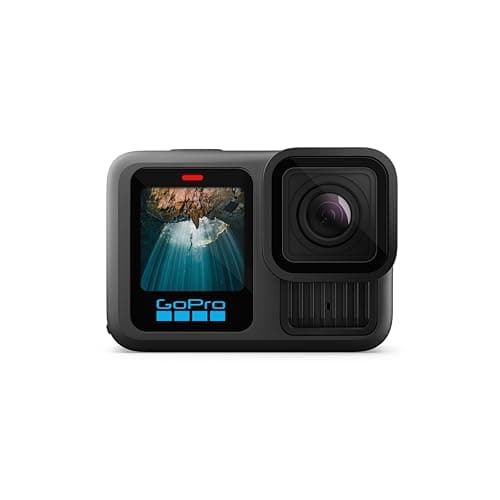 GoPro HERO13 Black The safest default for lake and trail: 33ft without a housing, the steadiest footage in the category, and a mount for literally everything. | Anyone who wants one camera to handle the kayak, the bike and the family trip | 8.8/ 10 | |
| 02 | 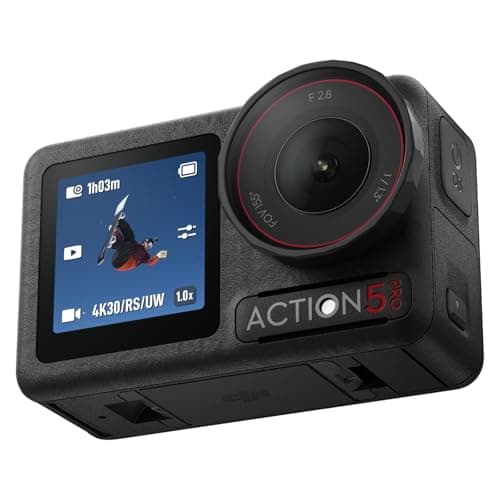 DJI Osmo Action 5 Pro Goes to 20m with no housing at all and publishes a 240-minute runtime — the two numbers that decide a long, wet, cold day. | Long paddles, cold water, and anyone tired of buying a housing to get past 10m | 9.1/ 10 | |
| 03 | 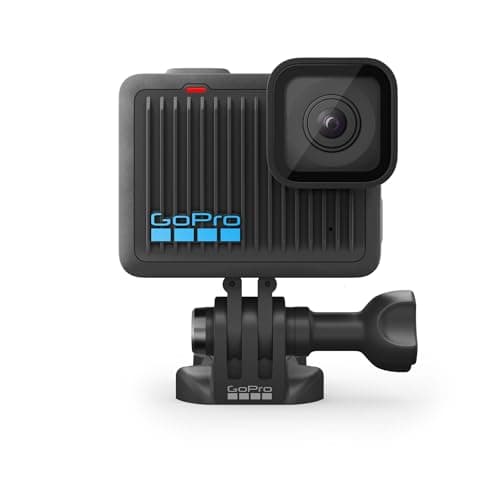 GoPro HERO (2024) The cheapest real GoPro, and the one whose 16ft rating you have to take seriously before you take it snorkeling. | A first camera, a kid's camera, or a second angle that mounts anywhere | 7.1/ 10 | |
| 04 |  GoPro Fetch Dog Harness The only camera mount made for a dog by a camera company, with two mount points and a tether in the box — and the chest position is the one that gets the watchable shot. | Dogs between 20 and 120 lbs who swim, and owners who want the dog's-eye view rather than a shaky back shot | 8.0/ 10 | |
| 05 | 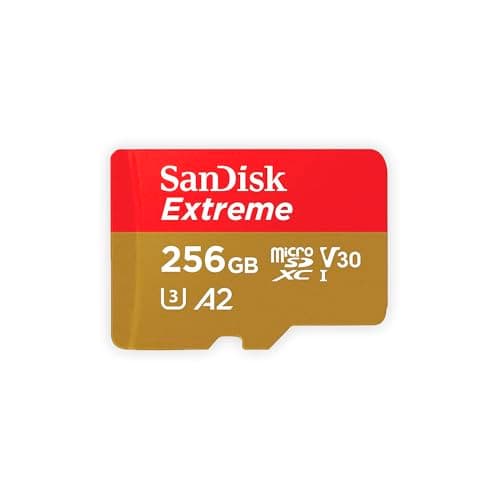 SanDisk Extreme microSDXC UHS-I The card that appears on every manufacturer compatibility list, rated V30 and built to survive being wet, cold and dropped. | Anyone who does not want to think about cards again | 8.9/ 10 |
Scores are our editorial judgment from published specs and named independent reviews, weighted for lake and trail use — not measurements. We have not tested these units and do not own them.
02
How we picked
We do not lab-test, bench-test or dive-test cameras, and we do not own test units. What we do instead is read the manufacturer's published specifications, read the independent reviews that genuinely do test, read owner reports for the failure modes specs never mention — fogging, salt corrosion, cold battery collapse, mount slippage — and then weight all of it for action cameras used on lake and trail. Where a number is not published, the page says “not published” rather than filling the cell.
The full method, including what we refuse to do, is on the editorial policy page.
- 30%Water survival
- Rated depth without a case, door design, and what the manufacturer actually publishes.
- 25%Stabilization in chop
- A kayak deck and a rooty trail shake in ways a handheld walk test never shows.
- 20%Battery in the cold
- Published runtime, spare-battery cost, and whether it charges while recording.
- 15%Mount ecosystem
- Finger mount, threaded, magnetic — and how much of it you have to re-buy.
- 10%Footage you will keep
- Lens replaceability, low-light behavior, and how much cutting the footage needs.
What we ranked on, and why
A dog camera is not a smaller version of a person camera. The buyer's constraints change completely, and four of them decide everything.
Bare water rating, first. Dogs do not check the forecast or the depth. A dog that swims takes the camera in without warning, repeatedly, and shakes it dry afterward at a frequency designed to work a door seal loose. Every pick here is rated for water with no housing — 5m, 10m or 20m — because a housing on a dog harness is extra bulk, extra weight and a fogging risk in exactly the warm-animal, cool-water conditions that cause fogging. If you want the ratings in one place, the depth table has every camera on this site.
Weight on the harness, second. Camera weight on a dog is not about whether the dog can carry it — a labrador can carry a brick — it is about whether the harness stays where you put it. Mass on a chest mount pulls the rig sideways on every stride, and a rig that rotates films the ground. 150g on a 70lb dog is unnoticeable. The same 150g on a 25lb terrier is a harness that will be under its armpit within a mile.
Mount compatibility, third, and it is more important than it looks. GoPro's Fetch is the only dog harness made by a camera company, and it takes the two-prong fitting that GoPro bodies have built in. Everything else needs an adapter. Each adapter adds height, adds a flex point and adds one more thing to work loose on an animal you cannot supervise. Mount compatibility covers what every adapter costs you.
What total loss costs, fourth. This is the specification nobody lists. Dogs lose cameras: in long grass, in a river, in a hedge, off a dock. A $400 flagship and a $180 compact survive the same swim, and only one of them ruins your month when it does not come back. That is why the HERO (2024) is on this list and why the tether is not optional.
| Camera | Bare water rating | Published weight / mass | Battery | Fits the Fetch harness |
|---|---|---|---|---|
| GoPro HERO13 Black | 33ft (10m) | Not published on the page we read | 1900mAh Enduro, removable | Directly — built-in fingers |
| DJI Osmo Action 5 Pro | 20m | 146g | 1950mAh, removable · 240 min at 1080p24 | With a two-prong adapter |
| GoPro HERO (2024) | 16ft (5m) | 46% less mass than HERO13 Black (GoPro's figure) | Built in, not removable | Directly — built-in fingers |
Chest, not back
Almost every disappointing dog video has the same cause: the camera was on the dog's back. From up there the frame is sky, the back of a head and a bouncing spine, and the dog's own movement is amplified by the height of the mount.
The chest position fixes all three. It sits at the dog's eye line, points where the dog is going, and keeps the mass low and close to the body where it moves least. It is also where the interesting footage lives — water coming at the camera, legs in frame, the moment the dog commits to the jump.
Two practical notes. Point the camera slightly up from level, because a dog's chest tilts forward when it runs and a level mount films dirt. And use the widest lens setting you have: you cannot aim a dog, so capture everything and crop afterward — 4K vs 5.3K vs 8K explains how much crop headroom each resolution actually buys.
Settings for a dog
Dog footage fails in predictable ways, and three settings fix most of it.
Shoot 4K60, not 4K30. A dog's stride is fast, repetitive vertical motion. 60fps both looks right and gives you the option of slowing a clip to half speed, which is how you turn ten seconds of frantic running into something watchable.
Stabilization on, horizon lock on if you have it. A dog rolls the camera constantly. Horizon lock is the single biggest improvement available to dog footage, and HyperSmooth vs FlowState vs RockSteady covers which modes cost what.
Short clips, started by you. Film in bursts of thirty to sixty seconds when something is happening. A camera left running on a dog for an hour produces an hour of grass and one good second you will never find, and it drains the battery that should have caught the swim.
Wind and panting are the audio problem. A chest-mounted camera sits directly in front of a breathing animal, and the microphone is going to pick up all of it. How to cut wind noise has the fixes, but for most dog clips the honest answer is to replace the audio in the edit.
What to skip
Any camera without a bare water rating. If it needs a case to survive a swim, it is the wrong camera for a dog that swims.
A 360 camera, mostly. The reframing payoff is real for a camera you cannot aim, and a dog is the definition of a camera you cannot aim. But exposed hemispherical lenses at dog height meet sand, gravel and undergrowth constantly, and every clip needs a reframing pass before anyone can watch it. If you want to try it anyway, the deeper rating matters — GoPro MAX2 vs Insta360 X5 compares the two current options and the 15m body is the one for an animal that swims.
A head mount. They exist. A camera on a dog's head is heavy where the dog is most sensitive, gets shaken hardest, and films the same sky-and-ears view as a back mount with more weight in the worst place.
Leaving it on while nobody is watching the dog. A harness-mounted camera on a dog running loose in woodland is how cameras are lost, and a tether on a snagged harness is a hazard to the dog rather than a safety feature for the camera. Fit the rig for the part of the walk you are watching.
03
Every pick, in detail
- 33ft (10m), no housing
- 1900mAh Enduro
- 1.5h at 5.3K30 / 2.5h at 1080p30
- 8.0
- 9.5
- 8.5
- 9.5
- 9.0
GoPro HERO13 Black
GoPro
The safest default for lake and trail: 33ft without a housing, the steadiest footage in the category, and a mount for literally everything.
Anyone who wants one camera to handle the kayak, the bike and the family trip
Top pick, and the mount is the reason. GoPro makes the Fetch harness and GoPro cameras carry the two-prong fitting in the body, so the camera clips into the harness with nothing in between. Every adapter you add to a dog rig is a hinge that works loose while an animal runs through undergrowth, and this is the only combination with zero of them.
33ft (10m) bare covers everything a dog will do to it: swimming, retrieving, standing in a river, getting shaken at 10Hz on the bank. HyperSmooth 6.0 with AutoBoost is the other half — a dog's gait is a vertical bounce at exactly the frequency that makes footage unwatchable, and this is the steadiest published system in the category. The replaceable lens cover matters more here than on any other page of this site, because a dog films at sand height.
The cost is simple: it is the most expensive thing in this list and you are strapping it to an animal with its own opinions. Budget for a float and a tether in the same order, and accept that the Enduro battery's 1.5 hours at 5.3K30 is more than enough because no dog should wear a camera for an hour anyway.
- HyperSmooth 6.0 with AutoBoost is the steadiest stabilization we can find published figures for
- Built-in mounting fingers plus 1/4-20 threads — it fits the GoPro ecosystem and a normal tripod
- Enduro battery is rated to keep full camera functionality down to 14°F (-10°C)
- Replaceable lens cover, so a scratched lens is a $20 problem and not a $400 one
- 33ft is shallower than the DJI and it is the shallowest of the three flagships
- Anything past 33ft needs the separate Protective Housing
- HB-Series lenses and ND filters are all extra purchases
Specs from GoPro HERO13 Black published specifications.
- 20m bare / 60m with case
- 1950mAh · 240 min at 1080p24
- -20° to 45°C
- 9.5
- 9.0
- 9.5
- 8.0
- 9.0
DJI Osmo Action 5 Pro
DJI
Goes to 20m with no housing at all and publishes a 240-minute runtime — the two numbers that decide a long, wet, cold day.
Long paddles, cold water, and anyone tired of buying a housing to get past 10m
The swimming-dog pick, and the better buy if your dog is a retriever rather than a paddler. 20m bare is double the HERO13 Black, which stops mattering as a diving number and starts mattering as margin: a dog that launches off a dock takes the camera under harder and deeper than you would, and nobody is there to notice the door was not fully latched.
DJI's published 240 minutes at 1080p/24 and the -20° to 45°C range both help on a winter beach walk, and the 1/1.3-inch sensor handles the low, flat light dogs are usually walked in. See the full specification read for every published figure.
The honest cons are the mount and the weight. DJI uses a magnetic quick-release, so fitting it to the Fetch harness means an adapter to the two-prong fitting — and a magnetic latch plus an adapter on a running animal is exactly the structure we warn about above. Use a mechanical adapter, not the magnetic one, and tether it. At 146g it is also the heaviest body here, which rules it out for small dogs.
- 20m without the Waterproof Case — double the bare-camera depth of the HERO13 Black
- DJI publishes 240 minutes of recording at 1080p/24 with screens off, the longest figure in this set
- Rated to -20°C, which matters more on an October lake than any resolution number
- 1/1.3-inch sensor holds detail when the light goes flat
- Mount ecosystem is smaller than GoPro's, and magnetic quick-release adapters are their own purchase
- 146g — the heaviest of the flagship three
- Fewer third-party mounts and filters exist for it
Specs from DJI Osmo Action 5 Pro published specifications.
- 16ft (5m)
- 4K30, 2.7K60 slo-mo
- Built in, not user-removable
- 6.0
- 7.5
- 6.0
- 9.0
- 7.0
GoPro HERO (2024)
GoPro
The cheapest real GoPro, and the one whose 16ft rating you have to take seriously before you take it snorkeling.
A first camera, a kid's camera, or a second angle that mounts anywhere
The pick for a small dog, and the pick for anyone who has done the arithmetic on what a dog can destroy. GoPro publishes 46% less mass than the HERO13 Black, and on a 25lb dog that difference is the whole decision — a harness that pulls sideways on every stride does not produce footage anyone watches.
It keeps the two things that make a GoPro the right dog camera: built-in mounting fingers, so it clips into the Fetch harness directly, and HyperSmooth. 4K30 is the ceiling, which is more than enough for footage shot at knee height by an animal.
Two real limits. The 16ft (5m) rating is a swim-and-splash rating rather than a retrieving-off-a-boat one, so a dog that dives deep belongs on one of the two cameras above. And the battery is built in — there is no spare, so a long day means a power bank and a break.
- Genuinely tiny — 46% less mass than HERO13 Black
- Built-in mounting fingers, and GoPro lists it as compatible with 35+ mounts
- HyperSmooth stabilization at the lowest GoPro price
- Simple enough to hand to someone who has never used one
- 16ft (5m) is a snorkel-adjacent rating, not a diving one
- The battery is built in — you cannot carry a spare, you carry a power bank
- 4K30 is the ceiling; no 4K60, no high-frame-rate 4K
Specs from GoPro HERO published specifications.
- Dogs 20-120 lbs (9-54kg)
- Back and chest
- Harness, hardware, camera tether
- 8.5
- 8.0
- 7.0
- 8.5
- 7.0
GoPro Fetch Dog Harness
GoPro
The only camera mount made for a dog by a camera company, with two mount points and a tether in the box — and the chest position is the one that gets the watchable shot.
Dogs between 20 and 120 lbs who swim, and owners who want the dog's-eye view rather than a shaky back shot
The part that actually decides whether any of this works. GoPro publishes two mounting locations, back and chest, a fit range of 20 to 120 lbs (9 to 54kg), a removable chest mount for smaller dogs, soft padded construction at every adjustment point, and a washable, water-friendly material rated by GoPro as holding up to swimming, splashing and mud. A camera tether is in the box, which most third-party harnesses leave out.
Use the chest position. The back mount is the one everybody tries first and it films sky, spine and the back of a head; the chest mount sits at the dog's eye line pointing where the dog is going, which is the entire reason to put a camera on a dog. The trade is that the chest position is lower, so it collects more water and more mud — which is fine, because every camera here is rated for both.
The cons are worth stating plainly. 20 lbs is a hard floor and GoPro says so, so this is not a small-dog product even with the chest mount removed. GoPro publishes no depth or water rating for the harness itself, only that the material is water-friendly. And the quick-release bases are a two-prong fitting, so a DJI or Insta360 body needs an adapter. GoPro's own Fetch is also hard to find on Amazon — the search link here lands on the current listings, and the third-party harnesses that dominate those results are a real alternative at a lower price, with the usual caveat that none of them publishes a specification you can check.
- Two mounting locations — back and chest — and the chest view is the one that reads as a dog's perspective
- GoPro publishes a washable, water-friendly material that holds up to swimming, splashing and mud
- Soft padded construction, padded at every adjustment point
- Chest mount is removable to fit smaller dogs
- A camera tether is included, which is the part most third-party harnesses leave out
- 20 lbs is a real floor — small dogs cannot carry a flagship camera, and GoPro says so
- GoPro publishes no water or depth rating for the harness itself, only that the material is water-friendly
- Quick-release bases are a two-prong fitting, so a DJI or Insta360 body needs an adapter
- A back-mounted camera films mostly sky and spine; the good shot needs the chest position and a short recording
Specs from GoPro Fetch Dog Harness (ADOGM-001) product page.
- U3 · V30 · A2 · Class 10
- Up to 190MB/s read, 130MB/s write
- Shock, temperature, water and X-ray proof
- 8.5
- 9.5
- 9.0
- 9.0
- 8.0
SanDisk Extreme microSDXC UHS-I
SanDisk
The card that appears on every manufacturer compatibility list, rated V30 and built to survive being wet, cold and dropped.
Anyone who does not want to think about cards again
Not an exciting pick and the one that saves the footage. A dog rig is shaken constantly, and a card that cannot sustain the write rate drops the recording rather than the quality — usually in the thirty seconds that mattered. A V30-rated card from a named brand is the floor; speed classes compared explains which rating governs video and what size to buy has the capacity arithmetic. Buy two small cards rather than one big one, because the one thing a dog camera does reliably is come home muddy.
- V30 guarantees a 30MB/s minimum sustained write, which is what high-bitrate video actually needs
- SanDisk publishes shockproof, temperature-proof, waterproof and X-ray-proof ratings
- Appears on GoPro, DJI and Insta360 tested-card lists more often than any other card
- Capacities up to 1TB, so a long trip does not need a card swap
- Write speeds vary by capacity — the 64GB tops out at 80MB/s write, the 128GB at 90MB/s
- Counterfeits are common; buy from a seller you trust
- V30 is the floor, not the ceiling — 8K on some cameras wants more headroom
Specs from SanDisk Extreme microSDXC UHS-I product page.
04
What decides this category
Weigh your dog before you buy the harness
GoPro publishes a 20 to 120 lbs (9 to 54kg) fit range for the Fetch, with the chest mount removable for smaller dogs. 20 lbs is a floor, not a suggestion. Below it, no camera in this category is a good idea on a harness.
Buy the cheaper camera than you think you need
The difference between a flagship and a compact is invisible in footage shot at knee height by an animal. The difference in what you lose when the dog comes back without it is not.
Buy the float and the tether in the same order
They are not the same item and they do different jobs. A swimming dog tests both, usually within the first week.
What we would skip
Cheap suction or clip mounts repurposed for a dog. They are designed for a surface that does not breathe, flex or roll in mud. A purpose-made harness with two padded mount points is the only fixing that stays where you put it.
05
Questions people actually ask
01What is the best action camera for a dog?
The GoPro HERO13 Black, because its built-in two-prong fingers clip straight into GoPro's Fetch dog harness with no adapter, it is rated 33ft (10m) bare, and HyperSmooth 6.0 is the steadiest published stabilization for a running animal. For a dog that swims deep, the DJI Osmo Action 5 Pro's 20m bare rating is the safer choice; for a small dog or a smaller budget, the GoPro HERO (2024) is far less mass and far less loss.
02Should the camera go on the dog's back or chest?
Chest. A back-mounted camera films sky, the back of the head and a bouncing spine, and the height amplifies every stride. The chest position sits at the dog's eye line, points where the dog is going, and keeps the weight low where it moves least. Angle it slightly upward, because a running dog's chest tilts forward.
03Can a dog wear a GoPro in water?
Yes, within the camera's own rating. Every pick here is waterproof with no housing — 16ft (5m) on the HERO (2024), 33ft (10m) on the HERO13 Black, 20m on the DJI Osmo Action 5 Pro. Use the included tether and add a float for deep water; GoPro publishes no depth rating for the Fetch harness itself, only that the material is water-friendly.
04What size dog can wear an action camera harness?
GoPro publishes a fit range of 20 to 120 lbs (9 to 54kg) for the Fetch, with the chest mount removable to suit smaller dogs in that range. Below 20 lbs, the weight of any current action camera is enough to pull the harness out of position.
05Is a 360 camera good for filming a dog?
In principle yes, because you cannot aim a dog and a 360 camera removes aiming entirely. In practice the exposed lenses sit at sand and gravel height, and every clip needs reframing before anyone else can watch it. If you try it, pick the deeper-rated body for a dog that swims.
06How long should a dog wear a camera?
Minutes, not hours — fit it for the part of the walk you are watching. An hour of harness footage is an hour of grass with one good second in it, and a camera left running on a dog nobody is watching is the most common way one gets lost.
06
Read this next
Floats, tethers and not losing your camera
The cheapest two purchases on this page, and a swimming dog tests both.
Best chest mounts for action cameras
The human version of the same argument about where mass belongs.
Action camera mount compatibility
What an adapter costs you before you put one on an animal.
Best action cameras for kids
The other roundup ranked on weight and what total loss costs.
Best action camera for hiking
Where the dog is going, ranked for the person holding the lead.
07
Sources
- GoPro Fetch Dog Harness (ADOGM-001) product page
- GoPro HERO13 Black published specifications
- DJI Osmo Action 5 Pro published specifications
- GoPro HERO published specifications
- SanDisk Extreme microSDXC UHS-I product page
Specifications are quoted from the manufacturer pages above as they read on the dates shown. Where a figure is not published, this site says so rather than estimating one. We have not tested these products.