The best action camera for horseback riding
A trot is a vertical bounce two or three times a second, for an hour. Stabilization is not a nice-to-have on a horse - it is the entire difference between footage and nausea.
Part of On the Trail.
We earn a commission if you buy through our links, at no extra cost to you. It never changes what we recommend or the order we rank it in — how this works.
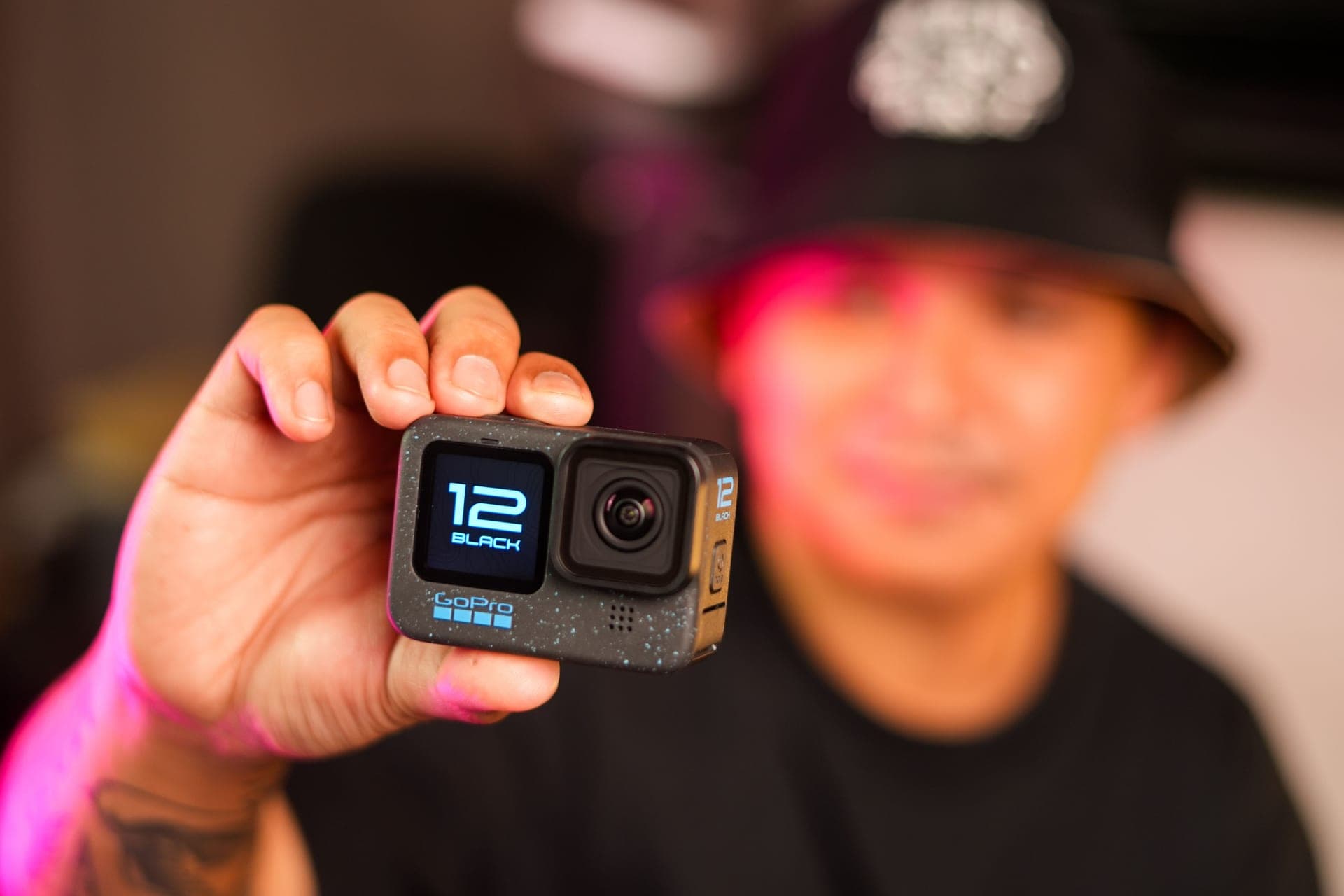
The GoPro HERO12 Black is the best action camera for horseback riding, and the reason is stabilization rather than anything else on the spec sheet: GoPro publishes HyperSmooth 6.0 on it, the same version it ships on its current flagship, and a horse's gait is the most punishing rhythmic input an action camera gets. It is for the rider whose footage so far has been unwatchable. The DJI Osmo Action 4 is the budget pick, at the lowest live price here with a removable battery and 18m of bare waterproofing for river crossings and rain. The GoPro Chesty is the mount that matters: on a horse it beats a helmet mount on both steadiness and sense. In between: the DJI Osmo Action 5 Pro for all-day rides on a published 240-minute runtime, and the Insta360 GO Ultra at 53g if you would rather not feel the camera at all. Prices come from the live price layer with the date they were read.
01
Quick picks
| # | Product | Best for | Score | Price |
|---|---|---|---|---|
| 01 | 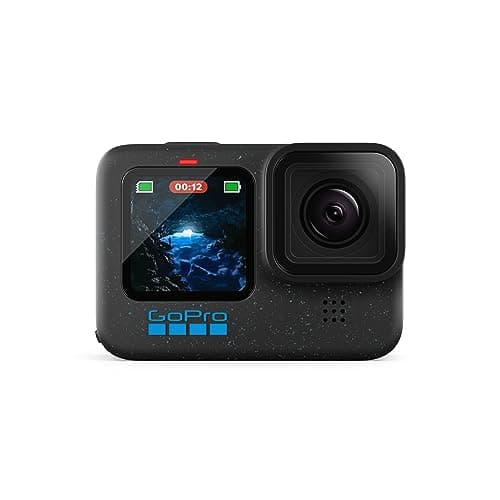 GoPro HERO12 Black The previous flagship, and the water story is identical to the HERO13 Black: 33ft bare, HyperSmooth 6.0, a removable Enduro battery. | Anyone who wants the flagship water rating without paying flagship money | 8.5/ 10 | |
| 02 | 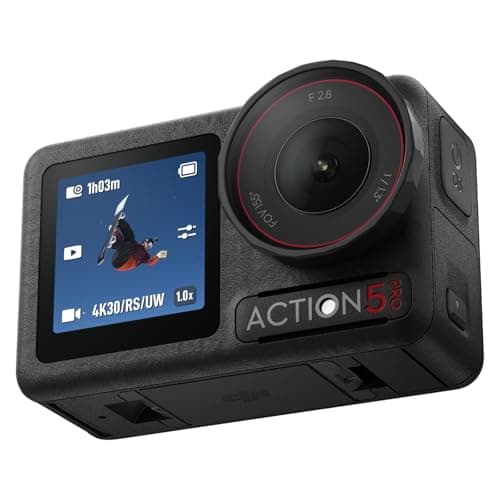 DJI Osmo Action 5 Pro Goes to 20m with no housing at all and publishes a 240-minute runtime — the two numbers that decide a long, wet, cold day. | Long paddles, cold water, and anyone tired of buying a housing to get past 10m | 9.1/ 10 | |
| 03 | 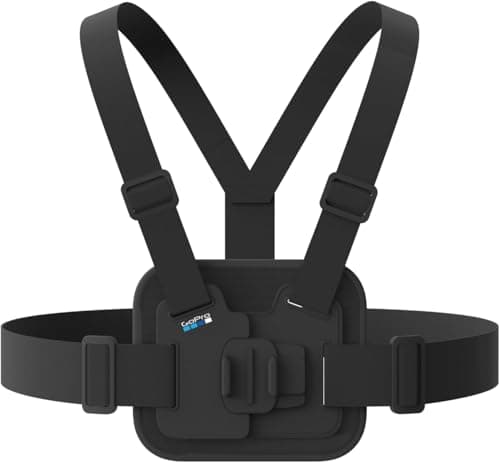 GoPro Chesty Performance Chest Mount The mount that shows your hands — which on a kayak means the paddle, and on a bike means the trail arriving. | Paddling and riding footage where the hands are the story | 8.1/ 10 | |
| 04 | 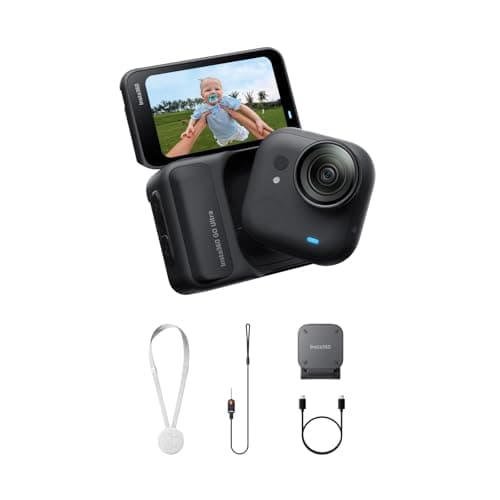 Insta360 GO Ultra 53 grams and IPX8 to 10m on its own — the camera you actually clip on for a paddle instead of leaving in the dry bag. | Hands-free clips where a full-size camera would never leave the bag | 7.6/ 10 | |
| 05 | 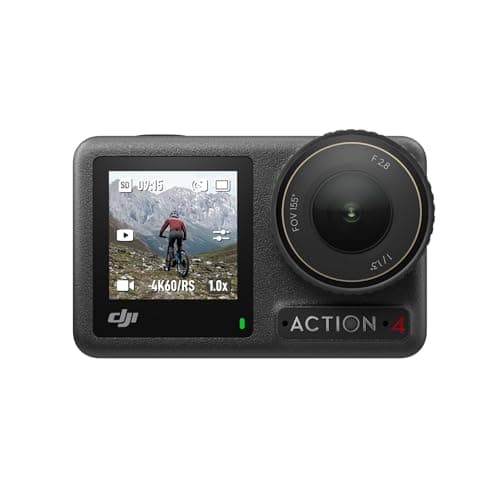 DJI Osmo Action 4 The previous DJI flagship, still 18m bare and still on shelves — the most water rating per dollar in this list. | Buyers who want deep-water capability without paying flagship money | 8.5/ 10 |
Scores are our editorial judgment from published specs and named independent reviews, weighted for lake and trail use — not measurements. We have not tested these units and do not own them.
02
How we picked
We do not lab-test, bench-test or dive-test cameras, and we do not own test units. What we do instead is read the manufacturer's published specifications, read the independent reviews that genuinely do test, read owner reports for the failure modes specs never mention — fogging, salt corrosion, cold battery collapse, mount slippage — and then weight all of it for action cameras used on lake and trail. Where a number is not published, the page says “not published” rather than filling the cell.
The full method, including what we refuse to do, is on the editorial policy page.
- 30%Water survival
- Rated depth without a case, door design, and what the manufacturer actually publishes.
- 25%Stabilization in chop
- A kayak deck and a rooty trail shake in ways a handheld walk test never shows.
- 20%Battery in the cold
- Published runtime, spare-battery cost, and whether it charges while recording.
- 15%Mount ecosystem
- Finger mount, threaded, magnetic — and how much of it you have to re-buy.
- 10%Footage you will keep
- Lens replaceability, low-light behavior, and how much cutting the footage needs.
Why riding is the hardest stabilization test on this site
Mountain biking produces sharp impacts. Running produces a steady jog. A horse produces something worse than either: a rhythmic vertical displacement, two or three times a second, sustained for an hour, with a lateral roll on top of it. Electronic stabilization is very good at random shake and less good at a strong periodic motion, which is why riders so often conclude that action cameras do not work - when what did not work was the mount and the mode.
Three criteria follow.
Published stabilization system and horizon leveling, first. Horizon leveling is what corrects the roll; the stabilization version is what smooths the bounce. Both are published facts, and both are in the table below.
Runtime, second. A trail ride is hours, usually with no power and often with no convenient moment to change a battery while mounted. A removable cell and a long published runtime are the practical requirements.
Where it sits on you, third. On a horse the camera goes on your body, and the lower and more rigidly it is attached, the better the footage. That is a mount decision as much as a camera one.
The published figures, side by side
| Pick | Published stabilization | Published runtime | Weight / water | Price |
|---|---|---|---|---|
| GoPro HERO12 Black | HyperSmooth 6.0 with Horizon Lock | Over 2.5h at 1080p30 | 33ft (10m) bare | Check price |
| DJI Osmo Action 5 Pro | RockSteady with horizon leveling | 240 min at 1080p/24 | 146g, 20m bare | Check price |
| GoPro Chesty | n/a - it is the mount | n/a | Fits over heavy winter jackets | Check price |
| Insta360 GO Ultra | FlowState with horizon leveling | Up to 170 min with the Action Pod | 53g, IPX8 to 33ft (10m) camera only | Check price |
| DJI Osmo Action 4 | RockSteady with HorizonBalancing | 160 min at 1080p/24 | 18m bare | Check price |
The settings that fix riding footage
Turn horizon leveling on, and leave it on. It is the single biggest improvement available, because the roll is what makes riding footage feel wrong.
Shoot a higher frame rate, not a higher resolution. 4K/60 or 1080p/60 gives the stabilization more frames to work with and makes the bounce read as motion rather than as judder. 4K against 5K and 8K explains the trade with card space.
Accept the crop. Strong stabilization narrows the frame, so compose wider than looks right in the preview.
Deal with the wind. At a canter the microphone hears nothing but air. How to cut wind noise has the fixes in order of effect.
Who should buy which
Unwatchable footage is the problem: the HERO12 Black.
All-day trail rides: the Osmo Action 5 Pro.
Whatever you buy: the Chesty, fitted over your actual riding layers.
You do not want to feel it: the GO Ultra.
Smallest spend: the Osmo Action 4. If the trail rather than the horse is the subject, the hiking picks and the camping picks cover the rest of the trail hub.
03
Every pick, in detail
- 33ft (10m) bare / 196ft (60m) housed
- 1720mAh Enduro, removable
- Over 1.5h at 5.3K30 / over 2.5h at 1080p30
- 8.0
- 9.0
- 8.0
- 9.5
- 8.0
GoPro HERO12 Black
GoPro
The previous flagship, and the water story is identical to the HERO13 Black: 33ft bare, HyperSmooth 6.0, a removable Enduro battery.
Anyone who wants the flagship water rating without paying flagship money
Who it is for: the rider whose main problem is that nobody can watch the footage.
HyperSmooth 6.0 is the published system, and on the HERO12 Black it is the same version GoPro ships on its current flagship - which is why a superseded model leads this page. GoPro's implementation includes Horizon Lock, and on a horse that is the feature that matters most: the camera rotates with every stride and every lean, and leveling the horizon is what makes the result look deliberate. The mount ecosystem is the second half of the argument - built-in folding fingers plus a 1/4-20 thread means the chest harness below fits with no adapter.
Honest cons: 33ft (10m) bare is the shallowest flat rating here, which is still far more than a river crossing needs; GoPro does not list GPS in the HERO12 Black specifications if you wanted a route overlay; and it is a superseded model, so stock narrows as it sells through. The stabilization roundup explains the system, and the brand comparison sets it against the others.
- 33ft (10m) without a housing — the same bare rating GoPro publishes for the HERO13 Black
- HyperSmooth 6.0, the same stabilization version as the current flagship
- Removable 1720mAh Enduro battery, so a spare is a pocket item rather than a power bank
- Built-in folding fingers plus a 1/4-20 thread: the whole GoPro mount catalog and a normal tripod
- GoPro does not list GPS in the HERO12 Black specifications
- No HB-Series lens mount, so none of the HERO13's swappable-lens accessories fit
- 1720mAh against the HERO13 Black's 1900mAh Enduro cell
- It is a superseded model, so stock narrows as it sells through — check the listing before you plan around it
Specs from GoPro HERO12 Black published specifications.
- 20m bare / 60m with case
- 1950mAh · 240 min at 1080p24
- -20° to 45°C
- 9.5
- 9.0
- 9.5
- 8.0
- 9.0
DJI Osmo Action 5 Pro
DJI
Goes to 20m with no housing at all and publishes a 240-minute runtime — the two numbers that decide a long, wet, cold day.
Long paddles, cold water, and anyone tired of buying a housing to get past 10m
Who it is for: long rides, early starts and cold mornings in the saddle.
240 published minutes at 1080p/24 from a removable 1950mAh cell is the longest published runtime of any flat camera in our registry, and a trail ride is measured in hours. DJI also publishes a -20° to 45°C battery operating range, which covers the frosty start, and 20m of bare waterproofing for rain and water crossings. RockSteady with horizon leveling handles the gait well.
Cons: DJI's mount catalog needs an adapter for two-prong fittings, which includes the chest harness below - budget for it. At 146g it is the heaviest body here, which on a chest strap under a jacket you will notice at the trot. And it is the previous generation. The Action 5 Pro read has the full sheet.
- 20m without the Waterproof Case — double the bare-camera depth of the HERO13 Black
- DJI publishes 240 minutes of recording at 1080p/24 with screens off, the longest figure in this set
- Rated to -20°C, which matters more on an October lake than any resolution number
- 1/1.3-inch sensor holds detail when the light goes flat
- Mount ecosystem is smaller than GoPro's, and magnetic quick-release adapters are their own purchase
- 146g — the heaviest of the flagship three
- Fewer third-party mounts and filters exist for it
Specs from DJI Osmo Action 5 Pro published specifications.
- Adjustable, fits over heavy winter jackets
- Quick-release buckle, usable with gloves
- Harness, vertical buckle, thumb screw
- 8.0
- 9.0
- 7.0
- 8.5
- 8.0
GoPro Chesty Performance Chest Mount
GoPro
The mount that shows your hands — which on a kayak means the paddle, and on a bike means the trail arriving.
Paddling and riding footage where the hands are the story
Who it is for: every rider on this page. On a horse the chest is the right answer.
A chest harness frames the horse's neck and ears, the reins in your hands and the trail ahead - the shot that actually looks like riding. It also sits closer to your center of mass than a helmet, which means less amplified movement, and it keeps the camera off your riding helmet entirely. GoPro publishes the harness as adjustable, fitting over heavy winter jackets, with a quick-release buckle usable with gloves on.
Cons: it films where your torso points, so it misses what you turn to look at; and it needs setting with your riding layers on, because a body protector or a winter coat changes the fit entirely. On attaching anything to a riding helmet, read your helmet manufacturer's own guidance - riding helmets are safety equipment and their makers publish their own rules, which we are not in a position to summarize for your model. Chest against helmet has the trade-off.
- Padded and breathable, and genuinely adjustable across body types and layers
- The quick-release buckle works with gloves on, which matters in cold water
- Lower and steadier than a helmet mount — less head-turn, less nausea in the edit
- Shows the paddle stroke, which is the shot most people are actually trying to get
- A PFD over the top changes the angle, so set it up wearing what you will actually wear
- Sits low; on a sit-inside kayak it can end up framing mostly deck
- Nothing about it is waterproof — it gets wet and stays wet
Specs from GoPro Chesty product page.
- IPX8 to 33ft (10m), camera only
- 53g
- Up to 170 min with the Action Pod
- 7.0
- 8.0
- 7.5
- 8.0
- 8.0
Insta360 GO Ultra
Insta360
53 grams and IPX8 to 10m on its own — the camera you actually clip on for a paddle instead of leaving in the dry bag.
Hands-free clips where a full-size camera would never leave the bag
Who it is for: riders who do not want to feel a camera on them at all.
53g, clipped magnetically to a jacket or a shirt. There is no harness to fit under a body protector and nothing swinging on a strap at the canter, which for some riders is the difference between filming and not bothering. Insta360 rates the camera body IPX8 to 33ft (10m) on its own, with up to 170 published minutes once the Action Pod is in the kit.
Cons: the magnet mount is proprietary and the Action Pod is half the system; at 53g on a flexible clip it moves more than a rigid chest mount, so stabilization is doing more work; and it is the smallest sensor here, which shows under tree cover. The small camera roundup ranks the class.
- 53g means it goes on a hat brim, a PFD strap or a chest magnet and you forget it is there
- IPX8 to 10m for the camera itself, with a 1/1.28" sensor that is far larger than the size suggests
- Action Pod adds a flip screen and the long runtime when you want it
- Removable microSD, so you are not stuck with fixed onboard storage
- The Action Pod is not rated to the same depth as the camera — read the two ratings separately
- Magnetic mounting is convenient but is not a mechanical lock in real chop
- No interchangeable lens cover, so a scratch is permanent
Specs from Insta360 GO Ultra published specifications.
- 18m bare / 60m with case
- 1770mAh · 160 min at 1080p24
- -20° to 45°C
- 9.0
- 8.5
- 8.5
- 8.0
- 8.0
DJI Osmo Action 4
DJI
The previous DJI flagship, still 18m bare and still on shelves — the most water rating per dollar in this list.
Buyers who want deep-water capability without paying flagship money
Who it is for: the budget pick - a riding camera that is not a precious object.
18m of bare waterproofing, the same 1/1.3-inch sensor size as the Action 5 Pro, a removable 1770mAh cell, 160 minutes at 1080p/24 and a -20° to 45°C battery operating range. Around horses, gear gets stood on, dropped in a yard and rained on, and a cheaper body with a real water rating is the sensible purchase.
Cons: 160 published minutes against 240, no front screen, and DJI's Osmo Action 4 page states guaranteed software updates until 31 December 2026 - a published end date. The Action 4 read has the detail.
- 18m without a case still beats every current GoPro by a wide margin
- Same 1/1.3-inch sensor size as the Action 5 Pro
- Rated to -20°C like its replacement
- Usually the cheapest way into serious bare-camera depth
- 160 minutes published against the Action 5 Pro's 240
- Superseded, so accessories and support will taper off first
- No front OLED — the Action 5 Pro's front screen is genuinely more useful for framing
Specs from DJI Osmo Action 4 published specifications.
04
What decides this category
Fit the mount in your riding kit, not in the house
A body protector, a winter coat and a hi-vis vest all change where a chest harness sits and where it points. Fit it dressed as you ride, then check the angle from the saddle - not standing on the ground, where you are leaning forward differently.
Stabilization beats resolution, by a long way
On a horse, every pixel you add is a pixel of a bouncing frame. Spend on the stabilization system and shoot a moderate resolution at a higher frame rate.
Mind the horse before the footage
A strap being fitted, a camera beeping or a dangling tether is new equipment to an animal that notices new equipment. Introduce it on the ground, in the yard, before the first ride.
What we would skip
Head straps worn over a riding helmet; anything bonded to a helmet shell without reading the manufacturer's guidance; and the highest resolution mode, which spends battery on detail the bounce destroys.
05
Questions people actually ask
01What is the best action camera for horseback riding?
The GoPro HERO12 Black, because stabilization decides riding footage and GoPro publishes HyperSmooth 6.0 with Horizon Lock on it - the same version as its current flagship. The DJI Osmo Action 5 Pro is the pick for long rides, on a published 240-minute runtime.
02Where should a rider mount an action camera?
On your chest. It frames the horse's neck, your hands and the trail, sits closer to your center of mass than a helmet so it moves less, and it avoids attaching anything to safety equipment. Chest against helmet works through it.
03Can you put an action camera on a riding helmet?
That depends entirely on your helmet manufacturer's guidance and, if you compete, on your organization's rules. Read both before attaching anything - we cannot tell you what your model allows. A chest mount sidesteps the question and films a better angle for riding anyway.
04Why is my horse riding footage so bouncy?
Because a gait is a strong rhythmic motion, which is the hardest thing for electronic stabilization to correct. Turn horizon leveling on, shoot a higher frame rate at a lower resolution, and move the camera from your head to your chest - those three changes fix most of it.
05Can you mount a camera on the horse?
We do not recommend or stock a saddle or bridle mount, and we are not going to invent guidance about attaching equipment to an animal. The rider-mounted options on this page are what we can honestly stand behind.
06
Read this next
Chest mount vs helmet mount
The decision that matters most on a horse.
Best action camera with stabilization
The same field ranked on steadiness alone.
Best action camera for hiking
The trail hub's other long-day roundup.
How to cut wind noise
What to do about the only thing the microphone hears at a canter.
07
Sources
- GoPro HERO12 Black published specifications
- DJI Osmo Action 5 Pro published specifications
- GoPro Chesty product page
- Insta360 GO Ultra published specifications
- DJI Osmo Action 4 published specifications
Specifications are quoted from the manufacturer pages above as they read on the dates shown. Where a figure is not published, this site says so rather than estimating one. We have not tested these products.